“Libraries provide access to information, entertainment, and the Internet. They are the backbone of democracy, sacred places where anyone can find answers to their questions. Unfortunately, people who come there for help behave just as badly they do everywhere else.”
In January Overdue Media released the eleventh compilation of the Unshelved web comics that chronicles the daily misadventures of Dewey and his co-workers at an American dysfunctional library. Reads well with others compiles the comics strips originally published on the website between April 1st 2013 and September 25th 2014, as well as the “Conference Tips” originally published in ALA CogNotes newspapers in June 2014, January 2014 and June 2014.
The Unshelved web comics is very dear to my heart despite the very average quality of the drawings (although it’s probably quite good for a web comics). The reason for that is quite simple: I work in a library myself and I can recognize in those strips situations I’ve found myself in so many times. Believe me, it’s much better to choose to laugh about it than go insane!
The quality of the strips is improving with each new volume, but unfortunately the novelty of the concept wear off so it’s not uproarious anymore. However it’s still quite funny and entertaining to read (maybe less if you don’t know well the library domain). Again, like the last couple of books, I deplore that they haven’t included the “Unshelved Book Club” pages, but at least now the book is 120 pages in full color. You can choose to read the comics for free online, but personally I prefer the convenience of having a real book in my hands (and it offers encouragements to the creators). This should be a mandatory reading for all library staff!
2013-09-02 Unshelved Vol. 11: Reads well with others, by Gene Ambaum and Bill Barnes. Seattle, Overdue Media, January 2015. 22.5 x 17 x 1 cm, 120 pgs., $11.95 US / $15.95 CDN. ISBN-13: 978-1-937914-06-6. For readers of all ages.
“Sicile, 241 avant J.-C. Après deux décennies de conflit avec Rome, l’armée carthaginoise menée par Hamilcar Barca doit déposer les armes. Son fils, Hannibal, a six ans quand il assiste à cette bataille. Mise en déroute, Carthage doit un tribut astronomique au vainqueur, et l’enfant est témoin, impuissant, de l’humiliation des siens.”
“Mais le jeune Hannibal refuse l’échec : élevé dans la haine de Rome, il va vouer son existence entière à la destruction de l’ennemi. Commence alors l’affrontement exceptionnel d’un des plus grands tacticiens de tous les temps et de son alter ego romain, le génie militaire Scipion l’Africain. Traversée des Alpes à dos d’éléphant, pillages impitoyables et combats parmi les plus sanglants de mémoire d’homme : un duel à mort qui a marqué l’Histoire…”
“Bravoure, complots et stratégie… Plongez au cœur des batailles qui opposèrent les légendaires Hannibal et Scipion !”
Je ne peux pas croire qu’un manga mettant en scène l’histoire de Rome m’ait échappé! Et c’est dans un style très décent! Il s’agit d’un manga seinen historique couramment prépublié dans le magazine Ultra Jump de Shueisha depuis mars 2011. On y raconte la deuxième guerre punique alors que l’expansion naissante de Rome l’opposait à l’empire Carthaginois au IIIe siècle avant notre ère. Il y a sept tomes de paru jusqu’à maintenant. Une bande-annonce et un extrait de cinquante-neuf pages sont disponible sur le site de Ki-oon. À lire absolument dès que j’ai un peu de temps!
Pour plus d’information vous pouvez consulter les sites suivants:
Godzilla: une métaphore du japon d’après-guerre
“Le kaiju eiga (film de monstres) continue encore aujourd’hui à offrir aux théoriciens un indicateur intéressant de l’évolution de la société japonaise depuis 1954, année de sortie du premier Godzilla. Le Japon d’après-guerre demeure sans nul doute un lieu de prédilection qui se prête à l’incarnation de plusieurs périls enfantés par l’inconscience des hommes. Godzilla et ses avatars, par leurs ravages cataclysmiques, perpétuent cette image d’une nation victime des forces de la nature ou des dérives génocidaires de la science.”
Un sujet qui me semble passionnant, abordé ici par un auteur québécois dans un essai publié en France. J’ai toujours dit que le cinéma est une fenêtre ouverte sur la société et le temps et qu’il peut nous en apprendre beaucoup si seulement on peut prendre quelques instant pour l’observer et y réfléchir. C’est particulièrement vrai pour le cinéma japonais. Vous pouvez voir la couverture arrière pour plus de détails, ainsi qu’un extrait sur Google Books.
Godzillamd: une métaphore du japon d’après-guerre, par Alain Vézina. Paris, l’Harmattan, mai 2014. 21.5 x 0.8 x 13.5 cm, 198 pg., 24 € / $40.95 Can. ISBN: 978-2-343-03201-6. Recommandé pour public adulte (16+).
Pour plus d’information vous pouvez consulter les sites suivants:
Planète japon
“Planète Japon est un magazine francophone trimestriel, entièrement dédié à la culture japonaise. On y trouve des dossiers (sur l’histoire, la culture, la société japonaise, les arts et même les paysages japonais), des articles de qualités (musique, littérature, mangas, cinéma, cuisine, technologie, tendances, etc.) mais aussi des interview. Distribué partout en France ainsi que dans certains pays francophones, Planète Japon propose un voyage entre modernisme et traditions à tous les passionnés de Japon, quel que soit leur âge et leur connaissance du pays.”
On me dit que c’est disponible en kiosques ici mais jusqu’à maintenant j’en ai fait une demi-douzaine sans la moindre chance. Pour plus de détails voyez leur site internet ou la page Facebook.
La Divine Comédie par Go Nagai
J’ai été plutôt intrigué lorsque Animeland m’a appris que les éditions Black Box (dont j’ignorais l’existence: voir leur site internet et page Facebook) allait publier fin septembre une adaptation très personnelle (et qui semble très “inspirée” de Gustave Doré—pour ne pas dire copié) de la Divine Comédie de Dante dans le cadre de leur Collection Go Nagai (3 tomes de 258 pages, 14,5 x 21 cm, 32.70 €). Cela n’a rien de récent puisque Dante shinkyoku (?????) a originalement été publié au Japon en 1994.
Je n’aime pas du tout Go Nagai: je trouve son dessin laid, ses histoires vulgaires et il a la fâcheuse tendance à usurper le travail de ses assistants sous son propre nom. J’imagine assez bien cependant une adaptation de Dante par cet auteur fasciné par l’horreur démoniaque. Je serais donc curieux de voir ce que cela donne comme résultat (en fait, nul besoin d’attendre que cette série traverse l’Atlantique puisqu’il existe déjà une “scanlation” anglaise partielle). À voir donc, mais par simple curiosité.
The Firefly Effect: Electoral 2072 – Book 1
I have this friend from college who seems to be a real renaissance man: he’s an athlete, an artist (he drew a wicked Calvin on my dorm’s door and inked the comic I scripted, Gates of Pandragon), an engineer, and a lawyer. I knew he was creative (he wrote some RPG scenarii) but I recently discovered that he also wrote a couple of science-fiction novels! Some would say they are not real books because they are not in print, but ebooks are the future and the publishing company is an open access publisher specialized in Science, Technology and Medicine! It looks quite serious (but actually they’re based in India and have a questionable record; it’s more like self-publishing as you pay them to publish your stuff). He told me that he writes hard-science and implied that it might be a difficult read since he writes for himself, assuming that his readers have a PhD in Physics! Comments are good, though, and it looks interesting so I will surely give it a try as soon as I have a little time.
For more information you can check the following websites:
A Brief History of Manga
“Manga is more than a genre in the comics field: it is a vital creative medium in its own right, with hundreds of millions of readers worldwide, a host of graphic styles, and a rich history now spanning seven decades.”
“Now for the first time, that history is told by an award-winning expert in the field. Covering topics from Akira to Mazinger Z, this book is fully illustrated throughout, and photos of key creators accompany accessible sidebars and timelines.”
“Answering the key questions of any fan where did my favourite manga come from, and what should I read next? this book will open doors to neophytes and experts alike.”
There sure has been an avalanche of reference books about manga lately, but I always said that there is never too much information. Each new books offer a new angle, a new perspective. And this time it’s written by Helen McCarthy, a well-known anime and manga specialist from the United Kingdom. I am quite curious to read it and add it to my reference shelf. I’ll try to get a review copy from the publisher (if I can reach them, their website was down for a while).
For more information you can check the following websites:
Histoire(s) du manga moderne
“1952. Le manga moderne fait ses premiers pas dans un Japon qui retrouve son indépendance après la Seconde Guerre mondiale. 2012. Phénomène culturel global, le manga est un rouage essentiel de la troisième puissance économique au monde. Comment, en soixante ans, la BD japonaise a-t-elle connu un tel essor ? Qui sont les acteurs ayant permis cette incroyable expansion ? Année après année, découvrez les événements majeurs et les artistes qui ont marqué l’histoire du manga moderne.”
J’ai introduit ce titre il y plus d’un an déjà mais, là il est finalement paru alors j’aimerais encore une fois en souligner l’importance avant d’en faire un commentaire plus approfondi. C’est un bel ouvrage avec une présentation chronologique fort intéressante. Et comme je l’ai dit plus haut, on a jamais trop de références sur le manga, chaque nouveau livre apportant une nouvelle perspective.
Histoire(s) du manga moderne , par Matthieu Pinon et Laurent Lefebvre. Paris: YNNIS Éditions, Avril 2015. 24 x 2.5 x 27 cm, 204 pg., 29.99 € / $49.95 Can. ISBN: 979-1-0933-7622-6.
Pour plus d’information vous pouvez consulter les sites suivants:
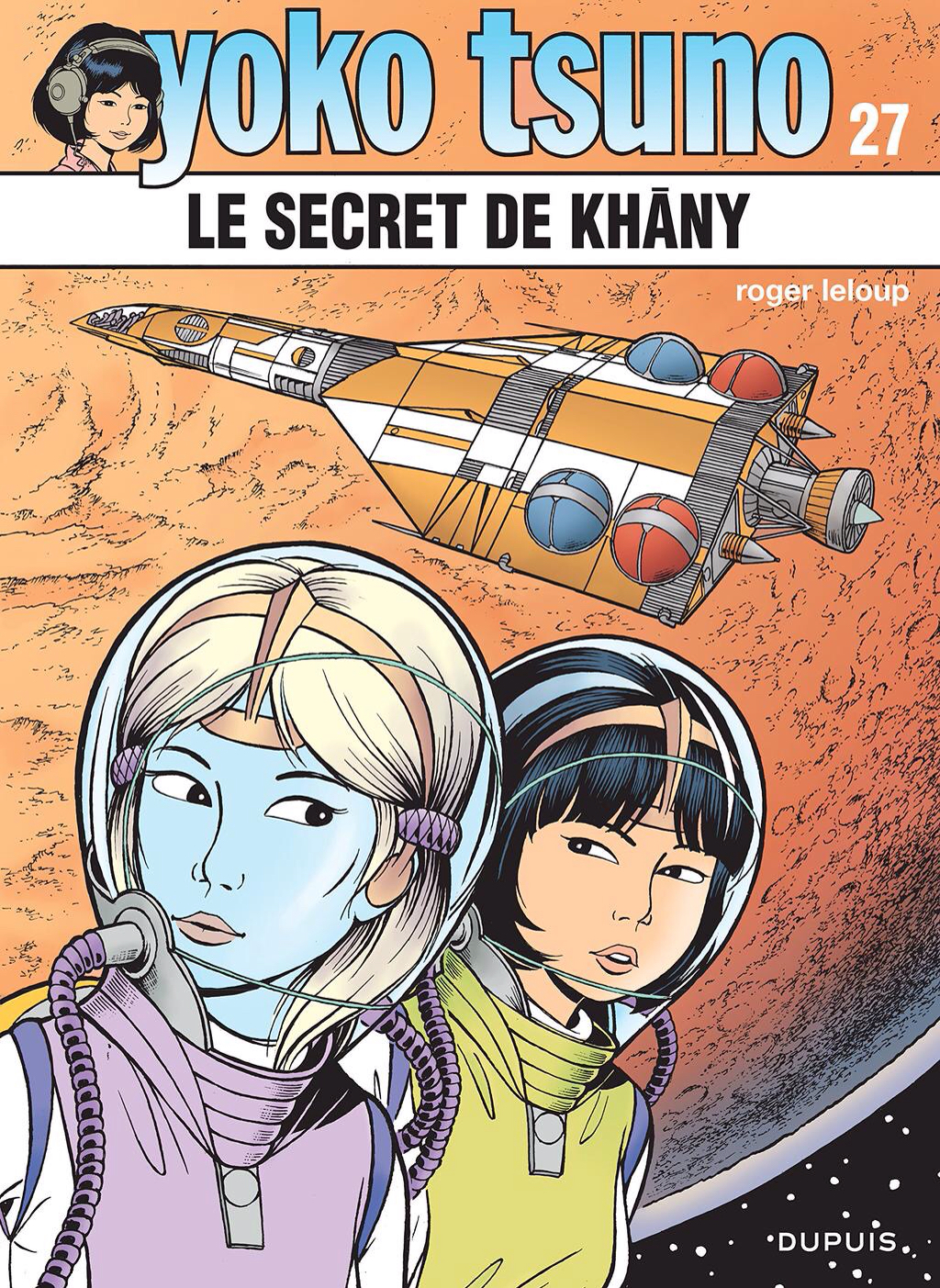
“La nuit est tombée sur Loch Castle Cottage et ses habitants. Mais tous ne dorment pas… Yoko et Émilia sont dehors au moment où un étrange engin volant les survole et, d’un rayon fulgurant, frappe Yoko à la tête. Dans un réflexe de survie, Émilia désintègre l’engin qui explose et s’écrase dans le Loch.”
“Peu de temps après, Khâny apparaît dans son vaisseau spatial et explique à Yoko que l’engin l’a prise pour elle, à cause de l’alignement de leurs ondes de pensée. Elle lui révèle une info étonnante : chargée de veiller sur les Vinéens qui dorment en léthargie sous la terre et d’assurer leur retour sur Vinéa, Khâny a découvert parmi eux une adolescente à qui on a insufflé des connaissances très particulières, à savoir un programme de “purification” capable d’éliminer microbes et bactéries de la surface de la Terre pour permettre aux Vinéens de s’y installer sans danger. Ce programme, sinistre héritage de l’infâme Karpan, aurait donc le pouvoir d’éliminer toute vie terrestre ! Plus grave encore: l’adolescente a réussi à fuir son caisson pour se réfugier sur Mars où un accélérateur-lanceur pointé sur la Terre pourrait réaliser, à titre posthume, l’horrible dessein de Karpan.”
“Pour aider son amie vinéenne, Yoko va prendre tous les risques et se lancer dans cette aventure sans se douter que Khâny lui cache un autre secret…”
ATTENTION: Peut contenir des traces de “divulgâcheurs”! Les personnes allergiques à toutes discussions d’une intrigue avant d’en avoir eux-même prit connaissance sont vivement conseillé de prendre les précautions nécessaires pour leur sécurité et devraient éviter de lire plus loin.
Actually, document.write(“”); I’ve seen almost all Japanese movies, except Out of my hand (after all it’s not really a Japanese film) and Shinjuku midnight baby (anyway, I’ve heard that it was terrible: too long, with too much gay sex; many girls came for the cute actors but were put off by the graphical guy on guy sex scenes). I’ve seen Master Blaster online (the student short film) and I am planning so see the screener for Hoshiogaoka Wonderland later this week.
Saturday, I’ve seen Neboke, Alone in Fukujima (well, at least half of it), Popura no aki and Decline of an assassin. Four movies in one day to finish my festival in a dash (I had to pack as many movies as possible since my employer refused to give me the Sunday off). It was quite tiring.
There was the same glitch that I’ve often seen this year during Neboke: the picture froze and came back without sound, so they had to change the screening copy (although I doubt it was a problem related to the copy; it was probably due to equipment issues). We started the movie with french subtitles and finished it with english subtitles! I also missed nearly half of Alone in Fukujima because of a scheduling conflict and the fact that Neboke finished later because of the glitch and its Q&A session. Also, my wife wanted to see an Italian movie in competition, but it had been rescheduled and she screened a swedish movie instead. Despite all those little annoyances, it was a good day. I am also glad that, despite their threats, there was no disturbances caused by disgruntled employees during the week-end. It’s good because that’s the moment of week (particularly in the evening) when the festival is the busiest.
Now that the festival is finished (at least for me), I’ll have more time to write and put my comments online, as well as edit the Q&A videos (I have already added the video for At Home Q&A both on my comment page and on Vimeo). But, first, I have to rest a little (and catch up on some of the chores at home). In the meantime, you can check my entry “Montreal World Film Festival 2015” for all the details on this year’s Japanese movies.
I’ve noticed another poster in the Quartier Latin’s hall announcing a sequel for the movie Belle and Sebastien due for February 2016 (in Quebec). It’s titled “L’aventure continue” (The adventure continues). [Google, Youtube, Wikipedia]
With such days so busy with work, duties and a full schedule of screenings, I am getting quite tired. Tomorrow will be my heaviest day with four screenings (and probably my last for this year). Hopefully I’ll be able to rest (and write) in the following days so I can share with you my comments on all those interesting movies.
Today was excellent. I’ve seen Dear Deer, Summer on the Frontline (which joins the short list of my favourites along with Blowing in the wind of Vietnam) and Gassoh, as well as attending the latter’s press conference.
Press conferences at the MWFF are always somewhat excruciating because every words must be translated both in French (because this is Quebec) and in English (because this is an international film festival after all). It makes a thirty-minute press conference feels very short and only a few questions can be asked by the press and the public to the movie crew. That’s rather annoying but it can’t be helped. I wish the press conference would be longer (since, unlike most big festival, they cannot afford multi-languages simultaneous translation—which would save lots of time).
I’ve filmed most Japanese directors’ introduction to their movies’ screening, with any Q&A sessions that I could attend, as well as today’s press conference. I’ll put them online as soon as I can do a quick edit on each of them in order to keep them as short as possible (which reminds me that I still have press conferences from previous years that I still need to share!).
For a second time there was technical issues during the screening. The picture froze, then fast-forwarded and then came back without sound for five or ten minutes. Then they “rewinded” and restarted where the problem had occured. Luckily, no other issues happened. The director, who was present to introduce his movie and for a Q&A afterward, apologized profusely (it was the japanese thing to do) even if it was not his fault.
Despite that small problem, I enjoyed this short day.
If you want to read some comments about the Japanese movies at the festival (in french) you can check the first part of the article by my esteemed colleague Claude R. Blouin.
It seems that more troubles might be brewing for the festival (as if it needed more) as some employees of the festival, experiencing delays with the well-earned payment of their salary, are threatening to strike from Friday if the situation is not resolved (Le Devoir). I can understand their plight but, on the other hand, I know many film buffs who would do their job for free just for a few tickets and a chance to meet with international moviemakers!
Since I had several hours in-between the two movies I was able to write my comments for all the movies I had seen the previous days. It still need some research and polishing, but I should be able to post them soon. For now I’m really too tired to do anything but sleep.
I wish I could write more extensive comments but unfortunately I am a little too busy. Seeing movie after movie doesn’t leave enough time to do in-depth analysis. And when you sit at night, after having viewed three movies, it difficult to write in details about each of them. That’s why I try to put down on paper my first impression as soon as I leave the theatre. It’s easy to do when there’s a couple of hours in-between movies, but more difficult when you have to rush from one place to another with just minutes before the beginning of the next show (harder still when there’s a Q&A after a screening).
Anyway, my purpose with this blog has always been to simply introduce a work (be it a manga, a book or a movie) with just enough information (and links) to interest the readers and incite them to look further.
Today, I’ve seen Kagura-me, Akai Tama and Blowing in the wind of Vietnam. All ranging from good to excellent. I’ll try to write and post my comments on those movies as soon as possible.
“A father, document.write(“”); a mother, an elder son, a daughter and a younger son. A family of five. To all appearances, a perfectly normal, happy family. However it turns out that none of them have a blood relationship. Each of them has a sad story and separate families of their own. Does being related by blood, make a family? Or if they live together, does it make them a family? When people learn to connect with others, when they are placed in a difficult situation, how do they react for a family? This is a film about people who were hurt by family, but saved by family. ”
The Moriyama family looks like any other ordinary family. However, none of them are related. The father is a thief. He started stealing to support his pregnant wife. She is hit by a car and lose the baby. He gets caught, goes to prison and his wife leaves him. Once out of prison, he continues with a criminal life. One day, during a burglary, he discovers a young boy chained in the bathroom of a house. He decides to save him. Together they settle in a home, acting like father and son. Later, the thief triggers an alarm and, as he might be caught, he is helped by a teenager who has run away from his home. He was verbally abused by his parents who found his indecisiveness and shyness not up to the standard of their rich (but parvenu) status. He joins the father and younger “son” in their home.
The mother was physically abused by her violent husband. One day she is considering killing herself by jumping in front of a train but notices a teenage girl who is about to do the same. Without thinking about her own situation anymore, she prevent the girl from jumping. The girl was sexually abused by her father. They both run away (it is more implied than said or shown) and settle in an apartment together as mother and daughter. One day, the mother meets the father in a pet shop and the father (it’s not shown how or why) invites them to join his little family.
They survive through a life of crime: the father doing burglary, the mother swindling men in mariage schemes, the older son doing forgery in a print shop and the young boy and girl simply going to school. Unfortunately, the mother tries to swindle a bigger swindler and she ends up kidnapped. The family rushes to gather the ransom, but, despite the father’s warning, it leads them to a violent outcome. The father goes to prison again to save his family. In the end, the family will pull through thanks to its strength. Despite not being related, they all had suffered abuse and could better understand and confort each other. Reconstituted family can work and even be stronger than blood ties.
There is a lot of frustration nowadays in Japan which apparently translate into an increase of domestic violence at home. This subject (and its salvation through reconstituted family) is interesting but the storytelling is often way too slow, and also contains gaps or credibility issues. Some scenes are simply not plausible, not because of the actors’ performance, which is quite excellent, but because the situation is being too convenient or at least not explained in a satisfactory manner. However, it is a beautiful story and a good enough movie to be well worth watching.
At home (??????): Japan, 2015, 110 min.; Dir.: Hiroshi Chono; Scr.: Teruo Abe (based on the novel by Takayoshi Honda); Music: Takatsugu Muramatsu; Phot.: Shinya Kimura; Ed.: Osamu Suzuki; Prod. Des.: Shin Nakayama; Cast: Yutaka Takenouchi (Dad/Thief), Yasuko Matsuyuki (Mom/Swindler), Kentaro Sakaguchi (Jun Moriyama), Yuina Kuroshima (Asuka Moriyama), Yuto Ikeda (Takashi Moriyama), Jun Kunimura, Itsuji Itao, Seiji Chihara.
Film screened at the Montreal World Film Festival on August 28th, 2015 (Cinema Quartier Latin 12, 12h00 – with an attendance of 90 people, filling 60% of the theatre) as part of the “Focus on World Cinema” segment. The director was present for a short Q&A at the end.
Unfortunately, my first day at the festival was quite disastrous. The first movie was good. The second movie had so many technical problems (started ten minutes late, microphone problem for the presentation, there was picture without sound, sound without picture, repeatedly) that the screening was interrupted and cancelled a little before the middle of the movie. I had to go to the screening room of the Film Market to see the (disappointing) end. There the copy ran just fine so it’s unlikely that the problem was caused by the dvd encoding (the excuse was that since it’s a foreign movie the encoding could have been messed up, but usually if this is the case it just either work or doesn’t) so the problem must have been with the Quartier Latin’s equipment (they were using VLC on a MacBook and a digital projector). It’s not the first year that this kind of problem occurs.
And the third movie… was cancelled due to some rescheduling! That’s quite annoying. I had made myself a (gruelling) schedule where I could see all Japanese movies, but with those changes it will be impossible. And at least one of the movie that I can’t watch is not even available in the Film Market screening room…
Anyway, I’ll try to post soon my comments on the two movies I’ve managed to see today, and you can still check my entry “Montreal World Film Festival 2015” for all the details on this year’s Japanese movies.
I also noticed in the Quartier Latin lobby a poster announcing the movie “Paul à Québec” for September 18th. Great!
Here our interest is mostly with the Japanese movies. At first, with the festival press releases and an article in the august edition of Coco Montreal, we determined that the festival would show at least fourteen Japanese movies. However, with the release of the schedule we astonishingly discovered that a record-breaking number of Japanese movies will be shown this year: seventeen (twenty-one if we count a Liberian movie with a Japanese director, a four-minute short and two documentaries)! See the films index for details. (updated 2015-08-21)
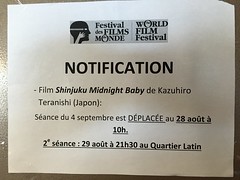
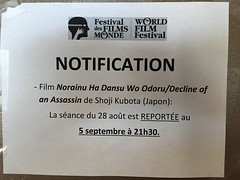
Be careful, the schedule of some movies has changed (updated 2015-08-28).
Coco Montreal have put a more detailed article (this time with english and french translation) on the festival’s Japanese movies in their September issue (available both in the issuu.com flash version and on their Facebook page). [updated 2015-09-01]
You can now read some comments about the Festival’s Japanese movies (in french) in the first part of the article by my esteemed colleague Claude R. Blouin on the blog Shomingeki. [updated 2015-09-03]
You will find, after the jump, a list of all those movies (plus a few useful links — of course, more details and links will be added as the information become available):
World Competition / Film en compétition
Gassoh (??): Japan, 2015, 87 mins; Dir.: Tatsuo Kobayashi; Scr.: Aya Watanabe (based on the manga by Hinako Sugiura); Phot.: Hitoshi Takaya; Music: Asa-Chang; Cast: Yuya Yagira (Kiwamu Akitsu), Koji Seto (Masanosuke Yoshimori), Amane Okayama (Teijiro Fukuhara), Joe Odagiri, Mugi Kadowaki, Minami Sakurai, Kai Inowaki, Yuko Takayama, Reiko Fujiwara, Daisuke Ryu, Rie Minemura, Mantaro Koichi, Lily.
The final resistance to the dismantling of the Togugawa Shogunate at the end of the Edo period and the futile struggles of three young men who participated in the Shougitai resistance.
Schedule: Thu 9/03 9:00 CI; Thu 9/03 21:30 CI.
First Feature Competition / Compétition de premières oeuvres
When their claim to have seen a phantom deer is debunked, three young siblings are denigrated. Now, 25 years later, their father dying, the wounds are still raw.
Sangoroh, a rakugo artist, has a drinking problem and is annoyed by his partner Manami’s pestering him about it. Can he get his life in order before it’s too late.
Tokita would rather be making movies than teaching about them in film school. But it pays the bills and there’s always Yui, the pretty school secretary. Then Ritsuko enters his life…
Schedule: Fri 8/28 10:00 QL10; Sat 8/29 19:00 QL10.
The Next Generation Patlabor — Tokyo War (The Next Generation ????? ? ???? / Patoreiba: Shuto Kessen / Lit. “Patlabor: Decisive battle over the capital”): Japan, 2015, 93 min.; Dir./Scr.: Mamoru Oshii; Phot.: Hiroshi Machida, Tetsuya Kudo; Art Dir.: Anri Jojo; Ed.: Yoshinori Ohta; Music: Kenji Kawai; Labor Design: Hideki Hashimoto, Katsuya Terada; Cast: Toshio Kakei (Keiji Gotoda), Erina Mano (Akira Izumino), Seiji Fukushi (Yuma Shiobara), Rina Ohta (Kasya), Shigeru Chiba (Shigeo Shiba), Kanna Mori (Rei Haihara), Kotaro Yoshida (Onodera), Reiko Takashima (Kei Takahata), Yoshinori Horimoto (Isamu Otawara), Shigekazu Tajiri (Hiromichi Yamazaki), Kohei Shiotsuka (Shinji Mikiya), Yoshikazu Fujiki (Yoshikatsu Buchiyama).
In a world where giant robots are built and used for labour, a special police force of robots is created to handle crimes relating to these machines: the Patrol Labor.
At home (??????): Japan, 2015, 110 min.; Dir.: Hiroshi Chono; Scr.: Teruo Abe (based on the novel by Takayoshi Honda); Music: Takatsugu Muramatsu; Phot.: Shinya Kimura; Ed.: Osamu Suzuki; Prod. Des.: Shin Nakayama; Cast: Yutaka Takenouchi (Thief), Yasuko Matsuyuki (Swindler), Kentaro Sakaguchi (Jun Moriyama), Yuina Kuroshima (Asuka Moriyama), Yuto Ikeda (Takashi Moriyama), Jun Kunimura, Itsuji Itao, Seiji Chihara.
A father, a mother, an elder son, a daughter and a younger son. A family of five. For all appearances, a perfectly normal, happy family. But none of them related.
Blowing in the wind of Vietnam (??????????? / Betonamu No Kaze Ni Fukarete): Japan/Vietnam, 2015, 116 min.; Dir.: Tat Binh & Kazuki Omori; Scr.: Kazuki Omori, Uichiro Kitazaki (based on a novel by Miyuki Komatsu); Phot.: Koichi Saito; Ed.: Naoki Kaneko; Music: Tetsuro Kashibuchi; Cast: Eiji Okuda, Akira Emoto, Kôji Kikkawa, Keiko Matsuzaka, Yôsuke Saitô, Reiko Kusamura, Yûya Takayama, Shigehiro Yamaguchi, Reina Fujie, Yoneko Matsukane, Tan Nhuong, Lan Huong, Tan Hanh.
When Misao returns to Japan from Vietnam for her father’s funeral, she sees that her mother is becoming forgetful, even a bit senile. Can a change of scenery help?
Schedule: Fri 8/28 9:30 QL12; Sat 8/29 21:30 QL12.
Decline of an assassin (??????????/ Norainu ha dansu wo odoru / lit. “Stray dogs are dancing”): Japan, 2015, 100 min.; Dir./Scr./Ed.: Kubota Shouji; Phot.: Hiromitu Nishimura; Music: Ipeei Yogo; Cast: Yoshimasa Kondo, Keisuke Kato, Shogo Suzuki, Hidetoshi Kubota, Yuri Yanagi, Kouta Kusano.
After four decades as the reliable hitman for a criminal gang, Kurosawa is now making mistakes. It may be time to retire. But how can he ever return to “normal” life?
Schedule: Fri 8/28 20:30 QL16; Sat 8/29 12:00 QL16; Sat 9/05 21:30 Ql11.
Back in his hometown after retirement, Takashi Arimura finds life depressing. On his wife’s suggestion he takes up painting. The world now looks very different.
Schedule: Sun 8/30 16:00 QL16; Mon 8/31 9:10 QL16.
Love can be deadly but when Haruka decided to make love with her boyfriend she never expected it to be literally true. A dark fantasy about life, sex and love.
When the son of a government minister wants to be in Japan’s first gay marriage – to one of her political supporters, no less – a mysterious lawyer offers to help.
Schedule: Fri 9/04 16:00 QL11; Sat 9/05 21:30 QL11; Fri 8/28 10:00 QL11; Sat 8/29 21:30 QL11.
Summer on the frontline (???? 15??? / Soman kokkyo 15 sai no natsu / Summer of 15 years old on the Soviet national border): Japan, 2015, 94 min.; Dir./Scr.: Tetsuya Matsushima (based on his own novel); Phot.: Kazuo Okuhara; Ed.: Seiichi Miyazawa; Music: Koji Ueno; Cast: Ryuuchiro Shibata, Anna Kijima, Min Tanaka, Isao Natsuyagi.
When the great earthquake of 2012 destroys his high school’s filmmaking equipment, Keisuke, 15, looks forward to a dull summer. He couldn’t be more mistaken.
A young drifter hoping to escape from his social dead end, breaks into a gangster’s locker in search of gold. What he finds is a hard drive with very dangerous information.
Schedule: Fri 9/04 20:00 QL13; Sat 9/05 10:00 QL13.
The Letters (????? / Popura no aki / lit. “Autumn poplar”): Japan, 2015, 98 min.; Dir./Scr./Ed.: Ken’ichi Ohmori (based on a novel by Kazumi Yumoto); Phot.: Masao Nakabori; Cast: Nene Ohtsuka, Tamao Nakamura, Miyu Honda.
Chiaki, 8, devastated by the death of beloved father, moves into an apartment whose landlady claims to be able to deliver letters to the dead.
Schedule: Fri 9/04 9:00 QL12; Sat 9/05 19:30 QL12.
Yoko the cherry blossom (Yoko Zakura) : Japan, 2015, 115 min.; Dir./Scr.: Gen Takahashi; Phot.: Phil Harder; Ed.: Yoshinori Ota; Music: Benjamin Be’doussac; Cast: Takashi Sasano, Koji Matoba, Maki Miyamoto, Yuki Kazamatsuri.
The true story of a Japanese teacher’s quest to create a hybrid cherry blossom, to fulfill a promise he made to his students before they were sent off to die in World War II.
Alone in Fukushima (????????? / Naoto hitorikkiri): Japan, 2015, 98 min., Dir./Scr./Phot./Ed.: Mayu Nakamura; Music: Saho Terao; Sound: Masashi Furuya.
Alone in Fukushima is a feature length documentary about Naoto Matsumura, a man who remained alone in a no-man’s land after the nuclear disaster. The film follows Naoto struggling to survive with the animals in a small town which Japan tries to erase from the map.
Schedule: Tue 9/01 16:00 QL14; Sat 9/05 16:00 QL2.
Behind “The Cove” (?????????? / `Za k?vu’ no uragawa): Japan, 2015, 110 min.; Dir./Scr./Phot./Ed.: Keiko Yagi.
Keiko Yagi never bothered to see the 2010 film THE COVE, thinking it just another exaggerated attack on Japan’s dolphin hunt. But she decided to see for herself.
Schedule: Fri 9/04 21:30 QL14; Sat 9/07 14:30 QL14.
Several Japanese movies won awards again this year:
TAG by Sion Sono received the Cheval Noir Award for Best Film
Tomoe Kanno (for LA LA LA AT ROCK BOTTOM) received the Cheval Noir Award for Best Screenplay
Subaru Shibutani (for LA LA LA AT ROCK BOTTOM) received the Cheval Noir Award for Best Actor
Reina Triendl (for TAG) received the Cheval Noir Award for Best Actress
Sion Sono’s TAG also received a Special Mention “for its creative, surprising, and monumental opening kill sequence”
MISS HOKUSAI by Keiichi Hara received no less than three awards: the Satoshi Kon Award for Best Animated Feature Film, the Prix Séquences, as well as the Best Animated Feature Audience Award (Gold Prize)
LOVE & PEACE by Sion Sono received the Best Asian Feature Audience Award (Gold Prize)
Surprisingly, Attacks on Titan, the latest sensation from Japan, didn’t win any prize.
The dates for next year festival (the 20th anniversary edition!) were also announced: The Fantasia International Film Festival will take place in Montreal from July 14 to August 2, 2016.
Continuez après le saut de page >> Elle s’appelait Tomoji (intitulé simplement ????? [ Tomoji ] en japonais) est le fruit d’une commande de la part du temple bouddhiste fréquenté par Jirô Taniguchi et son épouse. L’histoire est d’abord parue dans le bulletin trimestrielle de la secte Shinnyo-En avant d’être publié chez Futabasha en août 2014. La traduction française n’a pas tardé à paraître en janvier 2015 chez un jeune éditeur appartenant au groupe de l’école des loisirs, Rue de Sèvres, qui avait déjà publié Giacomo Foscari de Mari Yamazaki en septembre 2013 ainsi que Cet été-là par Mariko et Jillian Tamaki (une BD par des nord-américaines d’origine japonaise) en mai 2014.
Dans l’interview inclut à la fin de l’ouvrage, Taniguchi nous explique que Shinnyo-En désirait “valoriser ce qui fait la particularité de ce temple, et notamment mieux faire connaître la personnalité et le parcours de sa créatrice, Tomoji Uchida.” Taniguchi n’avait cependant pas l’intentsion de se lancer dans un travail hagiographique, car de simples anecdotes biographiques sont insuffisant pour bâtir une histoire accrocheuse. Pour ce faire il était nécessaire d’y introduire des éléments fictifs. Il décida de se concentrer sur la vie de Tomoji avant la création du temple en privilégiant “le parcours de vie qui a façonné la personnalité de Tomoji, et qui l’a conduite à choisir la voie de la spiritualité.”
Ayant un emploi du temps plutôt chargé et étant peu familier avec ce genre de récit et la période, Taniguchi a décidé de faire appel à une scénariste professionnelle, Miwako Ogihara. Il admet volontiers qu’avec les années il produit des mangas qui offrent moins d’action et de passion, comme ce fut le cas pour Blanco ou Le sommet des dieux, par exemple, et plus de subtilités et de douceurs. Dans le cas de Elle s’appelait Tomoji, il trouvait particulièrement important que l’intrigue se déroule d’une “façon calme et précise”.
Taniguchi nous raconte donc divers moments marquants de la vie de Tomoji Uchida. Chapitre I: Elle s’appelait Tomoji; 1925 (Taishô 14). Tomoji a 13 ans et revient de l’école en flânant. Pendant ce temps, Fumiaki Itô, 19 ans, arrive au village pour photographier, à la demande de sa mère, la grand-mère de Tomoji, Kin Uchida (67 ans)—dont il est le petit-fils de la soeur ainé. Tomoji arrive tard et elle croise Fumiaki sur la route mais sans le rencontrer. Le 9 mai 1912 (dernière année de l’ère Meiji) nait Tomoji par une nuit orageuse.
Chapitre II: Des jours heureux; Mai 1913 (Taishô 2): Pour l’anniversaire de Tomoji, toute la famille se rends chez le photographe de Nirasaki, à vingt kilomètres de Takane. Août 1914 (Taishô 3): sa petite soeur, Masaji, vient au monde. Décembre 1916 (Taishô 4): son père, Yoshihira, meurt d’une péritonite aigüe due à une appendicite.
Chapitre III: La séparation; janvier 1919 (Taishô 8): les enfants travaillent à l’épicerie de la famille; la mère, maintenant veuve, retourne dans sa famille à Gochôda. Elle sera élevé par sa grand-mère et son grand (demi-)frère, Toyô. En avril, Tomoji rentre à l’école primaire Jinjô à Nagasawa. Elle doit marché, seule, plus d’une heure pour s’y rendre. Au retour elle doit aider aux travaux ménagers et au magasin. Printemps 1921 (Taishô 10): Masaji entre aussi à l’école, ce qui fait que Tomoji ne marche plus seule. Masaji est souvent malade. Décembre 1921: la fièvre de Masaji empire et elle doit rester alité plusieurs jours. Janvier 1922 (Taishô 11): Masaji meurt de la fièvre.
Chapitre IV: Le ciel, au loin; avril 1923 (Taishô 12): Tomoji va en excursion avec sa classe.e Elle démontre beaucoup de compassion et d’entraide pour ses amis et sa famille. Été 1923 (Taishô 12): Tomoji est bien organisé et débrouillarde dans son travail. Sa famille mène une vie simple mais sereine. 1er septembre 1923 (Taishô 12): c’est le grand tremblement de terre de la région du Kantô et un vaste incendie ravage Tokyo. Fumiaki, qui vit maintenant à Tokyo, assiste de près à la catastrophe. Été 1924 (Taishô 13): Tomoji travaille aux champs avec sa grand-mère. Le travail est dur mais “après les difficultés… il y a toujours quelque chose d’heureux qui arrive.” Pendant ce temps, Tokyo se reconstruit et Fumiaki apprend l’anglais.
Chapitre V: Le voyage; mars 1925 (Taishô 14): il est décidé que Tomoji poursuivra ses études à l’école supérieure. Elle doit marcher trois kilomètre sur un chemin de montagne pour aller en classe, où elle excelle en toute matière dont le chant. Elle est nommé déléguée de classe. Été 1930 (Shôwa 5): un mariage est arrangé pour Toyô. La grand-mère, qui travaille encore au champs, au magasin et dit des prières pour les voisins malades, commence à avoir des problèmes de santé et meurt à 72 ans. A ses funérailles, le 1er septembre 1930, “Tomoji se souvient de sa grand-mère, attentive aux problèmes que lui racontaient les gens pour pouvoir les aider.” À l’automne c’est le marriage de Toyô. Tomoji décide de quitter la maison pour aller à l’école de couture de kimonos à Kôfu. Elle part en janvier 1931 (Shôwa 6). Elle a 18 ans.
Chapitre VI: Le printemps est arrivé; janvier 1931: de sept heures du matin à minuit, Tomoji passe tout son temps à la couture, puis aux travaux ménagers. Son seul moment de repos c’est celui du repas. Janvier 1932 (Shôwa 7): elle retourne à la maison pour visiter son frère et sa femme qui est enceinte. Elle y apprend qu’elle a une proposition de mariage: il s’agit de Fumiaki Itô de Minami-Arai. C’est un bon prospect car il travail dans une société de construction d’avion à Tokyo. Il est aussi de retour dans sa famille pour les fêtes du nouvel an. Mais avant qu’elle aille se présenter à sa famille, Fumiaki et son frère viennent faire une visite surprise. Quelques jours plus tard, Tomoji se rends avec sa tante à Minami-Arai pour rencontrer la famille de Fumiaki. Elle y fait bonne impression grâce à la bonne éducation qu’elle a reçu de sa grand-mère. Elle est adroite et économe: “Le riz est le résultat de beaucoup de travail (…) il ne faut pas en gaspiller le moindre grain.” De sa grand-mère elle dit aussi qu’elle “était sincèrement dévouée aux autres.” Le jeune couple promet de s’écrire et chacun retourne à son travail.
En Mars, Tomoji reçoit une lettre de sa tante pour lui annoncer qu’elle a reçu le consentement officiel de madame Yoshi Itô pour le mariage. Elle écrit aussitôt à Fumiaki pour lui dire qu’elle est prête à partir dès qu’il viendra la chercher. Il vient aussitôt et ils repartent pour Tokyô. Comme il n’est pas le successeur de la famille et qu’elle n’a pas de dot, ils décident qu’ils peuvent se passer de cérémonie de mariage. En avril, ils s’installent dans un appartement près de la gare de Tachikawa. Ils organisent un petit banquet pour célébrer leur union. Tomoji veux vivre simplement, et construire une famille avec des enfants “dont les rires animent la maison”. Pour la première fois depuis la mort de son père, Tomoji est heureuse et sereine. Elle a le sentiment qu’elle doit beaucoup à sa grand-mère…
Dans Elle s’appelait Tomoji, on retrouve avant tout le superbe style graphique de Taniguchi — clair, précis, détaillé, avec quelques belles pages en couleurs — ainsi que le même genre de récit que pour Le Journal de mon père. Toutefois l’on sent qu’il y manque quelque chose et que le récit n’a pas vraiment d’âme. Le sujet était pourtant prometteur mais Taniguchi (et/ou la scénariste) a échoué dans sa tentative d’en faire un récit captivant. C’était probablement un projet trop ambitieux et Taniguchi a essayé de couvrir trop d’année en un petit nombre de pages ce qui en fait un récit beaucoup trop anecdotique. C’est un très beau manga, et malgré la volonté d’en apprendre plus sur ce personnage intéressant, la lecture n’en est cependant pas satisfaisante. C’est donc un manga très décevant, ce qui est rare dans le cas de Taniguchi.
Elle s’appelait Tomoji, scénario: Jirô TANIGUCHI et Miwako Ogihara, dessin: Jirô TANIGUCHI. Paris: Rue de Sèvres, janvier 2015. 174 pgs, 18.5 x 25.5 cm, 17 € / $31.95 Can, ISBN: 9782369811312. Recommandé pour public adolescent (12+). Un extrait peut être consulté sur le site de l’éditeur.
“If you are cold, tea will warm you; if you are too heated, it will cool you; If you are depressed, it will cheer you; If you are excited, it will calm you.” ― William Ewart Gladstone
 “Our very first full-color collection, document.write(“”); Reads Well With Others features stirring tales of library derring-do, often inspired by, and occasionally blatantly documenting, true stories from librarians around the world. In this volume you’ll find strips about: unattended children, creeps, staff trainings, website redesigns, reading levels, confidentiality, bookstores, coffee… and much more, including Conference Tips never seen on our site.”



















 Clodjee's Safe-House