Anime & manga update [002.026.297]

Japanese culture update 

NHK World Japan documentary series continue to be a great source of information about Japanese culture, history and life — including popular culture like anime and manga. Here are some interesting Video On Demand (VOD) that I have recently noticed.

Manben

The latest episode of the documentary series “Manben: Behind the Scenes of Manga with Urasawa Naoki” is dedicated to Sugimura Shinichi. “Manga artist Urasawa Naoki takes you behind the scenes of how manga is made with guest Sugimura Shinichi. Learn Sugimura’s digital drawing techniques as he works on the climax of Last Pleasure Boat.” This episode was broadcast on October 23, 2026 and will be available as VOD only  until October 31, 2026. Fascinating! You better watch it fast !

Detective Conan Special

I’ve recently watched a rerun of an interesting episode of the documentary series Anime Manga Explosion dedicated to the popular Gosho Aoyama manga and anime. “This episode spotlights Detective Conan, a mystery series loved for more than 30 years. We introduce the appeal of the original manga and go behind the scenes of the anime’s production, exploring how mysteries are adapted for animation and how the characters are designed with respect for the source manga. We also follow the scenario meetings where the anime’s original stories are created, and highlight the dedication of the staff behind this long-running series.” This episode was originally broadcast on July 25, 2026 and will be available as VOD until July 25, 2027. 

Iki: The Aesthetic of Edo

In this episode of the documentary series Spiritual Explorers, “Our explorer gains an insight into “iki,” a unique aesthetic cultivated by the people of Edo, now known as Tokyo. Defined by modesty and compassion, it endures to this day.” This episode was originally broadcast on August 19, 2026 and is available as VOD until August 19, 2027.

Venice 2026 & Focus on Tanaka Kinuyo

The latest episode of the documentary series J-Flicks is dedicated to this year’s Venice Film Festival and offers a focus on Tanaka Kinuyo. “We check out “Look Back” by KOREEDA Hirokazu and TSUKAMOTO Shinya‘s “Mr. Nelson, Did You Kill People?“, both screened at the Venice Film Festival, and the classic “Love Letter” by TANAKA Kinuyo.” This episode was broadcast on October 17, 2026 and is available as VOD until January 17, 2027.

And some news from Anime News Network:

Passeurs culturels

J’ai récemment reçu les épreuves d’un nouvel article qui parle de moi.

Suite au colloque sur l’internationalisation de la BD auquel j’ai participé en mai 2024 et où s’est tenu la table ronde “Initier la vague anime et manga”  — qui avait déjà résulté en un interview sur le blogue de Bounthavy Suvilay, enseignante et journaliste française — cette dernière a écrit un nouvel article à mon sujet, intitulé “Transfert culturel du manga : Toren Smith et Claude J. Pelletier, les passeurs du Canada.” Cet article paraîtra bientôt dans le No 64 de la Revue internationale d’études canadiennes, publiée par la University of Toronto Press. 

La sortie de ce numéro annuel est prévue pour l’automne 2026. Malheureusement, je ne crois pas que ce soit une revue qui ait une grande diffusion. Le site de la revue mentionne qu’il est possible de s’abonner ($79.00 pour un numéro !), mais les articles des numéros précédents semblent disponibles en ligne. La revue n’apparaît pas dans les catalogues des bibliothèques de la Ville de Montréal, ni de la BANQ. Toutefois, selon WorldCat, elle se retrouve dans la plupart des bibliothèques universitaires (Concordia, McGill McLennan, UdeM, UQAM).

De toute façon, je suis presque gêné d’être comparé à Toren Smith qui a tant fait pour la diffusion de l’anime et du manga en Amérique du Nord. Mais, bon, c’est l’œuvre d’une vie, alors j’imagine que je dois l’assumer… C’est vrai que le magazine Protoculture Addicts (et plusieurs autres de mes projets) ont grandement contribués à faire connaître l’anime et le manga, et que ce fut un travail de pionnier qui a eut une certaine influence, mais cela n’est pas du tout au même niveau de ce qu’a accompli le regretté Toren Smith. Et je n’ai rien fait tout seul. Cela a toujours été le travail d’une équipe. Je me vois surtout comme un chef d’orchestre… C’est néanmoins toujours réconfortant de voir son dur labeur reconnu.

Voici donc le résumé de l’article en question:

“Cet article examine le rôle central des passeurs culturels dans la diffusion et l’appropriation du manga et de l’anime en Occident, à travers les parcours de Toren Smith et de Claude J. Pelletier. Le premier a traduit et édité des mangas emblématiques, tandis que le second a créé un réseau d’information spécialisé, contribuant à la reconnaissance du manga hors du Japon, au Canada. L’analyse révèle les mécanismes de sélection, d’adaptation et de médiation qui ont permis ce transfert culturel. Les choix éditoriaux de ces intermédiaires reflètent leurs préférences personnelles et les tendances de la culture jeune nord-américaine. Leurs efforts ont non seulement rendu ces œuvres accessibles, mais ont aussi favorisé leur appropriation, donnant naissance à des créations hybrides inspirées du manga et de l’anime.”

Abstract: 

“This article examines the central role of cultural intermediaries in the dissemination and appropriation of manga and anime in the West, through the trajectories of Toren Smith and Claude J. Pelletier. The former translated and edited iconic manga, while the latter created a specialized information network, contributing to the recognition of manga outside Japan, specifically in Canada. The analysis reveals the mechanisms of selection, adaptation, and mediation that made this cultural transfer possible. The editorial choices of these intermediaries reflect both their personal preferences and the prevailing trends in North American youth culture. Their efforts not only rendered these works accessible but also fostered their appropriation, giving rise to hybrid creations inspired by manga and anime.”

Lorsque l’article sera publié, et s’il est disponible en ligne, j’en ajouterai ici le lien.

Anime & manga update [002.026.283]

Japanese culture update 

NHK World Japan documentary series continue to be a great source of information about Japanese culture, history and life — including popular culture like anime and manga. Here are some interesting Video On Demand (VOD) that I have recently noticed.

Anime Studio: Toei Animation

This new episode of the documentary series Anime Manga Explosion introduces us to one of the main anime studio of Japan. “This episode spotlights TOEI ANIMATION, an anime studio marking its 70th anniversary. We trace the studio’s history, beginning with the story behind The White Snake Enchanteress, Japan’s first full-color feature-length animated film. We then follow Mazinger Z, which helped create a new business model for Japanese anime, and Dragon Ball, which carried Japanese anime around the world. Finally, we step inside production on the studio’s current series, One Piece, to see the craft behind the animation.” This episode was broadcast on October 9, 2026 and will be available as VOD only until October 17, 2026.

Anime Journal

This is a new documentary series about anime fandom. “This new program digs deep into what overseas fans loved about the anime released this year and how the translators of one anime, Akane-banashi, approached its traditionally Japanese subject matter.” This episode will air on October 14, 2026 (12:30 AM, 04:30 AM, 12:30 PM, 7:30 PM).

Deep Dive with Hideo Kojima

The documentary series Game-Genome explores the inner workings of video games. This episode is about Death Stranding. “Half a century since the birth of video games, we explore how legendary titles have shaped our ideas and created a new culture. “DEATH STRANDING” won new plaudits for its uncanny predictions of our experiences during the pandemic. Program guests share their love for the game, and why it’s captivated so many. Renowned developer Hideo Kojima guides us on a deep dive into his creation and explores his inspiration and motivations. A special, expanded episode with new footage in response to the reaction to the original broadcast.” This episode was broadcast on June 24, 2023 and is available as VOD until September 5, 2027.

Mother 2 (EarthBound)

Another episode of the documentary series Game-Genome. “MOTHER 2 is a classic RPG known internationally as EarthBound. Its creator, Itoi Shigesato, joins longtime fans to discuss how the game was made, revealing secrets behind its lasting popularity.” This episode was broadcast on September 12, 2026 and is available as VOD until September 12, 2027.

Some more news from Anime News Network:

And one more thing …

A dear friend, from the Protoculture days, brought to my attention this AI re-edit of the first episode of Robotech Macross, “Boobytrap”. It is a perfect transposition of the anime into a “live-action“ produced by AI. That’s quite something. Exploring on this subject, I also found on Youtube this AI-produced “live-action” titled  Macross Robotech The Movie: The Future Meets The Past. It seems to be in several parts (here another one). It tells a different story using the Robotech characters. Interesting. Is this the future of movies ?

Anime & manga update [002.026.277]

Japanese culture update 

NHK World Japan documentary series continue to be a great source of information about Japanese culture, history and life — including popular culture like anime and manga. Here are some interesting Video On Demand (VOD) that I have recently noticed.

White Flag: Mizuki Shigeru and the War

This episode of the “Documentary 360” series is about Mizuki Shigeru. “Manga artist Mizuki Shigeru’s masterpiece “White Flag” comes to life as an anime. His story was based on a WWII soldier who defied his superiors to protect his men. What truly happened on “Iwo Jima”?” This episode was broadcast on September 11, 2026 and is available as VOD until September 11, 2027. A GREAT documentary !

Bread

This episode of the short documentary series “Japan Delish” is about Japanese bread.  “Ever heard of an-pan?! From fruit sandwiches to curry-filled delights, Japanese bread is full of delicious surprises!” This episode was broadcast on December 6, 2025 and is available as VOD until December 5, 2026.

Sake Truth

This episode of the documentary series “Time and Tide” is about sake.  “Sake is gaining attention worldwide for its rich and complex flavors. We explore various aspects of Japan’s national drink, from the koji that determines the flavor to medieval innovations that laid the foundation for sake-making today. We also shine a light on heated sake, or kanzake, and examine the science behind how heat affects its flavor profile.” This episode was broadcast on December 19, 2025 and is available as VOD until December 19, 2026.

Some more news from Anime News Network:

And one more thing …

I forgot. I wanted also to mention this book just recently released in English. It is described as: “In this captivating collection of dialogues, renowned manga artist, writer and painter Mari Yamazaki and art historian Nicole Coolidge Rousmaniere — lead curator of the Art of Mangaexhibit at the de Young Museum and The Brooklyn Museum — explore the patterns of human history to find a roadmap for optimism in the modern world.” (Contributors includes one of my favourite mangaka and one of my favourite translators !) [2026/10/05]

  • YAMAZAKI Mari & COOLIDGE-ROUSMANIERE Nicole  (Translated by Frederik L. Schodt & Beth Cary). Happiness Theories; A Manga Artist & An Art Historian Find Wisdom in 3,000 Years and in LIFE. Shueisha, sept. 2026. 228 pg. $24.99. 979-8-950818-07-3 [Amazon • Goodreads • Les libraires]

Manga from the past

My wife received another care package from her sister. She was doing some cleaning up in the house of their childhood. She sent a bunch of manga that my wife bought in her teens. It’s a good example of the shōjo manga that girls were reading in the seventies.

Those manga were mostly aimed at young teen girls and the style of the artwork would probably be seen as old-fashioned today. For those reasons, it is unlikely that any publishers would be interested in translating them. I find this a little sad, because those titles were good and popular entertainment at the time and people today should be aware of this. You cannot understand the history of manga without knowing this…

The first fourteen books are all by the same mangaka: Yukari Ichijo (一条ゆかり). I have already talked about her; I guess my wife liked her stories a lot. It’s mostly romantic comedies.

The Cool Guys Vol. 1-2 (こいきな奴ら / Koikina Yatsura), by Yukari Ichijo, Shueisha (Ribon Mascot Comics). It was serialized in Ribon magazine from January 1974 to March 1977 and compiled in two tankōbon in August 1975 and March 1978. It’s composed of four parts published in yearly special issues: “Act 1: Judes Judith” (Jan. 1974), “Act 2: Esper Hunting” (Feb. 1975), “Act 3: Full of Danger” (Feb. 1976) and “Act 4: Dormie III’s Heritage” (Feb. & March 1977). You can see an excerpt here.

“The adventures of twins dedicated to finding out who killed their beloved parents!  The son of the Count and Countess of Grasse, Judes and his sister Judy, are beautiful twin siblings who are well-known in Paris. The two suspected that their parents had suddenly died in an accident, but with the help of a fellow pickpocket and an ex-killer, they set out to investigate the truth…! A fashionable and popular comic book with thrills and suspense!” (From Manga Updates)

Koikina Guys ACT-III: Full of dangers (こいきな奴ら ACT III: 危険がいっぱしい / Koikina Yatsura Act. III: Kiken ga ippashii),  by Yukari Ichijo, Shueisha. Ribon February New Year’s Special Issue (Vol. 22, No. 3) Supplement – ​​February 1976 (りぼん2月新春特大号(第22巻第3号)付録 昭和51年2月). This is the Ribon yearly special issue with Act III of the previous books. [Google]

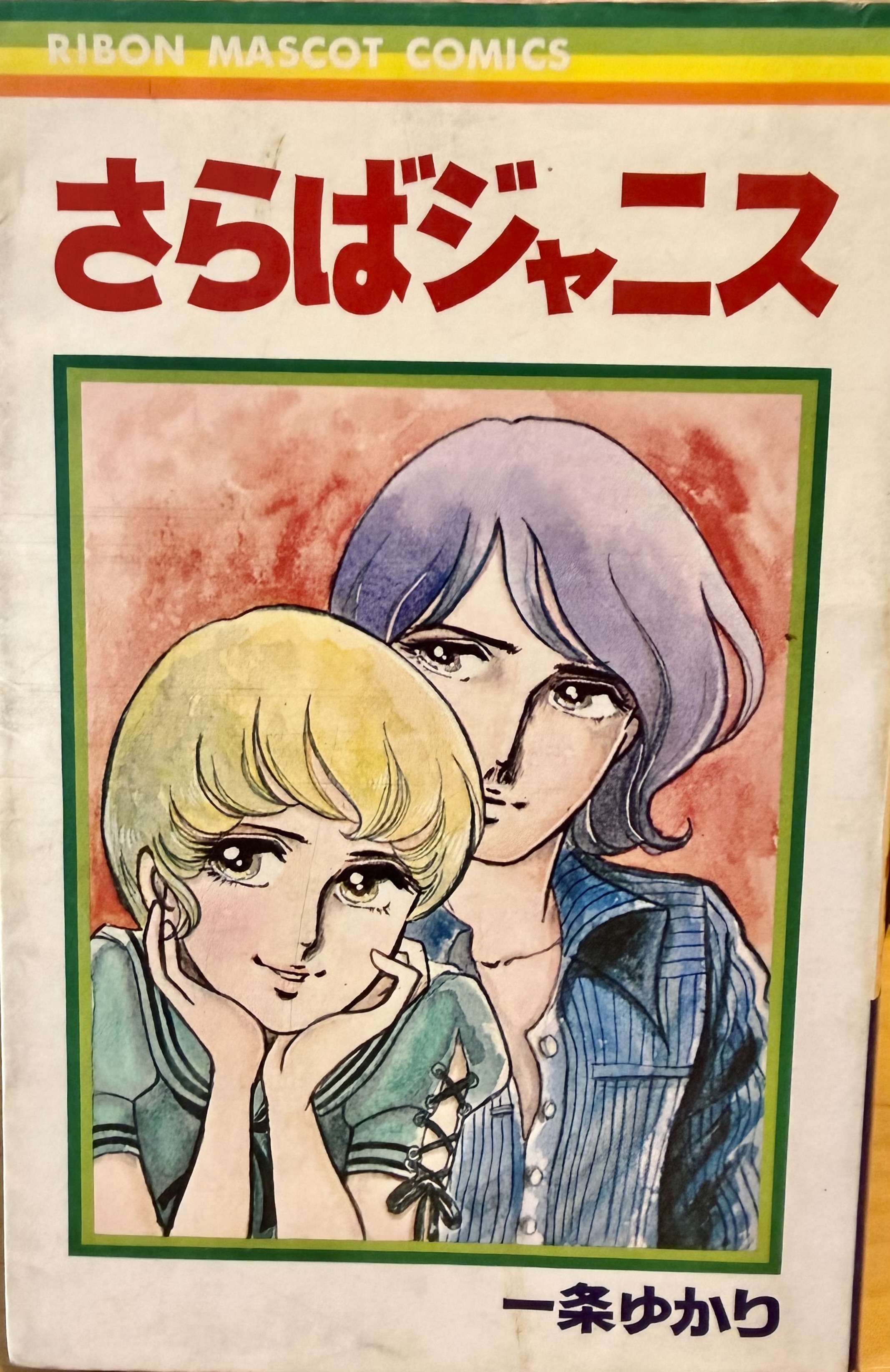
Farewell, Janis (さらばジャニス / Saraba janisu), by Yukari Ichijo, Shueisha (Ribon Mascot Comics), 202 pages. Serialized in Ribon magazine and compiled in one volume in 1972. You can read an excerpt here. [Manga Updates]

“Janis discovers a new way of life at a school with a free-spirited atmosphere! Mr. Farrow, a traveler, is dissatisfied with his son Janis’s feminine nature and subjects him to a harsh, Spartan upbringing. However, after reading a letter left by his late mother expressing her wish for him to “live freely,” Janis resolves to leave home… A unique romantic story about a beautiful boy with a girl’s heart.” (From Amazon)

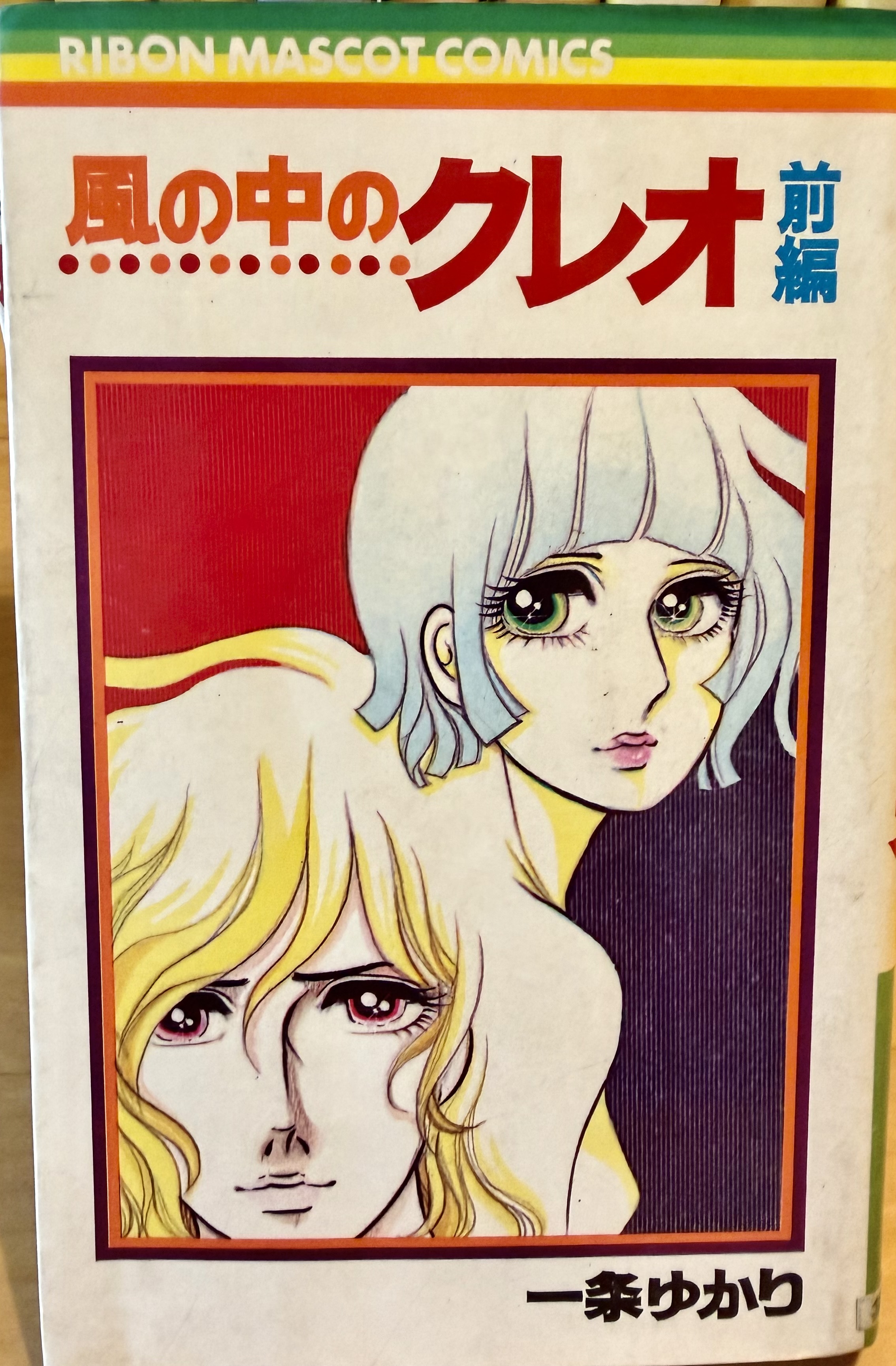
Cleo in the Wind: Part 1-2 (風の中のクレオ / Kaze no naka no Kureo), by Yukari Ichijo, Shueisha (Ribon Mascot Comics). Serialized in Ribon magazine (Aug. ’70 – Feb. ’71) and compiled in two volume in 1971. You can see an extract here. [Amazon • Mangapedia • Manga Updates]

“What is the shocking fate of love between young Cleo and Belle? Velvet (commonly known as Belle), who attends high school, is curious about Cleo’s existence. Cleo is popular with the girls, but he is also insufferable. Belle considers using him as the model for a novel, but… Part one of a dramatic love story about Belle falling for a naive young man. [Vol. 1 also includes the short stories: Twenty Days of Love / Poem of the Wind]” (From Shueisha)

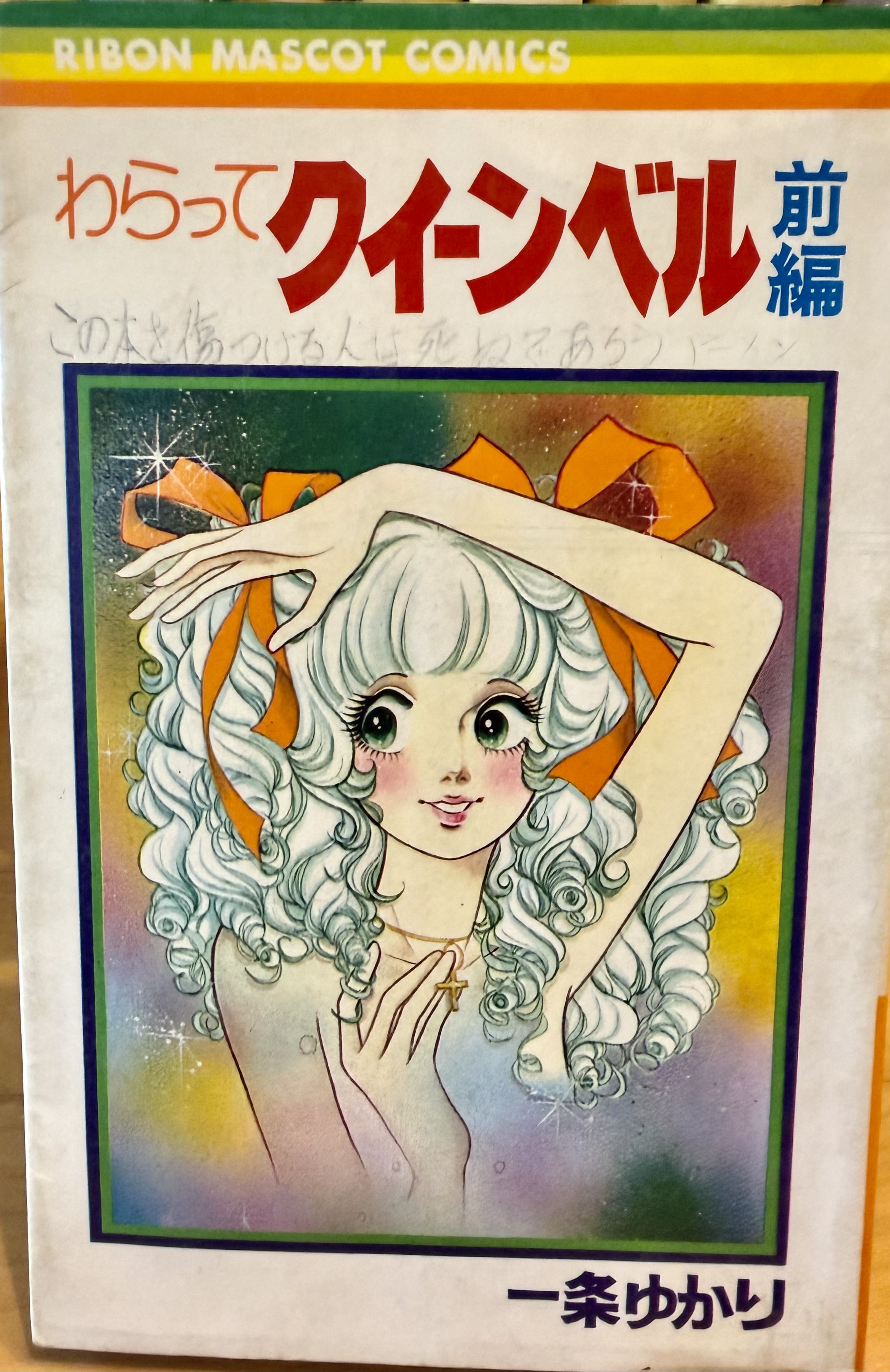
Smile, Queen Bell Part 1-2 (わらってクイーンベル / Waratte kuinberu), by Yukari Ichijo, Shueisha (Ribon Mascot Comics). Serialized in Ribon magazine (April to September 1973) and compiled in two volume in 1973. You can see an extract here. [Amazon • Mangapedia • Manga Updates]

“Queen Bell grew up without knowing her father and lost her mother at a young age. Queen, who was living in a boarding school in Switzerland, receives news that her father has passed away. Queen, confused, visits England and learns that she is the only daughter of a millionaire, but then a mysterious duo appears…!?” (From Amazon)

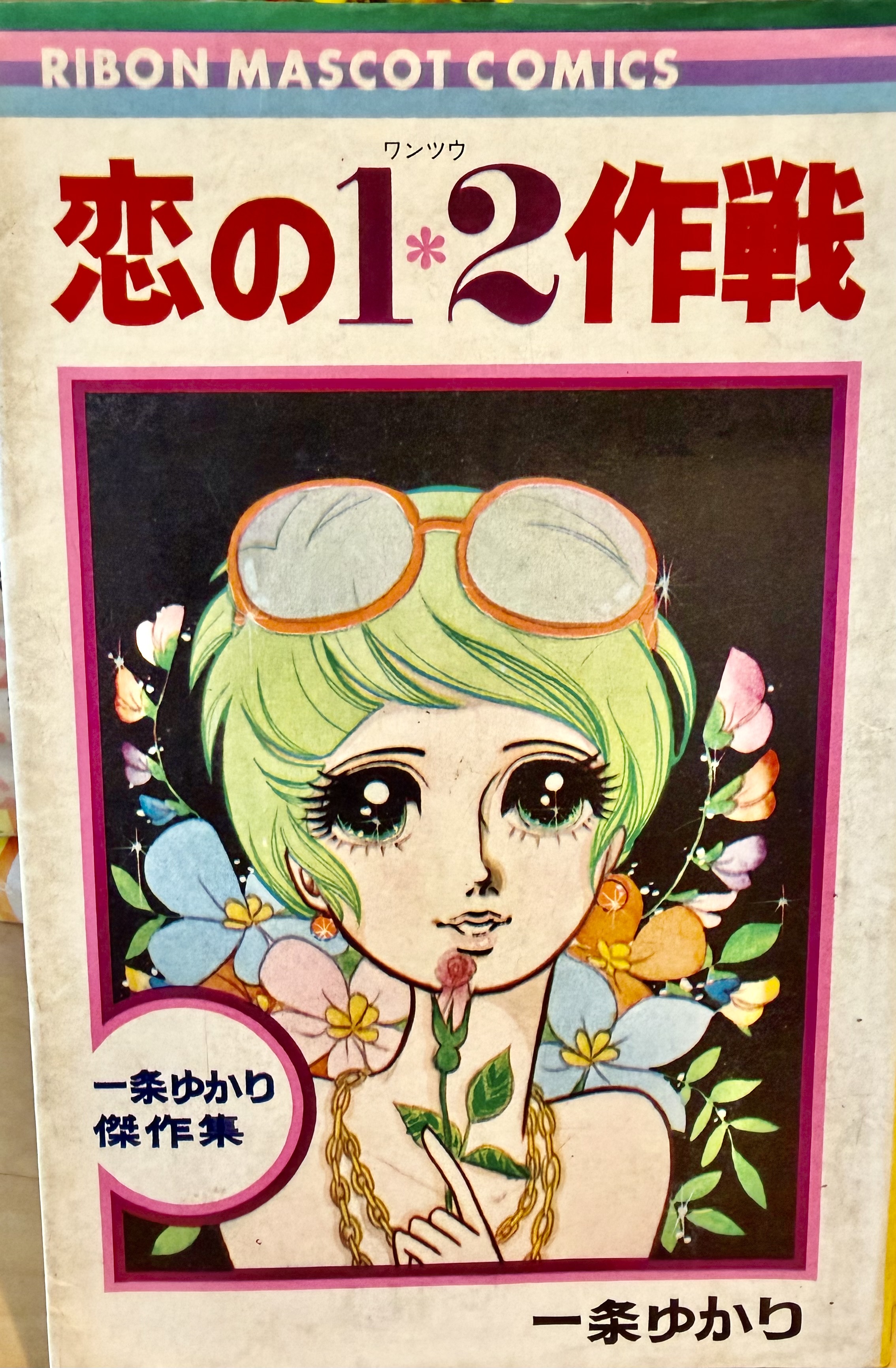
Love Strategy One-two (ワンツウ 恋の1•2の作戦 / Koi no 1•2 no sakusen), Yukari Ichijo Masterpiece Collection, Shueisha (Ribon Mascot Comics). Serialized in Ribon magazine (in the new year special issue of 1970) and compiled in one volume in August 1970. You can see an extract here. [Amazon • Manga Updates]

“Brothers and sisters who are neighbors… Who is in love with whom? College students Jean and Pierre get a failing grade and end up studying with their younger brothers Henri and Jam at a relative’s house in a rural town. However, there were wonderful sisters living in the house next door, and the boys’ hearts were disturbed! A neighborhood romantic comedy with an unexpected twist!” (From Amazon)

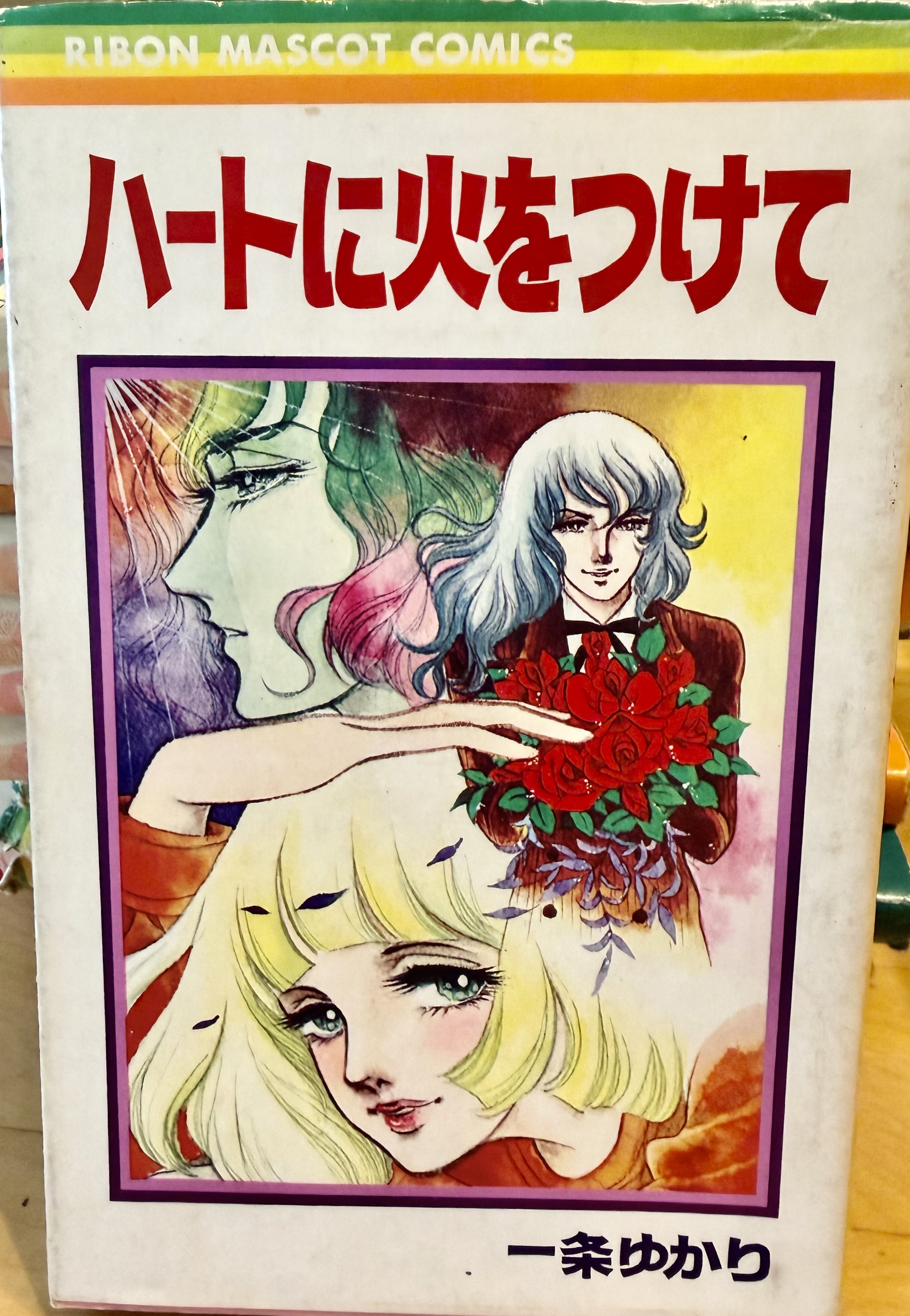
Light a fire in my heart (ハートに火をつけて / Hāto ni hi o tsukete), by Yukari Ichijo, Shueisha (Ribon Mascot Comics). Serialized in Ribon magazine and compiled in one volume in 1973. You can see an extract here. [Amazon • Manga Updates]

“A flame of love ignited in a world of glamour! During winter break, Josée—whose older sister is the actress Cécile Donahue—meets Gillan, the older brother of her best friend Angela, at a club. However, Gillan discovers that Cécile is actually Josée’s mother… A stylish romance filled with the games of love. [Also includes: Winter in Shellfield / Ami… A Male Friend]” (From Amazon)

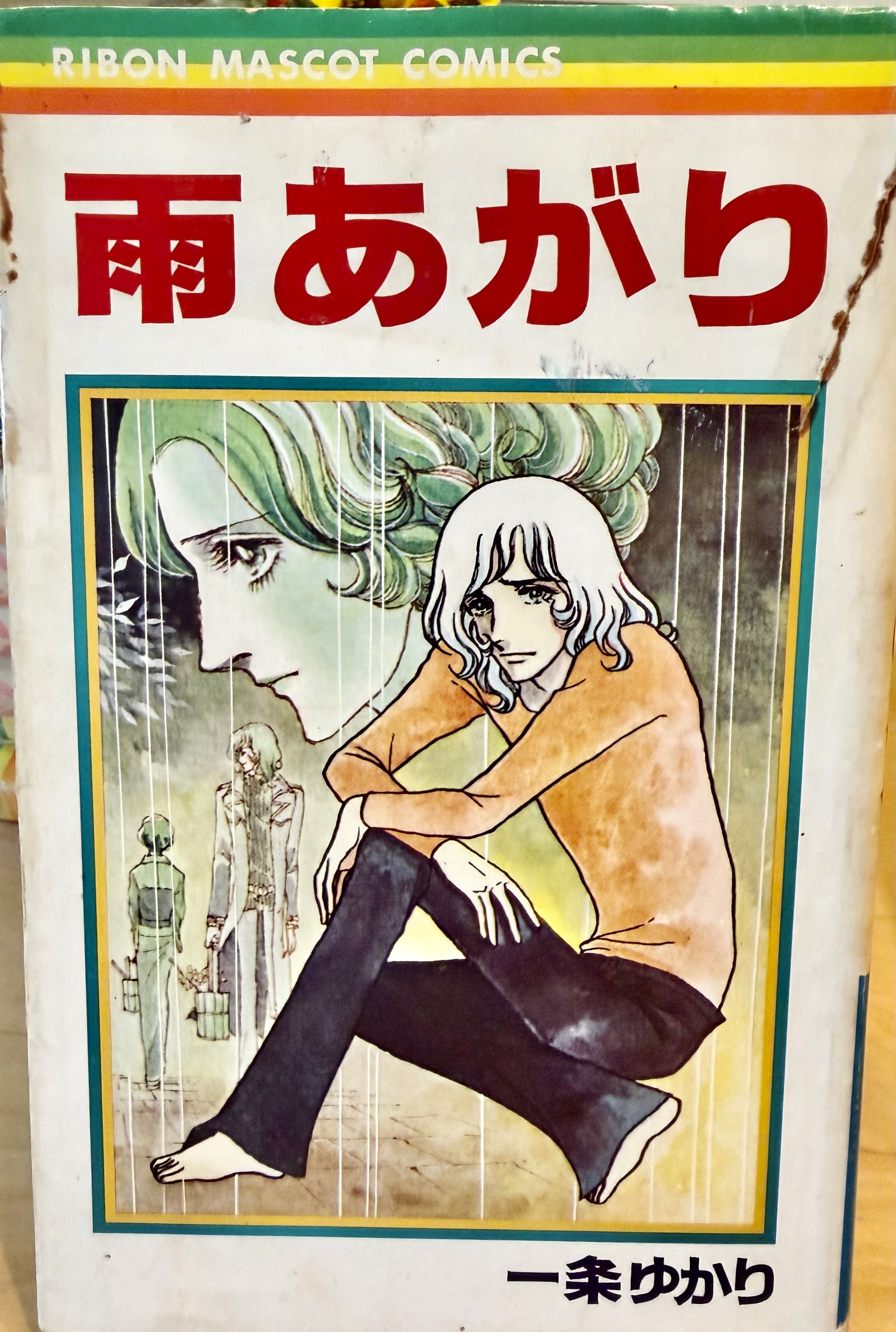
After the Rain (雨あがり / Ame agari), by Yukari Ichijo, Shueisha (Ribon Mascot Comics). Serialized in Ribon magazine and compiled in one volume in 1971. You can see an extract here. [Amazon • Manga Updates]

“Akihiko, a college student, is captivated by the beauty of an older woman he meets while visiting the grave of his deceased mother. However, that night, he was told by his father that he wanted to “introduce someone whom he was thinking of marrying” and that was exactly the woman he met during the day. It is a work that depicts Akihiko’s love with nowhere to go, who suffers from his feelings for a woman who has become a young mother-in-law.” (From AI Overview)

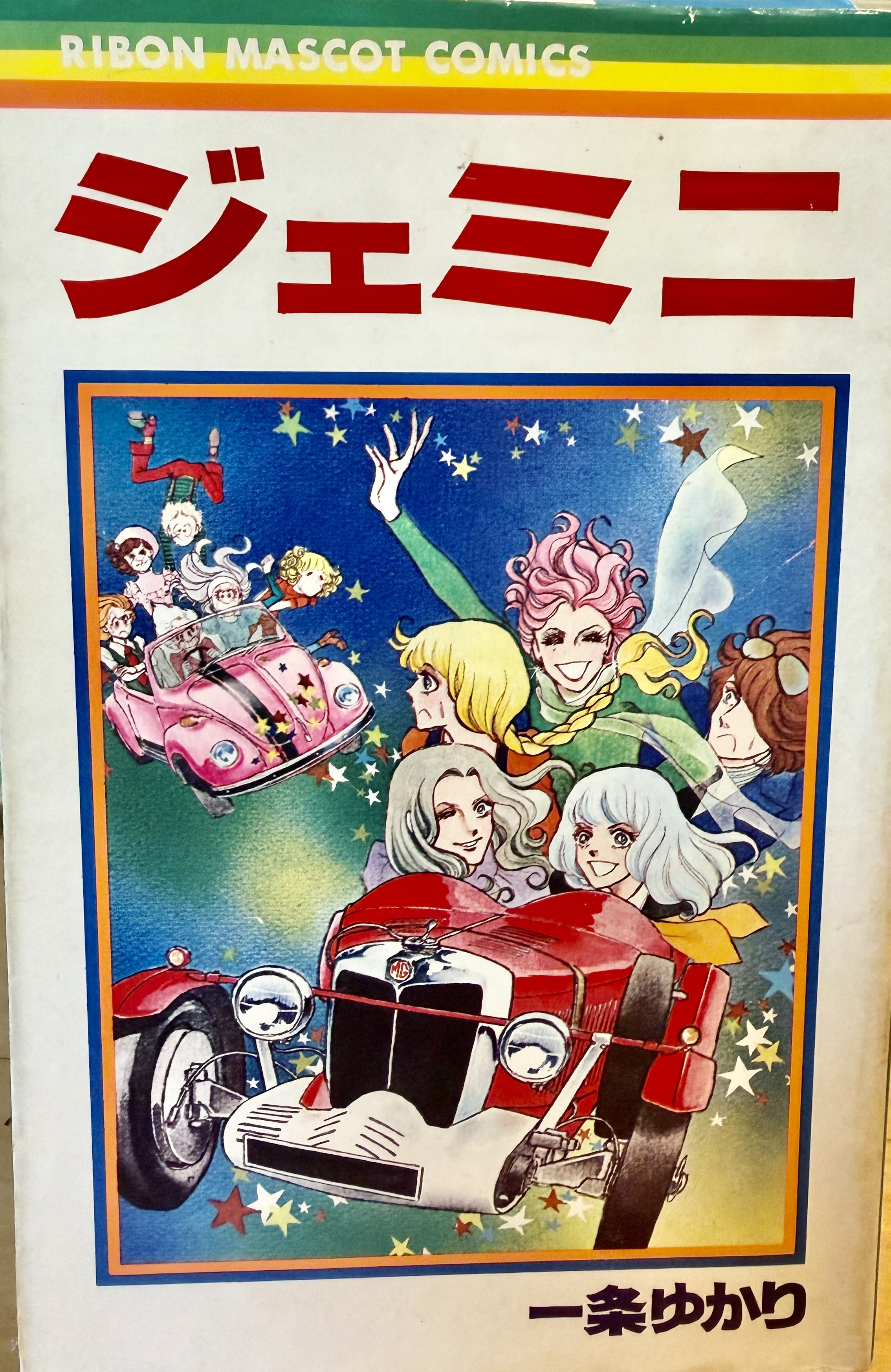
Gemini (ジェミニ), by Yukari Ichijo, Shueisha (Ribon Mascot Comics). Serialized in Ribon magazine (April ’75 issue) and compiled in one volume in December 1975. You can see an extract here. [Amazon • Manga Updates]

“What will be the fate of the skinny girl who lives in the mansion of her beautiful brothers? Gemini is a poor female student who is busy working part-time. One day, she gets into a car accident at school, and her life changes drastically when the driver turns out to be Shelfy, the girl’s idol! A pure love story of a girl who loves cars.”

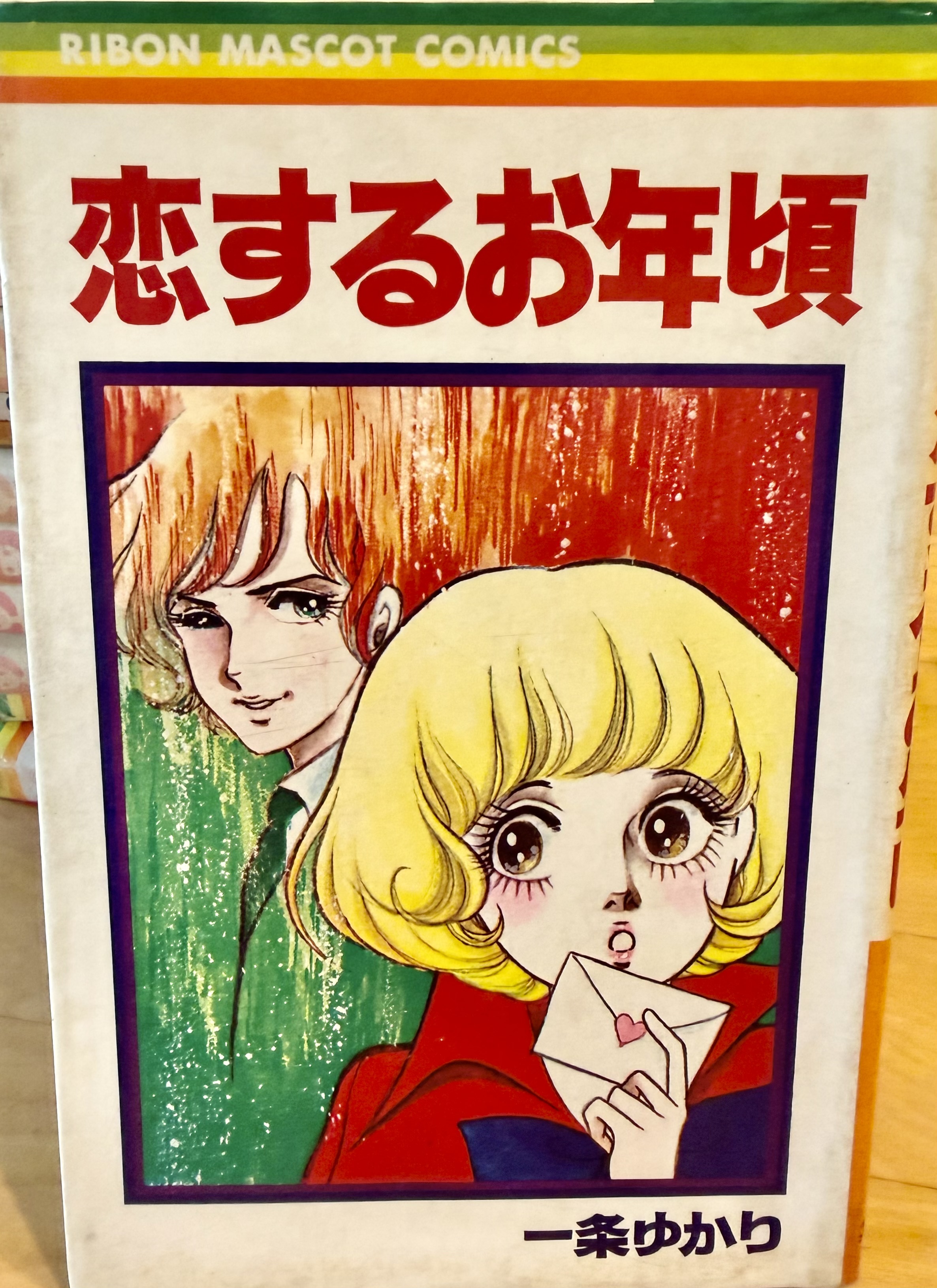
The Age of Falling in Love (恋するお年頃 / Koisuru o toshigoro), by Yukari Ichijo, Shueisha (Ribon Mascot Comics). Serialized in Ribon magazine (Jan. & Feb. ’71 issues) and compiled in one volume in 1973. You can see an extract here. [Amazon • Manga Updates]

“School love situation between an innocent girl and a slightly bad boy. 16-year-old Hoshi Ainoko has a crush on her delinquent classmate Jun Hirose, but does he like her best friend Mana? One day, Noko helps Hirose-kun sneak out of class and lies to their teacher… Youthful graffiti full of love troubles.” (From Amazon)

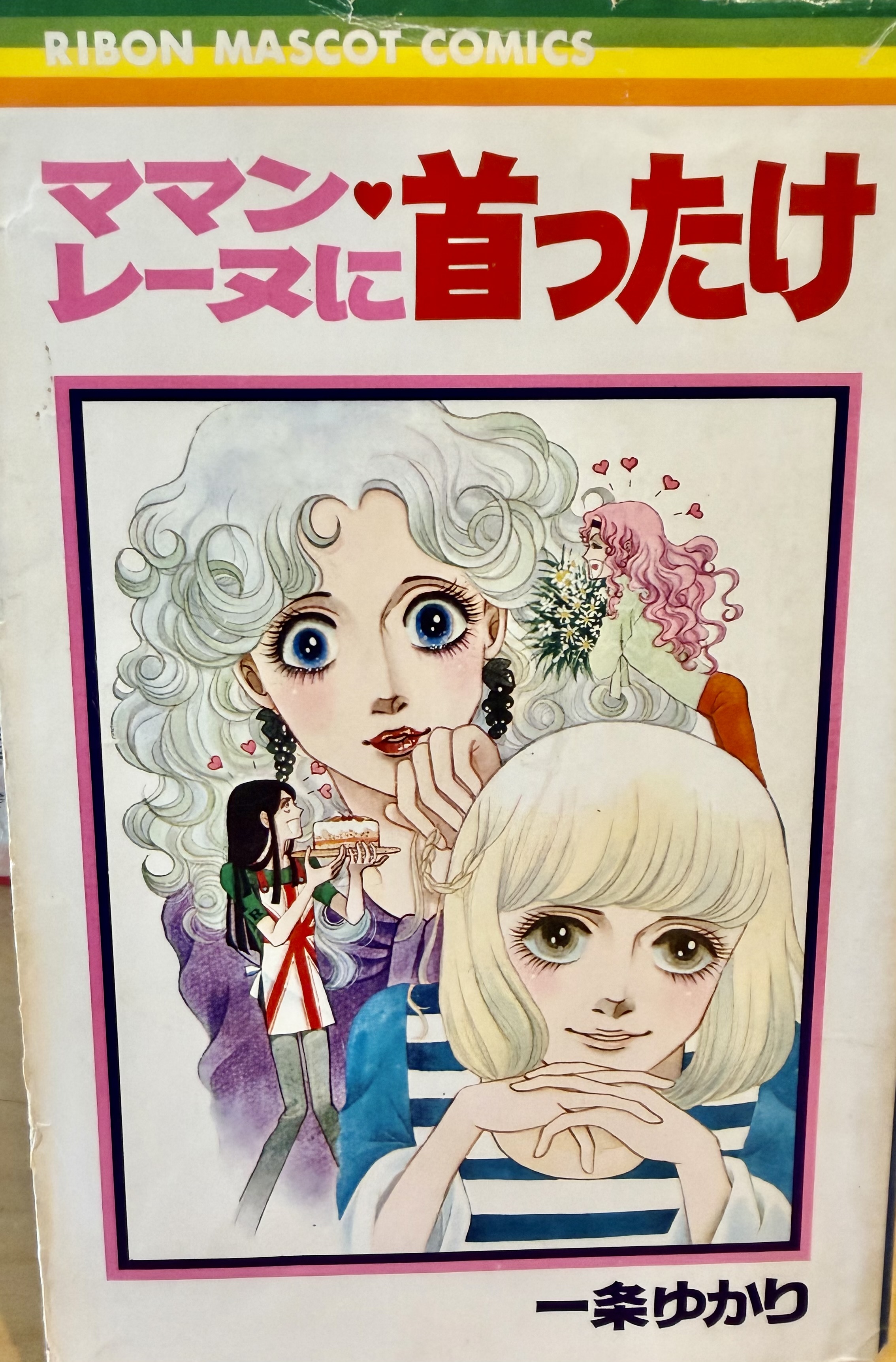
Smitten with Maman Reine (ママン・レーヌに首ったけ / Maman Reenu ni Kubittake), by Yukari Ichijo, Shueisha (Ribon Mascot Comics). Serialized in Margaret magazine (#33 1975) and compiled in one volume in 1976. You can see an extract here. [Amazon • Manga Updates]

“All boys, including superstars and friends, are in love with Maman!? Matthew’s Maman is not good at housework. After the old maid left, there was chaos in the house. Her son Matthew is one of the most popular boys at school, but there are rumors that he’s his mother’s boy! The definitive romantic comedy about unique lovers!”

The next four volumes are by Ryoko Yamagishi (山岸凉子). She’s a member of the Year 24 Group, a movement of female mangaka, all born around the same year (Showa 24 or 1949), that contributed in the 1970s to the innovative development of shōjo manga. None of her works has been translated, but she is mostly known for Shiroi Heya no Futari (1971, about a romance in an all-girls boarding school in France), Hi Izuru Tokoro no Tenshi (1980-84, about Prince Shōtoku who spread Buddhism in the 6th century, won the 1983 Kodansha Manga Award), and Maihime Terpsichora (2000-06, about the harsh reality behind young ballet dancers hopeful, won the Tezuka Osamu Cultural Prize in 2005) and…

Arabesque vol 1-4 (アラベスク), by Ryoko Yamagishi, Shueisha (Ribon Mascot Comics). Serialized in Ribon magazine (Oct. ’71 to Apr. ’73) and compiled in four volumes in 1972-74. An extract is available here. [Amazon • Manga Updates • Wikipedia JP] 

A story about Russian ballet. “Nonna Petrova, a tall, sixteen-year-old ballet student in Kiev, is unaware of her unique balletic brilliance. Having low self-esteem due to the unwanted comparison with her talented older sister, Nonna is “discovered” by leading ballet dancer Yuri Mironov, and, under his guidance, is led to stardom.” (From Manga Updates)

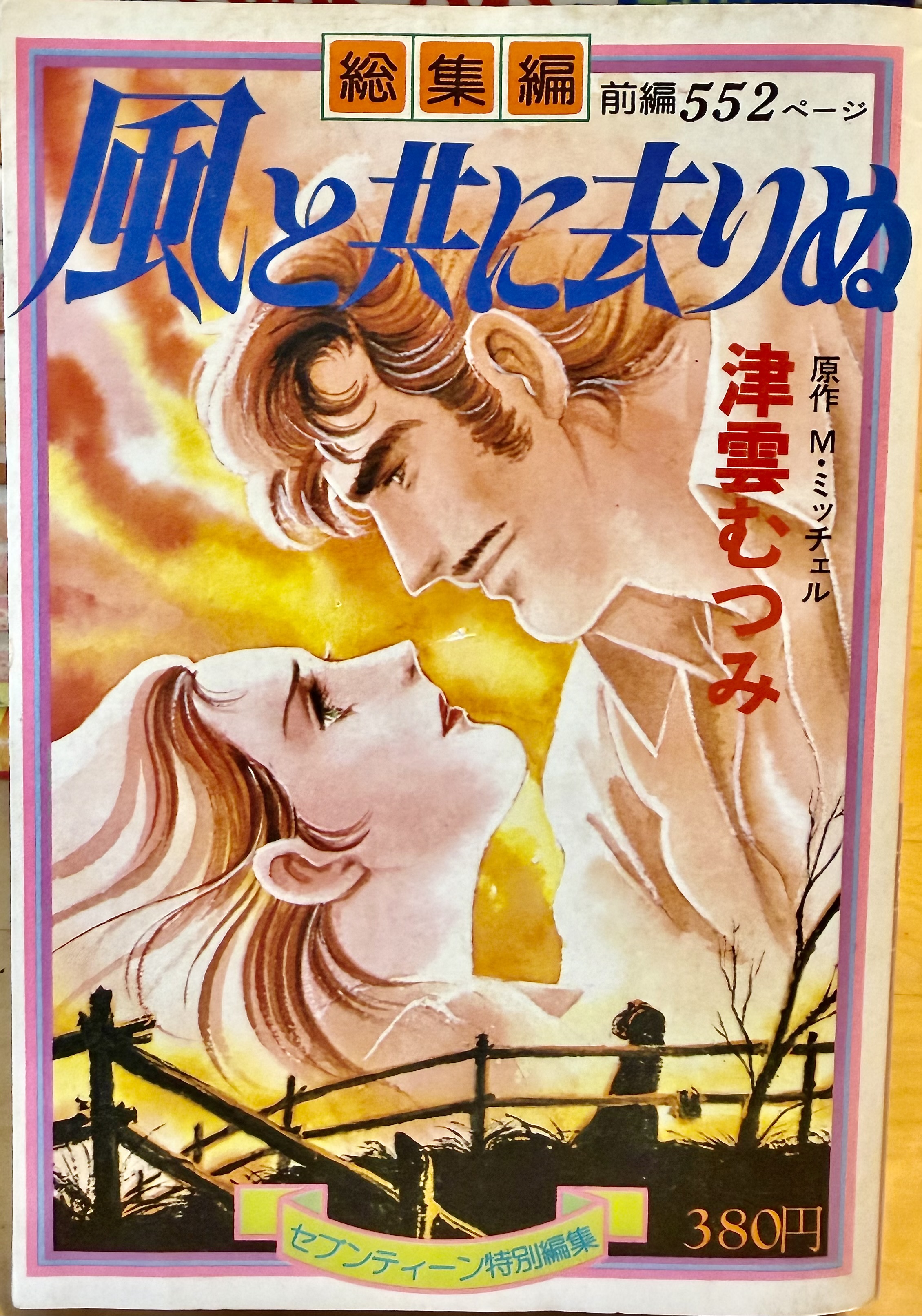
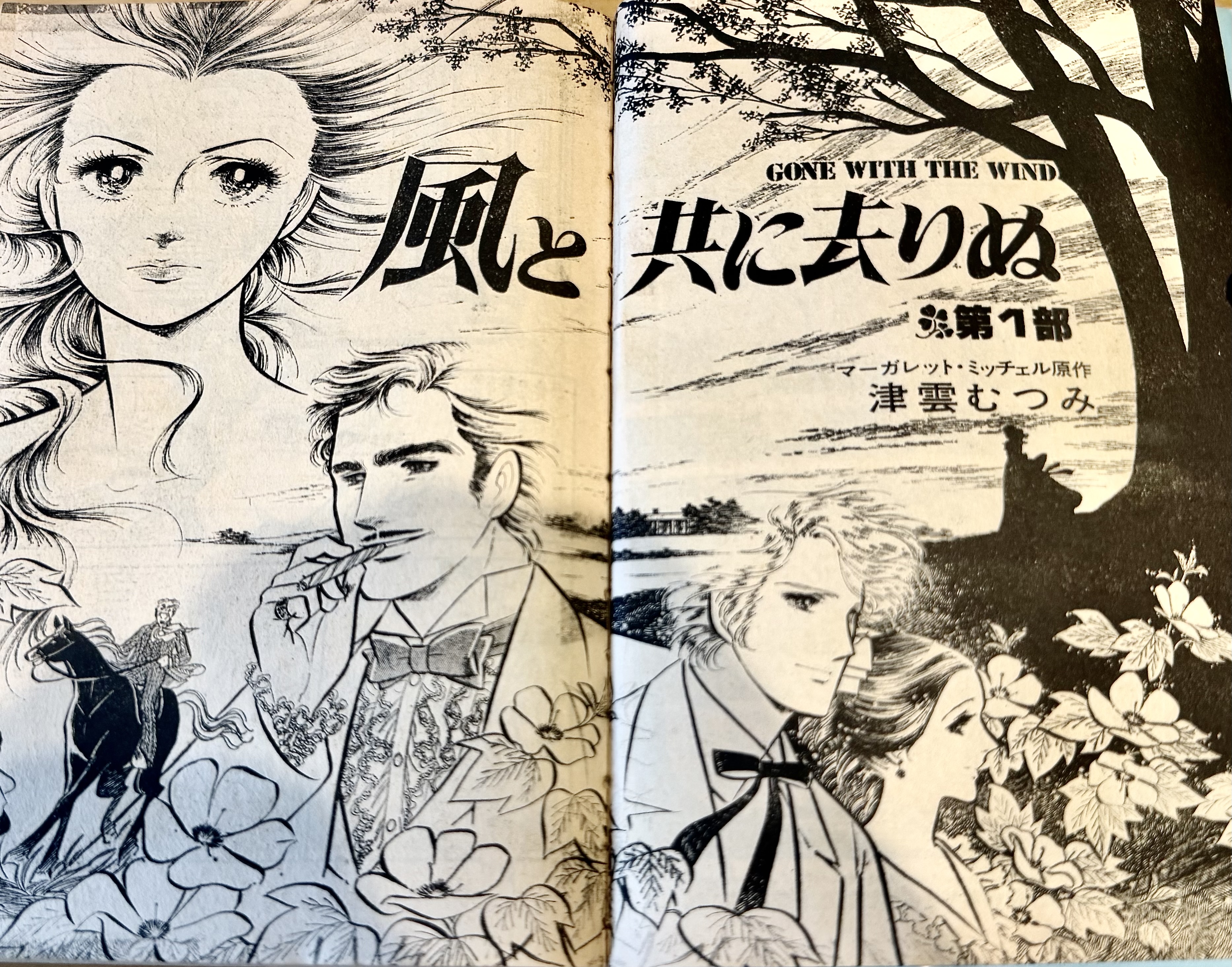
The last volume is by Mutsumi Tsukumo (津雲むつみ). She’s mainly known for Colorful Time and From the End of Darkness (which both won the Japan Cartoonists Association Award in 1976 and 1993). Several of her titles were also adapted into TV drama (“I’m a man!”, “Wind Ring Dance“, “Hanai Yumei” and “Let me hear the words of love“). She died of lung cancer in 2017. This manga is a faithful adaptation of the famous 1936 Margaret Mitchell’s novel, Gone with the Wind (which is one of my wife favourite story and movie).

Gone with the Wind, Part 1 (風と共に去りぬ第1部 / Kaze to Tomo ni Sarinu), by Mutsumi Tsukumo, Based on the work by Margaret Mitchell. Seventeen Special Limited Edition, 552 pages, 380 yen. It was serialized in Shueisha Weekly Seventeen between 1977 and 1979 and compiled in two volumes in 1978-1980. [Manga Updates]

“Tara is a town in the southern United States just before the Civil War. Scarlett, the daughter of a squire, is proud and beautiful, and a socialite who captivates any man. However, Ashle, whom she loved, ends up marrying Melanie… Mutsumi Tsugumo vividly depicts this timeless masterpiece. An epic story of intertwined love and hate begins――!!” (From Amazon)

Anime & manga update [002.026.249]

Japanese culture update 

NHK World Japan documentary series continue to be a great source of information about Japanese culture, history and life — including popular culture like anime and manga. Here are some interesting Video On Demand (VOD) that I have recently noticed.

Again, not much news about anime & manga this week, but there is always something interesting about Japanese culture. Now, let’s talk about food. 

In North America, we don’t think much about the use of fermentation to produce food, even though we use it constantly to process beer, bread, cheese, kombucha, wine, yogurt, etc. However, in Japan, they take this process very seriously. Much more of their food uses fermentation (for example in gyoshō, miso, nattō, sake, shōchū, shōyu, etc.).  It was long used not only to preserve food, but also to enhanced its flavour. The funny thing is that I discovered this fact while watching an anime: Moyashimon (about which my wife and I wrote a very interesting article in PA #96: 52-55; the series is available on Crunshyroll; it is based on a manga and has also spawn a live-action TV drama series).

I was reminded of all this while watching an episode of the NHK World Japan documentary series Trails to Oishii Tokyo:

Japan’s Fermented Foods Go Global

“More than just a longer shelf life, Japan’s fermented foods offer enhanced flavor and nutrition. Unlock secrets to the culture’s longevity, starting with koji mold cultivation that dates back 600 years. Get an inside look at how the foods are taking the world by storm as we join a miso workshop in Paris and view the largest sake brewery in the U.S. Introducing Japanese fermentation—the foundation of the island nation’s renowned cuisine.” This episode aired on August 19, 2023 and will be available as VOD only until September 11, 2026. Better hurry watching it !

However, the Trails to Oishii Tokyo series offers many more interesting food documentaries:

Shiso

“Shiso: a Japanese herb gaining fans worldwide. Refreshing shiso is key in Japanese cuisine, which features a lot of raw fish. See how shiso’s leaves, flowers and seeds are all used in oishii dishes.” This episode was broadcast on August 28, 2024 and is available as VOD until September 1, 2027.

Japanese Frozen Foods

“Japan is now a frozen foods powerhouse. Cutting-edge technology and producers’ passion keep the hits coming. Dive into the world of Japanese frozen foods that are turning the world upside down.” This episode was broadcast on August 7, 2026  and is available as VOD until August 7, 2027.

Gourmet Canned Food?!

“Canned food is no longer just for storage or emergencies — it has become fine cuisine. Join us in this special episode as we explore the frontlines of Japan’s uniquely evolved canning industry.” This episode was broadcast on October 17, 2025 and is available as VOD until May 15, 2027.

Some more news from Anime News Network:

Revue de ‘zines [002.026.248]

Revue de ‘zines

Je continue (tant bien que mal) mon perpétuel rattrapage sur les magazines et autres ‘zines pertinents dans mon champ d’intérêt… Pour vous éviter le souci de courir après l’information, j’en épluche donc le contenu pour vous. C’est plein de bonnes suggestions de lectures… (Faute de temps et d’énergie, j’ai limité ou omis les hyperliens. Si vous voulez en savoir plus sur un auteur, un titre ou un sujet, vous pouvez consulter par vous-même soit Google ou Wikipedia!)

Animeland #255 (Juil.-Sept. 2026)

Ce numéro nous offre un dossier sur Naruto: le manga, portrait de Masashi Kishimoto (mangaka), entrevue avec Chistel Hoolans (DG) pour les 30 ans de Kana, Konoha Land, la génération Boruto, les spin-offs, portrait de Seishi Kishimoto (mangaka, frère jumeau de Masashi Kishimoto), portrait et entrevue de Hiroaki Samura (L’Habitant de l’infini), les versions anime, la version française, entrevue avec Christophe Hespel & Fabienne Loriaux (voix de doublage), et le jeu de plateau Naruto Shippuden Battle. Le numéro se complète avec un dossier Ninja: entrevue avec Pierre-François Souyri (historien du Japon médiéval), les autres oeuvres de shinobi, et entrevue avec Masakazu Hirayama & Yuji Nakao (jeu video Ninja Gaiden 4).

Le numéro se conclut sur une série de chroniques: Wish List (nous offre une sélection de mangas, anime et goodies), et Aparté (rencontres avec Gu Joe & Mu Tou [réalisateurs de La Légende de Hei], Baku Kinoshita [réalisateur du Dernier souffle d’un Yakuza], Hagane, Jules Kollisch & Izu [Kraken Mare] et Pomodorosa [illustrateur, designer et musicien]).

À lire absolument pour tous fans d’anime.

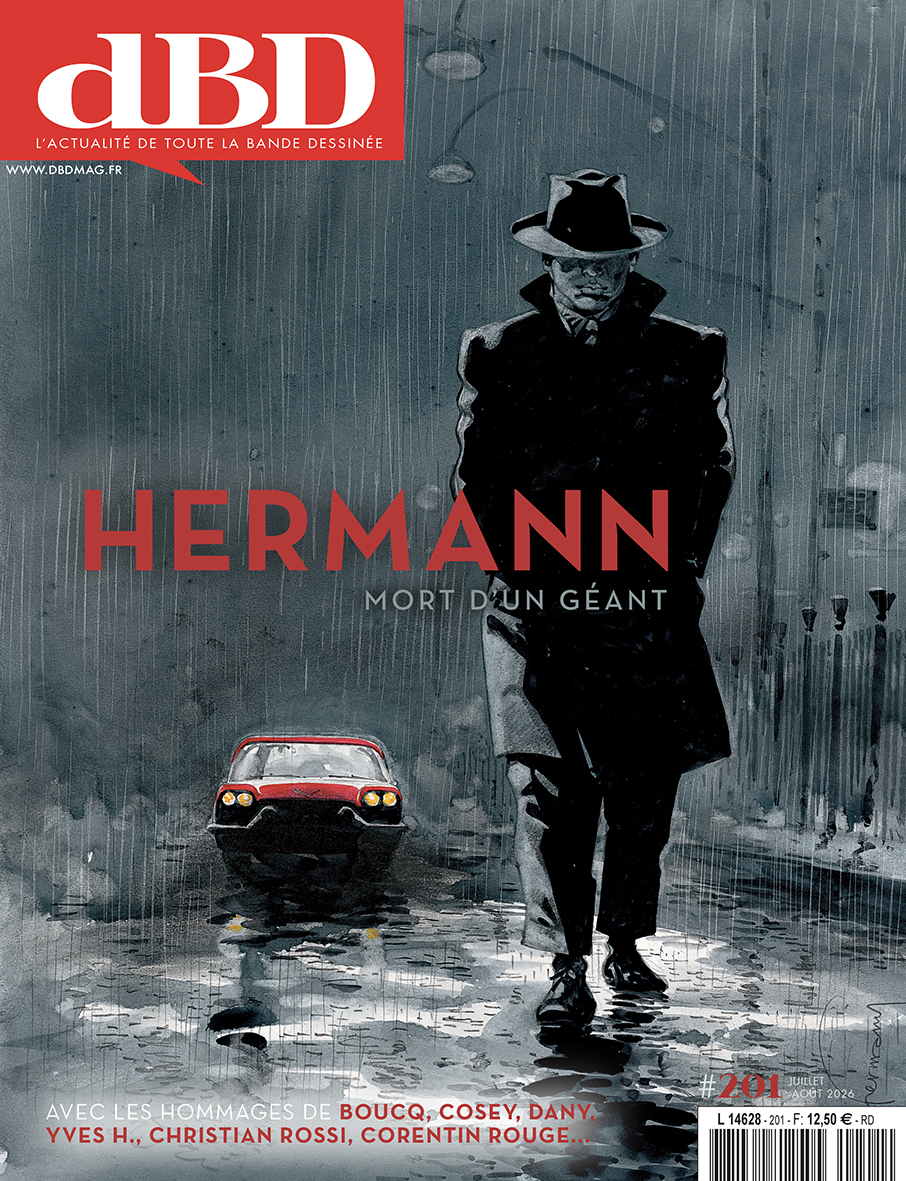
dBD #201 (Juil.-Août 2026)

Dans le cahier actualités on mentionne les parutions du dernier volume de Vinland Saga (le #29) accompagné d’un coffret de collection, de À jamais sans ce jardin par Shizuka Nahano et de Ranpo Amnesia par Shintaro Kago (tous deux chez IMHO). On retrouve également un article rendant hommage à Marjane Satrapi, décédée en juin dernier, une présentation de l’adaptation en animation par Phuong Mai Nguyen de la BD In Waves, par AJ Dingo, parue chez Rue de Sèvres et un article sur le nouveau label de Dargaud: Astrolab.

À la une de ce numéro, on retrouve une présentation sur Hermann, décédé en mars dernier, avec des entrevues, pastiches et hommages par Bernard Cosey, Yves H., Boucq, Dany, Corentin Rouge, Henri Filippini, et Christian Rossi. Le numéro se poursuit avec des entrevues de David Vandermeulen (sur Fritz Haber T.5, chez Delcourt), Christian Rossi (sur Comanche Trail, chez Casterman), Jesus Alonso Iglesias (sur Dortmunder, avec Headline, chez Dupuis), Xavier Houssin (sur  Xaxaxa Illustrations, chez Éd. Caurette), et Joël Parnotte (sur Cauchon… ou l’homme qui tua Jeanne d’Arc, avec Dorison & Delahaye, chez Dargaud).

Et finalement quelques rubriques : dans le Cahier Critique on commente des parutions récentes (je note La grande panique de Diletta par Osamu Tezuka chez FLBLB, Les années bleues T.1 par Ito chez Sakka, The Marshal King T.1 par Boichi chez Doki-Doki, et Kamakura Bakeneko Club par Daisuke Igarashi chez Moonlight), “Ça vaut le détour” commente quelques titres supplémentaires, “Le Territoire des Mangas” nous présente sur deux pages les nouveautés du genre (Hotel Inhumans par Ao Tajima chez Kurokawa, Sukima par Gao Yan chez Casterman, Alice au-delà des étoiles T.1 par Kiko Urino chez Glénat, Fans des sylvanian families T.1 par Kuko Okano chez Soleil, Le journal des chats par Junji Ito chez Delcourt/Tonkam), puis L’Exposition du mois (“Cling! LA BD parle cash”, à la Monnaie de Paris), L’Art de la couverture (Hercule Poirot: Le meurtre de Roger Ackroyd, par Pascal Bresson & Alberto Taracido, chez Paquet) et Humeur.

Une lecture indispensable pour se tenir au courant des nouveautés en BD.

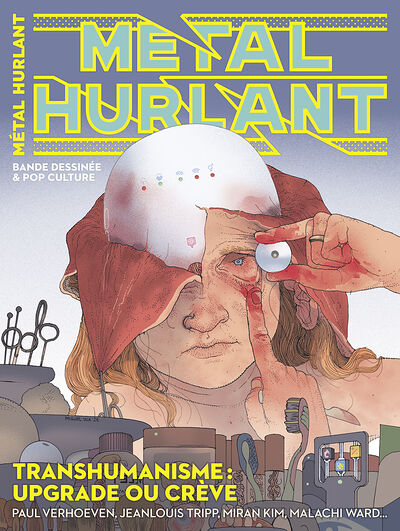
Métal Hurlant N° 18 (Février 2026)

Ce numéro regroupe 25 courts récits et 8 articles (que je n’ai parcourue qu’en diagonale) sur le thème de “Transhumanisme: Upgrade ou crève“. Comme pour les numéros que j’ai commentés précédemment, si souvent les styles (extrêmement variés) des artistes n’étaient pas toujours de mon goût, j’ai quand même trouvé que la plupart des courts récits méritait d’être lus. J’ai mis en caractères gras les titres les plus intéressants (narrativement et/ou graphiquement)…

Ce numéro nous présente donc les récits suivants: “Aventure Labyrinthique” (Lola Owl, Yang Weilin & Maribel Conejero, 17 pg), ”Retour à la normale” (Branko Jelinek, 11 pg), ”Il faut qu’on parle…” (Andrès Garrido Martin, 7 pg, B&W), ”Période de grâce” (Kevin Sullivan & Simon Leclerc, 9 pg), ”Hacks” (Cole Sanders & Jonathan Wayshak, 9 pg), ”Mimmo” (Alessio Fioriniello, 10 pg), ”Déchets” (Carlos Dearmas, 9 pg), ”Cyber Alpage” (Thomas Bidault, 7 pg), ”Chair à Canon” (Tim Adam & Alessandro Saiu, 7 pg), ”Le cerveau de dieu” (Facundo Nehuén Lopez, 9 pg), ”La froide étreinte” (Miran Kim, 7 pg), ”Upgrade” (Valentin Ramon, 9 pg), ”Régression” (Jean-Luc Cornette & Sagar, 7 pg), ”Le raccourci” (Nikola Pisarev, 11 pg), ”Respawn” (Thibaud de Rochebrune, 9 pg), ”Le trou” (Arthur Wong, 7pg), ”Nihilgene” (Jacques Després, 7 pg, B&W), ”Le sourire de Jim” (John Pham, 8 pg), ”Le champ des possibles” (Eldiablo & Constantin Zamfiresco, 9 pg), ”Entre chien et loup” (Alex Ristorcelli, 11 pg), ”Xenia” (Malachi Ward, 9 pg), ”Love Story” (JeanLouis Tripp, 9 pg), ”Projet ‘Immortel’” (Tony Cheng, 7pg), ”Ultime Assaut” (R.L. Black, 9 pg),et ”Lumière” (Adrien Mangoldf & David Ferracci, 9 pg).

Inégal, mais une bonne lecture quand même.

Métal Hurlant N° 18-bis (Avril 2026)

Enfin un numéro “Vintage” comme il s’en faisait au début de l’anthologie, présentant des récits classique publiés dans d’anciens numéros de la revue Métal Hurlant. Ce numéro regroupe 24 courts récits et 11 articles (que je n’ai parcourue qu’en diagonale, sauf pour l’entrevue avec Gou Tanabe) sur le thème de “1970-1990: H.P. Lovecraft & autres histoires terrifiantes”. Comme pour les numéros que j’ai commentés précédemment, si souvent les styles (extrêmement variés) des artistes n’étaient pas toujours de mon goût, j’ai quand même trouvé que la plupart des courts récits méritait d’être lus. J’ai mis en caractères gras les titres les plus intéressants (narrativement et/ou graphiquement)…

Ce numéro nous présente donc les récits suivants: ”Le bol maudit” (Enki Bilal, 8 pg), ”À tire d’aile” (Enki Bilal, 8 pg), ”Ophiuchus” (Enki Bilal, 8 pg), ”La chose à venir” (Enki Bilal, 8 pg), ”Excursion nocturne…” (Frank Margerin, 4 pg, B&W), ”Ktulu” (Moebius, 5 pg), ”Approche sur Centauri” (Philippe Druillet & Moebius, 6 pg), ”Mon petit frère, André” (Philippe Foerster, 5 pg, B&W), ”Le chef-d’oeuvre de Dewsbury” (Yves Chaland & Luc Cornillon, 4 pg), ”L’énigme du mystérieux puits secret” (Yves Chaland & Luc Cornillon, 4 pg), ”Les 2 vies de Basil Wolverton” (Yves Chaland, 2 pg, B&W), “Barzai le Sage” (Marc Caro, 8 pg, B&W), ”L’Homme de Black Hole” (Serge Clerc, 4 pg, B&W), ”Fièvre” (Jean-Michel Nicollet, 8 pg), ”H.P.L.” (Jean-Michel Nicollet, 3 pg), ”Fièvres” (Halmos, 6 pg, B&W), ”Le Roi des mouches” (Rodolphe & Loisel, 7 pg, B&W), ”L’abomination de Dunwich” (Norberto Buscaglia & Alberto Breccia, 15 pg, B&W, tiens plus de l’histoire illustrée que de la BD), ”Le monstre sur le seuil” (Norberto Buscaglia & Alberto Breccia, 11 pg, B&W, tiens plus de l’histoire illustrée que de la BD), ”Necronomicon” (Philippe Druillet, 11 pg, plutôt des illustrations que de la BD), ”Mandragore” (Caza, 12 pg), ”Mausolée” (Frédéric Bézian, 10 pg, B&W), ”L’appel de Cthulhu” (Esteban Maroto, 32 pg, B&W), et ”Le Langage des chats” (Nicole Claveloux, 2 pg, B&W).

Un incontournable pour les amateurs du Métal Hurlant vintage et/ou de Lovecraft.

Pour plus d’Infos: [ Goodreads • Humanos • Nelligan • Wikipedia ]

Omoi

I have recently discovered Omoi (www.omoi.com) which is a digital manga service that makes it easy to read hundreds of legally licensed manga series across a variety of genres and publishers, for one low price. It distributes manga from English manga publishers like Kodansha and J-Novel Club, as well as exclusive series licensed directly from Japan. Fans can read manga on the Web, or with an iOS and Android app. Omoi pays royalties back to publishers based on readership data. 

When you register, the first fourteen days are free and the first chapter of each series is also usually free (with ads). More chapters are available with a Premium subscription ($4.99 US / mo) and the latest chapters of a series are generally unlocked “with a one-time payment” (each volume costing between  $7.99 and $19.99 or between $6.39 and $15.99 with a Premium subscription).

Here is what I think:

Pro:

  • Interesting way to sample titles
  • With the premium subscription it might seems like a good deal…

Con:

  • …however it seems impossible to read an entire series without paying extra. What’s the use to pay a monthly premium if you have to pay for the last volumes in the end ? Therefore, it looks like a bait and switch scam (which is minimally immoral and, in some places, illegal).
  • What’s the advantage to read in electronic format if the cost of a volume is roughly the same or just slightly less than a printed volume (considering that 60% of the cost of a printed volume is the distribution in stores which is not necessary with an electronic format) ?! It seems to me that the Japanese publisher are simply too greedy.
  • Some series are incomplete
  • No possibility to search by author

At first, I really thought that this was an interesting way of reading manga. However, I have nearly a thousand manga in my library and I paid for just a few of them. Most titles are press copies that I received in the days of Protoculture. And I am not planning on starting paying for manga now (anyway, most of the manga I read lately came from my local public library). So, I applied for press copies, but considering that my blog has only a small readership (between fifty and an hundred visits daily), I doubt I would get any.

Anyway, I don’t think it’s worth to pay so much for an electronic version of a manga (for which you can lose access at any moment, which is not the case for a physical book in my library), but with the fourteen-day trial and the premium subscription, it’s a great way to sample titles before committing to purchase a series (electronically or otherwise). 

In their catalog, I found just a few titles of interest (for me anyway):

  • Apollo’s Song, Osamu Tezuka (Kodansha) [Chap. 0 free with ads / Vol. $11.99]
  • Arte, Kei Ohkubo (Coamix) [Chap. 1 free with ads / Chap. 2-15 unlocked with Premium]
  • Ashita no Joe, Asao Takamori, Tetsuya Chiba (Kodansha)[Vol. $19.99 ea]
  • Ayako (Osamu Tezuka, to come later from Kodansha)
  • Battle Angel Alita, Yukito Kishiro (Kodansha)[Chap. 1 free with ads / Vol. $10.99 ea]
  • Battle Angel Alita: Last Order, Yukito Kishiro (Kodansha) [Chap. 1 free with ads / Vol. $19.99 ea]
  • Battle Angel Alita: Mars Chronicle, Yukito Kishiro (Kodansha) [Chap. 1 free with ads / Vol. $10.99 ea]
  • Battle Angel Alita: Holy Night and other stories, Yukito Kishiro (Kodansha) [Vol. $14.99]
  • Black Jack, Osamu Tezuka (Kodansha) [Chap. 1 Free with ads / Vol. $7.99 ea]
  • Beck, Harold Sakuishi (Kodansha) [Chap. 1 free with ads / Vol. $10.99 ea]
  • Blue Period, Tsubasa Yamaguchi (Kodansha) [Chap. 1 free with ads / Vol. $10.99 ea]
  • Buddha, Osamu Tezuka (Kodansha) [Chap. 1 Free with ads / Vol. $11.99]
  • Delinquent Detective: Sukeban Deka (available Fall 2026)
  • Descending stories, Haruko Kumota (Kodansha) [Chap. 1 free with ads / Vol. $12.99 ea]
  • Dororo, Osamu Tezuka (Kodansha) [Chap. 1 free with ads / Vol. $12.99]
  • Ghost in the shell: Stand Alone Complex, Shirow Masamune, Yu Kinutani (Kodansha) [Chap. 1-3 free with ads / Chap. 4-18 unlocked with Premium / Vol. 3-5: $10.99 ea]
  • Initial D, Shuichi Shigeno (Kodansha) [Chap. 1-3 free with ads / Chap. 4-305 unlocked with Premium / Vol. 25-48: $10.99 ea]
  • Le chevalier d’Eon, Tou Ubukata, Kiriko Yumeji (Kodansha) [Chap. 1 free with ads / Vol. $10.99 ea]
  • Manchuria Opium Squad, Tsukasa Monma, Shikako (Kodansha) [Chap. 1 free with ads / Vol. $10.99 ea]
  • Message to Adolf, Osamu Tezuka (Kodansha) [Chap. 1 Free with ads / Vol. $11.99 ea]
  • Mushishi, Yuki Urushibara (Kodansha) [Chap. 1-3 free with ads / Chap. 4-20 unlocked with Premium / Vol. 5-8: $10.99 ea]
  • MW, Osamu Tezuka (Kodansha) [Chap. 1 Premium / Vol. $11.99]
  • Neo Faust, Osamu Tezuka (Ablaze) [Chap. 1-2 with Premium]
  • Ode to Kirihito, Osamu Tezuka (Kodansha) [Chap. 1 Free with ads / Vol. $11.99]
  • One Hundred Tales, Osamu Tezuka (Ablaze) [Chap. 1 Free with ads / Chap. 2-4 unlocked with Premium]
  • Paradise Kiss, Ai Yazawa (Kodansha) [Chap. 1 Free with ads / Vol. $10.99]
  • Princess Knight, Osamu Tezuka (Kodansha) [Chap. 1 Free with ads / Vol. $7.99 ea]
  • Sakuran, Moyoco Anno (Kodansha) [Chap. 1 Free with ads / Vol. $9.99]
  • Shakespear Manga Theatre, Osamu Tezuka (Ablaze) [Chap. 1-2 free with ads / Chap. 3-6 unlocked with Premium]
  • She and her cat, Makoto Shinkai, Tsubasa Yamaguchi (Kodansha)[Chap. 1 free with ads / Vol. $7.99]
  • The Apothecary Diaries, Natsu Hyuuga, Nekokurage, Itsuki Nanao, Touco Shino (Square Enix) [Vol. 1-15: $7.99 ea / $6.39 ea with Premium]
  • The Book of Human Insects, Osamu Tezuka (Kodansha) [Chap. 1 Free with ads / Vol. $7.99]
  • The Drops of God, Tadashi Agi, Shu Okimoto (Kodansha)[Chap. 1-3 free with ads / Chap. 4-219 unlocked with Premium / Vol. 23-44: $10.99 ea]
  • The Drops of God: Mariage, Tadashi Agi, Shu Okimoto (Kodansha) [Chap. 1 free with ads / Vol. : $9.99 ea]
  • The Ghost in the shell, Shirow Masamune (Kodansha) [Chap. 1-3 free with ads / Chap. 4-11 unlocked with Premium / Vol. 1.5-2: $15.99 ea]
  • The Ghost in the shell: The Global Neural Network, Max Gladstone, Alex de Campi, Brenden Fletcher, Genevieve Valentine (Kodansha) [unavailable?]
  • The Ghost in the shell: The Human Algorithm, Shirow Masamune, Junichi Fujisaku, Yuki Yoshimoto (Kodansha) [Chap. 1 free with ads / Vol.: $10.99 ea]
  • The Heroic Legend of Arslan, Yoshiki Tanaka, Hiromu Arakawa (Kodansha) [Chap. 1 free with ads / Vol.: $10.99 ea]
  • The Tale of Genjj: Dreams at Dawn, Waki Yamato (Kodansha) [Chap. 1-3 free with ads / Chap. 4-27 unlocked with Premium / Vol. 6-10: $13.99 ea]
  • Vinland Saga, Makoto Yukimura (Kodansha) [Chap. 1 free with ads / Vol.: $17.99 ea]

When I discovered Omoi, I was hopeful, but in the end their offering is rather disappointing.

And what about the other platforms ? 

  • ComiXology (owned by Amazon, similar to Kindle; app with flat fee of $5.99 US/mo; not publisher specific, offers unlimited access to over 45,000 digital comics, GN and manga)
  • Crunchyroll Manga (expensive flat fee at $13.99 or $17.99 per month, but includes anime). Notable: Initial D, Salary Man Kintaro, The Apothecary Diaries.
  • Manga Plus (owned by Shueisha, flat fee standard at $1.99 or Deluxe at $4.99). Notable: Rurouni Kenshin (255 chap.), Thermae Romae Redux (15 chapters).
  • Mangamo (app with a flat fee of $4.99/mo). Notable: Blue Period.
  • Viz Manga offers a flat-rate subscription ($3.99 US / mo), but it’s mostly Shonen Jump titles (shonen, obviously, so of little interest to me). Notable: Golden Kamuy (314 chapters or 31 volumes) and Tokyo These Days (3 vol.)

However, none of those platforms offers enough interesting titles to justify a subscription. Short of learning Japanese, the best option remains the public library… Although I might try one or two of those for a short time…

Anime & manga update [002.026.234]

Japanese culture update

NHK World Japan documentary series continue to be a great source of information about Japanese culture, history and life — including popular culture like anime and manga. Here are some interesting Video On Demand (VOD) that I have noticed this week.

Comiket

Our Comiket’s History: 50 Years of Love : “First held in 1975, Comiket has long shaped Japan’s creative culture from manga and anime to games and cosplay. The committee, exhibitors, volunteers, fans, and cosplayers share their devotion to it.” This episode was originally broadcast on April 25, 2026 and will be available as VOD until April 25, 2027.

National Museum of Japanese History

Japanese Life and Culture: A Journey Through 37,000 Years ~National Museum of Japanese History~ : “The National Museum of Japanese History boasts a vast collection that traces everyday life and culture through Japan’s history. Andy [Pompilio] and Shaula [Vogue] will travel through time to explore life, culture, and the wisdom and spirituality of Japan.” This episode was originally broadcast on December 5, 2025, with an edit on Jan. 27, 2026; it will be available as VOD until December 5, 2026.

Tokyo National Museum

Explore the Tokyo National Museum : “The Tokyo National Museum is home to a collection of some 120,000 objects of beauty and interest, mainly Japanese art and craft pieces along with work from the Asian mainland and historical artifacts. The museum houses 89 items deemed by the Japanese government to be of especially high value and designated as national treasures. Paying a visit to this historic museum that is celebrating its 150th anniversary are Andy [Pompilio] and Shaula [Vogue], hosts of NHK WORLD-JAPAN’s popular program DESIGN TALKS plus. They marvel at the majestic building, visit an exhibit that offers insights into 30,000 years of creativity in Japan, and revel in the first ever exhibit of every national treasure in the museum’s possession — an experience that will surely make art aficionados across the world jealous. The two also get a glimpse of the future of museums, experiencing high-definition imagery, 3D computer graphics, and other cutting-edge digital technology. Come join us on this 50-minute adventure exploring the Tokyo National Museum, something not to be missed by anyone visiting the metropolis.” This episode was originally broadcast on January 7, 2023  and will be available as VOD until January 24, 2027.

Other notable news

Revue de ‘zines [002.026.221]

Revue de ‘zines

Je continue (tant bien que mal) mon perpétuel rattrapage sur les magazines et autres ‘zines pertinents dans mon champ d’intérêt… Pour vous éviter le souci de courir après l’information, j’en épluche donc le contenu pour vous. C’est plein de bonnes suggestions de lectures… (Faute de temps et d’énergie, j’ai limité ou omis les hyperliens. Si vous voulez en savoir plus sur un auteur, un titre ou un sujet, vous pouvez consulter par vous-même soit Google ou Wikipedia!)

Animeland #254 (Avr. – Juin 2026)

Ce numéro nous offre un dossier sur One Piece: le manga, portrait du créateur, Eiichirô ODA, les Vivre Cards, l’univers étendu, les versions anime, l’Exposition Emotion, rencontres avec Hisashi Kagawa (chara-designer), Tatsuya Nagamine & Keni Yokoyama (directeur et animateur), Vincent Chansard (animateur), Noureddine Widad (producteur et aide du studio Massket), et les versions françaises.

On retrouve également un dossier sur le 70 ans de TOEI animation: L’Histoire de Toei, Toei en 30 productions, ainsi que des Rencontres avec Shin’ya Hasegawa (animateur), et Katsuyoshi Nakatsuru (animateur & chara-designer).

Le numéro se conclut sur une série de chroniques: Wish List (nous offre une sélection de mangas, anime et goodies), Hommage (Kiriko Nananan, mangaka de Blue), Aparté (rencontres avec Yumiko Shirai [Wombs], Mujirushi Shimazaki & Kuroimori [Erio & The Electric Doll] et Koré Yamazaki [Ancient Magnus Bride, Ghost & Witch]), et Postface.

À lire absolument pour tous fans d’anime.

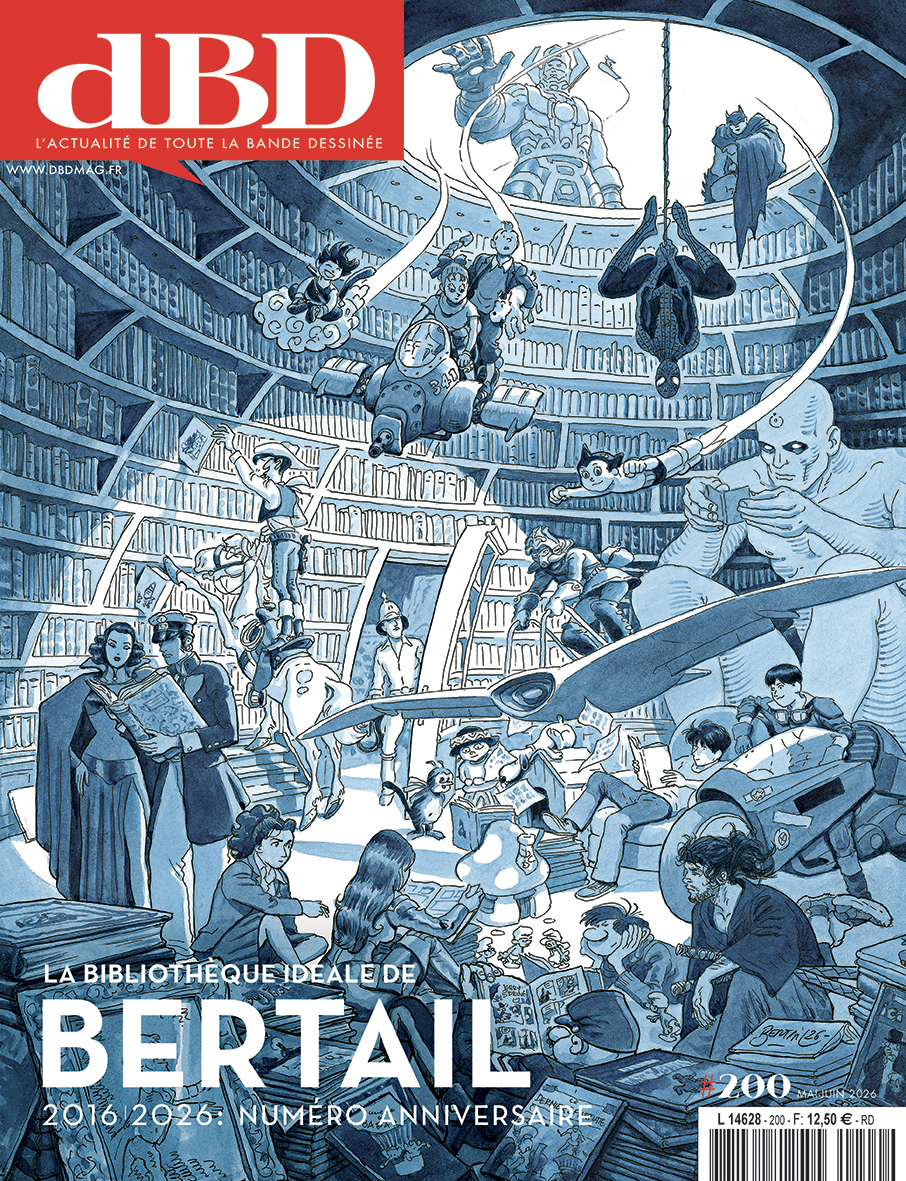
dBD #200 (mai-juin 2026)

Dans le cahier actualités on mentionne la parution de Printemps bleu par Taiyo Matsumoto chez Delcourt/Tonkam, de Métal Hurlant #18 sous-titré “Upgrade ou crève“ sur le thème du transhumanisme, la réédition patrimoniale de Le char de l’État dérape sur le sentier de la guerre par F’Murr chez Édition 2042, de Eyeshield 21 Brain Brave par Riichirô Inagaki et Yûsuke Murata et Dragon Ball Full Color – Les Saiyans par Akira Toriyama, tous deux chez Glénat. On retrouve également un article (L’Intégrale du mois) sur la traduction du western italien La Conquête de l’Ouest, vol. 1-2, par Gino d’Antonio, Renzo Calegari et Renato Polese aux Éditions Paquet.

À la une de ce numéro anniversaire, dBD a demandé à dix collaborateurs de présenter leur bibliothèque idéale des dix dernière années, leur entrevue favorite ainsi qu’un coup de coeur: Philippe Peter (#1: Révolution par Grouazel & Locard chez Actes Sud, entrevue avec Guillaume Singelin, coup de coeur: Le voyage de Marcel Grob par Colin & Goethals chez Futuropolis), Yannick Lejeune (#1: 1629, ou l’effreyante histoire des naufragés du Jakarta par Dorison & Montaigne chez Glénat, entrevue avec Xavier Dorison, coup de coeur: House of X / Powers of X par Hickman, Larraz & Silva chez Panini), Philippe Tomblaine (#1: Révolution par Grouazel & Locard chez Actes Sud), Éric Adam (#1 La Couleur des choses par Martin Panchaud, entrevue avec Jean-David Morvan, coup de coeur: L’Odyssée d’Hakim par Fabien Toulmé chez Delcourt), Jean-Samuel Kriegk (#1: Spirou, L’Espoir malgré tout par Émile Bravo chez Dupuis, entrevue avec Bryan Talbot, coup de coeur: Imbattable par Pascal Jousselin chez Dupuis), Frédérique Pelletier (#1: Maus, un survivant raconte par  Art Spiegelman chez Flammarion), Philippe Cauvin (#1: Lucky Luke: Les Rivaux de Painful Gulch, par Morris & Goscinny chez Dupuis), Maxime Gueugneau (#1: Le Grand Vide par Léa Murawiec chez 2042, entrevue avec Léa Murawiec, coup de coeur: La vie est une corvée par Salomé Lahoche chez Exemplaire), et le Géant Vert (#1: Viens faire un tour chez Marx Donald par Prior & Danide chez Ça et Là, entrevue avec Magali Le Huche, coup de coeur: Les Derniers Jours de Robert Johnson par Frantz Duchazeau chez Sarbacane). 

Les entrevues se poursuivent avec Matthieu Bonhomme (sur La Longue Marche de Lucky Luke, chez Lucky Comics) et Brigitte Lecardier (sur La réalité est énorme, avec Arcady Picardi, chez Dupuis). 

Côté manga on retrouve une entrevue avec Oh! Great (auteur de Air Gear et Bakemonogatari, sur Smoke, un manga réalisé en couleur et en format franco-belge publié chez Kana) et “Le Territoire des Mangas” nous présente sur deux pages les nouveautés du genre (No Longer A-Rank Party T.1 par Unagi, Zombie & Yûri chez Delcourt/Tonkam, Shinobi Undercover T.1 par Takegushi & Mitarashi chez Soleil, Mad T.1 par Yusuke Otori chez Kazé, Smother Me T.1 par Hiroshi Shimamoto chez Glénat, Blade & Bastard T.1 par Fugetsu & Kagyu chez Pika, No Devil T.1 par Senchiro chez Big Kana).

Et finalement quelques rubriques : dans le Cahier Critique on commente des parutions récentes (j’y note Le dernier écrivain par Chitose Akai chez Glénat), “Ça vaut le détour” commente quelques titres supplémentaires, puis L’Art de la couverture (Dred Scott par Jérome Ropert, Tom Graffin & Thibault Descamps chez Grand Angle), et Humeur.

Une lecture indispensable pour se tenir au courant des nouveautés en BD.

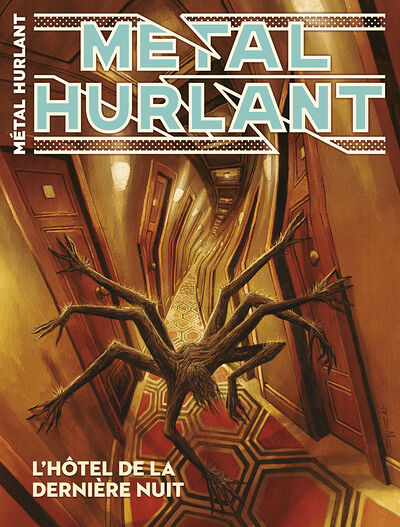
Métal Hurlant N° 17 (Nov. 2025)

Ce numéro regroupe 27 courts récits et 12 articles (que je n’ai parcourue qu’en diagonale sauf les entrevues avec Shintaro Kago et Naoki Urasawa que j’ai lu avec beaucoup d’intérêt) sur le thème de “l’Hôtel de la Dernière Nuit” (pourquoi faut-il que quand il est question d’hôtel ou de motel on en vienne presque toujours à de l’horreur ou du fantastique ? Heureusement, parfois cela donne aussi de la SF)! Comme pour les numéros que j’ai commentés précédemment, si souvent les styles (extrêmement variés) des artistes n’étaient pas toujours de mon goût, j’ai quand même trouvé que la plupart des courts récits méritait d’être lus. J’ai mis en caractères gras les titres les plus intéressants (narrativement et/ou graphiquement)…

Ce numéro nous présente donc les récits suivants: ”Hôtel Baja” (Salvador Sanz, 7 pg), “Étoiles Fugitives” (Daniel Blancou & David Ferracci, 7 pg), “Do Not Disturb” (Ryan Heshka, 7 pg), “Hôtel Paradis” (Gregory Panaccione, 9 pg), “Mizpah, Tonopah” (Jerry Frissen & Afif Khaled, 8 pg, B&W), “Otto” (Alexander & Dona Asisi), “Vénus” (rien mangold & Eduardo Francisco, 9 pg), “Bye Bye, Planète Poussière” (Anne Masse, 9 pg), “Week-End d’Évasion” (Koren Shadmi & Kilos Felvidéki, 9 pg), “Cornelius” (Miguel Baqbiano & Alex C. Santana, 9 pg), “Tartarus Hôtel” (Thibault Claudel & Ronan Toulhoat, 9 pg), “Yomi Motel” (Jacques Després, B&W, 7 pg), “Villa Castagnola” (Marvin Paval & Julien Noirel, 9 pg), “Desert Lake Motel” (Lola Owl & Iwan Lépingle, 5 pg), “Le Petit Homme de Prague” (Miguel Vila, 9 pg), “El Rancho Motel” (Otto Maddox & Erwann Surcouf, 7pg), “Voyage Immobile” (Étienne Appert, 7 pg), “L’Hôtel Beauregard” (Benoit Feroumont, 9 pg), “Les Âmes Salées” (Céline Colliot-Thélène & Joseph Callioni, 9 pg), “Entre-Monde” (Thibaud de Rochebrune, 5 pg), “Le Grand Tour” (Fabrizio Dori, 11 pg), “L’Amant Épris” (Enzo Berkati, 5 pg), “La Somnambule” (Alexandre Kha, 9 pg), “Jour de Chance” (Lilian Coquillaud, 9 pg), “La Vouivre” (Galaad, 7 pg), “Dark Polar” (Philippe Scoffoni, B&W, 9 pg), et “Honey Moon Suite” (J.R. Hughto & Curt Merlo, 5 pg).

Inégal, mais une bonne lecture quand même.

Pour plus d’Infos: [ Goodreads • Humanos • Nelligan • Wikipedia ]

Revue de ‘zines [002.026.220]

Revue de ‘zines

Je continue (tant bien que mal) mon perpétuel rattrapage sur les magazines et autres ‘zines pertinents dans mon champ d’intérêt… Pour vous éviter le souci de courir après l’information, j’en épluche donc le contenu pour vous. C’est plein de bonnes suggestions de lectures… (Faute de temps et d’énergie, j’ai limité ou omis les hyperliens. Si vous voulez en savoir plus sur un auteur, un titre ou un sujet, vous pouvez consulter par vous-même soit Google ou Wikipedia!)

Animeland #253 (Jan. – Mars 2026)

Un autre numéro sous le signe de la nostalgie ! Celui-ci nous offre un dossier sur le 50e anniversaire de Goldorak: la série TV de Goldorak (Grendizer), sa réception en France, l’exposition à Japan Expo, le manga, piloter Goldorak, les autres mangas clefs de Gô Nagai (Mazinger, Devilman, Cutie Honey, Kekko Kamen, Violence Jack), Goldorak U (remake), rencontre avec Barbara Tissier (comédienne et directrice artistique). Pour compléter le sujet on retrouve également un dossier sur les robots géants: mecha designs, l’origine, expositions, rencontre, panel et exposition sur Yoshikazu Yasuhiko (char. des. de Gundam), exposition sur Mamoru Nagano (L-Gaim, Five Star Stories), rencontres avec Shinji Aramaki (Artmic: Mospeada, Appleseed, Megazone 23, Madox-01, Gasaraki, Bubblegum Crisis), Toshihiro Kawamoto (BONES: Cowboy Bepop, Wolf’s Rain), Yoshitomo Yonetani (GaoGaiGar), Gorô Taniguchi (Code Geass), et panel M.S. Gundam GQuuuuuuX.

Le numéro se conclut sur une série de chroniques: Wish List (nous offre une sélection de mangas, anime et goodies), Aparté (rencontres avec Naoki Urasawa, Disciples), et Postface.

À lire absolument pour tous fans d’anime.

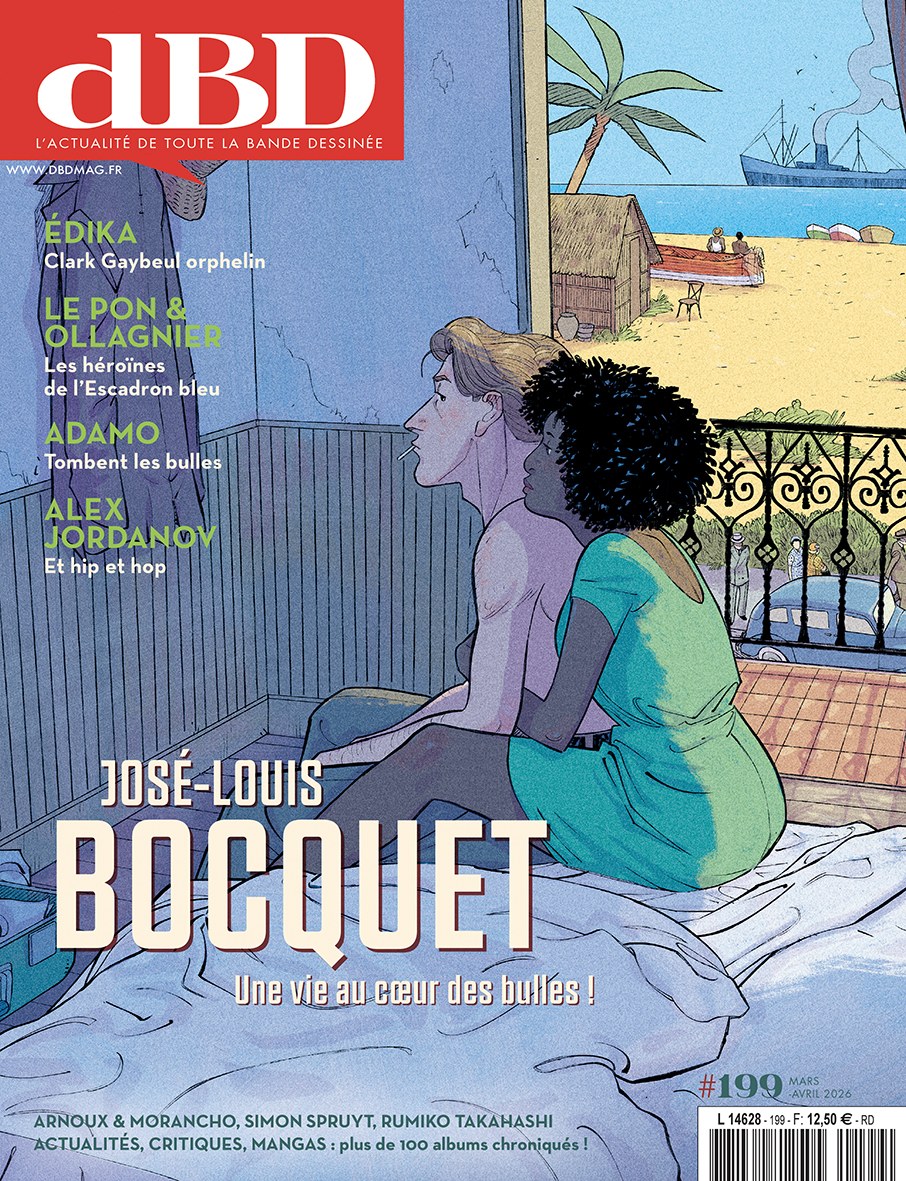
dBD #199 (mars-avril 2026)

Dans le cahier actualités on mentionne la parution de Princesse Saphir vol. 1, par Osamu Tezuka, chez Delcourt et du Jojo’s Travel Guide par Hirohiko Araki & Akiyo Yura également chez Delcourt. On y retrouve aussi un article sur la réédition en dix volumes de La Grande Histoire de Picsou T.1 par Don Rosa chez Glénat.

À la une de ce numéro, on retrouve une entrevue monstre avec José-Louis Bocquet (sur son oeuvre en général). Les entrevues se poursuivent avec Salvarore Adamo (sur son dernier disque, Des nèfles et des groseilles…, chez Universal, sa collection d’art et ses relations avec les dessinateurs), avec Clément Argouarc’h, Daniel Goossens et Yves Frémion qui rendent hommage à Édika (Édouard Karali) décédé en décembre 2025, avec Virginie Ollagnier et Yan Le Pen (sur L’escadron bleu, 1945, chez Dupuis), Alex Jordanov (sur Radio Club, avec Ké Clero, chez Glénat), 

Côté manga on retrouve un article sur Rumiko Takahashi (sur Urusei Yatsura, Maison Ikkoku, Ranma 1/2, Inu-Yasha, Rinne, Mao, One-Pound Gospel, Mermaid Saga, Rumic World et la parution chez Glénat de Rumiko Takahashi Colors, 1978-2024) et  “Le Territoire des Mangas” nous présente sur deux pages les nouveautés du genre (Kraken Mare T.1 [Izu & Hagane, chez Pika], Shiba Inu Rooms T.1 [Esu Oomori, chez Doki Doki], Spring Storm and Monster T.1 [Mitsubachi Miyuki, chez Delcourt/Tonkam], The Regalia of the Underdog T.1 [Shinachiku, chez Glénat], The Hitman’s Fave [Rintaro Ôshima, chez Kurokawa] et Goze Hotaru T.1 [Kou Tosaya, chez Kazé]).

Et finalement quelques rubriques : dans le Cahier Critique on commente des parutions récentes (je note Train de nuit dans la Voie lactée (Adrien Demont, d’après Kenji Miyazawa, chez Morgen), Rai Rai Rai t.1 (Yoshiaki, chez Ki-oon), Witch and Mercenary t.1 (Kaoru Chôhôkiteki & Makoto Miyagi, chez Doki Doki), et Mon adolescence explosive t.1 (Tao Nohara, chez Doko Doki)), “Ça vaut le détour” commente quelques titres supplémentaires (dont Planetarium Ghost Travel par Sakana Sakatsuki, chez Rue de Sèvres), puis L’Art de la couverture (Sigi t.1 par Érik Arnoux & David Morancho, chez Glénat), Avant-Première (extrait de six pages de Le Marche-Lune, par Simon Spruyt, chez Le Lombard) et Humeur.

Une lecture indispensable pour se tenir au courant des nouveautés en BD.

Anime & manga update [002.026.214]

Anime & Manga update 

NHK World Japan continues to be a great source of information about Japanese culture with their documentary series, and many of them are about anime & manga. Here are some recent documentaries that I found interesting:

Anime Manga Explosion

The latest episode of this documentary series is offering us a Detective Conan Special, which is “a mystery series loved for more than 30 years. We introduce the appeal of the original manga and go behind the scenes of the anime’s production, exploring how mysteries are adapted for animation and how the characters are designed with respect for the source manga. We also follow the scenario meetings where the anime’s original stories are created, and highlight the dedication of the staff behind this long-running series.”This episode was broadcast on July 25, 2026 and will be available as Video-On-Demand (VOD) until July 25, 2027.

Manben

The latest episode of “Manben: Behind the Scenes of Manga with Urasawa Naoki” is dedicated to Oshimi Shuzo. “Check out manga artist Oshimi Shuzo, whose trauma-probing stories have led to many screen adaptations. Learn how manga can be self-therapy as he works on Blood on the Tracks and Welcome Back, Alice.” This episode was broadcast on July 18, 2026 and will be available as Video-On-Demand (VOD)  until July 18, 2027.

AI x Anime

An episode of the documentary series “Deeper Look” was dedicated to the impact of AI on anime. Titled The Future of Animation in the Age of AI, it asked the question: “Is generative AI a creative revolution or chaos? Rob Salkowitz, technology and pop culture analyst, examines the impact on the animation industry.” This episode was broadcast on February 2, 2026 and will be available as VOD until February 2, 2027.

Animated Documentary

It is August, therefore NHK is offering a lot of stories about the atomic bombings of Hiroshima and Nagasaki. This is a nice animation titled Iwata’s Grandma that retell the personal experience of Chizuko. “Why does Iwata’s Grandma refuse to be in photos? This animation documentary is based on a picture book about the atomic bomb tragedy, but conveys kindness and hope rather than fear and anxiety.” This episode was broadcast on July 31, 2025 and will be available as VOD until July 29, 2027.

Barefoot Gen

The documentary series “Project X: Unsung Heroes” is offering an episode titled “Barefoot Gen: Bridging the Divide”. It is another story about the atomic bombings of Hiroshima and Nagasaki, but this time it focuses on a group of young Japanese and American in the 70s (including Oshima Masahiro, Jim Peck, and Alan Gleason) who were impressed with the depth of the manga Barefoot Gen by Nakazawa Keiji and decided to form “Project Gen”to translate it in English. A must-see documentary! “The true story of how amateur translators brought a manga about the Hiroshima atomic bombing to the US and the world, bridging cultural divides and spreading a message of peace.” This episode was broadcast on August 1, 2026 and will be available as Video-On-Demand ONLY UNTIL August 8, 2026.

Netflix Japanese drama

I am almost done with watching the 151-episode morning drama series Mampuku (まんぷく / lit. “full stomach” or “stuffed”). I have already talked about it in a previous update, but I can only add that, if you like Japanese culture and food, this is a must-see series. It is the story of the couple who, through a lot of hardship, invented the instant ramen and the cup noodles ! I just bought some Nissin package instant ramen to celebrate this show. When I am done with this show I will most probably continue with another morning drama. This 15-minute format is really a blast !

So far, I could find just another Japanese Morning Drama series on Netflix: Soar High! (舞いあがれ! / Maiagare!) about a young woman who wants to become a pilot. It is a 2022 126-episode series with Haruka Fukuhara, Katsunori Takahashi and Hiromi Nagasaku. “Passion. Dedication. Flight. With a childhood dream in her heart, Mai toils to become a pilot — but the long path to her first takeoff never deters her.” [Wikipedia]

Other notable news

The digital manga service Omoi has announced at Otakon that it will release Shinji Wada‘s Delinquent Detective: Sukeban Deka shojo manga on its manga reader app this fall. It has also acquired fifty-four manga titles from Kodansha, including many manga by Osamu Tezuka (Apollo’s Song, Ayako, Black Jack, Buddha, Dororo, Message to Adolf, MW, Ode to Kirihito, Princess Knight, The Book of Human Insects), Moyoco Anno’s Sakuran and Ai Yazawa’s Paradise Kiss. Omoi is a digital manga service that makes it easy to read hundreds of legally licensed manga series across a variety of genres and publishers, for one low price (Premium: $4.99 US / mo). It distributes manga from English manga publishers like Kodansha and J-Novel Club, as well as exclusive series licensed directly from Japan. Fans can read manga on Web, iOS, and Android, and Omoi pays royalties back to publishers based on readership data. (Sources: ANN, Omoi)

Drawn & Quarterly has announced at the San Diego Comic-Con the acquisition of Shigeo Ito’s Marmalade Princess  and Hinako Sugiura‘s Miss Hokusai manga to be released respectively in spring and fall 2027. (Source: ANN)

Introduction to the Saviour

My wife picked up a manga at the cultural center’s bazar from an artist that she remembers liking when she was younger: Kyôko Ariyoshi (有吉京子).

She was born in Kumamoto in 1950 and started trying to get stories published when she was a teenager in junior high school. After graduation, having received letters of encouragement from magazine editors, she moved to Tokyo to become a shōjo mangaka. In 1971, she was selected as a finalist in the 9th Margaret Manga Research Student competition and published her first story, “仔ネコと少女” [zi Neko To Shōjo / lit. “Kitten and Girl”], in Weekly Margaret summer supplement. It was quickly followed in #32 of Weekly Margaret by the ballet story “白鳥の歌をきいて!” [Hakuchō no uta o kīte! / “Listen to the swan song!“]. 

For five years, she had to comply with her editor’s instruction to draw school manga, but in 1976 she finally got the permission to draw the ballet story she always wanted to do and for which she is now mostly known. And thus, Swan began its serialization in issue 47 of Weekly Margaret and lasted for six years (1976-1981, compiled in 21 volumes !). It was followed by many sequels (白鳥の祈り [Hakuchō no inori / “The Swan’s Prayer”] and Swan Act II) and other ballet stories (アプローズ -喝采- [Apurōzu – kassai – / “Applause”], ニジンスキー寓話 [Nijinsukī gūwa / “Nijinsky Fables”], etc.). Swan is her only work to have been translated in English, but unfortunately publication stopped after volume 15 (2005-2010, CMX Comics). For more information you can check: Manga Update [author • title] and Wikipedia [JP / EN / FR].

Introduction to the Saviour [救世主入門 / Kyūseishu nyūmon] is a minor work. It was serialized in Bessatsu Princess magazine from 1993 No. 10 to 1994 No. 17 and was compiled in two volumes in 1994 by Akita Shoten’s Princess Comics (Vol. 1: 1994-01-21, 183 pages, 978-4-253-07556-5; Vol. 2: 1994-12-16, 211 pages, 978-4-253-07565-7). The back cover description simply says: 庭師にして、元救世主…それは誰!? 心優しく不思議な青年・ジョーが示す奇跡とは…!? [A gardener and a former savior… who is that!? What kind of miracle will Joe, a kind-hearted and mysterious young man, show…!?].

Basically, it’s the story of Jesus being reincarnated into a young gardener and trying to make good and helping people around him… The art is relatively simple, but quite nice. As for the storytelling, well, I wish my Japanese was better so I could tell you more about the story. I just thought this was an interesting find worth talking about. Unfortunately, there are so many nice old shōjo manga that were published in the ‘70s, ‘80s and ‘90s that only a fraction of them can by translated and we’ll never know most of them…

Here’s a few sample pages:

And a rough translation: 

Continue reading →

Anime & Manga update [002.026.179]

Anime & Manga update 

NHK World Japan continues to be a great source of information about Japanese culture with their documentary series, mostly those about anime & manga. 

Anime Manga Explosion

The latest episode of the documentary series “Anime Manga Explosion”is dedicated to animation director Kameyama Yohei. His directorial debut was the series Milky☆Subway: The Galactic Limited Express (which was his graduation project). It is “a sci-fi comedy about a group of convicts who turn an interplanetary express train into chaos”. The young director shares his thoughts behind the series, and presents the first half of the uncut theatrical version. This style is not my cup of tea, but it offers a glimpse of what’s popular in anime lately. This episode aired June 27 at 11:10 PM and June 28 at 05:10, 10:10 AM and 04:10 PM. It should also be available soon as Video On Demand.

Another notable episode is the “Sound! Euphonium Special”. It is a coming-of-age story set in a high school brass band from Kitauji High School Music Club located in Uji, Kyoto. The story (響け! ユーフォニアム / Hibike! Yūfoniamu) was first published as a series of fourteen light novels by Ayano Takeda (Takarajimasha Bunko, 2013-2024, translated in English by Yen Press) and was later adapted into seven manga (2014-2017), a thirty-nine episode anime series (by Kyoto Animation, 2015-2024, available from Crunchyroll), an OVA (2023) and five movies (by Kyoto Animation, 2016-2026). The author shares how she inspired herself from her own experience in a band and we see how Kyoto Animation adapted the series and go behind the scene for an inside look at The Final Movie. This episode was broadcast on May 30, 2026 and will be available as VOD until May 30, 2027.

Netflix Japanese drama

It seems that Netflix has acquired lately a lot of Japanese TV dramas. I have already seen several of them, which are all excellent: Asura, Bayside Shakedown (read the article), Midnight Diner (read my comment), Midnight Diner: Tokyo Stories, Quartet, Samurai Gourmet (read my comment), and  The Makanai. However, I have recently discovered three new NHK TV series that are quite promising:

Descending Stories: A Life in Rakugo : “Based on the beloved manga, this live-action series follows a master of rakugo — a traditional form of Japanese storytelling — and his apprentice”. 2018, 10 episodes, cast: Masaki Okada, Ryō Ryūsei, Riko Narumi, Aya Ōmasa and Ikusaburo Yamazaki. It is based on the manga Descending Stories: Showa Genroku Rakugo Shinju (昭和元禄落語心中 / Lit. “Flourishing Shōwa – Rakugo Double Suicide”, Kodansha, 2010-2016, translated in English by Kodansha USA) which was also adapted into an OVA (2015) and an anime TV series (Studio Deen, 2016-2017, available on Crunchyroll). [AsianWiki • IMDb • MyDramaList • Wikipedia]

Tokyo Salad Bowl (東京サラダボウル) : “An eccentric detective and a guarded interpreter bond over international cuisine as they tackle cases involving Tokyo’s foreign residents and tourists”. 2025, 9 episodes, Cast: Nao, Ryuhei Matsuda. Based on a manga by Kuromaru (黒丸). [DramaWiki • IMDb • JPC • Kodansha JP • MyDramaList • Wikipedia JP]

Mampuku (まんぷく  / lit. “full stomach” or “stuffed”) : “Food-loving Fukuko weds a bold entrepreneur. Through war and failure, she stands by him — and helps him invent instant noodles. Based on a true story”. 2018, 151 episodes (15 min.), Cast: Sakura Ando (Fukuko Imai), Hiroki Hasegawa (Manpei Tachibana), Yuki Uchida (Saki Imai), Keiko Matsuzaka (Suzu Imai). This Japanese TV drama tells the story of Masako and Momofuku Andō (their names were changed in the story), founder of Nissin Foods and the inventors of instant ramen (Nissin Chicken Ramen) and cup noodles. [AsianWiki • IMDb • MyDramaList • Wikipedia]

Mampuku is probably the most interesting of those shows, because it is a period drama, centered around conquering hardship (generally for a female heroine), but mostly because it is one of those very popular NHK “Morning Drama” (aka 連続テレビ小説 / Renzoku Terebi Shōsetsu / lit. “serial TV novel” or 朝ドラ / Asadora / lit. “Morning drama”). This trend started in April 1961 with Musume to Watashi (娘と私 / lit. “A Daughter and Me”) with daily fifteen-minute episodes airing from Monday to Friday at 8:00 AM (with an omnibus airings on Saturday) and has continued to this day (the current show being The Scent of the Wind). Mampuku is the  99th Asadora series to air on NHK! The only other Asadora that I’ve seen (which was in a way very similar to Mampuku) was Massan (マッサン, Sept. 2014 – March 2015, 150 episodes) which tells the story of Ellie and Masaharu Kameyama, based on the life of Rita and Masataka Taketsuru who helped establish whisky production in Japan and founded the Nikka Whisky Distilling company.  

I just hope that Netflix will bring us more of those Japanese morning drama.

Other notable news

Netflix has announced that Cyberpunk: Edgerunner is getting a second season that will premier this fall. Cyberpunk: Edgerunner 2 will feature new characters (Weak Kingsley, Talia Yang, Roman Carax, and D). The 10-episode series is directed by Kai Ikarashi, with script by Masahiko Otsuka, character designs by Ichigo Kanno and Bartosz Sztybor as producer and showrunner. It is based on polish CD PROJEKT RED‘s Cyberpunk 2077 videogame, itself based on Mike Pondsmith‘s Cyberpunk tabletop RPG game series. (Source: ANN)

Anime News Networks offers an interview with Yōhei Kameyama on his breakout hit, Milky☆Subway: The Galactic Limited Express.

The new adaptation of Ghost in the Shell by director Mokochan and studio Science SARU was premiered at Annecy Animation Festival on June 22. Anime News Network’s Kevin Cormack gives us a review. It seems “Phenomenally faithful” to the manga. Amazon Prime will start streaming the show worldwide starting from July 7.  I can’t wait to see this. 

A new live-action series based on Tohru Fujisawa’s GTO: Great Teacher Onizuka manga has been announced. Onizuka is now 52-year-old and teaches at the Seishin Academy. The same actor than the first series (Takashi Sorimachi) is playing the role, with the original director (Satoru Nakajima) and scriptwriter (Kazuhiko Yukawa) returning as well. It will premiere on Kansai TV and Fuji TV on July 20 (Source: ANN).

Crunchyroll has announces their release schedule for the summer 2026 season. Nothing exciting. Check Anime News Networks for the full listing.

Taiga Sassa’s manga Isabella Bird in Wonderland, which started in 2013, will end on September 15 with the 137th issue of Kadokawa’s Harta magazine. (Source: ANN)

Naoki Urasawa will launch on August 12 the new manga series Saigo no Manga Kyōshitsu (The Final Manga Classroom) in the September issue of Shogakukan’s Big Comic Original Special (Big Comic Original Zōkan). (Source: ANN)

NHK announced that Nao Iwamoto’s Marronnier Ōkoku no Shichinin no Kishi (The Seven Knights of the Marronnier Kingdom) manga will be adapted into a TV anime series that will air on NHK Educational in October. (Source: ANN)

Anime & Manga update [002.026.138]

Anime & Manga update

NHK World Japan continues to be a great source of information about Japanese culture with their documentary series. 

Anime Manga Explosion 

Notable is the episode of Anime Manga Explosion  dedicated to Anime Sound, where voice actor Otsuka Akio reveals the techniques behind iconic lines from My Hero Academia and Bleach: Thousand-Year Blood War, and composer Inai Keiji talks about the music recording session for the new anime Star Wars: Visions Volume 3 The Duel: Payback. It aired on November 29 last year, but remains available as VOD until November 29, 2026.

The latest episode of Anime Manga Explosion is dedicated to “That Time I Got Reincarnated as a Slime, a fantasy series that has grown from a web novel into a hit anime. Original creator Fuse makes his first-ever TV appearance to share the passion behind the story. We also go behind the scenes at the anime studio [Eightbit], revealing production secrets from the very beginning of the series. Plus, we look at innovative production methods being used for the upcoming new season.” This episode aired on April 25, 2026 and will be available as VOD until April 25, 2027. 

Manben

The latest episode of Manben: Behind the scenes of manga with Urasawa Naoki is dedicated to Umino Chica (Honey and Clover). Urasawa Naoki takes us behind the scene of the production of the mangaka new series, March Comes in Like a Lion! The 21st episode of Manben Neo originally aired on November 22, 2025, with an extended version airing on March 19, 2026. The subtitled version aired on May 8, 2026 and will be available as VOD until May 8, 2027.

And other news

The spirit of the times is definitely one of nostalgia. Anime Expo, which will be held from July 2-5 at the Los Angeles Convention Center, has announced that it will host “the first official North American screening” of the 1984 movie The Super Dimension Fortress Macross: Do You Remember Love?. The screening will take place on July 5 at 12:00 p.m. PDT. (Source: ANN)

The highly anticipated reboot of Patlabor is finally out. Patlabor EZY File 1 (機動警察パトレイバー EZY / Kidō Keisatsu Patlabor EZY) premiered on May 15th — with File 2 coming on August 14th (more details on ANN, see the trailer on Youtube). The two-part movie is animated by J.C.Staff and directed by Yukata Izubuchi, with a script by Kazunori Itō, character design by Masami Yuuki, animation directed by Takamitsu Satou, costume design by Akemi Takada and music by Kenji Kawaii. I can’t wait to see this one. In the meantime, you can read the review on Anime News Network.

Bandai Namco Filmworks has announced two more films for the Votoms franchise, with the first one premiering on November 20. Armored Trooper VOTOMS: Die Graue Hexe / The Grey Witch (装甲騎兵ボトムズ灰色の魔女 / Sōkō Kihei Botomuzu Haiiro no Majo) is produced by Sunrise and Production I.G and directed by Mamoru Oshii, with mecha design by Shinobu Tsuneki and Yoshiro Sono and music by Kenji Kawai. It will be part of Sunrise’s 50th anniversary commemoration. See the trailer on Youtube (Source: ANN)

Revue de ‘zines [002.026.108]

Revue de ‘zines

Je continue (tant bien que mal) mon perpétuel rattrapage sur les magazines et autres ‘zines pertinents dans mon champ d’intérêt… Pour vous éviter le souci de courir après l’information, j’en épluche donc le contenu pour vous. C’est plein de bonnes suggestions de lectures… (Faute de temps et d’énergie, j’ai limité ou omis les hyperliens. Si vous voulez en savoir plus sur un auteur, un titre ou un sujet, vous pouvez consulter par vous-même soit Google ou Wikipedia!)

Animeland #252 (Octobre-Décembre 2025)

Ce numéro nous offre un dossier sur Evangelion et Gainax: le studio Gainax, expo sur les 30 ans de Nadia, entrevue avec Hiroaki Inoue (ex VP de Gainax), Infographie: Gainax en 30 productions, Contexte et Conséquences: Le third impact de l’animation japonaise, Origine et Production: la création d’Eva, rencontre avec Kazuya Tsurumaki (réal. Adj.), Mahiro Maeda, Yôji Enokido (co-scén.), portrait de Hideaki Anno, Le manga: l’autre version d’Eva, rencontre avec Yôko Takahashi (interprète de l’Opening), Yûsuke Matsui (animateur 3D), les 30 ans d’Eva (panel à Japan Expo). On y trouve également un bref dossier sur les héritiers de Gainax: le studio Trigger et rencontre avec l’animateur Yoshimichi Kameda.

Le numéro se conclut sur une série de chroniques: Wish List (nous offre une sélection de mangas, anime et goodies), Aparté (rencontre avec le mangaka KENT, auteur de Great Kaiju Gaea-Tima, et Takeshi Koike, réalisateur de Redline), et Hommage (Éric Legrand, voix de Végéta et Deiya).

Wow, que de souvenirs. Lire sur l’âge d’or de l’anime me rend très nostalgique. À lire absolument pour tous fans d’anime.

Animeland #254 (Avril-Juin 2025)

Ce numéro nous offre un dossier sur One Piece : le manga, portrait de Eiichirô Oda (créateur), les Vivre Cards, l’univers étendu, les anime, l’exposition Emotion, rencontres avec Hisashi Kagawa (Chara-designer), Tatsuya Nagamine et Kenji Yokoyama (directeur et animateur), Vincent Chansard (animateur), Noureddine Widad (producteur) et les voice actors.

On retrouve également un dossier sur les 70 ans du studio Toei Animation: l’histoire du studio, rencontres avec Shin’ya Hasegawa et Katsuyoshi Nakatsuru (animateurs),

Le numéro se conclut sur une série de chroniques: Wish List (nous offre une sélection de mangas, anime et goodies — où je note la parution de Le coeur de Thomas [Moto Hagio, Akata], Thermae Rome Redux [Mari Yamazaki, Casterman], Mai The Psychic Girl [Kazuya Kudô & Ryôichi Ikegami, Vega]), Hommage (Kiriko Nananan, Blue), Aparté (rencontres avec Yumiko Shirai, Wombs; Mujirushi Shimazaki & Kuroimori, Erio, The Electric Doll; Koré Yamazaki, Ancient Magnus Bride), et Postface.

À lire pour tous fans d’anime.

dBD #197 (Nov.-Déc. 2025)

Dans le cahier actualités on mentionne la parution de Lézards Rêveurs par Giraud/Moebius chez Moebius Production. On y retrouve également un article sur la parution chez Delcourt de Dessus-Dessous: L’Intégrale (1903-1905) par Gustave Verbeek.

À la une de ce numéro, on retrouve une entrevue avec Elene Usdin & Boni sur Detroit Roma chez Sarbacane. Les entrevues se poursuivent avec Philippe Ghielmetti (graphiste des Blake et Mortimer), Régis Loisel (sur La Dernière Maison juste avant la forêt, avec Jean-Blaise Djian, chez Rue de Sèvres), Dorothée de Monfreid (sur Fantasie Lyrique: Dans les coulisses de l’Opéra de Paris, chez Dargaud), Thierry Smolde (sur Moonlight Express, avec Clérisse, chez Seuil), Ugo Bienvenu (sur Arco, chez Denoël Graphic et le long-métrage d’animation du même titre), Jean Dytar (sur Les Sentiers d’Anahuac, avec Romain Bertrand, chez Delcourt), Philippe Richelle (sur Un flic sous l’Occupation T.1, avec Beuriot, chez Glénat), Pierre Dubois (sur La Vallée des Oubliés, avec Henriet & Usagi, chez Le Lombard), Thierry Gloris (sur Malgré Nous – Intégrale, avec Terray, chez Soleil)

Et finalement quelques rubriques : dans le Cahier Critique on commente des parutions récentes, “Ça vaut le détour” commente quelques titres supplémentaires, “Le Territoire des Mangas” nous présente sur deux pages les nouveautés du genre (Tough, L’Héritier du Dragon T.1 [Tsuya Saruwatari, Delcourt], Héritages: Les Gouttes de Dieu T.1 [Tadashi Agi &Okimoto, Glénat], Veux-tu que je tue pour toi ? T.1 [Yukiaki Kurando & Sousou Sakakibara, Soleil], Völundio: Chroniques des lames sacrées T.1 [Nanaki Nanao, Doki Doki], Nano Machine T.1 [GGBC, Great H & Wolya, Pika], Moscow 2160 [Kumo Kagyu, Kôtarô Sekine & Noboru Kannatuki, Kurokawa], et Quand je ne serai plus là [Osamu Yamamoto, Le Lézard Noir]), puis L’Art de la couverture (La Guerre de Lucas, par Laurent Hopman & Renaud Roche, chez Deman), et Humeur (Angoulême: Morne plaine!).

Une lecture indispensable pour se tenir au courant des nouveautés en BD.

dBD #198 (Jan.-Fév. 2026)

Dans le cahier actualités on mentionne la parution de UFO Robot Goldorak (Go Nagai, chez Isan-Sha). On y retrouve également un article sur les lauréats 2025 des prix Landerneau (Chabouté pour Plus loin qu’ailleurs), BD Boum (Kerascoët pour Au chant des grenouilles), Papiers Nickelés (Christelle Pissavy-Yvernault & David Amram pour La Véritable Histoire des éditions Dupuis), Meilleure Revue BD (Dessableur) et Grand Prix de la critique ACBD 2026 (Romain Bertrand & Jean Dytar pour Sentiers d’Anahuac).

À la une de ce numéro, on retrouve un Hommage Frank Pé (présentation, lettre de Rodolphe Massé, et entrevue datant de 2024).  Les entrevues se poursuivent avec Philippe Lacheau (sur le film Marsupilami), Philippe Caza (sur sa carrière, Le Monde d’Arkadi Intégrale Luxe et L’Âge d’Ombre chez Les Humanoïdes Associés), Arnaud Le Gouëfflec & Julien Solé (sur Gotlib, une vie en BD, chez Fluide Glacial), Marcello Quintanilha (sur El Dorado, chez Le Lombard), Cyril Bonin (sur Karl, chez Sarbacane), et Mathieu Gabella (sur Le Serment avec Bourgouin, chez Glénat).

Et finalement quelques rubriques : dans le Cahier Critique on commente des parutions récentes (dont Dans la tête de Sherlock Holmes T.3, par Liéron & Dahan, chez Ankama; et Les Noces des lucioles T.1 par Oreco Tachibana, chez Glénat), “Ça vaut le détour” commente quelques titres supplémentaires, “Le Territoire des Mangas” nous présente sur deux pages les nouveautés du genre (Le garçon et le dragon [Idonaka, Doki Doki], Emerging Intégrale [Masaya Hokazono, Kurokawa], Pompoko [Isao Takahata, Glénat], Mon Petit Nid Douillet [Chiaki Ida, Soleil], BJ Alex T.1 [Mingwa, Kbooks], Divines T.1 [Kamome Shirahama, Pika], H2 T.1 [Mitsuru Adashi, Delcourt/Tonkam]), puis Les expos du mois, L’Intégrale du mois (Frank Cappa – Intégrale par Manfred Sommer, chez Nouveau Monde), Portfolio (Jared Muralt, Buglands), Éternel (Gotlib Oeuvre complète 1967, chez Dargaud/Fluide Glacial), L’Art de la couverture (Dans la tête de Sherlock Holmes, par Cyril Liéron &  Benoit Dahan, chez Ankama), Avant-Première (Cyril Bonin, Karl) et Humeur.

Une lecture indispensable pour se tenir au courant des nouveautés en BD.

Métal Hurlant HS Hellfest (Juin 2025)

Ce numéro regroupe 30 récits et 12 articles (que je n’ai parcourue qu’en diagonale) sur le thème de Hellfest (un festival français de musique métal qui a lieu en juin à Clisson). Comme pour les numéros que j’ai commentés précédemment, la plupart des styles (extrêmement variés) des artistes n’étaient pas vraiment de mon goût, mais j’ai trouvé quelques-uns de ces courts récits intéressants et tous méritaient (sans doute) d’être lus.

Ce numéro nous présente donc les récits suivants: “Hellfest in Hell” (par Pat Mills & Olivier Ledroit, 9 pages couleurs), “Holy Grail” (Arnaud Le Gouëfflec & Sagar, 9 pgs coul.), “Goatface et le sorcier maléfique” (Rune Ryberg, 9 pgs coul.), “Jurafest” (Jaouen Salaün, 7 pgs en bichromie), “Metal” (Nicolas Barberon & Olivier Martin, 4 pgs coul.), “Punk Inferno” (Marc Caro, 5 pgs B&W), “Sisyphe” (Fabrizio Dori, 9 pgs coul.), “Fête de l’enfer” (Pierre Alary, 5 pgs coul.), “Confiance Nordique” (Miguel Vila, 9 pgs coul.), “TRU2C” (Alexandre Ristorcelli, 7 pgs coul.), “Rock Star” (Romane Granger, 7 pgs coul.), “La Fleur du Mal” (Michaël Sanlaville, 9 pgs coul.), “Journal d’un hellfesteur” (Camille Burger, 11 pgs coul.), “La meute des damnés” (Hugues Micol, 7 pgs B&W), “Féminazgoules” (Élizabeth olleville & Juliette Étrivert, 7 pgs coul.), “Mes chers agneaux” (Thomas Bidault, 7 pgs coul.), “La lourde musique du hasard” (Jerry Frissen & Manolo Carot, 6 pgs coul.), “Soloverdose” (Nikola Witko, 5 pgs en bichromie), “Holy Metal Guts” (Gwendal Briec, 9 pgs B&W),  “Gueules de métal” (Juanjo Guarnido, 3 pgs coul.), “Le gentleman tranquille” (Matthew Allison, 4 pgs coul.), “Metalhead” (Pixel Vengeur, 5 pgs coul.), “Metalhead” (Bouzard, 7 pgs coul.), “Black Nap” (Aseyn, 5 pgs — pas lu car trop chargé), “A very curious girl” (Erwann Surcouf, 11 pgs coul.), “Super Super” (Vuillemin, 4 pgs coul.), “The curse of thirst” (Prozeet, 9 pgs coul.), “The Myling” (Lane Milburn, 9 pgs coul.), “Battle Metal” (Adrien Mangold & Pierre Dheur, 9 pgs coul.), et “The Ultimate Blasphemy” (Pat Mills & Thimothée Montaigne, 5 pgs B&W).

Horrible et très inégal, et n’offre de l’intérêt que si vous êtes fan d’heavy métal, un genre en BD qui n’est pas propice à de beaux dessins, ni à de belles histoires.

Métal Hurlant N°16 (Août 2025)

Ce numéro regroupe 26 courts récits et 8 articles (que je n’ai parcourue qu’en diagonale) sur le thème du développement humain qui peut être à la fois bénéfique et maléfique, sous le titre “On n’arrête pas le progrès”! Comme pour les numéros que j’ai commentés précédemment, si souvent les styles (extrêmement variés) des artistes n’étaient pas toujours de mon goût, j’ai toutefois trouvé la plupart des courts récits plutôt intéressants — quoique tous méritaient sans doute d’être lus. J’ai mis en caractères gras les titres les plus intéressants (narrativement et/ou graphiquement)…

Ce numéro nous présente donc les récits suivants: “Alterego” (par Xavier Doriso & Moissonne, Stéphane Servain, 13 pages couleur), “Le vétéran” (Fred Duval & Elvire De Cock, 5 pgs coul.), “Détox” (Koren Shadmi, 9 pgs coul.), “Fixe-Temps” (Edgar Sandi Martinès, 9 pgs en duotone — tellement chargé que j’ai abandonné la lecture!), “Mon meilleur ami” (Yohan Radomski & Alessio Fioriniello, 9 pgs coul.), “Illusion perdue” (Jérôme Lavoine, 9 pgs coul.), “La Terre est une prison” (Swann Metallica & Caloucalou, 5 pgs coul.), “Seconde Génèse” (Cédric Mayen & Marianne Alexandre, 9 pgs coul.), “Blind Box” (Yang Weilin, 11 pgs coul.), “L’enfant intérieur” (Étienne Appert, 9 pgs coul.), “Doc-Trin’ 146” (Thomas Ferroul, 9 pgs coul.), “En négatif” (Ceti, 8 pgs coul.), “L’utérus de dieu” (Facundo Nehuén Lopez, 9 pgs coul.), “Sarrebourg” (Florian Breuil, 5 pgs coul.), “La fin” (Jeff Legrand & Allanva, 6 pgs coul.), “Les champions” (Alejandro Jodorowsky & Iness, 4 pgs coul.), “Histoire de guerre” (Fabio Ruotolo, 5 pgs coul.), “L’extase du Révérend Cole” (Pierre Léauté & ADC, 9 pgs coul.), “Nimrod” (FAFNER, 11 pgs coul.), “Je n’aime que toi” (Alice Geslin & Luca Albanese, 9 pgs coul.), “Opossum” (Alberto Pagliaro, 9 pgs coul.), “Le sabot de Vénus” (Matéo Lavina & Florian Genthial, 9 pgs coul.), “Traducteur universel” (Antoine Dodé, 10 pgs coul.), “Le voyageur” (Mislav Tomasinjak, 11 pgs coul.), et “Erreur 404” (Jean-Pierre Dionnet & Jorg De Vos, 17 pgs coul.).

Inégal, mais une bonne lecture quand même.

Pour plus d’Infos: [ Goodreads • Humanos • Nelligan • Wikipedia ]
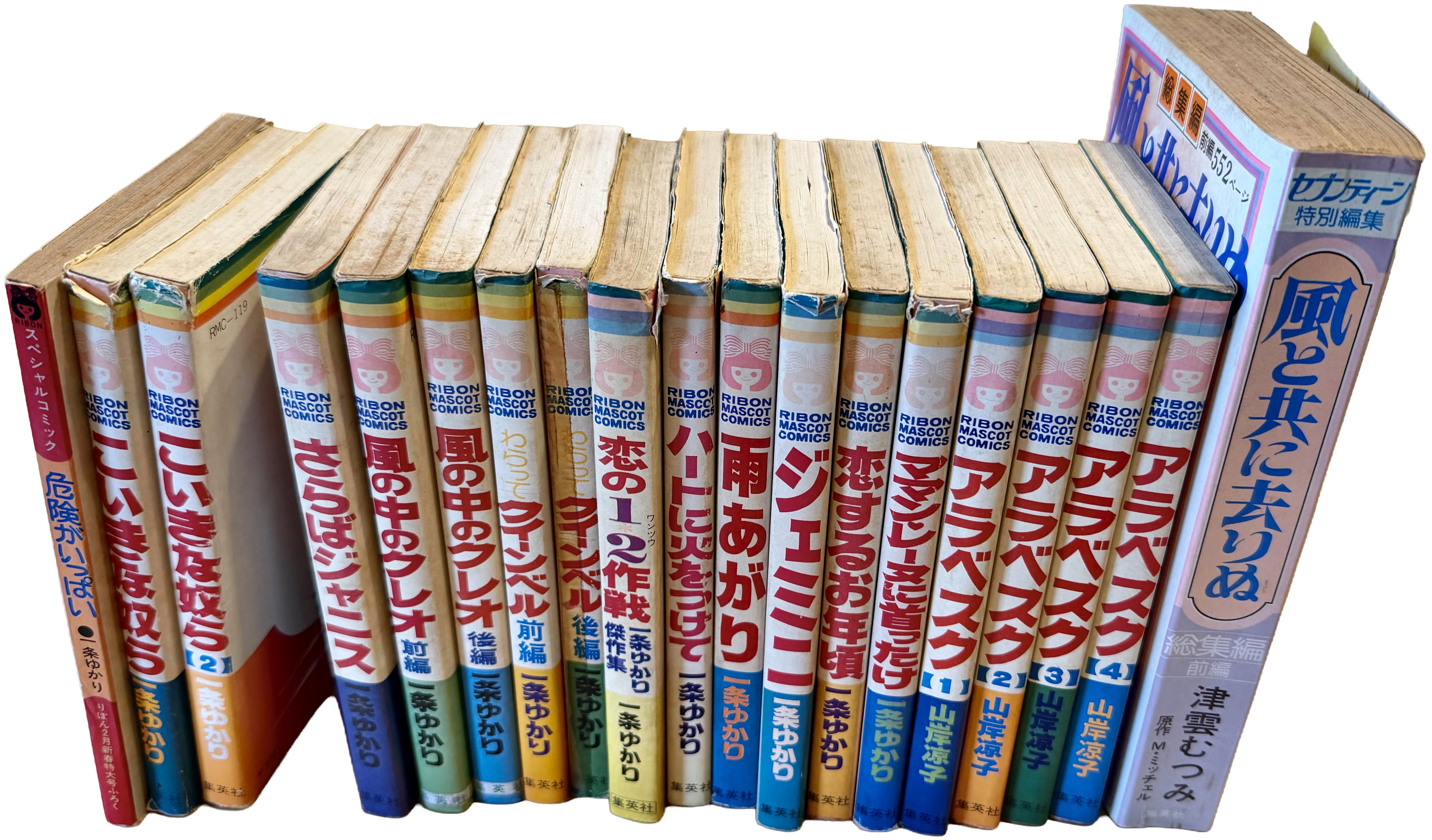
Anime & manga updates [002.025.363]

Anime & manga updates

NHK World Japan continues to be a great source of information about Japanese culture with their documentary series.

Medalist (メダリスト)

The NHK World Japan documentary series Anime Manga Explosion latest episode is a special about “Sports Manga & Anime”. After an overview of the Japanese beloved genre that is sports manga and anime, exploring with anime critic Fujitsu Ryota how the portrayal of sports evolved over time, and how have creators refined their craft, the documentary focus on the “the production of the figure skating anime Medalist to find out how animators capture the subtle movements and atmosphere of the rink.” This episode aired on December 27, 2025 and is available as VOD until December 27, 2026.

Medalist is a manga about figure skating. Created by Tsurumai Kada (つるまいかだ — the gender, age or identity of this artist has not been disclosed), it is serialized in Monthly Afternoon since May 2020 and has been compiled, so far, in thirteen tankōbon (volumes) at Kodansha. It has been translated in English and published by Kodansha USA (12 vol. so far) and in French by Nobi Nobi (Coll. Genki, 11 vol. so far). It has won the Next Manga Award in 2022,  the Shogakukan Manga Award in 2023 and the Kodansha Manga Award in 2024. A novel adaptation by Jun Esaka is also being published by Kodansha KK Bunko since January 2025 (2 vol. so far).

It is the story of fifth grade student Inori Yuitsuka who dreams to become a great figure skater, but since her sister injured herself in a competition, her mother doesn’t want her to even try. Then she meets Tsukasa Akeuraji, an athlete who has seen his skating dream crushed and is now considering becoming a coach. Together they will find the motivation to reach for Olympic Gold !

The story has been animated by ENGI studio into a 13-episode television series (one season so far), directed by Yasutaka Yamamoto, with screenplay by Jukki Hanada, character design by Chinatsu Kameyama and music by Yuki Hayashi. It was airing in Japan on TV Asahi and is currently streaming on Disney+ and Hulu.

It’s a story about perseverance. It’s funny, the style is rather cartoony, but the storytelling is quite average and the inking is very uneven, often too light, sometimes too heavy and always sketchy. All the characters are over the top psychos! No wonder kids now-a-day are having mental problems… The anime is very faithful to the manga.

Japanese library

The documentary series Document 72 Hours offers an interesting report on a public library in Kanazawa. Titled “Beyond the Books at a Kanazawa Library” it talks about a library that “resembles a sublime theater and offers more than 1.1 million books. For three days, we asked people what books piqued their interest and how they spend their time here.” This episode was initially aired on March 3, 2025 (rebroadcast on December 28th) and is available as VOD until March 29, 2026. It is not directly related to anime or manga, but it’s about two of my main pole of interest: Japanese culture and libraries.

Revue de ‘zines [002.025.333]

Revue de ‘zines

Je continue (tant bien que mal) mon perpétuel rattrapage sur les magazines et autres ‘zines pertinents dans mon champ d’intérêt… Pour vous éviter le souci de courir après l’information, j’en épluche donc le contenu pour vous. C’est plein de bonnes suggestions de lectures… (Faute de temps et d’énergie, j’ai limité ou omis les hyperliens. Si vous voulez en savoir plus sur un auteur, un titre ou un sujet, vous pouvez consulter par vous-même soit Google ou Wikipedia!)

Animeland #251 (Juil.-Sept. 2025)

Ce numéro nous offre des dossiers sur Hokuto no Ken (manga, portrait de Tetsuo Hara (dessinateur), de Buronson (scénariste), les suites, Coamix (éditeur), entrevue avec Tsukasa Hôjô (co-fondateur de Coamix), l’anime et ses spin-off, l’adaptation française, rencontres avec Jun’ichi Hayama (animateur), Takuya Wada (animateur) et Yoshitomo Yonetani (assist. Prod.) et sur la Post-Apo (définition du genre, la fin du monde dans le mangas, rencontres avec Masakazu Ishiguro (auteur de Journey Beyond Heaven), Oh!Great (auteur de Kaijin Fugeki), ainsi que Kei Urana & Hideyoshi Andô (auteurs de Gachiakuta).

Le numéro se conclut sur une série de chroniques: Wish List (nous offre une sélection de mangas, anime et goodies — où je note la parution de Le poème du vent et des arbres par Keiko Takemiya chez naBan), Aparté (entrevue avec You Chiba, autrice de Kindergarten Wars), Focus Taïwan (entrevue avec Chang Sheng, auteur de Yan et de Baby), Japon (Entrevue avec Hyuganatsu, auteur du roman Les carnets de l’apothicaire), Hommage (Kazuo Umezu), et Postface.

À lire pour tous fans d’anime.

Animeland #252 (Oct.-Déc. 2025)

Ce numéro nous offre un dossier sur Neon Genesis Evangelion (Studio Gainax, une exposition sur les 30 ans de Nadia: Le secret de l’Eau Bleue, Rencontre avec Hiroaki Inoue (ex-VP), l’impact au Japon, origine et production, rencontres avec Kazuya Tsurumaki (réalisateur adjoint), Mahiro Maeda (directeur, designer et animateur), et Yôji Enokido (co-scénariste), portrait de Hideaki Anno, la manga, rencontres avec Yôko Takahashi (interprète de l’OP), Yûsuke Matsui (animateur 3D), panel des 30 ans de EVA à Japan Expo, Studio Trigger: héritier de Gainax, et rencontre avec Yoshimichi Kameda (animateur)).

Le numéro se conclut sur une série de chroniques: Wish List (nous offre une sélection de mangas, anime et goodies), Aparté (entrevue avec KENT (auteur deGreat Kaiju Gaea-Tima) et Takeshi Koike (Redline)), et Hommage (Éric Legrand, voix de Végéta et Seiya).

À lire pour tous fans d’anime.

dBD #196 (Sep.-Oct. 2025)

Dans le cahier actualités on mentionne la parution de l’édition prestige de Black Paradox par Junji Ito chez Delcourt/Tonkam, du Dorohedoro All-Star Guide Book par Q-Hayashida chez Soleil, et de Jeux de nuit par Tadao Tsuge chez Cornelius. On y retrouve également un article sur la réédition de Gen aux pieds nus T.1 par Keiji Nakazawa chez Le Tripode.

À la une de ce numéro on retrouve une entrevue avec Cosey sur sa série Jonathan et Yiyun, tous deux chez Le Lombard. Les entrevues se poursuivent avec Dominique Hé (sur La porte ouverte, 1971-1977: Mes années Moebius, chez Glénat), David B. (sur Monsieur Chouette chez L’Association), Alison Bechdel (sur Spent chez Denoël Graphic et sur l’exposition au Cartoonmuseum de Bâle), et Yann Le Bec (sur Les Singes chez Dupuis/Les Ondes Marcinelle).

Dans le Cahier Critique je note seulement Mujina Into The Deep par Inio Asano chez Kana (Top!; “À l’esthétique léchée (…) et à la psychologie particulièrement travaillée, ce seinen prend la latitude de la pleine page et de la composition aérée (…) pour étaler l’insolente virtuosité d’Asano”). “Ça vaut le détour” commente quelques titres supplémentaires.

“Le Territoire des Mangas” nous présente sur deux pages les nouveautés du genre : Ruridragon T.1 (Masaoki Shindo, chez Glénat), Engineer T.1-2 (Ikeda Kunihiko, chez Kotodama), The Strange House T.1 (Kyo Ayano d’après Uketsu, dont le roman parait simultanément au Seuil), Super Ball Girls T.1 (Maneyuki Kaneshiro & Akira Hiramoto, chez Soleil), En Pays Lointain (Masumi Sudo, chez Nobi Nobi), Le Dernie Écho de notre Existence T.1-2 (Yasuo Ohtagaki & Yuuki Ohta chez Moonlight).

Et finalement quelques rubriques : Le dessin du mois (l’affiche de Aude Picault pour le festival de BD de Delémont), L’Art de la couverture (Ohio: La belle rivière par Fred Duval, Brada, Jean-Paul Fernandez et Emem chez Delcourt), Avant-Première (7 pages de Les cheveux d’Édith par Fabienne Blanchut, Catherine Locandro et Dawid chez Dargaud), Talent à Découvrir (Corentin Garrido, pour Le Bonheur, chez Le Monte-En-L’Air) et Humeur.

Une lecture indispensable pour se tenir au courant des nouveautés en BD.

Métal Hurlant N°15 (mai 2025)

Ce numéro regroupe 29 courts récits et 8 articles (que je n’ai parcourue qu’en diagonale) sur le thème de l’immensité et des mystères des océans, sous le titre “Les Mondes du Silence”! Comme pour les numéros que j’ai commentés précédemment, si souvent les styles (extrêmement variés) des artistes n’étaient pas toujours de mon goût, j’ai toutefois trouvé quelques-un des courts récits plutôt intéressants — quoi que tous méritaient sans doute d’être lus. J’ai mis en caractères gras les titres les plus intéressants (narrativement et/ou graphiquement)…

Ce numéro nous présente donc les récits suivants: “L’Océan qui chante” (Fabrizio Dori, 9 pgs, couleur), “Europa” (Fabien Grolleau & Abdel de Bruxelles, 11 pgs, coul.), “Au-delà de l’océan” (Valentin Ramon, 7 pgs, coul.), “Narcose” (Zéphir, 9 pgs, coul.), “La plage” (Simeon van den Ende & Pim Bos, 9 pgs, coul.), “Achane” (Edo Brenes, 9 pgs, coul.), “Pour l’humanité” (Joseph Falzon, 9 pgs, coul.), “Les lueurs de la nuit, l’abîme et le naufragé des étoiles” (Homero Rios & Leno Carvalho, 7 pgs, N&B), “Le plongeon” (Jean-Luc Cornette, 5 pgs, coul.), “La tribu de l’eau” (Marco Taddei & Samuele Canestrari, 7 pgs, duotone), “Thurs. 7:13 PM” (Thomas Bidault, 5 pgs, coul.), “Mocha – Pêche interdite” (Marc Caro & Cecyle Bay, 9 pgs, coul.), “Limon” (Juliette Hayer, 9 pgs, coul.), “Megasillon” (Arthur de Pins, 9 pgs, coul.), “Enterré” (Ryan Barry, 9 pgs, N&B), “Soupe primordiale” (Laurent Siefer, 11 pgs, coul.), “Le pêcheur ds abysses” (Miel Vandepitte, 7 pgs, coul.), “Abyssal transfert” (Richard Guérineau, 9 pgs, coul.), “Chasse sous-marine” (Gloria Ciapponi & Luca Conca, 7 pgs, coul.), “Deux frères” (Gamberoussette, 5 pgs, coul.), “Les astro-nautiques” (Alexandre Ristorcelli, 8 pgs, coul.), “Blind Taste” (Marc Caro, 3 pgs, N&B), “Maelström” (Brouette Hurlante, 5 pgs, coul.), “Intrication au naturel” (Grégory Panaccione & Giorgio Gualandris, 7 pgs, N&B), “Océanisation” (Étienne Appert, 11 pgs, coul.), “La grande marée” (Camille Moulin-Dupré, 9 pgs, N&B), “TOL” (Damien Cuvillier, 5 pgs, coul.), et “Caralisator” (Michaël Sanlaville, 7 pgs, coul.).

Inégal, mais une bonne lecture quand même.

Pour plus d’Infos: [ Goodreads • Humanos • Nelligan • Wikipedia ]
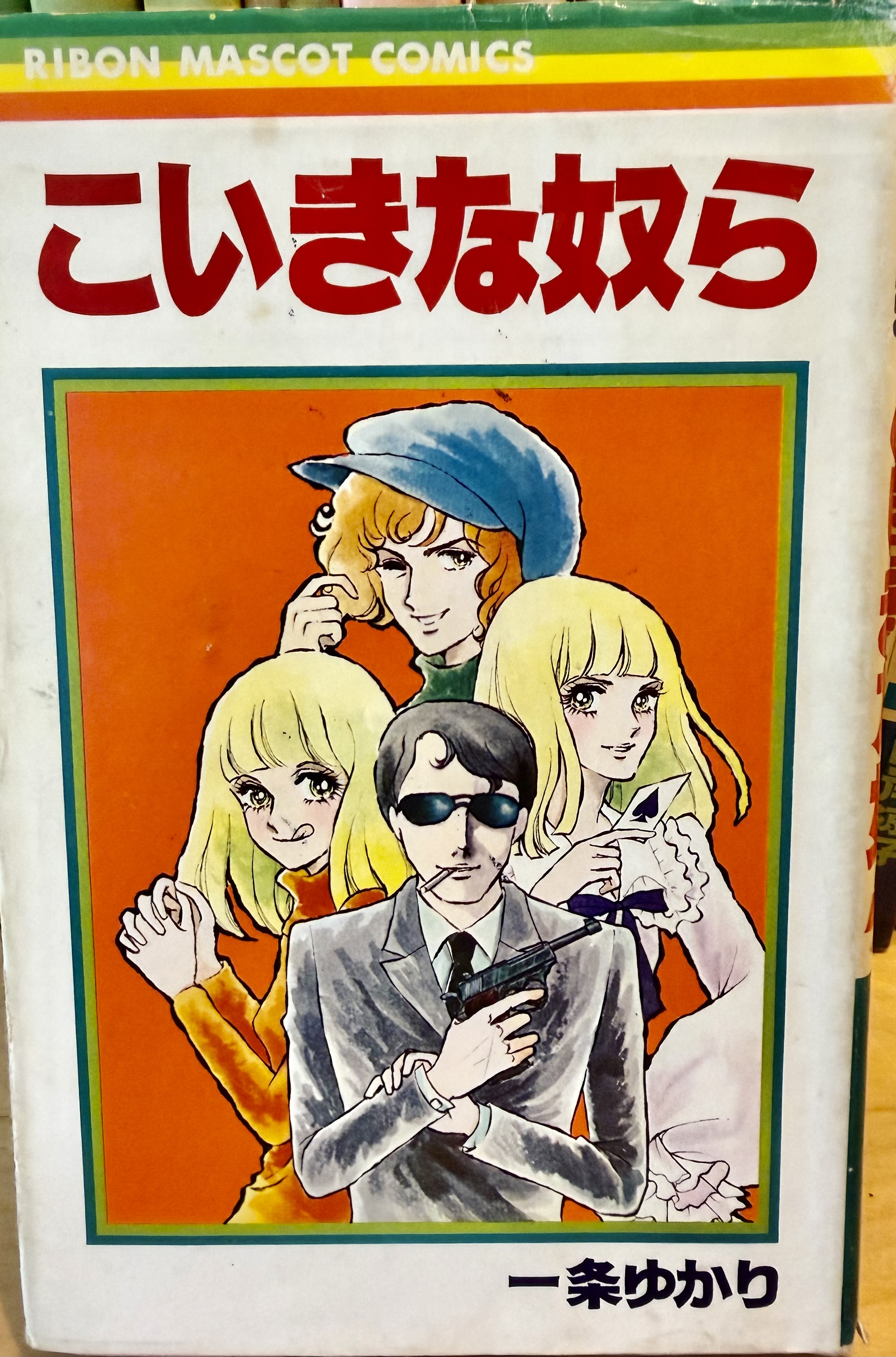
Anime & manga updates

NHK World Japan continues to be a great source of information about Japanese culture with their documentary series.

The Apothecary Diaries Special

The documentary series “Anime Manga Explosion” offers a special on the manga and anime The Apothecary Diaries. It is a fantasy story based on a novel where, in a country inspired by the Tang dynasty’s China, a young girl trained as an apothecary is solving mysteries. The author (Hyūga natsu) and anime director (Naganuma Norihiro) talk about how the story and the anime were produced. This episode aired in May 24, 2025 and will be available as Video On Demand (VOD) until May 24, 2026.

Anime Sanctuaries

There was a documentary series named “Anime Sanctuaries” where the description said “Did you know that a lot of your favorite anime are based in real-life locations? Join us on a pilgrimage around Japan to the “Sanctuaries” that are the inspiration of some of the greatest anime!” Unfortunately, I missed it, there are no VOD available and no more air date. Sorry! Keep an eye and maybe they will broadcast it again.

It was probably referring to the Seichi junrei phenomenon where fans go to visit locations featured in their favourite series. It is also referred as “Anime Tourism.” You can find more information on the following sites: Anime-88 Spots • Connect • DeepLog • Japan Travel • LivingInJapan • TMDb • WebJapan.

Plastic Models

The documentary series “Japanology Plus Mini“ offers an episode about Plastic Models: “Japan’s plastic models are popular worldwide. Shizuoka City leads the nation in plastic model shipments. We look at the city’s plastic model industry, from its history to the latest developments.” It was first aired on November 1 & 2, 2025 and will be available as VOD until November 1, 2026.

More Than Books

This is not about anime or manga, but it talks about a great interest of mine. The documentary series “Today’s Close-up” offers an episode about a new type of Japanese library. Titled “More Than Books: Libraries as Community Hubs” it is described as this: “So-called “lively libraries” that promote new concepts, such as allowing people to chat, eat and drink are gaining popularity, resulting in a sharp increase in users in an era of declining population. Some facilities use books and magazines to promote intergenerational exchanges and resolve local issues. In addition, some local governments have focused on their libraries’ ability to attract users by allowing people to use them for free as a key part of urban development. We visit a library in Gifu that has seen its visitor numbers increase tenfold. What is the potential for public spaces to evolve into places for everyone?” It was aired on November 6, 2025 and will be available as VOD until November 13, 2025.

Revue de ‘zines [002.025.285]

Revue de ‘zines

Je continue (tant bien que mal) mon perpétuel rattrapage sur les magazines et autres ‘zines pertinents dans mon champ d’intérêt… Pour vous éviter le souci de courir après l’information, j’en épluche donc le contenu pour vous. C’est plein de bonnes suggestions de lectures… (Faute de temps et d’énergie, j’ai limité ou omis les hyperliens. Si vous voulez en savoir plus sur un auteur, un titre ou un sujet, vous pouvez consulter par vous-même soit Google ou Wikipedia!)

dBD #195 (Juil.-Août 2025)

Dans le cahier actualités on mentionne la parution d’une étude sur le Boy’s Love (par Mayra Sudal & Priscilla Reculard, chez Ynnis), du manga Nikuko du port de pêche (par Kanako Nishi & Sugisaku, chez Rue de Sèvres), et de deux nouveaux numéros HS de Métal Hurlant: Hellfest et Le cahier de vacances. On y retrouve également un article sur la “Censure & BD: Des liaisons dangereuses?”

À la une de ce numéro on retrouve une entrevue avec Stanislas sur son nouvel album La Fin du monde, chez L’Association. Les entrevues se poursuivent avec Arthur H & Alfred (sur La solidité du rêve, chez Casterman), Dominique Ziegler, Baladi et Denis Robert (sur leurs livres Chacal Hebdo [chez Hoochie Coochie] et Mohicans, connaissez-vous Charlie? [chez Julliard et Florent Massot en poche], Sylvain Repos (sur Yojimbot T.4: Flammes de carbone, chez Dargaud), et Nicolas Presl (sur La ville, chez Atrabile).

“Le Territoire des Mangas” nous présente sur deux pages les nouveautés du genre : Earth Expansion T.1 (par Yasshaa! & Hajime Yamamoto, chez Akata), Centuria T.1 (par Tohru Kuramori, chez Kurokawa), Beryl, De Paysan à Maître d’armes T.1 (par Kazuki Satô, chez Nobi Nobi!), Crows T.1 (par Hiroshi Takahashi, chez Kana), et la réédition de Les Années Douces (par Jirô Taniguchi, chez Casterman).

Dans le Cahier Critique je note seulement Le journal de Hanako par Machiko Kyô, chez IMHO (Top!; “Dessinatrice étonnantes par les sujets qu’elle traite, Machiko Kyô s’est intéressée dans le triptyque Girl x War x Fantasy à la place des femmes japonais pendant la Seconde Guerre mondiale. (…) récit au trait onirique (…)”).

Et les rubriques : Expo du mois (“La lampe Cuny en dessin” à la galerie des Tanneries), L’Inédit du mois (Héros de BD: dessin collectif [G. Pichard, C. Godard, Druillet, Tardi, Tabary, N. Claveleux, F’Murr, JJ Loup, R. Franc, Moebius, S. Clerc, C. Montellier, O. Clavel, Mordillo, JC Forest, Reiser, E. Bilal, Gotlib, JC Mézières] par paru dans Le Bulletin des jeunes en 1977), L’Art de la couverture (Vincent avant Van Gogh, par Sergio Salma, chez Glénat), Intégrale (F’Murr), Avant-Première (extrait de Alva Odyssée, par Aksel Studsgarth & Daniel Hansen, chez Glénat), Hommage (François M. Froideval), et Humeur.

Changement de formule pour s’adapter à l’évolution du marché. Le magazine devient bimestriel, avec plus de pages (128) et plus de rubriques qui accorderont plus de place au auteurs…

Une lecture indispensable pour se tenir au courant des nouveautés en BD.

Métal Hurlant N°13 (novembre 2024)

Ce numéro regroupe 28 courts récits et 11 articles (que je n’ai parcourue qu’en diagonale) sur le thème de la vengeance! Comme pour les numéros que j’ai commentés précédemment, plusieurs des styles (extrêmement variés) des artistes n’étaient pas vraiment de mon goût, mais j’ai trouvé quelques-un des courts récits plutôt intéressants — quoi que tous méritaient sans doute d’être lus. J’ai mis en caractères gras les titres les plus intéressants (narrativement et/ou graphiquement)…

Ce numéro nous présente donc les récits suivants: “Eolarf et Hieronimus” (par Thomas Bidault, 7 p. couleurs), “Tu te souviendras de moi” (par Kevin Sullivan & Simon Leclerc, 9 p. coul.), “Perpetuum vendetta” (par Marc Caro & Cecyle Bay, 7 p. coul.), “Good Boy” (par Matthew Allison & Jonathan Wayshak, 9 p. N&B/coul.), “Hine-Nio-Te-Pô” (par Joseph Callioni, 8 p. coul.), “Vengeance divine” (par Marvin Paval & Fabio Ruotolo, 9p. coul.), “Force de frappe” (par Miguel Vila, 9p. coul.), “Qui vole un oeuf…” (par Lars Gabel, 5 p. coul.), “L’Ombre perdue” (par Nikola Pisarev, 9 p. coul.), “Blattaria” (par Gwendal Briec, 7 p. coul.), “Le vide qui nous sépare” (par Valentin Ramon, 7 p. coul.), “Sous terre” (par Elie Huault, 7 p. N&B), “Le loup qui gagne est celui que tu nourris” (par Jerry Frissen & Afif Khaled, 7 p. coul.), “La Dame du jardin” (par Miguel Martinez Barbero, 7 p. coul.), “Pyrosphore” (par Jacques Després, 9 p. N&B), “Le reliquat” (par Matthew Sheean, 7 p. coul.), “Squash” (par Koren Shadmi, 9 p. coul.), “La machine qui rêve” (par Thierry Martin, 9p. coul.), “L’Oeil du singe” (par Akeussel, 7 p. coul.), “Grenouilles chevauchant un serpent” (par Florian Breuil, 7 p. coul.), “Cthulhu à la montagne” (par Pixel Vengeur, 6p. coul.), “Le voleur Hermès doit mourir” (par Rune Ryberg, 9 p. coul.), “L’Honneur exige satisfaction” (par Simon Roy & Artyom Trakhanov, 9 p. coul.), “Le petit secret” (par Pog & Sagar, 7 p. coul.), “Forme humaine” (par Zoeami, 5 p. coul.), “Viatinni” (par Ké Clero & Toth’s, 9 p. coul.), “La corneille” (par Eliot, 9 p. N&B/coul.), et “L’Échappée” (par Alberto Belmonte, 7 p. coul.).

Une belle découverte quand même.

Pour plus d’Infos: [ Goodreads • Humanos • Nelligan • Wikipedia ]
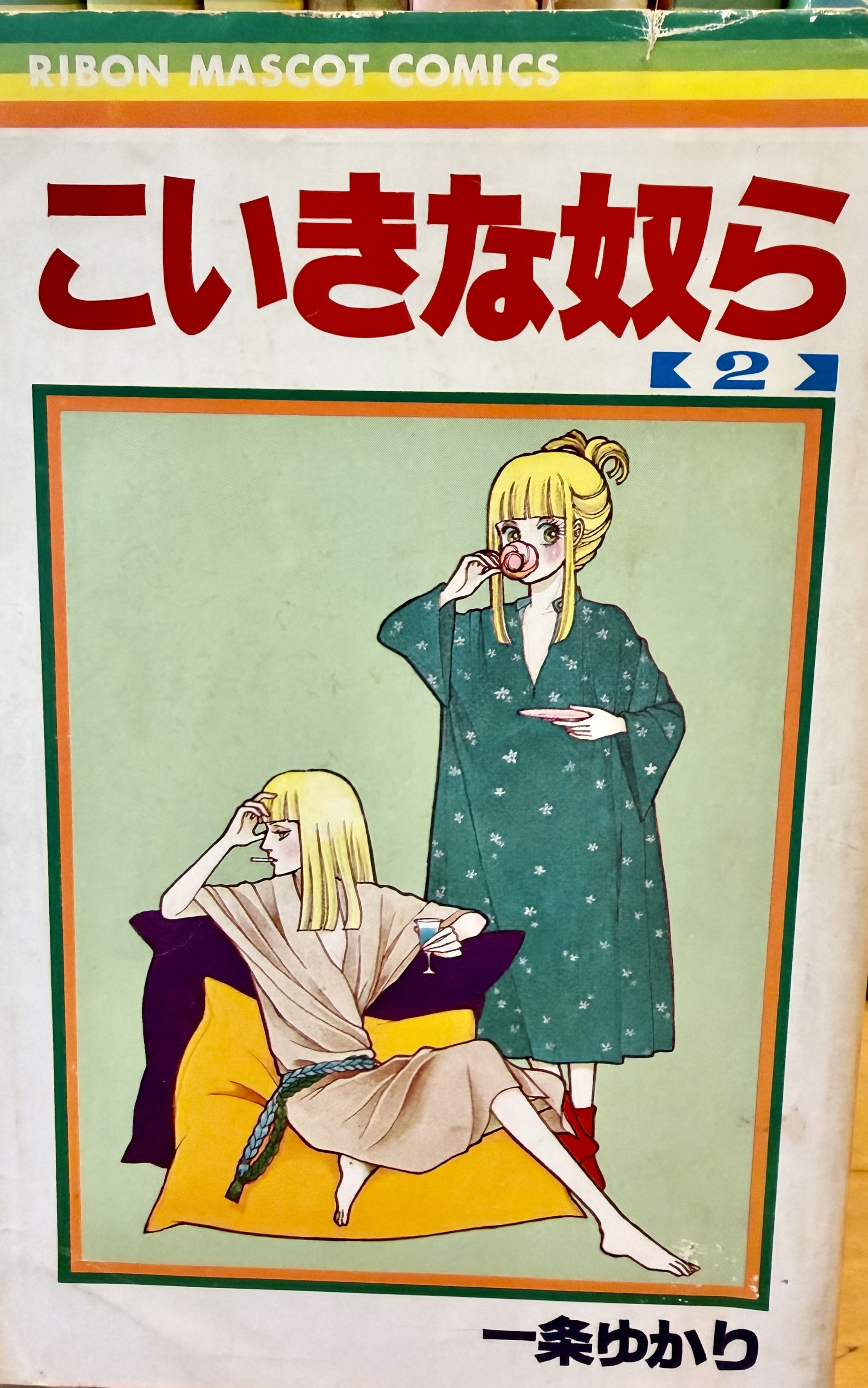
[ Translate ]

Anime & manga updates [002.025.256]

Anime & manga updates

Manben: Otomo

Urasawa Naoki & Otomo Katsuhiro

Another update on Manben: The latest episode of the NHK World documentary series Manben: Behind the Scenes of Manga with Urasawa Naoki (which introduces us to mangaka like Morohoshi Daijiro, Shigeru Mizuki, Nishi Keiko, Chiba Tetsuya, or Iwamoto Nao) is about Otomo Katsuhiro, the internationally renowned legend who created a masterpiece that shaped and revolutionized manga. Urasawa discuss his work with Otomo over the original pages of his manga Domu.

The episode originally aired in Japan on March 24, 2025, but the English version just aired on September 12 and 13, 2025 and is now available to view as VOD (Video on Demand) until September 27, 2025.

Paper film: The curious origins of color Anime

“Much of the first animation came out of France in the early 20th century, but developed mainly in the United States with the rise of film. In Japan, black and white animation began in the nineteen tens, but colour didn’t become prominent until the nineteen sixties. Except for a brief little-known chapter. A U.S. researcher has rediscovered and successfully restored coloured anime created here in the nineteen-thirties. (…) In the 1930s, Japan produced animated movies on paper, not celluloid. A U.S. professor has been restoring existing films, which were known for their full color.”

This news story aired on September 4th, 2025 and is now available as VOD. The 7-min. clip is also available on Youtube.

Adapting Anime Costumes for Live-Action

Direct Talk interviews the stylist and costume designer Nakahara Sachiko who “translates the looks of popular Japanese anime and manga characters into costumes for live-action adaptations. She talks about making an impact on the global stage.” The show aired on July 22, 2025 and is now available as Video On Demand (VOD) until July 22, 2026.

History Uncovered: The Hiroshige Code

“Influential ukiyo-e artist Utagawa Hiroshige‘s “100 Famous Views of Edo“, a series of prints encoding his view of the changing face of Japan.”  Art historian Toshinobu Yasumura, Professor Timon Screech, Hinohara Kenji and Manabu Oishi discuss, interpret and explain the messages hidden in Hiroshige’s art. This episode of “Time and Tide” aired on August 30, 2025 and is now available as Video On Demand (VOD) until August 29, 2026.

[ Traduire ]

Yukari ICHIJO

At the end of February, my wife received a care-package from her sister in Japan. She was doing some decluttering in their parents’ house and she sent my wife a bunch a manga that she had bought in the 70s. They are still in a perfect condition. That’s quite a memorabilia… It includes four manga series: the complete Versailles no bara by Riyoko IKEDA (10 vol.), the complete Designer by Yukari Ichijo (2 vol.), the complete Tea Time by Yukari Ichijo (2 vol.), and the first two volumes (of seven) of Suna no Shiro also by Yukari Ichijo. My wife never got to read the end of the latter because she left Japan. She particularly liked Yukari Ichijo, not because she cared much about her stories, but mostly because she greatly appreciated her shōjo style.

Everybody knows about IKEDA’s Versailles no Bara, but ICHIJO is not very well known in the West. However, Yukari ICHIJO (一条ゆかり) is an important and popular mangaka in Japan as she has published nearly fifty titles and received a couple of prizes for her work: the Kodansha Manga Award  for Yūkan Club in 1986 and the Japan Media Arts Festival Excellence Prize for Pride in 2007.

Her real name is Noriko Fujimoto and, even if she is considered to have greatly contributed to the development of Shōjo manga with her beautiful style and was actually born in 1949, she is generally NOT considered a member of the the Year 24 Group, probably because her themes, narratives and art style are more traditional and less “innovative” than the works of the Group.

Several of her titles were adapted as TV dramas (Designer, Tadashii Ren’ai no Susume, Suna no Shiro), movie (Pride) or anime OVA (Yūkan Club). So it is no surprise that her most well known titles are Yukan Club (1981) and Pride (2003). Her works are generally typical shōjo manga offering romantic thrillers stories with themes of conflits or family problems. For more information: AniList • ANN • AsianWiki • Google • Manga Updates • Wikipedia (Jp / Fr).

I often complained that manga publishers don’t tap enough (or even at all) into the goldmine of manga published in the 70s and 80s. There is a veritable untapped mine of manga out there that I wish were picked up for translation. That’s why I would like to introduce you, as best as I could, to those three titles that I have in my hands (but cannot read!):

デザイナー / Designer

A melodrama about professional success and revenge. It is the story of Ami, a successful model, and her rivalry with Reika, a fashion designer. However, Ami doesn’t know who her parents were and when she discover her mother’s identity, she will only seek revenge on the woman who abandoned her. 2 vol., 1974, serialized in Ribon (Shueisha). For more information: ANN • Goodreads • Google • Manga Updates • Wikipedia Jp.

ティー♥︎タイム / Tea Time

This manga offers us, in two parts, a school romance about the love lives of three handsome, but tortured boys. Shion lives in the mansion where his sister committed suicide. As a tribute to her, he swore never to love anyone again. At his new high school, he reunites with his old friends Souji and Kaoru… and then he meet Shirakawa Mai… It also includes five short stories: He… (彼… / Kare…; 24 p), Beware of Jill (ジルにご用心 / Jiru ni goyōshin; 47 p), How about the bride? (花嫁はいかが⁉︎ / Hanayome wa ikaga⁉; 24 p), Night Fairy (夜のフェアリー / Yoru no fearī; 23 p), and Yukari’s Mini Mini Melhen (ゆかりのミニミニめるへん / Yukari no mini mini meruhen; 2 p).  2 vol., 1976, serialized in Ribon (Shueisha). For more information: Amazon Jp • Google • Manga Updates • Shueisha • Shueisha Reader.

砂の城 / The sand castle

Suna no Shiro depicts the forbidden love of a young couple and their complicated feelings. “In a quiet area of France during WWII, a very young orphan boy was left on the steps of a large mansion on the same day that a daughter was born to the bourgeois family living there. From that day on, Francis and Natalie grew up together and found themselves falling deeply in love. As talk of their marriage began to stir, Natalie suddenly lost her parents to a plane crash, leaving her aunt as her guardian. This aunt, vehemently opposed to Natalie’s engagement to a mere orphan, drove Natalie and Francis to run away together. Unfortunately, they were caught. Rather than be torn apart from each other, Natalie and Francis decide to spend eternity together by jumping off a cliff….” [from MangaUpdates] However, in a cruel twist of fate, both survived, neither knowing what happened to the other. Francis has lost his memory, marries and has a son. When both Francis and his wife tragically die, Natalie decides to take in the boy, but, with time, his resemblance to Francis haunts her… 7 vol., 1977-1981, serialized in Ribon (Shueisha). This manga is available as scanlation (Jshoujo Scans). It was also adapted into a Fuji TV daytime drama in 1997. For more information: Goodreads • Manga Updates • MyAnimeList • MyDramaList • Wikipedia [JP / EN].

[ Traduire ]

Anime & manga update [002.025.228]

Anime & manga update: Manben

Another update on Manben: The latest episodes of the NHK World documentary series Manben: Behind the Scenes of Manga with Urasawa Naoki (which introduces us to mangaka like Shigeru Mizuki, Nishi Keiko, Chiba Tetsuya, or Iwamoto Nao) is about Morohoshi Daijiro, a master of mystery. We see him ink a draft of the stand-alone short story 俺が増える(“Ore ga Fueru” / lit. “I will increase”) for the ongoing anthology Daijiro Morohoshi Theater (Moroboshi daijirō gekijō serialized in Shogakukan’s Big Comic Zōkan-gō [Big Comic Special] and compiled in vol. 3 — of six tankōbon so far). The episode originally aired in Japan in November 2020 (available on Youtube), but the English version just aired on July 16, 2025 (at 09:10 PM) and July 17, 2025 (at 03:10 AM, 09:10 AM, and 03:10 PM) and should be soon available to view as VOD (Video on Demand).

Daijiro Morohoshi is a mangaka specializing in strange, horror, mystery or folklore stories. In 1970, he made his debut in COM magazine. In 1974, he was selected for the 7th Tezuka Award for the short story “Seibutsu Toshi” and he won the fourth Tezuka Osamu Cultural Prize in 2000 with Saiyū Yōenden. His works have not been very successful and he is not very well known in the West (his only works translated are BOX: Qu’y a-t-il dans la boite? published in French by Le Lézard Noir and Shiori et Shimiko partially (5 vol.) published in French by Doki Doki), but he received enormous recognition from his peers (he is known as the “manga artist of manga artist”) particularly for his detailed style. His majors works are Yōkai Hunter (1974), Mud Men [1975-82], Ankoku Shinwa [1976], Kōshi Ankokuden [1977-78] and Saiyū Yōenden [1983, ongoing].

For more info: ANN • Manga Updates • Wikipedia [EN • FR • JP]

[ Traduire ]

Revue de ‘zines [002.025.214]

Revue de ‘zines

Je continue mon perpétuel rattrapage sur les magazines et autres ‘zines pertinents dans mon champ d’intérêt… Pour vous éviter le souci de courir après l’information, j’en épluche donc le contenu pour vous. C’est plein de bonnes suggestions de lectures… (Faute de temps et d’énergie, j’ai limité ou omis les hyperliens. Si vous voulez en savoir plus sur un auteur, un titre ou un sujet, vous pouvez consulter par vous-même soit Google ou Wikipedia!)

Animeland #250 (Avril – Juin 2025)

Ce numéro très spécial (#250!) nous offre un dossier volumineux (146 p.!) et exhaustif sur Lady Oscar et le manga shôjo : le shôjo manga avant La Rose de Versailles, le manga de La Rose de Versailles, portrait de Riyoko Ikeda, les autres oeuvres de Riyoko Ikeda (Bara Yashiki no shôjo, Freesia no Asa, Très cher frère… (lire mon commentaire), Orpheus no Mado, Claudine, Ayako, Ten no Hate Made-Poland Hishi), l’interprétation de Takarazuka, l’archétype de la fille-prince, les autrices phares des années 1970 (Yasuko Aoike, Ryôko Takashina, Waki Yamato, Yukari Ichijô, Yumiko Ôshima, Ryôko Yamagishi, A-ko Mutsu), Moto Hagio (portrait, entrevue), la galaxie Margaret, l’anime de La Rose de Versailles, adaptation française, portrait d’Osamu Dezaki (Dir.), entrevue avec Michi Himeno (char. Design), le studio TMS,  entrevues avec Keiichi Ishiyama, Shiro Aono et Yuuji Toki, et, finalement, un bref portrait de Eiko Hanamura et la prépublication exclusive de son histoire courte “Une autre moi” (30 pages, en collaboration avec Akata) complètent ce dossier.

Le numéro se conclut avec quelques chroniques: Japon (Le dit du Genji) et Jeu Vidéo (rencontre avec Daisuke Ishiwatari, créateur de Guilty Gear).

Une lecture incontournable et essentielle pour tous fans d’anime et de manga (il est toutefois impardonnable d’avoir omis Eroica de la liste des oeuvres de Riyoko Ikeda).

Canal BD #159   (Fév. – Mars 2025)

Canal BD est un autre périodique dédié à la bande dessinée, mais que je n’ai pas l’habitude de lire souvent, car il n’est pas disponible à ma bibliothèque locale (quoi que je puisse l’avoir par prêt entre biblio). De plus, c’est un magazine qui est plus orienté pour les libraires (Canal BD étant une chaîne de librairies — avec des listes de parutions sans beaucoup de détails et beaucoup de publicités), il n’offre que des présentations (et non des commentaires critiques) et couvre très peu les mangas.

La section “Gros Plan” nous introduit à Daemon (Ronoan Toulhoart & Vincent Brugeas, chez Le Lombard) et Première Dame (Jean-Philippe Payraud & Didier Tronchet, chez Glénat). Dans la section “Sélection” on présente des parutions récentes avec un peu plus de détails. J’y note Arzak: Destination Tassili (Moebius, chez Moebius Prod). La section “Jeunesse” fait de même, mais pour les parutions jeunesse. La section “Interview” nous offre une entrevue avec Mathieu Bablet et Guillaume Singelin (sur Shin Zéro, chez Rue de Sèvres).  La section “Meilleures Ventes” présente Blake et Mortimer #30: Signé Olrik (Yves Sente & André Juillard, chez Ed. Blake et Mortimer) pour la BD et Instinct T.1 (inoxtag chez Michel Lafon – c’est du manga ça?), My Hero Academia T.40 (Kohei Horikoshi, chez Ki-oon) et One-Punch Man T.30 (Yusuke Murata, chez Kurokawa) pour le manga. La section la plus intéressante pour moi est sans doute “BD du Monde” où l’on retrouve Tokyo, ces jours-ci T.2 (Taiyô Matsumoto, chez Kana) et Frères du Japon (Taiyô Matsumoto, chez Delcourt), ainsi que Dohohedoro: Chaos Edition T.1 (Q-Hayashida, chez Soleil).

Une lecture intéressante pour se tenir au courant des nouveautés en BD. Par contre, ce qui est le gros avantage de ce magazine c’est qu’il est aussi disponible gratuitement en ligne!

dBD #193 (Mai 2025)

Dans le cahier actualités on mentionne la parution du premier volume du magazine de prépublication collectif Manga Issho (300 pages offrant 18 auteurs et 14 histoires, fruit de la collaboration entre les éditeurs Altraverse, Kana, Planeta Comic et Star Comics, 4,90 €, chez Kana), de Shotaro Ishinomori: Il était une fois le roi du manga (par Claude Leblanc, chez IMHO), et de Harem End (Shintaro Kago, chez IMHO). On retrouve également un article qui souligne les vingt-cinq ans de la maison d’édition L’Employé du Moi. De plus, suite à la “Mauvaise Humeur” de Frédéric Bosser dans le #192, Dany réplique avec des précisions sur l’affaire Spirou et la Gorgone Bleue — Dupuis ayant cessé la commercialisation de l’album suivant des accusations de racisme à l’égard de Dany & Yann.

À la une de ce numéro on retrouve une entrevue avec Matthieu Bonhomme (sur Charlotte Impératrice T.4, avec Nuri, chez Dargaud). Les entrevues se poursuivent avec Alain Ayroles & Hervé Tanquerelle (sur La terre verte, chez Delcourt), Jean-Paul Krassinsky (sur De pierre et d’os, d’après Bérengère Cournut, chez Dupuis), Homs (sur Le Diable et Coral, chez Dargaud), et Matz (sur L’Or du spectre, avec Philippe Xavier, chez Le Lombard et Les papillons ne meurent pas de vieillesse, avec Frédéric Bézian, chez Casterman).

On retrouve également un article sur l’art de la couverture en prenant pour exemple Enfermé: Mathurin Réto, pupille à Belle-Île de Julien Hillon et Renan Coquin. Dans la même idée, on nous présente (à l’occasion de la parution de L’art de Bretécher chez Dargaud et de l’exposition Signé Bretécher au musée de la BD d’Angoulème) quelques crayonnés de recherche pour des planches d’Agrippine et du Destin de Monique.

Le Coup de Coeur du Mois va à Lisa Blumen pour Sangliers (chez L’Employé du mois). Il n’y a toujours aucune section sur les mangas dans ce numéro. Dans le Cahier Critique je note Louve T.1 par Miyako Miiya, chez Rue de Sèvres (Super!; “Une succession de chapitres qui se grignotent comme des histoires courtes. Un récit plein de poésie, porté par un dessin charbonneux à l’effet saisissant”).

Une lecture indispensable pour se tenir au courant des nouveautés en BD.

dBD #194 (Juin 2025)

Dans le cahier actualités on mentionne la parution de Tout savoir sur les Chevaliers du Zodiaque et les héros en armure (par Bounthavy Suvilay, chez Ynnis), Saint Seiya Deluxe T.1 (par Masami Kurumada, chez Kana), Tanaki & Amane (par Fumi Yoshinaga, chez Soleil), Dragon Ball: Le roi démon Piccolo T.1 (version colorisée, par Akira Toriyama, chez Glénat), et Dog Signal T.1 (par Saya Miyauchi, chez Soleil). On retrouve un article sur le festival d’Angoulème et la controverse qui entoure la gestion de ses organisateurs, L’Humanité en appellant même au boycott pour l’an prochain.

À la une de ce numéro on retrouve une entrevue avec James Tynion IV (sur The Nice House by the Sea T.1 avec Alvaro Martinez Bueno, Something is Killing the Children T.8 avec Werther Dell’Edera, The Department of Truth T.5 avec Martin Simmonds, Le Déviant T.1 avec Josh Hixson, et L’Étrange Quotidien de Christopher Chaos T.1 avec Tate Brombal & Isaac Goodhart, tous chez Urban Comics).  Les entrevues se poursuivent avec Stéphane Oiry (sur Les héros du peuple sont immortels, chez Dargaud), Elie Huault (sur Cometa, chez Les Humanoïdes Associés), Bruno Duhamel (sur Whisky, avec David Ratte, chez Grand Angle), et Pierre Alexandrine (sur L’Amourante, chez Glénat). On retrouve également un article sur l’art de la couverture en prenant pour exemple Les Parrains: Il était une fois à New York T.1-3 par David Chauvel, Erwan Le Saëc & Thomas Ehretsmann, chez Delcourt.

Côté mangas on nous offre (enfin!) une entrevue avec Usamaru Furuya (sur La Musique de Marie, chez IMHO et Je voudrais être tué par une lycéenne T.1-2, chez Delcourt). La chronique Ça vaut le détour mentionne également Le Gardien des étoiles (par Isuzu Uemura, chez Rue de Sèvres; “un manga humaniste et apaisant”).  Et dans le Cahier Critique je note Watership Down (par James Sturm & Joe Sutphin, d’après Richard Adams, chez Mr Toussaint Louverture), Sorcières T.1 par Daisuke Igarashi, chez Delcourt (Super!; “réédition (…) de ce manga atypique précédemment paru chez Casterman en 2007”), et Great Kaiju Gaea-Tima T.1 par Kent, chez Ki-oon (Super!; “postulat narratif audacieux (…), l’intrigue promet quelques développements intéressants”).

Une lecture indispensable pour se tenir au courant des nouveautés en BD.

[ Translate ]

Anime & manga update [002.025.208]

Anime & manga update

Update: Young Magazine English version

NHK World News reports that Kodansha  announced that, to commemorate the magazine’s 45th anniversary, it is releasing a special English-language edition of Young Magazine, its popular magazine for young adults. According to NHK World Japan, “Young Magazine USA will have about 1,000 pages featuring 20 titles on themes including Sci-Fi and cyberpunk.” Kodansha will hand out the special edition at Anime NYC in August 21-24 and at Kinokuniya  bookstores in the US from August 21 to November 10. It is unclear if this will be a one-shot edition or if more issues of the magazine are planned. According to ANN, “Readers will be able to vote for their favorites among 16 eligible titles, with the winners earning serialization on the K MANGA App.” [Sources: ANN • NHK World Japan]

The Professionals

Another interesting TV series on NHK WORLD Japan is “The Professionals“ about “exceptional people who are breaking new ground and making a difference in their area of expertise.” There are currently eight episodes available. Yesterday, I watched an interesting episode about Honda Tsuneyuki, a toy developer who designs capsule toys. He introduced capsule toys of unprecedented size: 7-centimetre ! In this documentary, we follow him as he is producing the capsule toy of a big Gundam head.

“A Tiny Universe in the Palm of Your Hand: Honda Tsuneyuki, Toy Developer” aired July 25 (10:10 PM) and July 26 (06:10 AM, 11:10 AM, 05:10 PM), but should be available as VOD soon.

Anime & Manga Explosion !

The latest episode of the NHK WORLD Japan documentary series “Anime & Manga Explosion !” is about anime and manga adapting mythological themes. The first part tells us about the anime adaptation of Masami Kurumada’s manga Saint Seiya directed by Morishita Kozo. The second part talks about a manga inspired by the Japanese folk tale of Momotaro (with a serious twist!): Tougen Anki by Yura Urushibara — which has just started airing on Nippon TV as an anime adaptation by Studio Hibari under the direction of Ato Nonaka. In this episode they mentioned Anime News Network !

“Classic Tales Reborn: SAINT SEIYA / TOUGEN ANKI” aired July 26 (11:10 PM) and July 27 (05:10 AM, 10:10 AM, 04:10 PM), but should be available as VOD soon. There are eight episodes of  “Anime & Manga Explosion !” currently available as Video On Demand (VOD).

[ Traduire ]

Anime & manga updates [002.025.194]

Anime & manga updates

Manben

I’ve talked about “Manben” a couple of years ago, but here’s another update.

The latest episodes of the NHK World documentary series Manben: Behind the Scenes of Manga with Urasawa Naoki (which introduces us to mangaka like Shigeru Mizuki, Nishi Keiko or Chiba Tetsuya) is about Iwamoto Nao, a popular shojo manga artist known for her rich worlds of fantasy, romance, and adventure. Over a four-day period, we see her work on pages for Seven Knights of the Marronnier Kingdom. The episode originally aired in Japan in October 2020, but the English version just aired on July 12, 2025 (at 09:10 PM) and July 13, 2025 (at 03:10 AM, 09:10 AM, and 03:10 PM) and should be soon available to view as VOD (Video on Demand).

Iwamoto Nao (岩本 ナオ) is a shōjo mangaka who made her debut when she received the 10th Gekkan Flowers Comic Audition Golden Flower Award for her work “Sono Kanojo no Sonzai” which was subsequently published in the May 2004 issue of Monthly Flowers. She also received in 2009 the 55th Shogakukan Manga Awards in Shojo category for Machi de Uwasa no Tengu no Ko. She is mostly known for the latter as well as for Kin no Kuni Mizu no Kuni and Marronnier Oukoku no Shichinin no Kishi, but she has published more than half a dozen titles:

  • スケルトンインザクローゼット [Sukeruton in za Kuroozetto / Skeleton in the Closet] : a collection of 7 stories, serialized in Flowers, Shogakukan, 2005.
  • イエスタデイ、イエス ア デイ[Iesutadi Iesu a Di / Yesterday, Yes a Day] : serialized in Flowers, Shogakukan, 2006, 1 vol.
  • あめなしむらやくば さんぎょうか けん かんこうがかり [Amenashi-mura Yakuba Sangyou-ka ken Kankougakari ]: serialized in Rinka, 2007, 3 vol.
  • 町でうわさの天狗の子 [Machi de Uwasa no Tengu no Ko / lit. “The Tengu Child Rumored in Town”] : serialized in Flowers, Shogakukan, 2007, 12 vol. Translated in French by Kazé as Spiritual Princess. [Nelligan]
  • ジャイキリ読んで〇〇してきました [Jaikiri Yonde Maru Maru Shite Kimashita / lit. “I Started Doing 〇〇 After Reading Giant Killing”] : an essay manga published in “Giant Killing extra”, Kodansha, 2010.
  • 金の国水の国 [Kin no Kuni Mizu no Kuni / lit. “Gold Kingdom and Water Kingdom”] : serialized in Flowers, Shogakukan, 2014, 1 vol. It was adapted into an anime movie in 2023 and translated in English by Seven Seas. Also translated in French by Akata as Les noces de l’or et de l’eau.
  • 七叶树王国的七名骑士 [Marronnier Oukoku no Shichinin no Kishi / lit. “Seven famous swordsmen of the Seven Leaf Kingdom”] : serialized in Flowers, Shogakukan, 2016, 10 vol., ongoing series. Translated in French by Akata as Les 7 chevaliers du royaume des Marronniers.
  • 岩本ナオ 古今東西しごと集 [Iwamoto Nao Kokon Touzai Shigoto-shuu / lit. “Nao Iwamoto: A collection of work from around the world, past and present”] : an anthology collecting 4 stories to celebrate her 15th year anniversary in the industry, Shogakukan, 2019.

[ AniList • ANN • Goodreads • LesLibraires • MangaUpdates • Nelligan • Wikipedia ]

Léviathan

The anime adaption of Scott Westerfeld‘s young adult novel series, Leviathan, is now available on Netflix. Produced by Studio Orange (Trigun Stampede, Beastars), it is set in an early twentieth century alternate steampunk past and tells the story of an Austrian fugitive prince and a Scottish airman in disguise who find themselves aboard the HMS Leviathan, a genetically engineered airship, fighting mechanized war machines in order to prevent a world war.

I have now watch half of the twelve episodes of the series and I must say that I am VERY impressed with this anime. It is quite faithful to the original book (of course, like all adaptation, there are a few shortcuts here and there, and some changes, but it is very respectful of the original) and the animation is of very high quality. It is somewhat reminiscent of Gundam (character designs) and Miyazaki (particularly the watercolour storyboard of the end credits by Christopher Ferreira & Alex Alice). It is an excellent work that I strongly recommend to all anime fans, particularly if you already know the novels or if you are interested in alternate history and steampunk.

Leviathan, Japan, 2025, anime series, 12 episodes of 25 min.: Dir.: Christophe Ferreira; Scr.: Yuichiro Kido, Yukata Yasunaga (based on Scott Westerfeld’s novels); Studio: Qubic, Orange; Anim. Prod.: Tokuya Ogawa, Daigo Ikeda; Voice dir.: Yoshimi Iide;  Char. Des.: Ayumi Kurashima;  Mecha des.: Takehiko Hoashi, Shinobu Tsuneki;  Creature des.: Le Yamamura;  Art dir.: Tadashi Nakajima;  Ed.: Edit Room Seyama, Rie Matsubara; Mus.: Nobuko Toda, Kazuma Jinnouchi, Joe Hisaishi (op & closing theme); Prod.: Katrina Minett, Yoshihiro Watanabe; Distr.: Netflix; Cast: Natsumi Fujiwara (Dylan), Ayumu Murase (Alek), Shunsuke Sakuya (Volger), Yasuhiro Mamiya (Klopp), Mie Sonozaki (Dr. Nora Barlow), Ivan Shibata (Newkirk), Fairouz Ai (Lilit), Hiroki Touchi (Tesla), Ikuko Tani (Nene), Genta Nakamura (Hoffman), Daichi Hayashi (Rigby), Satoshi Niwa (Matthews), Naoto Kobayashi (Thomas), Yukitaro Namura (Hirst), Michio Hazama (George Darwin), Takahiro Fujiwara (Pavel), Naomi Kusumi (Zaven), Tessyo Genda (Sultan).

[ ANN • IMDb • Wikipedia ]

[ Traduire ]

Une rose seule

“Rose arrive au Japon pour la première fois de sa vie, sur les traces d’un père qu’elle n’a jamais connu. Celui-ci, décédé depuis peu, lui avait laissé une lettre à son intention, l’invitant à se rendre dans ce pays si lointain qui est en partie le sien. Accueillie à Kyoto, elle est guidée par Paul, l’assistant de son père, à travers un itinéraire imaginé par le défunt, semé de temples et de jardins, d’émotions et de rencontres, qui va lui permettre dépasser l’amertume et la colère liées à l’absence pour se laisser emporter par le tourbillon de ses origines enfin retrouvées.”

“Kan Takahama dépeint avec subtilité les tourments intérieurs et l’intimité des sentiments dans cette réinterprétation lumineuse du récit d Muriel Barbery.”

[Texte du site de l’éditeur; voir aussi la couverture arrière]

(Attention, lire l’avertissement de possible divulgacheurs)

Une rose seule [薔薇が咲くとき / Bara ga Saku Toki / lit. “Quand les roses fleurissent”] est un manga seinen tout en couleurs de Kan Takahama. Il a d’abord été prépublié en format électronique dans Torch en 2023, puis compilé en volume chez Leed en 2024. Il a été traduit en français chez Rue de Sèvres. Takahama, qui semble se spécialiser dans les histoires aux relations amoureuses complexes et difficiles, adapte ici un roman éponyme de Muriel Barbery (L’Élégance du hérisson). Elle nous offre ainsi avec une grande sensibilité une quête d’identité à travers la détresse morale, le deuil et enfin l’acceptation de soi, puis de l’autre et enfin l’amour. Le style un peu particulier, mais très beau, de Takahama se prête bien à ce genre de récit. Une lecture agréable et touchante.

Je note deux entrevues avec Barbery et Takahama sur TV5 et Youtube qui méritent qu’on y jette un coup d’oeil.

Une rose seule, par Kan Takahama (d’après le roman de Muriel Barbery [Actes Sud, 2020]; traduction et adaptation par Corinne Quentin). Paris: Rue de Sèvres, août 2024. 224 pages. 21.4 x 27.5 cm. 22.00 € / $42.95 Can. ISBN 978-2-81020-079-5. Pour un lectorat jeune adulte (14+). Sens de lecture occidental.

Vous trouverez plus d’information sur les sites suivants:

[ Amazon • Goodreads • Google • Nelligan • Wikipedia • WorldCat ]

© Rue de Sèvres édition 2024

[ Translate ]

Isabella Bird vol. 11

“Le cruel Charles Maries refuse de laisser Ito, son employé aux yeux de la loi, continuer son périple avec Miss Bird. Décidée à récupérer son guide-interprète, l’aventurière fait donc au botaniste une proposition qu’il ne peut pas décliner : le jeune japonais l’accompagnera à Biratori, mais il en profitera pour recueillir des échantillons de plantes. Un présent, plus aucun obstacle ne se dresse entre Isabella et la suite de son voyage ! Il est temps pour elle de rencontrer les mystérieux Aïnous, ce peuple à la culture bien particulière et dont l’Occident sait si peu de choses…

Lancez-vous à la découverte d’un Japon traditionnel désormais disparu à travers les yeux de l’intrépide Isabella Bird ! Basé sur les écrits réels de l’aventurière, Isabella Bird, femme exploratrice est un récit passionnant sur la rencontre de deux mondes, dessiné avec un rare souci du détail par Taiga Sassa, nouveau talent prometteur !”

[Texte de la couverture arrière]

(Attention, lire l’avertissement de possible divulgacheurs)

Isabella Bird, femme exploratrice (ふしぎの国のバード / Fushigi no Kuni no bādo [Bird] / littéralement: “Bird au pays des merveilles”) nous offre le récit de voyage de la célèbre exploratrice britannique au Japon du début de l’ère Meiji en se basant sur sa correspondance avec sa soeur Henrietta qui fut publiée en 1880 sous le titre Unbeaten Tracks in Japan. Écrit et dessiné par Taiga Sassa, ce manga seinen historique a d’abord été publié en feuilletons dans le magazine Harta (Enterbrain), puis compilé en volumes chez Kadokawa. Le premier volume est paru en mai 2015 et le plus récent volume, le douzième, est paru au Japon en décembre 2024. J’ai commenté tous les volumes précédents.

Ce manga nous fait le récit très romancé de l’expédition d’Isabella Bird à Hokkaidō, nous offrant une fenêtre intéressante sur le Japon de l’ère Meiji. Isabella arrive enfin à Hokkaidō et a un premier contact avec les Aïnous. Elle se rends compte toutefois que son séjour ne sera pas sans difficultés. Si le récit est un peu inégal, la qualité du dessin, précis et détaillé, est notable. L’aspect ethnologique du récit n’est pas sans rappeler Golden Kamuy, qui offre une histoire un peu similaire mais souvent plus humoristique et surtout beaucoup plus violente. L’ouvrage nous offre donc une lecture à la fois agréable, distrayante mais aussi très instructive. Un manga indispensable surtout pour les amateurs d’histoire et de culture Japonaise. 

Isabella Bird, femme exploratrice T.11 par Taiga SASSA. Paris: Ki-oon (Coll. Kizuna), août 2024. 208 pg, , 13 x 18 cm, 7,95 € / $15.95 Can., ISBN 979-10-327-1740-0. Pour lectorat adolescent (12+).

Vous trouverez plus d’information sur les sites suivants:

[ Amazon • Goodreads • Google • Nelligan • Wikipedia • WorldCat ]

© Taiga Sassa 2024.

[ Translate ]

Olympia Kyklos vol. 7

“Un nouveau péril menace la cité de Démétrios. Cette fois, c’est une épidémie qui menace de décimer Tritona ! Alors que ses concitoyens sont au plus mal, Démétrios est sommé une fois de plus par le patriarche de trouver une idée qui sauvera les siens. Sport, manga, théâtre, musique : au gré de ses allers-retours avec l’époque contemporaine, le jeune peintre sur céramiques a déjà prouvé les vertus de l’expression de soi sous bien des formes. Saura-t-il relever cet ultime défi alors qu’il atterrit dans un Japon en pleine pandémie de Covid ? Et si un autre voyageur temporel lui apportait un concours inespéré ?” [Texte de la couverture arrière]

Olympia kyklos (オリンピア・キュクロス / lit. “Cercles Olympique”) est un manga seinen par Mari Yamazaki qui a été sérialisé au Japon dans le magazine bimensuel Grand Jump entre mars 2018 et juillet 2022 avant d’être compilé en sept volumes chez Shueisha. Cette série humoristique consacré aux sports olympiques et à la résilience humaine, se conclut alors que Tritonia est menacée par une épidémie mortelle. Démétrios se retrouve une fois de plus transporté par Zeus à Tokyopolis, pour y découvrir comment les japonais gèrent-ils la pandémie de COVID-19.  Pour fournir au héros une solution, Yamazaki croise le récit avec une autre de ses séries de manga: Thermae Romae. L’ingénieur romain Lucius construira donc une station thermale à Tritonia, car en plus du port du masque, une bonne hygiène (se laver les mains!) est la meilleurs façon de combattre l’épidémie (dans la mesure où l’on garde ses distances). Une excellente série, hilarante, mais aussi très didactique. 

Olympia Kyklos vol. 7 par Mari Yamazaki.  Bruxelles: Casterman (Coll. Sakka), septembre 2024. 208 pages, 13.2 x 18.1 cm, 8,45 € / $C 15.95, ISBN 978-2-203-24030-8. Pour lectorat adolescent (14+).

Voir mes commentaires des volumes précédents. 

Vous trouverez plus d’information sur les sites suivants:

[ Amazon • Goodreads • Google • Nelligan • Wikipedia • WorldCat ]

© 2018 Mari Yamazaki. All Right Reserved.

[ Translate ]

Anime & manga updates [002.025.165]

Anime & manga updates

Manben

The latest episodes of the NHK World documentary series Manben: Behind the Scenes of Manga with Urasawa Naoki (which introduces us to mangaka like Shigeru Mizuki or Nishi Keiko) is about Chiba Tetsuya, the creator of the legendary series Ashita no Joe. The episode originally aired in Japan in 2020, but the English version just aired on June 13, 2025 (at 09:10 PM) and June 14, 2025 (at 03:10 AM, 09:10 AM, and 03:10 PM) and should be soon available to view as VOD (Video on Demand).

Tetsuya CHIBA [jp], now 86 year-old, talks about creating Ashita No Joe and we see him working on a few pages of his latest autobiographical series, Hinemosu no Tari Nikki [ひねもすのたり日記 / lit. “Daytime diary”]. He was recently the first mangaka to be honoured with the prestigious Order of Culture award. 

Midnight Diner

If you are into Japanese drama tv series, I strongly recommend Midnight Diner [深夜食堂 / Shinya shokudō]. Based on a manga by Yarō Abe, it offers five seasons of ten 25-minute episodes each, directed by Joji Matsuoka and starring Kaoru Kobayashi. The first three seasons aired in Japan on MBS from October 2009 to December 2014 and the last two seasons (titled Midnight Diner: Tokyo Stories) aired on Netflix from October 2016 to October 2019. All five seasons are now available subtitled on Netflix. It tells the story of a chef, known only as “Master”, who operate a 12-seat late-night diner in Shinjuku. It is opened from midnight to 7 am and the menu offers only Tonjiru (pork miso soup), but the chef can cook whatever customers request as long as he has the ingredients for it. Each episode focuses on one specific Japanese dish and the life drama of one of his regular costumer. It has also spawn two movies (in 2014 and 2016). It is a really great series as it offers the drama of daily life, is often funny and sometimes falls into fantasy (or magical realism). I really like it.

Leviathan

The anime adaption of Scott Westerfeld‘s young adult novel series, Leviathan, is coming to Netflix on July 10th. Produced by Studio Orange (Trigun Stampede, Beastars), it is set in an early twentieth century alternate steampunk past and tells the story of an Austrian fugitive prince and a Scottish airman in disguise who find themselves aboard the HMS Leviathan, a genetically engineered airship, fighting mechanized war machines in order to prevent a world war. It is quite promising. You can watch the teaser on Youtube:

[ Traduire ]