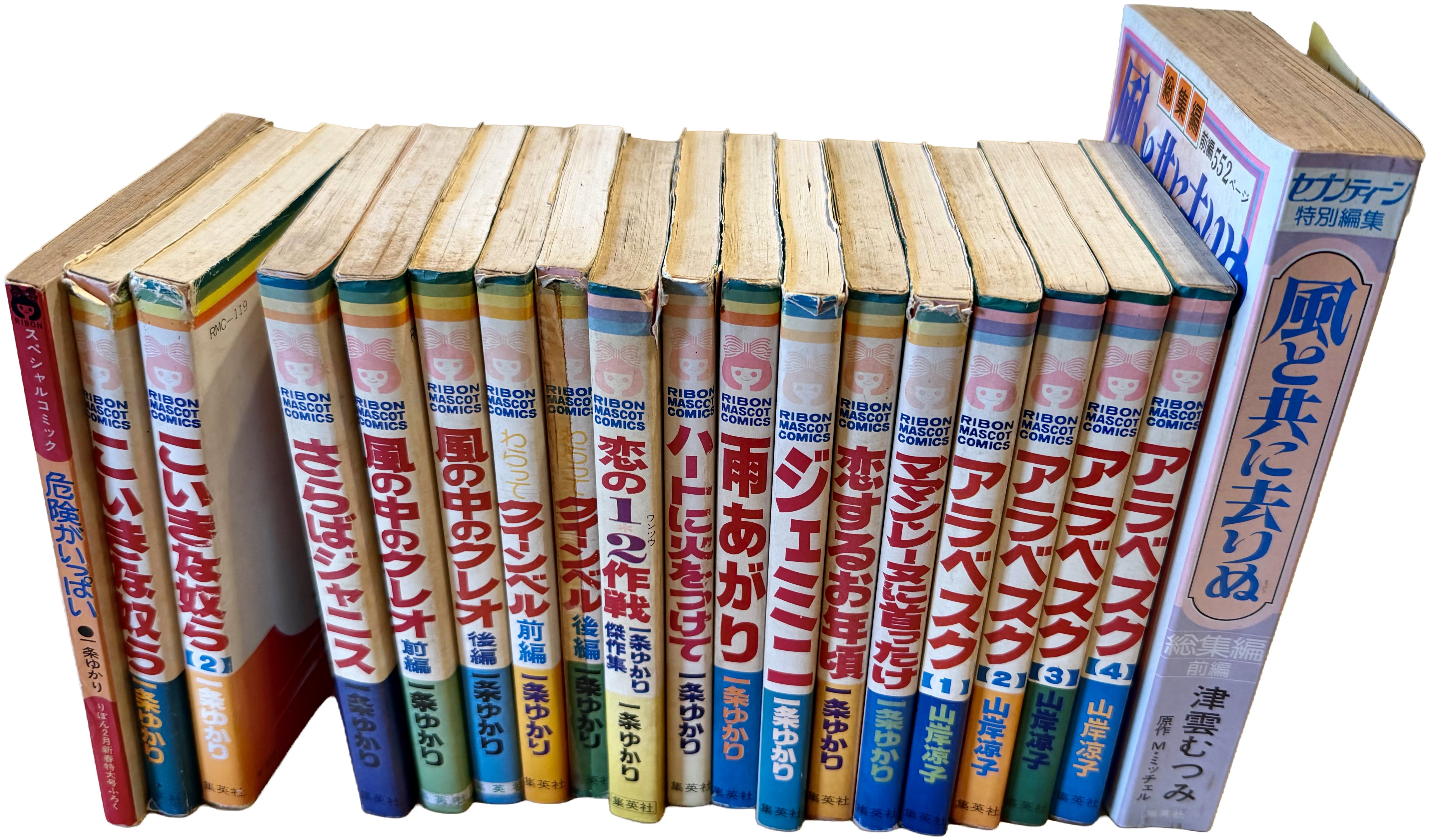
My wife received another care package from her sister. She was doing some cleaning up in the house of their childhood. She sent a bunch of manga that my wife bought in her teens. It’s a good example of the shōjo manga that girls were reading in the seventies.
Those manga were mostly aimed at young teen girls and the style of the artwork would probably be seen as old-fashioned today. For those reasons, it is unlikely that any publishers would be interested in translating them. I find this a little sad, because those titles were good and popular entertainment at the time and people today should be aware of this. You cannot understand the history of manga without knowing this…
The first fourteen books are all by the same mangaka: Yukari Ichijo (一条ゆかり). I have already talked about her; I guess my wife liked her stories a lot. It’s mostly romantic comedies.
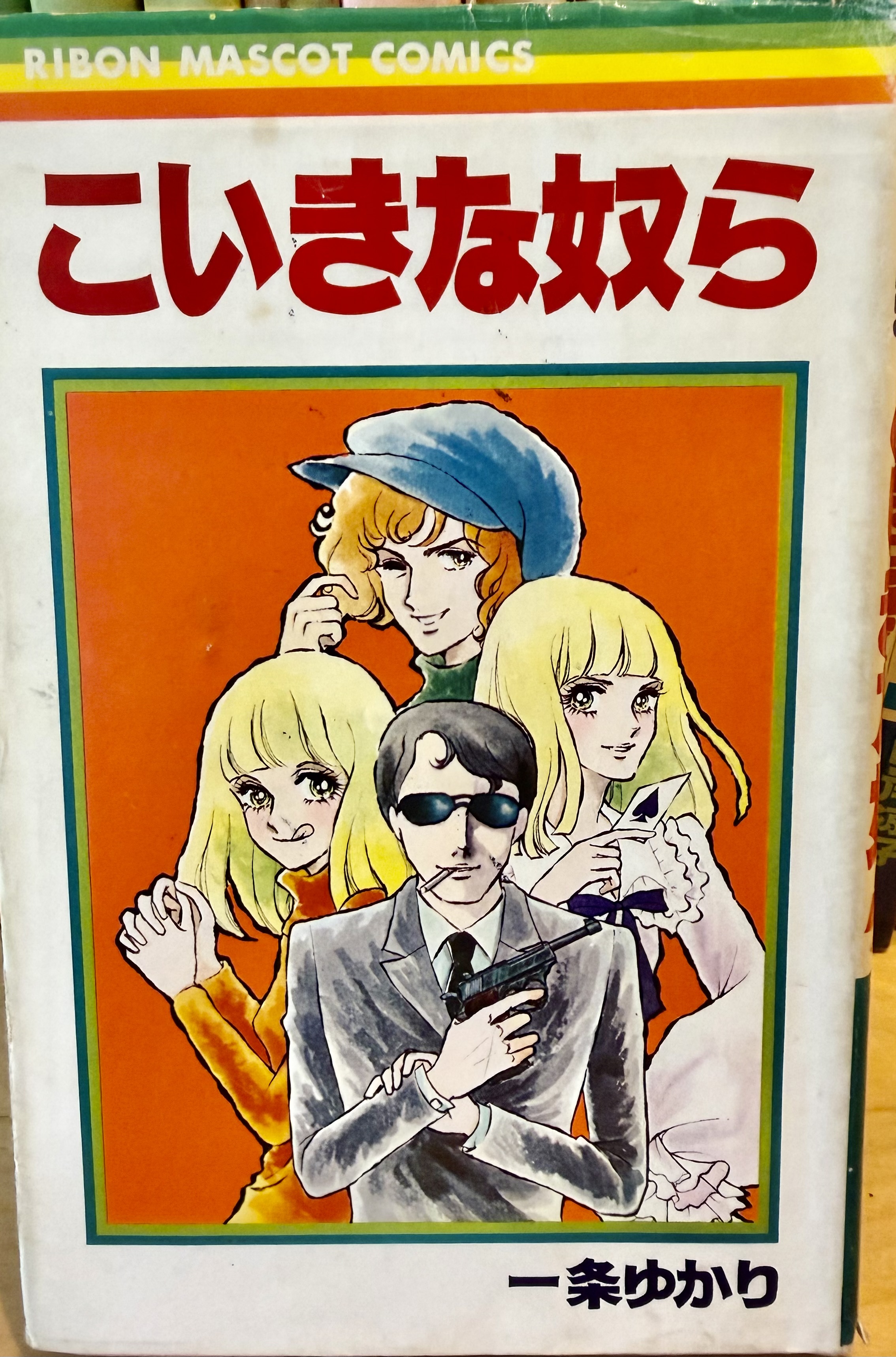
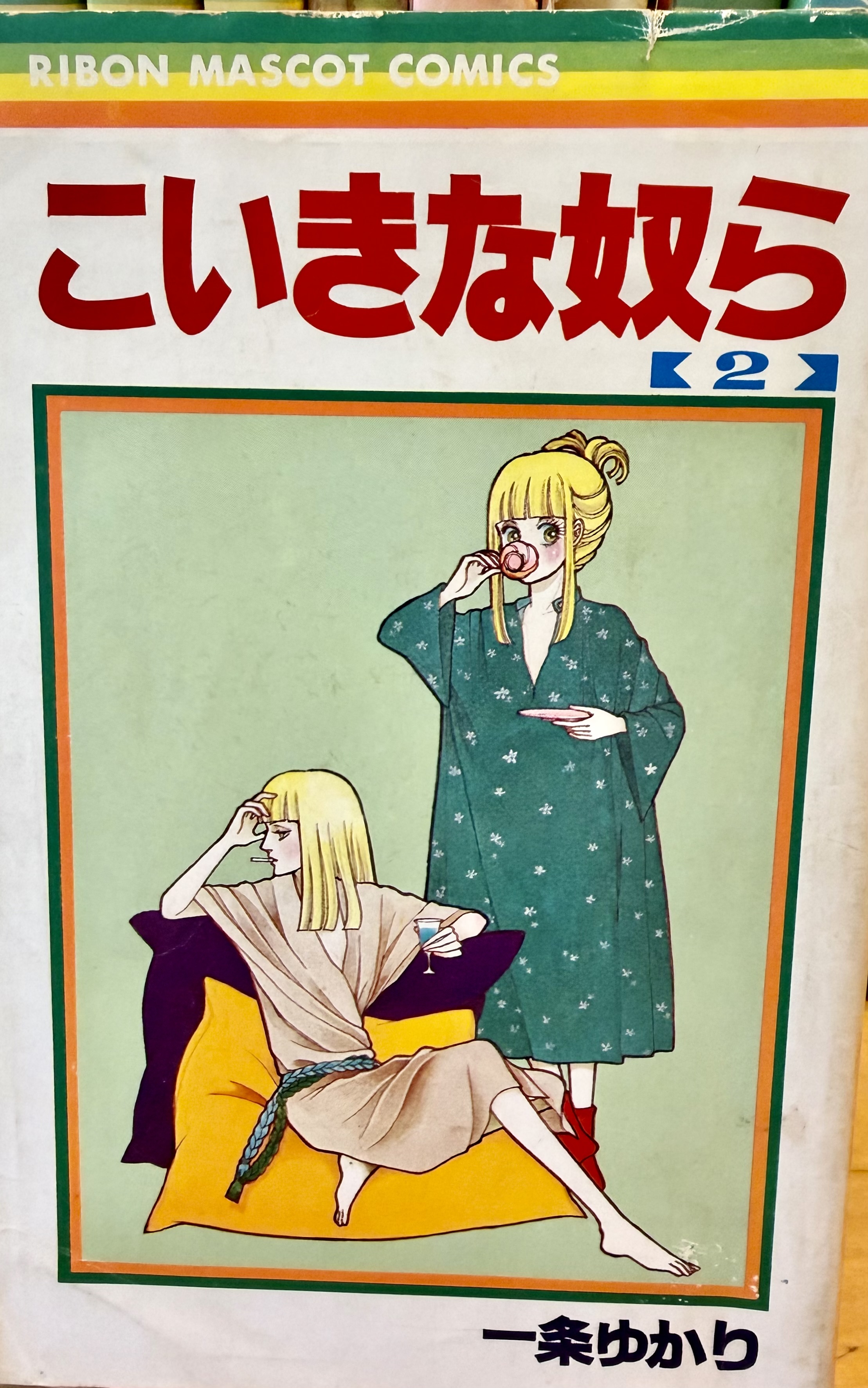
 The Cool Guys Vol. 1-2 (こいきな奴ら / Koikina Yatsura), by Yukari Ichijo, Shueisha (Ribon Mascot Comics). It was serialized in Ribon magazine from January 1974 to March 1977 and compiled in two tankōbon in August 1975 and March 1978. It’s composed of four parts published in yearly special issues: “Act 1: Judes Judith” (Jan. 1974), “Act 2: Esper Hunting” (Feb. 1975), “Act 3: Full of Danger” (Feb. 1976) and “Act 4: Dormie III’s Heritage” (Feb. & March 1977). You can see an excerpt here.
 “The adventures of twins dedicated to finding out who killed their beloved parents! The son of the Count and Countess of Grasse, Judes and his sister Judy, are beautiful twin siblings who are well-known in Paris. The two suspected that their parents had suddenly died in an accident, but with the help of a fellow pickpocket and an ex-killer, they set out to investigate the truth…! A fashionable and popular comic book with thrills and suspense!” (From Manga Updates)
Koikina Guys ACT-III: Full of dangers (こいきな奴ら ACT III: 危険がいっぱしい / Koikina Yatsura Act. III: Kiken ga ippashii), by Yukari Ichijo, Shueisha. Ribon February New Year’s Special Issue (Vol. 22, No. 3) Supplement – February 1976 (りぼん2月新春特大号(第22巻第3号)付録 昭和51年2月). This is the Ribon yearly special issue with Act III of the previous books. [Google]
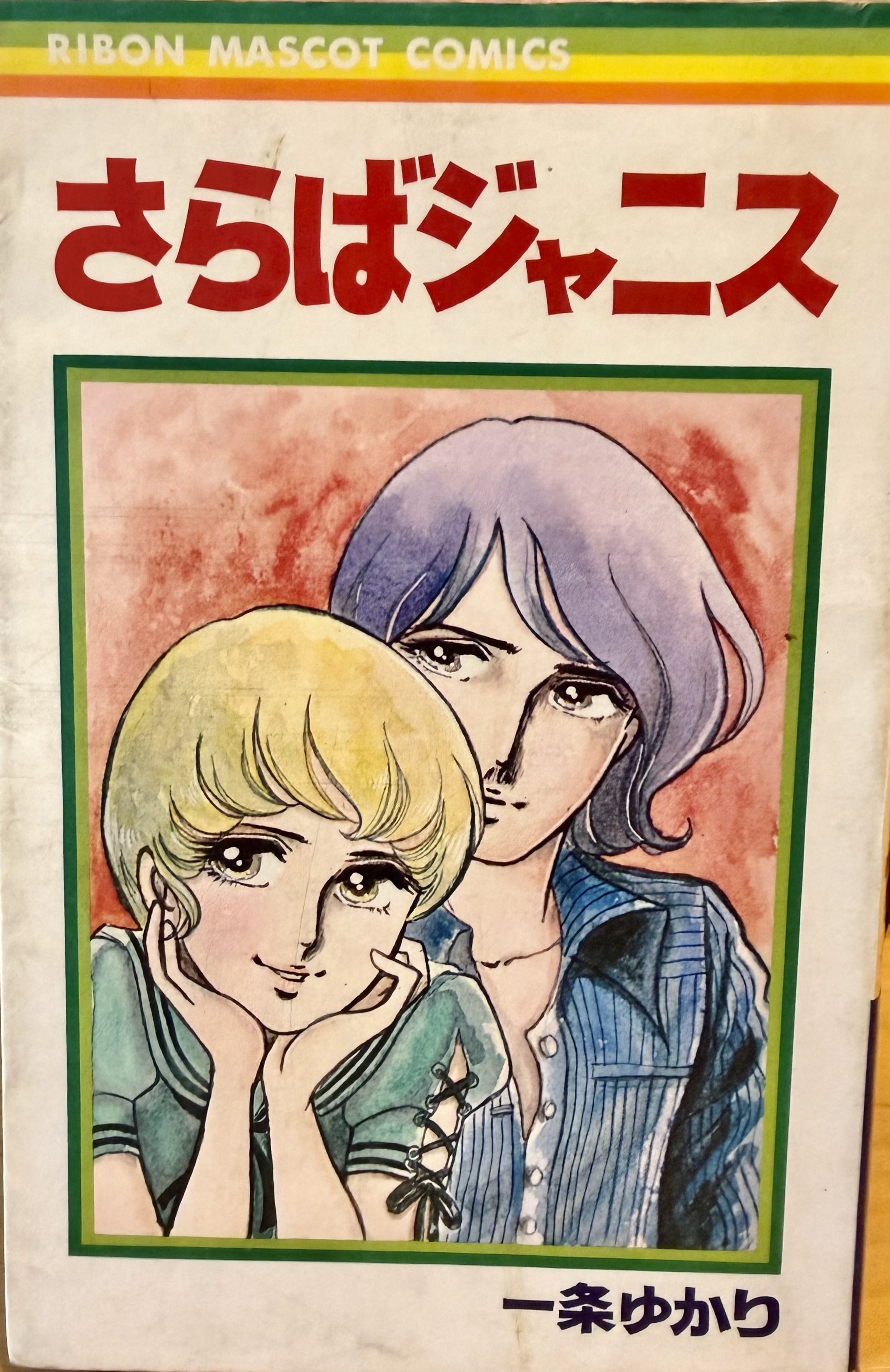
 Farewell, Janis (さらばジャニス / Saraba janisu), by Yukari Ichijo, Shueisha (Ribon Mascot Comics), 202 pages. Serialized in Ribon magazine and compiled in one volume in 1972. You can read an excerpt here. [Manga Updates]
“Janis discovers a new way of life at a school with a free-spirited atmosphere! Mr. Farrow, a traveler, is dissatisfied with his son Janis’s feminine nature and subjects him to a harsh, Spartan upbringing. However, after reading a letter left by his late mother expressing her wish for him to “live freely,” Janis resolves to leave home… A unique romantic story about a beautiful boy with a girl’s heart.” (From Amazon)
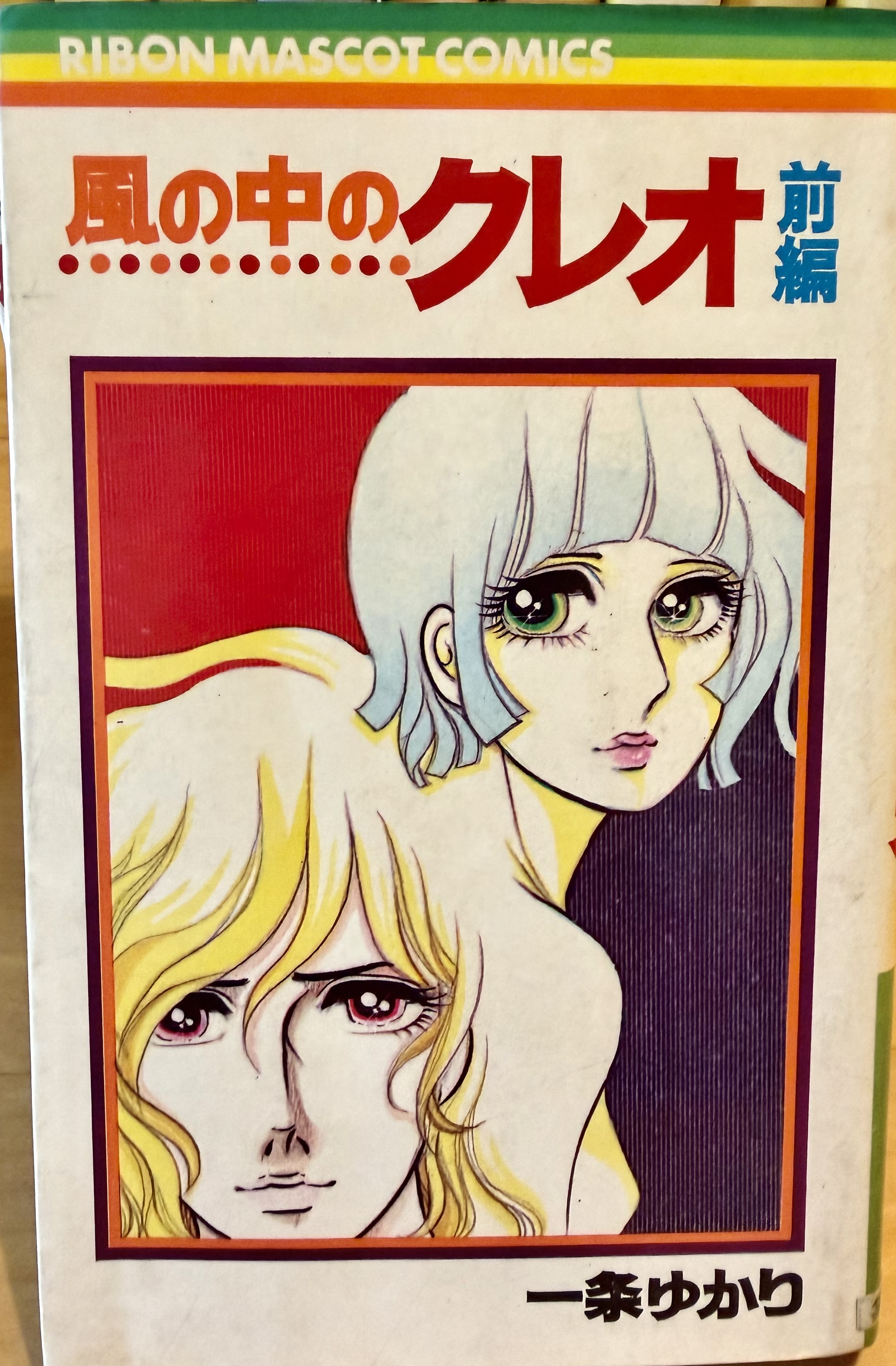
 Cleo in the Wind: Part 1-2 (風の中のクレオ / Kaze no naka no Kureo), by Yukari Ichijo, Shueisha (Ribon Mascot Comics). Serialized in Ribon magazine (Aug. ’70 – Feb. ’71) and compiled in two volume in 1971. You can see an extract here. [Amazon • Mangapedia • Manga Updates]
“What is the shocking fate of love between young Cleo and Belle? Velvet (commonly known as Belle), who attends high school, is curious about Cleo’s existence. Cleo is popular with the girls, but he is also insufferable. Belle considers using him as the model for a novel, but… Part one of a dramatic love story about Belle falling for a naive young man. [Vol. 1 also includes the short stories: Twenty Days of Love / Poem of the Wind]” (From Shueisha)
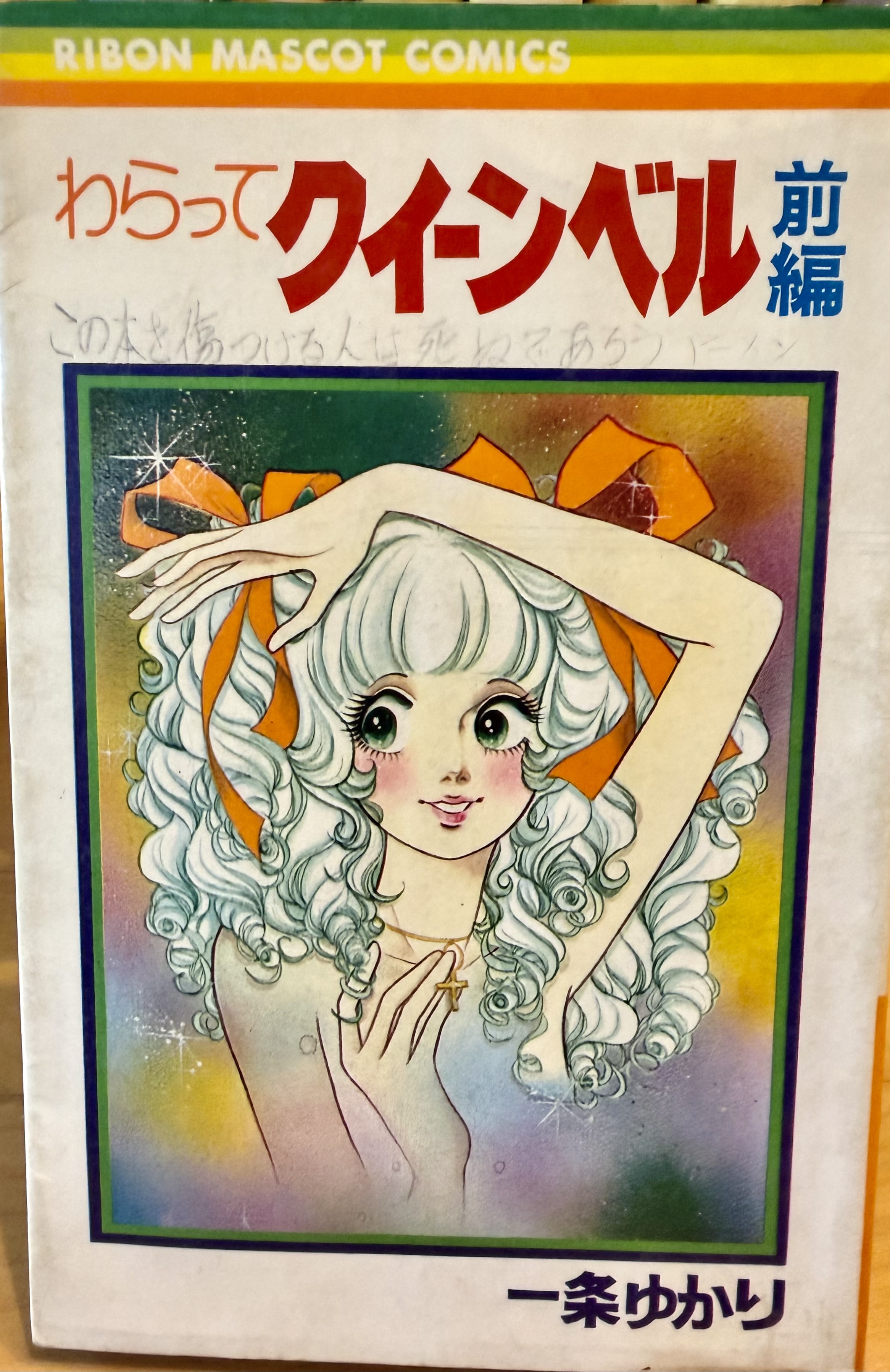
 Smile, Queen Bell Part 1-2 (わらってクイーンベル / Waratte kuinberu), by Yukari Ichijo, Shueisha (Ribon Mascot Comics). Serialized in Ribon magazine (April to September 1973) and compiled in two volume in 1973. You can see an extract here. [Amazon • Mangapedia • Manga Updates]
“Queen Bell grew up without knowing her father and lost her mother at a young age. Queen, who was living in a boarding school in Switzerland, receives news that her father has passed away. Queen, confused, visits England and learns that she is the only daughter of a millionaire, but then a mysterious duo appears…!?” (From Amazon)
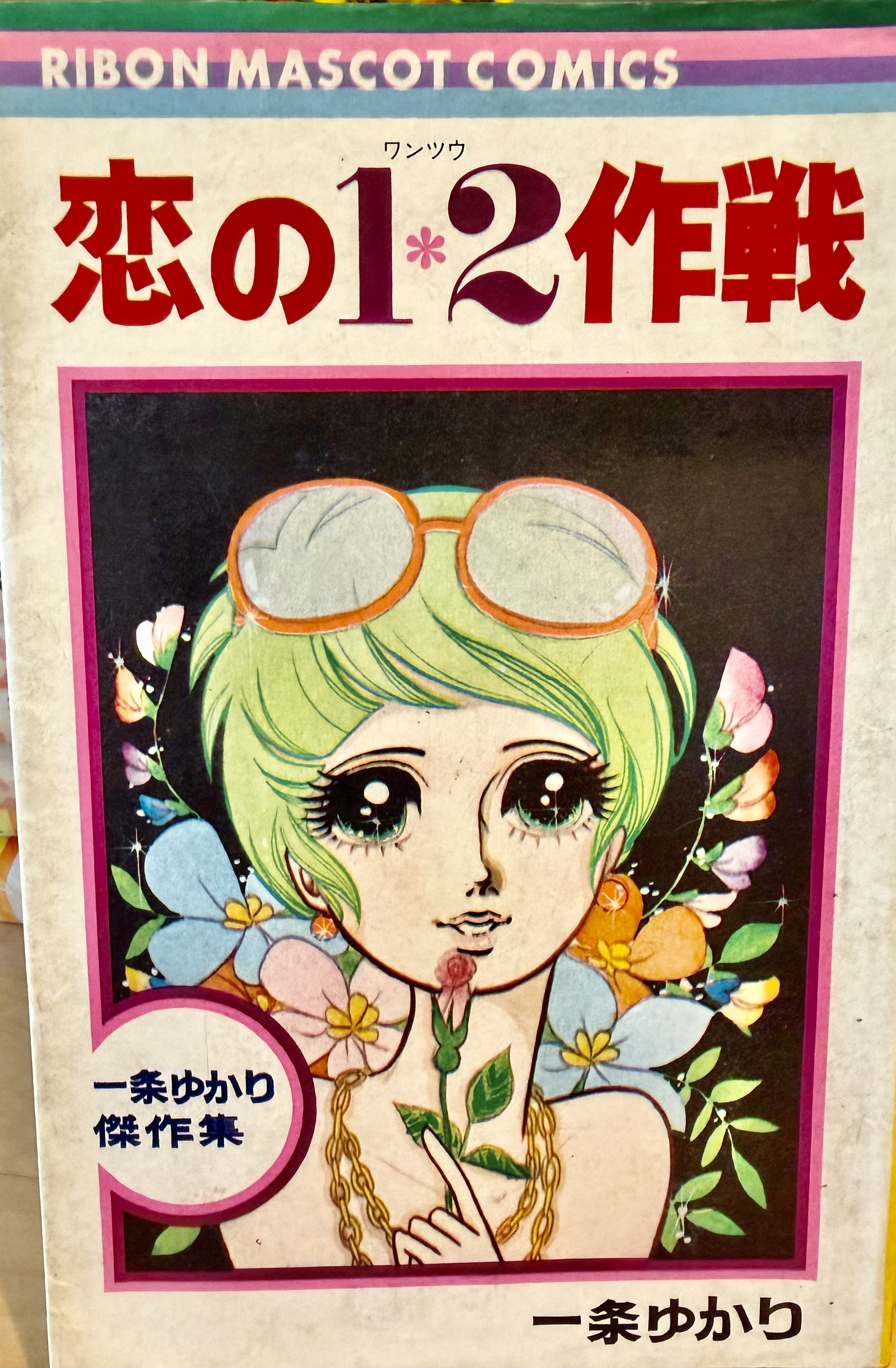
 Love Strategy One-two (ワンツウ 恋の1•2の作戦 / Koi no 1•2 no sakusen), Yukari Ichijo Masterpiece Collection, Shueisha (Ribon Mascot Comics). Serialized in Ribon magazine (in the new year special issue of 1970) and compiled in one volume in August 1970. You can see an extract here. [Amazon • Manga Updates]
“Brothers and sisters who are neighbors… Who is in love with whom? College students Jean and Pierre get a failing grade and end up studying with their younger brothers Henri and Jam at a relative’s house in a rural town. However, there were wonderful sisters living in the house next door, and the boys’ hearts were disturbed! A neighborhood romantic comedy with an unexpected twist!” (From Amazon)
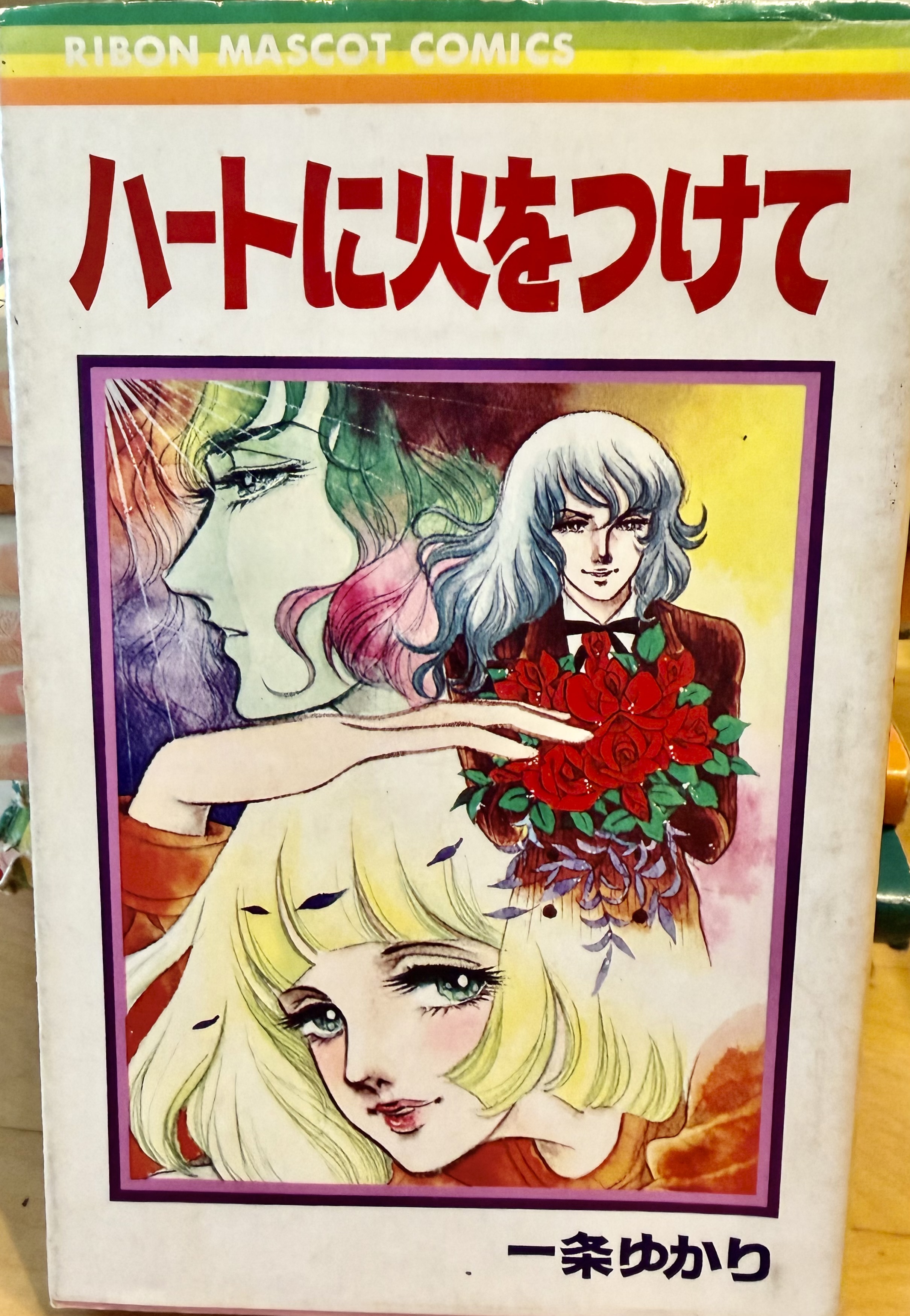
 Light a fire in my heart (ハートに火をつけて / Hāto ni hi o tsukete), by Yukari Ichijo, Shueisha (Ribon Mascot Comics). Serialized in Ribon magazine and compiled in one volume in 1973. You can see an extract here. [Amazon • Manga Updates]
“A flame of love ignited in a world of glamour! During winter break, Josée—whose older sister is the actress Cécile Donahue—meets Gillan, the older brother of her best friend Angela, at a club. However, Gillan discovers that Cécile is actually Josée’s mother… A stylish romance filled with the games of love. [Also includes: Winter in Shellfield / Ami… A Male Friend]” (From Amazon)
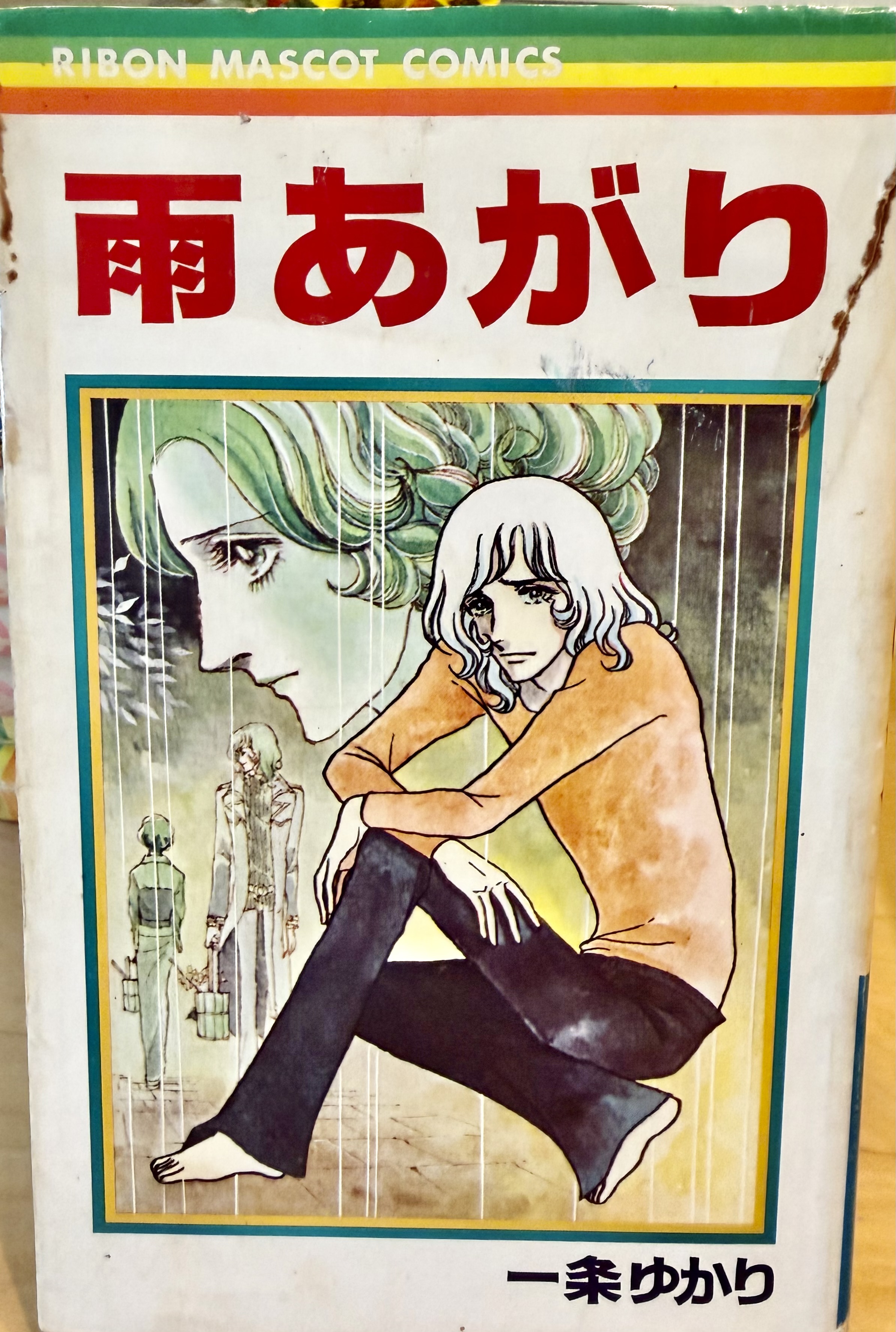
 After the Rain (雨あがり / Ame agari), by Yukari Ichijo, Shueisha (Ribon Mascot Comics). Serialized in Ribon magazine and compiled in one volume in 1971. You can see an extract here. [Amazon • Manga Updates]
“Akihiko, a college student, is captivated by the beauty of an older woman he meets while visiting the grave of his deceased mother. However, that night, he was told by his father that he wanted to “introduce someone whom he was thinking of marrying” and that was exactly the woman he met during the day. It is a work that depicts Akihiko’s love with nowhere to go, who suffers from his feelings for a woman who has become a young mother-in-law.” (From AI Overview)
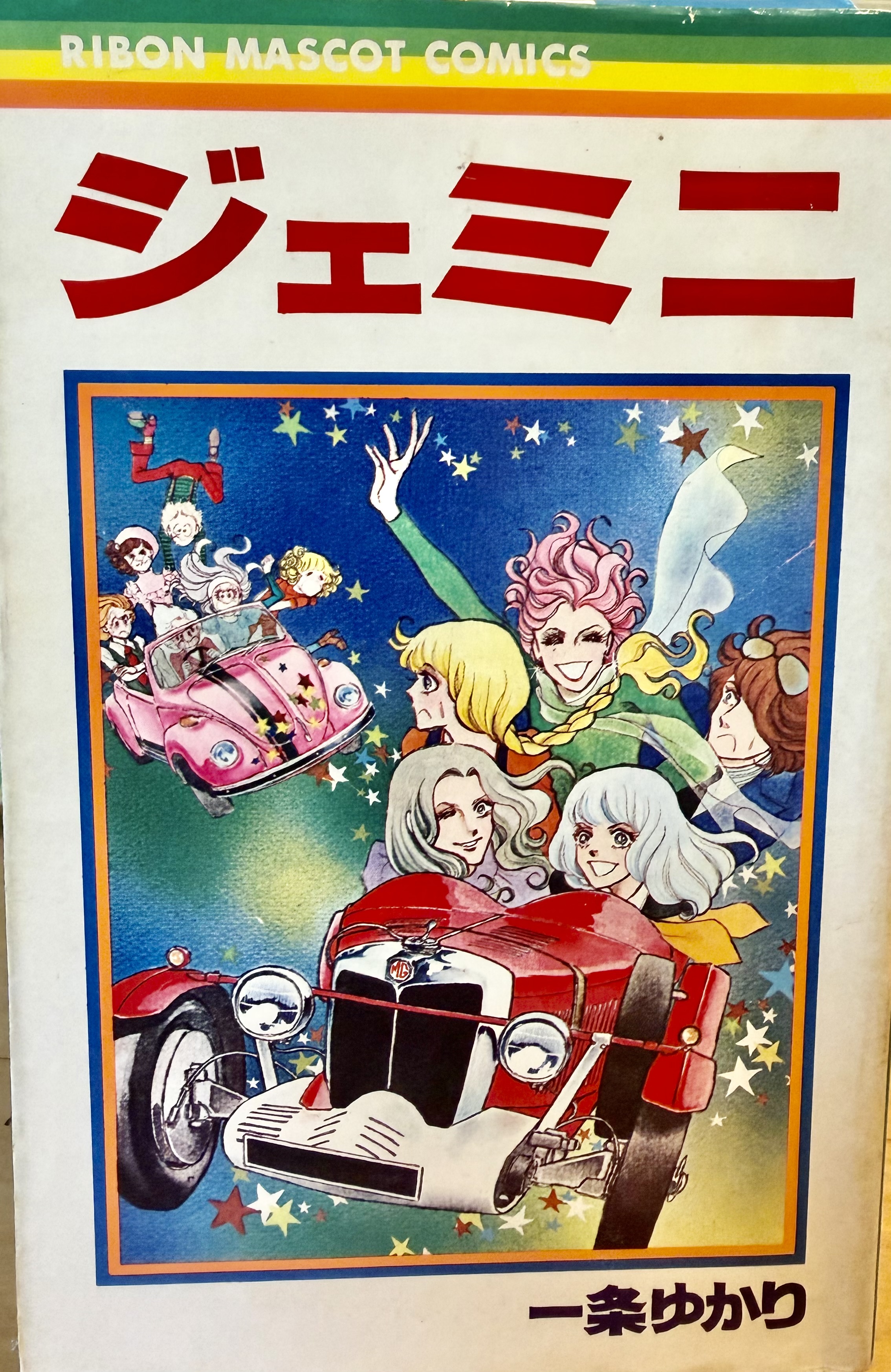
 Gemini (ジェミニ), by Yukari Ichijo, Shueisha (Ribon Mascot Comics). Serialized in Ribon magazine (April ’75 issue) and compiled in one volume in December 1975. You can see an extract here. [Amazon • Manga Updates]
“What will be the fate of the skinny girl who lives in the mansion of her beautiful brothers? Gemini is a poor female student who is busy working part-time. One day, she gets into a car accident at school, and her life changes drastically when the driver turns out to be Shelfy, the girl’s idol! A pure love story of a girl who loves cars.”
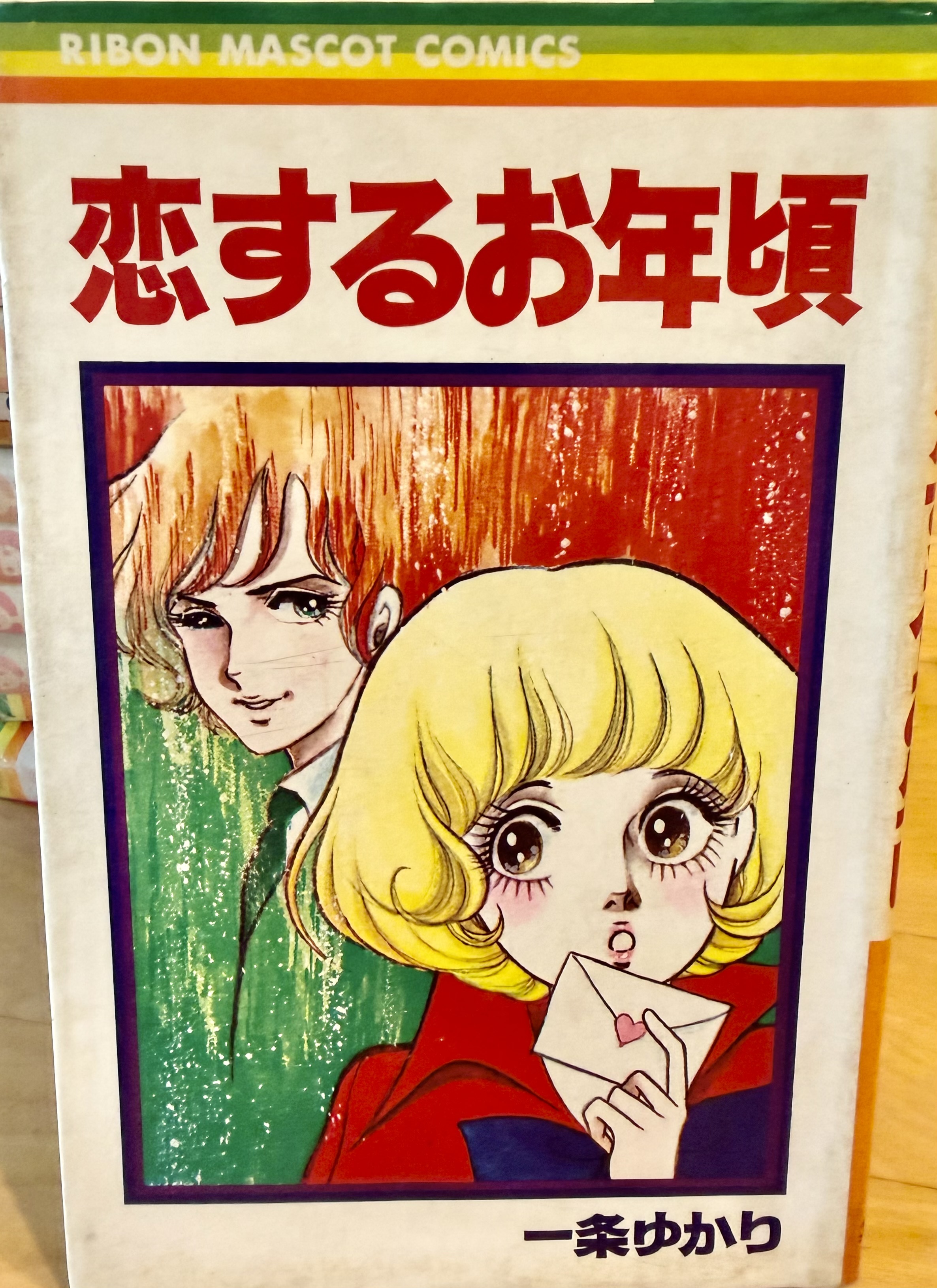
 The Age of Falling in Love (恋するお年頃 / Koisuru o toshigoro), by Yukari Ichijo, Shueisha (Ribon Mascot Comics). Serialized in Ribon magazine (Jan. & Feb. ’71 issues) and compiled in one volume in 1973. You can see an extract here. [Amazon • Manga Updates]
“School love situation between an innocent girl and a slightly bad boy. 16-year-old Hoshi Ainoko has a crush on her delinquent classmate Jun Hirose, but does he like her best friend Mana? One day, Noko helps Hirose-kun sneak out of class and lies to their teacher… Youthful graffiti full of love troubles.” (From Amazon)
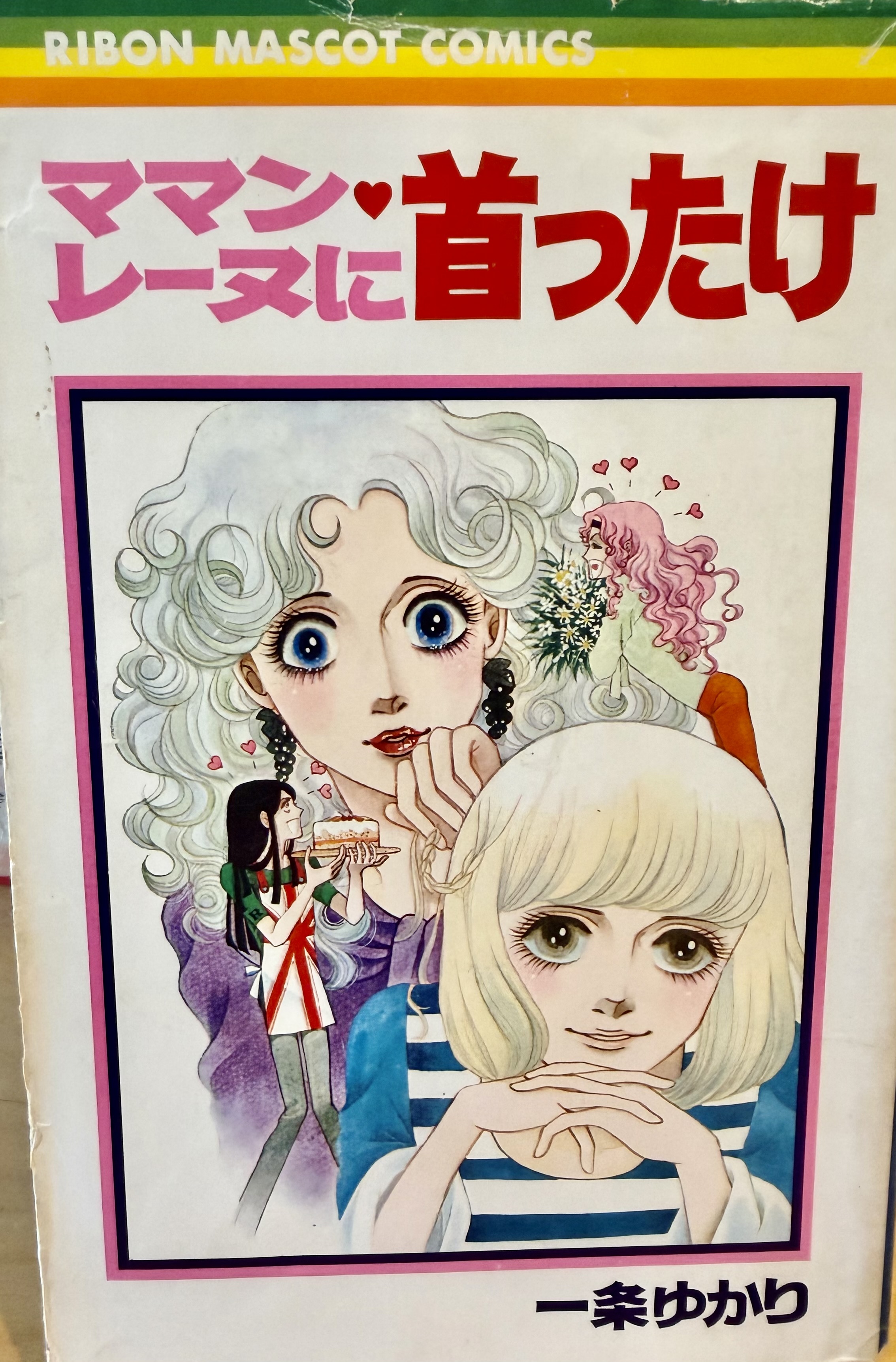
 Smitten with Maman Reine (ママン・レーヌに首ったけ / Maman Reenu ni Kubittake), by Yukari Ichijo, Shueisha (Ribon Mascot Comics). Serialized in Margaret magazine (#33 1975) and compiled in one volume in 1976. You can see an extract here. [Amazon • Manga Updates]
“All boys, including superstars and friends, are in love with Maman!? Matthew’s Maman is not good at housework. After the old maid left, there was chaos in the house. Her son Matthew is one of the most popular boys at school, but there are rumors that he’s his mother’s boy! The definitive romantic comedy about unique lovers!”
The next four volumes are by Ryoko Yamagishi (山岸凉子). She’s a member of the Year 24 Group, a movement of female mangaka, all born around the same year (Showa 24 or 1949), that contributed in the 1970s to the innovative development of shōjo manga. None of her works has been translated, but she is mostly known for Shiroi Heya no Futari (1971, about a romance in an all-girls boarding school in France), Hi Izuru Tokoro no Tenshi (1980-84, about Prince Shōtoku who spread Buddhism in the 6th century, won the 1983 Kodansha Manga Award), and Maihime Terpsichora (2000-06, about the harsh reality behind young ballet dancers hopeful, won the Tezuka Osamu Cultural Prize in 2005) and…
Arabesque vol 1-4 (アラベスク), by Ryoko Yamagishi, Shueisha (Ribon Mascot Comics). Serialized in Ribon magazine (Oct. ’71 to Apr. ’73) and compiled in four volumes in 1972-74. An extract is available here. [Amazon • Manga Updates • Wikipedia JP]
A story about Russian ballet. “Nonna Petrova, a tall, sixteen-year-old ballet student in Kiev, is unaware of her unique balletic brilliance. Having low self-esteem due to the unwanted comparison with her talented older sister, Nonna is “discovered” by leading ballet dancer Yuri Mironov, and, under his guidance, is led to stardom.” (From Manga Updates)
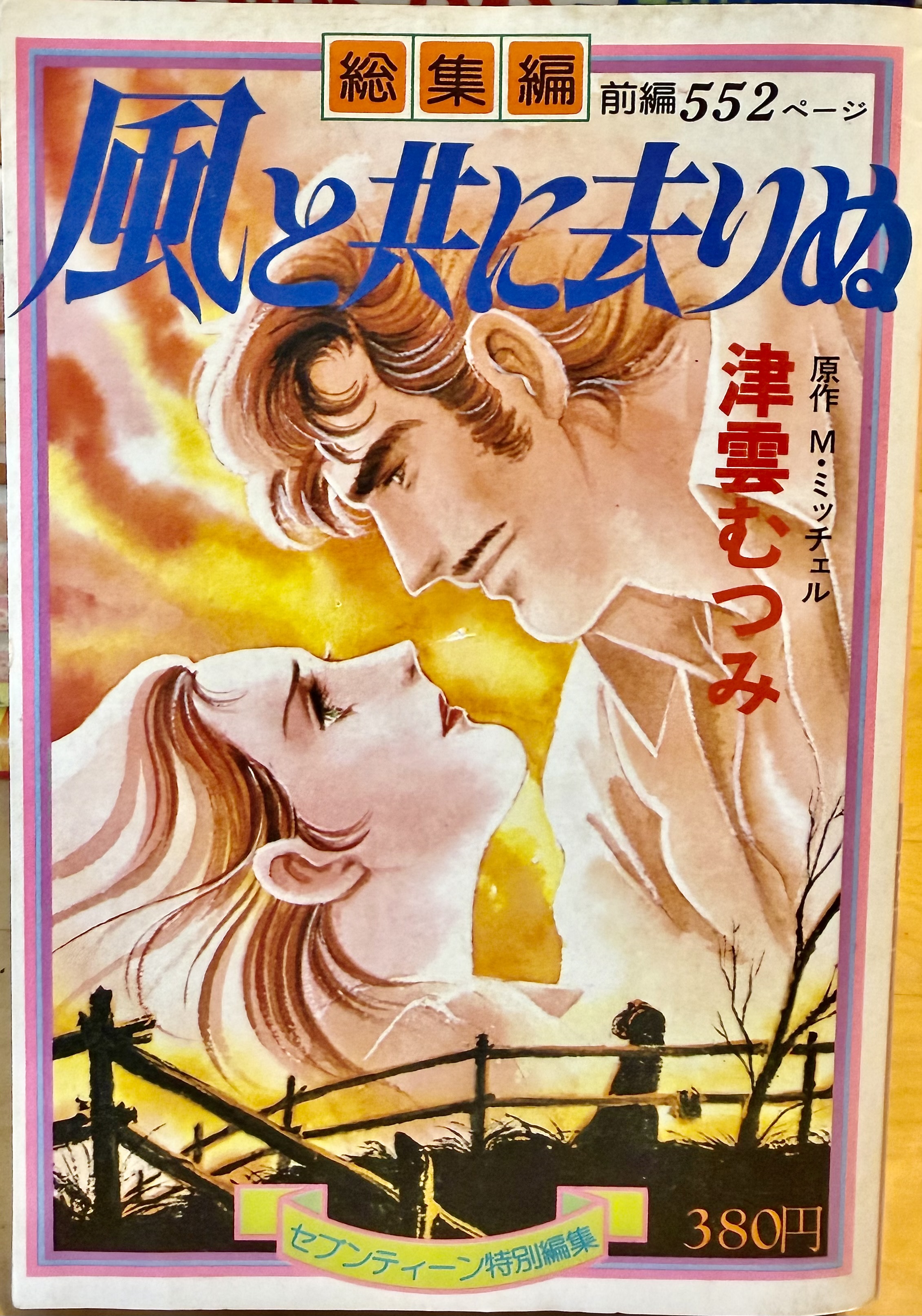
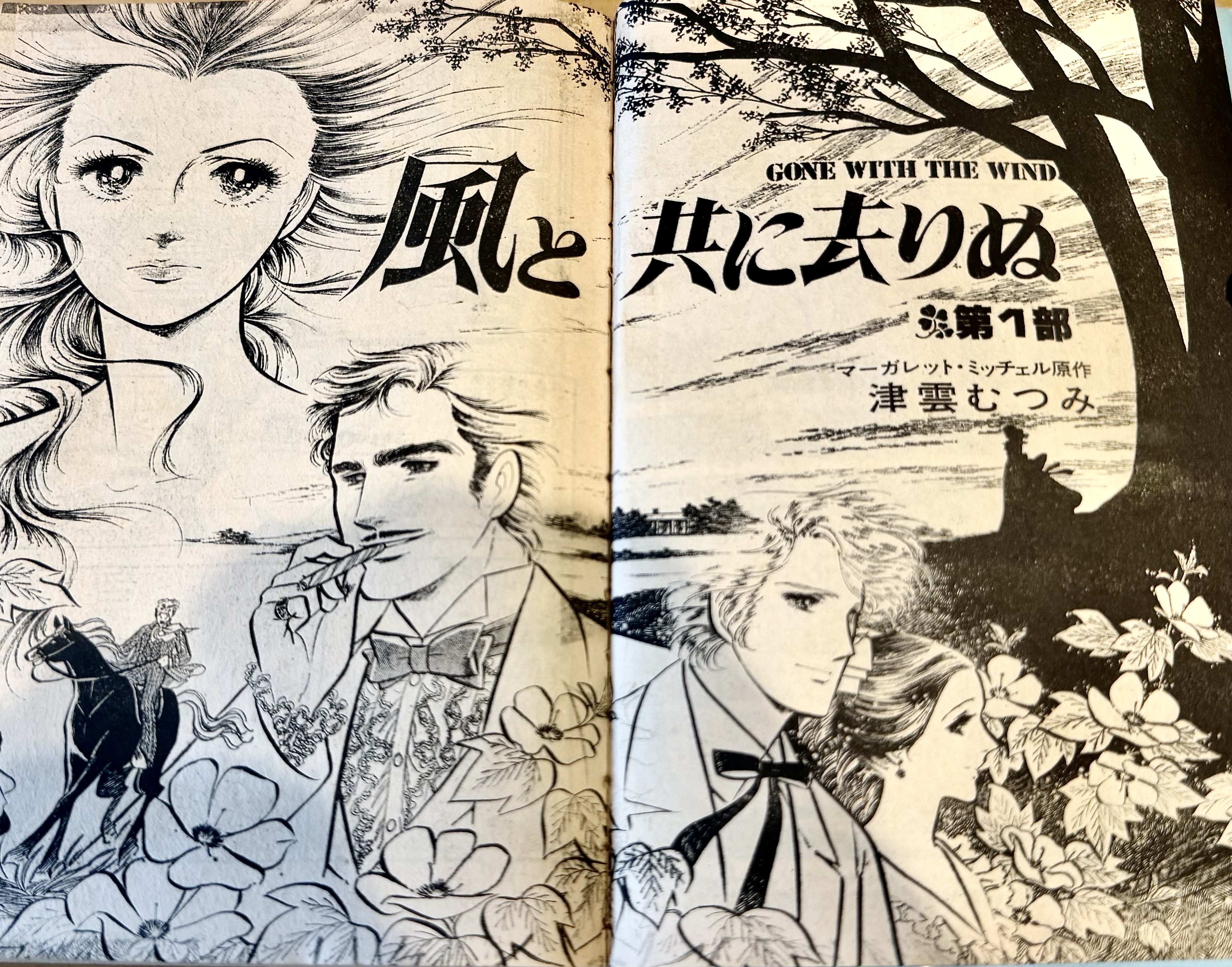
 The last volume is by Mutsumi Tsukumo (津雲むつみ). She’s mainly known for Colorful Time and From the End of Darkness (which both won the Japan Cartoonists Association Award in 1976 and 1993). Several of her titles were also adapted into TV drama (“I’m a man!”, “Wind Ring Dance“, “Hanai Yumei” and “Let me hear the words of love“). She died of lung cancer in 2017. This manga is a faithful adaptation of the famous 1936 Margaret Mitchell’s novel, Gone with the Wind (which is one of my wife favourite story and movie).
 Gone with the Wind, Part 1 (風と共に去りぬ第1部 / Kaze to Tomo ni Sarinu), by Mutsumi Tsukumo, Based on the work by Margaret Mitchell. Seventeen Special Limited Edition, 552 pages, 380 yen. It was serialized in Shueisha Weekly Seventeen between 1977 and 1979 and compiled in two volumes in 1978-1980. [Manga Updates]
“Tara is a town in the southern United States just before the Civil War. Scarlett, the daughter of a squire, is proud and beautiful, and a socialite who captivates any man. However, Ashle, whom she loved, ends up marrying Melanie… Mutsumi Tsugumo vividly depicts this timeless masterpiece. An epic story of intertwined love and hate begins――!!” (From Amazon)