The Cinema Under the Stars program will take place after all. In a press release, document.write(“”); the festival announced that the free outdoor screenings will be back again this year for twelve nights. Beginning August 21 and running nightly at 8:30 pm through Labour Day (September 1), the Festival will show a wide selection of popular movies on the esplanade of the Place des Arts.
The festival also announced that it will be showing many italian movies again this year. As always the Montreal World Film Festival has a bumper crop of Italian films to show, this year more than ever. Starting with the president of the jury, Sergio Castellitto, and continuing through various sections of the Festival, lovers of Italian cinema will have plenty to celebrate. Thirteen films, produced or co-produced by Italy, are on show and Pupi Avati will be on hand for the premiere of his new film along with a large delegation of Italian film people. More details in the full press release.
Last Tuesday, the festival announced in a press release the details of the 45th Student Film Festival. Organized within the framework of the Montreal World Film Festival, the Student Film Festival, held August 23 to 27, 2014, has this year two competitive sections, comprising 26 Canadian films and 60 international films respectively. The winning films will share 6 prizes, including the Norman McLaren Prize for best Canadian film and the jury award Most Promising Director. Founded by Serge Losique in 1969, the Student Film Festival is the oldest film festival in Canada and was incorporated into the World Film Festival in 1985. The reputation of the Montreal festival has attracted many student films from around the world and this year, to accommodate the abundance of excellent foreign productions, an international competition was established and it features films from 18 countries!
Finally, a press release also detailed all the ticket options for the movie-goers attending the festival. Booklets of tickets and individual tickets to films of the Festival itself will go on sale August 16 to 21, from noon to 7 pm, at the box offices of the Imperial Cinema and the Cinéma du Quartier Latin. Festivalgoers may also purchase tickets online through Admission beginning August 22. The Festival run August 21 through September 1.
This year the festival is offering us eleventwelveJapanese features movies and threefive short films: two feature films [and one short film] in the “World competition” category, three in “Out of competition”, five feature films and threefour shorts in the “Focus on World Cinema” [all those short films are conveniently shown together] and onetwo feature films in the “Tribute to Michael J. Werner” [there’s another movie shown as a tribute to Alain Resnais]. There are no Japanese movies this year in “First Films World Competition”, “Documentary” or the “International selection of the Student Film Festival” categories.
At the press conference announcing the festival’s programming, Serge Losique reiterated his love for Japanese cinema. He tells us that Japan is one of the most film-loving countries in the world and has given us lots of great filmmakers (especially Akira Kurosawa). He tells us also that a Japanese film in competition this year will be accompanied by a host of top Japanese actors. The delegation for this film will include forty-five people, in addition to numerous representatives of Japanese media (from five television stations and eight newspapers)! [You can see the clip of Losique talking Japanese cinema from 1:05 to 2:00 mins on the press conference video that I posted on Vimeo and on my “Programmation FFM 2014” post [in french]]
More information on the festival’s japanese movies can be found on the Facebook page of the Canada-Japan Cultural Exchange magazine, Coco-Montreal.
Update [2014-08-15]: The schedule for the 2014 Montreal World Film Festival is now available on the festival web site [as a downloadable PDF file]!
Update [2014-08-20]: Details on each of the Japanese movies shown at the festival are now available on the festival’s web site.
After the jump, you will find a list of all the Festival’s Japanese movies with description [taken from the festival’s program] and supplemental links (more details and links will be added as the information become available):
The World Competition
Cape Nostalgia (???????? / Fushigina Misaki no Monogatari / The Tale Of A Cape): Japan, 2014, 117 min; Dir.: Izuru Narushima; Scr.: (based on Akio Morisawa novel); Prod.: Sayuri Yoshinaga; Cast: Sayuri Yoshinaga (Etsuko), Hiroshi Abe (Koji), Yuko Takeuchi, Tsurube Shofukutei, Takashi Sasano, Eiko Koike, Shota Shunputei, Arata, Takeo Nakahara, Renji Ishibashi.
“Etsuko Kashiwagi runs the Cape Café in a peaceful little town looking across the sea to distant Mt Fuji. It is the town’s favourite meeting place, where farmers, fishermen, hospital workers, clergy, and even the occasional police officer, gather to taste Etsuko’s special brew and trade gossip. The two most important things in Etsuko’s life are her jack-of-all-trades nephew Koji and the spring water she brings every day from a small island nearby. In every cup Etsuko brews is a prayer for the well-being of her customers, and coffee at her café is an uplifting experience for all. Koji is 45, and devoted to Etsuko, who lives in a shack beside her café. He is hot-tempered, quick to jump to conclusions and a bit of a troublemaker. The winds of change have started to blow through the placid existence of the Cape Café.” (from the Festival’s press release)
The light shines only there (????????? / Soko nomi nite Hikari Kagayaku): Japan, 2014, 120 min.; Dir.: Mipo O; Scr.: Ryo Takada (based on the novel by Yasushi Sato); Cast: Gou Ayano, Chizuru Ikewaki, Masaki Suda, Hiroko Isayama, Taijiro Tamura, Kazuya Takahashi, Shohei Hino.
“ Tatsuo has given up working and is idling his life away. One day at a Pachinko parlour, he gets to know a coarse but friendly young man, Takuji. Tatsuo accepts Takuji’s invitation and follows him home, which turns out to be a rundown, isolated house. It is here that Tatsuo meets Takuji’s older sister, Chinatsu. They feel a quick mutual attraction and become close, but Chinatsu’s life is difficult as she struggles to support her family. Even so, Tatsuo remains steadfast in his love for Chinatsu, and his unwavering feelings begin to sway her. Since finding a connection with Chinatsu, Tatsuo’s reality quietly begins to regain its colour…” (from the Festival’s press release)
Schedule: Sun 8/31 9:00 CI; Sun 8/31 19:00 CI; Mon 9/01 14:00 CI.
The World Competition — Short Films
Kemukujara: Japan, 2014, 13 min.; Dir.: Akihito Nonowe, Isao Sano, Konoka Takashiro. No dialogue. First episode of the stop motion experimental animation Keblujara. [Facebook] Schedule: Wed 8/27 9:00 CI; Wed 8/27 19:00 CI; Thu 8/28 14:00 CI.
The emotional journey of a four-member family that fails to recognize that it is rapidly growing apart until the mother is diagnosed with terminal cancer.
A drop of the grapevine (??????? / Budou no namida / lit. “Tears of Grapes”): Japan, 2014, 117 min.; Dir. & Scr.: Yokiko Mishima; Cast: Yo Oizumi (Ao), Shota Sometani (Roku), Yuko Ando (Erika), Tomorowo Taguchi, Tomoya Maeno, Lily, Kitaro,
Ren Osugi, Kyoko Enami.
In Hokkaido, Ao grows grapes for wine while his younger brother, Roku, tends to the wheat field inherited from their father. Then a mysterious women enters their lives.
Schedule: Sat 8/30 11:40 QL16; Sat 8/30 19:00 QL16; Sun 8/31 14:20 QL16.
A courtesan with flowered skin (???? / Hanayoi dochu): Japan, 2014, 102 min; Dir.: Keisuke Toyoshima; Cast: Yumi Adachi (Asagiri), Yasushi Fuchikami (Hanjiro), Ena Koshino, Yoko Mitsuya, Hanako Takigawa, Ayano Tachibana, Saki Takaoka, Tomochika, Kanji Tsuda.
In 1860s Japan, popular courtesan Asagiri is about to be freed from her indentured service. One day at a local festival she meets a young artisan, Hanjiro, an encounter that changes her destiny.
January 1946. A British military plane carrying diplomats makes a crash landing on the beach in a small village on a remote Japanese island. The pilots need help but the locals were enemies just half a year ago.
Schedule: Sat 8/30 13:00 QL15; Sat 8/30 21:30 QL15; Sun 8/31 17:00 QL15.
With a highly paid job, a beautiful wife, and two independent teenage kids, not to mention his own father living with him at home, Shunkuze, 47, seems to have it all. But appearances can be deceiving.
Schedule: Fri 8/22 19:20 QL12; Sat 8/23 11:40 QL12; Sun 8/24 16:40 QL12.
Lonely after the death of her husband, whom she nursed for years, 77 year-old Tae Tsurumoto decides to find a new life partner. Her family and friends try to dissuade her.
One third (??????? / Sanbun no ichi): Japan, 2014, 119 min.; Dir.: Hiroshi Shinagawa; Scr.: Hiroshi Shinagawa (based on a novel by Hanta Kinoshita); Cast: Tatsuya Fujiwara, Koki Tanaka, Ryuichi Kosugi, Mika Nakashima, Yosuke Kubozuka, Shinnosuke Ikehata, Ryo Kimura, Sho Aikawa, Mitsu Dan, Ayumi Shimozono.
Three small-time crooks desperate to turn their lives around manage to pull off a successful bank hit in broad daylight. But they aren’t the only ones after the loot.
Tokyo: The city of glass (???????????? / Tôkyô: Koko wa Glass no Machi): Japan, 2014, 100 min.; Dir.: Kazuhiro Teranishi; Scr.: Oroba Irie & Kazuhiro Teranishi; Phot.: Shigeru Iwamatsu; Ed.: Kumiko Arai; Mus.: Naoto Okabe; Cast: Atsushi Kimura, JK, Tomoko Nakajima.
A graduate student who runs a bar in Shinjuku N-chome, Tokyo’s gay district, meets a Korean man and falls in love, but a 20-year-old homicide case makes this more than a love story.
Schedule: Fri 8/22 19:00 QL15; Sat 8/23 10:00 QL15; Sun 8/24 14:00 QL15.
Focus on World Cinema — Short Films
All He Knows Right: Japan, 2014, 5 min.; Dir.: Akihito Nonowe, Isao Sano, Konoka Takashiro. No dialogue. Second episode of the stop motion experimental animation Keblujara. [Facebook]
No return on perishables (Koi ha kangaeruna, ai ha kanjiro): Japan, 2014, 18 min.; Dir.: Takatsugu Naito.
When the sun falls (Hi-wa-ochiru): Japan, 2014, 39 min.; Dir.: Yuji Kakizaki. [IMDb]
All four shorts are shown together: Schedule: Tue 8/26 21:40 QL13; Wed 8/27 16:20 QL13.
Tributes
Norwegian wood (??????? / Noruwei no mori): Japan, 2010, 128 min.; Dir.: Tran Anh Hung; Scr.: Haruki Murakami (based on his novel) & Anh Hung Tran; Phot.: Pin Bing Lee; Prod.: Chihiro Kameyama, Shinji Ogawa; Cast: Kenichi Matsuyama, Rinko Kikuchi, Kiko Mizuhara, Tetsuji Tamayama, Kengo Kora, Reika Kirishima, Eriko Hatsune, Tokio Emoto, Shigesato Itoi, Haruomi Hosono, Yukihiro Takahashi. Shown as part of the tribute to Michael J. Werner.
Tokyo, the late 1960s. Students around the world are uniting to overthrow the establishment and Toru Watanabe’s personal life is similarly in tumult.
Schedule: Sat 8/30 21:30 QL12; Sun 8/31 16:10 QL12.
Tôkyô Sonata (????????): Japan, 2008, 119 min.; Dir.: Kiyoshi Kurosawa; Scr.: Max Mannix, Kiyoshi Kurosawa, Sachiko Tanaka; Phot.: Akiko Ashizawa; Ed.: Kôichi Takahashi; Mus.: Kazumasa Hashimoto; Cast: Kazumasa Hashimoto, Kyoko Koizumi, Kai Inowaki, Yu Koyanagi, Koji Yakusho, Haruka Igawa. Shown as part of the tribute to Michael J. Werner.
An ordinary Japanese family slowly disintegrates after its patriarch loses his job at a prominent company, then detours into the comic, the macabre and the sublime.
Hiroshima mon amour (???????? / Nij?yojikan no j?ji / lit. “Twenty-four-hour affair”): France / Japan, 1959, 90 min.; Dir.: Alain Resnais; Scr.: Marguerite Duras; Phot.: Michio Takahashi, Sacha Vierny; Mus.: Georges Delerue, Giovanni Fusco; Cast: Emmanuelle Riva, Eiji Okada, Bernard Fresson, Stella Dassas, Pierre Barbaud.
A French actress filming an anti-war film in Hiroshima has an affair with a married Japanese architect as they share their differing perspectives on war.
Vous pouvez également visionner quelques extraits de la conférence de presse sur Vimeo :
Bien sûr, avec le retrait de plusieurs subventions (à ce sujet voir mon billet “Le FFM se prépare à une 38e année difficile”, de même que le récent article du Devoir “L’incompréhensible assassinat du FFM” et l’éditorial de The Gazette du 6 août, “It’s time for Montreal’s main film festival to refocus” [en anglais]), il y aura des événements qui seront annulés ou dont l’avenir est encore incertain, comme les projections en plein air (le FFM cherche toujours un nouveau commanditaire) ou le sous-titrage bilingue des films en compétition (quoique la technologie rend maintenant cela plus facile et surtout moins coûteux). Toutefois, avec la diversité et la qualité habituelle de sa programmation, je ne suis pas sûr la plupart des amateurs fidèles du FFM voient vraiment une différence. Tout ce qu’ils veulent c’est voir de bons et beaux films et, pour cela, ils seront sûrement servi. Et, comme nous le rappel Serge Losique, le FFM est un festival très important, respecté à travers le monde. Il mérite donc toute notre attention et notre support.
Le Festival des Films du Monde de Montréal se tiendra du 21 août au 1er septembre 2014, aux cinémas Impérial (1430 rue de Bleury — Métro Place des Arts) et Quartier Latin (350 rue Emery — Métro Berri-UQAM). Les billets seront disponible dès le 16 août à midi aux guichets des cinémas Impérial et Quartier Latin, et en réseau de billetterie dès le 22 août. Les billets individuels sont $10, les Passeports sont $100 et la Carte Cinéphile est $250. Des carnets de 10 coupons échangeables contre des billets individuels sont également disponible pour $70. Plus de détails sur le site du festival: www.ffm-montreal.org.
The only large competitive festival in North America accredited by FIAPF (the International Federation of Film Producers’ Associations), the 38th Montreal World Film Festival will run from August 21 to September 1, 2014.
<a href="http://dl.dropbox.com/u/53330/pics/Case_of_Kyoko, document.write(“”); _Case_of_Shuichi-0001.jpg” target=”“new””>“Minamisanriku, Japan, was devastated by the tsunami of March 11, 2011, with most buildings destroyed by waves of 16 metres or higher, and over half the town’s population swept away or drowned. With 90% of the town gone, there’s no “home” there anymore for former residents Kyoko and Shuichi. For psychological reasons as well: left behind were a mother and a child. What does the future hold for the living?” (Text from the Festival’s program)
Case of Kyoko, Case of Shuichi feels like two movies in one. We follow the path of two characters, Kyoko and Shuichi, who never meet but nearly intersect at the end of the movie—only because they are from the same hometown of Minamisanriku in Miyagi Prefecture. Both of them have commit some sort of ”crime” that forced them to leave their home for Tokyo, where they try to rebuilt their life. Both of them are lonely and adrift, in search for something or someone to anchor their heart. In the wake of the Great East Japan Earthquake and Tsunami, they both decide to go back home, to look for the loved one they left behind (her daughter, his mother).
Kyoko is very unhappy and works as an insurance agent to support her family. The competition amongst her coworkers is fierce and she ends up having an affair with her boss (and with some customers) in order to secure her employment. When this scandalous situation is revealed, she is blamed and shamed by her family. She has to leave her hometown. Can she improve her situation or is she condemned to succumb to the same pitfall?
Shuichi accidentally killed his abusive father in order to protect his mother. After serving time in a juvenile detention center, he finds a job in a small factory in Tokyo. He makes friends and slowly finds acceptance and redemption.
Case of Kyoko, Case of Shuichi is the fifth movie directed by actor Eiji Okuda (his first movie as director, Sh?jo (2001), and his third movie, A Long Walk (2006), were shown at the Montreal Film Festival). He likes small budget movies and instead of hiring big-name actors (probably to save money), the two main roles are played by his daughter (Sakura Ando) and son-in-law (Tasuku Emoto) — I am wondering if it is easier or harder to direct your own daughter; the quality of the performance is the same anyway it seems. The director was present at the festival but had unfortunately left by the time I screened the movie so I missed the opportunity to see him. The theatre was a little more than half full.
It is a good movie with nice photography and an introspective subject that succeeds nevertheless to capture the attention of the viewer. It reminds me a little of Claude Lelouch’s A man and a women: we expect Kyoko and Shuichi to meet in the end, but they don’t. However, it seems that they are destined to meet. We can only hope that they eventually do.
“In 1582, document.write(“”); before the unification of Japan, Nobunaga Oda was forced to take his own life at Honno-ji Temple during a violent revolt led by Mitsuhide Akechi. Following Oda’s death, the powers in Japan held the Kiyosu Conference — the “conference that changed the course of history” — to resolve the Oda clan’s succession of leadership and redistribute Mitsuhide Akechi’s territories. Hideyoshi Toyotomi, Nagahide Niwa and Tsuneoki Ikeda meet to decide on a successor. The conference would become Japan’s first group-made political decision. In this film, director Koki Mitani, known especially for his comedies, gives us his unique interpretation of the intricate web of human relationships involved in this process as the brave general Katsuie Shibata and Hideyoshi Hashiba, who would later unify Japan, engage in a battle of wits, deceit and bargaining.” (Text from the Festival’s program)
The Kiyosu Conference is the 6th feature film by Koki Mitani, a director mostly known for his modern-day comedies (Suite Dreams [reviewed in PA #90: 74] and The Magic Hour were both shown at the Montreal World Film Festival in 2006 and 2008, respectively). It is his first attempt at a historical epic. It tells the story of what’s considered as the first political meeting of Japanese history. After the death of Nobunaga Oda in 1582, all the Oda clan power players (Katsuie Shibata, Hideyoshi Toyotomi, Nagahide Niwa, Tsuneoki Ikeda) agree to meet at the Kiyosu Castle in order to discuss his succession. Ensues a series of political intrigues, romances and plot twists which, added to the sheer number of characters (the leaders, their vassals and retainers, all with long Japanese names), makes it rather complicated to recount the whole story (for that the synopsis in the Festival’s program [above] is doing a good job).
You might think that such a serious and complex subject would be boring, but Mitani draws into his experience to create comic relief at regular intervals, so the movie carries a consistant light tone. I was actually quite surprised: I was expecting a historical saga and found what could be considered a comedy (somewhere in the movie there’s even a guy wearing a Groucho Marx moustache!). Some critics have seen in the movie a political satire, but I think it is simply the result of the awkward mix of drama and comedy that can often be found in Japanese movies.
“When Ryohei’s wife, document.write(“”); Otomi, suddenly passes away, Ryohei is deeply depressed, without the strength to live. Two weeks after her death, a woman visits Ryohei and gives him a recipe book which was left by Otomi, a “recipe book” for a happy life. Meanwhile, Ryohei’s daughter Yuriko comes to visit him. Yuriko’s own marriage is about to end in divorce and she will have use for Otomi’s “recipe book”.” (Text from the Festival’s program)
This movie is the second adaptation of Yuki Ibuki’s book of the same title. It was her second novel (published in february 2010, it has unfortunately not been translated into english yet) and, as it quickly became a bestseller, it was first adapted into a four-episode television drama which aired on NHK between February 15 and March 8, 2011.
The important cultural element behind the story is that, in Japanese Buddhism (and Mahayana Buddhism in general), after the funeral (which occurs three or seven days after death) there’s another important ceremony held after seven weeks, on the 49th day. It seems that mourning is a slow process in Japan: it starts with preparing the body, changing the deceased’s name, holding a wake, then there’s the funeral and the cremation, followed by weekly praying and offering. Little by little, as it performs a kind of “karmic introspection”, the deceased’s spirit is moving away from the physical world until it is completely free from it. Then it achieves awakening (or enlightenment), which is a profound understanding of reality. The 49th day ceremony has for purpose to support the deceased in this transition into a new life and to celebrate it. Interestingly, this slow process also allows to mourners to get used to their loved one’s departure and this is this specific aspect that is the subject of the movie.
When Ryohei’s wife died, he was devastated. However, Otomi knew that her passing would deeply affect her family, particularly her husband, so she prepared an illustrated guide book for them. The handwritten recipe book is proposing activities (like cooking, cleaning and the basics of house keeping) for every day of the seven weeks of mourning, culminating with a big party for the family and friends! Otomi had been volunteering at the “Ribbon House”, a rehabilitation center for teenagers with difficulties, where she was teaching cooking and housework. She asked one of her students, Imoto “Imo” Sachie (a tanned blond with lots of make-up and weird clothing), to bring the book to her family. She does more than that as she stays to help, along with her Japanese-Brazilian friend Harumi (Haru aka Carlos Yabe).
At the same time, Ryohei’s daughter Yuriko (her mother died when she was a kid and Otomi was her step-mother) is depressed: she’s childless and her fertility treatment failed, she has to take care of her mother-in-law and she discovers that her husband is having an affair! She decides to leave her husband and go back home to help her father. She finds him already in good company. So, altogether with Imo and Haru, despite many difficulties, she’s helping her father going through the mourning recipes—which reveals being beneficial for everybody.
“Shy and socially inept, document.write(“”); Kentaro Amanosizuku, 35, works for the city but lives with his parents, a pet frog and video games as his chief interests. Worried about their son’s future, Kentaro’s parents look into matchmaking services, seemingly to no avail. Then a nibble. Would Kentaro be interested in meeting their daughter Naoko? A meeting is arranged. Naoko is a beautiful young woman but she is blind. Kentaro is smitten. But Naoko’s father has his doubts about Kentaro and the meeting comes to nought. Then, one day, Naoko’s mother comes to visit at Kentaro’s office. Is he still interested in her daughter?” (Text from the Festival’s program)
Kentaro is overly shy (what they call in Japan an “hikikomori”) and, despite having a job and a good income, he has no girlfriend. His parents have tried to match him several time but without success. Their hope gets high when they find a good, suitable match (a woman his age who’s still single) but no deal is made at the introduction meeting. His parents are against the match because it is revealed that she’s blind and her parents are against the match because he is a simple municipal salaryman. However, they start to spend time together against their parents’ will and without their knowledge and they start appreciating each other in many ways. It is not easy, they have to face many obstacles. Kentaro is afraid that he won’t be able to protect her as he is so clumsy. An accident occurs, but he is as determined as he is indestructible!
Blindly in love is a very good romantic comedy — which was quite welcomed after screening several depressing movies in the 2013 Montreal’s World Film Festival. It was the first “feel good” movie that I was seeing in that edition of the festival, at last, and I was quite happy with it.
The movie seems to imply that parents have a responsibility toward what happens to their kids. But when their kids are in their thirties I think they are just overprotective. It is another movie talking about the hikikomori phenomenon, so it really makes me wonder (like I did in Botchan) if this trend means that there are more cases of those withdrawn (hikikomori) and socially inept young people (dokuo), perhaps because of the increasingly stressful socio-economic situation of Japan, or is it simply because the Japanese are starting to pay more attention to those people in emotional distress?
Anyway, like most good Japanese movies, it was pleasant, entertaining and provoked reflection. And it attracted lots of people since the theatre was three-quarter full. The screening finished a little late because of the Q&A that followed in presence of the director, Masahide Ichii.
Opening for Blindly in love, there was an american short (23 mins) titled Common: “Agnes, a widowed church organist, has her lonely, patterned existence threatened when someone from her past comes back into her life…” A previous lesbian love interest! It felt like a good student movie with an interesting subject but a little slow-developing.
You can see a video on Vimeo (27:08 mins) showing the introduction and Q&A session with director Masahide Ichii, before and after the Montreal World Film Festival’s screening on August 28th, 2013 (translation by Dr. Minoru Tsunoda):
Lire la suite >>
En mars, le FFM annonçait que le Marché international du film de Montréal, qui est une activité importante du Festival des films du monde de Montréal, aura une nouvelle section de films européens ce qui fera du Marché une plateforme majeure du cinéma européen en Amérique. Ce sera l’occasion pour tous les secteurs européens de l’industrie cinématographique de faire la promotion de leurs films et de développer d’éventuels partenariats de coproduction. Le Marché du film de Montréal est un rendez-vous important pour les membres de l’industrie locale qui y trouvent l’occasion unique de rencontrer des professionnels de tous les pays. En plus de la présence des représentants européens, le Marché accueillera à nouveau la Semaine de l’industrie chinoise du cinéma. (Voir le communiqué)
À la fin avril, le FFM annonçait que le 38e Festival des films du monde sera dédié à la mémoire de Gabriel García Márquez décédé plus tôt cette année. Il est “sans conteste un phare unique de la littérature mondiale du XXe siècle. Le FFM tient à saluer sa mémoire en hommage à son immense talent et à son engagement humaniste constant pour la défense des cultures de l’Amérique du Sud. Il est un des adeptes du réalisme magique qui a influencé non seulement ses collègues écrivains mais aussi nombre de cinéastes latino américains et autres que nous avons accueillis ici » a déclaré Serge Losique, président du FFM. (Voir le communiqué)
Puis, en mai, le FFM dévoilait l’affiche du 38e Festival, qui a été choisie par le public. Il s’agit d’une oeuvre l’artiste bolivien Marco Toxico.
Ses œuvres sont reconnues mondialement et ont bénéficié de publications en Allemagne, Argentine, Belgique, Brésil, Espagne, France, Mexique, Pérou et Venezuela en plus d’y être exposées régulièrement. Il est le cofondateur, avec Karen Gil, de la maison d’édition La Ñatita consacrée à la publication de leurs travaux. Il a été nommé parmi les 10 meilleurs illustrateurs par le Cow International Design Festival d’Ukraine et a obtenu une mention lors des Rencontres latino-américaines de Design 2013 de Buenos-Aires. (Voir le communiqué)
À la fin juin, le FFM nous rappelle que le Marché international du film de Montréal se prépare a accueillir une importante délégation de l’industrie cinématographique chinoise qui viendra proposer une série de projets de coproduction. (Voir le communiqué)
Finalement, en juillet, le FFM a annoncé que Salaud, on t’aime de Claude Lelouch sera le film d’ouverture de la 38e édition du festival (voir le communiqué) et que Aimer, boire et chanter d’Alain Resnais en serait le film de clôture (voir le communiqué). On a également annoncé le 1er août que l’acteur Hippolyte Girardot sera présent à Montréal pour la projection de l’ultime film de Resnais, “Aimer, Boire et Chanter” (voir le communiqué).
Malheureuseement, les préparatifs pour cette 38e édition du festival sont perturbés par une sérieuse controverse. Le 5 juin dernier, Le Devoir annonce que le Festival des films du monde est menacé car il serait en panne de financement. En effet, la SODEC ne lui accorderait pas de subventions cette année et deux autres bailleurs de fonds principaux, Téléfilm Canada et la Ville de Montréal, retireraient aussi leurs soutien faute d’avoir accès à tous ses livres, à un plan de redressement bien établi et à des finances équilibrées. Le FFM serait ainsi en faillite technique puisqu’il serait miné par un déficit accumulé de plus de 2,5 millions.
Le FFM réplique avec un communiqué où il affirme que malgré le fait que certaines promesses de soutien n’ont pas été tenues, les préparatifs pour la 38e année du festival continues, que le festival se tiendra malgré tout, et qu’il offrira comme par le passé une sélection riche et variée. Il est impossible de nier que les festival éprouve des difficultés financières mais qu’il devrait passer au travers grâce à une gestion rigoureuse et responsable et à un plan de relance.
Par la suite, La Presse et Le Devoir font la chronique de cette saga (à noter que la série d’articles de La Presse nous parait plutôt hostile envers le festival):
À suivre… Étrangement, à travers toute cette tempête, je n’ai pas vu beaucoup de gens qui défendent le FFM: à part quelques acteurs du monde du cinéma [Le Devoir, 16 juillet — abonnement requis], je n’ai vu qu’un éditorial au Devoir titré “Un actif à conserver” [Le Devoir, 3 juillet — abonnement requis mais heureusement le FFM l’a reprit dans son intégralité sur sa page Facebook] et une chronique de Nathalie Petrowski, titré “Une dernière chance” (La Presse, 7 juillet) qui le défendent tant soit peu.
Je trouve tout cela extrêmement dommage. Comme je l’ai déjà dit dans un commentaire quelque part sur FB, non seulement le FFM nous offre l’occasion de voir des films qu’on ne verrait pas ailleurs (contrairement au festival de Toronto où les films sortent en salles dans les semaines qui suivent; je n’en comprend pas du tout l’intérêt…) mais il fait rayonner la ville de Montréal internationalement ! Oui peut-être qu’il n’attire plus autant les foule que Fantasia (mais les deux festivals visent des public totalement différents) et c’est sûr qu’il y aurait du travail à faire sur la promotion et la gestion mais le FFM n’en demeure pas moins un événement culturel essentiel qui se doit d’être préservé et subventionné. Point. Si on trouve de l’argent pour la F1, je suis sûr qu’on peut faire l’effort d’en trouver pour le FFM ! Alors, grands dieux et s.v.p., arrêtez d’argumenter et faites juste en sorte qu’on puisse voir de bons et beaux films !
“In the vastness of the Himalayas, document.write(“”); a young nomad’s curiosity lies beyond the horizon. ” (Festival’s Program)
It’s “a simple story, with practically no dialogue, that of a young nomad hoping to leave this place. Capturing endless, vertiginous landscapes Tau Seru is a physical, earthy film offering a tender portrait of a father and son in the silence of the lambs.” (Baptiste Etchegaray, on Semaine de la Critique du Festival de Cannes website)
This cute short is not Japanese, but since it was opening for one of the Japanese movies at the World Film Festival, I thought that I might as well talk about it a little.
The director is Australian and it was shot in the Indian Himalayas in a region called Ladakh, near the city of Leh.
A father and son bring their herd of sheep and goats to the “alpine” pastures of the Himalayas. One sheep is sick or too tired and refuse to go further. The father ask the son to go sell it to a nearby camp. The son take the money of the sale, hops on a bus and leaves, presumably for the city. An age-old story beautifully told, with almost no dialogues (in fact, I don’t remember any!). The scenery and the photography is just gorgeous. A nice little gem.
“Journalist Shuichi Fujii receives a letter from convicted killer Junji Sudo. Writing from death row, document.write(“”); Sudo wants to confess to crimes unknown to the police. Visiting Sudo in prison, Fujii learns about “Doc” who masterminded a string of murders. Set up by Doc, Sudo seeks revenge and implores Fujii to find the evidence needed to arrest his former boss. Working from Sudo’s sketchy memories, Fujii begins to piece together a grizzly tale of extortion, torture, rape, and arson. But as his desire to see Doc brought to justice nears a climax, he runs into resistance from unexpected sources.” (Festival’s Program)
This investigative journalism movie is based on a true story that was first published in Shinchosha‘s Shinch? 45 [lit. “mass market 45”] monthly magazine. That magazine started in 1982 as a health and living magazine for the 45+ years-old, but evolved first into a biographical magazine in 1985 and then, in 2001, into a crime stories, scandals & gossips magazine aimed at a female readership in their 30s and 40s, to finally become a general interest magazine in 2008. The whole story was republished as a nonfiction novel titled ??????????????[Kyoaku: Aru Shikeishuu no Kokuhatsu / lit. “Heinous: Accusation of a condemned”], written by the editorial staff of the magazine (Tokyo, Shinchosha, october 2009. 386 pages, ? 580, ISBN 978-4101239187). Of course, the movie is a fictionalized adaptation, so some names and events might have been changed.
Fujii is a reporter at the Shinch? 45 magazine. He is asked by his editor to investigate a letter received by the magazine from a death-row inmate. He goes to prison and interview the inmate, a gangster named Sudo who wants to confess of three murders that the police don’t even know about. Having converted to christianism in prison, he wants to atone for his crimes and give his victims peace by telling the truth about those unknown murders. He also wants revenge against his former boss, who’s the mastermind behind the murders. He feels its unfair that he is on death-row and his boss has not even been accused of anything. Since his boss has abandoned him and tricked him into killing his trusted right-hand man, he also feels betrayed. The boss is simply known as “Doc” [Sensei] or, as he commits murder to profit from land speculation and insurance fraud, the “death alchemist” (because he transform people’s death into gold). However, Fujii’s editor don’t think that such ordinary crimes would interest their readership and orders him to move to another investigation.
Even if he is skeptical that a death-row inmate would tell the truth, Fujii doesn’t want to let go of his investigation just yet. He visits the crime scenes, interviews all possible suspects and witnesses and soon realizes that Sudo’s confession is genuine! He even finds out Doc’s identity: he is named Kimura [actually Sudo and Kimura real names are Goto Ryoji and Mikami Shizuo]. It is a difficult investigation, because Kimura covered his tracks well and there’s little evidences. He succeeds to convince his editor to publish the story. Eventually the police starts investigating, makes accusations and put Kimura to trial.
The movie offers us three different stories: Fujii’s investigation, the unfolding of events as told by Sudo, but also the personnal toll that the investigation takes on Fujii and his family. He is so obsessed with the investigation that he neglect his wife and she eventually asks for divorce. However, what’s the message that director Kazuya Shiraishi want to tell us? Does he simply want to us to be aware of this rather trivial true crime story? Does he want to emphasize the human drama behind such ordinary news item? It’s not clear. To tell the truth this movie is a rather typical and quite ordinary journalistic crime investigation movie. The acting is good, the story itself is intriguing and interesting, but the storytelling and even the photography are quite dull. So, once again, a rather average movie for this year’s festival (and again Japanese movies don’t seems to attrack much attention since this 350-seat theatre had only a 15% occupancy for this showing).
“The “shanidar flower” only grows on certain women. Mysterious buds germinate on their skin and then bloom into beautiful flowers whose extracts lead to a new miracle drug at the “Shanidar Laboratory”. Kyoko and Ohtaki work at the lab, document.write(“”); and are always on the lookout for new donors, but not all women are cooperative. That’s when Kyoko’s charm comes into play. Meanwhile, abnormal side effects begin to appear stemming from the flower-removal surgery. Harvesting these flowers may be triggering something dangerous.” (Festival’s Program)
The movie opens on a commentary that explains how flowers are responsible for the extinction of dinosaurs because plants developed them as a defence mechanism (I am not sure this make sense). Kyoko joins the scientific team of Shanidar Laboratory under the supervision of Dr. Yoshizaki and his assistant Dr. Otaki. Her role is to help recruit study subjects and care for them (mostly psychologically).
It is not explained why the flower grows on women or why some women and not others. Are the flowers implanted? If not why bothering searching for candidates? It’s not made clear. Maybe flowers are usually removed upon discovery unless the candidate accepts to bring it to term for an handsome rewards. The story follows three candidates: Yurie, Miku and Haruka. The movie spends lots of time showing us how the flowers are taken care of and developing the candidates character. The flowers always grow on the chest (near the heart?) and are wrapped in a protective cushion and a hard container with screwing top so its growth can be regularly monitored. Candidates live in a sanatorium-type environment with simple but futuristic Ikea-like living quarters.
Unfortunately, flowers seem to have adverse effects on the candidates. First, it seems to affect their mind and then develop a growing bond with them as they mature. It looks like most women die of cardiac arrest after the flower is removed, but if it’s not removed when the flower bloom, it is said that it releases a toxin that kills the host. Eventually, the three candidates we follow become unstable: Yurie’s flower withers a little when Dr. Otaki rejects her advances, Miku freaks out and starts ripping out other candidate’s flowers, and Haruka rips out her own flower to give it to Miku. This incident leads to the eventual shut down of the project.
The movie could have ended there, but then Kyoko is having an affair with Dr. Otaki. She reveals to him that a flower is budding on her too. Fearing for her safety he cuts it in her sleep, but she wanted it to bloom and seeds, so she leaves him. Otaki goes back to his botanical research. Later he learns that Kyoko’s flower grew back and gave seeds, causing her to fall into a coma. He finds shanidar flowers growing all over the city now. It is then revealed that they are a parasitic species possibly responsible for the extinction of dinosaurs and Neanderthal. They will probably destroy all human civilization and bring us to evolve into plants!
That’s quite a weird science-fiction movie. Is there an allegory or a metaphor hiding in there? Some new-age cautionary tale about genetically modified plants and evil pharmaceutical companies? I am really not sure of what director Gakuryu Ishii wanted to tell us. The poetic story is interesting, but lacks focus and develops way too slowly (really, I almost fell asleep many times). The acting is barely average, but the sets are nice (despite the low budget) and the photography (with a lovely imagery that sometimes border the psychedelic) as well as the music (cool electric guitar) are also quite nice. Even if the deficient writing is compensated by nice visuals, it remains a rather average movie. (It didn’t attract much interest since the 150-seat theatre was only 20% filled)
One interesting point is that the movie (and the name of the flower) is inspired by a real fact mentioned in the movie: an archaeological excavation campaign undertaken in the Shanidar Cave (Northern Irak) between 1957 and 1961 led to the discovery of ten skeletons of Neanderthals. The find of pollen in one of them, indicating that flowers had been buried with the body, was considered evidence of burial ritual. However, recent studies seems to suggest that the pollen was a later contaminant (possibly brought by animals).
“Tomoyuki Kaji, document.write(“”); 28, is socially inept and thoroughly lacking in self-confidence. “If you die, are you happy then?” he asks on the Internet. An employment agency sends him to work at a factory in Nagano where he meets Tanaka, a co-worker who suffers from narcolepsy. “To the stars, we’re all alike,” he muses, and the pair become fast friends. This is new territory for Kaji, and he is exhilarated. Out for a drive one night, they meet Yuri, a young girl who has fled the clutches of their co-worker, Okada. Charmed by Yuri, they attempt to protect her. But this isn’t as simple as they imagine…” (Festival’s Program)
Tomoyuki Kaji is a loner, socially inept and quite a shy guy. He moved from Tokyo to Nagano to work in a car-parts’ factory. He receives his orientation at the same time than another new arrival, Okada, who’s a bold, arrogant young man. Both go to eat together afterward and at the restaurant they meet Tanaka, another factory worker who’s also quite socially inept and suffers from narcolepsy when he’s emotional. Okada leaves them to go out with a woman (he’s got what Kaji calls “mojo”, i.e. success with women), so Kaji and Tanaka, realizing they are quite similar, become friends. They are both bullied by their co-workers, including Okada, who turns out to be a serial rapist and murderer. When he meets the sister of the speed ice-skater he first killed because he was jealous of his performance, he turns his attention to her, but she escapes and is helped by Kaji and Tanaka who are having an outing in the countryside. However, when Yuri show her preference for Tanaka, Kaji feels betrayed and abandoned. After all, maybe he has more affinity with Okada? Feeling despair, he goes to Akihabara with the intent of running people over with his car and stabbing many with a huge knife…
Why is the movie titled “Botchan” when it has apparently nothing to do with S?seki’s novel of the same name? The only similarity I can see is that S?seki recount with humour his experience of being a teacher transferred from Tokyo to Matsuyama (on Shikoku island), while the movie tells us about the tribulation of Kaji moving to work in Nagano. The central issue of the novel is about morality, while the movie’s theme is more about loneliness and despair (and if it’s a comedy, it’s a twisted and sick one!).
I feel that there has been a lot of Japanese movies lately about socially inept people, like the so-called hikikomori (withdrawn) and dokuo (socially inept young men). Is it because it’s a problem that is particularly on the mind of the Japanese in the recent years? Or is it the expression of the accumulation of collective despair due to the Great Eastern Earthquake and tsunami, years of economic hardship, failure of the japanese dream, and a national psychological profile made of a facade (the need for social conformity creates lots of emotional repression) that is starting to crack at the seams? There’s lots of bottled-up emotions in those Japanese! And the tendency to ostracize those who start to buckle under the pressure (avoiding social contacts or sticking out as different and weird) only makes this problem worse, as it alienates them even more. Sometimes pushing them over the edge…
It is very difficult to understand this movie if you don’t have basic notions of Japanese society, culture and history. In the end, the movie makes a vague reference to what is known as the “Akihabara massacre” (see reports about this in BBC News, Japan Probe, The Washington Post and The Yomiuri Shimbun). The movie doesn’t explain anything and assume the viewers already know about it (clearly indicating that it was not intended for a foreign audience). On June 8, 2008, Tomohiro Kat? (25 year-old) drove his two-ton rented truck into the Akihabara crowd, killing three people, then got out of the truck and started stabbing people with a dagger, killing four more and injuring at least ten.
Clearly, the movie is trying to answer the question: “what could have pushed a man to commit such a terrible thing?” There are indeed many similarities between Kaji (in the movie) and Kat?, who was an unpopular loner and looser from Aomori, working temporarily in an auto parts factory in Susono City (Shizuoka-ken), often posting messages with his phone on a web site, and who got upset when some co-workers had hidden his work clothes. He reportedly told the police that he was “tired of life”. Of course, the movie is set in a different place and Kaji drove a mini-van, not a two-ton truck. Not much is known on the motivation of the real killer. Although the movie is offering interesting speculations, I seriously doubt that it really happened that way.
So, I understand that the movie is trying to explain the Akihabara massacre, putting the blame of the murderer’s social inaptitude on the pressure of society, but many aspects of the movie still doesn’t make sense! Like: why, while everybody is being chased by Okada, no one think of calling the police? Maybe the director wanted to parallel the fact that, despite Kat? posting his intentions on the internet, nobody tried to stop him. Was anyone listening?
I feel that this movie is more a reenactment documentary than entertainment. It is weird and pointless. With all the angst and screaming, it is quite painful to watch. It attracted little attention (40 viewers in a theatre of about 150 seats, that’s an occupancy of 26%) and a couple of people left before the end. It’s an interesting subject of reflection, for TV maybe, but not an entertaining movie to watch in a theatre.
“In a world of black and white, document.write(“”); ore dug from the cave is shedding colored light. Mikuro, identifying himself as the “Black Fox” bandit appears in front of the white-haired boy Kohaku who is captured in the back of a cave by a gang of thieves. Mikuro who collects the ore shedding “colored” light, says proudly that he has a “dream” to fulfill in this world of black and white. “It’s decided! From now on you will be my little brother.” Kohaku has lost hope for life after his parents were murdered, but he is forced to be Mikuro’s little brother and together they start running towards the world out of the cave.” (from the movie Press Book)
A young boy with white hair is from a race that can make rocks glow in a very colourful manner. This ability is feared in a world where all colour has disappeared, leaving only black and white, and therefore members of this race are persecuted. White Fox is captured and held in a cave, but he is saved by Black Fox who as vowed to restore colour to the world. He sees White Fox as the only one left who could do it. They escape to the surface and join Black Fox’s sister who is almost blind, but can see only colour. She is the reason why Black Fox wants to bring back colour and makes his sister see again.
This is a nice short movie that feels a lot like a student movie. However, it was planned as a pilot for a full-lenght feature film. Because of his young age, Kiyoshi Endo had trouble to find support for his fantasy adventure feature film, “B/W Foxes and the Rainbow Crystal”. And then the Great East Japan Earthquake occurred, paralyzing most of the movie industry in Japan. After doing some volunteering in the area affected by the tsunami, he decide to at least produced this short prelude. It was shot in five days, under conditions of heavy snow fall, in the northeast: Abukuma-Dou in Yamamoto-cho (Miyagi prefecture) and Tamura City in Tohoku district (Fukushima Prefecture).
Action and stunt scenes could have been better, but considering this is a very low budget movie, it is quite acceptable. The actor playing White Fox had lots of hesitation in his acting, but that also is to be expected considering his young age (even if he had previous acting experience). The special effects are not too bad, so all in all it is a nice and cute story. (And it is surprising I could say that much about such a short movie).
“When Kensuke Adachi is fired from his job for a mistaken order, document.write(“”); he is devastated. He withdraws from society and locks himself in his room. His father Kenzo and his sister Yuko are worried but can do nothing besides supporting him. One day Kensuke finds a web site for people who love dressing up in female clothing. Kensuke is fascinated by the drag queen depictions on the site posted by users who proudly display their glamorous alter egos. At first Kensuke thinks the images are demeaning, but gradually he begins to become very interested in the lifestyle depicted on screen.” (from The Montreal World Film Festival program guide)
Kensuke finds a job right after graduating university. He is a shy and clumsy boy, pessimistic and quite unsure of himself, so eventually his mistakes get him fired from his job. He is hurt and becomes withdrawn, refusing to leave his home for five years. This is a phenomenon that the Japanese call “hikikomori”, often seen in bullied children who cannot deal with social interaction by fear of being hurt physically or emotionally. Eventually his disorder evolves into becoming a jyosokootaku, someone who is obsessed with cross-dressing. This activity will bring him to interact socially again and help him finally find acceptance. He will find himself as well as a comfortable place in society. He will not be afraid of commitment anymore.
Kensuke is not homosexual. He simply likes to wear women’s clothing. However, since a gay guy falls for him, the movie also obliquely address the subject of LGBT in Japanese society. If they have rarely encountered as much hate and discrimination as in western culture, Japanese LGBT have more often been subject of ridicule and have now started gaining acceptance. Kensuke situation is therefore similar to the plight of most Japanese LGBT. All in all, this movie is a simple coming of age story.
I must admit that I didn’t expect too much from this movie. The previous movies that I’ve seen from director Shoji Kubota (Lost Love Murder seen at the Montreal Film Festival in 2010 and Crazy-ism seen of the festival in 2011) didn’t impressed me at all. I found them rather boring and amateurish. However I was quite surprised to find that The little girl in me is quite enjoyable. It is still a very low budget movie, but this time the acting is excellent (although there was a few scenes at the beginning of the movie where the acting felt awkward, but it was probably to express the discomfort of the characters) and the photography is quite good. I guess the director has grown more experienced and more confident.
This year the festival is offering us eleven Japanese movies: one in official world competition, one in the World Great category (out of competition), eight in the Focus on World Cinema (including one short) and one short student movie.
Here’s some Clips from World Competition films on Youtube:
The World Competition
Rikyu ni Tazuneyo ( ??????? / Ask This of Rikyu ): Japan, 2013, 123 min.; Dir.: Mitsutoshi Tanaka; Scr.: Eriko Komatsu (Based on a novel by Kenichi Yamamoto); Phot.: Takeshi Hamada; Ed.: Kazunobu Fujita; Mus.: Taro Iwashiro; Distri.: Toei; Cast: Miki Nakatani, Ebizô Ichikawa, Yusuke Iseya, Nao Omori.
“As thunder crashes and rain pours down, 3000 soldiers surround the home of tea master Rikyu. Chancellor Toyotomi Hideyoshi has ordered him to commit suicide. As he sits and contemplates his death, his wife So-on speaks to him: “There is one who is always in your thoughts.” Old memories are revived… Son of a fish shop owner Tanaka Yoshiro studied the Japanese tea ceremony and became one of the great influences on its traditions. An exponent of the “wabi” style of ceremony, which eschewed expensive accoutrements in favour of rustic simplicity,Tanaka, now going by the name of “Soeki”, came to the attention of Oda Nobunaga who appointed him tea master. When Oda died and power passed to Hideyoshi, Soeki continued in his role as “emperor of tea” and was ennobled with the name of “Rikyu” so that he could enter the palace as Hideyoshi’s assistant. But Hideyoshi is a jealous and paranoid ruler and he purges his closest confidants. The final object of Hideyoshi’s obsession is connected with Rikyu’s youth…” (Festival’s Program)
Schedule: Sun 9/01 9:00 CI; Sun 9/01 19:00 TM; Mon 9/2 14:00 CI.
“In 1582, before the unification of Japan, Nobunaga Oda was forced to take his own life at Honno-ji Temple during a violent revolt led by Mitsuhide Akechi. Following Oda’s death, the powers in Japan held the Kiyosu Conference — the “conference that changed the course of history” — to resolve the Oda clan’s succession of leadership and redistribute Mitsuhide Akechi’s territories. Hideyoshi Toyotomi, Nagahide Niwa and Tsuneoki Ikeda meet to decide on a successor. The conference would become Japan’s first group-made political decision. In this film, director Koki Mitani, known especially for his comedies, gives us his unique interpretation of the intricate web of human relationships involved in this process as the brave general Katsuie Shibata and Hideyoshi Hashiba, who would later unify Japan, engage in a battle of wits, deceit and bargaining.” (Festival’s Program)
“Tomoyuki Kaji, 28, is socially inept and thoroughly lacking in self-confidence. “If you die, are you happy then?” he asks on the Internet. An employment agency sends him to work at a factory in Nagano where he meets Tanaka, a co-worker who suffers from narcolepsy. “To the stars, we’re all alike,” he muses, and the pair become fast friends. This is new territory for Kaji, and he is exhilarated. Out for a drive one night, they meet Yuri, a young girl who has fled the clutches of their co-worker, Okada. Charmed by Yuri, they attempt to protect her. But this isn’t as simple as they imagine…” (Festival’s Program)
Schedule: Fri 8/23 13:30 QL12; Sat 8/24 10:10 QL12; Sun 8/25 11:30 QL12.
Hakoiri musuko no koi ( ??????? / lit. “Love of a Son who is in the Box” / Blindly in love ): Japan, 2013, 108 min.; Dir.: Masahide Ichii; Scr.: Masahide Ichii, Takahiro Tamura; Mus.: Ren Takada; Phot.: Daisuke Sôma; Ed.: Chieko Suzaki; Prod.: Chikako Nakabayashi, Yumiko Takebe; Cast: Gen Hoshino, Kaho, Sei Hiraizumi, Ryoko Moriyama, Ren Osugi, Hitomi Kuroki, Honoka, Shuntaro Yanagi, Miyako Takeuchi, Kanji Furutachi.
“Shy and socially inept, Kentaro Amanosizuku, 35, works for the city but lives with his parents, a pet frog and video games as his chief interests. Worried about their son’s future, Kentaro’s parents look into matchmaking services, seemingly to no avail. Then a nibble. Would Kentaro be interested in meeting their daughter Naoko? A meeting is arranged. Naoko is a beautiful young woman but she is blind. Kentaro is smitten. But Naoko’s father has his doubts about Kentaro and the meeting comes to nought. Then, one day, Naoko’s mother comes to visit at Kentaro’s office. Is he still interested in her daughter?” (Festival’s Program)
“Erika’s life fall aparts when her boyfriend leaves scars on both her heart and her face. The manager of the family restaurant where she works part time refuses to let her work with a scarred face, and she has no way to pay for an abortion. She resolves never again to be at the mercy of sentiment. She decides to become a hostess at the Elleseine nightclub in Tokyo’s notorious Kabukichio entertainment and red-light district. Before long she has risen to the top, becoming the club’s number one hostess. But material fortune doesn’t always translate into personal happiness. Can she have her cake and eat it?” (Festival’s Program)
Schedule: Fri 8/30 16:50 QL9; Sun 9/01 21:20 QL15.
Case of Kyoko, Case of Shuichi: Japan, 2013, 135 min.; Dir. & Scr.: Eiji Okuda; Phot.: Takahiro Haibara; Ed.: Manabu Shinoda; Mus.: Hibiki Inamoto; Prod.: Takahito Obinata, Miyako Kobayashi; Cast: Sakura Ando, Tasuku Emoto.
“Minamisanriku, Japan, was devastated by the tsunami of March 11, 2011, with most buildings destroyed by waves of 16 metres or higher, and over half the town’s population swept away or drowned. With 90% of the town gone, there’s no “home” there anymore for former residents Kyoko and Shuichi. For psychological reasons as well: left behind were a mother and a child. What does the future hold for the living?” (Festival’s Program)
Schedule: Sat 8/24 13:10 QL12; Sun 8/25 21:10 QL12; Thu 8/29 19:00 QL12.
Shanidar no hana ( ???????? / The flower of Shanidar ): Japan, 2013, 105 min.; Dir.: Gakuryu Ishii; Scr.: Hiroaki Jinno, Gakuryu Ishii, Tomofumi Tanaka; Phot.: Yoshiyuki Matsumoto; Mus.: Michiaki Katsumoto; Cast: Gou Ayano, Haru Kuroki, Kanji Furutachi, Ayumi Ito, Rio Yamashita, Yuiko Kariya.
“The “shandihar flower” only grows on certain women. Mysterious buds germinate on their skin and then bloom into beautiful flowers whose extracts lead to a new miracle drug at the “Shanidar Laboratory”. Kyoko and Ohtaki work at the lab, and are always on the lookout for new donors, but not all women are cooperative. That’s when Kyoto’s charm comes into play. Meanwhile, abnormal side effects begin to appear stemming from the flower-removal surgery. Harvesting these flowers may be triggering something dangerous.” (Festival’s Program)
Schedule: Fri 8/23 16:40 QL15; Sat 8/24 16:30 QL9; Sun 8/25 9:20 QL9.
“Journalist Shuichi Fujii receives a letter from convicted killer Junji Sudo. Writing from death row, Sudo wants to confess to crimes unknown to the police. Visiting Sudo in prison, Fujii learns about “Doc” who masterminded a string of murders. Set up by Doc, Sudo seeks revenge and implores Fujii to find the evidence needed to arrest his former boss. Working from Sudo’s sketchy memories, Fujii begins to piece together a grizzly tale of extortion, torture, rape, and arson. But as his desire to see Doc brought to justice nears a climax, he runs into resistance from unexpected sources.” (Festival’s Program)
“When Ryohei’s wife, Otomi, suddenly passes away, Ryohei is deeply depressed, without the strength to live. Two weeks after her death, a woman visits Ryohei and gives him a recipe book which was left by Otomi, a “recipe book” for a happy life. Meanwhile, Ryohei’s daughter Yuriko comes to visit him. Yuriko’s own marriage is about to end in divorce and she will have use for Otomi’s “recipe book”.” (Festival’s Program)
“”Write, form a rhizome, increase your territory by deterritorialization, extend the line of flight to the point where it becomes an abstract machine covering the entire plane of consistency.” Inpsired by the philosophies of Gilles Deleuze and Félix Guattari. ” (Festival’s Program)
Live with the sea (?????): Japan/Singapore, 2013, 8 min.; Dir./Phot./Ed.: Yuichiro Nakano.
“When the massive tsunami hit northern Japan in March 2011, a fisherman just barely escaped on his boat. He lost everything, including friends and family. Grateful to have survived, he donates fish to needy people. ” (Festival’s Program)
Schedule: Sun 8/25 18:50 QL14; Sat 8/31 16:20 QL14.
Our cinema: review of a year of hits
Karakara (????): Canada/Japan, 2012, 103 min.; Dir./Scr./Ed.: Claude Gagnon; Phot.: Michel St-Martin; Light.: Motoshi Kinjo; Sound: Masahiro Yokozawa & Louis Collin; Cost.: Yuko Arai; Ass. Dir.: Masato Tanno; Mus.: Yukito Ara; Theme Song: Sakishima Meeting (Yukito Ara & Isamu Shimoji); Prod.: Takako Miyahira, Samuel Gagnon, Claude Gagnon; Exec. Prod.: Yuri Yoshimura Gagnon; Cast: Gabriel Arcand, Youki Kudoh, Megumi Tomita, Yuichi Atta, Toshi Moromi, Tenyu Okuda, John Potter, Takayuki Ichise, Mieko Taira and a special appearance by Toshiko Taira. Was screened at Cannes in May 2012 as part of “Perspective Canada.”
Looking to embark on a spiritual journey, Pierre Masson, a 61-year-old retired Quebec university professor, ends up making a short, unsettling trip around Okinawa with Junko, a 40-year-old runaway wife. The unprepared intellectual would rather not get involved with this unlikely and passionate lover, especially in an unfamiliar and disorienting cultural context. The confused, unwilling sexagenarian decides nevertheless to follow his destiny, unsure of where it (she?…) will take him.
Schedule: Sun 8/25 20:30 Espace Culturel G.-E. Lapalme (Place des Arts).
More details and links will be added as the information become available (whenever I can).
Updated: Details on “Ask This of Rikyu”, list of Korean films (8/8); details on “Kiyosu Kaigi” & “Botchan”, AsianWiki links (8/9); details for most of the other films (8/10); schedule links (8/16); Korean movies’ links, schedule, description and remaining details (8/17); commentary link for Botchan (8/23).
“Japan’s long years of civil war are nearing a conclusion with Toyotomi Hideyoshi one short step away from finally uniting the land under his rule. He sends a huge army north against the Hojo clan, document.write(“”); his last enemy. The one stronghold he cannot take is Oshi Castle, a Hojo outpost in the land of Bushu. Called “the floating castle” because of the lake that surrounds it, it is under the command of Narita Nagachika, a popular leader known to the people of his domain, unflatteringly, as “nobou-sama”, from deku no bou, or “blockhead”. Under Hideyoshi’s order, General Ishida surrounds the castle with a force of 20,000 men. Nagachika, as his nickname suggests, is not much of a thinker, but he is a brave and obstinate leader. Against the overwhelming force of the Ishida army, the defenders of the valiant castle — no more than 500 men — unite with the common folk in stubborn resistance, refusing to retreat a single step, even when Ishida resorts to the extraordinary tactic of damming a river to flood them out. But, with victory in their grasp, outside events give the story a twist no one would have ever expected.” (from The Montreal World Film Festival program guide)
The release of the movie was delayed for a little more than a year because of the march 2011 T?hoku earthquake and tsunami. Obviously, the flooding tactic used by the Ishida army would have been a painful reminder of the tsunami tragedy. The producers thoughts for a moment to make a few changes to the movie in order to release it earlier, but they felt they couldn’t tamper with historical events.
The events retold in this movie are indeed largely accurate. In 1590, Toyotomi Hideyoshi undertook a last campaign in his effort to unify Japan. It was waged against the Late H?j? clan in the Kanto region, which was one of the last resistance to his authority. According to Mary Elizabeth Berry, H?j? Ujimasa had adopted a passive resistance strategy against Hideyoshi’s forces and withdrew most of his forces to Odawara Castle, which was defended by his son H?j? Ujinao. After a siege of several months, the H?j? surrendered. Hideyoshi gave the eight Kanto provinces to Tokugawa Ieyasu in exchange for his submission, thus unifying Japan under his rule and ending an era. During this campaign, Hideyoshi’s army had to laid siege to many castles of Kanto, including the Hachigata castle and the Oshi Castle. It is the siege of Oshi that is depicted in the movie. Despite his order to do otherwise, the lord of Oshi, Nagachika Narita, refused to surrender to Ishida Mitsunari (even after he dammed the river in an attempt to flood the castle) and hold the castle until the fall of Odawara was announced.
I really enjoyed this nice recreation of the era (particularly the sets and costumes). Of course, it might not be the best CGI I’ve seen but it’s good enough to well support the story. Usually, samurai movies offer drama with lots of angst, violence and sadness. It is quite rare to see a samurai comedy. Of course, contrary to western cinema, japanese movies are more complex and nuanced. So, in this movie, there is still lots of people dying (but not in a senseless manner), you still have fighting scenes, some suspense, but everything is done with a much lighter tone. All in all it is a good entertainment.
This is definitely one of my favourite at the 2012 Montreal Film Festival.
“Tokyo was once a tiny village called Edo. The city owes its rapid expansion to the fact that, document.write(“”); in 1603, Shogun Tokugawa Ieyasu wanted to found the country’s capital at a place that was as far away as possible from the imperial seat in Kyoto. Edo soon grew to become a magnificent city. Anyone passing beneath the Great Gate of the new capital entered a glamorous world of pleasure and recreation, with a row of elegant brothels in the Yoshiwara district stretching over a kilometre. The courtesans who worked there were expected to be well-versed in music, dance and parlour games, as well as the art of flower arranging. Sakuran tells the story of one woman living in the lustrous world of Yoshiwara who was determined to stand on her own two feet and live life as she pleased.” (From the 2007 Montreal World Film Festival official programming book)
WARNING: May contains trace of spoilers! People allergic to the discussion of any plot’s elements before seeing a movie are strongly advised to take the necessary precautions for their safety and should avoid reading further.
With this movie, you enter the flamboyant “floating world” of 17th Century Japan’s Ukiyo-e — as it is reminiscent of that era’s woodblock prints and paintings which often represented courtesans and scenes of the pleasure quarters. What makes this film so unique is that most of the people who created Sakuran are women! The creator of the original manga, Moyoco Anno, the director, Mika Ninagawa, the scriptwriter, Yuki Tanada, and most of the cast are all women. Sakuran is a movie about women who need to survive in a harsh environment like the Yoshiwara District of Edo. Continue reading →
“Japan, document.write(“”); summer 1939. Pressure is building for Japan to sign a pact with Germany and Italy, but admiral Yamamoto is reluctant to go to war with the US, whom he considers too powerful.” (2012 Montreal World Film Festival schedule book)
Yamamoto Isoroku (?? ???) was a great thinker and strategist (he’s often depicted in the movie playing shogi, a chess-like military strategy game). He told his superiors (and I am paraphrasing here) “Don’t make a tripartite alliance with Germany and Italy. If you do, the Americans will cut us from the essential supplies we need.” But eventually, they did make an alliance with Hitler. He also told them “Don’t attack the U.S., because they’re stronger than us. If we do, we’ll lose and Japan will be utterly destroyed.” But eventually, they did attack the Americans and, having no choice, Yamamoto planned the attack himself. However, he warned his superiors to “make sure to declare war before attacking the Americans, because if not it will certainly make things worse.” Of course, the Japanese embassy screwed up and the declaration of war was given one hour after the attack, angering the Americans. There is no mention in the movie of his famous quote: “we have awaken a sleeping giant,” probably because it is now considered apocryphal. Finally, he insisted that, if they had to go to war with the Americans, it would be better to hit them hard and fast in the hope to crush their morale and be able to quickly sue for peace, because he considered that if Japan had to engage in a long war of attrition with them they would definitely lose since the Americans were far superior in force and resources.
Unfortunately, his superiors took no heed of his warnings and the Pacific war quickly became a messy affair as the Japanese kept making wrong decisions after another, leading toward an ugly end. The culprit was an enormous national pride that made people believe they could win despite the odds. Even if Pearl Harbor was a strategic failure (they gambled they could destroy the American Pacific Fleet, but its most important elements, the carriers, were nowhere to be seen), it was portrayed at home as a great victory. The “success” of Midway was a failure as well (Yamamoto’s subordinates did not follow his instruction to “load half the airplanes with torpedoes in order to strike and sink the carriers that our attack will definitely draw”), but the huge lost sustained by the Navy ultimately sealed the fate of Japan. In Guadalcanal, a retreat became a “transfer of troops” in the national newspapers! Fortunately, Yamamoto died in an enemy attack in the Solomon Islands (he wanted to inspect the troops and boost their morale by his presence, but someone had stupidly broadcast his traveling plans), and therefore never witnessed the miserable end of the war.
Yamamoto Isoroku is a “biographical” drama that focuses solely on Yamamoto’s role in the Pacific War and his conviction that war against the Americans was a mistake and that, if it was indeed inevitable, the best chances of success for Japan was to aim at a quick peace after hitting them hard and fast. Not much is said on his personal life: once in a while we glimpse of his family just to remind the viewers that he is human and has a wife and children. The movie is essentially an history lesson but, thanks to an excellent storytelling, it never feels like a lecture. The director achieves this by introducing the viewers to two groups of people — a couple of newspaper reporters and the customers of a small izakaya bar — which he cleverly use to communicate to the viewers the essential historical and chronological information about the progress of the war, its historical context, what’s the public opinion at the time and who thinks what about the current strategy or geo-political situation.
Strangely, it doesn’t feel at all like an anti-war movie and is not even apologetic of Japan’s role in the war. It simply tells the viewers that, if Yamamoto’s vision would have prevailed, the Pacific War might have been avoided or at least delayed and, in case of war, an early peace would have been pursued, avoiding all the horrors that ultimately deprived Japan of its honor. It tells us (and I totally agree with that assessment) that the war was essentially caused by the stupidity of the “hawks,” the warmonger amongst the media and the political bureaucracy. Unfortunately, in order to pass his message, the director is raising Yamamoto to a status of demi-god and the movie is endlessly chanting is coolness and greatness to the point of being annoying.
I am not sure exactly what this movie is telling us about the ideology of today’s Japan. We’ve certainly seen an increase in war movies being produced lately and it seems to coincide with an hardening of the right wing parties seeking more aggressive politics. Many want to re-arm Japan or defend more aggressively Japanese territory against the claim of other countries in order to secure future resources. However, I don’t think that this movie is part of this trend. In contrary, it seems to warn us against repeating the pitfall of history (but this time the sleeping giant would probably be China).
All in all, despite its ideological aspects, it is quite an interesting movie that offers a beautiful photography where, surprisingly, the special effects are minimally obtrusive (I cannot say they are barely noticeable, but at least they are negligibly obvious). A movie well worth watching.
Yamamoto Isoroku (Admiral Yamamoto): Japan, 2011, 140 min.; Dir.: Izuru Narushima; Scr.: Yasuo Hasegawa, Kenzaburo Iida; Phot.: Takahide Shibanushi, Hiroshi Futsuta; Ed.: Hirohide Abe; Mus.: Tarô Iwashiro; Prod.: Shohei Kotaki; Cast: Koji Yakusho, Hiroshi Tamaki, Akira Emoto, Toshiro Yanagiba, Hiroshi Abe, Eisaku Yoshida, Kippei Shiina, Takeo Nakahara, Ikuji Nakamura, Mitsugoro Bando, Mieko Harada, Asaka Seto, Rena Tanaka, Toru Masuoka, Yoshihiko Hakamada, Shunji Igarashi, Asaka Seto, Rena Tanaka, Toru Masuoka, Yoshihiko Hakamada, Shunji Igarashi. Screened, in presence of one of the producers, as part of the “World Great” segment (Out of competition) at the Montreal World Film Festival 2012, on August 26th, 18:40 in Cinéma Quartier Latin 9 (a theatre with a 350-seat capacity which was a little less than 3/4 full). Other comments or reviews:
One last point, not related to the movie itself: The primary duty of a film festival and of a movie theatre is to preserve the integrity of the artistic works it is presenting. I didn’t appreciate at all that the sound was cut off for almost the entire end credits of the movie. A soundtrack is an integral part of a movie. It’s bad enough that the movie started late (because of the Q&A of the previous movie, I think) but it is not the first year that I witness unforgivable technical screw ups at the festival and particularly at the Quartier Latin. Of course, the people of the festival say it’s the mistake of the projectionist who cannot see or ear what’s happening inside the theatre, and the acting theatre manager I spoke to said all complaints should be directed to the festival staff since they are the one in charge during the festival (even of the projectionist). This lack of respect for the movie industry craftsmen who created this film and for the viewers is quite annoying. It is a small detail, I admit, but it should never happen. The frustration I feel when this happens distract me from the enjoyment of the movie.
Update: Here’s a video of the very quick presentation made by one of the producers before the screening of “Yamamoto Isoroku” at the 2012 Montreal World Film Festival.
Karakara: Japan/Canada, 2012, 103 min.; Dir./Scr./Ed.: Claude Gagnon; Phot.: Michel St-Martin; Light.: Motoshi Kinjo; Sound: Masahiro Yokozawa & Louis Collin; Cost.: Yuko Arai; Ass. Dir.: Masato Tanno; Mus.: Yukito Ara; Theme Song: Sakishima Meeting (Yukito Ara & Isamu Shimoji); Prod.: Takako Miyahira, Samuel Gagnon, Claude Gagnon; Exec. Prod.: Yuri Yoshimura Gagnon; Cast: Gabriel Arcand, Youki Kudoh, Megumi Tomita, Yuichi Atta, Toshi Moromi, Tenyu Okuda, John Potter, Takayuki Ichise, Mieko Taira and a special appearance by Toshiko Taira. Was screened at Cannes in May 2012 as part of “Perspective Canada.”
Looking to embark on a spiritual journey, Pierre Masson, a 61-year-old retired Quebec university professor, ends up making a short, unsettling trip around Okinawa with Junko, a 40-year-old runaway wife. The unprepared intellectual would rather not get involved with this unlikely and passionate lover, especially in an unfamiliar and disorienting cultural context. The confused, unwilling sexagenarian decides nevertheless to follow his destiny, unsure of where it (she?…) will take him.
Anata e (Dearest): Japan, 2012, 111 min.; Dir.: Yasuo Furuhata; Scr.: Takeshi Aoshima, Yasuo Furuhata (based on a story by Seichi Ichiko); Phot.: Junichiro Hayashi; Ed.: Jun’ichi Kikuchi; Mus.: Yusuke Hayashi; Cast: Ken Takakura, Yuko Tanaka, Koichi Sato, Tsuyoshi Kusanagi, Kimiko Yo, Haruka Ayase, Takahiro Miura, Tadanobu Asano, Takeshi Kitano, Mieko Harada, Hideji Otaki, Kyozo Nagatsuka, Takashi Okamura.
Eiji’s wife leaves a posthumous request for her ashes to returned to the sea off the coast of her hometown. She also informs Eiji that there is a letter awaiting him there in the post office.
Schedule: Sun 9/2 19:00 TM.02.1; Sun 9/2 19:00 CI.02.1; Mon 9/3 14:00 CI.03.2.
First Films World Competition
Sono Yoru no Samurai (The Samurai That Night): Japan, 2012, 119 min.; Dir./Scr.: Masaaki Akahori (based on a play by himself); Cast: Sakura Andô, Gô Ayano, Tomorowo Taguchi, Mitsuki Tanimura, Hirofumi Arai, Maki Sakai.
Nakamura is released from prison after serving five years for killing a woman in a hit-and-run accident. The woman’s husband has vowed revenge.
Schedule: Sat 9/1 18:40 L9.01.4; Sat 9/1 9:30 L14.01.1; Sun 9/2 16:10 L14.02.4; 9/3 14:20 L14.03.2.
Japan, summer 1939. Pressure is building for Japan to sign a pact with Germany and Italy, but admiral Yamamoto is reluctant to go to war with the US, whom he considers too powerful.
Schedule: Sat 8/25 11:00 L9.25.1; Sun 8/26 18:40 L9.26.5. Read our commentary on this movie.
Nobou no Shiro (The Floating Castle): Japan, 2012, 146 min.; Dir.: Isshin Inudo & Shinji Higushi; Scr.: Ryo Wada (based on his 2007 novel); Mus.: Koji Ueno; Prod: Osamu Kubota; Cast: Mansai Nomura, Koichi Sato, Hiroki Narimiya, Tomomitsu Yamaguchi, Nana Eikura, Honami Suzuki, Masachika Ichimura, Yusuke Kamiji, Takayuki Yamada, Takehiro Hira, Machiko Ono, Mana Ashida, Gin Maeda, Tokyo Dageki Dan, Sohkoh Wada.
In the year 1590, Toyotomi Hideyoshi is on the verge of conquering all of Japan. One obstacle remains: a floating fortress known as Oshi Castle, defended by only 500 men.
Schedule: Tue 8/28 18:40 L9.28.4; Wed 8/29 16:30 L15.29.4; Thu 8/30 11:40 L15.30.2. Read our commentary on this movie.
Itai (Reunion): Japan, 2012, 100 min.; Dir.: Ryoichi Kimizuka (based on a non-fiction book by Ishii Kota); Cast: Nishida Toshiyuki, Ogata Naoto, Katsuji Ryo, Kunimura Jun, Sakai Wakana, Sato Koichi, Sano Shiro, Sawamura Ikki, Shida Mirai, Tsutsui Michitaka, and Yanagiba Toshiro. The story is set in a morgue of Kamaishi, Iwate, in the aftermath of the great March 11th 2011 Tohoku earthquake and tsunami. More details on Tokyo Hive or AsianWiki.
In March 2011, following the devastating earthquake and subsequent tsunami, a small town on northeastern Japan is faced with the problem of collecting and disposing of the victims’ bodies.
Schedule: Sat 9/1 21:20 L9.01.5; Sun 9/2 14:00 L14.02.3; Mon 9/3 12:00 L14.03.1.
Focus on World Cinema
Kazoku no Kuni (Our Homeland): Japan, 2012, 100 min.; Dir./Scr.: Yong-hi Yang; Phot.: Yoshihisa Toda; Ed.: Takashige Kikui; Mus.: Tarô Iwashiro. Cast: Sakura Andô, Arata, Ik-Joon YangYang, Kotomi Kyôno, Masane Tsukayama, Yoshiko Miyazaki, Tarô Suwa. More details on The Japan Times.
A Japanese family of Korean origin are torn apart by ideology as they welcome one of their own after 25 years in a “repatriation program.”
Schedule: Fri 8/31 14:30 L15.31.3; Fri 8/31 21:40 L15.31.6; Sat 9/1 16:30 L15.01.4; Sun 9/2 12:40 L15.02.2.
Kon-shin: Japan, 2012, 134 min.; Dir.: Yoshinari Nishikori (based on Kenichi Kawakami novel); Cast: Sho Aoyagi, Ayumi Ito, and Naomi Zaizen. The story revolves around a Sumo wrestler preparing for a big classical Sumo Wrestling tournament held at Mizuwaka Temple on Oki island, Shimane Prefecture.
Originally, Sumo was not a sport but a sacred ceremony. The classic Sumo culture and practice is still alive on the Oki islands.
Boku no Naka no Otoko no ko (The Little Girl in Me): Japan, 2012, 100 min.; Dir./Scr./Ed.: Shoji Kubota; Cast: Ryoma Baba, Bengaru, Ryûnosuke Kawai, Naoki Kawano, Hôka Kinoshita, Kouta Kusano, Yuri Nakamura, Kiriko Shimizu, Asahi Uchida, Kinuwo Yamada, Yûrei Yanagi.
Devastated after being fired from his job, Kensuke locks himself up in his room, with only the Internet as his window to the outside. Then he discovers the world of cross-dressing.
Schedule: Fri 8/31 12:00 L15.31.2; Fri 8/31 19:10 L15.31.5; Sat 9/1 11:50 L15.01.2; Sun 9/2 21:20 L15.02.6.
Tsui no Shintaku (The Terminal Trust): Japan, 2012, 144 min.; Dir./Scr.: Masayuki Suo (based on a short story by Saku Tatsuki); Cast: Tamiyo Kusakari, Kôji Yakusho, Takao Osawa, Tadanobu Asano. A movie about euthanasia.
Shinzo Egi suffers from severe asthma but he does not want to be placed on life support.
Schedule: Sat 9/1 14:30 L14.01.3; Sun 9/2 9:30 L14.02.1; Sun 9/2 18:40 L14.02.5.
B/W Foxes and the Cave of Light: Japan, 2012, 15 min.; dir.: Kiyoshi Endo; Cast: Takuma Wada. Short Film opening for Boku no Naka no Otoko no ko.
“In a world of black and white, ore dug from the cave is shedding colored light. Mikuro, the “Black Fox” bandit, appears before the white-haired boy Kohaku, who is captured by a gang of thieves.“ (Festival’s program)
You can read a little more on some of those movies on the Coco Montreal website as their August issue (pages 8-9) offers an article detailing the Japanese movies at the festival.
The Festival Guide Book is now available online and provides the films’ index and schedule in PDF format. (8/15)
“Five social misfits commit a successful murder-robbery, document.write(“”); but, stuck in their hideout, they soon fight over the money” (2011 World Film Festival of Montreal schedule book, pg. 44)
Having rob an old man of his life savings (which he kept under a mattress) a group of young people who are all in dire need of money meet in an unused gym to spit their disappointing spoils. It result in discord and fights as they all plot to try to keep the loot for themselves — some with the help of unscrupulous yakusa.
Probably the worse film I’ve seen at the festival this year. It has no real action, the character have no depth and it’s a type of story we’ve seen more than a dozen time already. Since the action is very static and takes place in only two or three sets, it feels like a stage play rather than a movie. By moments some scenes were so ridiculous that it reminded me of those italian comedy (or puppets show) were characters hit each other with a club and fall on their back!
It is certainly entertaining but of little interest as it is not well directed nor played.
Kureizizum (Crazy-ism): Japan, 2010, 90 min.; Dir./Scr./Ed.: Shoji Kubota; Phot.: Aya Matsubayashi; Cast: Ryoba Baba, Akiko An, Makoto Uenobori, Enoku Shimegi, Kurumi Hijikata, Hikaru Shida. Screened as part of the “Regards sur les cinémas du monde” segment at the Montreal World Film Festival 2011, on August 22nd, 21:40 in Cinéma Quartier Latin 10.
“Can time be made to stand still? Can it be reversed? A meditation on this theme, document.write(“”); contrasting the worlds of the photographer Eadweard Muybridge — who in 1878 successfully photographed consecutive phases in the movement of a galloping horse — and a mother who, watching her daughter grow up, realizes she is slipping away from her.” (From 2011 Montreal World Film Festival program book, pg. 63)
This movie offers a very wobbly hand-drawn animation (made of drawing and painting on paper), a classical soundtrack (a canon by J.S. Bach) without any spoken words and a very confusing story. It is clearly inspired by the contribution of Eadweard Muybridge to the genesis of early cinema with the invention of the phenakistoscope and zoopraxiscope. He first “filmed” a horse in motion by using a series of strings that would be successively hit by a running horse thus triggering a succession of camera. The animation seems also to makes allusion to Muybridge discovering that his wife was having affair and the fact that he shot and killed her lover (a murder for which he was later acquitted). There was also lots of scenes of a mother and child dancing and playing piano, but that would not have made much sense to me if I would not have read the program description. Overall, it is an amusing animation.
A co-production with the National Film Board of Canada, which seemed to have produced the musical part of the animation.
Muybridge’s Strings: Canada/Japan, 2011, 13 min.; Dir./Scr./Ed.: Koji Yamamura; Original Music, Sound Design: Normand Roger, Pierre Yves Drapeau, Denis Chartrand; Ex. Prod.: David Verrall (NFB), Kenji Saito (NHK), Shuzo John Shiota (Polygon); Prod.: Michael Fukushima (NFB), Keisuke Tsuchihashi (NHK), Shuzo John Shiota (Polygon). A co-production of the National Film Board of Canada, NHK and Polygon Pictures. Screened as part of the “Shorts Official Competition” segment at the Montreal World Film Festival 2011, on August 21st, 21:30 in Maisonneuve Theatre (opening for Dirty Hearts).
“Kyohei, document.write(“”); who has retreated into himself after several psychological wounds, finally begins to appreciate the preciousness of live, ironically through dealing with death.” (2011 World Film Festival of Montreal schedule book, pg. 58)
Antoki no Inochi (Life back then): Japan, 2011, 131 min.; Dir.: Takahisa Zeze; Scr.: Tanaka Sachiko, Takahisa Zeze (Based on the novel by Masashi Sada); Phot.: Atsuhiro Nabeshima; Ed.: Junichi Kikuchi; Cast: Masaki Okada, Nana Eikura, Mitsuru Fukikoshi, Akira Emoto, Rei Dan,Yoshiko Miyazaki, Kanji Tsuda. Screened as part of the “Official Competition” segment at the Montreal World Film Festival 2011, on August 18th, 21:30 in Théatre Maisonneuve. It has won the “Innovation Award” at the 35th Montreal World Film Festival.
“When Usagi, document.write(“”); a WWII veteran, returns to Tokyo everyone is surprised to learn that he survived. Usagi hopes for a revival of his prewar theatrical career but his efforts quickly hit a snag when another “Usagi” turns up.” (2011 World Film Festival of Montreal schedule book, pg. 60)
I’m not sure what to make of this film. The first part of this weird movie seems to be a variation on the “Martin Guerre” story. After WW2 a man walks alone in the streets. His face is bandaged, he seems shell-shocked and never says a word (for almost the entire movie). A small theatre attract his attention, he walks in and silently sits on the stage from where he is quickly expulsed. However, he is recognized as the rakugo artist Usagi. Considering his state, people assumes he his amnesiac. He is welcomed back without much questions into his artist “family” and they help him coming back to the stage. He is also to be married to the theatre family head’s daughter. But he seems now more talented as a mime than as a rakugo performer!
Of course, another man eventually walks into the theatre and this time he is the real Usagi. We learn that both men fought together in the war and when Usagi (the real one) was deadly wounded, he asked his friend to go announced his death to his theatre family and fiancé. Since he was himself wounded and not very talkative, people just assumed that he was Usagi. The man never really attempted deception. He just played along. It is however decided that, since the real Usagi was wounded in the throat and is therefore mute, he would pass his stage name to his friend but would nevertheless wed his fiancé. A big party is planned for the stage premiere of the new Usagi and the couple’s wedding. On stage, Usagi takes a big machine gun out and shoot everybody. I guess that, in the end, they all laugh to death (the dream of any comedian, but is it real or is it figurative?).
The movie is sprinkled with weird scenes. At some point, Usagi is sitting on a dock by a quiet lake, looking at the moon (Beethoven’s Moonlight Sonata playing in the background — Usagi means rabbit in Japanese and is often associated with the moon) and then a strange man dressed in modern clothes materialise in a Star Trek-like teleporter and cross the scene saying “I’m a time traveler”. later, in the red-light district, he is with a huge geisha and they start digging a tunnel into the ground (maybe he is trying to free the geisha? Or looking for the machine gun he needs for his rakugo/mime skit? Who knows?).
I feel that the entire movie is built as the punch of a rakugo’s story. There is no surprise there since the director is himself a comedian. And, actually, there is a rakugo story that is told throughout the movie by Usagi: A soldier is asked to identify his friend Bob, but he doesn’t know he is dead. Or is he Bob himself? “Uh, Oh. I’m getting confused,” says one soldier at the end of the story. “What’s wrong,” says the other. “I know I am the one that’s dead. But, if I’m looking at me… Who in the world am I?” Well, I am equally confused. The movie started in a very interesting way, but the end is rather disappointing. It is not my favourite movie of this year’s festival, but I admit it is quite original. It is certainly worth watching.
The director was at the festival (I saw him in the lobby of the hotel dressed in a white tuxedo), but he didn’t show up when I went to see the movie.
Gekko no kamen (Moonlight mask): Japan, 2011, 102 min.; dir.: Itsuji Itao; Scr.: Itsuji Itao, Shoichiro Masumoto; Phot.: Masakazu Oka; Ed.: Ken Memita; Cast: Itsuji Itao, Tadanobu Asano, Satomi Ishihara. Screened as part of the “Regards sur les cinémas du monde” segment at the Montreal World Film Festival 2011, on August 21st, 19:00 in Cinéma Quartier Latin 10.
Antoki no Inochi (Life back then): Japan, 2011, 131 min.; Dir.: Takahisa Zeze; Scr.: Tanaka Sachiko, Takahisa Zeze (Based on the novel by Masashi Sada); Phot.: Atsuhiro Nabeshima; Ed.: Junichi Kikuchi; Cast: Masaki Okada, Nana Eikura, Mitsuru Fukikoshi, Akira Emoto, Rei Dan,Yoshiko Miyazaki, Kanji Tsuda.
Kyohei, who has retreated into himself after several psychological wounds, finally begins to appreciate the preciousness of life, ironically through dealing with death.
Schedule: 8/18, 21:30, TM.18.2; 8/19, 11:00, CI.19.2; 8/20, 16:30, CI.20.4. Read our commentary on this movie.
Muybridge’s Strings: Canada/Japan, 2011, 13 min.; Dir./Scr./Ed.: Koji Yamamura; Original Music, Sound Design: Normand Roger, Pierre Yves Drapeau, Denis Chartrand; Ex. Prod.: David Verrall (NFB), Kenji Saito (NHK), Shuzo John Shiota (Polygon); Prod.: Michael Fukushima (NFB), Keisuke Tsuchihashi (NHK), Shuzo John Shiota (Polygon). Animation co-produced by the National Film Board of Canada, NHK and Polygon Pictures.
Can time be made to stand still? Can it be reversed? A meditation on this theme, contrasting the worlds of the photographer Eadweard Muybridge — who in 1878 successfully photographed consecutive phases in the movement of a galloping horse — and a mother who, watching her daughter grow up, realizes she is slipping away from her.
Schedule: 8/21, 11:20, CI.21.2; 8/21, 21:30, TM.21.2; 8/22, 16:30, CI.22.4. Read our commentary on this movie.
Waga haha no ki (Chronicle of my mother): Japan, 2011, 119 min., Dir./Scr.: Masato Harada (based on a novel by Yasushi Inoue; Phot.: Akiko Shizawa; Ed.: Eugene Harada; Cast: Koji Yakusho, Aoi Miyazaki, Kikikirin.
An aging mother clings to fading memories of her son and the maternal love which she always had for him but was never able to express because of the complex history of the family. It had always been hidden under layers of feelings.
Corações sujos (Dirty Hearts): Brazil, 2011, 107 min., Dir.: Vicente Amorim; Scr.: David França Mendes (based on a novel by Fernando Morais); Phot.: Rodrigo Monte; Ed.: Diana Vasconcellos; Cast: Tsuyoshi Ihara, Takako Tokiwa, Eiji Okuda, Kimiko Yo, Shun Sugata, Eduardo Moscovis.
In Brazil after WWII, the large population of Japanese immigrants, already oppressed by the state, refused to believe that Japan has lost the war and a private war was begun against the “defeatists”. The story of one man caught up in this war and his wife’s struggle to extricate him.
Gekko no kamen (Moonlight mask): Japan, 2011, 102 min.; dir.: Itsuji Itao; Scr.: Itsuji Itao, Shoichiro Masumoto; Phot.: Masakazu Oka; Ed.: Ken Memita; Cast: Itsuji Itao, Tadanobu Asano, Satomi Ishihara.
When Usagi, a WWII veteran, returns to Tokyo everyone is surprised to learn that he survived. Usagi hopes for a revival of his prewar theatrical career but his efforts quickly hit a snag when another “Usagi” turns up.
Schedule: 8/19, 11:40, L10.19.1; 8/19, 21:30, L10.19.5; 8/20, 12:20, L10.20.2; 8/21, 19:00, L10.21.5. Read our commentary on this movie.
In December, 1999, a middle-aged man was arrested and charged with “negligence as a guardian, resulting in death”, a charge normally levelled against a person responsible for an elderly person or a child. How did it come to be levelled in this case?
In the 1980s, after unexplained deaths at his boating school, its principal, Totsuka, was sent to jail. Physical punishment was banned in all Japanese schools. But now Totsuka is back at work.
Updates: While waiting for our own commentaries on those movies, you can always check the excellent commentaries by Claude Blouin on Shomingeki (9/15/2011). Added a few links (8/19/2012).
M. Blouin est un collaborateur régulier au magazine allemand Shomingeki, une publication en ligne qui offre des commentaires et des notes sur le cinéma de la vie quotidienne (au Japon, “Shomingeki“ designe un genre de cinéma dramatique pour le peuple (la classe moyenne), sur la vie de tous les jours). Il y a récemment publié son appréciation des films japonais offert tant au Festival des Films du Monde qu’au Festival du Nouveau Cinéma:
“If you are cold, tea will warm you; if you are too heated, it will cool you; If you are depressed, it will cheer you; If you are excited, it will calm you.” ― William Ewart Gladstone
 The schedule for the 2014 Montreal World Film Festival is now available on the festival web site [as a downloadable PDF file]!


 “Minamisanriku, Japan, was devastated by the tsunami of March 11, 2011, with most buildings destroyed by waves of 16 metres or higher, and over half the town’s population swept away or drowned. With 90% of the town gone, there’s no “home” there anymore for former residents Kyoko and Shuichi. For psychological reasons as well: left behind were a mother and a child. What does the future hold for the living?” (Text from the


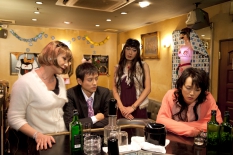
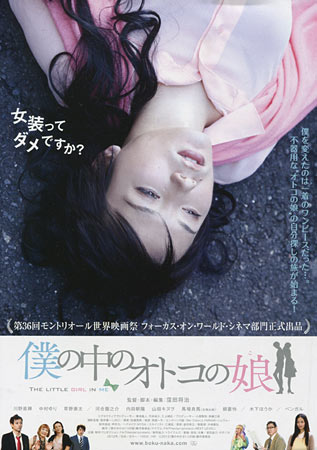



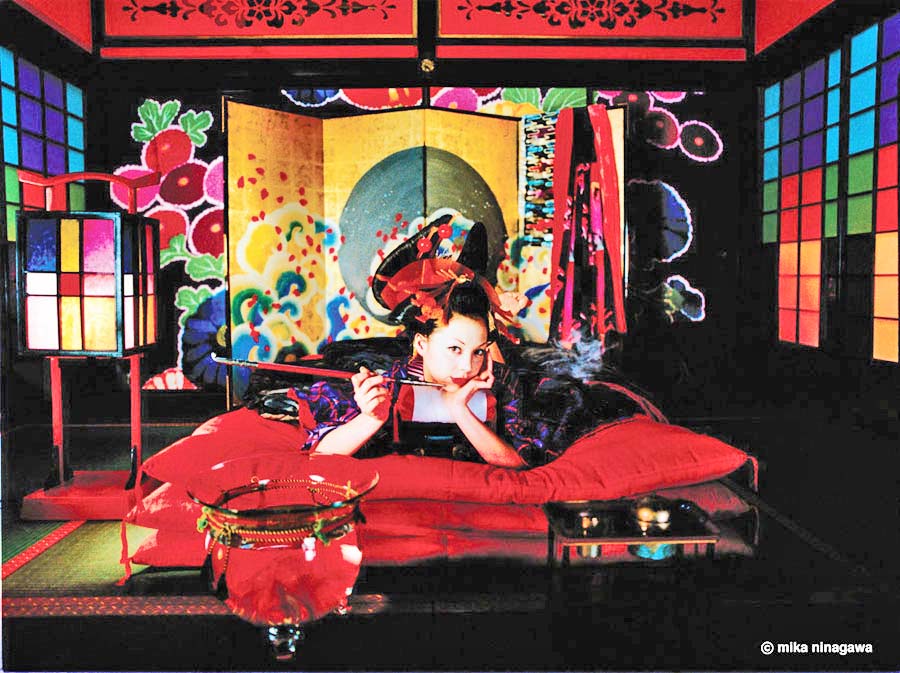
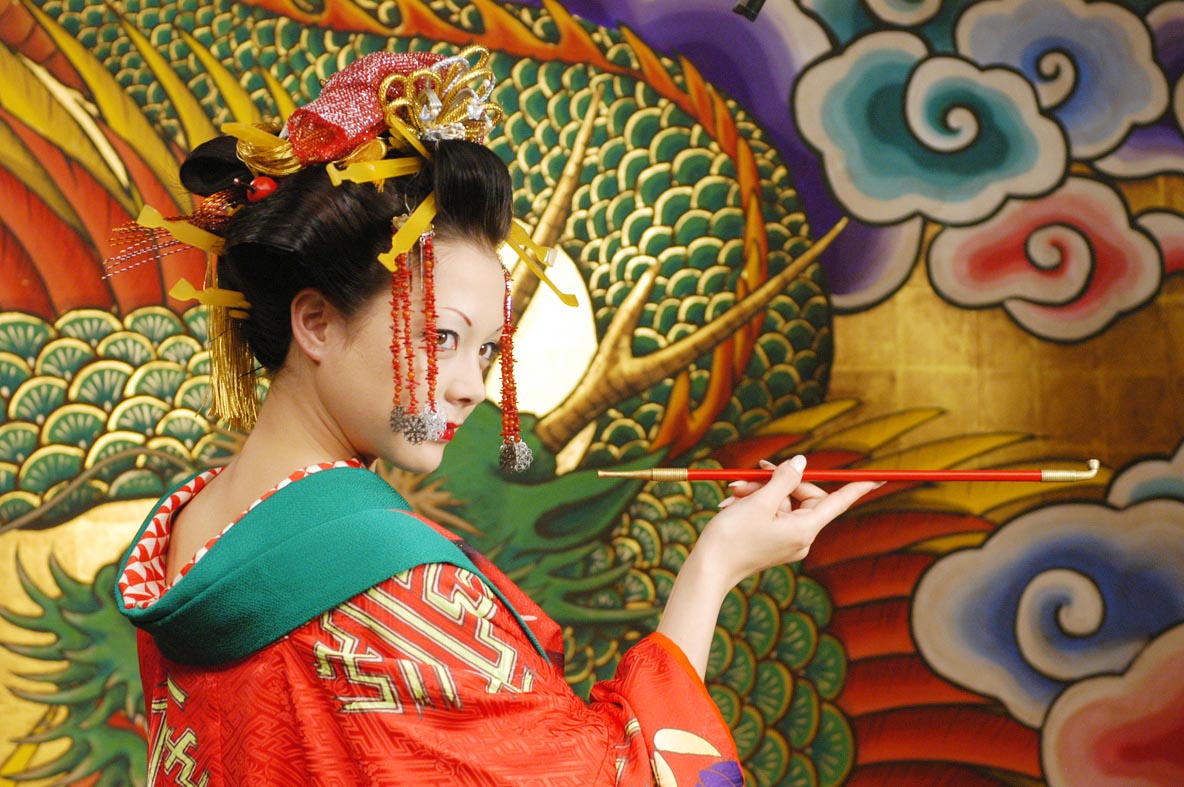


 Clodjee's Safe-House