Here we are listing only the categories that are of interest for our blog, but you’ll find more details on ALL the nominees on the Tokyo Hive and Internet Movie Database. You’ll find also some information (mostly about the anime category and the anime- & manga-related nominations) on Anime News Network.
The award winners will be announced on March 7, 2014, so stay tuned!
For the TV series the choice for the top 10 was a much harder one. There was so many excellent series, mostly from the U.K., that it made the selection difficult. I really think that I should watch less TV, but with such a huge choice of titles it is impossible to resist:
“Close your eyes. Open your mind. You will be unprepared.”
“Sucker Punch is an epic action fantasy that takes us into the vivid imagination of a young girl whose dream world provides the ultimate escape from her darker reality. Unrestrained by the boundaries of time and place, document.write(“”); she is free to go where her mind takes her, and her incredible adventures blur the lines between what’s real and what is imaginary.”
“She has been locked away against her will, but Babydoll (Emily Browning) has not lost her will to survive. Determined to fight for her freedom, she urges four other young girls—the outspoken Rocket (Jena Malone), the street-smart Blondie (Vanessa Hudgens), the fiercely loyal Amber (Jamie Chung) and the reluctant Sweet Pea (Abbie Cornish)—to band together and try to escape their terrible fate at the hands of their captors, Blue (Oscar Isaac), Madam Gorski (Carla Gugino) and the High Roller (Jon Hamm).”
“Led by Babydoll, the girls engage in fantastical warfare against everything from samurais to serpents, with a virtual arsenal at their disposal. Together, they must decide what they are willing to sacrifice in order to stay alive. But with the help of a Wise Man (Scott Glenn), their unbelievable journey—if they succeed—will set them free.” [Official Synopsis]
I just caught this movie on Showcase the other day and I was blown away. I had heard about it and seen some promising illustrations, but on release it was demolished by the critics (Rotten Tomatoes gave it a 23% rating for the critics and 46% for the audience) and I forgot about it. However it’s created by a reputable director, Zack Snyder (300, Watchman, Man of Steel), and even if it far from perfect it is quite a piece of beautiful entertainment. It is told with very little dialog, lots of music and astonishing CGI.
It starts with a sad story: a mother dies leaving her fortune to her two daughters. The abusive stepfather is unhappy with this and, as he is about to take it out on the girls, the oldest escapes her room and tries to kill him. However, the bullet ricochets on a steel pipe and kills the younger sister instead. The stepfather seizes this opportunity and has her institutionalized because of her supposedly violent and murderous behaviour. He makes a deal with the orderly that runs the place that she will be “taken care of”. In a few days, a special doctor will come to lobotomize her. That’s just the introduction. The girl, known as Babydoll, uses her imagination to escape her grim circumstances. The mental hospital becomes a brothel where’s the girls entertain the customers. But the Babydoll of the imaginary world escapes her own ordeal in a fantasy world where she is a warrior and has to gather five items in order to free herself: a map, a lighter, a knife, a key and a mysterious item that will be revealed at the end. The Babydolls of all worlds are determined to fight for their freedom.
The use of music and its sketch movie style reminds me of the eclectic storytelling of Heavy Metal where you had several unrelated segments united by one main story. Here you have an Inception‘s style asylum mindfuck that opens into segments set into four anachronistic mishmash fantasy world worthy of the most excessive mecha anime and video games: a Kungfu Panda style samurai fight where Babydoll acquires her only weapons: a katana and a Gluck, a WWI steampunk nazi zombie world where they acquire the map, a WW2 dragonslaying medieval fantasy world where they acquire the fire and a futuristic high train robbery meet bomb squad mission with a Vietnam war era helicopter where they acquire the knife (but not without a cost).
Snyder succeeds in capturing the pop culture of the current generation in the same way that Tarentino (Pulp Fiction, Kill Bill, Djando Unchained) captured the pop culture of the baby boomers. With its story inside a story, inside a story, the movie offers a clever storytelling. It also has a fascinating and beautiful visual. Unfortunately, the story is uneven and doesn’t always make sense, the acting is rather average, and the ending is quite disappointing: it delivers a soppy philosophical moral about self-determination and strength of character. I find solace in the fact that it is not really an happy ending. And, yes, it is sexist! But it is well worth watching (for a sci-fi loving male audience of course)!
“In the vastness of the Himalayas, document.write(“”); a young nomad’s curiosity lies beyond the horizon. ” (Festival’s Program)
It’s “a simple story, with practically no dialogue, that of a young nomad hoping to leave this place. Capturing endless, vertiginous landscapes Tau Seru is a physical, earthy film offering a tender portrait of a father and son in the silence of the lambs.” (Baptiste Etchegaray, on Semaine de la Critique du Festival de Cannes website)
This cute short is not Japanese, but since it was opening for one of the Japanese movies at the World Film Festival, I thought that I might as well talk about it a little.
The director is Australian and it was shot in the Indian Himalayas in a region called Ladakh, near the city of Leh.
A father and son bring their herd of sheep and goats to the “alpine” pastures of the Himalayas. One sheep is sick or too tired and refuse to go further. The father ask the son to go sell it to a nearby camp. The son take the money of the sale, hops on a bus and leaves, presumably for the city. An age-old story beautifully told, with almost no dialogues (in fact, I don’t remember any!). The scenery and the photography is just gorgeous. A nice little gem.
“Journalist Shuichi Fujii receives a letter from convicted killer Junji Sudo. Writing from death row, document.write(“”); Sudo wants to confess to crimes unknown to the police. Visiting Sudo in prison, Fujii learns about “Doc” who masterminded a string of murders. Set up by Doc, Sudo seeks revenge and implores Fujii to find the evidence needed to arrest his former boss. Working from Sudo’s sketchy memories, Fujii begins to piece together a grizzly tale of extortion, torture, rape, and arson. But as his desire to see Doc brought to justice nears a climax, he runs into resistance from unexpected sources.” (Festival’s Program)
This investigative journalism movie is based on a true story that was first published in Shinchosha‘s Shinch? 45 [lit. “mass market 45”] monthly magazine. That magazine started in 1982 as a health and living magazine for the 45+ years-old, but evolved first into a biographical magazine in 1985 and then, in 2001, into a crime stories, scandals & gossips magazine aimed at a female readership in their 30s and 40s, to finally become a general interest magazine in 2008. The whole story was republished as a nonfiction novel titled ??????????????[Kyoaku: Aru Shikeishuu no Kokuhatsu / lit. “Heinous: Accusation of a condemned”], written by the editorial staff of the magazine (Tokyo, Shinchosha, october 2009. 386 pages, ? 580, ISBN 978-4101239187). Of course, the movie is a fictionalized adaptation, so some names and events might have been changed.
Fujii is a reporter at the Shinch? 45 magazine. He is asked by his editor to investigate a letter received by the magazine from a death-row inmate. He goes to prison and interview the inmate, a gangster named Sudo who wants to confess of three murders that the police don’t even know about. Having converted to christianism in prison, he wants to atone for his crimes and give his victims peace by telling the truth about those unknown murders. He also wants revenge against his former boss, who’s the mastermind behind the murders. He feels its unfair that he is on death-row and his boss has not even been accused of anything. Since his boss has abandoned him and tricked him into killing his trusted right-hand man, he also feels betrayed. The boss is simply known as “Doc” [Sensei] or, as he commits murder to profit from land speculation and insurance fraud, the “death alchemist” (because he transform people’s death into gold). However, Fujii’s editor don’t think that such ordinary crimes would interest their readership and orders him to move to another investigation.
Even if he is skeptical that a death-row inmate would tell the truth, Fujii doesn’t want to let go of his investigation just yet. He visits the crime scenes, interviews all possible suspects and witnesses and soon realizes that Sudo’s confession is genuine! He even finds out Doc’s identity: he is named Kimura [actually Sudo and Kimura real names are Goto Ryoji and Mikami Shizuo]. It is a difficult investigation, because Kimura covered his tracks well and there’s little evidences. He succeeds to convince his editor to publish the story. Eventually the police starts investigating, makes accusations and put Kimura to trial.
The movie offers us three different stories: Fujii’s investigation, the unfolding of events as told by Sudo, but also the personnal toll that the investigation takes on Fujii and his family. He is so obsessed with the investigation that he neglect his wife and she eventually asks for divorce. However, what’s the message that director Kazuya Shiraishi want to tell us? Does he simply want to us to be aware of this rather trivial true crime story? Does he want to emphasize the human drama behind such ordinary news item? It’s not clear. To tell the truth this movie is a rather typical and quite ordinary journalistic crime investigation movie. The acting is good, the story itself is intriguing and interesting, but the storytelling and even the photography are quite dull. So, once again, a rather average movie for this year’s festival (and again Japanese movies don’t seems to attrack much attention since this 350-seat theatre had only a 15% occupancy for this showing).
“The “shanidar flower” only grows on certain women. Mysterious buds germinate on their skin and then bloom into beautiful flowers whose extracts lead to a new miracle drug at the “Shanidar Laboratory”. Kyoko and Ohtaki work at the lab, document.write(“”); and are always on the lookout for new donors, but not all women are cooperative. That’s when Kyoko’s charm comes into play. Meanwhile, abnormal side effects begin to appear stemming from the flower-removal surgery. Harvesting these flowers may be triggering something dangerous.” (Festival’s Program)
The movie opens on a commentary that explains how flowers are responsible for the extinction of dinosaurs because plants developed them as a defence mechanism (I am not sure this make sense). Kyoko joins the scientific team of Shanidar Laboratory under the supervision of Dr. Yoshizaki and his assistant Dr. Otaki. Her role is to help recruit study subjects and care for them (mostly psychologically).
It is not explained why the flower grows on women or why some women and not others. Are the flowers implanted? If not why bothering searching for candidates? It’s not made clear. Maybe flowers are usually removed upon discovery unless the candidate accepts to bring it to term for an handsome rewards. The story follows three candidates: Yurie, Miku and Haruka. The movie spends lots of time showing us how the flowers are taken care of and developing the candidates character. The flowers always grow on the chest (near the heart?) and are wrapped in a protective cushion and a hard container with screwing top so its growth can be regularly monitored. Candidates live in a sanatorium-type environment with simple but futuristic Ikea-like living quarters.
Unfortunately, flowers seem to have adverse effects on the candidates. First, it seems to affect their mind and then develop a growing bond with them as they mature. It looks like most women die of cardiac arrest after the flower is removed, but if it’s not removed when the flower bloom, it is said that it releases a toxin that kills the host. Eventually, the three candidates we follow become unstable: Yurie’s flower withers a little when Dr. Otaki rejects her advances, Miku freaks out and starts ripping out other candidate’s flowers, and Haruka rips out her own flower to give it to Miku. This incident leads to the eventual shut down of the project.
The movie could have ended there, but then Kyoko is having an affair with Dr. Otaki. She reveals to him that a flower is budding on her too. Fearing for her safety he cuts it in her sleep, but she wanted it to bloom and seeds, so she leaves him. Otaki goes back to his botanical research. Later he learns that Kyoko’s flower grew back and gave seeds, causing her to fall into a coma. He finds shanidar flowers growing all over the city now. It is then revealed that they are a parasitic species possibly responsible for the extinction of dinosaurs and Neanderthal. They will probably destroy all human civilization and bring us to evolve into plants!
That’s quite a weird science-fiction movie. Is there an allegory or a metaphor hiding in there? Some new-age cautionary tale about genetically modified plants and evil pharmaceutical companies? I am really not sure of what director Gakuryu Ishii wanted to tell us. The poetic story is interesting, but lacks focus and develops way too slowly (really, I almost fell asleep many times). The acting is barely average, but the sets are nice (despite the low budget) and the photography (with a lovely imagery that sometimes border the psychedelic) as well as the music (cool electric guitar) are also quite nice. Even if the deficient writing is compensated by nice visuals, it remains a rather average movie. (It didn’t attract much interest since the 150-seat theatre was only 20% filled)
One interesting point is that the movie (and the name of the flower) is inspired by a real fact mentioned in the movie: an archaeological excavation campaign undertaken in the Shanidar Cave (Northern Irak) between 1957 and 1961 led to the discovery of ten skeletons of Neanderthals. The find of pollen in one of them, indicating that flowers had been buried with the body, was considered evidence of burial ritual. However, recent studies seems to suggest that the pollen was a later contaminant (possibly brought by animals).
“Tomoyuki Kaji, document.write(“”); 28, is socially inept and thoroughly lacking in self-confidence. “If you die, are you happy then?” he asks on the Internet. An employment agency sends him to work at a factory in Nagano where he meets Tanaka, a co-worker who suffers from narcolepsy. “To the stars, we’re all alike,” he muses, and the pair become fast friends. This is new territory for Kaji, and he is exhilarated. Out for a drive one night, they meet Yuri, a young girl who has fled the clutches of their co-worker, Okada. Charmed by Yuri, they attempt to protect her. But this isn’t as simple as they imagine…” (Festival’s Program)
Tomoyuki Kaji is a loner, socially inept and quite a shy guy. He moved from Tokyo to Nagano to work in a car-parts’ factory. He receives his orientation at the same time than another new arrival, Okada, who’s a bold, arrogant young man. Both go to eat together afterward and at the restaurant they meet Tanaka, another factory worker who’s also quite socially inept and suffers from narcolepsy when he’s emotional. Okada leaves them to go out with a woman (he’s got what Kaji calls “mojo”, i.e. success with women), so Kaji and Tanaka, realizing they are quite similar, become friends. They are both bullied by their co-workers, including Okada, who turns out to be a serial rapist and murderer. When he meets the sister of the speed ice-skater he first killed because he was jealous of his performance, he turns his attention to her, but she escapes and is helped by Kaji and Tanaka who are having an outing in the countryside. However, when Yuri show her preference for Tanaka, Kaji feels betrayed and abandoned. After all, maybe he has more affinity with Okada? Feeling despair, he goes to Akihabara with the intent of running people over with his car and stabbing many with a huge knife…
Why is the movie titled “Botchan” when it has apparently nothing to do with S?seki’s novel of the same name? The only similarity I can see is that S?seki recount with humour his experience of being a teacher transferred from Tokyo to Matsuyama (on Shikoku island), while the movie tells us about the tribulation of Kaji moving to work in Nagano. The central issue of the novel is about morality, while the movie’s theme is more about loneliness and despair (and if it’s a comedy, it’s a twisted and sick one!).
I feel that there has been a lot of Japanese movies lately about socially inept people, like the so-called hikikomori (withdrawn) and dokuo (socially inept young men). Is it because it’s a problem that is particularly on the mind of the Japanese in the recent years? Or is it the expression of the accumulation of collective despair due to the Great Eastern Earthquake and tsunami, years of economic hardship, failure of the japanese dream, and a national psychological profile made of a facade (the need for social conformity creates lots of emotional repression) that is starting to crack at the seams? There’s lots of bottled-up emotions in those Japanese! And the tendency to ostracize those who start to buckle under the pressure (avoiding social contacts or sticking out as different and weird) only makes this problem worse, as it alienates them even more. Sometimes pushing them over the edge…
It is very difficult to understand this movie if you don’t have basic notions of Japanese society, culture and history. In the end, the movie makes a vague reference to what is known as the “Akihabara massacre” (see reports about this in BBC News, Japan Probe, The Washington Post and The Yomiuri Shimbun). The movie doesn’t explain anything and assume the viewers already know about it (clearly indicating that it was not intended for a foreign audience). On June 8, 2008, Tomohiro Kat? (25 year-old) drove his two-ton rented truck into the Akihabara crowd, killing three people, then got out of the truck and started stabbing people with a dagger, killing four more and injuring at least ten.
Clearly, the movie is trying to answer the question: “what could have pushed a man to commit such a terrible thing?” There are indeed many similarities between Kaji (in the movie) and Kat?, who was an unpopular loner and looser from Aomori, working temporarily in an auto parts factory in Susono City (Shizuoka-ken), often posting messages with his phone on a web site, and who got upset when some co-workers had hidden his work clothes. He reportedly told the police that he was “tired of life”. Of course, the movie is set in a different place and Kaji drove a mini-van, not a two-ton truck. Not much is known on the motivation of the real killer. Although the movie is offering interesting speculations, I seriously doubt that it really happened that way.
So, I understand that the movie is trying to explain the Akihabara massacre, putting the blame of the murderer’s social inaptitude on the pressure of society, but many aspects of the movie still doesn’t make sense! Like: why, while everybody is being chased by Okada, no one think of calling the police? Maybe the director wanted to parallel the fact that, despite Kat? posting his intentions on the internet, nobody tried to stop him. Was anyone listening?
I feel that this movie is more a reenactment documentary than entertainment. It is weird and pointless. With all the angst and screaming, it is quite painful to watch. It attracted little attention (40 viewers in a theatre of about 150 seats, that’s an occupancy of 26%) and a couple of people left before the end. It’s an interesting subject of reflection, for TV maybe, but not an entertaining movie to watch in a theatre.
“In a world of black and white, document.write(“”); ore dug from the cave is shedding colored light. Mikuro, identifying himself as the “Black Fox” bandit appears in front of the white-haired boy Kohaku who is captured in the back of a cave by a gang of thieves. Mikuro who collects the ore shedding “colored” light, says proudly that he has a “dream” to fulfill in this world of black and white. “It’s decided! From now on you will be my little brother.” Kohaku has lost hope for life after his parents were murdered, but he is forced to be Mikuro’s little brother and together they start running towards the world out of the cave.” (from the movie Press Book)
A young boy with white hair is from a race that can make rocks glow in a very colourful manner. This ability is feared in a world where all colour has disappeared, leaving only black and white, and therefore members of this race are persecuted. White Fox is captured and held in a cave, but he is saved by Black Fox who as vowed to restore colour to the world. He sees White Fox as the only one left who could do it. They escape to the surface and join Black Fox’s sister who is almost blind, but can see only colour. She is the reason why Black Fox wants to bring back colour and makes his sister see again.
This is a nice short movie that feels a lot like a student movie. However, it was planned as a pilot for a full-lenght feature film. Because of his young age, Kiyoshi Endo had trouble to find support for his fantasy adventure feature film, “B/W Foxes and the Rainbow Crystal”. And then the Great East Japan Earthquake occurred, paralyzing most of the movie industry in Japan. After doing some volunteering in the area affected by the tsunami, he decide to at least produced this short prelude. It was shot in five days, under conditions of heavy snow fall, in the northeast: Abukuma-Dou in Yamamoto-cho (Miyagi prefecture) and Tamura City in Tohoku district (Fukushima Prefecture).
Action and stunt scenes could have been better, but considering this is a very low budget movie, it is quite acceptable. The actor playing White Fox had lots of hesitation in his acting, but that also is to be expected considering his young age (even if he had previous acting experience). The special effects are not too bad, so all in all it is a nice and cute story. (And it is surprising I could say that much about such a short movie).
“When Kensuke Adachi is fired from his job for a mistaken order, document.write(“”); he is devastated. He withdraws from society and locks himself in his room. His father Kenzo and his sister Yuko are worried but can do nothing besides supporting him. One day Kensuke finds a web site for people who love dressing up in female clothing. Kensuke is fascinated by the drag queen depictions on the site posted by users who proudly display their glamorous alter egos. At first Kensuke thinks the images are demeaning, but gradually he begins to become very interested in the lifestyle depicted on screen.” (from The Montreal World Film Festival program guide)
Kensuke finds a job right after graduating university. He is a shy and clumsy boy, pessimistic and quite unsure of himself, so eventually his mistakes get him fired from his job. He is hurt and becomes withdrawn, refusing to leave his home for five years. This is a phenomenon that the Japanese call “hikikomori”, often seen in bullied children who cannot deal with social interaction by fear of being hurt physically or emotionally. Eventually his disorder evolves into becoming a jyosokootaku, someone who is obsessed with cross-dressing. This activity will bring him to interact socially again and help him finally find acceptance. He will find himself as well as a comfortable place in society. He will not be afraid of commitment anymore.
Kensuke is not homosexual. He simply likes to wear women’s clothing. However, since a gay guy falls for him, the movie also obliquely address the subject of LGBT in Japanese society. If they have rarely encountered as much hate and discrimination as in western culture, Japanese LGBT have more often been subject of ridicule and have now started gaining acceptance. Kensuke situation is therefore similar to the plight of most Japanese LGBT. All in all, this movie is a simple coming of age story.
I must admit that I didn’t expect too much from this movie. The previous movies that I’ve seen from director Shoji Kubota (Lost Love Murder seen at the Montreal Film Festival in 2010 and Crazy-ism seen of the festival in 2011) didn’t impressed me at all. I found them rather boring and amateurish. However I was quite surprised to find that The little girl in me is quite enjoyable. It is still a very low budget movie, but this time the acting is excellent (although there was a few scenes at the beginning of the movie where the acting felt awkward, but it was probably to express the discomfort of the characters) and the photography is quite good. I guess the director has grown more experienced and more confident.
This year the Japanese selection of the festival was offering thirty-three movies (including eight anime and three shorts). Unfortunately, I don’t have time anymore to queue to watch every Japanese movies like I used to do, and I also feel that I don’t fit with that kind of young, over energetic crowd anymore. But at least I was able to watch one movie and review two: Thermae Romae and Library Wars. There are a few more movies that I wished I would have been able to screen, like the Rurouni Kenshin live-action or Garden of Words, the latest Makoto Shinkai’s anime.
If you want to know more about the Japanese movies offered at this year’s Fantasia, I can recommend you the very interesting review by Claude R. Blouin at Shomingekiblog about seven of those movies (in french). Mr. Blouin says:
I draw the attention of literature’ lovers on a film whose spirit should reach readers of Gabrielle Roy, The Garden of Words, as well as on The Great Passage, which is about the life of words. About the world of image, Helter Skelter is noteworthy. Also Key of life for the relationship between play and adaptation. The introduction should give everyone some leads to go to the movies more likely to answer their concerns.
In a press release, the festival announced that it has reached “record attendance numbers this year, boasting more than 125,000 festival-goers for its 17th edition, surpassing last year’s record of 109,000 (a 15% increase). Over the course of its three-week film marathon, it presented over 131 features from 31 countries and more than 220 shorts from across the globe.” They also proudly announced this year’s prize-winners. Here we will list only those from Asia:
Fantasia Awards:
Best Director: Hou Chi-Jan (Taiwan) for When a wolf falls in love with a sheep
Best Actor: Cho Jae-hyun for The Weight by Jeon Kyu-hwan (South Korea)
Audience Awards:
Best Asian Feature:
– Gold: HK/Forbidden Super Hero by Yuichi Fukuda (Japan)
– Silver: Lesson of the Evil by Takashi Miike (Japan)
– Bronze: How to Use Guys with Secret Tips by Lee Wonsuk (South Korea)
Best Animation Feature: The Garden of Words by Makoto Shinkai (Japan)
Guru Prize For Most Energetic Film: HK/Forbidden Super Hero by Yuichi Fukuda (Japan)
You can find more information on the prize-winners over at Anime News Network.
I’d like to share one last thought about a complain that I heard again and again over the years: the line-ups. I guess that the festival is a victim of its own success. It is a problem that has always plagued the festival and that keeps people from attending. I heard many time (even this year) people saying that they would not come to Fantasia because they didn’t like the long line-ups (I, myself, abhors waiting in line and it’s one of the reasons that kept me from attending lately — besides being quite busy and not being a fan of the loud, rowdy crowd that seems to favours Fantasia). You line-up to get the tickets and then line-up again to get into the theatre. In a way, it’s a boon for the festival since most shows are sold out and not much can be done anyway to improve the experience for the viewers…
When I went to see Library Wars I must admit that I didn’t wait for the tickets, but, since I arrived only an half-hour early, I ended up waiting in line way over the corner of Ste-Catherine street, a little past the Centre Hi-Fi! Of course, the VIPs (guests, press or “friend” of the festival) have their own, much shorter line-up, but, surprisingly, it seems that even the $250 “Fantasia Passport”, giving access to every films, does not give priority access to screenings. I surely miss the time when it was worth for me to get a press accreditation. Now I am too busy and won’t bother with the accreditation process just for one or two movies. It’s too bad because the Fantasia selection of movies always includes some very interesting titles that can’t be ignored.
This year the festival is offering us eleven Japanese movies: one in official world competition, one in the World Great category (out of competition), eight in the Focus on World Cinema (including one short) and one short student movie.
Here’s some Clips from World Competition films on Youtube:
The World Competition
Rikyu ni Tazuneyo ( ??????? / Ask This of Rikyu ): Japan, 2013, 123 min.; Dir.: Mitsutoshi Tanaka; Scr.: Eriko Komatsu (Based on a novel by Kenichi Yamamoto); Phot.: Takeshi Hamada; Ed.: Kazunobu Fujita; Mus.: Taro Iwashiro; Distri.: Toei; Cast: Miki Nakatani, Ebizô Ichikawa, Yusuke Iseya, Nao Omori.
“As thunder crashes and rain pours down, 3000 soldiers surround the home of tea master Rikyu. Chancellor Toyotomi Hideyoshi has ordered him to commit suicide. As he sits and contemplates his death, his wife So-on speaks to him: “There is one who is always in your thoughts.” Old memories are revived… Son of a fish shop owner Tanaka Yoshiro studied the Japanese tea ceremony and became one of the great influences on its traditions. An exponent of the “wabi” style of ceremony, which eschewed expensive accoutrements in favour of rustic simplicity,Tanaka, now going by the name of “Soeki”, came to the attention of Oda Nobunaga who appointed him tea master. When Oda died and power passed to Hideyoshi, Soeki continued in his role as “emperor of tea” and was ennobled with the name of “Rikyu” so that he could enter the palace as Hideyoshi’s assistant. But Hideyoshi is a jealous and paranoid ruler and he purges his closest confidants. The final object of Hideyoshi’s obsession is connected with Rikyu’s youth…” (Festival’s Program)
Schedule: Sun 9/01 9:00 CI; Sun 9/01 19:00 TM; Mon 9/2 14:00 CI.
“In 1582, before the unification of Japan, Nobunaga Oda was forced to take his own life at Honno-ji Temple during a violent revolt led by Mitsuhide Akechi. Following Oda’s death, the powers in Japan held the Kiyosu Conference — the “conference that changed the course of history” — to resolve the Oda clan’s succession of leadership and redistribute Mitsuhide Akechi’s territories. Hideyoshi Toyotomi, Nagahide Niwa and Tsuneoki Ikeda meet to decide on a successor. The conference would become Japan’s first group-made political decision. In this film, director Koki Mitani, known especially for his comedies, gives us his unique interpretation of the intricate web of human relationships involved in this process as the brave general Katsuie Shibata and Hideyoshi Hashiba, who would later unify Japan, engage in a battle of wits, deceit and bargaining.” (Festival’s Program)
“Tomoyuki Kaji, 28, is socially inept and thoroughly lacking in self-confidence. “If you die, are you happy then?” he asks on the Internet. An employment agency sends him to work at a factory in Nagano where he meets Tanaka, a co-worker who suffers from narcolepsy. “To the stars, we’re all alike,” he muses, and the pair become fast friends. This is new territory for Kaji, and he is exhilarated. Out for a drive one night, they meet Yuri, a young girl who has fled the clutches of their co-worker, Okada. Charmed by Yuri, they attempt to protect her. But this isn’t as simple as they imagine…” (Festival’s Program)
Schedule: Fri 8/23 13:30 QL12; Sat 8/24 10:10 QL12; Sun 8/25 11:30 QL12.
Hakoiri musuko no koi ( ??????? / lit. “Love of a Son who is in the Box” / Blindly in love ): Japan, 2013, 108 min.; Dir.: Masahide Ichii; Scr.: Masahide Ichii, Takahiro Tamura; Mus.: Ren Takada; Phot.: Daisuke Sôma; Ed.: Chieko Suzaki; Prod.: Chikako Nakabayashi, Yumiko Takebe; Cast: Gen Hoshino, Kaho, Sei Hiraizumi, Ryoko Moriyama, Ren Osugi, Hitomi Kuroki, Honoka, Shuntaro Yanagi, Miyako Takeuchi, Kanji Furutachi.
“Shy and socially inept, Kentaro Amanosizuku, 35, works for the city but lives with his parents, a pet frog and video games as his chief interests. Worried about their son’s future, Kentaro’s parents look into matchmaking services, seemingly to no avail. Then a nibble. Would Kentaro be interested in meeting their daughter Naoko? A meeting is arranged. Naoko is a beautiful young woman but she is blind. Kentaro is smitten. But Naoko’s father has his doubts about Kentaro and the meeting comes to nought. Then, one day, Naoko’s mother comes to visit at Kentaro’s office. Is he still interested in her daughter?” (Festival’s Program)
“Erika’s life fall aparts when her boyfriend leaves scars on both her heart and her face. The manager of the family restaurant where she works part time refuses to let her work with a scarred face, and she has no way to pay for an abortion. She resolves never again to be at the mercy of sentiment. She decides to become a hostess at the Elleseine nightclub in Tokyo’s notorious Kabukichio entertainment and red-light district. Before long she has risen to the top, becoming the club’s number one hostess. But material fortune doesn’t always translate into personal happiness. Can she have her cake and eat it?” (Festival’s Program)
Schedule: Fri 8/30 16:50 QL9; Sun 9/01 21:20 QL15.
Case of Kyoko, Case of Shuichi: Japan, 2013, 135 min.; Dir. & Scr.: Eiji Okuda; Phot.: Takahiro Haibara; Ed.: Manabu Shinoda; Mus.: Hibiki Inamoto; Prod.: Takahito Obinata, Miyako Kobayashi; Cast: Sakura Ando, Tasuku Emoto.
“Minamisanriku, Japan, was devastated by the tsunami of March 11, 2011, with most buildings destroyed by waves of 16 metres or higher, and over half the town’s population swept away or drowned. With 90% of the town gone, there’s no “home” there anymore for former residents Kyoko and Shuichi. For psychological reasons as well: left behind were a mother and a child. What does the future hold for the living?” (Festival’s Program)
Schedule: Sat 8/24 13:10 QL12; Sun 8/25 21:10 QL12; Thu 8/29 19:00 QL12.
Shanidar no hana ( ???????? / The flower of Shanidar ): Japan, 2013, 105 min.; Dir.: Gakuryu Ishii; Scr.: Hiroaki Jinno, Gakuryu Ishii, Tomofumi Tanaka; Phot.: Yoshiyuki Matsumoto; Mus.: Michiaki Katsumoto; Cast: Gou Ayano, Haru Kuroki, Kanji Furutachi, Ayumi Ito, Rio Yamashita, Yuiko Kariya.
“The “shandihar flower” only grows on certain women. Mysterious buds germinate on their skin and then bloom into beautiful flowers whose extracts lead to a new miracle drug at the “Shanidar Laboratory”. Kyoko and Ohtaki work at the lab, and are always on the lookout for new donors, but not all women are cooperative. That’s when Kyoto’s charm comes into play. Meanwhile, abnormal side effects begin to appear stemming from the flower-removal surgery. Harvesting these flowers may be triggering something dangerous.” (Festival’s Program)
Schedule: Fri 8/23 16:40 QL15; Sat 8/24 16:30 QL9; Sun 8/25 9:20 QL9.
“Journalist Shuichi Fujii receives a letter from convicted killer Junji Sudo. Writing from death row, Sudo wants to confess to crimes unknown to the police. Visiting Sudo in prison, Fujii learns about “Doc” who masterminded a string of murders. Set up by Doc, Sudo seeks revenge and implores Fujii to find the evidence needed to arrest his former boss. Working from Sudo’s sketchy memories, Fujii begins to piece together a grizzly tale of extortion, torture, rape, and arson. But as his desire to see Doc brought to justice nears a climax, he runs into resistance from unexpected sources.” (Festival’s Program)
“When Ryohei’s wife, Otomi, suddenly passes away, Ryohei is deeply depressed, without the strength to live. Two weeks after her death, a woman visits Ryohei and gives him a recipe book which was left by Otomi, a “recipe book” for a happy life. Meanwhile, Ryohei’s daughter Yuriko comes to visit him. Yuriko’s own marriage is about to end in divorce and she will have use for Otomi’s “recipe book”.” (Festival’s Program)
“”Write, form a rhizome, increase your territory by deterritorialization, extend the line of flight to the point where it becomes an abstract machine covering the entire plane of consistency.” Inpsired by the philosophies of Gilles Deleuze and Félix Guattari. ” (Festival’s Program)
Live with the sea (?????): Japan/Singapore, 2013, 8 min.; Dir./Phot./Ed.: Yuichiro Nakano.
“When the massive tsunami hit northern Japan in March 2011, a fisherman just barely escaped on his boat. He lost everything, including friends and family. Grateful to have survived, he donates fish to needy people. ” (Festival’s Program)
Schedule: Sun 8/25 18:50 QL14; Sat 8/31 16:20 QL14.
Our cinema: review of a year of hits
Karakara (????): Canada/Japan, 2012, 103 min.; Dir./Scr./Ed.: Claude Gagnon; Phot.: Michel St-Martin; Light.: Motoshi Kinjo; Sound: Masahiro Yokozawa & Louis Collin; Cost.: Yuko Arai; Ass. Dir.: Masato Tanno; Mus.: Yukito Ara; Theme Song: Sakishima Meeting (Yukito Ara & Isamu Shimoji); Prod.: Takako Miyahira, Samuel Gagnon, Claude Gagnon; Exec. Prod.: Yuri Yoshimura Gagnon; Cast: Gabriel Arcand, Youki Kudoh, Megumi Tomita, Yuichi Atta, Toshi Moromi, Tenyu Okuda, John Potter, Takayuki Ichise, Mieko Taira and a special appearance by Toshiko Taira. Was screened at Cannes in May 2012 as part of “Perspective Canada.”
Looking to embark on a spiritual journey, Pierre Masson, a 61-year-old retired Quebec university professor, ends up making a short, unsettling trip around Okinawa with Junko, a 40-year-old runaway wife. The unprepared intellectual would rather not get involved with this unlikely and passionate lover, especially in an unfamiliar and disorienting cultural context. The confused, unwilling sexagenarian decides nevertheless to follow his destiny, unsure of where it (she?…) will take him.
Schedule: Sun 8/25 20:30 Espace Culturel G.-E. Lapalme (Place des Arts).
More details and links will be added as the information become available (whenever I can).
Updated: Details on “Ask This of Rikyu”, list of Korean films (8/8); details on “Kiyosu Kaigi” & “Botchan”, AsianWiki links (8/9); details for most of the other films (8/10); schedule links (8/16); Korean movies’ links, schedule, description and remaining details (8/17); commentary link for Botchan (8/23).
In 2019, the Japanese government pass the Media Betterment Act, a very strong censorship law, and creates a special army to enforce it by searching and eliminating any documents deemed unsuitable by the law. However, libraries in Japan have their own law that gives them freedom in collecting and offering their materials, guaranteeing privacy to their users and categorically opposing any type of censorship. Therefore, another armed force is created to protect libraries against such censorship. The story follows Iku Kasahara, a young recruit of the Library Defense Force, as she discovers all the challenges of a paramilitary life.
When she was in high school, Iku Kasahara went to a book store to pick up the latest instalment of a fantasy novel series that she liked a lot. As she was waiting to pay, a squad of MBA soldiers entered the store. She’s told that the novel she wants is banned and, as a soldier tries to wrestle it out of her hands, a Library Defense Force officer intervenes to help her and save the book. Years later, she wants to join the Library Defense Force in order to find her “prince”–even if she doesn’t remember how he looks like or what’s his name. Unfortunately, since she’s not taking her job seriously enough, she makes mistakes that could put her colleagues in harm’s way and some of them are resenting her for it. However, she works hard, learns from her mistakes and will eventually earn her colleagues’ trust.
In the 80s, the Media Betterment Act was created not only for the security of the country, to give more powers to the government, but also to “protect” the citizens, who could be “harmed” or badly influenced by books that are too violent or information that is too distressing to know. In 1999, when libraries started resisting this censorship, a group of MBA activists (whose identities always remained unknown) attacked and burned a library as an example. The sole survivor of the Hino Massacre, as it became known, decided to create the Library Defense Force to make sure such horrible violence would never happen again. So far, heavy combat was avoided but when the owner of a private information museum dies and his collection (rumoured to contains proof of illegal dealings behind the creation of the MBA) is to be donated to the LDF headquarter’s library, the MBA’s army launch an all out attack in hope to prevent the documents’ transfer. When this fails, the activists responsible for the Hino Massacre resurface and kidnap the LDF leader and his body guard: Iku Kasahara. It will be the opportunity for her to prove what she can do.
It is impossible to listen to this movie without thinking about people like Bradley Manning (who leaked thousands of classified U.S. documents), Julian Assange (WikiLeaks founder) or Edward Snowden (a CIA contractor who recently leaked information about secret U.S. electronic surveillance activities). In fact, I watched the movie on the same day Manning was found guilty of espionage and theft. Those brave individuals, not unlike the Library Defense Force, believe that governments should be held accountable if they brake their own law, that we should fight censorship and require absolute transparency from our governments.
Ever since september 11th 2001, several countries of the world have voted laws to protect themselves against terrorists, but it also seriously curtails the civil liberties of their citizens. In order to overcome the enemy you have to become like him, in a downward spiral into a police state and dictatorship. First, governments would want access to all information even if it infringes on personal privacy (it’s the Orwellian 1984 stage, similar to what Snowden warned us about). Then, they would want to control and restrict access to sensitive information they consider harmful (thus making people like Manning or Assange into criminals). Finally, the next step would be to eliminate the information they consider harmful (the Fahrenheit 451 stage; some countries might already be there and if the conservative gain even more power it might happen in America also; book censorship incidents are not rare and book burning is just one step further). Like they said in the movie, citing the German poet Heinrich Heine, a country that burns books is a country that will also burn men. So, when honest whistle blowers are considered as traitors, it is time to start worrying.
This movie stands as a warning of what could happens if things would really go wrong. It tells us that, in a way, it has already begun and that’s our fault for letting it happening. In the movie someone says that only the apathy of the people allowed this situation to happen. It is really not surprising. People don’t like to be bothered with situation like this (in fact, if something like this would happen in any of the libraries I worked for, people would not resist the authorities and give them whatever they wanted without a thought). Of course, the director wraps his message with a little humour, lots of action (using pretty decent special effects) and a good dose of romance (the director insisted a lot on the fact that his movie was a romantic comedy with action). It is quite an interesting and entertaining movie.
“Japan’s long years of civil war are nearing a conclusion with Toyotomi Hideyoshi one short step away from finally uniting the land under his rule. He sends a huge army north against the Hojo clan, document.write(“”); his last enemy. The one stronghold he cannot take is Oshi Castle, a Hojo outpost in the land of Bushu. Called “the floating castle” because of the lake that surrounds it, it is under the command of Narita Nagachika, a popular leader known to the people of his domain, unflatteringly, as “nobou-sama”, from deku no bou, or “blockhead”. Under Hideyoshi’s order, General Ishida surrounds the castle with a force of 20,000 men. Nagachika, as his nickname suggests, is not much of a thinker, but he is a brave and obstinate leader. Against the overwhelming force of the Ishida army, the defenders of the valiant castle — no more than 500 men — unite with the common folk in stubborn resistance, refusing to retreat a single step, even when Ishida resorts to the extraordinary tactic of damming a river to flood them out. But, with victory in their grasp, outside events give the story a twist no one would have ever expected.” (from The Montreal World Film Festival program guide)
The release of the movie was delayed for a little more than a year because of the march 2011 T?hoku earthquake and tsunami. Obviously, the flooding tactic used by the Ishida army would have been a painful reminder of the tsunami tragedy. The producers thoughts for a moment to make a few changes to the movie in order to release it earlier, but they felt they couldn’t tamper with historical events.
The events retold in this movie are indeed largely accurate. In 1590, Toyotomi Hideyoshi undertook a last campaign in his effort to unify Japan. It was waged against the Late H?j? clan in the Kanto region, which was one of the last resistance to his authority. According to Mary Elizabeth Berry, H?j? Ujimasa had adopted a passive resistance strategy against Hideyoshi’s forces and withdrew most of his forces to Odawara Castle, which was defended by his son H?j? Ujinao. After a siege of several months, the H?j? surrendered. Hideyoshi gave the eight Kanto provinces to Tokugawa Ieyasu in exchange for his submission, thus unifying Japan under his rule and ending an era. During this campaign, Hideyoshi’s army had to laid siege to many castles of Kanto, including the Hachigata castle and the Oshi Castle. It is the siege of Oshi that is depicted in the movie. Despite his order to do otherwise, the lord of Oshi, Nagachika Narita, refused to surrender to Ishida Mitsunari (even after he dammed the river in an attempt to flood the castle) and hold the castle until the fall of Odawara was announced.
I really enjoyed this nice recreation of the era (particularly the sets and costumes). Of course, it might not be the best CGI I’ve seen but it’s good enough to well support the story. Usually, samurai movies offer drama with lots of angst, violence and sadness. It is quite rare to see a samurai comedy. Of course, contrary to western cinema, japanese movies are more complex and nuanced. So, in this movie, there is still lots of people dying (but not in a senseless manner), you still have fighting scenes, some suspense, but everything is done with a much lighter tone. All in all it is a good entertainment.
This is definitely one of my favourite at the 2012 Montreal Film Festival.
“When Roman architect Lucius is criticized for his “outdated” thermae designs, he retreats to the local bath to collect his thoughts. All Lucius wants is to recapture the Rome of earlier days, when one could enjoy a relaxing bath without the pressure of merchants and roughhousing patrons. Slipping deeper into the warm water, Lucius is suddenly caught in the suction and dragged through the drainage at the bottom of the bath! He emerges coughing and sputtering amid a group of strange-looking foreigners with the most peculiar bathhouse customs…over 1,500 years in the future in modern-day Japan! His contemporaries wanted him to modernize, and so, borrowing the customs of these mysterious bath-loving people, Lucius opens what quickly becomes the most popular new bathhouse in Rome—Thermae Romae!” ( from the manga publisher’s website )
Thermae Romae (???? · ??? / Roman thermal baths in Latin), was written and illustrated by Mari Yamazaki. It was first serialized by Enterbrain in their monthly seinen manga magazine Comic Beam (between February 2008 and April 2013) before being compiled into six volumes. The French translation is published by Casterman (Sakka Collection, the first five volumes have already been published) and the English translation is published by Yen Press (two volumes published so far).
Thermae Romae is a rather wacky and sometimes coarse fantastic comedy. But this is obviously not a simple comedy. This would be a average manga (good because hilarious, but no more) if it were not for its rather ingenious premise. The story is well written and supported by sound research to detail. Drawings (especially the faces and backgrounds) are in a realistic style, which is rare for a manga (especially for a comedy). Each chapter is followed by comments and explanatory notes by the author. This manga, in addition to being a pleasant entertainment, gives us a lot of information on both Japanese and Roman cultures (which, strangely, appear to have much in common).
After the first two volumes, the time traveling of Lucius whenever he quickly needs new ideas become tiresome. Fortunately, the author introduces some new elements to enliven the story (introducing a semblance of political intrigue and addressing the issue of Hadrian‘s succession, for example). Yamazaki’s story therefore avoid running out of steam by bringing Lucius to discover a little more of Japanese culture. By comparing the two cultures, she reflects upon the experience of discovering a different culture and on how the West has perceived Japanese culture. With the fourth volume, the manga take a different direction that breaks Lucius’ temporal back-and-forth cycle and gives a new life to the story. Lucius meets the brilliant Satsuki Odate, an highly educated spa geisha who is interested in ancient Rome and can speak Latin! Having an interpreter will allow Lucius to discover more aspects of modern Japanese culture. The fifth volume is less about Roman baths than various small aspects of Roman culture. The presentation of the spatio-temporal travel (which remains unexplained) is refined and the volume ends with a suspense that makes us yearn for the next and final book! A very good manga! You can read more on this manga (in french) in a previous entry of this blog.
Thermae Romae Vol. 1-5, by Mari Yamazaki. Paris, Casterman (Coll. Sakka). Vol. 1: March 2012, 186 pg., ISBN: 978-2-2030-4909-3; Vol. 2: March 2012, 202 pg., ISBN: 978-2-2030-4910-9; Vol. 3: June 2012, 194 pg., ISBN: 978-2-2030-5082-2; Vol. 4: October 2012, 194 pg., ISBN: 978-2-2030-6040-1; Vol. 5: January 2013, 194 pg., ISBN: 978-2-2030-6206-1. 13.2 x 18.1 x 1.8 cm, 7,95 € / $13.95 Can. For young adult (14+). Vol. 6 coming around the end of summer 2013.
Thermae Romae Vol. 1-2, by Mari Yamazaki. New York, Yen Press. Vol. 1: November 2012, 352 pages, ISBN: 978-0-316-22919-7; Vol. 2: May 2013, 352 pages, ISBN: 978-0-316-23219-7. 7”x 10.125, $34.99 US ($38.99 Can). For Older Teen (14+). Vol. 3 coming in February 2014.
The Thermae Romae animation was produced by DreamLink Entertainment (DLE Inc.) studio under the direction of Azuma Tani with scripts by Mamoru Nakano and character designs by Toshimitsu Takechi. The three 24-min. episodes (or six 12-min. episodes) aired on Fuji TV’s Noitamina block between January 12 and January 26, 2012. The series has been licensed for released in North America by Discotek Media.
“Ancient Roman architect Lucius is too serious. His inability to keep up with the fast-moving times costs him his job. When a friend takes the dejected Lucius to the public bathhouse to cheer him up, Lucius accidentally slips through time and resurfaces in a modern-day public bath in Japan. There, he meets aspiring young manga artist Mami, along with others of the “flat-faced clan”. Shocked by the many inventive aspects of Japan’s bathing culture, Lucius returns to ancient Rome and garners tremendous attention when he implements these novel ideas back in Rome. As he time-slips back and forth between ancient Rome and modern-day Japan, Lucius’ reputation as the ingenious, new bath architect begins to grow.” (from IMDb)
The Thermae Romae movie is an excellent production. First, it includes a cast of very good actors (strangely the fact that most of the roman roles are played by Japanese actors with “less japanese faces” doesn’t make the movie feel less realistic). Second, the sets and costumes are superbs (it helps that they used the specialized facilities of Cinecitta studio in Rome, as well as some barely noticeable computer animation). Finally, it offers an interesting story, full of intrigue and good natured comedy. All in all, it is quite entertaining.
Unfortunately, if you know anything about roman antiquity or if you have previously read the manga, you’ll probably be very disappointed. First, emperor Hadrian is presented as a tyrant while he was in fact one of the most benevolent, cultured and caring emperor (as they said in the manga and anime: one of the five “good” emperors). Also, Ceionius (Aelius) is presented as an horrible womanizer and an incompetent which was most probably not the case. Secondly, I understand that a movie adaptation must take some liberty with the original story, but I felt in this case that it was diverging a little too much. The female character of Satsuki Odate, a scholarly spa geisha in the manga, is replaced by wannabe mangaka Manami Yamakoshi which opens for an entirely new story line. Lucius keeps meeting her in every of his time travelings (from the very beginning), until she finally comes back to Rome with him by accident. Her knowledge of history ends up changing the course of events and they must find a clever way to change things back as they should be happening. I am sure that in itself it is an interesting story but I was nevertheless quite disappointed. However, I still thinks it’s funny and I nevertheless recommend it.
Here our main interest is the asian programming which is offering over fifty movies from eight countries (besides Japan (33): South Korea (10), Hong Kong (4), and Taiwan (3), as well as China (1), Vietnam (1), Thaïland (1) and India (2)) and explores a multitude of genres and trends under the sign of diversity, audacity and celebration.
009 Re: Cyborg (Dir.: Kenji Kamiyama, North American premiere, 104 min.)
After School Midnighters (Dir.: Hitoshi Takekiyo, North American premiere, 94 min.). “A school’s morbid monsters of the night are no match for a trio of irrepressible little girls in this charming, distinctive and eye-poppingly weird work of 3D digital animation from Japan. Scientifically proven to spook and amuse! Official Selection: Annecy International Animation Film Festival 2013, Raindance Film Festival, Sitges International Fantastic Film Festival 2012.”
Berserk Golden Age Arc II: The Battle for Doldrey (Dir.: Toshiyuki Kubooka, Canadian premiere, 95 min.). “Guts, Griffiths and the Band of the Hawk hack and slash their way to the top of the bloody heap in this spectacular animated work of medieval mayhem that makes Game of Thrones seem like a pillow fight. Official Selection: Annecy International Animation Film Festival 2013.”
Berserk Golden Age Arc III: The Advent (Dir.: Toshiyuki Kubooka, North American, 110 min.). “Leaving the blood-soaked battlefields of medieval Midlands behind, the Band of the Hawk are drawn ever deeper into something far more dire and nightmarish as the manga adaptation draws to an apocalyptic close.”
The Burning Buddha Man (Dir.: Ujicha, North American premiere, 80 min.). “Gruesome abductions, a mysterious monk, monstrosities from a realm beyond our grasp… A truly independent oddity, using the forgotten “gekimation” (live-action paper cutout) technique. Weird, wondrous and way out there!”
Combustible (Dir.: Katsuhiro Otomo, Canadian Premiere, 12 min.).
Evangelion: 3.0 You Can (Not) Redo (Dir.: Hideaki Anno, North American premiere, 96 min.). “Fourteen years have elapsed since the last film’s events — alliances have shifted and the stakes have raised in Hideaki Anno’s masterful feature-film revision of his challenging and amazing Evangelion anime series!”
The Garden of Words (Dir.: Makoto Shinkai, Canadian premiere, 46 min.). “A series of meetings in the park are the thread of this anime tale of something like love, both deep and forever distant… A turn to realism from Makoto Shinkai (Children who chase lost voices from deep below), to many eyes the heir to Miyazaki’s throne.”
Kick-Heart (Dir.: Masaaki Yuasa, Canadian Premiere, 13 min.).
Possessions (Dir.: Shuhei Morita, Canadian Premiere, 15 min.).
The Apology King (Dir.: Nobuo Mizuta, World premiere, 128 min.). “In this vibrant comedy of manners from director Nobuo Mizuta, Sadao Abe (The Great Yokai War) stars as an eccentric motivational speaker running the Tokyo Apology Centre, which advise in the age-old Japanese practice of apologizing known as “dogeza”. Screenwriter Kankuro Kudo (Zebraman, Ping Pong) builds his story as a relentless escalation of cases to be tackled, and it is in their cumulative effect that The Apology King succeeds, defying expectations of scale and thrusting the viewer into a complex, absurd and hilarious supra-case in need of more fixing than a simple apology can provide.”
Bad Film (Dir.: Sion Sono, Canadian premiere, 161 min.). “A recently unearthed and completed early Sion Sono (Love Exposure, Suicide Club) work and pieced together from more than 150 hours of footage shot on Hi-8 video in 1995, starring the young director in a lead role, and hundreds of members of Tokyo GAGAGA, the performance art collective he founded in 1993. Bad Film is not only entirely inaccurate in its title but a shockingly assured early film. This is simply a must for any self-respecting Sonophile, as well as one of this year’s most exciting retro discoveries, for any fan of loud, abrasive and subversive Japanese cinema. Official Selection: Hong Kong International Film Festival 2013.”
Bushido Man (Dir.: Takanori Tsujimoto, North American premiere, 88 min.). “Seven master fighters, seven meals to meditate on, seven noble challenges and a whole lotta chop-socky fun in a low-budget, high-octane martial arts delight from the man behind Hard Revenge Milly! Official Selection: Yubari Fantastic Film Festival 2013. Hosted by Writer/Director Takanori Tsujimoto, Actor Mitsuki Koga, Actor/Action Director Kensuke Sonomura and actor Marc Walkow.”
The Complex (Dir.: Hideo Nakata, Canadian premiere, 106 min.). “Surprising and disturbing, The Complex marks the long-awaited return to the J-horror genre of Hideo Nakata (Ringu, Dark Water), and he still has the touch when it comes to oppressive atmosphere and disturbing sounds, but the master has matured in both style and thematic substance. Official Selection: International Film Festival Rotterdam 2013, Brussels International Fantastic Film Festival 2013, Udine Far East Film Festival 2013.”
Gatchaman (Dir.: Toya Sato, International premiere, 110 min.). “At last, after years of rumours and dashed hopes, it’s here: the live-action feature film based on Tatsuo Yoshida’s 1970s anime TV series Science Ninja Team Gatchaman… better known on these shores as Battle of the Planets! The brand new, big-screen Gatchaman is directed by Toya Sato (the Gambling Apocalypse Kaiji films) Written by Yusuke Watanabe (20th Century Boys, Gantz), boasts visual effects by Takashi Yamazaki (Space Battleship Yamato) and features a cast that includes Tori Matsuzaka (a Super Sentai Series veteran), Go Ayano (Crows Zero 2, Helter Skelter) and Japanese It Girl du jour Ayame Gouriki. Don’t walk, don’t run—fly to Fantasia to catch the Japanese pop-fantasy classic revisited, screening here for the first time anywhere outside Japan!”
The Great Passage (Dir.: Yuya Ishii, Canadian premiere, 133 min.). “The director of Sawako Decides (winner, Best Film, Fantasia 2010) and Mitsuko Delivers returns with another sensitive character study of an introverted young man throwing himself into editing an ambitious dictionary. Subtly epic in its manner and understatedly funny in its scripting. Official Selection: Hong Kong International Film Festival 2013, Puchon International Fantastic Film Festival 2013.”
Helter Skelter (Dir.: Mika Ninagawa, Canadian premiere, 127 min.). “LiLiCo is on the cover of every magazine, the object of lust and idolatry for all that enter her orbit. But perfect beauty is nothing more than a lovely nightmare. An aggressively effective, deceptively candy-coloured portrait of sex and power, where superstar Erika Sawajiri delivers a spectacular performance. Official Selection: BFI London 2012, New York Asian Film Festival 2013.”
HK/Forbidden Super Hero (Dir.: Yuichi Fukuda, Canadian premiere, 105 min.). “Disguised by a pair of panties, the Masked Pervert is the world’s first sex-fiend superhero! Forget Captain America, check out this delirious pastiche loaded with lowbrow laughs. Pervert power for the win! Official Selection: Puchon International Fantastic Film Festival 2013, New York Asian Film Festival 2013.”
It’s Me, It’s Me (Dir.: Satoshi Miki, Canadian premiere, 119 min.).
Key of Life (Dir.: Kenji Uchida, Quebec premiere, 128 min.). “A failed actor usurps the identity of a hired killer who has been struck by amnesia. Great idea! This little gem of comedy carried by deadpan hilarious humour, sharp dialogue and stunning plot twists has charmed crowds everywhere it’s played. Winner: Best Screenplay Award, Shanghai International Film Festival 2012, Official Selection: Toronto International Film Festival 2012, Brussels International Fantastic Film Festival 2013.”
Lesson of the Evil (Dir.: Takashi Miike, Canadian premiere, 129 min.). “Takashi Miike, who also opens this year’s festival with the North American Premiere of the previously-announced Shield of Straw, makes a powerful return to exploitation cinema with what may well be the single most shocking film of his career. In this horrific thriller threaded with black humour, a model teacher loved by all is in fact a psychopath planning the mass slaughter of his students. Official Selection: Rome Film Festival 2012, International Film Festival Rotterdam 2013.”
Neo Ultra Q (Dir.: various, North American premiere, 48 min.).
Number 10 Blues/Goodbye Saigon (Japan/Vietnam co-production, Dir.: Norio Osada, North American premiere, 97 min.). “One of the most exciting retro discoveries in years, this stunning insider’s look at the Vietnam War by Kinji Fukasaku collaborator Norio Osada (best known as the screenwriter of Lady Snowblood) flows with the madcap energy unique to 1970s counter-culture/exploitation cinema. Official Selection: International Film Festival Rotterdam 2013.”
Rurouni Kenshin (Dir.: Keishi Otomo, Quebec premiere, 135 min.). Based on Nobuhiro Watsuki’s manga. “In Meiji-era Japan, a former killer now wanders the countryside, his backward-bladed sword a symbol of his devotion to justice. It’s peace he seeks – but strife and treachery that find him! Fans of slick, slice-’em-up samurai cinema won’t want to miss this! Official Selection: Sitges International Fantastic Film Festival 2012.”
See You Tomorrow, Everyone (Dir.: Yoshihiro Nakamura, North American premiere, 120 min.). “Following a traumatic event, Satoru refuses to leave the urban island Furoku. A brilliant dissection of modern Japan, this insightful and exceptional film stars the formidable Gaku Hamada (Fish Story). From the inimitable director of Fish Story, Golden Slumber, A Boy and his Samurai. Official Selection: Udine Far East Film Festival 2013.”
Shield of Straw (Dir.: Takashi Miike, North American premiere, 125 min.).
Thermae Romae (Dir.: Hideki Takeuchi, Quebec premiere, 108 min.). Based on Mari Yamazaki’s manga (see my previous comments, in french). “A public-bathhouse builder in Rome of 128 A.D. tumbles through time to modern Japan, land of such marvels as toilet paper, Jacuzzis and of course electronic bidets! A wonderfully offbeat Japanese historical fantasy comedy with Hiroshi Abe (Survive Style 5+, Chocolate). Winner: Outstanding Performance by an Leading Actor, Japan Academy Awards 2013.” Screened at last years’ Toronto Film Festival.
The Tiger Mask (Dir.: Ken Ochiai, North American premiere, 91 min.). Based on Naoki Tsuji’s manga. “Revamping the orphan who becomes a wrestler to fight villains – an icon of anime, manga and live wrestling – Shochiku has initiated a new Japanese superhero franchise with The Tiger Mask. Be sure to get a ringside seat for its dynamic debut, screening here for the first time on the continent. Hosted by Co-Writer/Director Ken Ochiai.”
Ultraman Zero: The Revenge of Belial (Dir.: Yuichi Abe, North American premiere, 100 min.). “Nebula M78, the Land of Light, homeworld of the Ultramen, is attacked by Belial’s robotic weapons… celebrate the 50th anniversary of Tsuburaya Productions with this all-action sci-fi extravaganza.”
Uzumasa Jacopetti (Dir.: Moriro Miyamoto, North American premiere, 83 min.).
South Korea
Boomerang Family (Dir.: Song Hae-sung, Quebec premiere, 112 min.).
A Company Man (Dir.: Lim Sang-yoon, Canadian premiere, 98 min.).
In 2019, the Japanese government (following a trend that we start seeing today in many developed societies) pass a very strong censorship law in order to protect the country but it has the adverse effect of dangerously diminishing the freedom of expression. An armed force is created to search and eliminate any documents that contravene the law. However, libraries in Japan have their own law that gives them freedom in collecting and offering their materials, guaranteeing privacy to their users and categorically opposing any type of censorship (it’s based on the Statement on Intellectual Freedom in Libraries, a real law passed in 1954 and amended in 1979). Therefore, an armed force is created to protect libraries against such censorship. The story follows Iku Kasahara, a young woman who had always dreamed to join the Library Defense Force, as she becomes a recruit and discovers all the challenges of a paramilitary life.
Yesterday, we’ve learned from Anime News Network that “Montreal’s Fantasia International Film Festival will screen the Canadian premiere of the live-action Library Wars film this summer”. Fantasia’s scheduling is yet to be announced.
In the meantimes, you can have a quick look on the movie’s trailer Dailymotion:
The Japan Academy Prize Association has just announced the Award winners for its 36th edition (for the nomination see our previous blog entry):
Best Picture of the year: The Kirishima Thing (“Kirishima, document.write(“”); Bukatsu Yamerutteyo”, dir.: Daihachi Yoshida)
Best Director of the year: Daihachi Yoshida (The Kirishima Thing)
Best Animation of the year: Wolf Children (“Okami Kodomo no Ame to Yuki”, dir.: Mamoru Hosoda)
Best Actor of the year: Hiroshi Abe (Thermae Romae)
Best Actress of the year: Kirin Kiki (Chronicle Of My Mother)
Best Supporting Actor of the year: Hideji Otaki (Dearest)
Best Supporting Actress of the year: Kimiko Yo (Dearest)
Best Screenplay of the year: Kenji Uchida (Key Of Life)
Best Music of the year: Ikuko Kawai (A Chorus of Angels)
Best Cinematography of the year: Daisaku Kimura (A Chorus of Angels)
Best Lighting of the year: Takashi Sugimoto (A Chorus of Angels)
Best Art Direction of the year: Norihiro Isoda & Nariyuki Kondo (The Floating Castle)
Best Sound of the year: Fumio Hashimoto (Admiral Yamamoto)
Best Editing of the year: Mototaka Kusakabe (The Kirishima Thing)
Best Foreign Language Film of the year: The Intouchables (France)
Most Popular Film of the year: The Kirishima Thing
Most Popular Actor of the year: Yuko Oshima (a member of AKB48’s Team K, for her role in Ushijima the Loan Shark)
Unlike last year, there is no clear winner. However, The Kirishima Thing gets best picture, best director, best editing AND most popular film, while A Chorus of Angels gets three of the “Technical” awards and Dearest gets both supporting role awards. I’ve already seen Dearest but I’ll make sure to add the other two on my list of “to watch” movies.
Here we are listing only the categories that are of interest for our blog, but you’ll find more details on ALL the nominees on the AsianWiki. You’ll find also some information (mostly about the anime category and the anime- & manga-related nominations) on Anime News Network.
The award winners will be announced on March 8, 2013, so stay tuned!
“Tokyo was once a tiny village called Edo. The city owes its rapid expansion to the fact that, document.write(“”); in 1603, Shogun Tokugawa Ieyasu wanted to found the country’s capital at a place that was as far away as possible from the imperial seat in Kyoto. Edo soon grew to become a magnificent city. Anyone passing beneath the Great Gate of the new capital entered a glamorous world of pleasure and recreation, with a row of elegant brothels in the Yoshiwara district stretching over a kilometre. The courtesans who worked there were expected to be well-versed in music, dance and parlour games, as well as the art of flower arranging. Sakuran tells the story of one woman living in the lustrous world of Yoshiwara who was determined to stand on her own two feet and live life as she pleased.” (From the 2007 Montreal World Film Festival official programming book)
WARNING: May contains trace of spoilers! People allergic to the discussion of any plot’s elements before seeing a movie are strongly advised to take the necessary precautions for their safety and should avoid reading further.
With this movie, you enter the flamboyant “floating world” of 17th Century Japan’s Ukiyo-e — as it is reminiscent of that era’s woodblock prints and paintings which often represented courtesans and scenes of the pleasure quarters. What makes this film so unique is that most of the people who created Sakuran are women! The creator of the original manga, Moyoco Anno, the director, Mika Ninagawa, the scriptwriter, Yuki Tanada, and most of the cast are all women. Sakuran is a movie about women who need to survive in a harsh environment like the Yoshiwara District of Edo. Continue reading →
“Japan, document.write(“”); summer 1939. Pressure is building for Japan to sign a pact with Germany and Italy, but admiral Yamamoto is reluctant to go to war with the US, whom he considers too powerful.” (2012 Montreal World Film Festival schedule book)
Yamamoto Isoroku (?? ???) was a great thinker and strategist (he’s often depicted in the movie playing shogi, a chess-like military strategy game). He told his superiors (and I am paraphrasing here) “Don’t make a tripartite alliance with Germany and Italy. If you do, the Americans will cut us from the essential supplies we need.” But eventually, they did make an alliance with Hitler. He also told them “Don’t attack the U.S., because they’re stronger than us. If we do, we’ll lose and Japan will be utterly destroyed.” But eventually, they did attack the Americans and, having no choice, Yamamoto planned the attack himself. However, he warned his superiors to “make sure to declare war before attacking the Americans, because if not it will certainly make things worse.” Of course, the Japanese embassy screwed up and the declaration of war was given one hour after the attack, angering the Americans. There is no mention in the movie of his famous quote: “we have awaken a sleeping giant,” probably because it is now considered apocryphal. Finally, he insisted that, if they had to go to war with the Americans, it would be better to hit them hard and fast in the hope to crush their morale and be able to quickly sue for peace, because he considered that if Japan had to engage in a long war of attrition with them they would definitely lose since the Americans were far superior in force and resources.
Unfortunately, his superiors took no heed of his warnings and the Pacific war quickly became a messy affair as the Japanese kept making wrong decisions after another, leading toward an ugly end. The culprit was an enormous national pride that made people believe they could win despite the odds. Even if Pearl Harbor was a strategic failure (they gambled they could destroy the American Pacific Fleet, but its most important elements, the carriers, were nowhere to be seen), it was portrayed at home as a great victory. The “success” of Midway was a failure as well (Yamamoto’s subordinates did not follow his instruction to “load half the airplanes with torpedoes in order to strike and sink the carriers that our attack will definitely draw”), but the huge lost sustained by the Navy ultimately sealed the fate of Japan. In Guadalcanal, a retreat became a “transfer of troops” in the national newspapers! Fortunately, Yamamoto died in an enemy attack in the Solomon Islands (he wanted to inspect the troops and boost their morale by his presence, but someone had stupidly broadcast his traveling plans), and therefore never witnessed the miserable end of the war.
Yamamoto Isoroku is a “biographical” drama that focuses solely on Yamamoto’s role in the Pacific War and his conviction that war against the Americans was a mistake and that, if it was indeed inevitable, the best chances of success for Japan was to aim at a quick peace after hitting them hard and fast. Not much is said on his personal life: once in a while we glimpse of his family just to remind the viewers that he is human and has a wife and children. The movie is essentially an history lesson but, thanks to an excellent storytelling, it never feels like a lecture. The director achieves this by introducing the viewers to two groups of people — a couple of newspaper reporters and the customers of a small izakaya bar — which he cleverly use to communicate to the viewers the essential historical and chronological information about the progress of the war, its historical context, what’s the public opinion at the time and who thinks what about the current strategy or geo-political situation.
Strangely, it doesn’t feel at all like an anti-war movie and is not even apologetic of Japan’s role in the war. It simply tells the viewers that, if Yamamoto’s vision would have prevailed, the Pacific War might have been avoided or at least delayed and, in case of war, an early peace would have been pursued, avoiding all the horrors that ultimately deprived Japan of its honor. It tells us (and I totally agree with that assessment) that the war was essentially caused by the stupidity of the “hawks,” the warmonger amongst the media and the political bureaucracy. Unfortunately, in order to pass his message, the director is raising Yamamoto to a status of demi-god and the movie is endlessly chanting is coolness and greatness to the point of being annoying.
I am not sure exactly what this movie is telling us about the ideology of today’s Japan. We’ve certainly seen an increase in war movies being produced lately and it seems to coincide with an hardening of the right wing parties seeking more aggressive politics. Many want to re-arm Japan or defend more aggressively Japanese territory against the claim of other countries in order to secure future resources. However, I don’t think that this movie is part of this trend. In contrary, it seems to warn us against repeating the pitfall of history (but this time the sleeping giant would probably be China).
All in all, despite its ideological aspects, it is quite an interesting movie that offers a beautiful photography where, surprisingly, the special effects are minimally obtrusive (I cannot say they are barely noticeable, but at least they are negligibly obvious). A movie well worth watching.
Yamamoto Isoroku (Admiral Yamamoto): Japan, 2011, 140 min.; Dir.: Izuru Narushima; Scr.: Yasuo Hasegawa, Kenzaburo Iida; Phot.: Takahide Shibanushi, Hiroshi Futsuta; Ed.: Hirohide Abe; Mus.: Tarô Iwashiro; Prod.: Shohei Kotaki; Cast: Koji Yakusho, Hiroshi Tamaki, Akira Emoto, Toshiro Yanagiba, Hiroshi Abe, Eisaku Yoshida, Kippei Shiina, Takeo Nakahara, Ikuji Nakamura, Mitsugoro Bando, Mieko Harada, Asaka Seto, Rena Tanaka, Toru Masuoka, Yoshihiko Hakamada, Shunji Igarashi, Asaka Seto, Rena Tanaka, Toru Masuoka, Yoshihiko Hakamada, Shunji Igarashi. Screened, in presence of one of the producers, as part of the “World Great” segment (Out of competition) at the Montreal World Film Festival 2012, on August 26th, 18:40 in Cinéma Quartier Latin 9 (a theatre with a 350-seat capacity which was a little less than 3/4 full). Other comments or reviews:
One last point, not related to the movie itself: The primary duty of a film festival and of a movie theatre is to preserve the integrity of the artistic works it is presenting. I didn’t appreciate at all that the sound was cut off for almost the entire end credits of the movie. A soundtrack is an integral part of a movie. It’s bad enough that the movie started late (because of the Q&A of the previous movie, I think) but it is not the first year that I witness unforgivable technical screw ups at the festival and particularly at the Quartier Latin. Of course, the people of the festival say it’s the mistake of the projectionist who cannot see or ear what’s happening inside the theatre, and the acting theatre manager I spoke to said all complaints should be directed to the festival staff since they are the one in charge during the festival (even of the projectionist). This lack of respect for the movie industry craftsmen who created this film and for the viewers is quite annoying. It is a small detail, I admit, but it should never happen. The frustration I feel when this happens distract me from the enjoyment of the movie.
Update: Here’s a video of the very quick presentation made by one of the producers before the screening of “Yamamoto Isoroku” at the 2012 Montreal World Film Festival.
Karakara: Japan/Canada, 2012, 103 min.; Dir./Scr./Ed.: Claude Gagnon; Phot.: Michel St-Martin; Light.: Motoshi Kinjo; Sound: Masahiro Yokozawa & Louis Collin; Cost.: Yuko Arai; Ass. Dir.: Masato Tanno; Mus.: Yukito Ara; Theme Song: Sakishima Meeting (Yukito Ara & Isamu Shimoji); Prod.: Takako Miyahira, Samuel Gagnon, Claude Gagnon; Exec. Prod.: Yuri Yoshimura Gagnon; Cast: Gabriel Arcand, Youki Kudoh, Megumi Tomita, Yuichi Atta, Toshi Moromi, Tenyu Okuda, John Potter, Takayuki Ichise, Mieko Taira and a special appearance by Toshiko Taira. Was screened at Cannes in May 2012 as part of “Perspective Canada.”
Looking to embark on a spiritual journey, Pierre Masson, a 61-year-old retired Quebec university professor, ends up making a short, unsettling trip around Okinawa with Junko, a 40-year-old runaway wife. The unprepared intellectual would rather not get involved with this unlikely and passionate lover, especially in an unfamiliar and disorienting cultural context. The confused, unwilling sexagenarian decides nevertheless to follow his destiny, unsure of where it (she?…) will take him.
Anata e (Dearest): Japan, 2012, 111 min.; Dir.: Yasuo Furuhata; Scr.: Takeshi Aoshima, Yasuo Furuhata (based on a story by Seichi Ichiko); Phot.: Junichiro Hayashi; Ed.: Jun’ichi Kikuchi; Mus.: Yusuke Hayashi; Cast: Ken Takakura, Yuko Tanaka, Koichi Sato, Tsuyoshi Kusanagi, Kimiko Yo, Haruka Ayase, Takahiro Miura, Tadanobu Asano, Takeshi Kitano, Mieko Harada, Hideji Otaki, Kyozo Nagatsuka, Takashi Okamura.
Eiji’s wife leaves a posthumous request for her ashes to returned to the sea off the coast of her hometown. She also informs Eiji that there is a letter awaiting him there in the post office.
Schedule: Sun 9/2 19:00 TM.02.1; Sun 9/2 19:00 CI.02.1; Mon 9/3 14:00 CI.03.2.
First Films World Competition
Sono Yoru no Samurai (The Samurai That Night): Japan, 2012, 119 min.; Dir./Scr.: Masaaki Akahori (based on a play by himself); Cast: Sakura Andô, Gô Ayano, Tomorowo Taguchi, Mitsuki Tanimura, Hirofumi Arai, Maki Sakai.
Nakamura is released from prison after serving five years for killing a woman in a hit-and-run accident. The woman’s husband has vowed revenge.
Schedule: Sat 9/1 18:40 L9.01.4; Sat 9/1 9:30 L14.01.1; Sun 9/2 16:10 L14.02.4; 9/3 14:20 L14.03.2.
Japan, summer 1939. Pressure is building for Japan to sign a pact with Germany and Italy, but admiral Yamamoto is reluctant to go to war with the US, whom he considers too powerful.
Schedule: Sat 8/25 11:00 L9.25.1; Sun 8/26 18:40 L9.26.5. Read our commentary on this movie.
Nobou no Shiro (The Floating Castle): Japan, 2012, 146 min.; Dir.: Isshin Inudo & Shinji Higushi; Scr.: Ryo Wada (based on his 2007 novel); Mus.: Koji Ueno; Prod: Osamu Kubota; Cast: Mansai Nomura, Koichi Sato, Hiroki Narimiya, Tomomitsu Yamaguchi, Nana Eikura, Honami Suzuki, Masachika Ichimura, Yusuke Kamiji, Takayuki Yamada, Takehiro Hira, Machiko Ono, Mana Ashida, Gin Maeda, Tokyo Dageki Dan, Sohkoh Wada.
In the year 1590, Toyotomi Hideyoshi is on the verge of conquering all of Japan. One obstacle remains: a floating fortress known as Oshi Castle, defended by only 500 men.
Schedule: Tue 8/28 18:40 L9.28.4; Wed 8/29 16:30 L15.29.4; Thu 8/30 11:40 L15.30.2. Read our commentary on this movie.
Itai (Reunion): Japan, 2012, 100 min.; Dir.: Ryoichi Kimizuka (based on a non-fiction book by Ishii Kota); Cast: Nishida Toshiyuki, Ogata Naoto, Katsuji Ryo, Kunimura Jun, Sakai Wakana, Sato Koichi, Sano Shiro, Sawamura Ikki, Shida Mirai, Tsutsui Michitaka, and Yanagiba Toshiro. The story is set in a morgue of Kamaishi, Iwate, in the aftermath of the great March 11th 2011 Tohoku earthquake and tsunami. More details on Tokyo Hive or AsianWiki.
In March 2011, following the devastating earthquake and subsequent tsunami, a small town on northeastern Japan is faced with the problem of collecting and disposing of the victims’ bodies.
Schedule: Sat 9/1 21:20 L9.01.5; Sun 9/2 14:00 L14.02.3; Mon 9/3 12:00 L14.03.1.
Focus on World Cinema
Kazoku no Kuni (Our Homeland): Japan, 2012, 100 min.; Dir./Scr.: Yong-hi Yang; Phot.: Yoshihisa Toda; Ed.: Takashige Kikui; Mus.: Tarô Iwashiro. Cast: Sakura Andô, Arata, Ik-Joon YangYang, Kotomi Kyôno, Masane Tsukayama, Yoshiko Miyazaki, Tarô Suwa. More details on The Japan Times.
A Japanese family of Korean origin are torn apart by ideology as they welcome one of their own after 25 years in a “repatriation program.”
Schedule: Fri 8/31 14:30 L15.31.3; Fri 8/31 21:40 L15.31.6; Sat 9/1 16:30 L15.01.4; Sun 9/2 12:40 L15.02.2.
Kon-shin: Japan, 2012, 134 min.; Dir.: Yoshinari Nishikori (based on Kenichi Kawakami novel); Cast: Sho Aoyagi, Ayumi Ito, and Naomi Zaizen. The story revolves around a Sumo wrestler preparing for a big classical Sumo Wrestling tournament held at Mizuwaka Temple on Oki island, Shimane Prefecture.
Originally, Sumo was not a sport but a sacred ceremony. The classic Sumo culture and practice is still alive on the Oki islands.
Boku no Naka no Otoko no ko (The Little Girl in Me): Japan, 2012, 100 min.; Dir./Scr./Ed.: Shoji Kubota; Cast: Ryoma Baba, Bengaru, Ryûnosuke Kawai, Naoki Kawano, Hôka Kinoshita, Kouta Kusano, Yuri Nakamura, Kiriko Shimizu, Asahi Uchida, Kinuwo Yamada, Yûrei Yanagi.
Devastated after being fired from his job, Kensuke locks himself up in his room, with only the Internet as his window to the outside. Then he discovers the world of cross-dressing.
Schedule: Fri 8/31 12:00 L15.31.2; Fri 8/31 19:10 L15.31.5; Sat 9/1 11:50 L15.01.2; Sun 9/2 21:20 L15.02.6.
Tsui no Shintaku (The Terminal Trust): Japan, 2012, 144 min.; Dir./Scr.: Masayuki Suo (based on a short story by Saku Tatsuki); Cast: Tamiyo Kusakari, Kôji Yakusho, Takao Osawa, Tadanobu Asano. A movie about euthanasia.
Shinzo Egi suffers from severe asthma but he does not want to be placed on life support.
Schedule: Sat 9/1 14:30 L14.01.3; Sun 9/2 9:30 L14.02.1; Sun 9/2 18:40 L14.02.5.
B/W Foxes and the Cave of Light: Japan, 2012, 15 min.; dir.: Kiyoshi Endo; Cast: Takuma Wada. Short Film opening for Boku no Naka no Otoko no ko.
“In a world of black and white, ore dug from the cave is shedding colored light. Mikuro, the “Black Fox” bandit, appears before the white-haired boy Kohaku, who is captured by a gang of thieves.“ (Festival’s program)
You can read a little more on some of those movies on the Coco Montreal website as their August issue (pages 8-9) offers an article detailing the Japanese movies at the festival.
The Festival Guide Book is now available online and provides the films’ index and schedule in PDF format. (8/15)
“Five social misfits commit a successful murder-robbery, document.write(“”); but, stuck in their hideout, they soon fight over the money” (2011 World Film Festival of Montreal schedule book, pg. 44)
Having rob an old man of his life savings (which he kept under a mattress) a group of young people who are all in dire need of money meet in an unused gym to spit their disappointing spoils. It result in discord and fights as they all plot to try to keep the loot for themselves — some with the help of unscrupulous yakusa.
Probably the worse film I’ve seen at the festival this year. It has no real action, the character have no depth and it’s a type of story we’ve seen more than a dozen time already. Since the action is very static and takes place in only two or three sets, it feels like a stage play rather than a movie. By moments some scenes were so ridiculous that it reminded me of those italian comedy (or puppets show) were characters hit each other with a club and fall on their back!
It is certainly entertaining but of little interest as it is not well directed nor played.
Kureizizum (Crazy-ism): Japan, 2010, 90 min.; Dir./Scr./Ed.: Shoji Kubota; Phot.: Aya Matsubayashi; Cast: Ryoba Baba, Akiko An, Makoto Uenobori, Enoku Shimegi, Kurumi Hijikata, Hikaru Shida. Screened as part of the “Regards sur les cinémas du monde” segment at the Montreal World Film Festival 2011, on August 22nd, 21:40 in Cinéma Quartier Latin 10.
“Can time be made to stand still? Can it be reversed? A meditation on this theme, document.write(“”); contrasting the worlds of the photographer Eadweard Muybridge — who in 1878 successfully photographed consecutive phases in the movement of a galloping horse — and a mother who, watching her daughter grow up, realizes she is slipping away from her.” (From 2011 Montreal World Film Festival program book, pg. 63)
This movie offers a very wobbly hand-drawn animation (made of drawing and painting on paper), a classical soundtrack (a canon by J.S. Bach) without any spoken words and a very confusing story. It is clearly inspired by the contribution of Eadweard Muybridge to the genesis of early cinema with the invention of the phenakistoscope and zoopraxiscope. He first “filmed” a horse in motion by using a series of strings that would be successively hit by a running horse thus triggering a succession of camera. The animation seems also to makes allusion to Muybridge discovering that his wife was having affair and the fact that he shot and killed her lover (a murder for which he was later acquitted). There was also lots of scenes of a mother and child dancing and playing piano, but that would not have made much sense to me if I would not have read the program description. Overall, it is an amusing animation.
A co-production with the National Film Board of Canada, which seemed to have produced the musical part of the animation.
Muybridge’s Strings: Canada/Japan, 2011, 13 min.; Dir./Scr./Ed.: Koji Yamamura; Original Music, Sound Design: Normand Roger, Pierre Yves Drapeau, Denis Chartrand; Ex. Prod.: David Verrall (NFB), Kenji Saito (NHK), Shuzo John Shiota (Polygon); Prod.: Michael Fukushima (NFB), Keisuke Tsuchihashi (NHK), Shuzo John Shiota (Polygon). A co-production of the National Film Board of Canada, NHK and Polygon Pictures. Screened as part of the “Shorts Official Competition” segment at the Montreal World Film Festival 2011, on August 21st, 21:30 in Maisonneuve Theatre (opening for Dirty Hearts).
“Kyohei, document.write(“”); who has retreated into himself after several psychological wounds, finally begins to appreciate the preciousness of live, ironically through dealing with death.” (2011 World Film Festival of Montreal schedule book, pg. 58)
Antoki no Inochi (Life back then): Japan, 2011, 131 min.; Dir.: Takahisa Zeze; Scr.: Tanaka Sachiko, Takahisa Zeze (Based on the novel by Masashi Sada); Phot.: Atsuhiro Nabeshima; Ed.: Junichi Kikuchi; Cast: Masaki Okada, Nana Eikura, Mitsuru Fukikoshi, Akira Emoto, Rei Dan,Yoshiko Miyazaki, Kanji Tsuda. Screened as part of the “Official Competition” segment at the Montreal World Film Festival 2011, on August 18th, 21:30 in Théatre Maisonneuve. It has won the “Innovation Award” at the 35th Montreal World Film Festival.
“When Usagi, document.write(“”); a WWII veteran, returns to Tokyo everyone is surprised to learn that he survived. Usagi hopes for a revival of his prewar theatrical career but his efforts quickly hit a snag when another “Usagi” turns up.” (2011 World Film Festival of Montreal schedule book, pg. 60)
I’m not sure what to make of this film. The first part of this weird movie seems to be a variation on the “Martin Guerre” story. After WW2 a man walks alone in the streets. His face is bandaged, he seems shell-shocked and never says a word (for almost the entire movie). A small theatre attract his attention, he walks in and silently sits on the stage from where he is quickly expulsed. However, he is recognized as the rakugo artist Usagi. Considering his state, people assumes he his amnesiac. He is welcomed back without much questions into his artist “family” and they help him coming back to the stage. He is also to be married to the theatre family head’s daughter. But he seems now more talented as a mime than as a rakugo performer!
Of course, another man eventually walks into the theatre and this time he is the real Usagi. We learn that both men fought together in the war and when Usagi (the real one) was deadly wounded, he asked his friend to go announced his death to his theatre family and fiancé. Since he was himself wounded and not very talkative, people just assumed that he was Usagi. The man never really attempted deception. He just played along. It is however decided that, since the real Usagi was wounded in the throat and is therefore mute, he would pass his stage name to his friend but would nevertheless wed his fiancé. A big party is planned for the stage premiere of the new Usagi and the couple’s wedding. On stage, Usagi takes a big machine gun out and shoot everybody. I guess that, in the end, they all laugh to death (the dream of any comedian, but is it real or is it figurative?).
The movie is sprinkled with weird scenes. At some point, Usagi is sitting on a dock by a quiet lake, looking at the moon (Beethoven’s Moonlight Sonata playing in the background — Usagi means rabbit in Japanese and is often associated with the moon) and then a strange man dressed in modern clothes materialise in a Star Trek-like teleporter and cross the scene saying “I’m a time traveler”. later, in the red-light district, he is with a huge geisha and they start digging a tunnel into the ground (maybe he is trying to free the geisha? Or looking for the machine gun he needs for his rakugo/mime skit? Who knows?).
I feel that the entire movie is built as the punch of a rakugo’s story. There is no surprise there since the director is himself a comedian. And, actually, there is a rakugo story that is told throughout the movie by Usagi: A soldier is asked to identify his friend Bob, but he doesn’t know he is dead. Or is he Bob himself? “Uh, Oh. I’m getting confused,” says one soldier at the end of the story. “What’s wrong,” says the other. “I know I am the one that’s dead. But, if I’m looking at me… Who in the world am I?” Well, I am equally confused. The movie started in a very interesting way, but the end is rather disappointing. It is not my favourite movie of this year’s festival, but I admit it is quite original. It is certainly worth watching.
The director was at the festival (I saw him in the lobby of the hotel dressed in a white tuxedo), but he didn’t show up when I went to see the movie.
Gekko no kamen (Moonlight mask): Japan, 2011, 102 min.; dir.: Itsuji Itao; Scr.: Itsuji Itao, Shoichiro Masumoto; Phot.: Masakazu Oka; Ed.: Ken Memita; Cast: Itsuji Itao, Tadanobu Asano, Satomi Ishihara. Screened as part of the “Regards sur les cinémas du monde” segment at the Montreal World Film Festival 2011, on August 21st, 19:00 in Cinéma Quartier Latin 10.
The Girlfriend Experience is definitely not an entertaining movie — which is surprising considering that Steven Soderbergh is an experienced director (who gave us such movies as Sex, Lies, and Videotape (1989), Kafka (’91), Erin Brockovich (2000), Traffic (2000), Ocean’s Eleven (2001), Solaris (2002), and Che (2008)). However, it is certainly an interesting movie and reminds me more of the rather experimental productions from his early career. The movie is shot in video and edited in short sequences that tell the story in a non-linear way. As new characters are introduced you keep asking “ok, who’s that guy?”, and “when is this hapenning? Before or after this other sequence?” So it is very confusing and you cannot really enjoy the movie as you would normally do. Fortunately, the subject was interesting enough to keep me trying to make sense of it.
The movie tells the story of an independant, successful upscale prostitute who is able to maintain (or not) a balance between her job and her personal (romantic) relationships. The human aspects of this story is rather intriguing and would be quite an achievement if it would be original. Unfortunately, it’s not. It is suspiciously similar to a British TV series that I am quite fond of: Secret Diary of a Call Girl. Starring Billy Piper (Doctor Who), the series started in September 2007 and lasted four seasons for a total of thirty-two episodes. Itself based on the blog and books of Belle de Jour (a.k.a. Dr. Brooke Magnanti), The Intimate Adventures of a London Call Girl, the series tells the story of Belle, a successful high-class London Call Girl who has trouble balancing her job and the relationship with her boyfriend. Sounds familiar? There are really too much similarities to be a coincidence: the anecdote on how she does her accounting, the emphasis on fashion, and the fact that, in the end, whatever happens, all she can do (all she knows) is going back to “work”. Unfortunately for The Girlfriend Experience, the production quality, the acting and the incredible British humour makes of Secret Diary of a Call Girl an interesting AND very entertaining experience.
The Girlfriend Experience is definitely a below-average movie. It’s not only that I am already prejudiced against short movies (less than 100 min.), but this movie fails to deliver on too many aspects. When you put so much efforts advertising that your movie’s main actress is an ex-porn star you gotta put at least a few hot, realistic sex scenes. Instead, she delivers what seems like an unexpressive and emotionless performance. And the ad libbing of the actors creates dialogs that feel totally unnatural. And it’s not only me: according to Wikipedia the film did less at the box office (slightly above $1 M) than its production cost ($1.3 M) and received a poor rating from critics at Rotten Tomatoes (64%). The audience’s rating was even less (35%). Therefore I really cannot recommend this movie for any reason whatsoever. Unless you are masochistic, of course, or an unconditional fan of Soderbergh.
Côté “littérature”, document.write(“”); la Bibliothèque et Archives nationales du Québec (BAnQ) lance son année Manga. Les principaux événements sont les expositions “Manga: L’art du mouvement” (du 20 septembre 2011 au 30 septembre 2012, dans la salle d’exposition principale, niveau M) et “Raconte-moi un manga” (du 20 septembre 2011 au 13 janvier 2013, à l’Espace Jeunes).
Finalement, côté théatre, Usine C présentera, du 7 au 10 Septembre, la pièce de Yasushi Inoué “Le Fusil de Chasse” (adaptée par Serge Lamothe et mise en scène par François Girard). On y retrouve la célèbre actrice nipponne Miki Nakatani. Fait étonnant, la pièce est présentée en version intégrale japonaise avec surtitres français. Pour plus d’information je recommande la lecture de l’article de Elsa Pépin dans Voir. Dépêchez-vous car il n’y a que quatre représentations!
“If you are cold, tea will warm you; if you are too heated, it will cool you; If you are depressed, it will cheer you; If you are excited, it will calm you.” ― William Ewart Gladstone


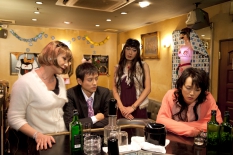
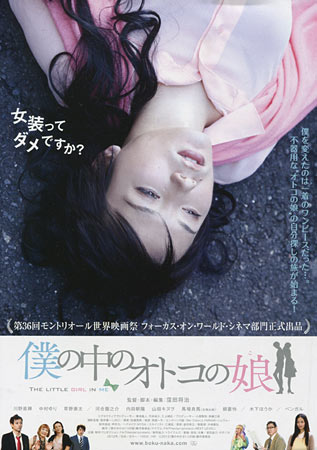


.jpg)







 Clodjee's Safe-House