Animal Friendship series
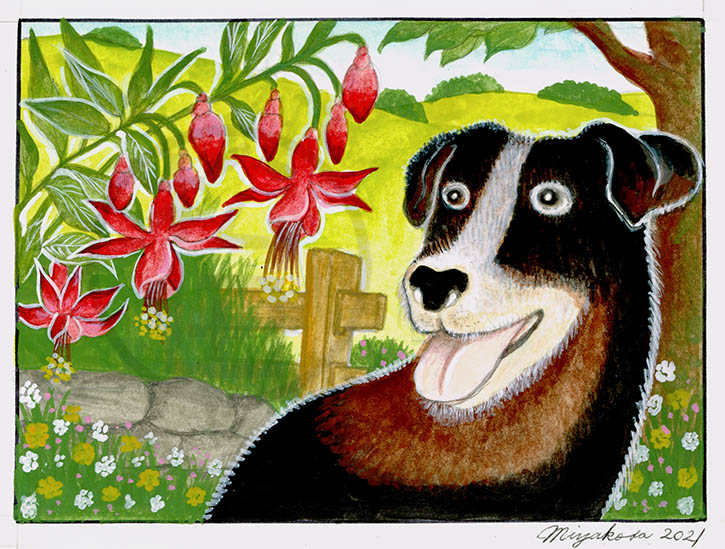
Happy terrier with fuchsia
[ Art © Miyako Matsuda, 2021 ]
See the index of this series of articles / Voir l’index de cette série d’articles
[ Art © Miyako Matsuda, 2021 ]


[ Art © Miyako Matsuda, 2021 ]
[ Art © Miyako Matsuda, 2021 ]
Yasuhiko Yoshikazu est surtout connu pour son travail en animation (réalisateur de Crusher Joe, Arion, Venus Wars, M. S. Gundam: The Origin et character designer pour, entre autres, Mobile Suit Gundam, M.S. Zeta Gundam, Mobile Suit Gundam F91). Toutefois il a aussi produit plusieurs excellents mangas historiques ou de science-fiction reconnus pour leurs séquences d’action (Arion [1979–1984, 5 vol.], Venus Wars [1986–1990, 4 vol.], Nijiiro no Trotsky [1990–1996, 8 vol.], Joan [1995–1996, 3 vol.], Jesus [1997], Waga na wa Nero [1998–1999, 2 vol.], Mobile Suit Gundam: The Origin [2001–2011, 23 vol.], Alexandros ~Dream for World Conquest~ [2003], etc., et Inui to Tatsumi -Siberia Shuppei Hishi- [en cours depuis 2018]).
Malheureusement peu de ses mangas ont été traduit. En anglais en peut trouver (si vous êtes chanceux dans certains cas) Dirty Pair (Dark Horse), Gundam The Origin (Vertical), Joan (ComicsOne), et Venus Wars (Dark Horse). En français il y a eut Jeanne (Tonkam), Jésus (Tonkam), et MS Gundam The Origin (Pika). J’espère sincèrement que des éditeurs vont avoir le courage de remettre ces titres disponibles et de publier d’autres oeuvres de Yasuhiko Yoshikazu…
Récemment, NHK World Japan présentait un documentaire intitulé Manben: Behind the Scenes of Manga with Urasawa Naoki. Le mangaka Naoki Urusawa y rencontre Yasuhiko Yoshikazu et discute avec lui de ses techniques de dessins et de son oeuvre. Le documentaire a été diffusé les 29 et 30 juillet 2022 mais est disponible pour visionnement en ligne (streaming, VOD) jusqu’au 30 juillet 2023. C’est extrêmement intéressant et mérite absolument d’être vu si vous êtes le moindre fan de l’un de ces deux mangaka.

[ Translate ]Plus d’info sur les sites suivants:
[ ANN • Google • Manga News • Manga Sanctuary • Manga Updates ]

[ Art © Miyako Matsuda, 2021 ]
[ Art © Miyako Matsuda, 2021 ]
[ Art © Miyako Matsuda, 2021 ]

[ Art © Miyako Matsuda, 2021 ]
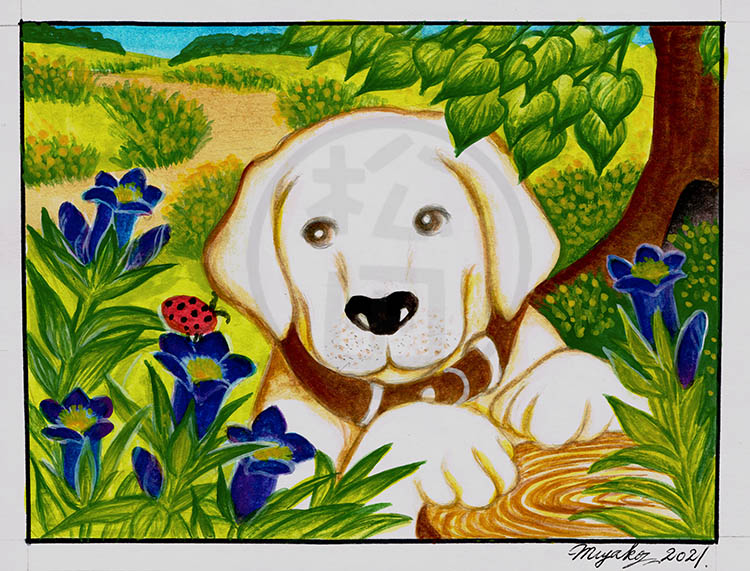
[ Art © Miyako Matsuda, 2021 ]
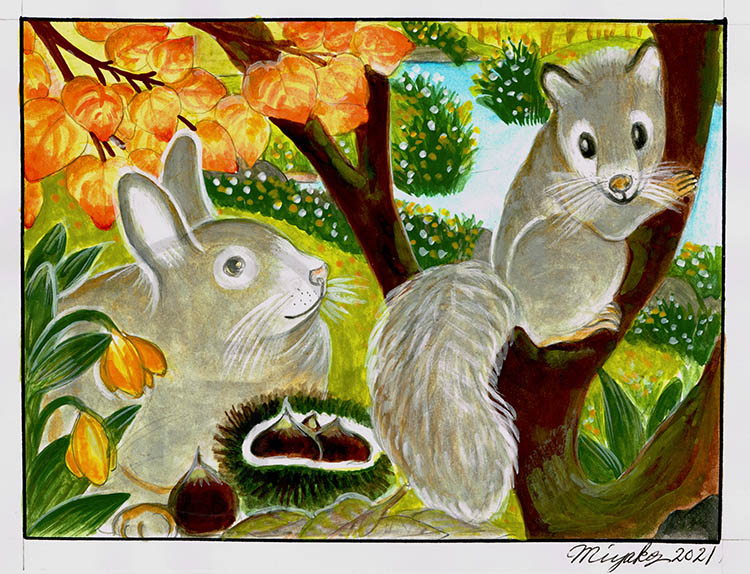
[ Art © Miyako Matsuda, 2021 ]

[ Art © Miyako Matsuda, 2021 ]
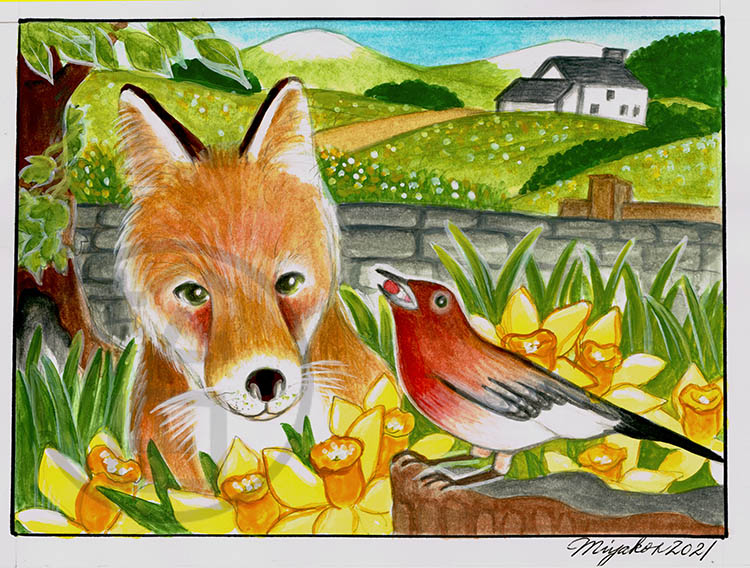
[ Art © Miyako Matsuda, 2021 ]
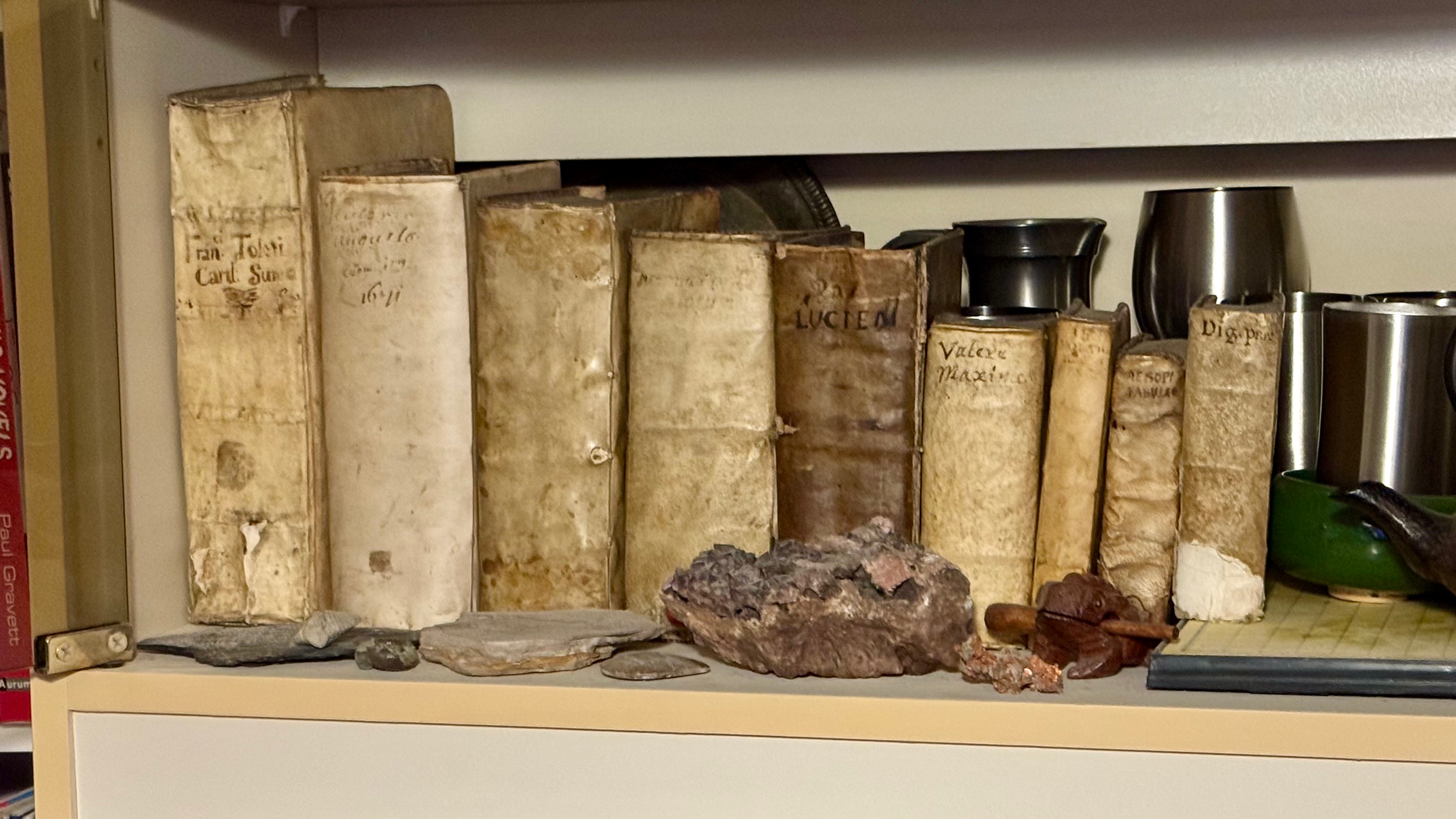
Here is an updated list of my old books collection. It is a part of my Cabinet of curiosities.
It was updated for a second time on September 29th, 2025.
This is a folio from the incunable Das buch der Chroniken vnnd geschichten mit figuren vld pildnussen von Anbeginn der welt biss auff dise vnsere Zeyt [“The Book of Chronicles and Histories With Figures and Illustrations From the Beginning of the World to the Present Day”] also known as Die Schedelsche Weltchronik [“Schedel’s World History”] or simply The Nuremberg Chronicle. It was first written in Latin by Hartmann Schedel on commission from the merchants Sebald Schreyer and Sebastian Kammermeister, and was later translated into German by George Alt. It was published in Nuremberg by Anton Koberger in December 1493.
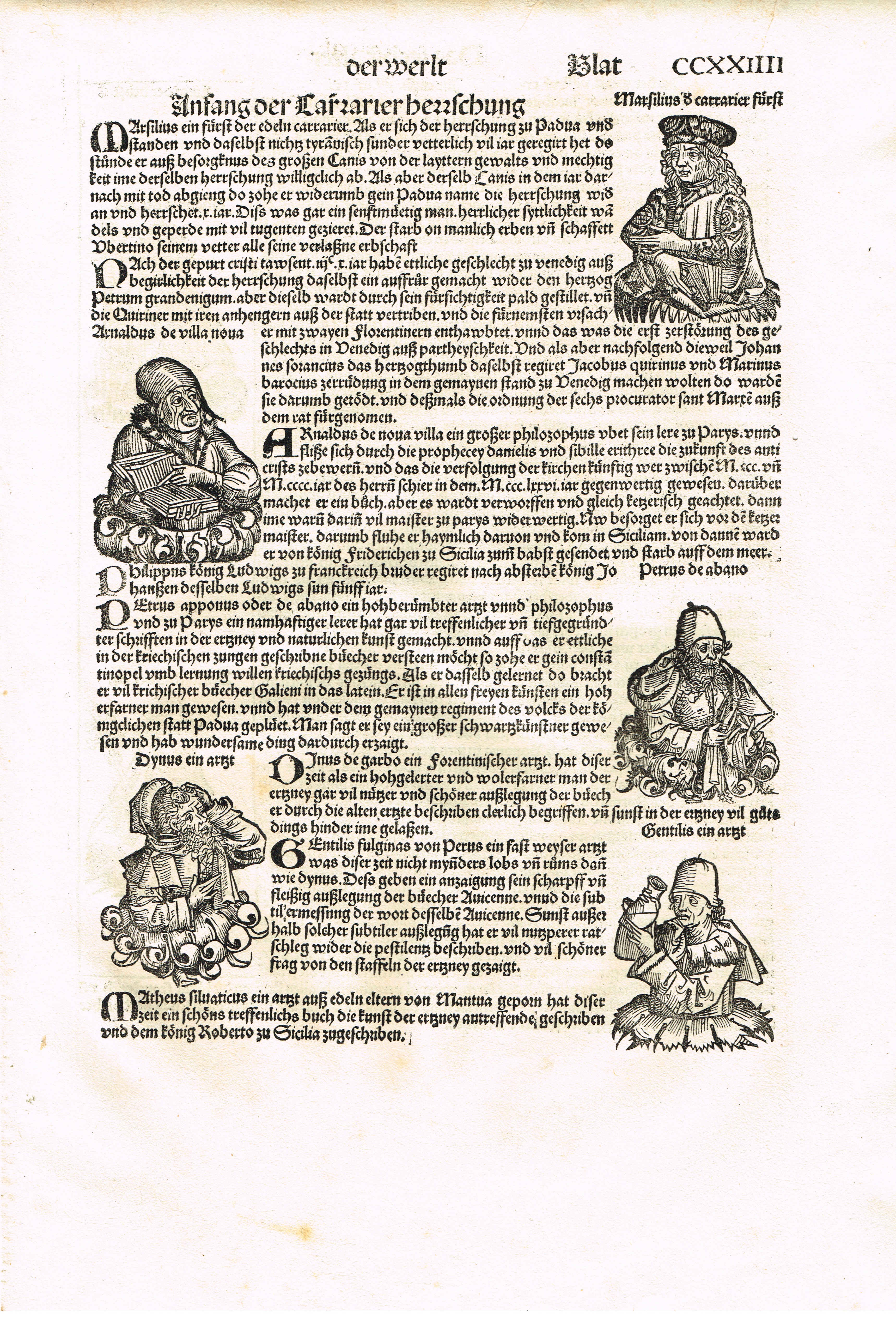
Feuillet CCXXIIII (R)
The recto of the CCXXIIII leaflet has a heading title (“Anfang der Carrarier herrschung” / “Origin of the reign of the lords of Carrara”), five illustrations and six vignettes dedicated to Marsiglio (Marsilius) of Carrara (lord of Padua), Arnaldus de Villanova (Arnaud de Villeneuve, Valencian doctor and theologian), Petrus Apponus (Pietro d’Abano, doctor and philosopher of Padua), Dino Del Garbo (Florentine physician), Gentilis Fulginas (Gentile da Foligno, physician and philosopher from the city of Foligno) and Matheus Silvaticus (Matthew Silvaticus, physician and botanist from Mantua). See the English translation.
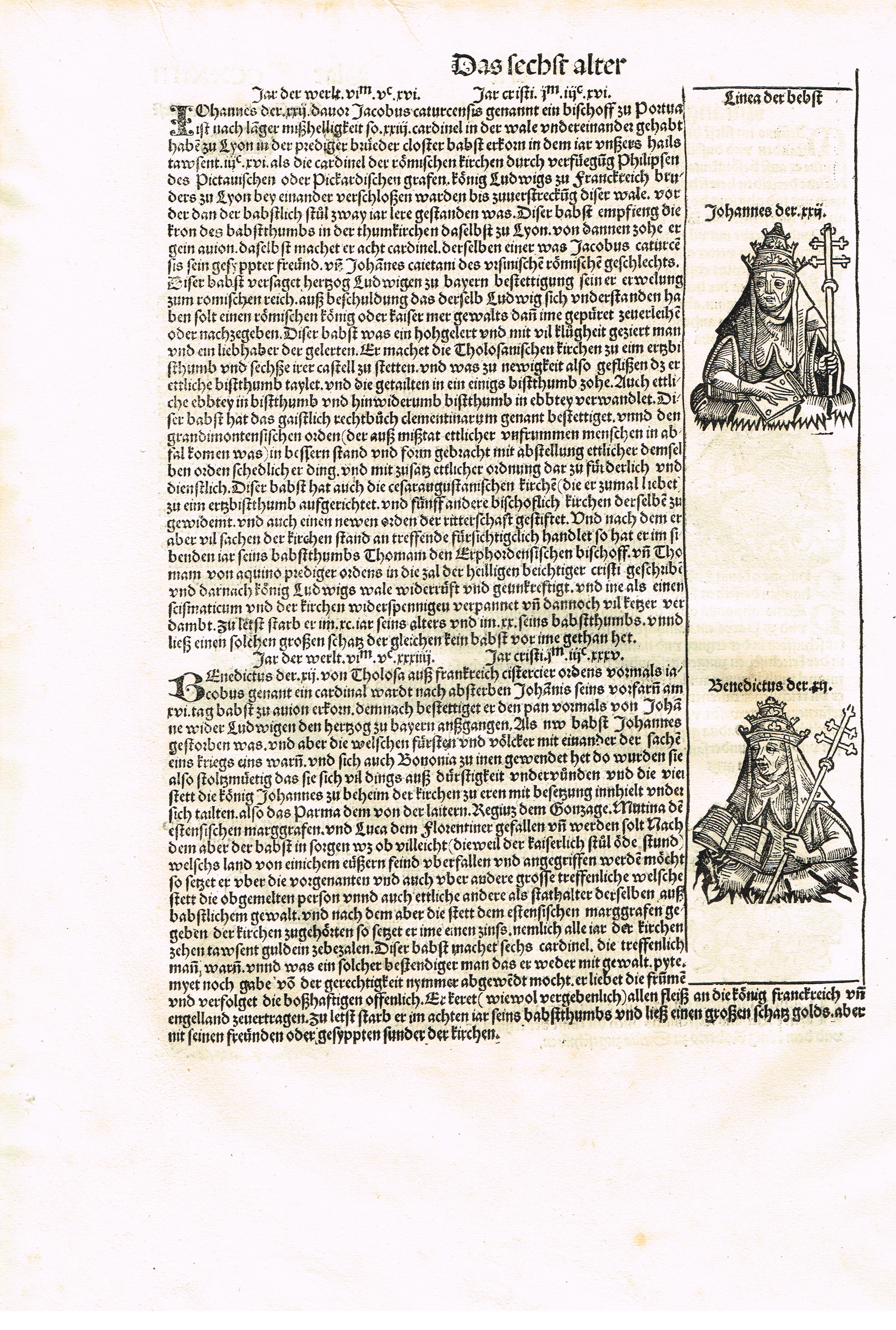
Feuillet CCXXIIII (V)
The verso of the CCXXIIII leaflet has a date (“Jar der werlt vi v i vi; Jar cristi i iii i vi” / “Year of the world 6516; Year of Christ 1316”), two illustrations and two vignettes: one dedicated to Pope Iohannes der xxii (John XXII) and the other, after a new date (“Jar der werlt vi v xxxiiii; Jar cristi i iii xxxv” / “Year of the world 6534; Year of Christ 1335”), to Pope Benedictus der xii (Benedict XII). See the English translation.

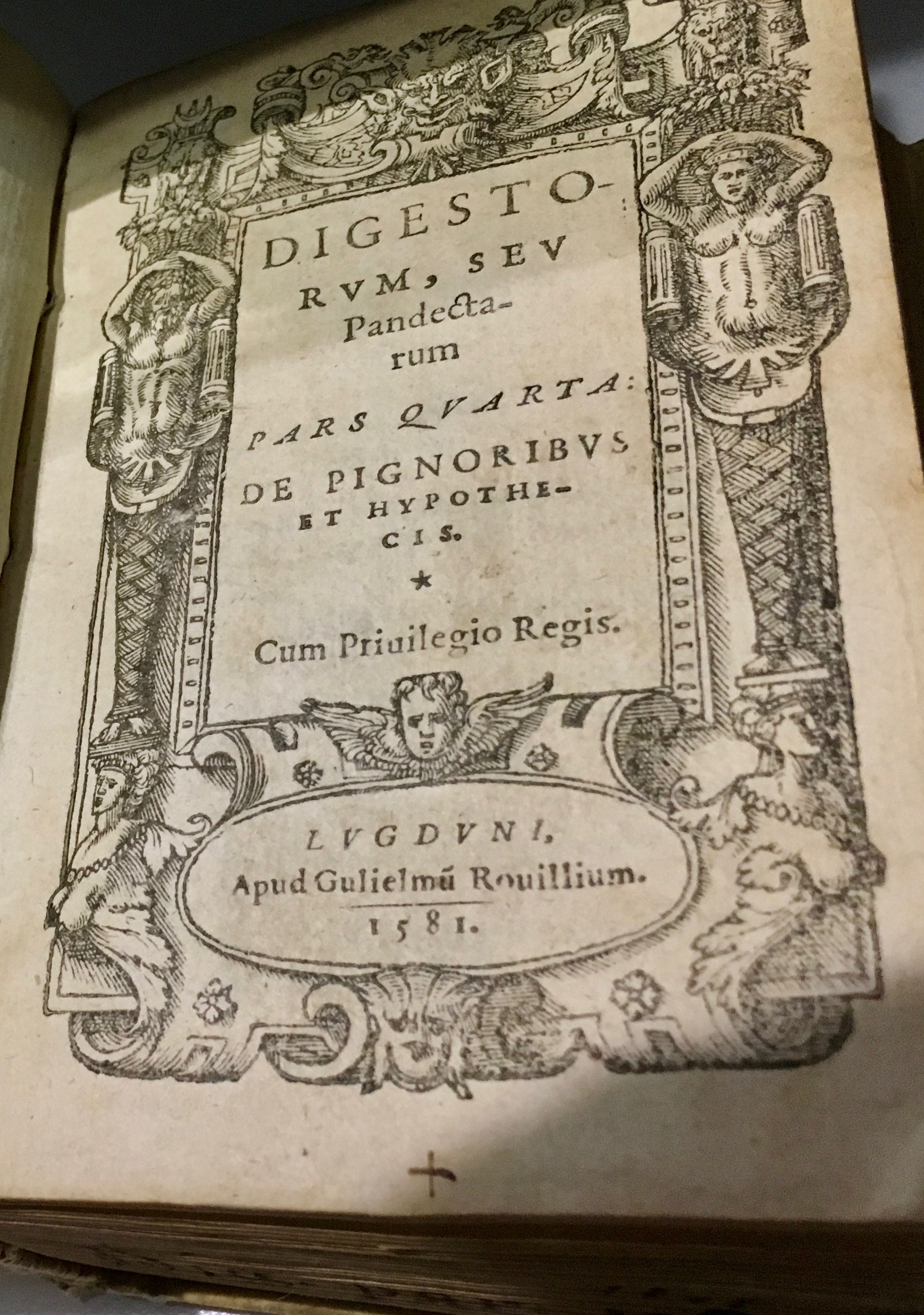
[Iustiniani Augusti] Digestorum sev pandectarum (Pars qvarta [liber XX – XXVII]), De Pignoribvs et hypothecis, Cum Priuilegio Regis, Lvgdvni [London], Apud Gulielmu Rouillium, 1581.
My oldest book is volume four (books 20 to 27) of a 1581 latin edition of the Digest or Pandects by the emperor Justinian I which constitute a compendium of Roman laws.
[ WorldCat ]
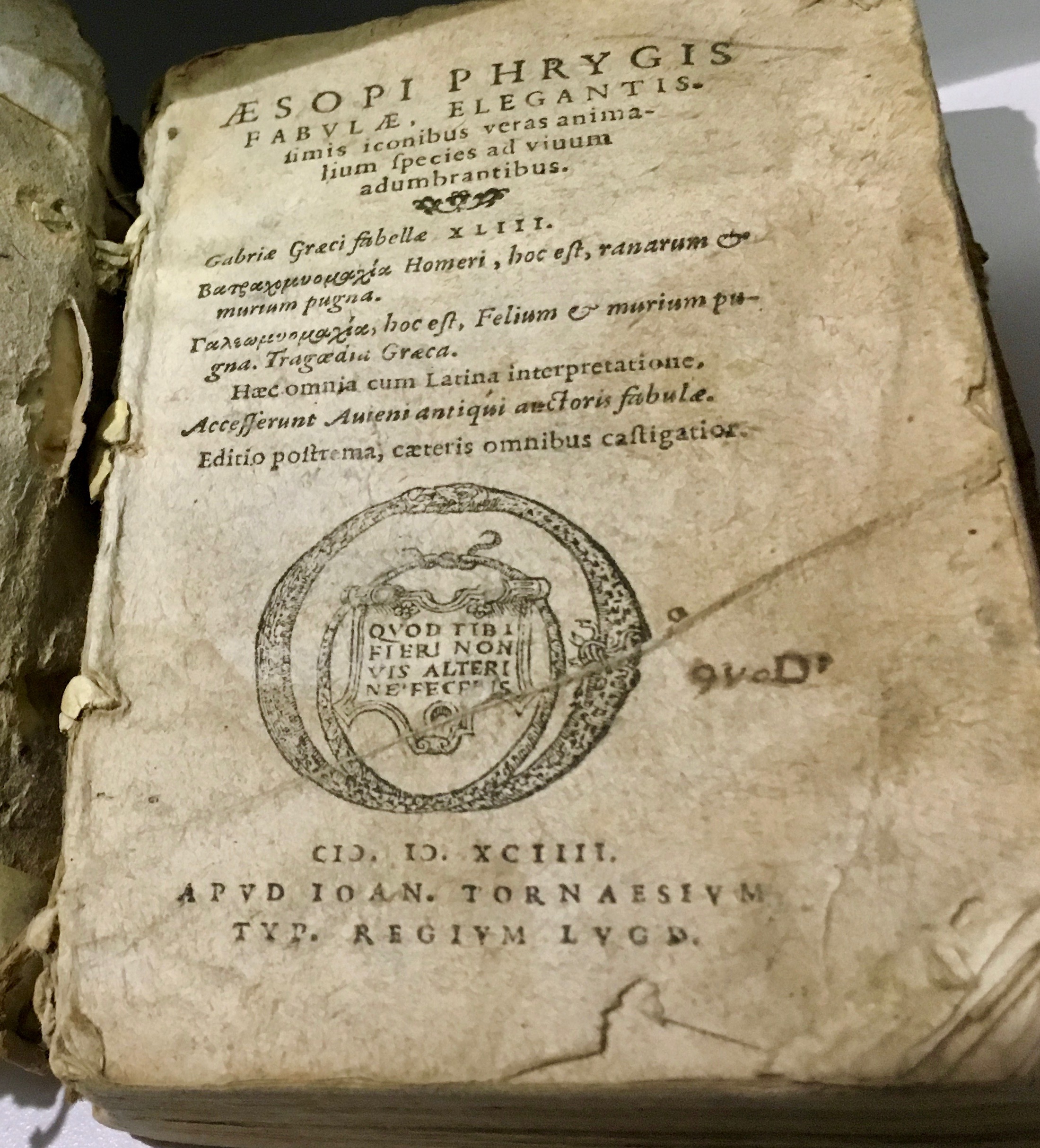 Aesopi Phrygis: Fabulae Elegantissimis iconibus veras animalium speciesad viuum adumbrantibus; Gabriae Graeci Fabellae XLIII ; batrachomyomachia Homeri, hoc est, ranarum et murium pugna. galeomyomachia, hoc est, felium et murium pugna tragoedia graeca. Haec omnia cum latina interpretatione ; accesserunt Auieni antiqui autoris fabulae. Editio postrema, caeteris omnibus castigatior. M D XCIIII [1594]. Apud Ioan[nem] Tornaesium, Typ. Regivm Lvgd[uni] [London].
More interesting is this 1594 illustrated edition of Aesop’s Fables with opposing Greek and Latin texts.
[ WorldCat ]
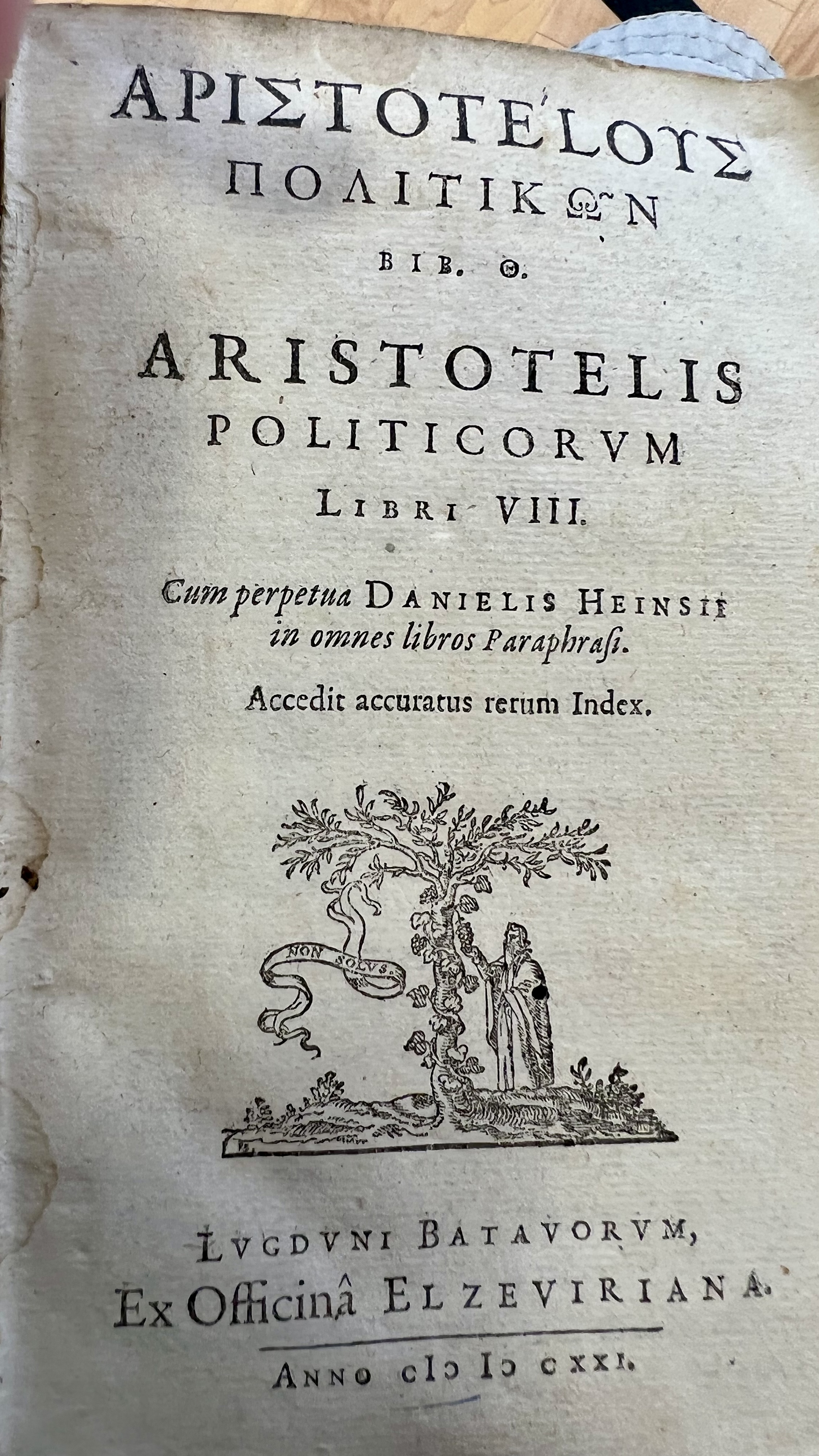 API𝚺TOTELOY𝚺 𝚷O𝚲ITIK𝛀N BIB.[λία] O.[κτώ]. ARISTOTELIS POLITICORVM LIBRI VIII (Aristotle’s Politics, in eight books). cum perpetua Danielis Heinsii in omnes libros paraphrasi; cedit accuratus rerum index. LVGDVNI BATAVORVM (Leyden, Netherland). Ex Officinâ ELZEVIRIANA. ANNO clↄ Iↄ CXXI. (MDCXXI / Year 1621).
This book is an in octavo (8vo, i.e. about 5.25 x 7.25 inches / 13 x 18 cm), set in contemporary full vellum, yapp edges, handwritten title on the spine (faded in this case). Besides a few stain, annotations and worm holes it is in pretty good shape. It has 1045 pages, plus sixteen introductory pages and a forty pages index (so it is 2.5 inches thick). It is a first Elzevir edition, presenting the Greek and Latin texts in parallel, with a commented synopsis (in Latin) by Daniel Heins for each book. According to the colophon, the typesetting was done by Isaac Elzevir.
[ Abe Books • Google • More Info • WorldCat ]
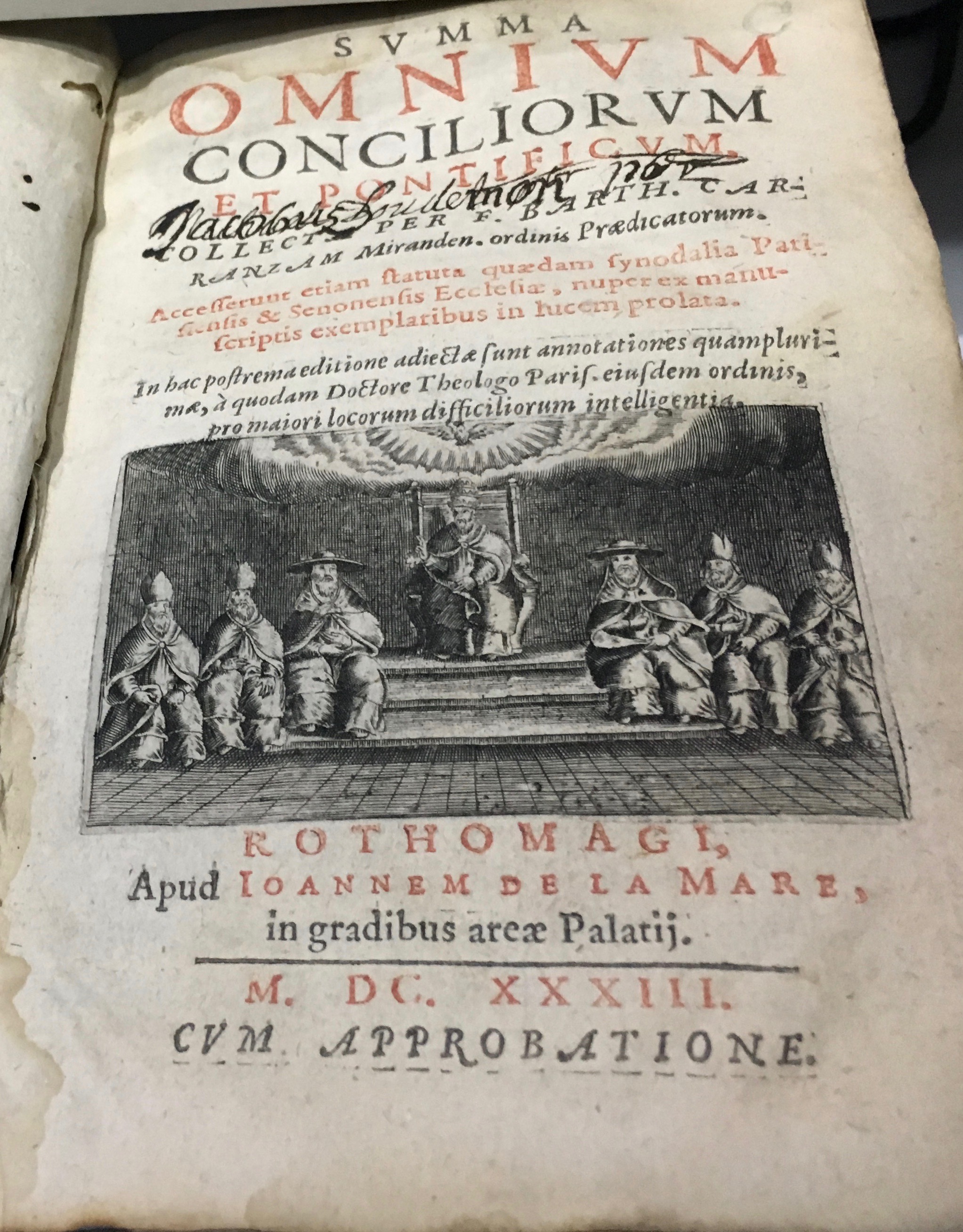 Svmma Omnivm Conciliorvm et Pontificvm, Rothomagi [Rouen], Apud Ioannem de la Mare, M DC XXXIII [1633].
This 1633 latin edition offers a compilation of conciliar and pontifical edicts. Those canonico-legal texts are rather insipid but the thick velum book with a pig-skin cover has quite a nice look.
[ WorldCat ]
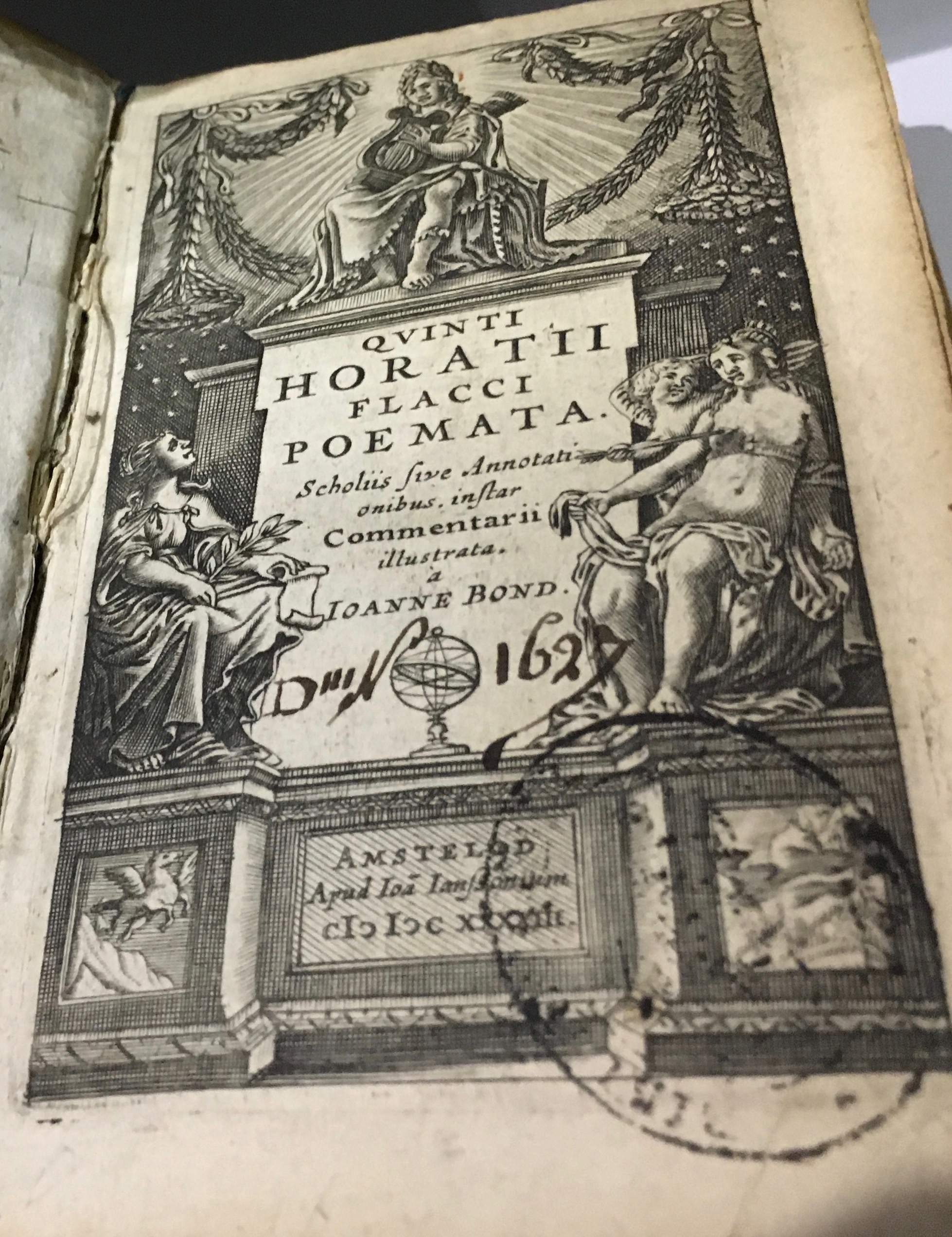 Qvinti Horatii Flacci Poemata, Amstelod [Amsterdam], Apud Ioa[nnem] Ianssonium, MDCXXXXIII [1643].
A 1643 latin edition of the poems of Horace.
[ WorldCat ]
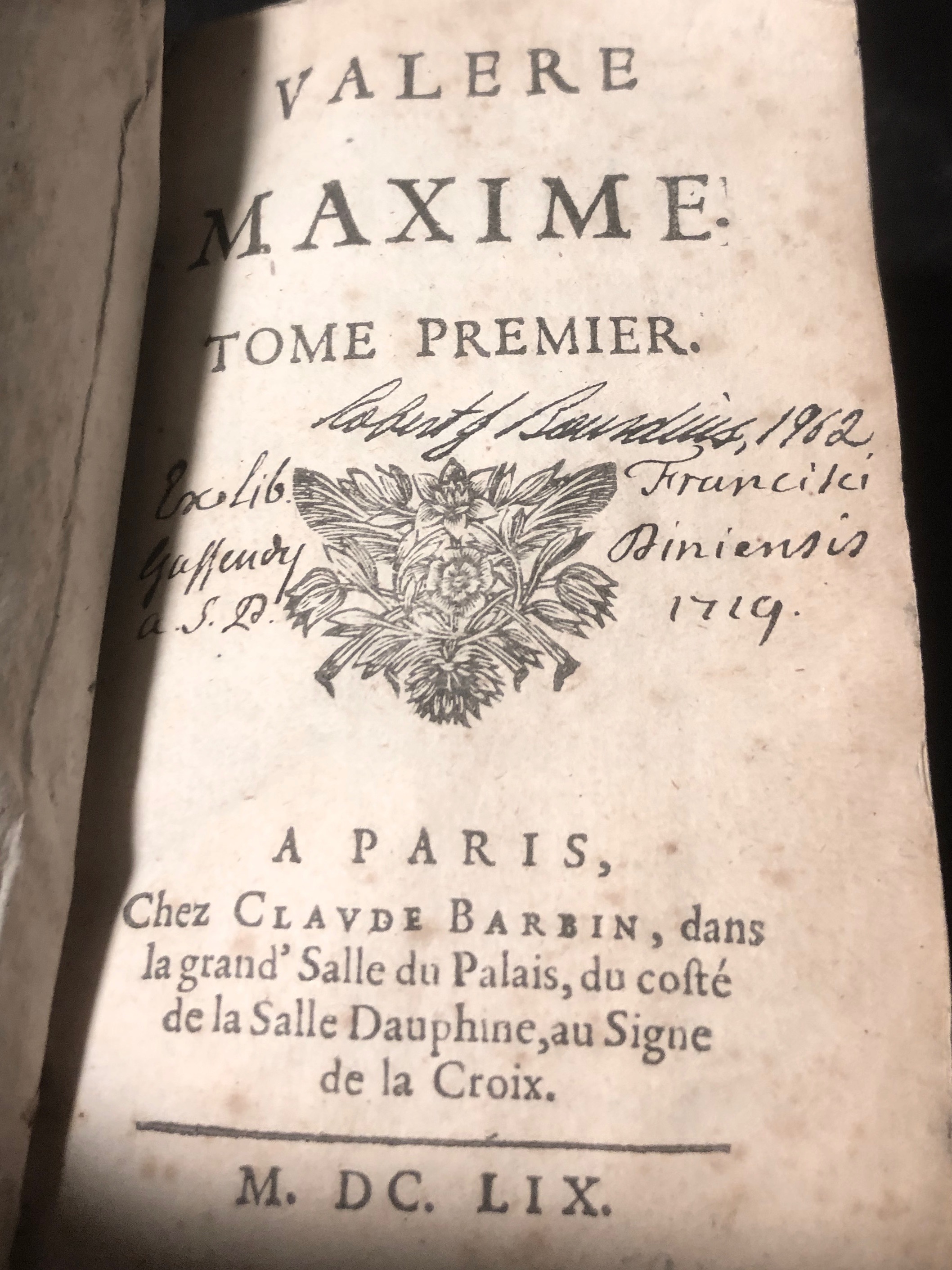 “VALERE MAXIME, A PARIS, CLAVDE BARBIN, dans la grand’ Salle du Palais, du cofté de la Salle Dauphine, au Signe de la Croix. M.DC.LIX. [1659]”
The title of the book (which doesn’t appear on the first page) is “Factotum ac dictorum memorabilium libri IX” [nine books of memorable deeds and sayings]. The binding (pork skin?) includes two volumes (it’s 4.5 cm thick), in the sextodecimo format (in-16, in this case 8 x 12.75 cm) . According to the note from Mr. de Freitas, it’s the second edition in French, translated by Jean Claveret. It is a collections of a thousand historical anecdotes, many lifted from earlier Roman writers, re-drafted by Valerius Maximus as moral and social models. It was written during the reign of Tiberius (around around CE 30 or 31). It is quite interesting…
[ More Info • Wikipedia • WorldCat ]
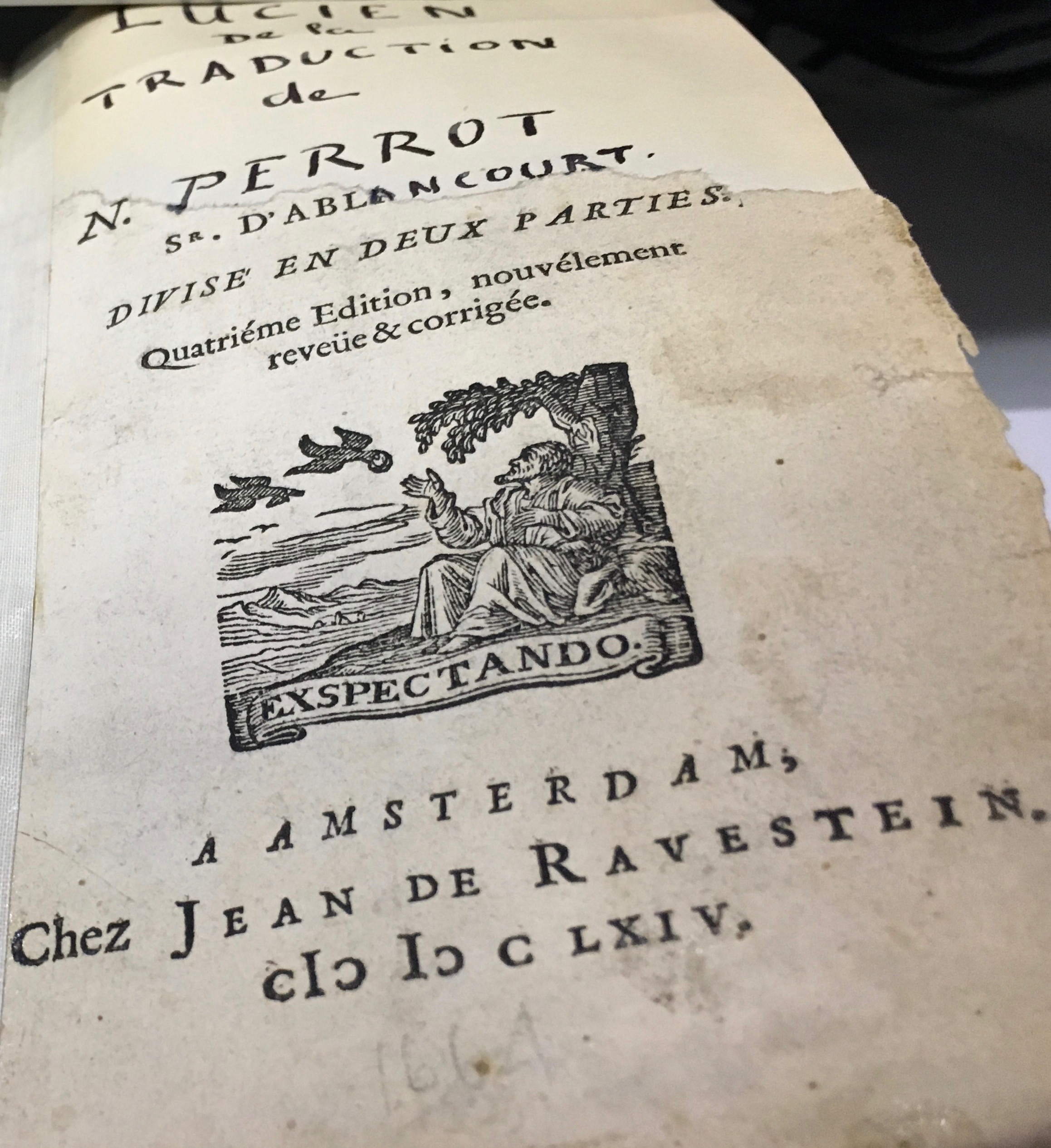 Lucien, de la traduction de N. Perrot, Sr. d’Ablancourt, à Amsterdam, chez Jean de Ravestein [Johannes Van Ravesteyn], M D C LXIV [1664].
My favourite old book: a 1664 old-french edition of the works of Lucian of Samosata.
[ WorldCat ]
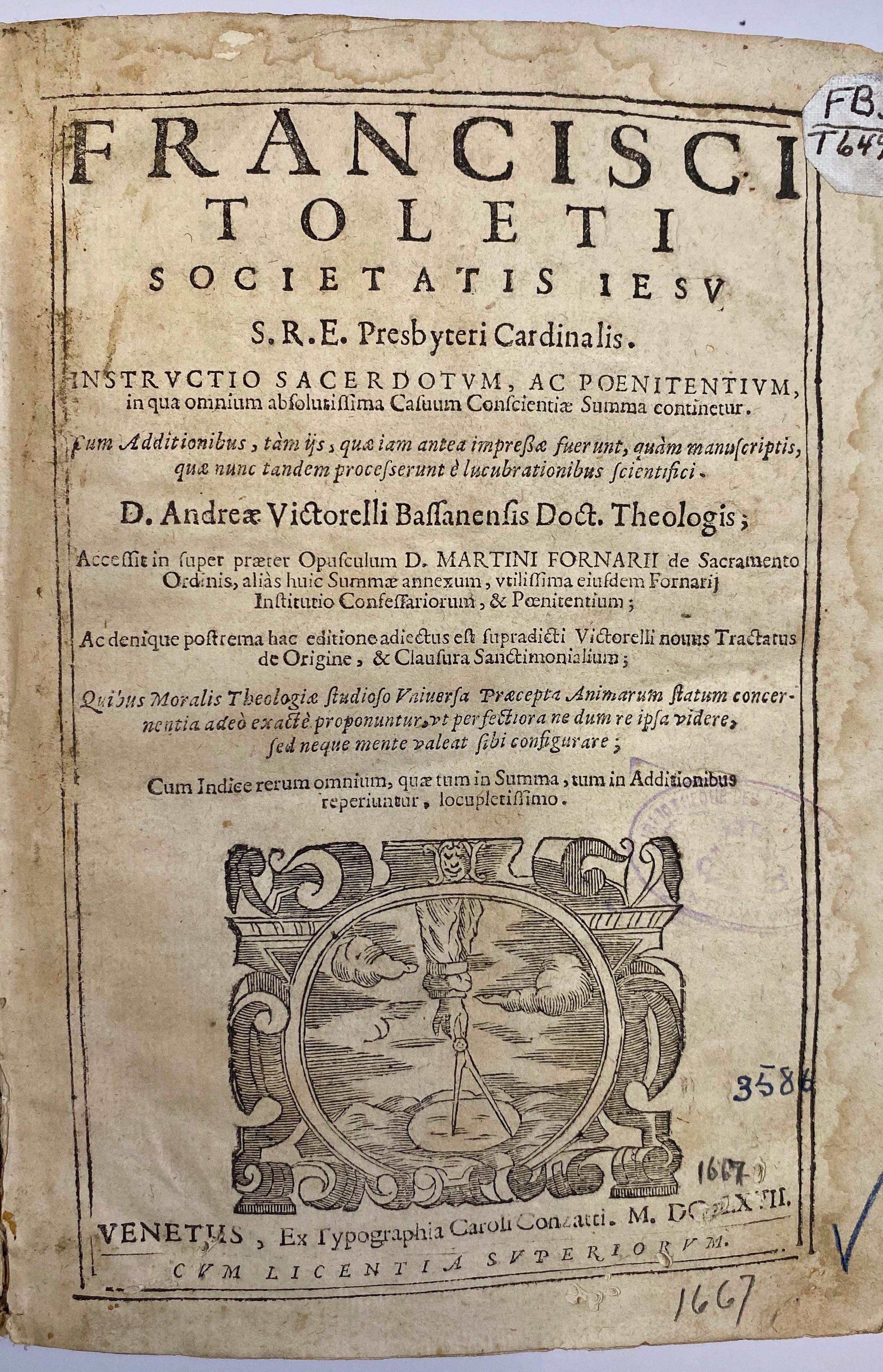 Instructio Sacerdotum, ac Poenitentium (…) [Instruction des prêtres sur le repentir], par Francisco de Toledo; Sacramento Ordinis, par Martino Fornario; Tractatus de origine et clausura sanctimonialium, par Andrea Victorello; Institutio confessariorum, par Martino Fornario. Venetia, Caroli Conzatti, 1667.
In-quarto, four books in one. The subject is of little interest and the book is in rather average condition (some pages are warped, stained, or with traces of wetting) but this is my first in-4 book (and the first from an Italian publisher), acquired at a good price.
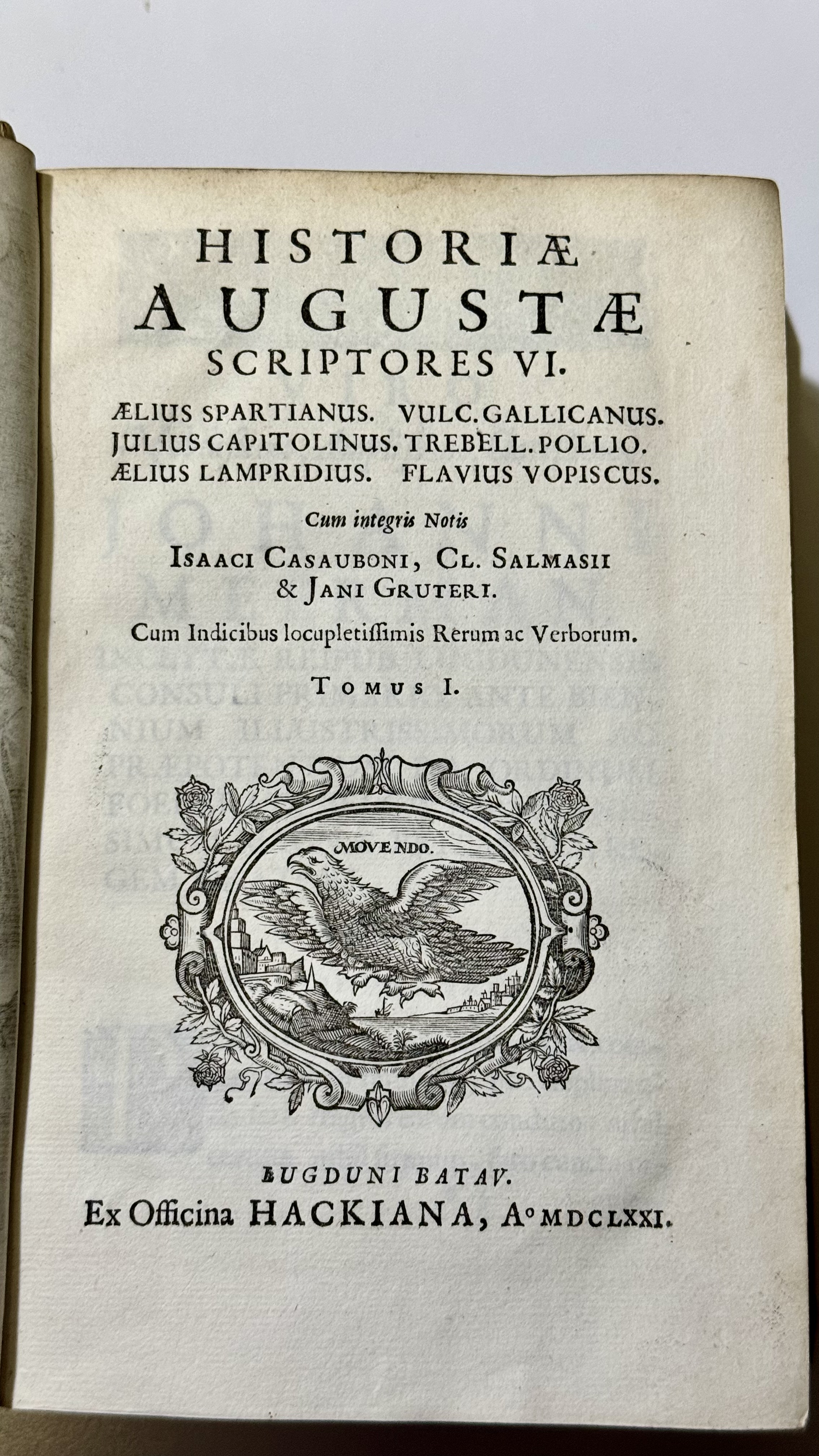 HISTORIAE AUGUSTAE SCRIPTORES VI. AELIUS SPARTIANUS. VULC[acius] GALLICANUS. JULIUS CAPITOLINUS. TREBELL[ius] POLLIO. AELIUS LAMPRIDIUS. FLAVIUS VOPISCUS. Cum integris Notis. ISAACI CASAUBONI, CL[audi] SALMASII & JANI GRUTERI. Cum Indicibus locupletiffimis Rerum ac Verborum. TOMUS I [of 2]. LUGDUNI BATAV[orvm] [Leiden, Netherlands]. Ex Officina HACKIANA [Johannes Hackius], A•MDCLXXI [anno 1671].
This is a small in quarto of 1,144 pages, with a nice vellum binding. This is not one of my oldest books (in fact it is the most recent I have for the 16-17th century period) and I already have an in quarto. However, its very good condition and the fact that it’s about a subject that is quite dear to me, make it one of my most precious books (along with the works of Lucian of Samosata).

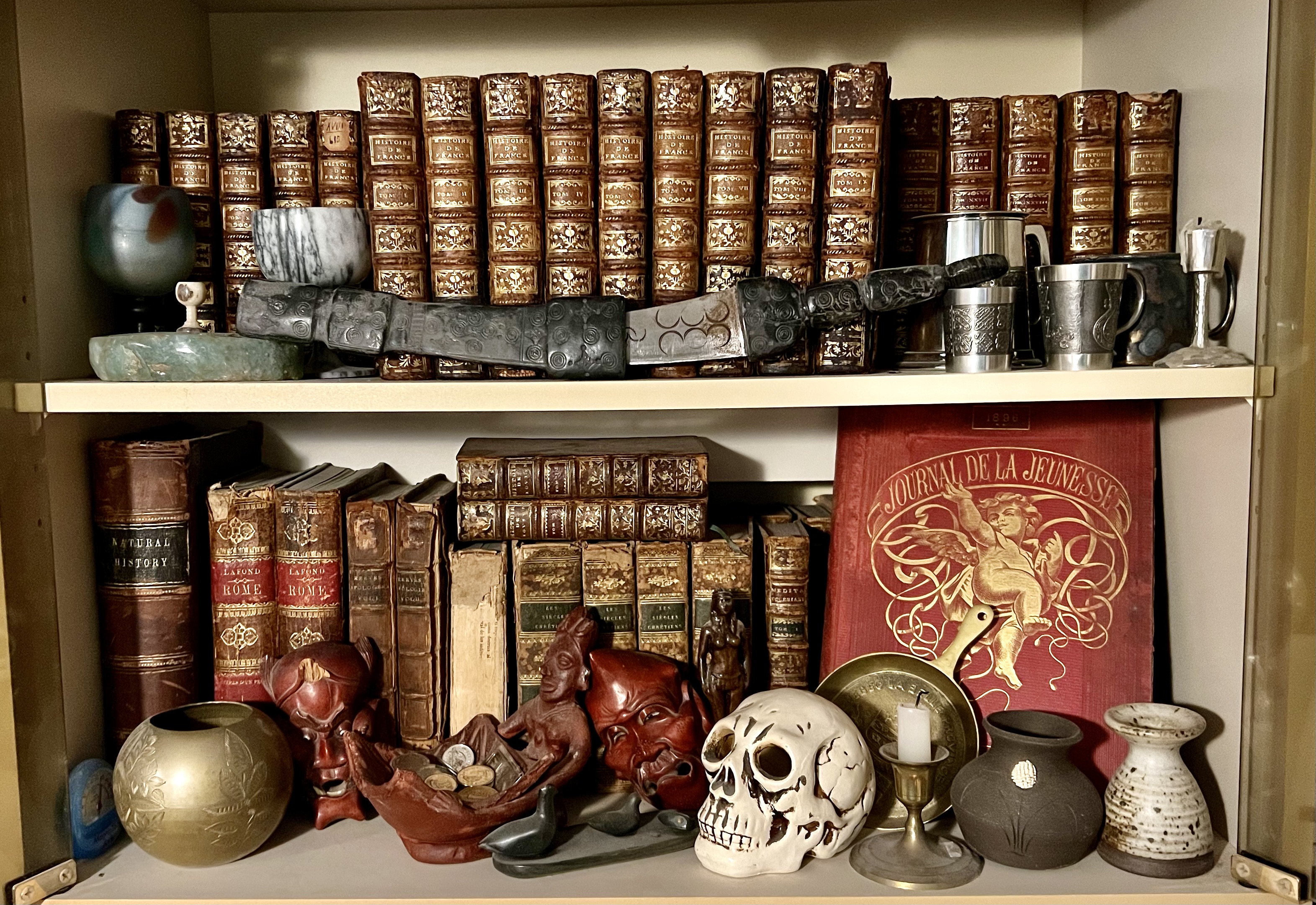
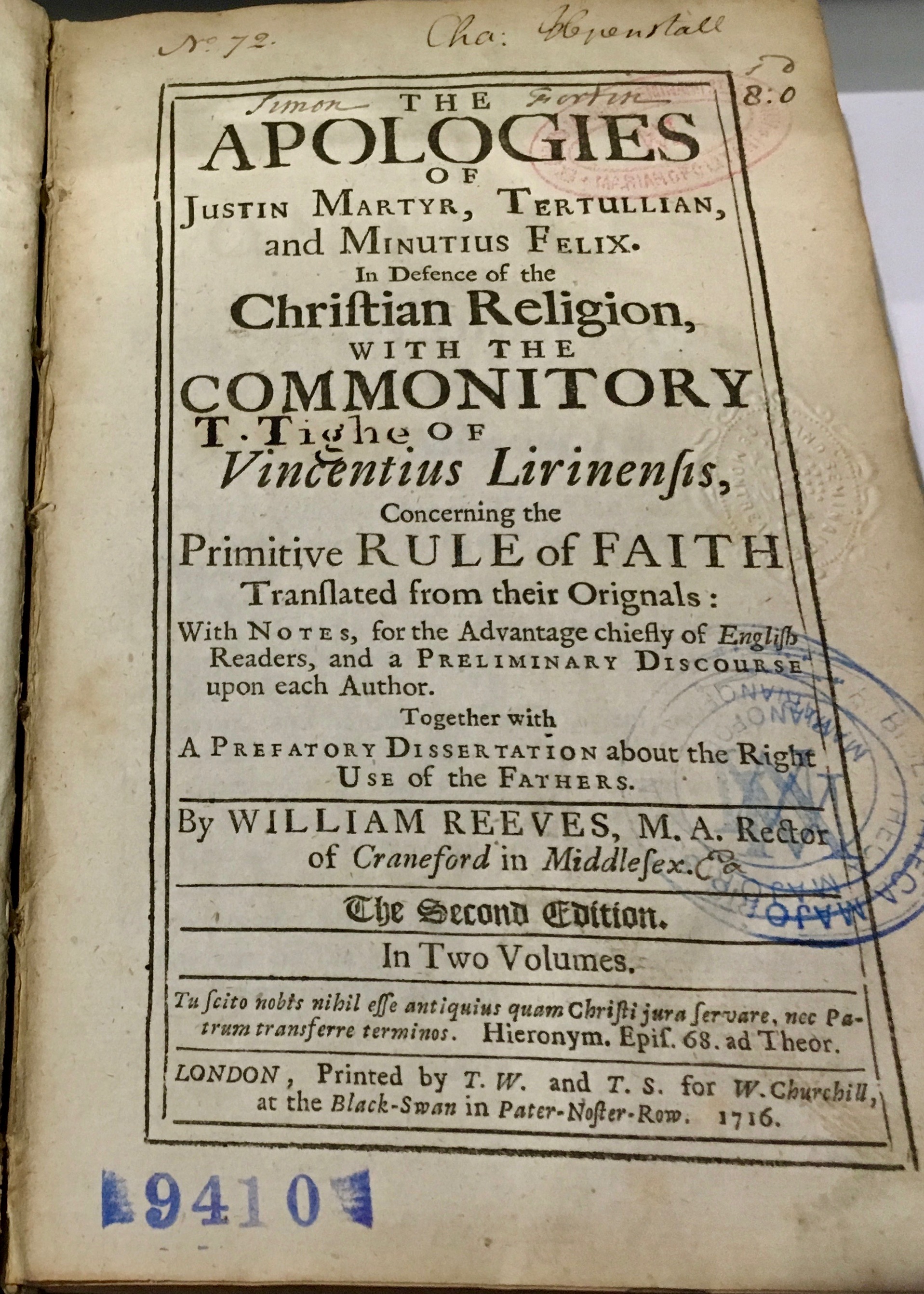 The Apologies of Justin Martyr, Tertullian, and Minutius Felix. In Defence of the Christian Religion with the Commonitory of Vincentius Lirinensis, Converning the Primitive Rule of Faith, Translated from their originals, by William Reeves, In Two Volumes, London, 1716.
More recent but interesting is this English translation of three christian apologists: Justin Martyr, Tertullian, and Minutius Felix.
[ WorldCat ]
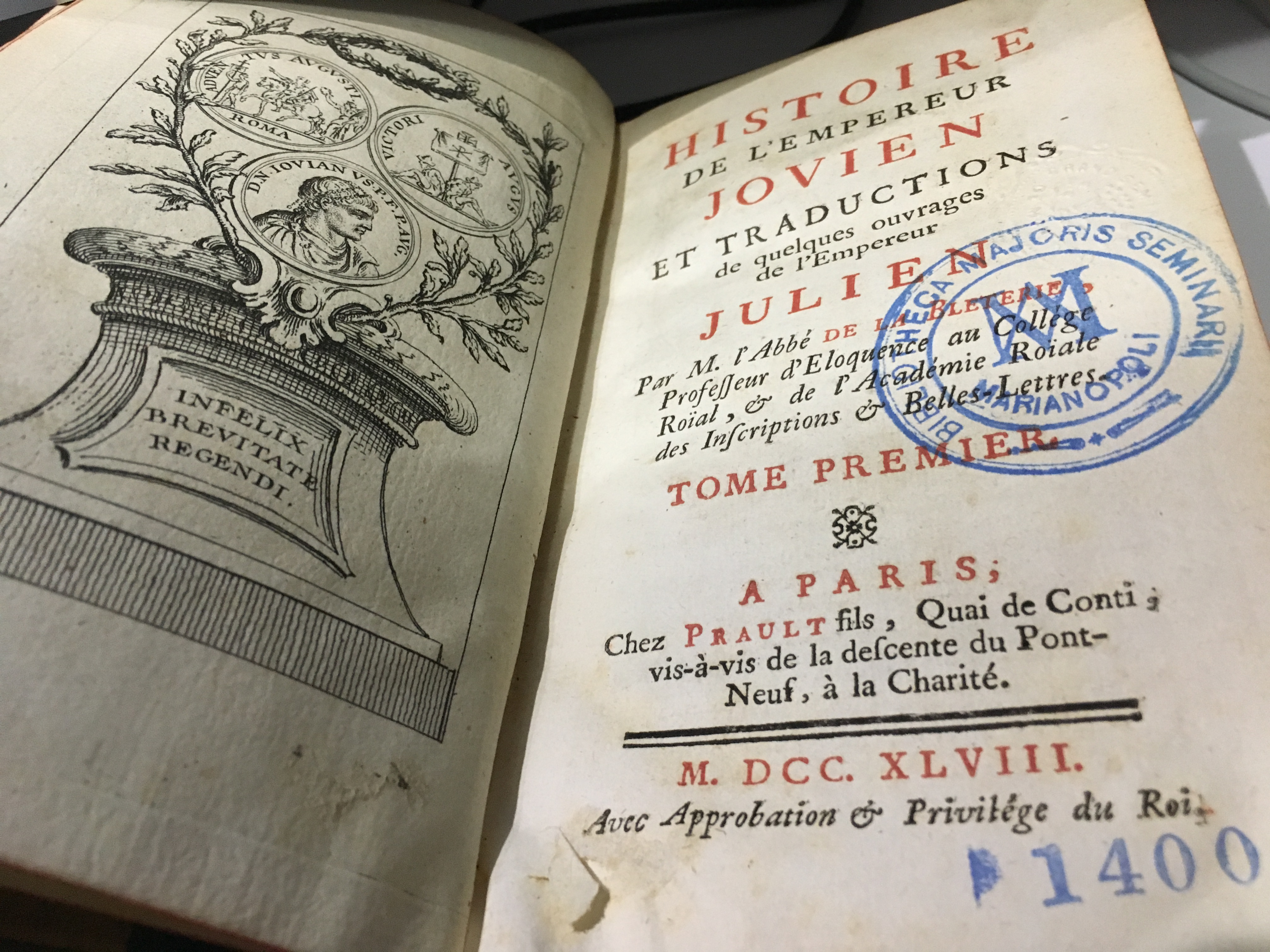 Histoire de l’Empereur Jovien et traductions de quelques ouvrages de l’Empereur Julien [Les Césars, Misopogon, Lettres, Fable Allegorique], par l’Abbé de la Bleterie [en deux tomes], à Paris, chez Prault fils, M DCC CLVIII [1748].
18th century french history book about the Emperor Jovian with translation of ancient texts by Emperor Julian.
[ WorldCat ]
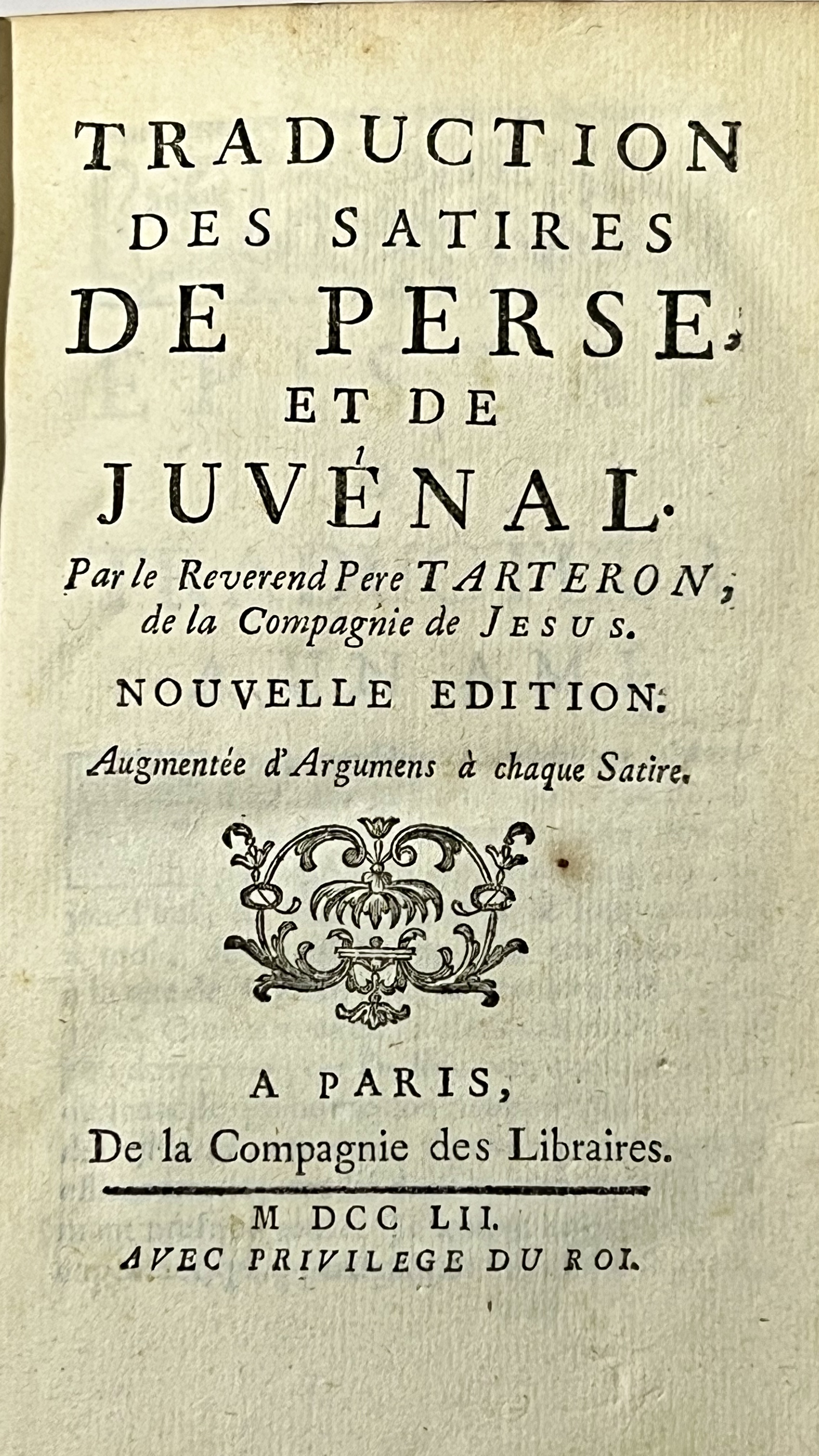 TRADUCTION DES SATIRES DE PERSE, ET DE JUVÉNAL. Par le Reverend Pere TARTERON, de la Compagnie de JESUS. NOUVELLE EDITION. Augmentée d’Argumens à chaque Satire. A PARIS, De la Compagnie des Libraires. M DCC LII. [1752] AVEC PRIVILEGE DU ROI.
This is an 18th-century bilingual (Latin & French) edition of the Satires of Persius and Juvenal. It is a 400-page (34 of introduction, 255 of text and 10 of table, errata and dedication) duodecimo book (10 x 17 cm) with a period calfskin binding, in fairly good condition (some scratches), sheepskin, decorated spine, 5 raised bands, brown title label, red edges, rubbed corners, filed headcaps, and a detached marbled endpaper. The interior is very beautiful (apart from a few rare stains). The first blank leaf contains a modern ex-libris in pen.
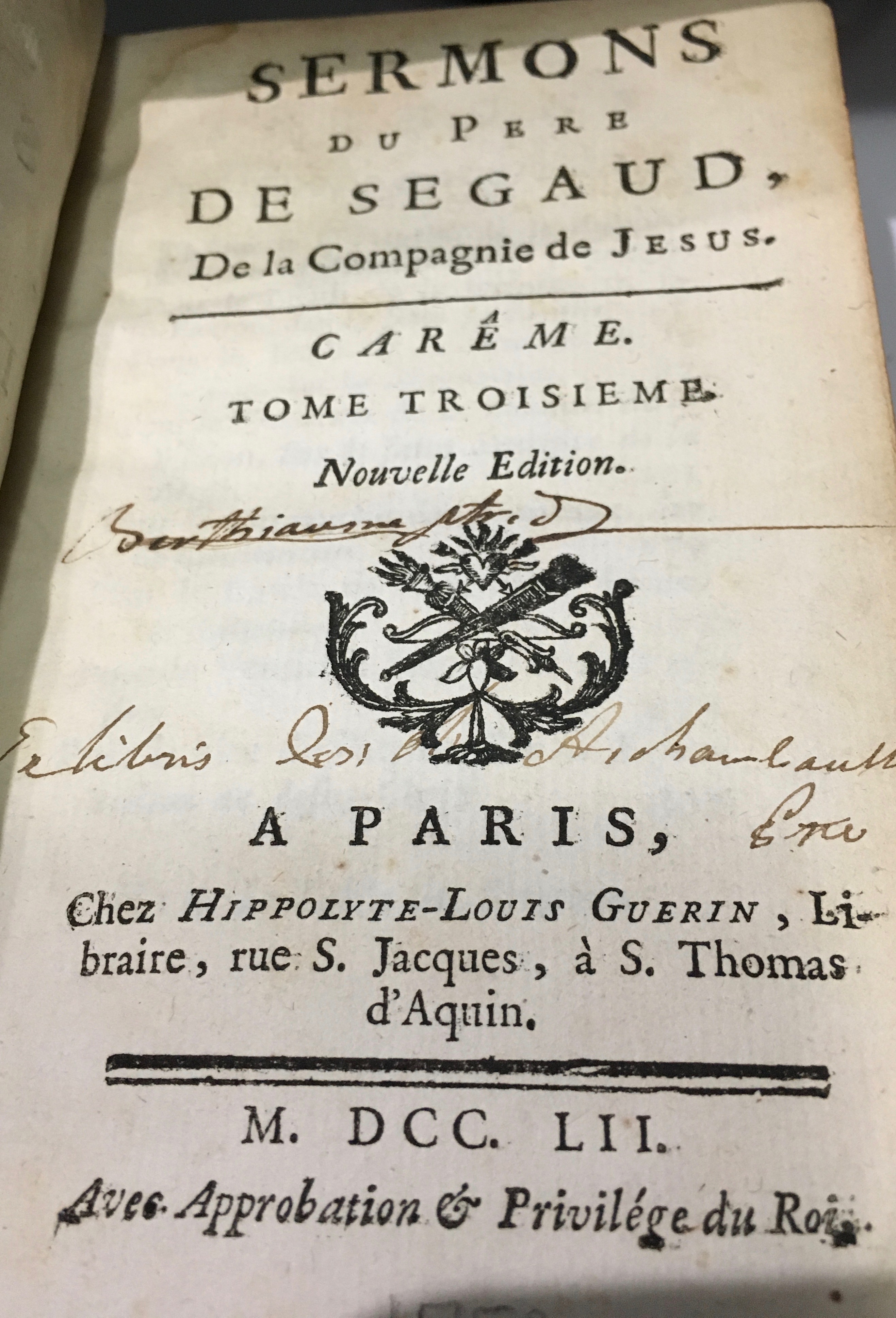 Sermons du Père de Segaud. Tome Troisième, À Paris, Chez Hippolyte-Louis Guerin, M DCC LII [1752].
A volume of religious texts about Lent from mid-18th century, in French. Uninteresting but still a nice old book.
[ WorldCat ]
 Histoire de France, depuis l’établissement de la monarchie jusqu’au règne de Louis XIV, par M. l’Abbé Velly [en 30 tomes], À Paris, Chez Desaint & Saillant, M DCC LXI [1761].
A superb collection of books about the history of France, but which doesn’t covers the french revolution since it was published before it happened! A nice set of 30 volumes!
[ WorldCat ]
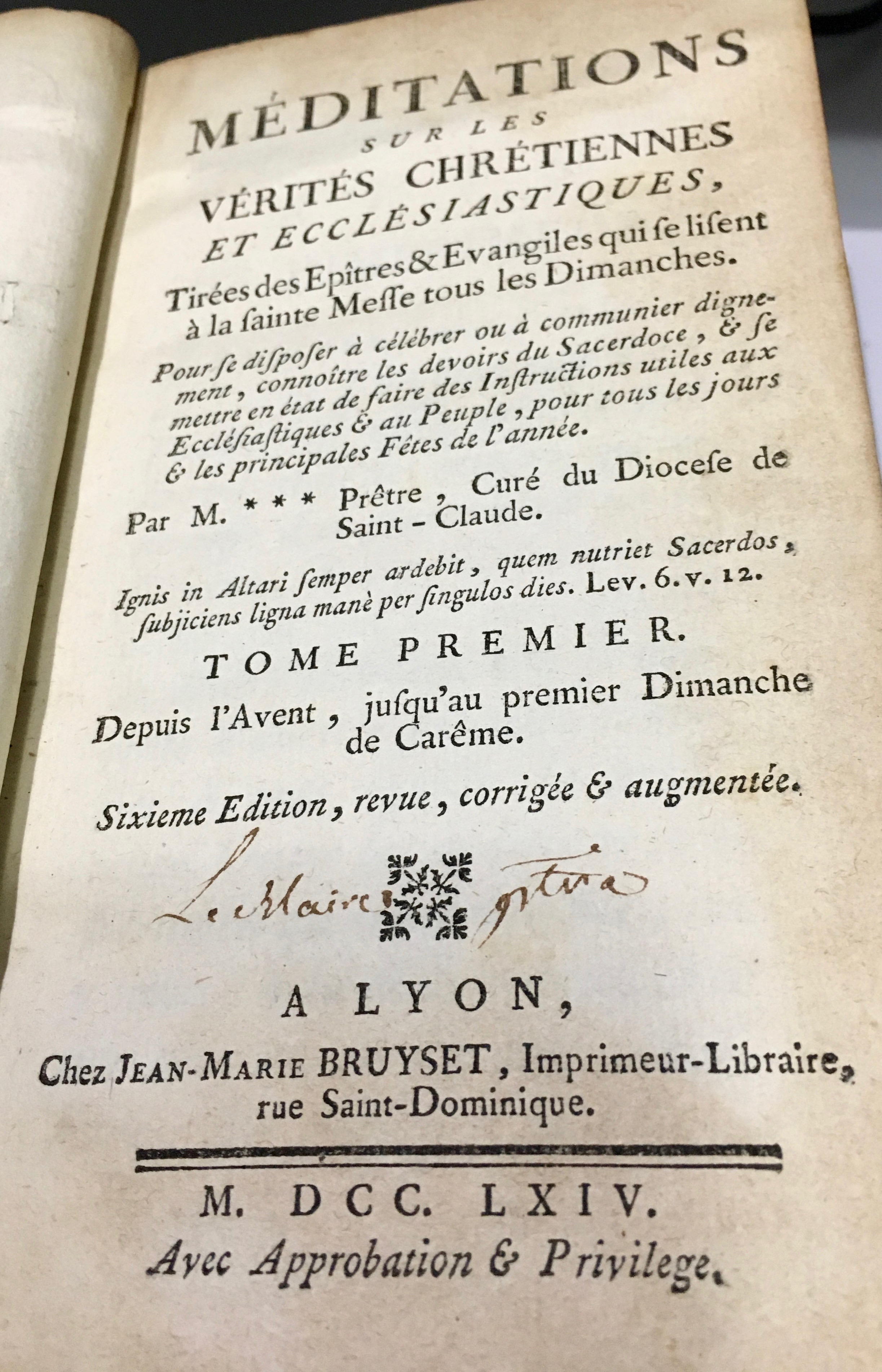 Méditations sur les Vérités Chrétienne et Ecclésiastiques, Anonymes [Joseph Chevassu], [en 6 tomes], À Lyon, Chez Jean-Marie Bruyset, M DCC LXIV [1764].
“Tirées des Epîtres & Évangiles qui se lisent à la sainte Messe tous les dimanches. Pour se disposer à célébrer ou à communier dignement, connoître les devoirs du Sacerdoces, & se mettre en état de faire les Instructions utiles aux Ecclésiastiques & au Peuple, pour touts les jours & les principales fêtes de l’année. Depuis l’avent, jusqu’au premier Dimanche de Carême.”
Extracts of the Bible to prepare oneself (but mostly priests) for the mass’ celebration. Boring religious stuff, but a nice mid-18th century old book set nevertheless.
[ WorldCat ]
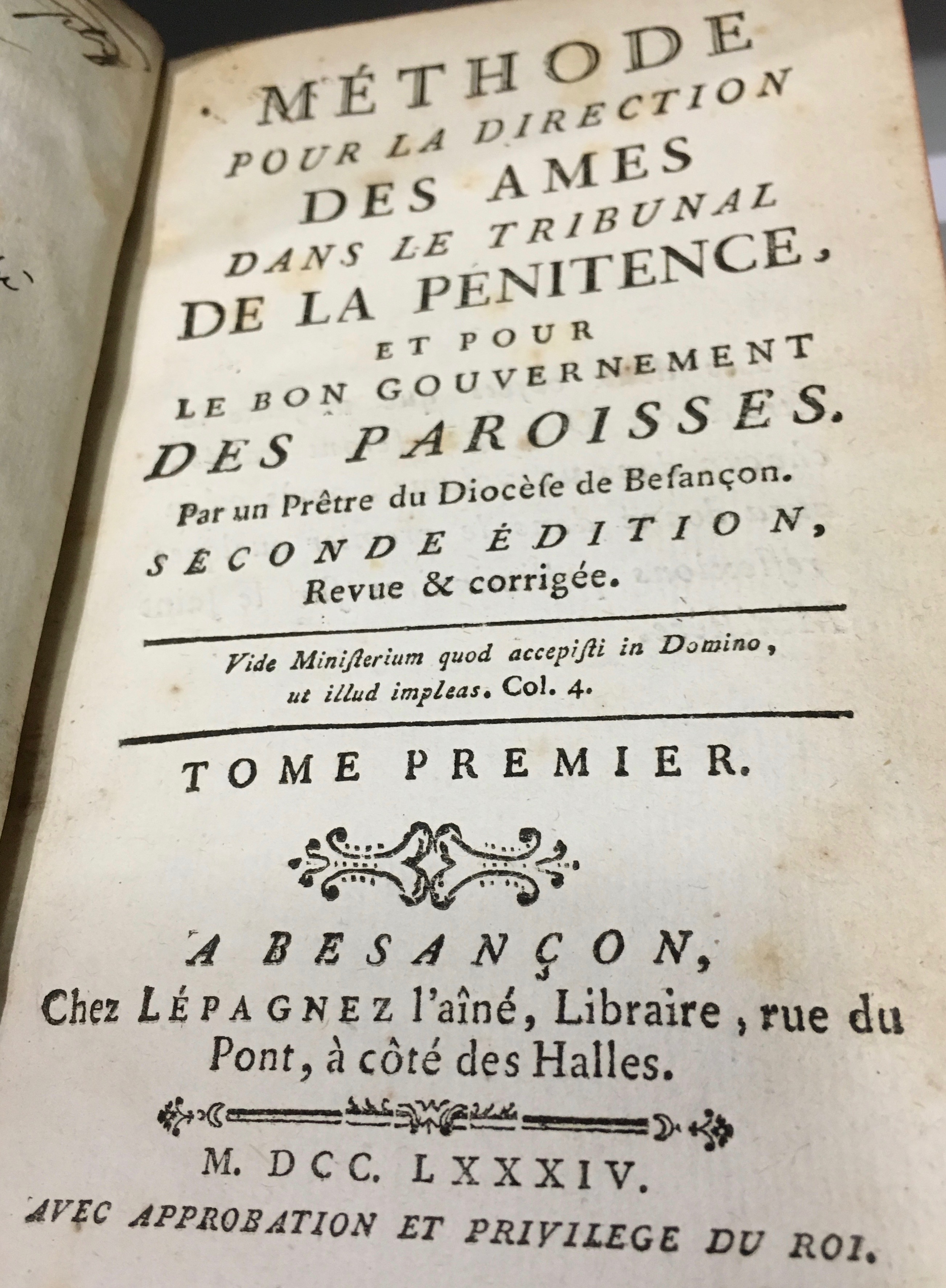 Méthode pour la direction des âmes dans le tribunal de la pénitence, et pour le bon gouvernement des paroisses. Anonyme [Joseph Pochard], À Besançon, Chez Lepagnez l’aîné, M DCC LXXXIV [1784].
Similar to the previous title, but late-18th century. Two volumes in the in-duodecimo format (in-12: each printed sheet [folio] was folded to give twelve small sheets or twenty-four pages; this very common format was varying according to the size of the original folio, but it was averaging the size of today’s pocket format).
[ WorldCat ]
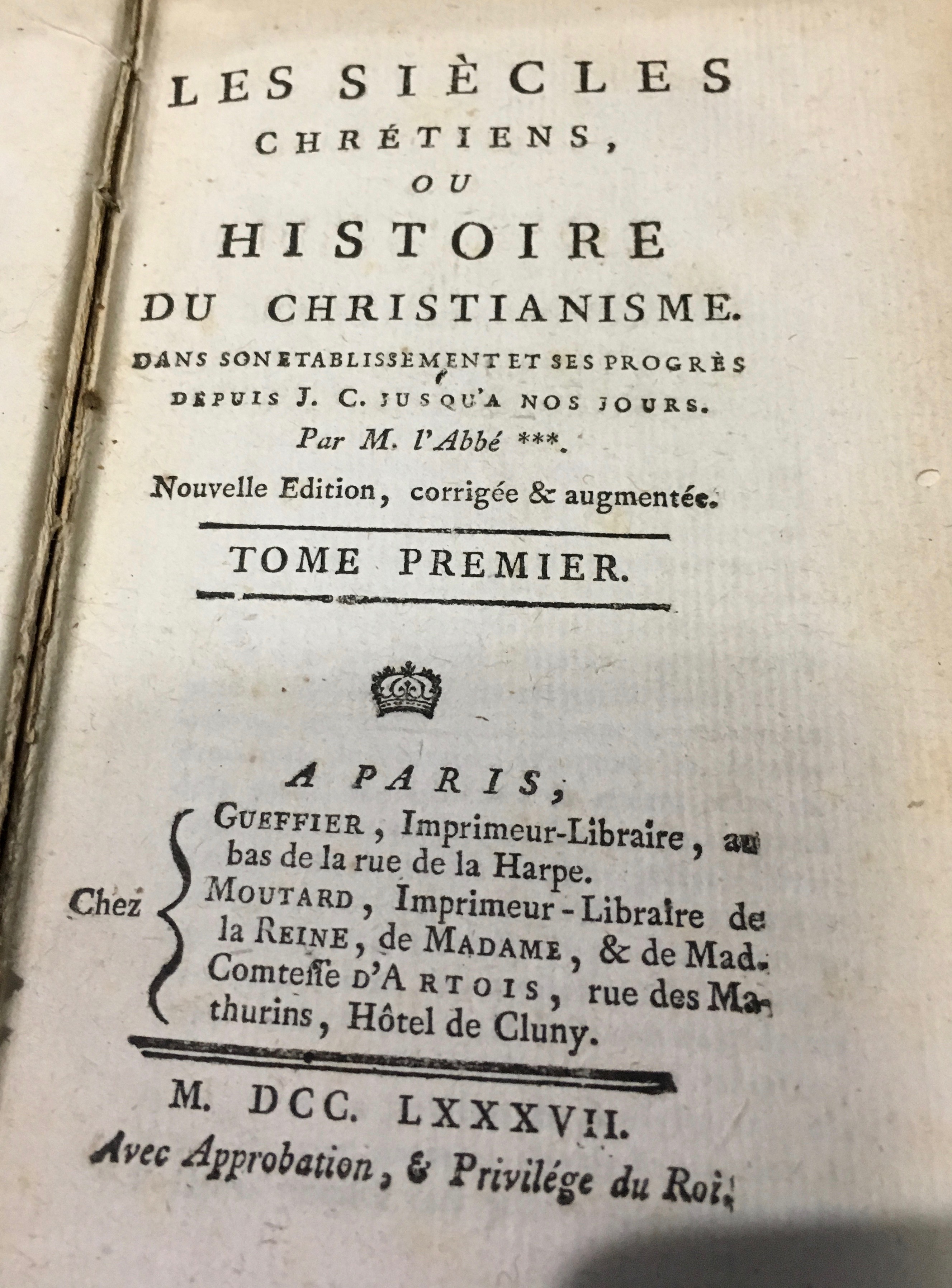 Les Siècles Chrétiens, ou Histoire du Christianisme. Dans son établissement et ses progrès depuis J.C. jusqu’à nos jours, Anonyme [Gabriel Marin Ducreux], [en cinq tomes], À Paris, chez Gueffier & Moutard, M DCC LXXXVII [1787].
A late-18th century book about the history of Christianity.
[ WorldCat ]
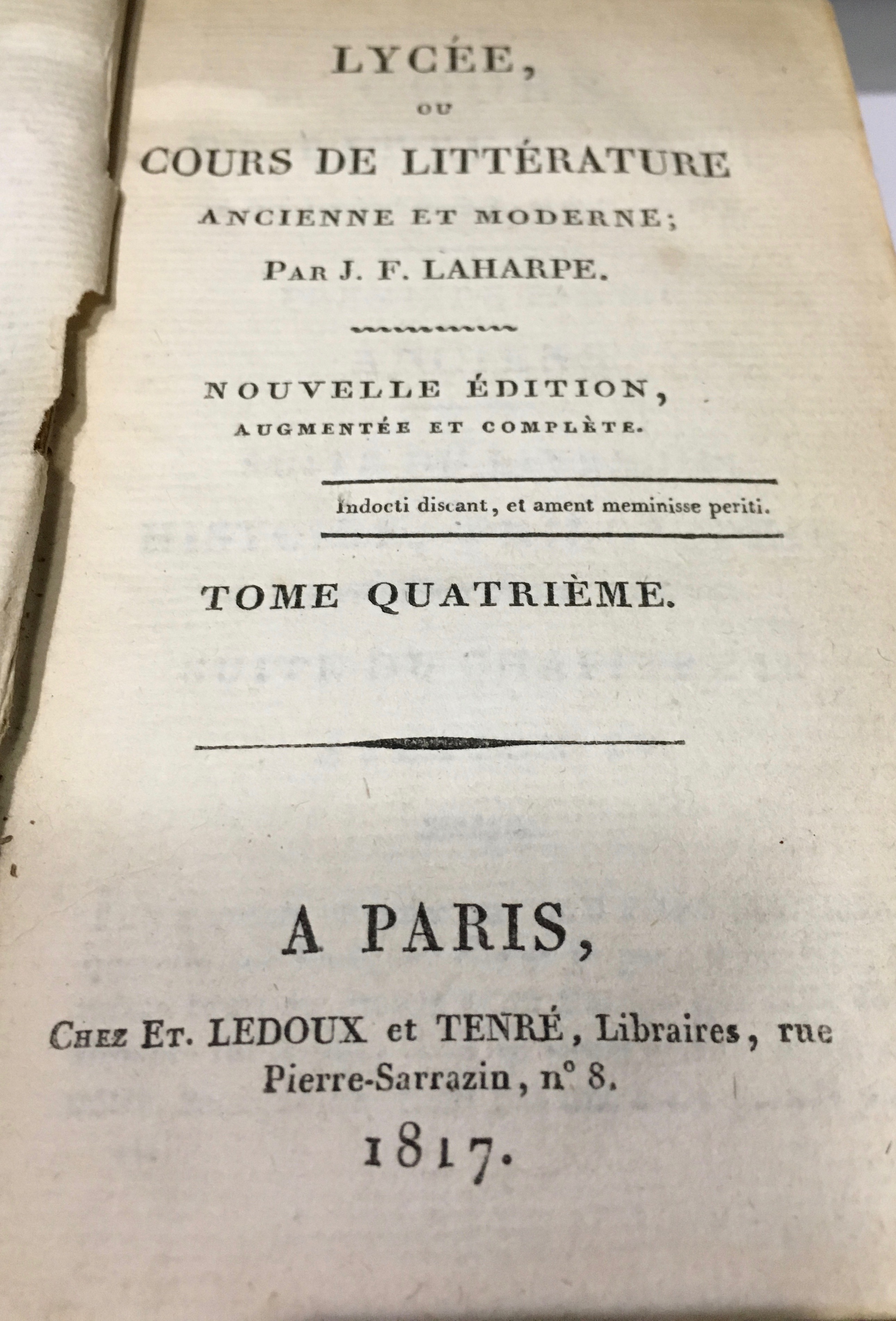 Lycée, ou cours de littérature ancienne et moderne, par J. F. Laharpe [Tome quatrième, cinquième et sixième], À Paris, Chez Et. Ledoux et Tenré, 1817.
Three volumes (out of sixteen ?) from an history of ancient and modern literature. I have a lot of those early 19th-century books, but this one has a relatively interesting subject.
[ WorldCat ]
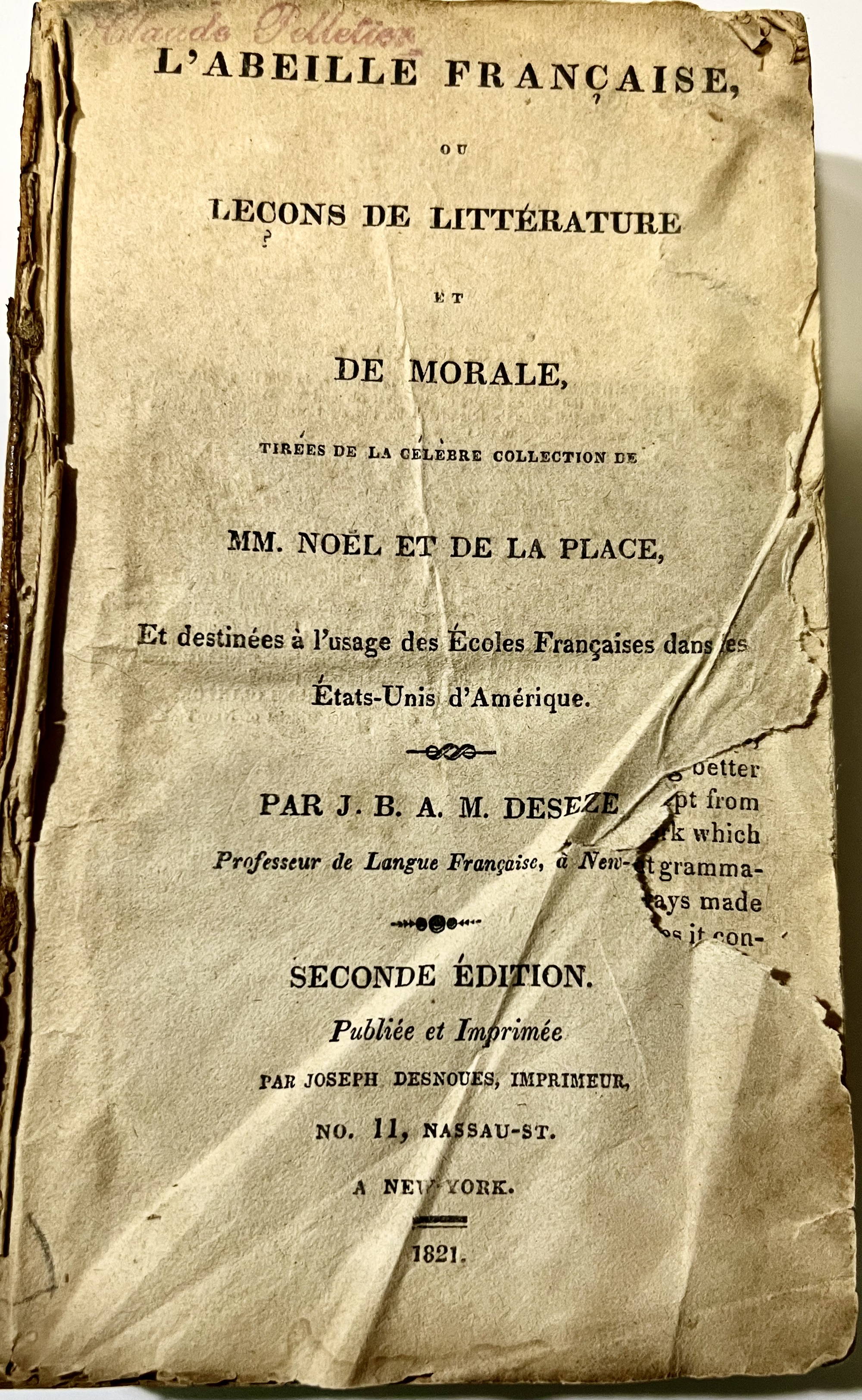 L’Abeille Française, ou Leçons de Littérature et de Morale, tirées de la célèbre collection de MM. Noël et De La Place, et destinées à l’usuage des écoles franc̦aises dans les États Unis d’Amérique, par J.B.A.M. Deseze. Seconde Édition. Publiée et Imprimée par Joseph Desnoues, Imprimeur, à New York. 1821.
In bad condition and missing its cover but it’s the only old book I have printed in the Americas.
[WorldCat]
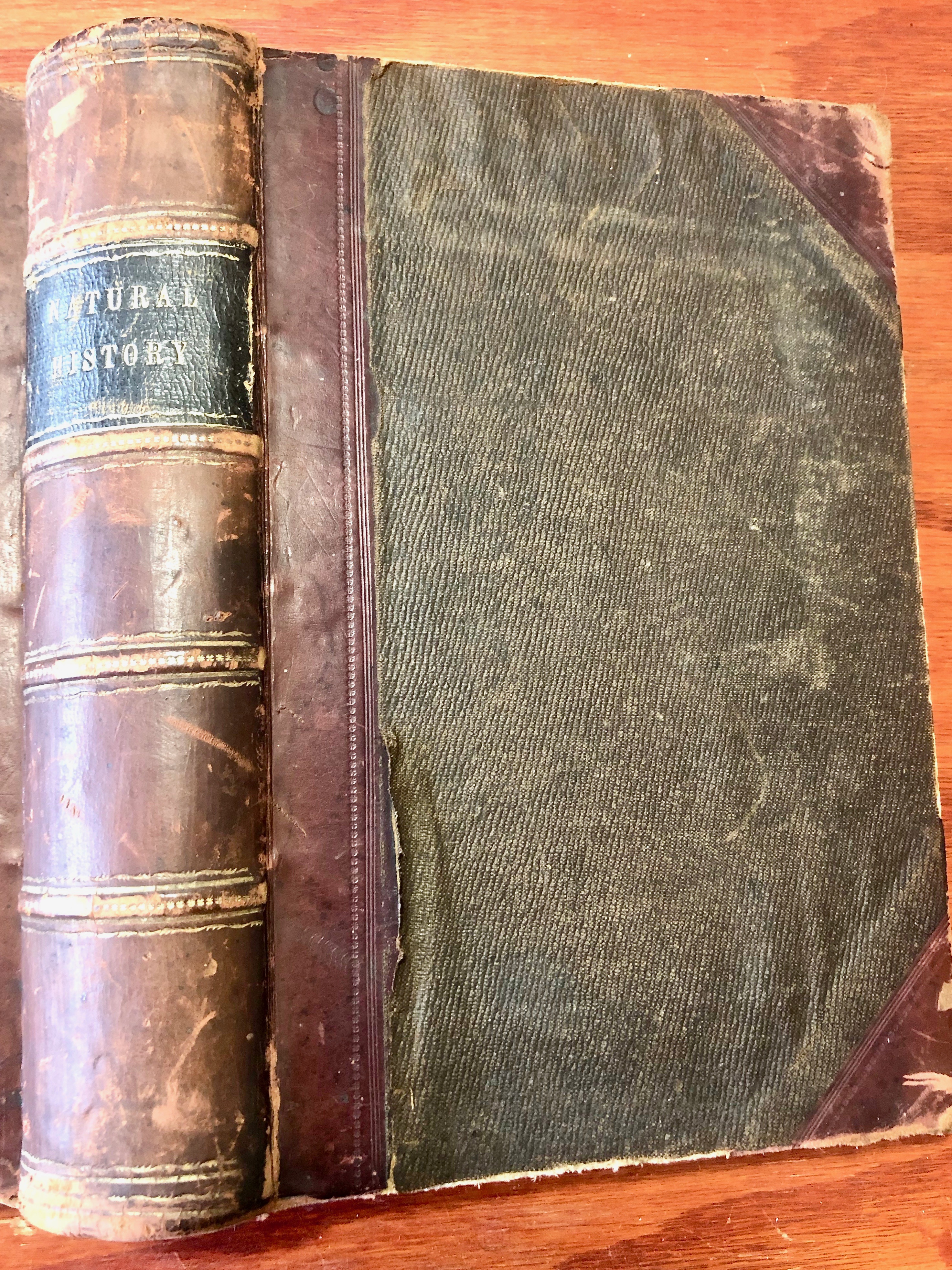 NATURAL HISTORY; or, a Description of the Earth and of Animated Nature, Compiled from the Works of Buffon, Goldsmith, Cuvier, Shaw, Vaillant, Humbolt, Audubon, &c., A New Edition, Improved and Enlarged. By Richard Cope. Halifax: Printed and Published by William Milner, Cheapside. MDCCCXLVI [1846].
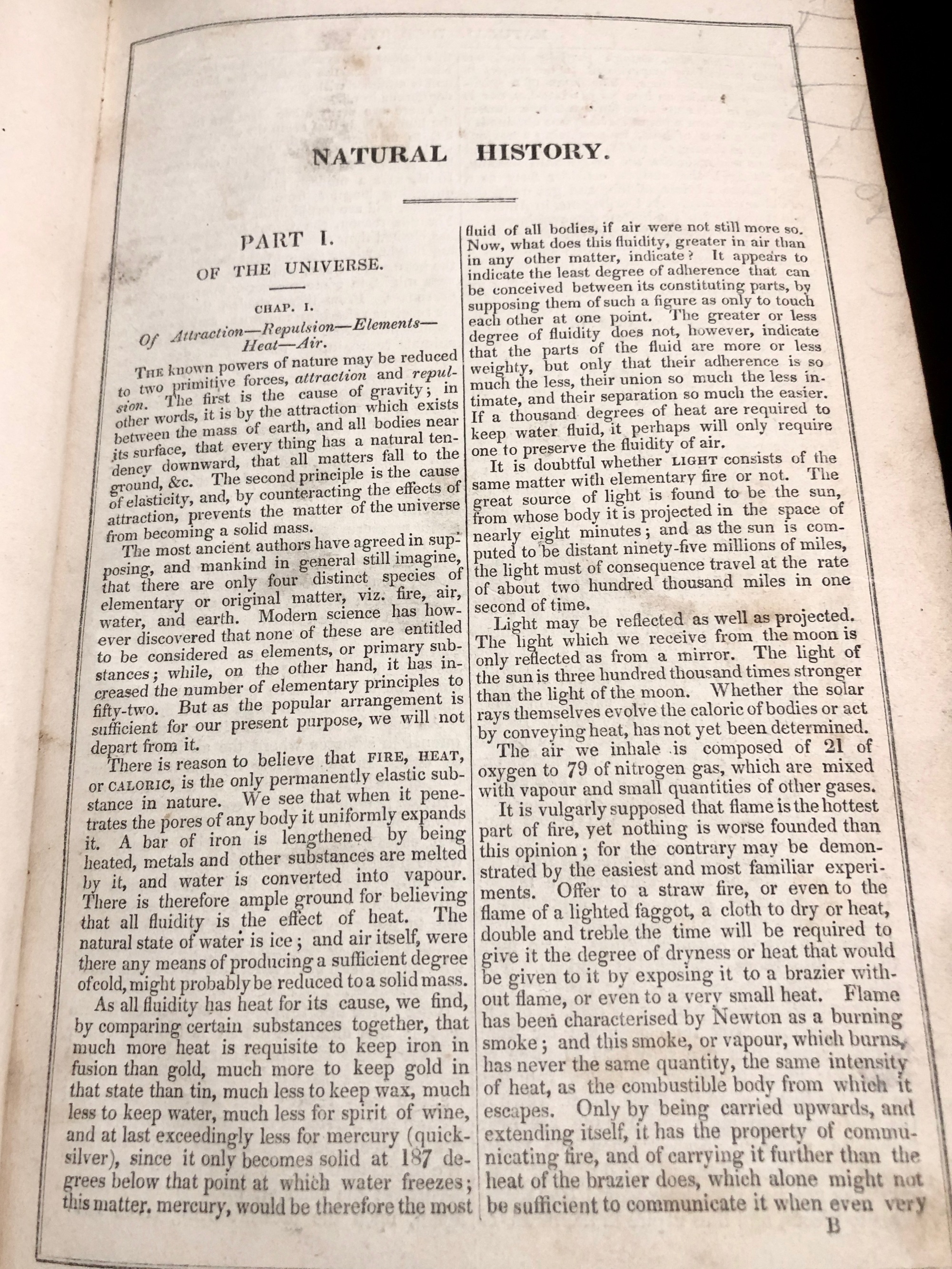 I found this book in my father’s library. It’s an octavo volume (15 x 24 x 5 cm) of 730 pages, with a cardboard cover, covered with brown cloth and thin leather. Unfortunately it was missing the front page so I had no idea who was the author or when it was published. The only clue was in the colophon: “William Milner, Printer, Cheapside, Halifax”… I then started a long investigation that allowed me to learn more about the book, its author and its publisher (Latest Acquisition , Investigation Update, A Sequel, Final Research). It’s just a mid-ninetieth century book, but it is in good condition and presents an interesting subject. And all the researches I made have endeared it even more to me…
[ Calderdale • Google • Lightcliffe Churchyard • WorldCat ]
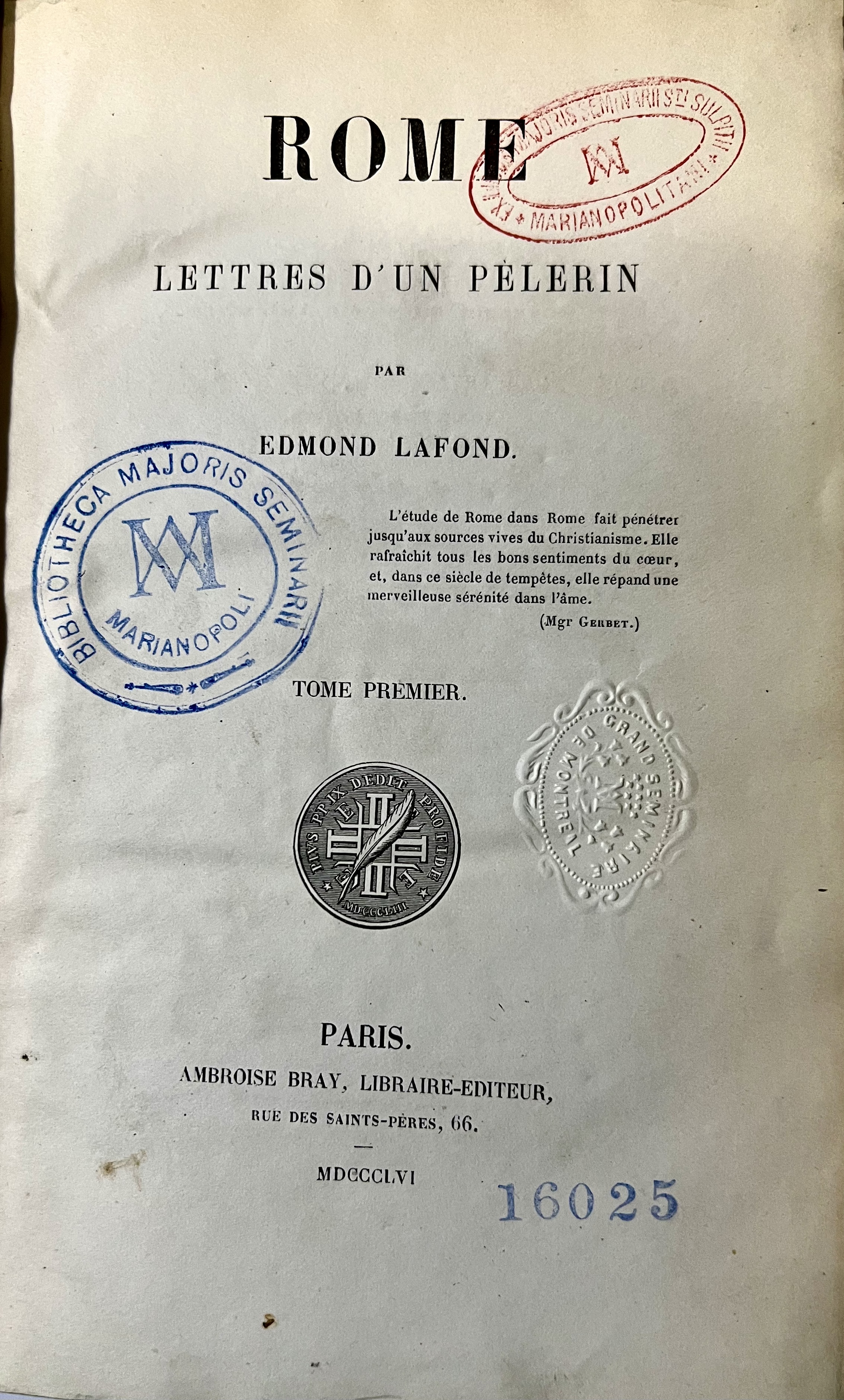 Rome, Lettres d’un Pèlerin, par Edmond Lafond. 2 vol. Paris: Ambroise Bray, Libraire-Éditeur. MDCCCLVI [1856].
The travelogue of a pilgrim in Rome. “A work that rightfully fits into the tradition of the grand tour and offers a series of sometimes curious and unusual observations on Italian customs and habits. The aspect of the artistic descriptions is not negligible. (…) This work has been selected by scholars as being culturally important, and is pat of the knowledge base of civilization as we know it.” Not very old but culturally interesting…
[ Google • WorldCat: Tome 1 • Tome 2 ]
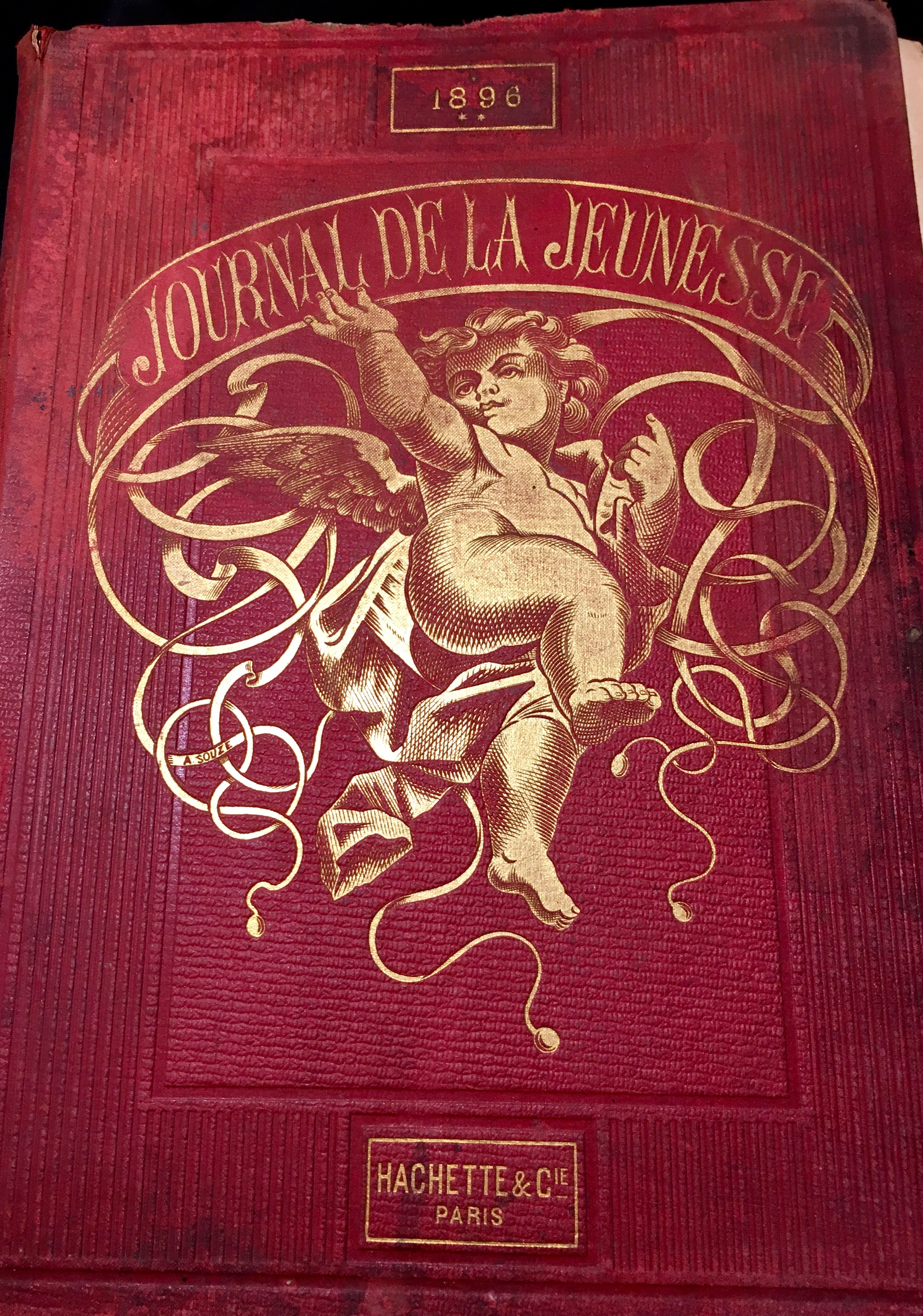 Journal de la Jeunesse, Paris: Hachette, 1896.
This is the annual compilation (with its characteristic red-binding) for a periodical dedicated to well-off kids between ten and fifteen years-old, published between 1873 and 1914. It offers a mix of educational articles and short stories (Source: Wikipedia). This is the compilation for 1896. Interesting subject and still old enough to be cherished.
[ WorldCat ]
On the subject of “old books” you can find more information in those articles:
[ Art © Miyako Matsuda, 2021 ]
[ Art © Miyako Matsuda, 2021 ]
[ Art © Miyako Matsuda, 2021 ]
[ Art © Miyako Matsuda, 2021 ]
[ Art © Miyako Matsuda, 2021 ]

[ Art © Miyako Matsuda, 2021 ]

[ Art © Miyako Matsuda, 2021 ]
[ Art © Miyako Matsuda, 2021 ]

[ Art © Miyako Matsuda, 2021 ]

[ Art © Miyako Matsuda, 2021 ]

[ Art © Miyako Matsuda, 2021 ]
Heraclius est né vers 575 en Cappadoce dans une famille d’origine arménienne. Son père, Heraclius Major, est officier supérieur dans l’armée de l’empereur Mauricius. Il gravit rapidement les échelons jusqu’à devenir général (magister militum) de l’armée d’Orient, puis d’Arménie (en 595) et finalement gouverneur de l’Afrique (exarque de Carthage) en 600. Heraclius Junior grandit sans doute auprès de son père et acquiert ainsi une bonne expertise militaire. En 602, l’empereur Mauricius est renversé par l’usurpateur Phocas et l’incompétence de celui-ci fait perdre à l’Empire beaucoup de territoire aux mains des Sassanides en Orient, des Lombards en Italie et des Wisigoths en Hispanie. Dégouté par ce règne disgracieux, l’exarchat d’Afrique se révolte contre l’usurpateur en 608. Héraclius l’Ancien et son fils sont nommé consuls. En 610, Heraclius Junior assemble une flotte qu’il lance contre Constantinople. L’usurpateur est facilement défait et exécuter. Heraclius Junior est nommé le nouvel empereur le 5 octobre 610. Son règne de trente ans, et la dynastie des Héraclides, marque un point tournant de l’histoire byzantine alors que l’Empire Romain d’Orient de l’Antiquité devient un véritable Empire Byzantin hellénisé et médiéval. Le latin cède le pas au grec et l’empereur abandonne les titres d’Augustus et d’Imperator pour celui de basileus.
La première préoccupation d’Heracius est de mettre fin à l’avancée des Sassanides. Malheureusement, il a hérité d’un empire désorganisé et pour la première partie de son règne il reste sur la défensive et incapable d’arrêter l’invasion. Les Sassanides occupent déjà l’Arménie, la Cappadoce et une partie de la Syrie mais leur progression se poursuit: ils prennent Antioche et le reste de la Syrie, Damas en 613, Jérusalem en 614 (capturant de saintes reliques comme la Vrai Croix) et l’Égypte en 618. Ils avancent également en Asie Mineure, car dès 615 ils assiègent Chalcédoine (presqu’aux portes de Constantinople, sur l’autre rive du Bosphore), puis ils prennent Nicomédie en 619, et l’île de Rhodes en 623. Même en Occident les ennemies de l’Empire (Lombards et Wisigoths) en profitent pour faire des avancés mais la menace vient surtout des Slaves et des Avars qui traversent les Balkans jusqu’au Péloponnèse et la mer Égée. En effet, les Avars s’allient aux Sassanides pour faire le siège de Constantinople en 626. Alors que tout semble perdu, le vent tourne finalement en faveur des byzantins…
Dès 622, Heraclius se réorganise et opte pour une stratégie plus agressive. Il exploite les divisions au sein de l’ennemi pour briser le siège de Constantinople puis, grâce à une alliance avec les Göktürks, lance en 627 une contre-offensive dans le Caucase où sa connaissance du terrain lui est un avantage. Il avance ensuite en Mésopotamie et obtient une victoire décisive lors de la bataille de Ninive en décembre 627. Encore une fois, c’est la mort du monarque Perse et la venu d’un successeur moins belliqueux qui lui permet de négocier la paix, de réoccuper les provinces perdues et de reprendre possession des précieuses reliques religieuses. De 628 à 633, l’Empire connait quelques années de paix qui vont lui permettre de panser ses blessures et de se reconstruire. Malheureusement, bientôt un nouvel ennemi encore plus formidable va faire son apparition… (À suivre !)
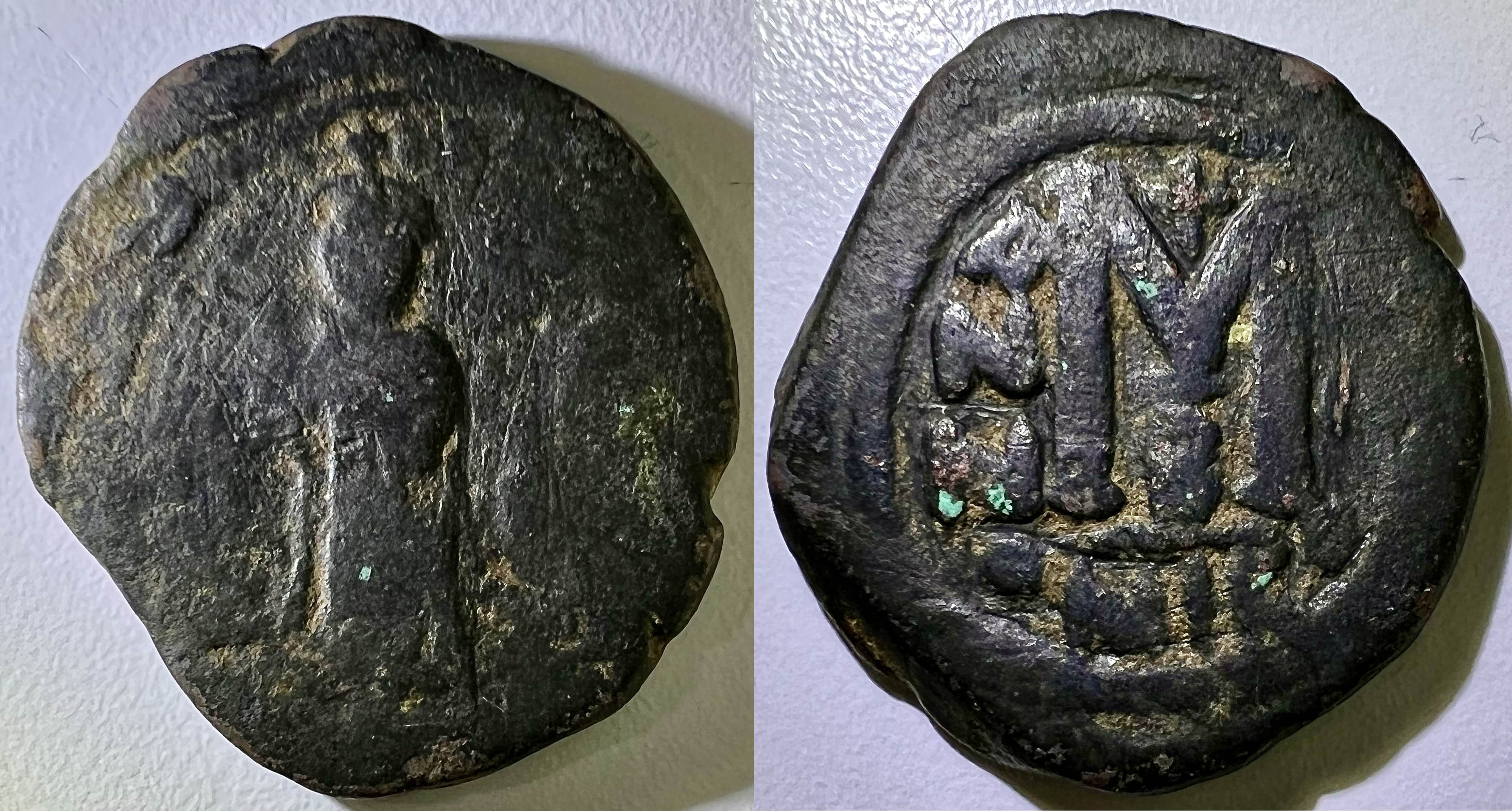 Je n’ai que deux pièces de monnaie de Heraclius. Sur la première, illustrée ici, il est représenté avec son fils Heraclius Constantinus. Il s’agit d’un follis plutôt passable (P/G [Poor / Good], 40 nummi, AE [Bronze], 27 x 30 mm (1.06 x 1.18 po), 12.577 g (194.1 gr), payé environ $5 le 1985/01/06, patine foncée, flan avec d’importantes rognures et probablement refrappé (“overstruck”); die-axis: ↑↓). Malgré une usure considérable on peut distinguer sur l’avers deux figures debout de face: Heraclius (à gauche) et Heraclius Constantinus (à droite, de taille plus petite), chacun vêtu d’une longue robe (chlamyde), portant une couronne surmontée d’une croix et un globe crucigère dans la main droite; une croix entre leurs têtes; avec l’inscription latine présumée dd[omini] NN[ostri] hERACLIVS ET hERA[clivs] CON[stantinvs] (“Nos Seigneurs Heraclius et Heraclius Constantinus” car les deux “d” et “N” indiquent un double pluriel). Le revers illustre un large M (marque de valeur indiquant 40 nummi), surmonté d’une croix (✝︎) et avec un “B” en-dessous (marque d’officine, Bêta = 2); encadré par un “ANNO” (vertical) dans le champs gauche et possiblement un “II II” (sur deux ligne) dans le champs droit (indiquant l’année de règne 4), et un “NIKO” en exergue (marque de l’atelier de Nicomédie).
Ces informations (confirmées par WROTH, W. Catalogue of the Imperial Byzantine Coins in the BM, v. 1: pp. xxiv-xxvii, 216-17 et GRIERSON, Philip. Catalogue of the Byzantine Coins in the Dumbarton Oaks Collection and in the Whittemore Collection: Vol. 2, Part 1: Phocas and Heraclius 602-641. Washington DC: Dumbarton Oaks Research Library & Collections, 1993. pp. 317-319) nous indiquent que ce follis a été frappée par la deuxième officine de l’atelier de Nicomédie. Toutefois, l’année de règne reste incertaine: si je crois y lire “II/II” (pour la 4e année, soit 613-614 EC), il pourrait tout aussi bien s’agir de “II/I” (3e année: 612/613 EC) ou même du pictogramme qui forme une sorte de “G” alongé (pour la 6e année: 615-616 EC). Il est cependant certain qu’elle a été frappée entre 612 et 616 EC.
[ Translate ]Sources: Wikipedia (Heraclius [FR/EN], Heraclius Constantinus [FR/EN]); IBC: 237-43, DOC 2.1: 158-160; Réf. online: Google, CoinArchives, CoinTalk, FAC, MA-Shop, MET, vcoins, WildWinds (text, image). Voir aussi ma fiche.
La semaine prochaine je vous présente ma seconde pièce de monnaie de Heraclius où ils est représenté avec son fils Heraclius Constantinus et sa deuxième épouse, Martina.

[ Art © Miyako Matsuda, 2021 ]
[ Art © Miyako Matsuda, 2021 ]

[ Art © Miyako Matsuda, 2021 ]
Souvenirs de Science-Fiction Québécoise
Manga, jeu vidéo et arts mineurs
A blog about the pursuit of knowledge
A blog about the pursuit of knowledge
Émission littéraire + Suggestions + Confidences
“If you are cold, tea will warm you; if you are too heated, it will cool you; If you are depressed, it will cheer you; If you are excited, it will calm you.” ― William Ewart Gladstone
A blog about the pursuit of knowledge
Book reviews and the occasional ramblings of a book blogger
Moi et les livres... dans cet ordre
Science, réflexion et poésie
Discussion, Resources, Roundtables, & Reviews
A blog about the pursuit of knowledge
A blog about the pursuit of knowledge
A blog about the pursuit of knowledge
 Clodjee's Safe-House
