As usual, we will concentrate our interest on the Japanese program that includes 4 anime (in total you can also find 33 other animated features — 29 shorts and 8 movies — from various countries). Besides Momotaro, Sacred Sailors, which is probably one of the first anime ever produced in Japan, there’s nothing out of the ordinary among those titles — although we’ve noticed that there’s lots of manga adaptations. Here’s a list of all the Japanese titles (with links to full description):
Bakuman : 2015 / 120 mins / Dir.: Hitoshi Ohne. Adaptation of the manga written by Tsugumi Ohba and illustrated by Takeshi Obata (Death Note) [AsianWiki, Eigapedia, IMdB]
Chihayafuru / Chihayafuru Kami no KuPart 1 & Part 2 : 2015-16 / 111 mins &112 mins / Dir.: Nori Koizumi. Adaptation of Yuki Suetsugu’s acclaimed manga series. [AsianWiki, Trailers Part 1 & Part 2, Wikipedia]
A Jirô Taniguchi’s one shot published in issue #8 & #9 of Big Comic (april 2016). Titled Izuko ni ka, document.write(“”); it is set in Tokyo during the Meiji era [Animeland, in french]
Crackle has announced that it has acquired streaming rights to Harmony Gold’s Robotech 85-episode television series and the Robotech: The Shadow Chronicles feature film. It will be available from May 15. Crackle has launched an anime channel that play like linear television, but content is also available on demand. Sony, Crackle parent company, also announced last year that it was planning a live-action Robotech film. [ANN]
TMS announced a new television anime production titled Trickster: Edogawa Rampo ‘Sh?nen Tantei-dan’ Yori (Trickster: From Rampo Edogawa’s “The Boy Detectives Club”). It will air in October on Tokyo MX and Yomiuri TV. It is based on Sh?nen Tantei-dan (The Boy Detectives Club), a 1937 series of novels by renowned Japanese mystery novelist Edogawa Rampo. A manga adaptation will also begin in the July issue of Kodansha’s Magazine Special [ANN]
The trend continues: after the announcement of live-action adaptation from anime like Ghost in the Shell, Battle Angel Alita, Yowamushi Pedal and Fullmetal Alchemist, now they are talking about adaptations for Gintama, Peach Girl, and even an americanized version of Death Note ! [Animeland, ICv2]
An exhibition dedicated to Jirô Taniguchi will be held in the city of Versailles, document.write(“”); France, between march 12 and may 15, 2016. [Source: Animeland, in french]
Voici la preuve que je ne suit plus vraiment l’actualité dans le domaine de l’anime et du manga (à part lire les gros titres du fil de nouvelles de ANN et Animeland — que vous retrouvez dans la colonne de droite de mon blog). Je suis passé à côté d’une grosse nouvelle: Animeland a changé de propriétaire… l’an dernier!
“AnimeLand est le 1er magazine français sur l’animation japonaise et internationale, document.write(“”); les mangas et tout l’univers otaku en France”. À tout les deux mois il offre une centaines de pages pleine à craquer de news, chroniques, interviews, articles et dossiers. J’ai toujours grandement admiré ce magazine fondé par Yvan West Laurence et Cédrik Littardi en avril 1991 (même si j’ai souvent eut l’impression que parfois ils “s’inspiraient” de Protoculture Addicts — quoiqu’il faudrait sans doute dire que l’inspiration était mutuelle). C’est rapidement devenu le meilleurs magazine sur l’anime et le manga hors-Japon et pas seulement en langue française.
Il y a quelques semaines, voulant justement me mettre un peu à jour dans les dernières tendances de la pop-culture japonaise, j’ai emprunté le plus récent numéro à la bibliothèque (#207, Décembre 2015 / Janvier 2016). Quelle ne fut pas ma surprise de découvrir que l’éditorial était signé par… Christopher Macdonald, l’éditeur de Anime News Network (et mon partenaire dans la dernière incarnation de Protoculture Addicts)! J’ai également noté que le magazine n’était plus publié par Anime Manga Presse mais plutôt par le mystérieux AMN (et cela depuis le numéro 202, en février/mars 2015). Qu’est-ce que tout cela voulait dire?
J’ai trouvé la réponse dans le fil de nouvelle du site d’Animeland: “Anime News Network reprend AnimeLand” (daté du 21 décembre 2014) [MàJ: ANN en a aussi parlé en janvier 2015]. ANN s’était donc bel et bien porté acquéreur du magazine français! Wow!
“Anime News Network, site internet leader mondial des news sur le manga et l’animation japonaise, est heureux d’annoncer la reprise d’AnimeLand, le premier magazine français de l’animation et du manga. (…) Une nouvelle société, AM Media Network, filiale de la société québécoise Anime News Network, reprend dès maintenant la publication de tous les magazines d’Anime Manga Presse qui, suite à des troubles financiers importants, a récemment traversé une procédure judiciaire.”
Toute mes félicitations à mon ami Christopher! Je lui souhaite, ainsi qu’à Animeland, le plus grand des succès. Je vais très certainement essayer de les suivre de plus près.
Now, the question is: will Udon includes in this edition the more recent Rose of Versailles “Episodes” ? Or will it be in an eventual third omnibus volume? I hope they thought of acquiring the rights for those stories as well…
At the same occasion, Udon announced the release of Moyoco Anno’s Sugar Sugar Rune also for the 2nd Quarter 2016 [ ANN ]
Studio Ghibli’s latest film, When Marnie Was There, earned over $500K in U.S. Theaters [ ANN ]
Nintendo President Satoru Iwata Passes Away [ ANN ]
Shigeru Mizuki’s manga Showa: A History of Japan (1939-1944 and 1944-1953) won the 2015 Will Eisner Comic Industry Award for Best U.S. Edition of International Material from Asia [ ANN ]
Mamoru Nagano’s manga Five Star Stories will receive its first new volume in nine years this august [ ANN, Forbes ]
Sunrise Announced at Anime Expo that it is working on a new Gundam TV series [ ANN ]
Tokyopop has announced at Anime Expo that it is planning to begin publishing manga again in 2016 [ ANN ]
Vertical announced at Anime Expo that it has licensed the publishing rights for, amongst others, the Attack on Titan: Lost Girls novel spinoff [ ANN ]
The live-action adaptation of Masamune Shirow’s Ghost in the Shell, starring Scarlett Johansson, is set to be released in march 2017 [ ICv2 ]
Luc Besson has announced that his next movie as producer and director will be Valerian and the City of a Thousand Planets, based on the comics by Pierre Christin & Jean-Claude Mézières, which should see a release in 2017 [ ICv2, themarysue.com]
(the Kita-Kojima (l.) and Minami-Kojima (r.) islands, document.write(“”); with the Uotsuri island in the background)
No wonder several countries are disputing its ownership!
[ Traduire ]
Here our main interest is the asian programming (over sixty movies from seven countries: 22 from Japan, 17 from South Korea, 7 from Hong Kong, 2 from Indonesia, one each from China, Malaysia and Philippines) and particularly the animation (twelve movies from four countries: 8 from Japan, 2 from China, as well as one each from South Korea and Indonesia — there’s also one anime-related animation from Québec).
Update: For comments on the Japanese movies presented at Fantasia, I highly recommend reading Claude R. Blouin’s article [in french], “Montréal, Fantasia 2014 : le Japon des exclus” on Shomingeki web magazine.
A recap list of the Asian programming titles follows (with links to full description).
Anime (+ Asian Animation):
Akira Project (Québec, Dir. Nguyen-Anh Nguyen, 5 mins)
“This is a must-have guide to 100 essential Japanese animation films, TV series, and made-for-video series, from 1950s classics to the latest Cartoon Network hits.
Looking for something specific? Eight unique icons make reviews easy to browse. From Akira to Naruto, Pokemon to Sailor Moon, anime veterans Brian Camp and Julie Davis present over 100 black & white images alongside summaries, style notes, rare facts, viewer-discretion guides, and critical comments on films that fans absolutely—zettai!—must see.”
We could say this book is only a compilation of reviews, but, on the other hand, it has the great advantage of offering extensive and very structured reviews. Also, if it offers only one hundred of them, they constitute the authors’ all time best anime selection (including movies, TV series, OAV, from 1958 to 2006, from Akira to Yu Yu Hakusho)!
The book opens on two essays: the first one gives a quick summary of the history of anime in America and explains the criteria use in the selection of titles; the second attempts to describe anime through its formats, styles and the experience it provides. It goes on with short biographies of fourteen great anime directors: Hideaki Anno, Osamu Dezaki, Yoshiaki Kawajiri, Satoshi Kon, Leiji Matsumoto, Hayao Miyazaki, Mamoru Oshii, Katsuhiro Otomo, Rintaro, Gisaburo Sugii, Isao Takahata, Osamu Tezuka, Yoshiyuki Tomino and Shinichiro Watanabe (a list similar to the Top 10 directors published in PA #90: 14). Like all good references, the book concludes with a bibliography. If there are about one hundred illustrations, some reviews have plenty of pictures while many are not illustrated at all. Such a book should be more generously illustrated.
All the reviews follow the same structure and are divided into nine parts: production notice (date, format, duration, genre, staff), summary, description of its style, comment (the review itself), mention of related titles (pre/sequels), notes on the creator/director, highlights (notable scenes), additional notes (anything from production notes to details on voice actors, or DVD extras), and rating advisory (violence, profanity, sexuality, etc.). All reviews are detailed and average three to four pages each.
I have often a hard time answering when people ask me to recommend them titles to watch. I’ve seen so many anime that it’s difficult to say which one I like best. This book offers an easy solution: here’s 100 titles that I can easily suggest. The book’s selection probably includes most people’s Top 10 (it’s the case for the staff Top 10 published in PA #84, or mine [minus Megazone 23], and you’ll find almost all Satoshi Kon [save Paprika] and Miyazaki [without Castle Of Cagliostro] titles). Of course, you cannot always agree with their selection (Chobits? Demon City Shinjuku? Harmagedon? Pokemon? Wicked City?!), but it certainly reviews most classic, popular and significant (historically or artistically) anime titles.
All in all, this is a very nice coffee table reading as it offers a ready-made list of viewing as well as lots of interesting information about the reviewed titles. Recommended for anime fans of all levels, zettai! (Absolutely!)
Anime Classics Zettai! 100 Must-See Japanese Animation Masterpieces, by Brian Camp & Julie Davis. Berkeley: Stone Bridge Press, 2007. 408 pp., paperback, $18.98 US / $23.00 CDN, ISBN 978-1-933330-22-8. Recommanded for teenagers (12+).
For more information / Pour plus d’information:
A version of this article was previously published in PA #97: 76.
This is an attempt to produce an exhaustive bibliography about anime & manga. It is far from complete yet. So far we’ve only transferred the old version from the Protoculture website (adding links to WoldCat and, whenever possible, to Nelligan—the Montreal libraries’ catalog). We’ve corrected the pictures’ links, added more books (whatever was published since we first started this bibliography; luckily we own a copy of most of these titles — the copy we own are on green background) and we’ll try to keep it updated as often as possible. Strangely, there are much more books about manga than anime… [Last update: 2024-12-28]
For those who are wondering: “anime” is referring to Japanese animation (cartoons) and “manga” is referring to Japanese comics. They are an important part of Japanese popular culture.
BARICORDI, Andrea; De GIOVANNI, Massimiliano; PIETRONI, Andrea; ROSSI, Barbara and TUNESI, Sabrina. Anime: Guida al cinema d’animazione giapponese. Bologna: Granata Press, 1991. 320 pages. ISBN 88-7248-014-0. 35,000 L. [in italian] [ Wikipedia ]
BARICORDI, Andrea; De GIOVANNI, Massimiliano; PIETRONI, Andrea; ROSSI, Barbara and TUNESI, Sabrina. Anime: A Guide To Japanese Animation (1958-1988). Translated from the Italian by Adeline D’Opera and presented by Claude J. Pelletier. Montreal, Protoculture, 2000. 320 pages, B&W, ISBN 2-9805759-0-9. $25.00 US/Can.
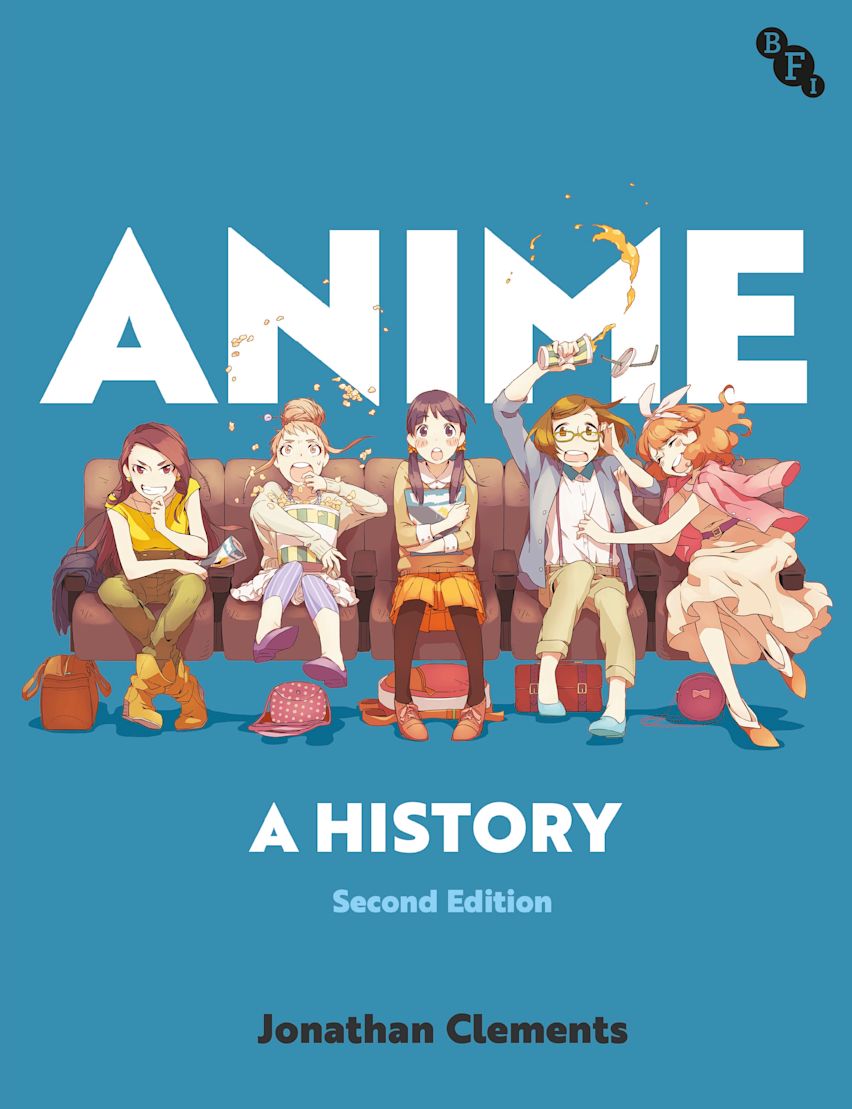
First edition: December 2013, ISBN 978-1844573905.
CLEMENTS, Jonathan & McCARTHY, Helen. The Anime Encyclopedia: A Guide To Japanese Animation Since 1917. Revised & Expanded Edition. Berkeley, Stone Bridge Press, 2006. 870 pg. ISBN 978-1933330105. $29.95 US.
First Edition: 2001, ISBN 1-880656-64-7. $24.95 US.
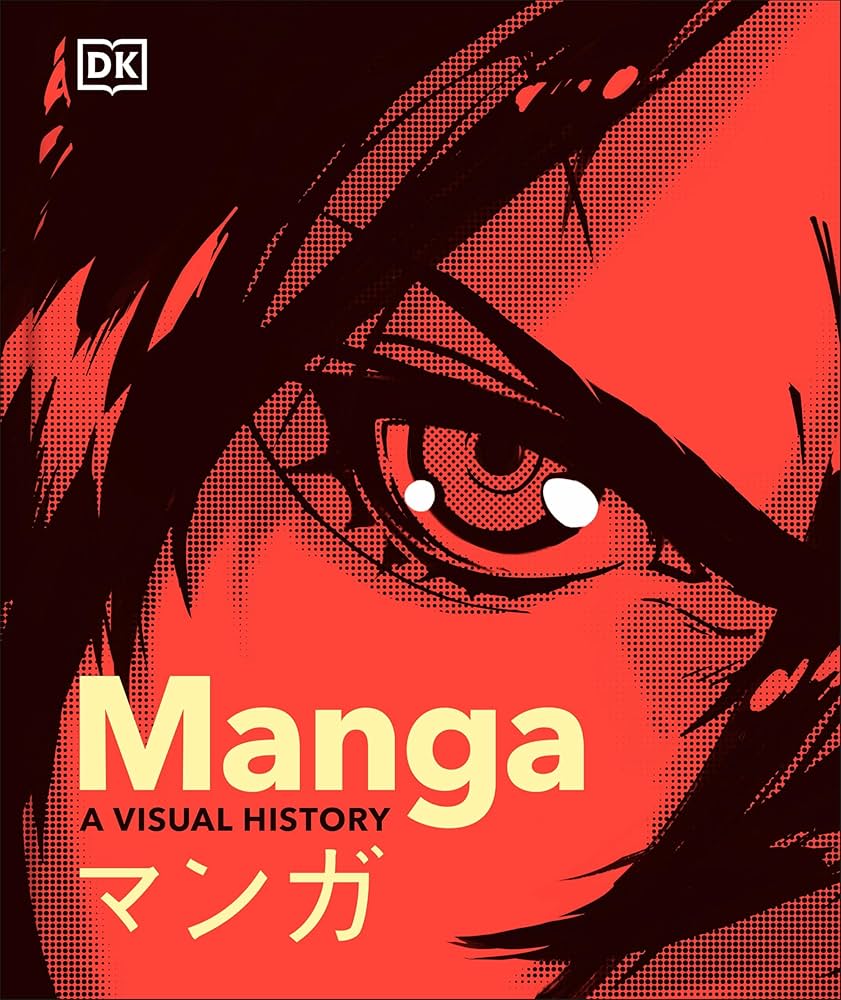
[Collectif] Manga: A Visual History. London: Dorling Kindersley Publishing (DK), (to be published in March 2025). 320 pages. ISBN 978-0593844199. 46 € / $50 US / $66.00 Can. Authors includes Frederik L. Schodt, Rachel Thorn, Zack Davisson, Erica Friedman and Jonathan Clements.
[Collectif]. Le meilleur du manga 2013: Les conseils des pros pour s’y retrouver dans la masse ! Paris, Kazé, Février 2013. 192 pg. ISBN 978-2-8203-0510-7. € 7,95 / $13.95. [in french]
GRAVETT, Paul. Manga: Sixty Years of Japanese Comics. Laurence King Publishing / Harper Design Intl, 2004. 176 pg. ISBN 978-1856693912. $24.95 US. [Aussi disponible en version française]
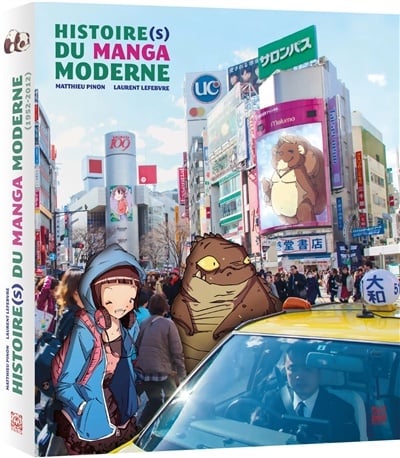
PINON, Matthieu & LEFEBVRE, Laurent. Histoire(s) du manga moderne. Paris: YNNIS Éditions, Avril 2015. 24 x 2.5 x 27 cm, 204 pg., 29.99 € / $49.95 Can. ISBN: 979-1-0933-7622-6.
Other editions: January 1983 (ISBN 9780870115493), January 2013 (ISBN 9781568364766).
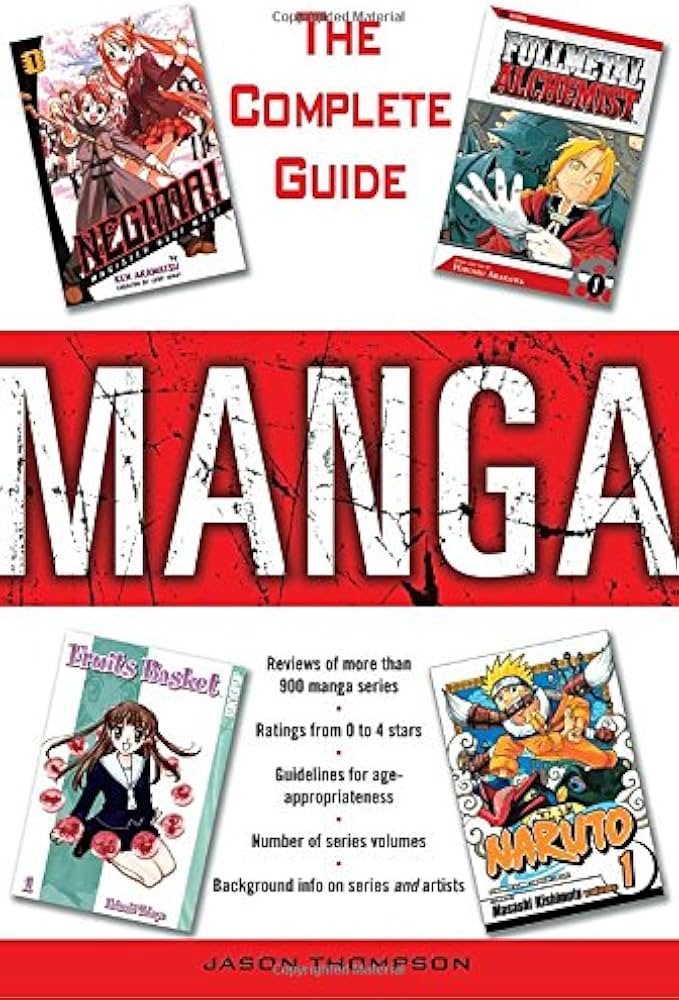
THOMPSON, Jason. Manga: The Complete Guide. New York, Ballantine/Del Rey, 2007. 556 pg. ISBN 978-0345485908. $19.95 US / $24.95 CDN. [Wikipedia] See my comment.
現代漫画博物館 [Lit. “Modern Comic Museum” / The Encyclopedia of Contemporary Manga, 1945-2005], by Shogakukan Manga Awards Office. Shōgakukan, November 2006. 532 pages. ISBN 978-4091790033. 4200円 [In Japanese]
Here we are listing only the categories that are of interest for our blog, but you’ll find more details on ALL the nominees on the Tokyo Hive and Internet Movie Database. You’ll find also some information (mostly about the anime category and the anime- & manga-related nominations) on Anime News Network.
The award winners will be announced on March 7, 2014, so stay tuned!
“When Roman architect Lucius is criticized for his “outdated” thermae designs, he retreats to the local bath to collect his thoughts. All Lucius wants is to recapture the Rome of earlier days, when one could enjoy a relaxing bath without the pressure of merchants and roughhousing patrons. Slipping deeper into the warm water, Lucius is suddenly caught in the suction and dragged through the drainage at the bottom of the bath! He emerges coughing and sputtering amid a group of strange-looking foreigners with the most peculiar bathhouse customs…over 1,500 years in the future in modern-day Japan! His contemporaries wanted him to modernize, and so, borrowing the customs of these mysterious bath-loving people, Lucius opens what quickly becomes the most popular new bathhouse in Rome—Thermae Romae!” ( from the manga publisher’s website )
Thermae Romae (???? · ??? / Roman thermal baths in Latin), was written and illustrated by Mari Yamazaki. It was first serialized by Enterbrain in their monthly seinen manga magazine Comic Beam (between February 2008 and April 2013) before being compiled into six volumes. The French translation is published by Casterman (Sakka Collection, the first five volumes have already been published) and the English translation is published by Yen Press (two volumes published so far).
Thermae Romae is a rather wacky and sometimes coarse fantastic comedy. But this is obviously not a simple comedy. This would be a average manga (good because hilarious, but no more) if it were not for its rather ingenious premise. The story is well written and supported by sound research to detail. Drawings (especially the faces and backgrounds) are in a realistic style, which is rare for a manga (especially for a comedy). Each chapter is followed by comments and explanatory notes by the author. This manga, in addition to being a pleasant entertainment, gives us a lot of information on both Japanese and Roman cultures (which, strangely, appear to have much in common).
After the first two volumes, the time traveling of Lucius whenever he quickly needs new ideas become tiresome. Fortunately, the author introduces some new elements to enliven the story (introducing a semblance of political intrigue and addressing the issue of Hadrian‘s succession, for example). Yamazaki’s story therefore avoid running out of steam by bringing Lucius to discover a little more of Japanese culture. By comparing the two cultures, she reflects upon the experience of discovering a different culture and on how the West has perceived Japanese culture. With the fourth volume, the manga take a different direction that breaks Lucius’ temporal back-and-forth cycle and gives a new life to the story. Lucius meets the brilliant Satsuki Odate, an highly educated spa geisha who is interested in ancient Rome and can speak Latin! Having an interpreter will allow Lucius to discover more aspects of modern Japanese culture. The fifth volume is less about Roman baths than various small aspects of Roman culture. The presentation of the spatio-temporal travel (which remains unexplained) is refined and the volume ends with a suspense that makes us yearn for the next and final book! A very good manga! You can read more on this manga (in french) in a previous entry of this blog.
Thermae Romae Vol. 1-5, by Mari Yamazaki. Paris, Casterman (Coll. Sakka). Vol. 1: March 2012, 186 pg., ISBN: 978-2-2030-4909-3; Vol. 2: March 2012, 202 pg., ISBN: 978-2-2030-4910-9; Vol. 3: June 2012, 194 pg., ISBN: 978-2-2030-5082-2; Vol. 4: October 2012, 194 pg., ISBN: 978-2-2030-6040-1; Vol. 5: January 2013, 194 pg., ISBN: 978-2-2030-6206-1. 13.2 x 18.1 x 1.8 cm, 7,95 € / $13.95 Can. For young adult (14+). Vol. 6 coming around the end of summer 2013.
Thermae Romae Vol. 1-2, by Mari Yamazaki. New York, Yen Press. Vol. 1: November 2012, 352 pages, ISBN: 978-0-316-22919-7; Vol. 2: May 2013, 352 pages, ISBN: 978-0-316-23219-7. 7”x 10.125, $34.99 US ($38.99 Can). For Older Teen (14+). Vol. 3 coming in February 2014.
The Thermae Romae animation was produced by DreamLink Entertainment (DLE Inc.) studio under the direction of Azuma Tani with scripts by Mamoru Nakano and character designs by Toshimitsu Takechi. The three 24-min. episodes (or six 12-min. episodes) aired on Fuji TV’s Noitamina block between January 12 and January 26, 2012. The series has been licensed for released in North America by Discotek Media.
“Ancient Roman architect Lucius is too serious. His inability to keep up with the fast-moving times costs him his job. When a friend takes the dejected Lucius to the public bathhouse to cheer him up, Lucius accidentally slips through time and resurfaces in a modern-day public bath in Japan. There, he meets aspiring young manga artist Mami, along with others of the “flat-faced clan”. Shocked by the many inventive aspects of Japan’s bathing culture, Lucius returns to ancient Rome and garners tremendous attention when he implements these novel ideas back in Rome. As he time-slips back and forth between ancient Rome and modern-day Japan, Lucius’ reputation as the ingenious, new bath architect begins to grow.” (from IMDb)
The Thermae Romae movie is an excellent production. First, it includes a cast of very good actors (strangely the fact that most of the roman roles are played by Japanese actors with “less japanese faces” doesn’t make the movie feel less realistic). Second, the sets and costumes are superbs (it helps that they used the specialized facilities of Cinecitta studio in Rome, as well as some barely noticeable computer animation). Finally, it offers an interesting story, full of intrigue and good natured comedy. All in all, it is quite entertaining.
Unfortunately, if you know anything about roman antiquity or if you have previously read the manga, you’ll probably be very disappointed. First, emperor Hadrian is presented as a tyrant while he was in fact one of the most benevolent, cultured and caring emperor (as they said in the manga and anime: one of the five “good” emperors). Also, Ceionius (Aelius) is presented as an horrible womanizer and an incompetent which was most probably not the case. Secondly, I understand that a movie adaptation must take some liberty with the original story, but I felt in this case that it was diverging a little too much. The female character of Satsuki Odate, a scholarly spa geisha in the manga, is replaced by wannabe mangaka Manami Yamakoshi which opens for an entirely new story line. Lucius keeps meeting her in every of his time travelings (from the very beginning), until she finally comes back to Rome with him by accident. Her knowledge of history ends up changing the course of events and they must find a clever way to change things back as they should be happening. I am sure that in itself it is an interesting story but I was nevertheless quite disappointed. However, I still thinks it’s funny and I nevertheless recommend it.
“Dans une ville entièrement immergée, un vieux monsieur résiste encore et toujours à la montée du niveau de la mer. Chaque fois que l’eau atteint son plancher, il est obligé de bâtir une nouvelle maison par-dessus la précédente, si bien qu’au fil du temps son logis a fini par ressembler à une immense pile de petits cubes. Un jour, alors qu’il s’est encore une fois lancé dans la construction d’une nouvelle demeure, ses outils tombent tout au fond de l’eau. Il enfile sa combinaison pour aller les repêcher, et au fur et à mesure qu’il descend à travers ses anciennes maisons, de lointains souvenirs lui reviennent en mémoire…”
“Découvrez le sublime livre créé par les auteurs du film La maison en petits cubes, récompensé dans les festivals du monde entier, notamment par le prestigieux Oscar du meilleur court-métrage d’animation”. [ Texte de la couverture arrière et du site de l’éditeur ] Continuez après le saut de page >>
La maison en petits cubes (?????? / Tsumiki no Ie) a été publié au Japon en 2008 par Hakusensha. Il a été traduit en français en mars 2012 par nobi nobi!, un éditeur de livres Jeunesse spécialisée sur le Japon. Cet album illustré est l’adaptation en livre d’un court-métrage d’animation. KATÔ Kunio (qui était le réalisateur et le directeur artistique de l’animation) a illustré le livre et HIRATA Kenya (scénariste et dessinateur pour les arrières-plans) en a écrit l’histoire. Le livre n’est pas une simple transposition de l’histoire mais plutôt un complément car les créateurs ont cherché avec le livre a pousser plus loin le récit qui est entièrement redessiné. Il y a donc quelques différences (dans l’animation, c’est sa pipe qu’il échappe à l’eau alors que dans le livre ce sont ses outils qui coulent par le fonds) mais le propos reste le même.
Les dessins faits à l’aquarelle, dominés par les tons jaunes et ocres pour la surface et aigue-marine pour l’eau, sont vraiment superbes. Ce conte tout en douceurs se veut peut-être une sorte de leçon écologique simple (puisqu’il fait allusion à la monté du niveau de l’océan), une parabole sur la persistance (devant le flot de l’adversité, il faut continuer et sans cesse se rebâtir), mais surtout une allégorie sur la mémoire, fluide et floue, souvent engloutie par le quotidien, et qu’il faut entretenir et chérir autant que possible pour la préserver. Un livre d’une grande richesse poétique qui me rappelle un peu Taniguchi (mais cela est sans doute due à une sensibilité toute japonaise qui leur est commune). Un beau conte pour les petits et pour les grands.
La maison en petits cubes, par HIRATA Kenya (texte) et KATÔ Kunio (illustration). Maisons-Laffitte, nobi nobi! (Hors Collection), 2012. 21,5 x 28,3 cm, 48 pg. couleurs, 14,95 € / $19.95 Can. ISBN: 978-2-918857-12-9. Recommandé pour enfants de 2 à 7 ans.
Pour plus d’information vous pouvez consulter les sites suivants:
Chose amusante, à travers ce livre, je retrouve mes intérêts à la fois pour le Japon, le manga, l’animation et le cinéma japonais.
Ainsi, ce livre m’a aussi fait découvrir la maison d’édition nobi nobi! (dont le nom [????], une onomatopée japonaise, signifie “être à l’aise” ou “se sentir bien” et fait référence à l’atmosphère propice à l’épanouissement que procure une bonne et riche lecture). Sa vocation, inusité dans le milieu de l’édition française, est de faire découvrir la culture japonaise par la “traduction d’albums illustrés japonais ou la création d’albums originaux inspirés par le Japon”.
Elle a été créé par deux passionnés du Japon, Pierre-Alain Dufour et Olivier Pacciani, qui ont tous deux travaillé auparavant pour une maison d’édition de manga. J’ai constaté au cours des ans que le Japon produit effectivement des livres pour enfants qui sont d’une grande beauté et sensibilité et qui sont donc un choix logique pour une maison d’édition qui désire publier des ouvrages de qualité qui offrent “des histoires intelligentes au graphisme étudié.”
Ce livre m’a également fait découvrir le court métrage d’animation qu’est aussi La maison en petits cubes et qui a inspiré le livre. D’une durée de seulement douze minutes, cette animation a été produite en 2008 par Robot Communication et animé par le studio Oh Production, sous la direction de KATÔ Kunio, avec un scénario et des arrières-plans de HIRATA Kenya ainsi qu’une musique de KONDO Kenji. Contrairement au livre, où les illustrations sont accompagnées d’un texte, le récit de l’animation ne se fait que par l’image, la musique et les effets sonores.
Robot Communication a été créé en 1986 principalement en tant qu’agence de production pour des commerciaux télévisés et comme une firme de conception graphique. Elle a depuis étendu ses activités à la production de films, d’animation et de contenu pour le web et les téléphones mobiles. Elle est connue pour avoir produit plusieurs des films que j’ai apprécié, entre autres Space Travelers, Always: Sunset on Third Street ’64, Odoru Dai Sousasen the Final (“Dancing Detectives”) et Space Battleship Yamato.
La version animé de La maison en petits cubes a été récompensée par le prix du meilleur court métrage d’animation au Festival international du film d’animation d’Annecy de 2008, par le Prix Hiroshima et Prix de l’Audience du Festival international du film d’animation d’Hiroshima de 2008 ainsi que par l’Oscar du meilleur court-métrage d’animation en 2009. Elle est largement disponible pour visionnement sur l’internet:
At about the same time (a few days earlier), Right Stuf’s Nozomi Entertainment announced the DVD Release of The Rose of Versailles Part 1 Limited Edition. The first set will be available on May 7, 2013 (it will include 4 discs, 480 minutes (20 episodes), Japanese audio with English subtitles and on-screen translations, $49.99 US, suggested for age 13+).
The original manga by Riyoko Ikeda was first serialized in Shueisha’s shoujo anthology magazine Margaret in 1972-73 before being collected in 10 volumes. It was so popular that it was adapted in a live-action movie and several stage musicals by the famous Takarazuka Revue troupe. In 1979-80, it was also adapted into a 40-episode anime series by TMS under the direction of Tadao Nagahama and Osamu Dezaki. The Right Stuf’s dvd set will be the very first english language release of this series.
Set before the French Revolution, The Rose of Versailles is a tale of romance and political intrigue that centers around Oscar François de Jarjayes, a young woman who was raised (and military trained) by her father as a man. Following a duel, Oscar is appointed Commander of the French Royal Guards in order to protect Marie-Antoinette, the fiancé of the prince and future king, Louis-Auguste. For more details, check rov.rightstuf.com.
So far, Viki’s anime line-up offers mostly stuff from Tezuka (strangely enough, Oniisama E… was animated by Tezuka Productions!) but I am sure more great titles will eventually be added (Lady Oscar / The Rose of Versailles is coming in December anyway).
Also known as “Berusaiyu no Bara” and “Lady Oscar,” The Rose of Versailles will be released via Right Stuf’s Nozomi Entertainment as two limited-edition DVD box sets in 2013. The series will also be streamed, beginning in December 2012, and made available exclusively to fans in the United States and Canada on Viki (Viki.com), as part of the site’s growing anime lineup. This will be the first time the entire anime series will be available to English-speaking audiences in North America.
Additionally, Nozomi Entertainment wants fans’ questions for an upcoming Q&A interview with Riyoko Ikeda, the creator of The Rose of Versailles. Please submit questions, via the form located at the official series site (rov.Right Stuf.com), by 4 p.m. CDT on Thurs., Nov. 1, 2012.
Right Stuf‘s President and CEO Shawne Kleckner said, “The Rose of Versailles is one of anime and manga’s truly legendary and iconic stories. It is an honor and privilege to bring this beloved series to DVD, via Nozomi Entertainment, and work with TMS and Viki to introduce our English-subtitled translation of the anime inspired by Ms. Ikeda’s masterwork to North American fans.”
“We’re thrilled to work with Right Stuf to bring The Rose of Versailles to fans in North America and add this famous title to our growing library of classic anime,” said Razmig Hovaghimian, Viki CEO.
“The Rose of Versailles has been released several times in multiple formats in many European and Asian countries until now but was never released in North America for the English-speaking audiences. I would like to thank the team at Right Stuf and Viki for making the North American The Rose of Versailles DVD and online release possible. When it comes to amazing shows, you never get tired of watching them, and I believe The Rose of Versailles is one of these shows. It would be a pleasure if the North American fans enjoy The Rose of Versailles as much as I have,” said Katsuki Masai, Deputy Manager of TMS Entertainment, USA, Inc.
Set during the years preceding the French Revolution, The Rose of Versailles is a tale of romance and political intrigue that centers around Oscar François de Jarjayes, a young woman whose father has raised her as a man – and trained her to be an elite and skilled soldier – so she can succeed him as the commander of the palace guards.
The Rose of Versailles is based upon the best-selling manga (comic) by Riyoko Ikeda (Dear Brother, a.k.a. Oniisama E…), which was originally serialized in Shueisha’s shoujo (girls’) anthology magazine Margaret, from 1972 through 1973, and later collected into 10 volumes. In addition to its anime adaptation, it inspired a short story collection (also written by Ikeda), a French-Japanese live-action film, and multiple musicals staged by Japan’s famed Takarazuka Revue.
This 40-episode anime adaptation of The Rose of Versailles originally aired on Japanese television from October 1979 through September 1980. It features animation by TMS Entertainment, as well as direction by Tadao Nagahama (Romance Robot Trilogy) and Osamu Dezaki (Nobody’s Boy – Remi, Dear Brother, Aim for the Ace!).
For more information about the series and to submit questions for the Q&A with Ms. Ikeda, visit rov.Right Stuf.com.
About RIGHT STUF, INC. Currently celebrating its 25th year in business, Right Stuf, Inc. was one of the first players in the U.S. Japanese Animation (“anime”) industry, as both an anime producer/distributor and a retailer. Right Stuf works to promote knowledge of its own products, as well as the anime and manga industry, in general, through its online storefront at Right Stuf.com and a variety of media including podcasts and special publications. Its video and print publishing division includes the Nozomi Entertainment, Lucky Penny, and 5 Points Pictures studio-labels.
About NOZOMI ENTERTAINMENT A publishing division of Right Stuf, Inc., Nozomi Entertainment is its signature label, dedicated to high-quality releases for collectors. True to the Japanese word that inspired its name, Nozomi’s focus is on “what fans want.” By focusing on a limited number of anime properties each year, the Nozomi production team ensures each release receives the care and attention to detail it deserves.
From anime classics like Astro Boy, Kimba and Gigantor to modern comedies, dramas and favorites such as The Irresponsible Captain Tylor, His and Her Circumstances, Gravitation, Ninja Nonsense, The Third: The Girl with the Blue Eye, Emma: A Victorian Romance, Maria Watches Over Us, ARIA, Gakuen Alice, Rental Magica, Dirty Pair, Junj? Romantica and Revolutionary Girl Utena, Nozomi Entertainment releases quality programming for fans of all ages and interests.
About Viki Viki is a global TV site with over 12 million monthly viewers who come to watch their favorite TV shows, movies and other premium content, translated into more than 150 languages by a community of avid fans. With over 1 billion videos viewed and nearly 250 million words translated, Viki uniquely brings global prime-time entertainment to new audiences and unlocks new markets and revenue opportunities for content owners. In 2011, Viki announced $20M in Series B funding from strategic investors including BBC Worldwide and SK Planet, a subsidiary of SK Telecom; as well as from existing investors Greylock Partners, Andreessen Horowitz, Charles River Ventures and Neoteny Labs, among others.
About TMS ENTERTAINMENT, LTD. TMS Entertainment, Ltd. (better known as TMS), one of the world’s largest and most distinguished animation studios, has rapidly won recognition from the international filmmaking community for its highly acclaimed animation, pioneering techniques and proud commitment to quality. With its headquarters situated in Tokyo under the supervision of a dedicated team of top development, production and design executives, TMS’s growing reputation is reflected by the versatility, artistry and originality of the remarkable volume of programs the company has produced for international markets worldwide. Established in the year 1964, TMS has produced more than 100 features and over 100 TV programming series, in total of 8,000 half hours, for global distribution. TMS also proceeds with restoration projects of the titles to keep its highest quality for the next generation. TMS is proud to uphold our tradition of presenting to you unforgettable images from the finest animation produced anywhere in the world. TMS’s programs have attained worldwide recognition, and we continue to strive for excellence and lead the animation world throughout the century.
Cette nouvelle est plutôt surprenante, puisque je n’avait pas entendu dire que le litige avait été règlé et qu’on s’attendrait plutôt à voir une sortie dvd d’abord en France et non au Québec. Espérons que cette sortie dvd ne sera pas troublée par les mêmes problèmes qu’avait eut Déclic Images en 2005. Quoiqu’il en soit, Imavision a annoncé la sortie du coffet dvd, en collaboration avec DEP, pour la période des Fêtes 2012. Une distribution sur “diverses plateformes” sera par ailleurs annoncée ultérieurement.
Je fais ça depuis pas mal d’années mais cette fois-ci pourrait bien être la dernière (on ne rajeuni pas après tout) alors ne manquez surtout pas cette opportunité de jeter un coup d’oeil sur ma petite vente de garage et d’y trouver des items spéciaux et des aubaines incroyables (surtout des Dvds et des manga à $5 ou $10, quelques “art books” et plus)!
This blog was hit by a couple of catastrophes in 2017 that broke many image links and introduced malicious lines of code that have now been neutralized but are still disfiguring many older entries of the blog.
Please bear with us while we are undergoing the long process of repairing the blog! The most important part of this blog is still there — the words to read and the ideas to share — but the aesthetic of the presentation has unfortunately suffered.
Thank you for your understanding and support!
— clodjee
After reading my bio/bibliography in the DALIAF, it reminded me that I published more than just fiction (or a few sci-fi short stories). So I decided to gather my own bibliography, a list as exhaustive as I could of all the major texts I’ve written. Here it is, right after the jump: Continue reading →
Je serai à la table #502 du Salon d’expositon (aussi connue comme la salle de vente), qui sera ouverte au public vendredi de 17:00 à 21:00, samedi de 10:00 à 19:00 et dimanche de 10:00 à 17:00.
Venez me recontrer pour discutter et jetez un coup d’oeil sur les aubaines incroyable que j’offre sur les dvds d’anime et les manga!
Cette année je n’ai qu’une seule table de vente, alors elle sera pas mal encombrée. J’y ferai moins la présentation du magazine (here.
“If you are cold, tea will warm you; if you are too heated, it will cool you; If you are depressed, it will cheer you; If you are excited, it will calm you.” ― William Ewart Gladstone


















.jpg)


 Clodjee's Safe-House