What better to read in the midst of a pandemic than The Walking Death comics?
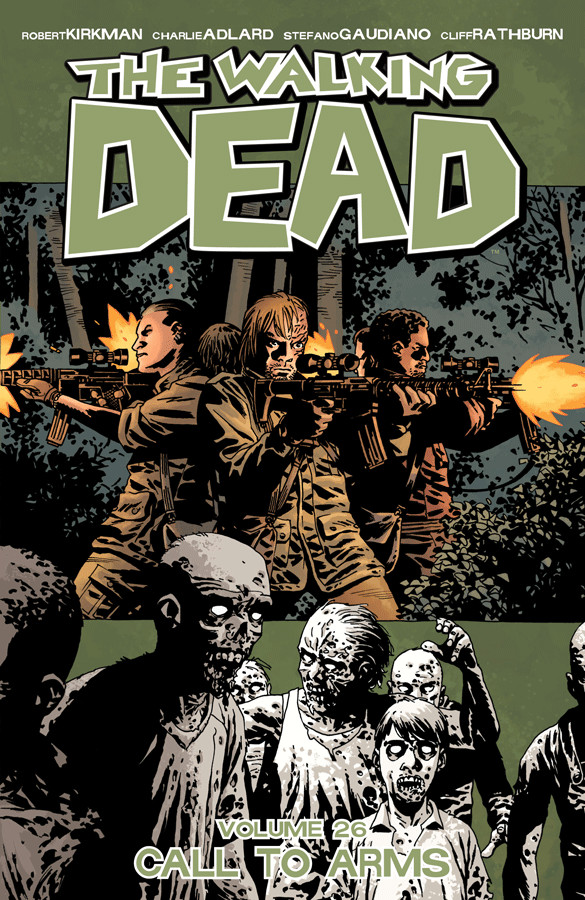
In volume 26, the Alexandrians starts learning to use weapons and combat tactics. However, amid the paranoïa someone shot a member of another communities that he didn’t know. Eugene has repaired the radio and is trying to reach someone, anybody, without much success… until someone finally answers! Both Eugene and the woman he is talking to are cautious not to reveal too much information about their own community. As they slowly gains trust she reveals that her name is Stephanie… A young man named Brandon, who hasn’t forgiven Rick for the fair’s massacre, frees Negan from his prison with the intention of joining the Whisperers. Heading a party searching for Negan, Aaron is stabbed by Beta and Michonne is nearly captured but Dwight intervenes on time. Negan slowly gains Alpha’s trust, just enough to be able to carve himself a trophy that he hopes would please Rick.
Page 12
Page 13
Page 14
Page 15
The comic storyline has just about caught up with the TV series. It progresses at a much quicker pace — it took several episodes of the TV series for Negan to gain Alpha’s trust. There is a lot of action in this volume and the storytelling remains captivating. The art is great and makes it easy to follow the story. The comic is very constant in its quality and this volume is as good as the previous one.
This comic is now less about zombies than about preserving civilisation. It could be set in the early time of the American colonies or in the far-west, where the Americans are competing with other colonies (Spanish or French instead of Saviors or Whisperers) while fighting hostile natives (instead of the undeads). I enjoyed it and, considering the time we are living in, it is quite entertaining.
The Walking Dead, vol. 26: Call to arms, by Robert Kirkman (Story), Charlie Adlard (Pencil), Stefano Gaudiano (Ink). Berkley: Image Comics, September 2016. 136 pages, 17 x 25.7 cm, $US 14.99 / $C 19.99, ISBN 978-1-63215-659-4, For Mature readers (17+). Includes issues 151-156. See back cover.
For more information you can consult the following web sites:
“After a devastating act of war by the Whisperers, Rick must chart a path for his community. But when his leadership is questioned, how will he respond?”
“The world we knew is gone. The world of commerce and frivolous necessity has been replaced by a world of survival and responsibility. An epidemic of apocalyptic proportions has swept the globe (…).”
That quote feels eerily familiar. It’s on the back covers of The Walking Dead comic books. Considering the situation that the COVID-19 virus has put us in, I thought it would be a good time to continue reading the comics. I like to wait a little before reading them because I don’t want to get ahead of the TV series — although both stories have diverged so much by now that it is quite an unnecessary precaution.
The last TV episode to air was episode 15 of the tenth season. The last episode of the season, #16, was due to air this week but the post-production was not completed because of the coronavirus shutdown and its airdate remains unknown. The producers say they have enough material to continue the TV series (including spin-off series and feature films) for another ten years! However, pre-production and filming of season eleven was also delayed by at least a month because of the pandemic. How ironic.
As for the comic book, it has ended with issue #193 (vol. 32), therefore I still have eight volumes to read — actually six volumes since I just finished volumes 25 & 26. Strangely, I never talked much about this series. I usually don’t like horror and zombie stories, but I am a great fan of post-cataclysmic worlds, so it’s not that. Maybe it is that, between the comics and the TV series, there would be so much to say. I already commented (in 2011 !) on the first eleven volumes along with the first season of the TV series. Last year, I also commented on the third compendium (vol. 17-24). Besides the progression of the story, I feel I don’t have much to add since the series has remained of a steady quality.
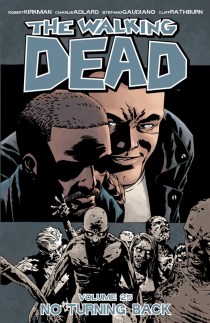
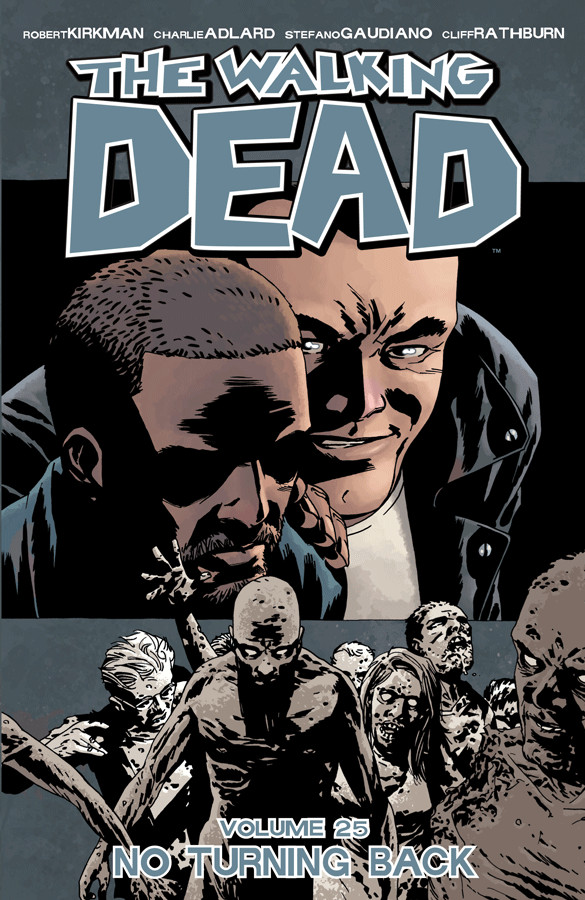
In volume 25, the Alexandrians discover that, during the fair, the Whisperers have abducted and killed a dozen members of the communities (including Rosita and Ezekiel !). They have also put their heads on stakes delimiting their territory. Rick don’t want to overreact and is hesitating. But his people are VERY angry. As this anger turns toward him he sends Lydia and Carl to the Hilltop for their safety. After being hardly beaten by his own people, he follows the advice of Negan. He deflects the anger by announcing that everyone will train in order to create a military force to defend the communities. Or, to quote Vegetius: Si vis pacem para bellum.
Page 17
Page 18
Page 19
Page 20
As I said before, it is quite weird that some characters die in the comics but not in the TV series and vice versa. The storytelling is fluid, riveting and move much faster than in the TV series. I like the art which is clean and easy to “read” despite being rather dark because of its heavy inking — although using simple textures (zip-a-tone) for the shading helps avoid overloading the pages. It is a well-written and interesting story about survival and the workings of a human society.
The Walking Dead, vol. 25: No Turning Back, by Robert Kirkman (Story), Charlie Adlard (Pencil), Stefano Gaudiano (Ink). Berkley: Image Comics, March 2016. 136 pages, 17 x 25.7 cm, $US 14.99 / $C 19.99, ISBN 978-1-63215-659-4, For Mature readers (17+). Includes issues 145-150. See back cover.
For more information you can consult the following web sites:
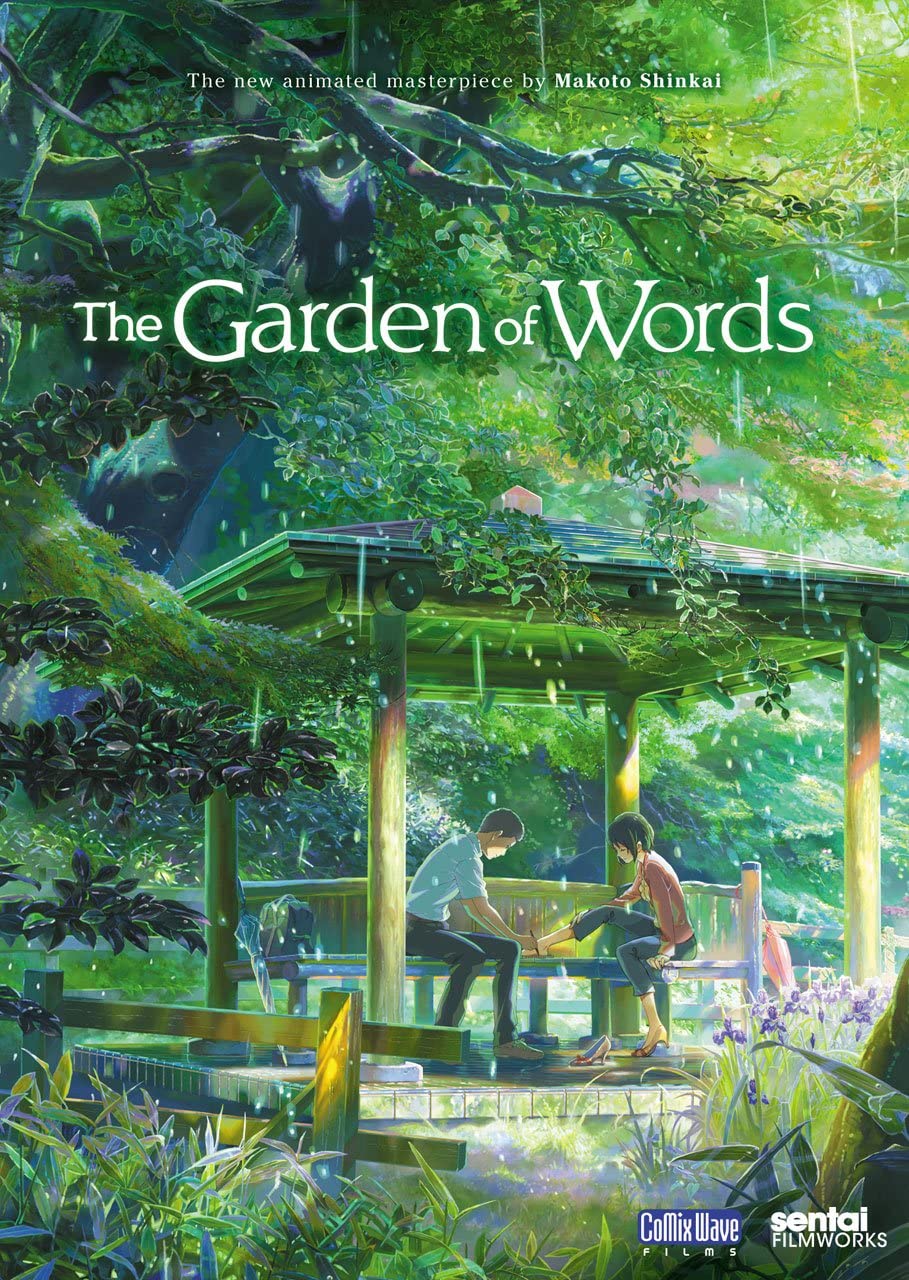
“When Takao, a young high school student who dreams of becoming a shoe designer, decides to skip school one day in favour of sketching in a rainy garden, he has no idea how much his life will change when he encounters Yukino. Older, but perhaps not as much wiser, she seems adrift in the world. Despite the difference in their ages, they strike up an unusual relationship that unexpectedly continues and evolves, without planning, with random meetings that always occur in the same garden on each rainy day. But the rainy season is coming to a close, and there are so many things still left unsaid and undone between them. Will there be time left for Takao to put his feelings into actions and words? Between the raindrops, between the calms in the storm, what will blossom in the garden of words?”
In an ode to the rain, Makoto Shinkai is offering us an exquisitely beautiful anime telling the story of the infatuation of a teenager for a woman nearly twice his age. Together, somehow, they will find a way — in their innocent and platonic relationship — to heal each other of their sentiments of alienation and doubt that is plaguing them. At the beginning of his life, he is uncertain of the path to follow. She is a young teacher bullied by her students to the point of having health problems.
They are brought together in a park by the rain and by poetry. In the beginning, Yukari recite a Waka / Tanka from Man’yōshū(Book 11, verse 2,513): “A faint clap of thunder / Clouded skies /Perhaps rain comes / If so, will you stay here with me?” Later, finally understanding was she said, Takao respond with the following verse (Book 11, verse 2,514): “A faint clap of thunder / Even if rain comes not / I will stay here / Together with you”…
It is impossible not to like a Makoto Shinkai movie. Beside a storytelling that is cute, nostalgic, thoughtful and poetic, we finds nice music and, above all, superb CG animation. The background art is so realistic that, in contrast, the standard animation of the character seems a little odd. It is a short movie but all the more excellent. Highly recommended.
The anime was adapted into a manga (illustrated by Midori Motohashi) serialized in Monthly Afternoon(June-December 2013) and published in Japan as a single volume by Kodansha, in English by Vertical (Oct. 2014, 220 pages, $12.95, ISBN 978-1-939130-83-9) and in French by Kazé (Déc. 2014, 208 pages, ISBN 978-2-82031-879-4). It was also adapted into a light novel serialized in Da Vinci (September 2013 – April 2014) and published in Japan by Media Factory (Kadokawa Shoten) and in France by Kazé (2014, 380 pages, ISBN 978-2-82031-880-0).
The Garden of Words (言の葉の庭 / Kotonoha no Niwa), Japan, 2013, 46 mins; Dir./Scr./Ed.: Makoto Shinkai; Char. Des.: Kenichi Tsuchiya; Art dir.: Hiroshi Takiguchi; Studio: CoMix Wave Films; Prod.: Noritaka Kawaguchi; Cast: Kana Hanazawa / Maggie Flecknoe (Yukari Yukino), Miyu Irino / Blake Shepard (Takao Akizuki), Fumi Hirano / Shelley Calene-Black (Takao’s mother), Takeshi Maeda / Crash Buist (Shōta, Takao’s brother), Yuka Terasaki / Brittney Karbowski (Rika, Shōta’s girlfriend), Suguru Inoue / Mike Yager (Matsumoto), Megumi Han / Allison Sumrall (Satō), Mikako Komatsu / Hilary Haag (Aizawa). Available on bilingual Dvd/Blu-Ray from Sentai Filmworks and currently streaming on Netflix.
To learn more about this title you can consult the following web sites:
Ce clip de cinq secondes nous montre une marmotte (Marmota monax / groundhog) ramassant des feuilles mortes pour les amener dans son terrier, sans doute pour rafraîchir son nid. Un ménage du printemps en quelque sorte ! À moins, bien sûr, que ce soit pour se faire une réserve de nourriture (ou de papier de toilette?!). Dans tous les cas, cela me semble un terrier bien confortable pour ce confinement printanier — ce qui n’est pas un problème pour cette espèce (du genre Marmota, de la famille des Sciuridae et de l’ordre Rodentia) puisqu’elle est plutôt solitaire… [Translate]
“Crazy Rich Asians follows native New Yorker Rachel Chu (Constance Wu) as she accompanies her longtime boyfriend, Nick Young (Henry Golding), to his best friend’s wedding in Singapore and meets Nick’s family for the first time. It soon becomes clear that the only thing crazier than love is family.”[Text from the DVD cover]
“(…) Rachel is unprepared to learn that Nick has neglected to mention a few key details about his life. It turns out that he is not only the scion of one of the country’s wealthiest families but also one of its most sought-after bachelors. Being on Nick’s arm puts a target on Rachel’s back, with jealous socialites and, worse, Nick’s own disapproving mother (Michelle Yeoh) taking aim. And it soon becomes clear that while money can’t buy love, it can definitely complicate things.”[Text from the official website]
This Rom com, based on the best-seller by Kevin Kwan, is a very funny — but still touching — movie about how unhealthily rich some Chinese have become and how some of them like to rub it in your face! It also has all the romantic imbroglio very typical of the genre.
Despite being a rare Hollywood movie with an all-Asian cast (and directed by Jon M. Chu, a dance-loving chinese-american), it was criticized for selecting bi-racial actors or actors from other Asian origins to portray Chineses or for not including actors from non-Chinese Singaporean ethnic groups (like from Malay or Indian origins). Who cares? It was a great box office success (earning eight time its budget) and received favourable reviews (ratings of 6.9 on IMDb, 91% / 76% on Rotten Tomatoes and 74% on Metacritic). For my part, I greatly enjoyed it. It is a must see.
To learn more about this title you can consult the following web sites:
“Society matron Norma Carlisle (Elizabeth McGovern) volunteers to accompany future Jazz Age star and free spirit Louise Brooks (Haley Lu Richardson) for a summer in New York. But why does she want to go? It’s a story full of surprises — about who these women really are, and who they eventually become. Written by Julian Fellowes and based on the beloved novel by Laura Moriarty.”
In the mid-1920s, Wichita resident and apparently meek housewife Norma Carlisle agrees to chaperones a fifteen year-old Louise Brooks to New York City, where she will study dance at the famous Denishawn school. Brooks, free from her overbearing parents, wants to experiment and explore, while Carlisle appears austere. However, they will finds common grounds as they both have their secrets and wounds to heal. It appears that Carlisle has her own agenda in going to NYC as she also seeks freedom…
I found this movie nearly boring, as it lacks excitement. It is a little drab and bland. The acting also shows little spark and emotion. The most interesting part of the movie is its biographical aspects. I learned a lot about Louise Brooks who will move from dancer (first with the Denishawn school troupe and later as a chorus girl with the Ziegfeld Follies) to actress (first in Hollywood with Paramount mostly for silent movies from 1925 to 1929, then in Europe in 1929-30, and back in Hollywood with talkies from 1931-38). She was the quintessential flapper. After falling into oblivion and hardship, her movies were rediscovered in the mid-50s and she reinvented herself with a writing career.
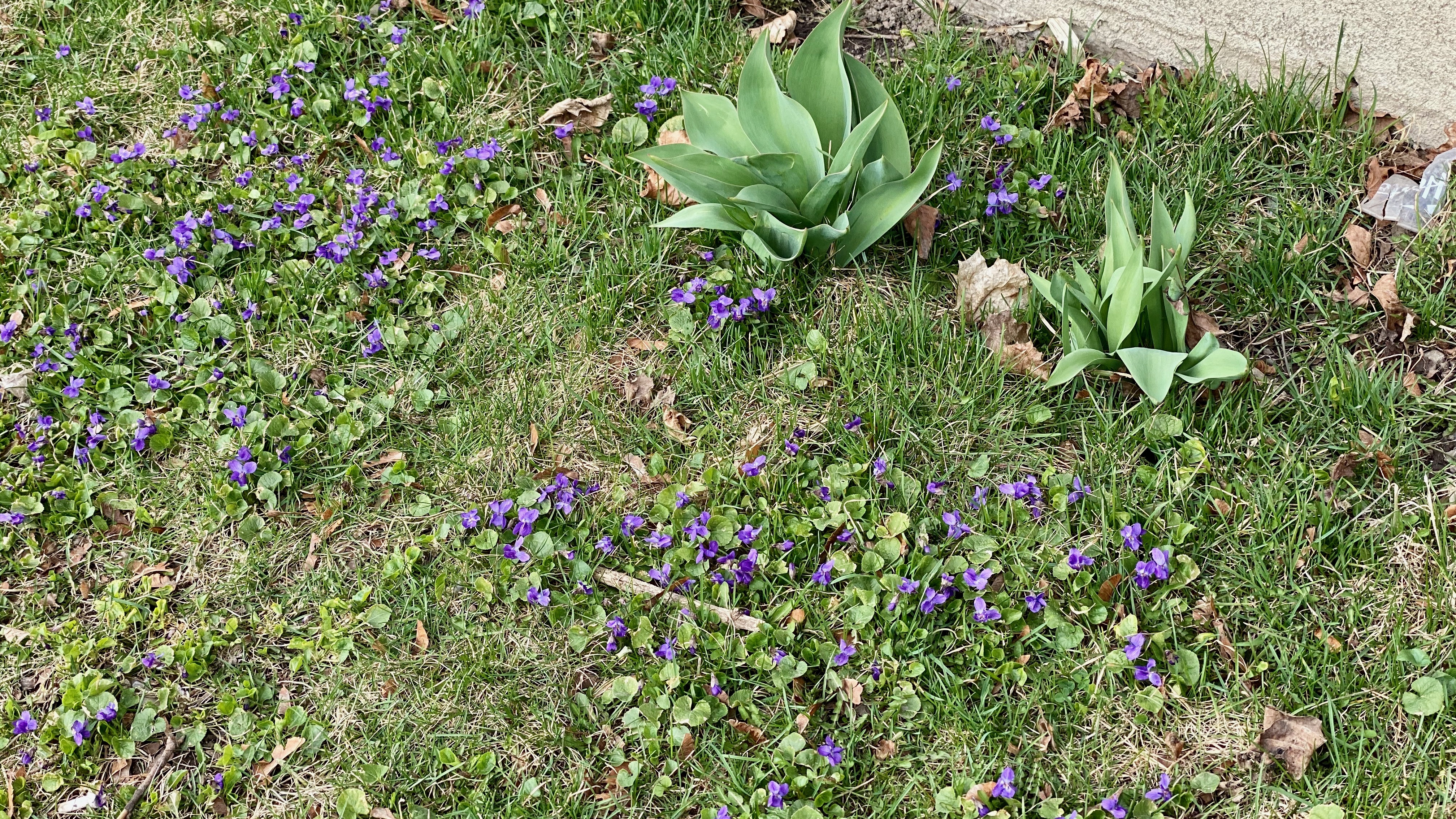
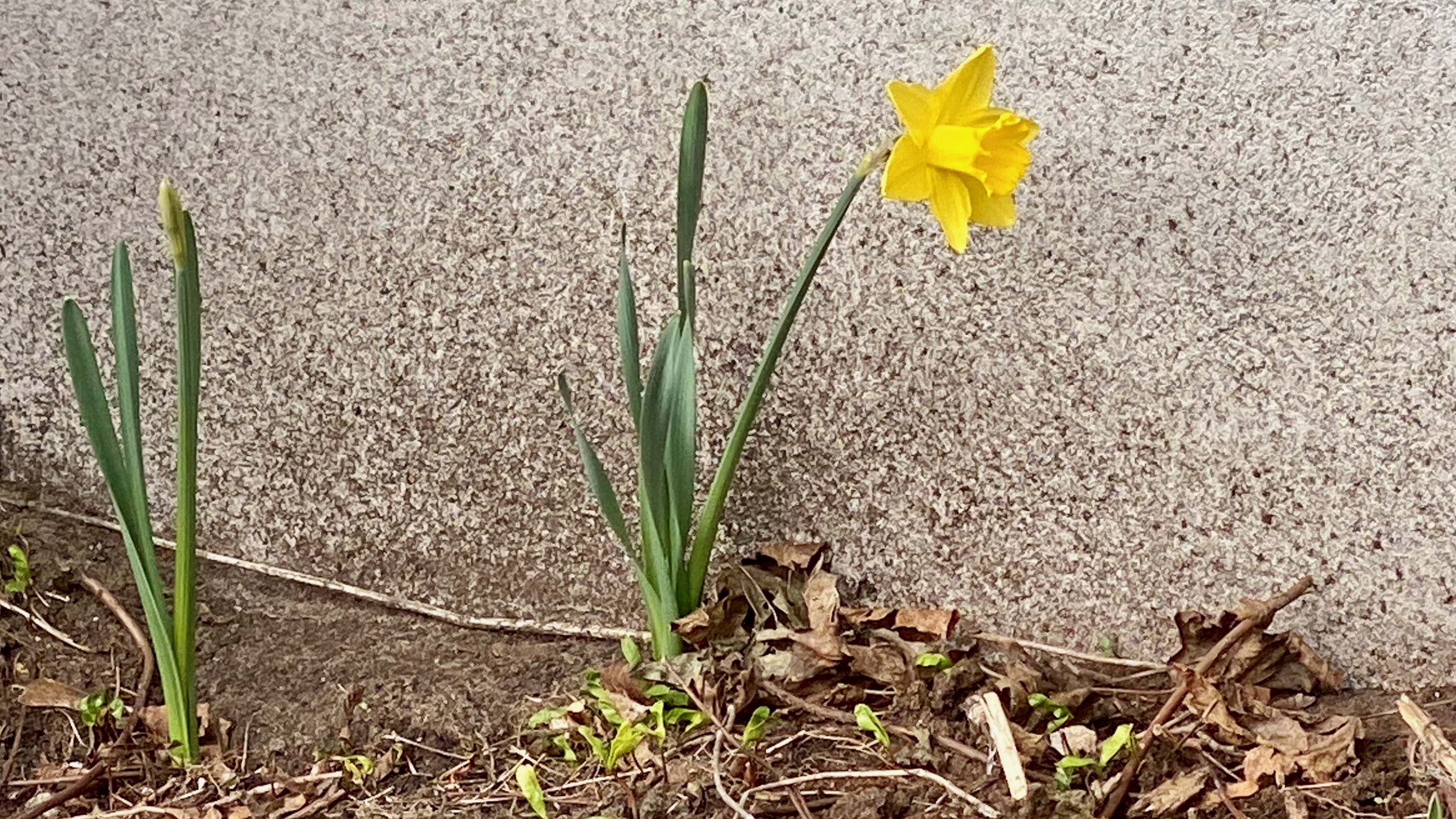
En se promenant dans la quartier cet après-midi, nous avons constaté qu’en plusieurs endroits des fleurs commencent à percer et à fleurir, mettant un peu de couleurs dans ce printemps triste et sombre… Nous avons ainsi pu observer des violettes (viola), des crocus (crocus en anglais aussi), des jacinthes (Hyacinth) and une jonquille (daffodil). De quoi réchauffer le coeur !
Notre promenade (tout en gardant nos distances) s’est poursuivie dans la parc, où nous avons pu observer encore un couple d’outardes (Bernaches / Branta canadensis / Canada goose) et même des mésanges (poecile atricapillus / Black-capped chickadee)…
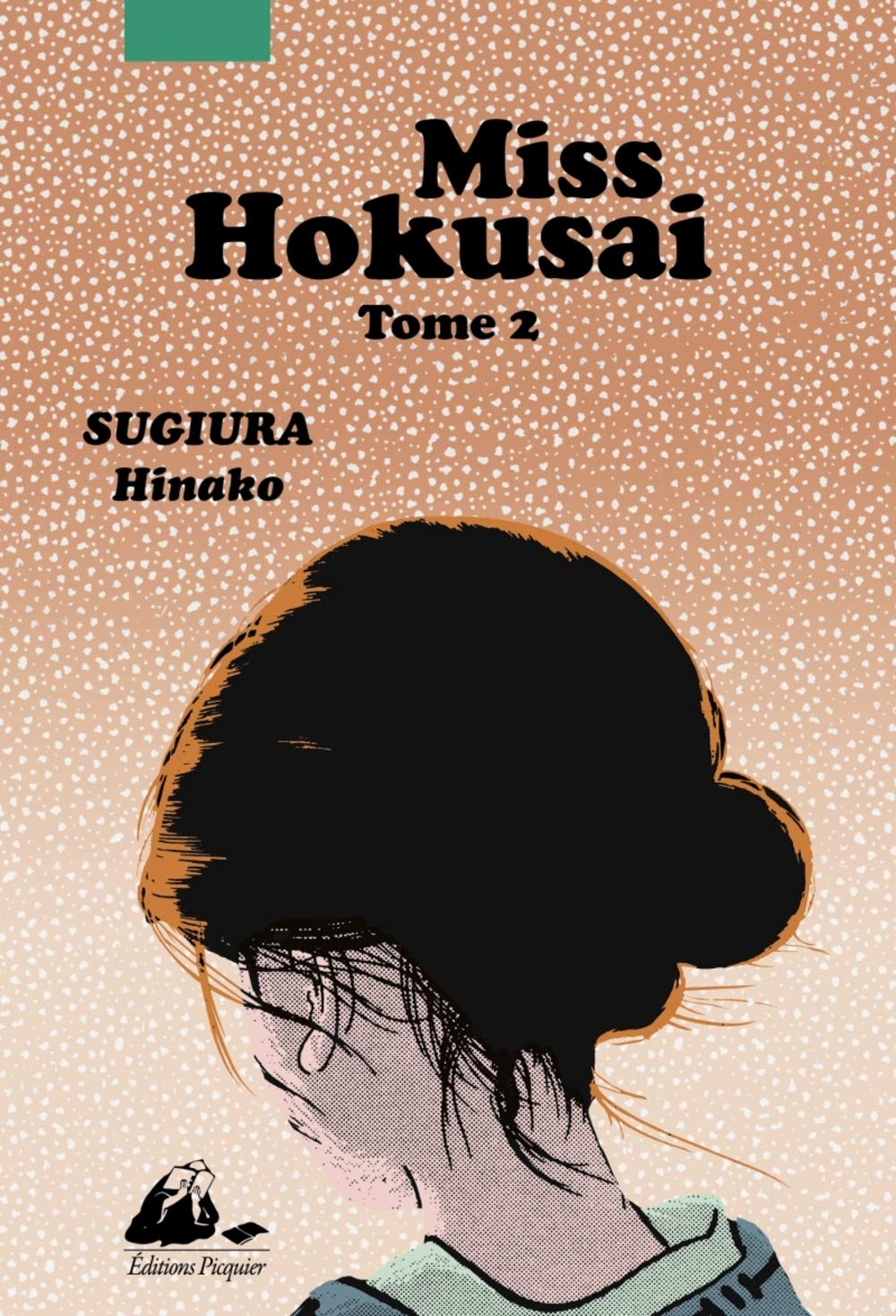
“Elle fumait la pipe et n’avait pas bon caractère. Mais quel talent !Voici le second volume d’une chronique pleine d’humour à la découverte d’une femme libre et d’une artiste : la fille du génial fou de dessin Hokusai, dont elle partagea l’existence excentrique dans le quartier des peintres et des courtisanes à Edo.”
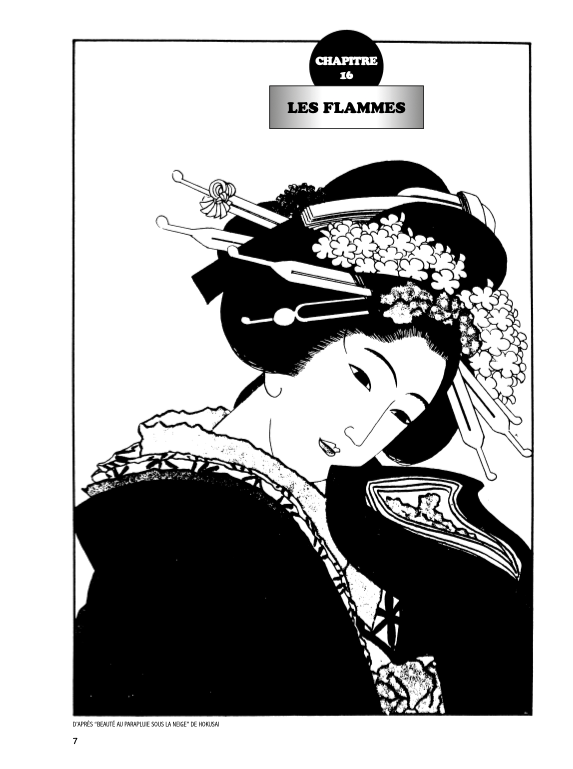
Ce deuxième volume nous offre quinze histoires relativement indépendantes les unes des autres. On y voit encore le travail que O-ei fait comme assistante de son père,Hokusai, le célèbre artiste d’ukiyo-e de l’ère Edo. Toutefois, plusieurs des histoires mettent de l’avant des personnages secondaires, souvent dans des aventures amoureuses qui impliquent des courtisanes. De nombreuses histoires ont aussi une thématique fantastique, évoquant ces histoires de fantômes dont la culture japonaise est friande.
Malheureusement, la nature anecdotique des histoires et le fait qu’il est difficile de distinguer entre eux les nombreux personnages rend la lecture un peu pénible. Chaque récit est intéressant en soi mais l’ensemble manque d’homogénéité et reste un peu confus.
Page 14
Page 15
Page 16
Page 17
Étant plus une historienne qu’artiste, Sugiura Hinako n’avait pas de véritable talent pour le dessin. Le style de ses mangas (fait de lignes simples à l’encre avec du zip-a-tone pour les textures) est donc frustre, plutôt grossier et peu attrayant. La pauvre qualité graphique du manga n’est racheté que par le fait qu’il est inspiré du style traditionnel des ukiyo-e (estampes japonaises) et des kibyōshi (romans illustrés) eux-même et qu’il tente de reproduire très fidèlement les détails architecturaux et vestimentaires de l’époque d’Edo et plus particulièrement de Yoshiwara (le quartier des plaisirs de l’ancien Tokyo). C’est cet aspect historique authentique qui rends le manga intéressant malgré tout.
Page 18
Page 19
Page 20
Page 21
Donc, laborieux à lire, le deuxième tome est beaucoup moins intéressant et organisé que le premier. Cela reste une lecture intéressante mais seulement pour les amateurs de l’histoire du Japon. La façon la plus agréable d’apprécier ce récit reste encore le dessin animé.
We are into the third week of confinement — actually it’s the nineteenth day. Beside reading and writing, the only activities that we can really do is working around the house, gardening and taking a walk in the park. Since it is the beginning of spring we can witness the marvellous awakening of nature: the neighbour’s crocus show their colours, our daffodils are shooting out of the ground, Canadian geese are bathing in a water puddle, the park is taking a few more colours with the greening of the grass and the apparition of the first flowers, butterflies are coming out and even the groundhog is doing some spring cleaning! The days are getting warmer and warmer…
Daffodils shooting out
Sunset on the park
Crocus
Park full of activities on a sunny day
first flowers
Groundhog doing some spring cleaning
Butterfly
Daffodils are growing
Canadian geese in a puddle
[ iPhone 11 Pro / Nikon D3300, around Frederic-Back Park, 03/31 – 04/06 ]
During our daily walk in the park this afternoon (I am happy to report that there was not too many people and that everyone kept their distance) we observed at least five different species of birds: a couple of mallard ducks in a little stream, a couple of Canadian geese in a water puddle, five turkey vulture (Urubu in French) circling in the sky, a few crows passing by and one lonely bird with long legs running around busily (most probably a Killdeer — Pluvier kildir in French). It was a beautiful spring day!
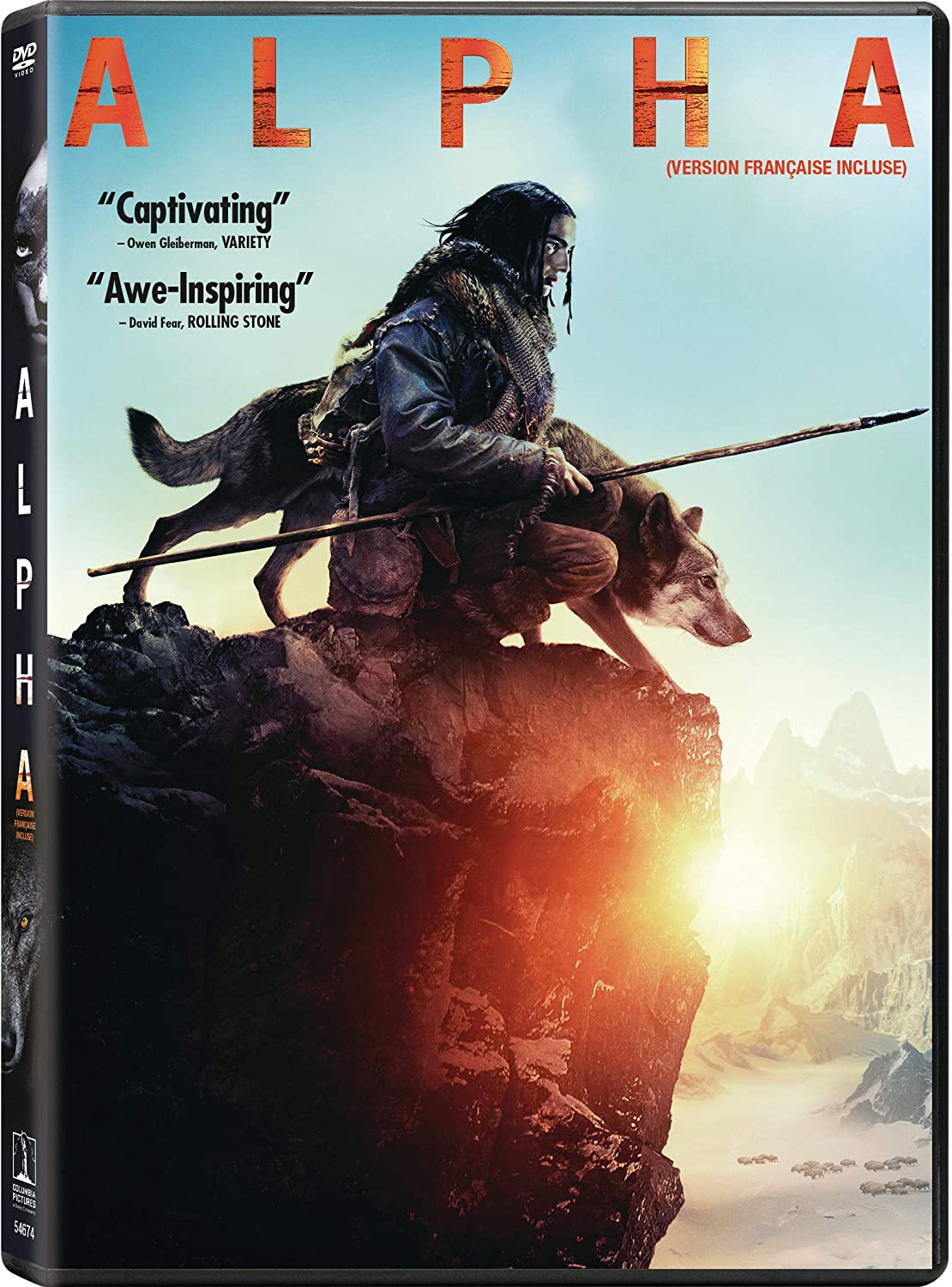
“Alpha is an epic adventure set in the last Ice Age. While on his first hunt with his tribe’s most elite group, a young man is injured and left for dead. Awakening to find himself broken and alone, he must learn to survive and navigate the harsh and unforgiving wilderness. Reluctantly taming a lone wolf abandoned by its pack, the pair learns to rely on each other and become unlikely allies, enduring countless dangers and overwhelming odds in order to find their way home before the deadly winter arrives.” [Promotional text]
This is an interesting action movie which is not only entertaining but can also be educational. Through its storytelling it tries to teach us two concepts: first, how our distant ancestors were living and also how the domestication of the wolf might have happened. It is a nice movie with a beautiful photography (and lots of CGI!) and a very simple story: boy gets hurt and left for dead, boy make friend with a companion of misfortune, and boy tries to survive and come back home. Unfortunately some scenes lack realism and are rather unbelievable.
The movie did well at the box-office (doubling the production cost) and was relatively well received by the critics (with ratings of 6.7 on IMDb and of 80% / 71% on Rotten Tomatoes). It was slightly less appreciated by the audience and what might have hurt it was probably that the viewers had to suffer not only through the “fake” language spoken by the protagonist and his family (we have no idea what kind of language those people were really using) but also the necessary subtitles (the American audience tends to dislike having to “read” a movie).
The people portrayed in this movie are “the solutreans” (which was originally supposed to be the title of the movie). They were early modern humans (Homo sapiens also called “Cro-Magnon”) living in Europe during the Upper Paleolithic (c. 20,000 years ago) and using a sophisticated flint tool-making “industry”. The movie certainly took some artistic license but it looks rather accurate to me.
The movie is quite loveable and entertaining but, personally, it is above all this effort to depict a prehistoric culture that made it interesting. It is worth seeing, mostly for dog lovers and if you are curious about the solutreans.
To learn more about this title you can consult the following web sites:
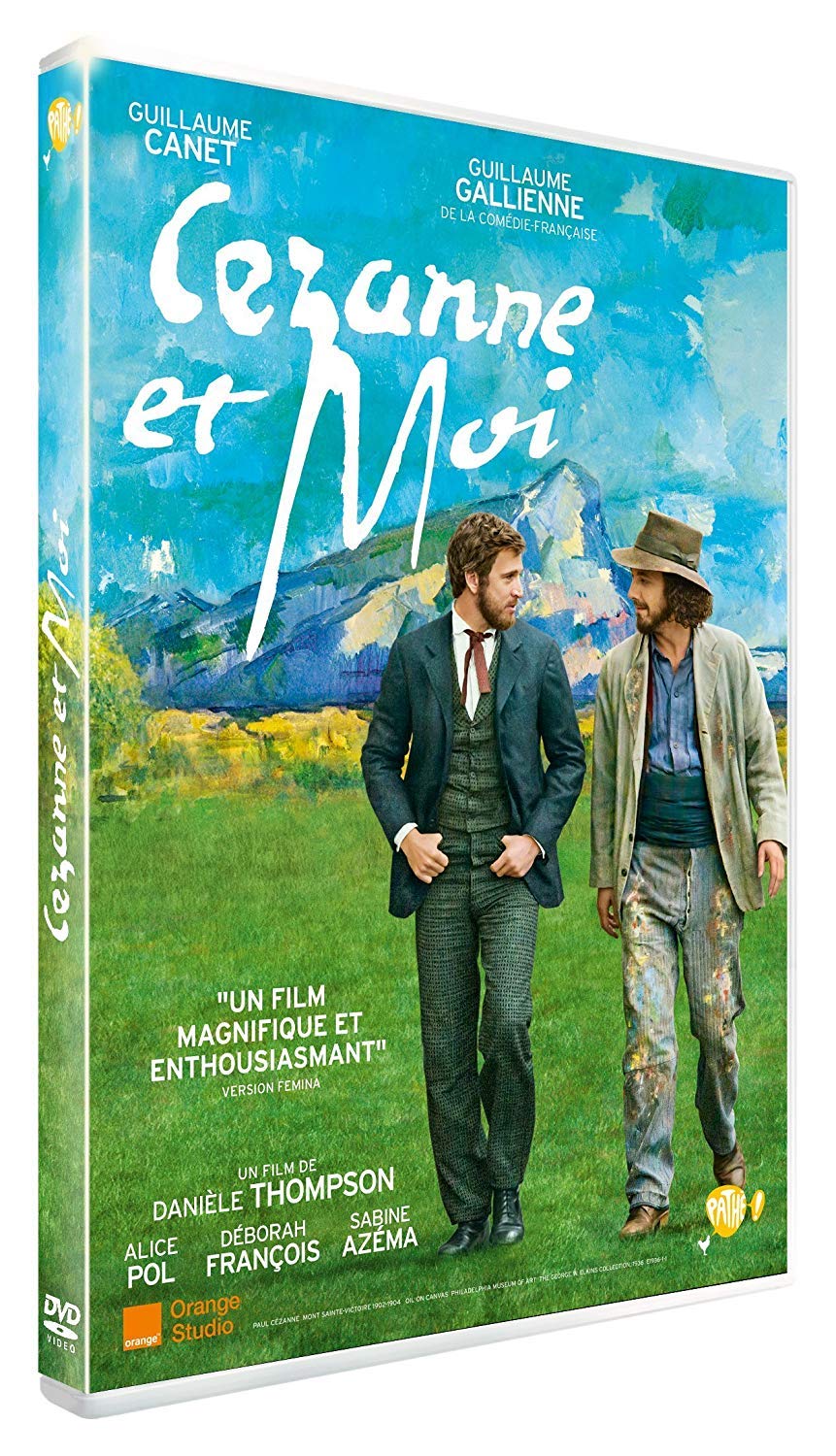
“Ils s’aiment comme on aime à treize ans, ils partagent tout.Paul est riche. Émile est pauvre. Ils quittent Aix, “montent” à Paris, où ils hantent les mêmes lieux, crachent sur les bourgeois, crèvent de faim puis mangent trop… Aujourd’hui Paul est peintre. Émile est écrivain. La gloire est passée sans regarder Paul. Émile lui a tout : la renommée, l’argent, une femme parfaite. Ils se jugent, s’admirent, s’affrontent. Ils se perdent, se retrouvent, comme un couple qui n’arrive pas à cesser de s’aimer.”
“Découvrez l’amitié tumultueuse méconnue de Cézanne et Zola, icônes du patrimoine français, interprétés avec brio par un duo d’acteurs d’exception Guillaume Gallienne (Guillaume et les garçons à table !) et Guillaume Canet (Jappeloup, Les Petits mouchoirs), tous deux lauréats d’un César du cinéma. Danièle Thompson (Le Code a changé) nous éblouit encore une fois avec ce film qui dépeint si bien la Provence et le Paris du XIXe siècle, et nous transporte au coeur du cercle des impressionnistes !”
Cézanne et moi est un beau film mais plutôt ennuyeux. C’est difficile d’apprécier un film, d’y trouver du plaisir, quand les deux personnages principaux sont si antipathiques. On n’arrive pas à s’identifier à eux ou à éprouver de la sympathie. Ils avaient peut-être du génie mais l’un manquait de confiance et était prompt aux excès de colère ou de déprime, et l’autre en avait trop et se donnait des airs prétentieux. Ils s’enviaient, n’arrêtaient pas de se voler leurs copines, puis se disputaient. C’était une amitié très colorée, orageuse mais si profonde… C’était la belle époque de la bohème !
Le film a essuyé un dur échec aux “box-office” et auprès de la critique (des ratings de 6.0 sur IMDb et de 54% / 50% sur Rotten Tomatoes) mais pourtant j’ai bien aimé. Évidemment, c’est un film un peu emmerdant mais il offre un bon récit, une belle photographie, une excellent jeu d’acteurs et c’est surtout intéressant pour ses aspects biographiques et historiques. On en apprend beaucoup sur Paul Cézanne et Émile Zola ainsi que sur cette époque de fin de siècle qui fut si riche culturellement (du naturalisme à l’impressionnisme, alors qu’ils côtoient les Manet, Mallarmé, Maupassant, Pissarro, Renoir ou Sisley). Quel contraste avec notre époque à la culture dissonante, où les gens ne croient plus ni à l’art, ni à la science ! Un bon passe temps en attendant la fin du monde…
Vous trouverez plus d’information sur les sites suivants:
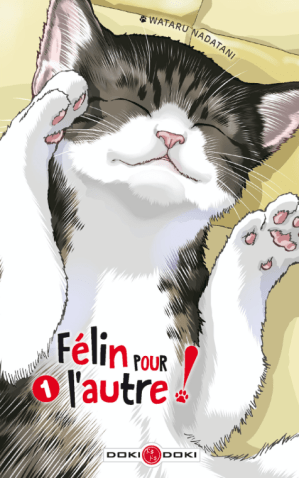
“Une comédie délirante et pleine d’action sur les fous des chats !
Kensuke Fuji vit un drame… Il adore les chats, mais ces derniers ne le calculent pas ! Ses sœurs y étant allergiques, le lycéen n’a jamais eu la chance d’avoir un matou à la maison, et il n’a pas vraiment le mode d’emploi pour leur plaire…
Sa vie bascule le jour où disparaît Tamako, une charmante chatte de gouttière qu’il croisait tous les matins. Parti à sa recherche, Kensuke va faire la rencontre de Jin Nekoya, un “maître-chat”, qui comprend parfaitement le langage félin. Désormais, le lycéen fera tout pour devenir le disciple de Jin, quitte à accepter les défis les plus improbables, et enfin se faire aimer des chats ! Tout ça sous le regard halluciné de Yamada, une copine de lycée…”
Les histoires de chats constituent un thème plutôt fréquent dans les mangas. J’ai d’ailleurs tenté d’en établir une liste (pas très exhaustive mais c’est un début; je me suis pour l’instant surtout concentré sur les titres disponibles en français — je viens tout juste de la mettre à jour). Étant moi-même un amateur de chats, je me suis promis d’en lire le plus possible. J’en ai déjà commenté plusieurs… En voici un autre…
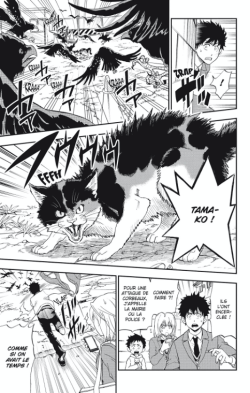
Félin pour l’autre ! est un manga shōnenmais au lieu des combats habituels le protagoniste entreprend une quête pour mieux comprendre les chats et découvrir comment se faire aimer d’eux. On y retrouve donc plusieurs éléments de la thématique nekketsu (naïveté, aspect initiatique, série de défis, etc.) qui constitue généralement la base des mangas shōnen typiques. Notre “héros”, Kensuke Fuji, découvre peu à peu la “voie du chat” (le byôkendô) en suivant les enseignements du “maître des chats” (un certain Nekoya Jin) qui lui lance différents défis pour le mener à franchir chaque fois une nouvelle étape. À travers le récit, l’auteur en profite pour donner aux lecteurs des conseils pour comprendre et apprécier ces adorables félins.
Ce manga nous offre un bon récit avec un graphisme plutôt traditionnel qui suit le style shônen mais avec des touches plus charmantes et détaillées dans ce qui a trait aux chats. Ce manga est donc une agréable et amusante lecture, qui se lit vite et bien (d’autant plus que c’est une courte série de seulement six volumes), en plus d’être un peu éducatif. Un bon manga à lire pour se dé-stresser en temps d’apocalypse viral!
Page 25
Page 26
Page 27
Page 28
Page 29
Page 30
Page 31
Félin pour l’autre ! vol. 1, par Nadatani Wataru (Traduction par Julien Pouly). Charnay-Lès-Mâcon: Doki Doki (Bamboo), mars 2019. 168 pages, 11 x 17.5 cm, 6,95 € / $C 12.95. ISBN 978-2-81896-755-3. Pour lectorat jeune (7+ ans).
Vous trouverez plus d’information sur les sites suivants:
The Japan Academy Film Prize (日本アカデミー賞 / Nippon Akademī-shō) is the Japanese Academy Awards (Oscars). It is awarded each year by the Nippon Academy-shō Association. The nominees were announced on January 15th and the winners were revealed at the ceremony held at the Grand Prince Hotel New Takanawa on March 6th. (Sources: Japan Academy Prize, Google, IMDb, Wikipedia).
Self-isolating has given me more time to pay attention to what’s happening in the anime and manga world. Therefore, here are a few news that I have noticed recently and that might interest you (if you are a fan):
There will be another Gundam movie titled Mobile Suit Gundam Hathaway (Kidō Senshi Gundam: Senkō no Hathaway). Due to open in Japanese theatres on July 23rd, the movie is based on a novel series by Yoshiyuki Tomino. It deals with the aftermath of Char’s Counterattack‘s climatic finale and is centred around Hathaway Noa, the son of captain Bright Noa. The project is directed by Shukou Murase, with a script by Yasuyuki Mutou, character designs by Pablo Uchida, Naoyuki Onda, and Shigeki Kuhara, and mechanical designs by Hajime Katoki, Kimitoshi Yamane, Seiichi Nakatani, and Nobuhiko Genba. (Source: ANN’s “Gundam- Hathaway Anime Film Teased With New Visual”).
Here is the list of titles available so far (either Sub and/or Dub): 8 Man After, A Wind Named Amnesia, A.D. Police, Adieu Galaxy Express, Angel Cop, Area 88, Black Jack, Blue Seed, Blue Submarine No 6, Bubblegum Crash!, Bubblegum Crisis, Card Captor Sakura, Ceres Celestial Legend, Chargeman Ken!, Cosmos Warrior Zero, Creamy Mami, Cromartie High School, CyBuster, DNA2, Dagger of Kamui, Dallos, DearS, Demon City Shinjuku, Demon Lord Dante, Devil Lady, DieBuster, Eat-Man, Eat-Man ’98, Fighting Foodons, Flame of Recca, Fuse: Memoirs of the Hunter Girl, Fushigi Yuugi, Gakuen Heaven, Galaxy Express, Giant Gorg, GoShogun, GodMars, Goku Midnight Eye, Gokudo, Golko 13: The Professional, GTO, Hells, Iria: Zeiram TheBounty Hunter, Jin-Roh, Jungle Emperor Leo, Kaiba, Key: The Metal Idol, Kyousougiga, Library War, Like the Clouds Like the Wind, Lily CAT, Mononoke, Nagasarete Airanto, Night on the Galactic Railroad, Otaku no Video, Pilot Candidate, Pop Team Epic, The Princess and the Pilot, Project A-ko, Riding Bean, Robot Carnival, Samurai Pizza Cats, Samurai Troopers, Sea Prince and Fire Child, Shining Tears x Wind, Space Adventure Cobra, Space Warrior Baldios, Street Fighter II, Tenjho Tenge, Thermae Romae, Toriko: Special Recipe of Gourmet God, Twelve Kingdoms, Twilight of the Cockroaches, Ultra Maniac, Urusei YatsuraBeautiful Dreamer, Vampire Princess Miyu, Virtua Fighter, Wicked City, Zombie Loan.
The life in the time of the coronavirus continues… I’ve now been in self-isolation for over a week (actually for about ten days) and I am doing well. There are no signs of any symptoms so far and I am in good shape (physically and mentally) — although I still suffers from kidney stones from time to time. I try to stay fit by doing at least an hour of walking (if possible reaching ten thousand steps) and thirty minutes of cardio (by shovelling the backyard or sweeping the driveway) every day — while keeping my distance from people which is really not a problem for me. Unfortunately we had a couple of days of rain and I couldn’t reach my goals during that time.
I also stay fit mentally by keeping busy with my blog and doing stuff around the house. First, all this reading is a great help in lowering my tsundoku pile. Second, since I am theoretically still working for the library, I try to do some reference work by writing as much reading suggestions and comments as possible. I have everything I need here to keep busy.
The moral is good — despite spending lots of time watching the news, both local and American. I really don’t mind the isolation. Now-a-day — with tons of books & Dvds, the television and the internet to make the mind travel — can we really be isolated anymore? In a way, the only apprehension is about going back to work and ending this very productive streak. However, the way things are going, I don’t think I have to worry about that for a while…
In the meantime, things are not doing so well around the world. We seem to cope well here in Quebec, but the situation looks dire in Europe and, particularly, in the U.S.. Here are some links to keep yourself informed:
J’ai vu sur FB quelqu’un qui demandait quelle série de manga je voudrais avoir sous la main si j’étais en confinement sur une île déserte (ou à la maison en cas d’épidémie?)… Je n’ai évidemment pas pu résister à donner mon opinion…
J’ai répondu “Probablement “Détective Conan” (97 vol.) ou “Les gouttes de dieu” (62 vol.) parce que c’est long et c’est intéressant…” En effet, la plupart des grosses séries sont des shonen insipides mais il y a toute de même quelques séries qui sont assez intéressantes pour stimuler l’intellect.
En me basant sur une liste des longues séries de manga au Japon, j’ai concocté cette liste des vingt-cinq longues séries (de plus de quarante volumes) traduites en français (je ne garanti pas que c’est exhaustif):
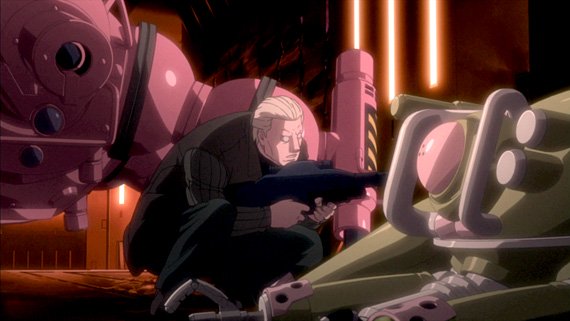
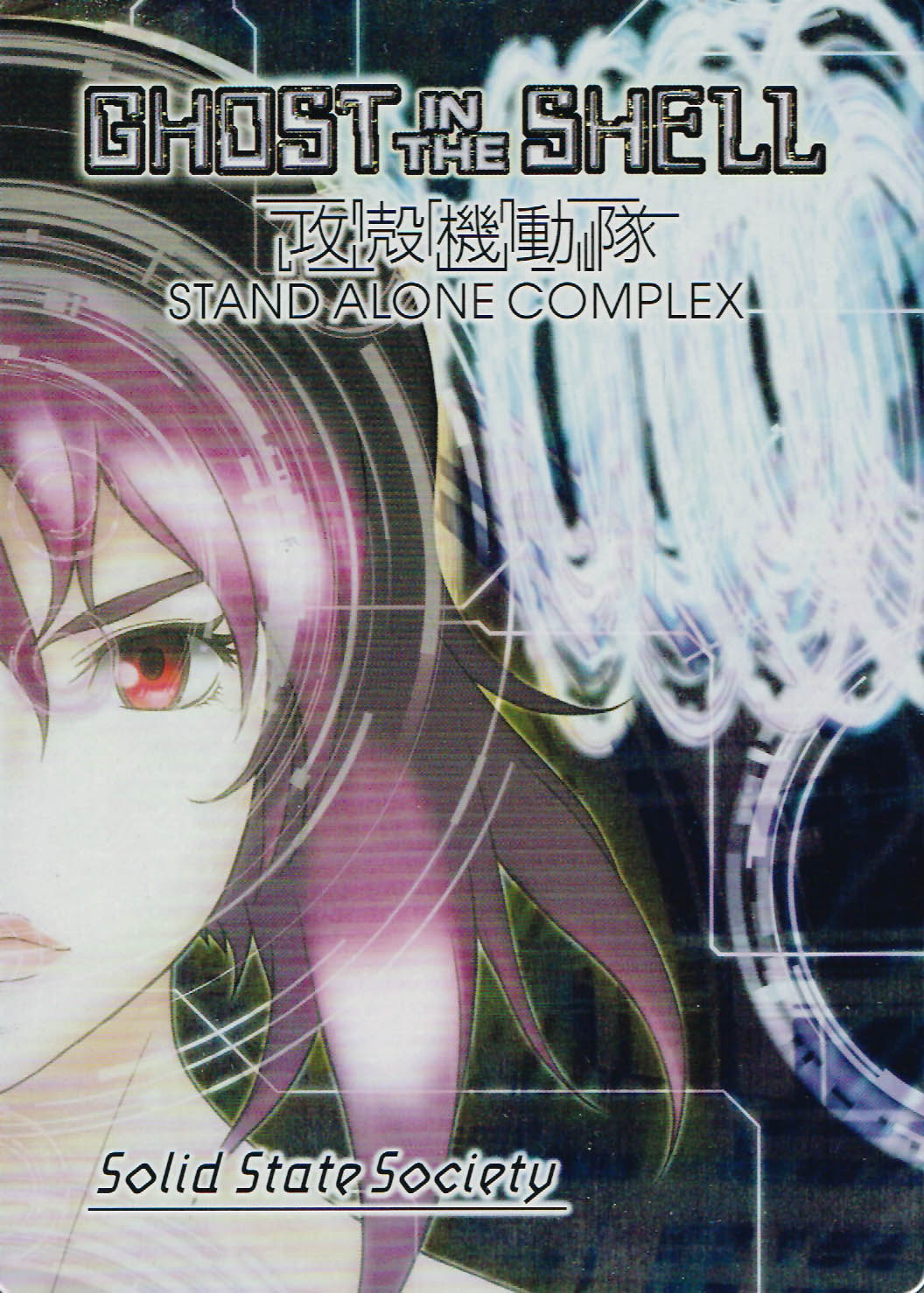
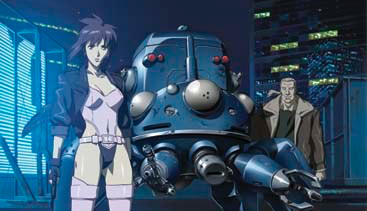
Ghost in the Shell: S.A.C.—Solid State Society is the third movie since 1995’s Ghost in the Shell anime adaptation. This feature-length TV movie was broadcast on Skyperfect! in September 2006 and released on DVD by Bandai Visual in November of the same year. Fantasia 2007 treated the fans by screening this excellent cyberpunk anime on the big screen! Directed by Production I.G.’s Kenji Kamiyama, fans can enjoy yet another high-tech sci-fi story, which is set in 2034, Tokyo. The timeline is two years after the last TV series (2nd GIG), as Japan is still dealing with the Asian refugee problems.
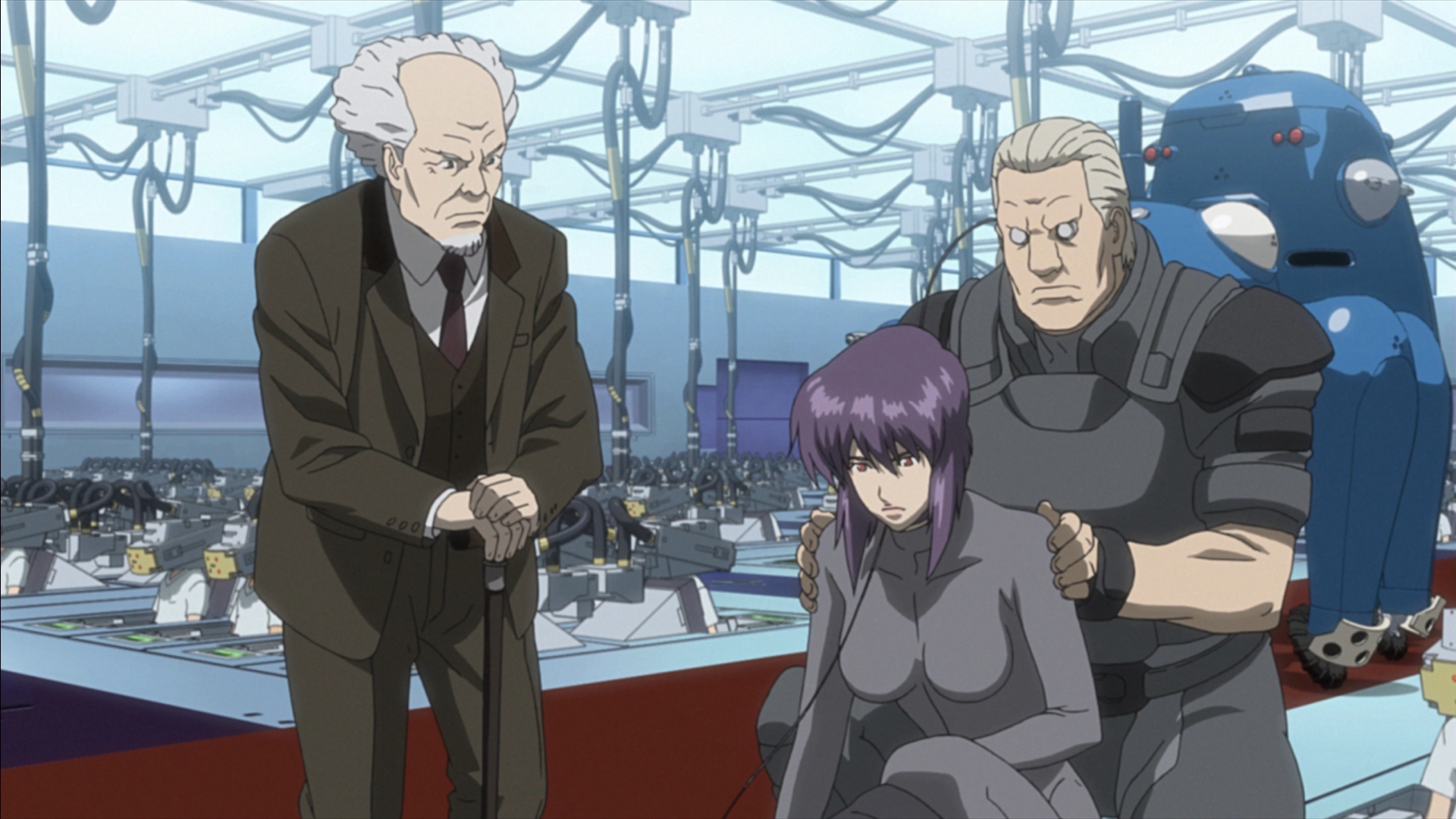
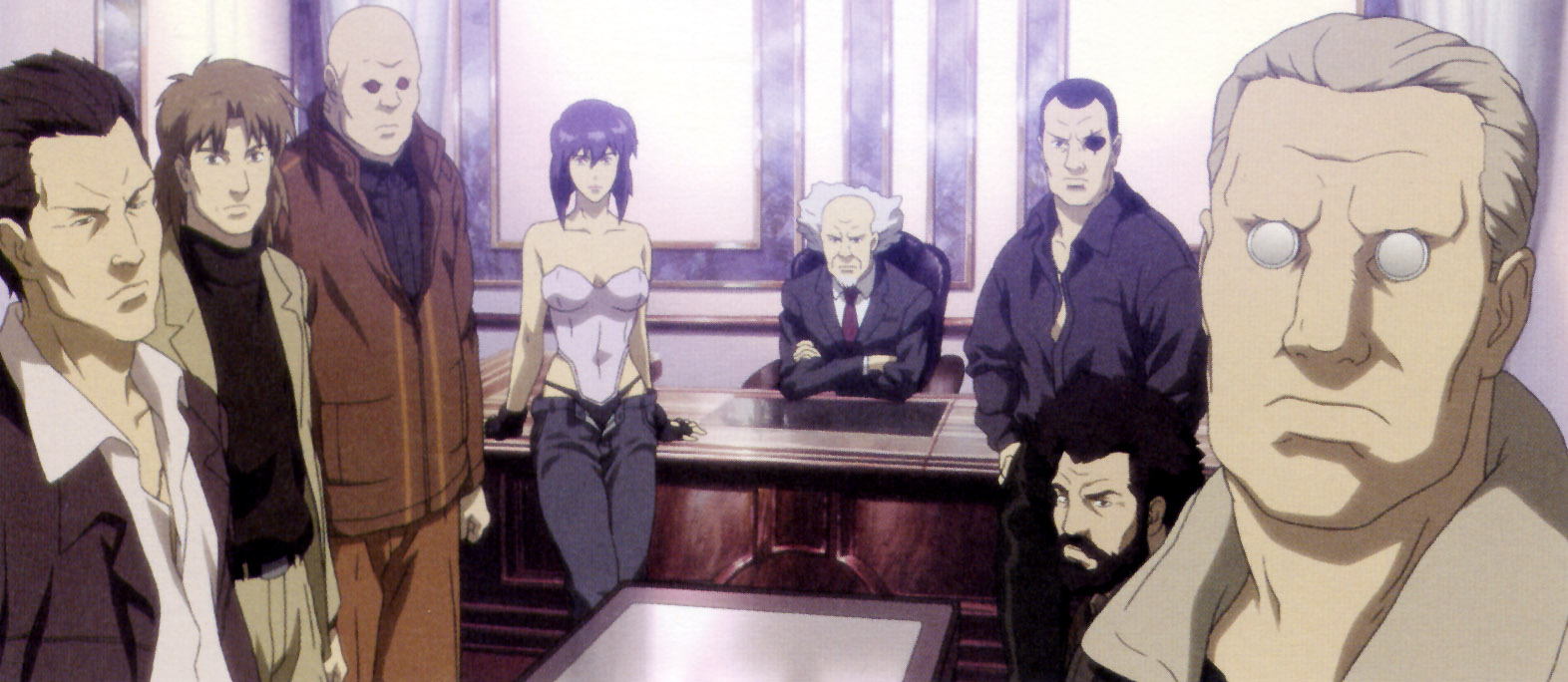
Major Motoko Kusanagi left Section 9 — Japan’s elite anti-terrorist unit — and was missing for over two years. She left because she felt that by acting alone she could investigate more discreetly (using multiple cyber bodies), more freely (without the irritating political oversight) and therefore more efficiently. For Batou, the absence of Motoko leaves his work meaningless and he picks & chooses the case he’s working on, taking assignments only when he thinks it might bring him closer to her. With the Major’s departure and Batou refusing assignments, Togusa was forced to become the leader of the team as her successor. Togusa is, as usual, a man of justice. Married and having two children, he’s different from the other team members who are all single — including the aging Chief Aramaki who has been struggling to deal with the fact that Section 9 has to move on without the Major. Other members such as Saito and Ishikawa keep their positions as network expert or sniper. All Section 9’s characters are extremely honest and act with a sense of justice and responsibility. They’re all faithful to their convictions as they were in the TV series.
Section 9 hired 20 rookies, and their latest mission is to solve a case involving politically charged hostages. Somehow, one of the terrorist suspects committed suicide on the spot, leaving a strange message: “The Puppeteer is coming”. At the same time, many other mysterious cases keep taking place, including one where a huge amount of abused children seem to have been kidnapped by an organization of ultranationalist retirees. What links all those cases together? It seems to be the work of a super-intelligent hacker who has been manipulating all this, but to do what exactly, no one knows…
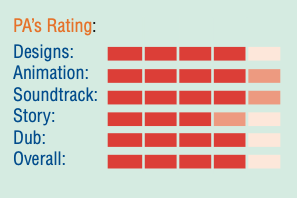
This movie is first class entertainment. Like the previous movies, it offers great music and superb animation. It has all the complex socio-political background of the previous TV series and maintains the series’ trademark cyberpunk feeling, but Director Kamiyama injected the storyline with so many themes — such as mass suicide, terrorism, biochemical weapons, kidnapping, old folks’ problems and child abuse — and subplots that the story gets confusing. It’s not easy to follow what’s happening in this extremely intricate movie. After the screening I was not quite sure of what I had just watched and who the Puppeteer really was! It’s one of those cases where you really need to purchase the DVD and watch the key scenes several time in order to be able to really enjoy the complexity of the movie.
In my humble opinion, I think that Director Kamiyama should have simplified and streamlined the storyline, maybe sticking with Togusa’s plot-line. I bet the viewers could have felt more empathy towards the movie if it was a little less complex. The animation itself has an overwhelming beauty, but, using all the great animation technology and talent of Production I.G., I think Director Kamiyama could have created a masterpiece, if he had just come up with a more coherent story. In the end, the true identity of the Puppeteer is still not very clear — but maybe Director Kamiyama kept it mysterious on purpose?
—miyako
Kôkaku Kidôtai: Stand Alone Complex — Solid State Society. Japan, 2006, 109 min.; Dir.: Kenji Kamiyama; Scr.: Kenji Kamiyama, Shôtaro Suga, Yoshiki Sakurai; Phot.: Kôji Tanaka; Ed.: Junichi Uematsu; Art Dir.: Yusuke Takeda; Char. Des.: Hajime Shimomura, Takayuki Goto, Tetsuya Nishio; Mechan. Des.: Kenji Teraoka, Shinobu Tsuneki; Mus.: Yoko Kanno; Prod.: Production I.G.; Distr.: Bandai, Manga Entertainment; Cast: Atsuko Tanaka (Motoko Kusanagi), Akio Ohtsuka (Batou), Kouichi Yamadera (Togusa), Kazuya Tatekabe (Col. Tonoda), Masuo Amada (Col. Ka Gae-Ru), Osamu Saka (Daisuke Aramaki), Takashi Onozuka (Pazu), Tarô Yamaguchi (Boma), Toru Ohkawa (Saito), Yutaka Nakano (Ishikawa), Yuya Uchida (Takaaki Koshiki), Dai Sugiyama (Proto), Nana Yamauchi (Togusa’s daughter), Yoshiko Sakakibara (Prime Minister Kayabuki). Available on R2 Dvd in Japan (BCBA-2606, 109 min., ¥9800) and on R1 Dvd in North America (Bandai/Manga Entertainment, #25176, Bilingual Dvd, 109 min., $19.98 US [Limited edition: $39.98 US], rated 13+).
• • •
In 2034, two years after the departure of Major Motoko Kusanagi (after the events of the TV series, Stand Alone Complex, which starts in 2030 and before the second movie, Innocence, set in 2032), Togusa is now in charge of Section 9, which has been expanded with the addition of several new recruits. Batou, frustrated to have been left behind by the Major, is still looking for her and therefore picks & chooses only the cases that seem related to his quest. A string of strange incidents — starting with a series of suicides, followed by the kidnapping of many children, and an economical conspiracy plotted by a group of old ultra-nationalists — seem to lead to a mysterious super-hacker nicknamed the “puppeteer.” The Major is carrying her own parallel investigation — which leads Batou to suspect her of being the puppeteer. In the end, the real identity of the perpetrator is the most surprising revelation of all.
This movie is directed by Kenji Kamiyama, the same person who directed the Stand Alone Complex TV series. It is therefore not surprising to find here the same excellent quality of production, as much in the design as in the animation. However, if the director succeeded to masterfully tie up all the elements of the story in the TV series, he seems to have difficulty to do the same in a movie format. Solid State Society feels like a long TV episode where he tries to compress the storyline of an entire series. There are too many sub-plots and the different elements of the story are mixed together in such a complex way that it sometimes lacks coherence and the viewers get confused (it took me at least two viewings to understand the complexity of the plot and even then I am not sure I understood everything correctly).
The timeline of the various series and movies seems confusing as well. The first movie is supposed to be set in 2029, while Solid State Society is set in 2034. It is not clear exactly when Major Kusanagi left Section 9. Also, they should have encountered the Puppet Master / Puppeteer before (in the first movie), but no mention is made of a prior encounter as if the first movie never happened. In fact, it feels like Solid State Society is a retelling of the encounter between the Major and the Puppeteer.
Despite the complex socio-political themes and the beautiful animation, Solid State Society does not have the same depth than the previous movies (directed by Mamoru Oshii) and it certainly doesn’t have the same contemplative beauty. It is a very nice movie, but it is much more demanding to the viewers than the TV series and even the previous movies — which you all need to have seen to really appreciate and understand this movie — so I would recommend it mainly to the die-hard Ghost In The Shell fans. Nevertheless, Solid State Society (and GITS in general) is the epitome of intelligent cyberpunk anime (a genre that, unfortunately, we don’t see often). Finally, I must add that the Limited Steelbook case edition (which contains three discs: one disc with the main feature, one disc full of extras, and the Solid State Society soundtrack CD) is totally awesome.
—clodjee
Bandai / Manga Entertainment, #25176 (ISBN 978-1-59409-831-4), Bilingual Dvd, 109 min., $19.98 US (Limited Edition: $39.98 US), rated 13+ (Violence). See back cover.
Pour oublier: le travail dès que possible
Ce sont les nuits qui sont les plus pénibles
Sa présence était comme une drogue dans mon sang
Me désintoxiquer des souvenirs réminescent
La douceur de ses lèvres, sa grande tendresse
Le goût de sa sève, ses promptes caresses
Mais surtout sa sollicitude à l’égard de ma détresse
Mon destin s’est accompli et la vie doit suivre son cours
Je suis éveillé, je ne suis plus aveugle, ni sourd
J’ai besoin d’action, de présences, plus qu’avant
Et maintenant seule l’obscurité me terrifie horriblement
Jamais je n’oublierai…
Nos destins se sont rencontré…
Elle m’a grandi, a illuminé mon obscurité…
Elle est toujours là, j’espère au moins son amitié…
Et avec équilibre, espoir de continuité…
Necesito un guia Usted es muy hermosa Usted me gusta muchisimo Yo te quiero
Mucha gracias por su atension, dispenseme… Cuendo puedo volver a verle?
1988-12-10
2.6 AFTERTHOUGHT
Mais ce ne sont là que des mots, des évidences
Qui sont, quant tout est fini, bien vide de sens
Quel est le poids des impressions anarchiques
Véhiculés par des clichés pathétiques
Devant ce qui fut si magique ?
1988-12-17
Le rêveur gris
Morwajal
Note: Voici les deux derniers morceaux de ce long poème sur ce qu’un bref idylle m’a appris de la vie. Comme toujours il s’agit de vers éclectiques, sans formes précises, ni métrique. Vous noterez deux brèves strophes en espagnol (nous nous échangions parfois de petits billets dans la langue de Cervantes) [pour la traduction demandez à Mr. Google!]… Voir les parties un (IIa: 2.1-2.2), deux (IIb: 2.3) et trois (IIc: 2.4) de cet ensemble. Le poète du dimanche n’en a pas encore fini puisque j’ai toujours dans mon sac quelques fragments épars.
Ghost in the Shell: Stand Alone Complex was a big hit in 2003 and Japanese DVD sales did great, so the creative team at Production I.G. decided to bring out a second season (titled “2nd Gig”). Now fans can look forward to another 26 episodes of cyber-political intrigue and action.
I can easily imagine that director Kenji Kamiyama was under a great deal of stress, with his work being compared with Mamoru Oshii’s Innocence, and to meet the fans’ expectations after the first season! Despite the high stakes, the young director was up to the task and I think he did a marvellous job. The “2nd Gig” is even better and more intriguing than the first season. He succeeded totally in creating his own world, telling the story in his own personal style, and we don’t even feel the need to compare his series with Oshii’s movie. Each has its own merit.
Kamiyama not only respected Masamune Shirow’s original manga, but he gave it life by detailing, even more so than Oshii’s movies did, its near-futuristic setting defined by the interaction of humanity and technology in a complex Asian geo-political environment. His strong, captivating storytelling is very well supported by the superb animation, the beautiful and elaborate artwork and an enchanting soundtrack. It is so great to see that there is such a great new talent in Japan, able to create a serious and intelligent story that can both entertain our senses and stimulate our mind. It is not surprising that both seasons of the TV series have received a great deal of acclaim, not only from anime fans, but also from those who seek serious science fiction shows.
As the “2nd Gig” starts, Section 9, which had been dissolved at the end of the 1st season, is resuming its job as an anti-cyberterrorist mobile unit. Although the team has returned, their work isn’t easy, and many difficulties lie ahead of them. The Japanese political landscape is changing and the government is keeping a close eye on their special police. The “Laughing Man” case might be solved, but it doesn’t take long for another terrorist organization, “The Individual Eleven,” to show up. Who are they? Are they the result of another “Stand Alone Complex”? They seem to be stirring up an uprising against the Asian immigrants and refugees. Could it be that simple? But some other politically-motivated forces seem to be at work. Can Major Motoko Kusanagi and her team unravel the complex overlapping political plots before they affect the nature of the government?
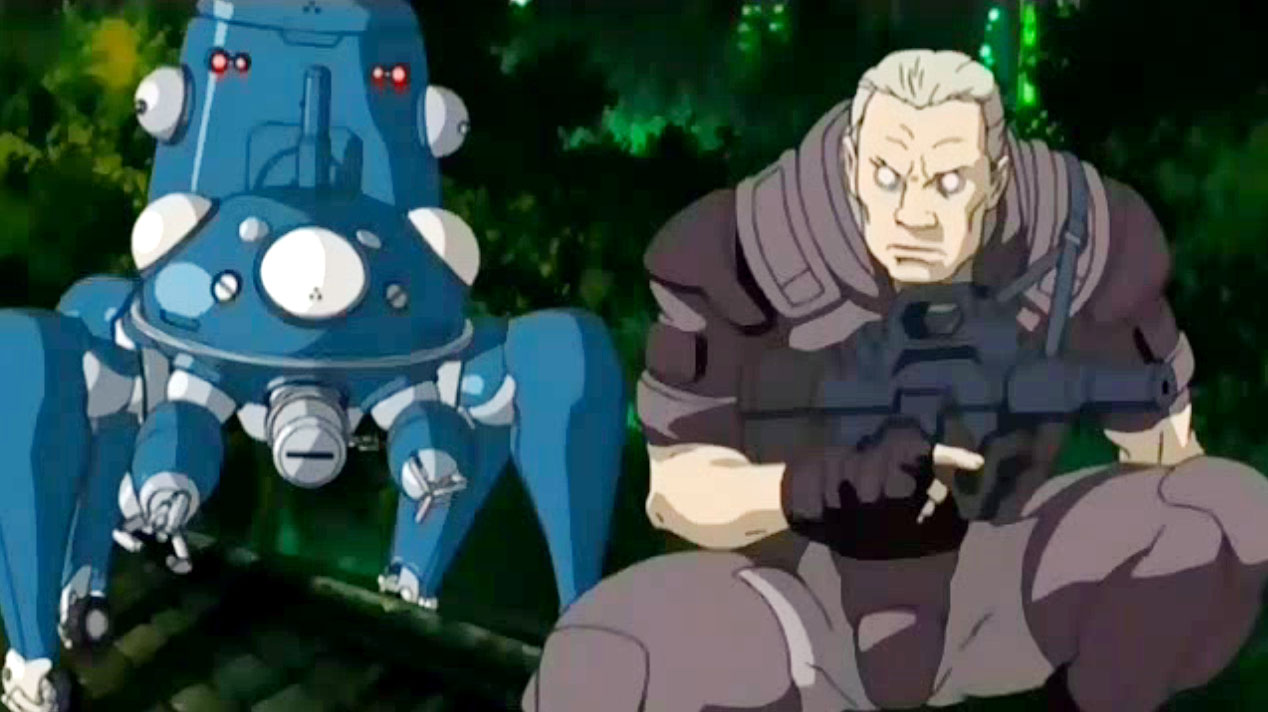
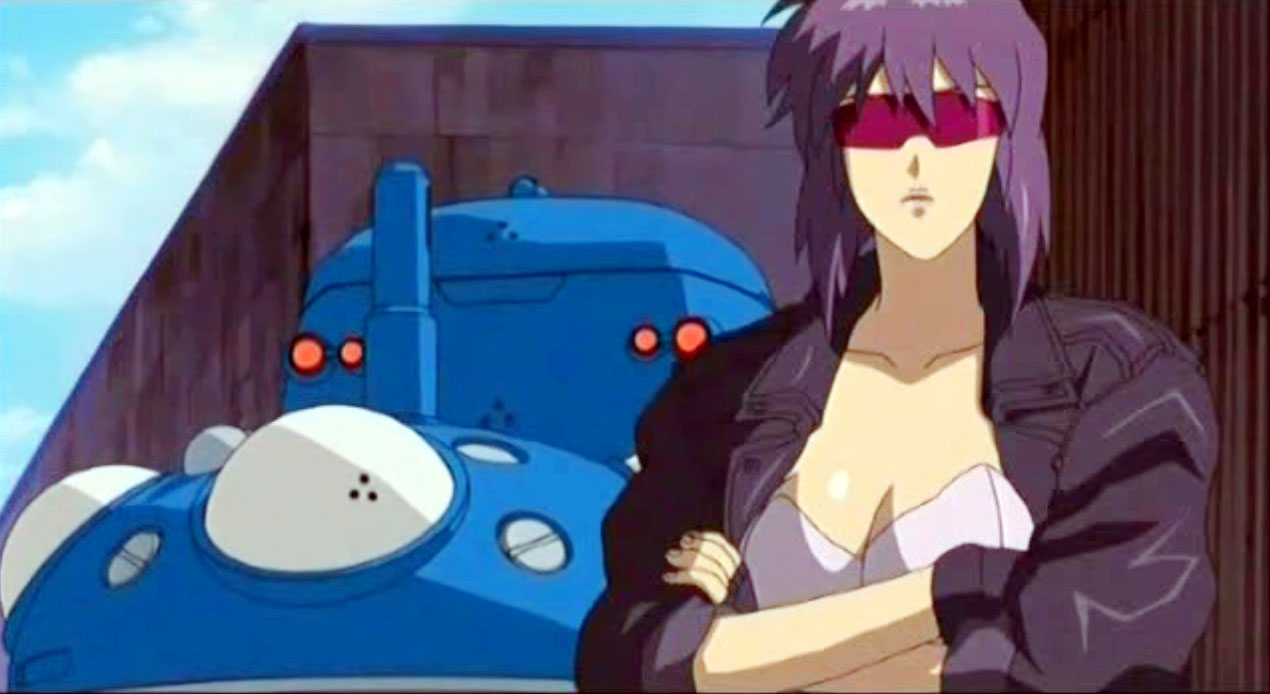
Technology might be omnipresent in Stand Alone Complex, but it is not overwhelming. In the “2nd Gig,” Director Kamiyama and Production I.G. keep an even greater focus on the human side of the story by exploring the characters’ hearts and emotions — even in the case of some of the terrorists. Each key member of Section 9 has a dedicated episode where we learn more about their past and personality. It is not done simply to paint a richer background; every single bit of information has its meaning. They also give a more humane face to the government (more likeable than the usual fat, corrupt, old minister) with the new Japanese prime minister, a young, good-looking lady who embodies the beauties (and sometime ineptitudes) of democracy. In contrast, there is the ugly face of Gohda, a shady character who embodies the threat of militarism. Also, the intelligent Tachikoma robots (their name means “standing, spinning top”) are back with a new, expanded sidekick role (definitely inspired by Motoko’s cute “helper” programs in the Man-Machine Interface manga). With their cute voices and comical comments, they give a human feel to the technology.
The terrorism and the Asian refugees’ problems seem to be an allusion to the Palestinian question and to some conspiracy theories that surfaced after 9/11 in Europe and in Japan (such as, American right wing groups being behind 9/11 in order to justify military action abroad and domestically limit civil liberties). But it is only used to emphasize the fact that, even in the future, terrorism — the favorite style of warfare of the 21st Century — is still omnipresent and we still haven’t found a way to deal with it. Despite all the advanced technology, humanity is still facing tremendous problems (war, pollution, corruption, poverty, overpopulation, crime). Nothing changes, and even the future’s future is still uncertain. Is there a solution to the crisis? Is there a possibility for us humans to be saved? The answer in “2nd Gig” might be in the origami cranes that appear in some episodes and that symbolize the prayers for peace and salvation. All we can do is, like Section 9, act with courage and determination (even if it means going against the rules sometimes), pray and hope for the best!
In conclusion, “2nd GIG” is even better than the first season. While still very political, dealing with terrorism and immigration problems, it also elaborates on more of the personal history of each of the main characters, including Major Kusanagi. The cyberpunk political intrigue is at moments a little complex, but it is the most intelligent anime series I have ever seen and it is superbly animated. It’s not all action, there’s also drama — and I did cry a few times. A real masterpiece! Of course, such an exceptionally excellent anime series cannot be seen only on TV. You have to purchase the DVD to watch it over and over again, to enjoy all the minute details of this superb animation and share the experience with your friends! And if after that you want more, the series was followed by a movie: Solid State Society.
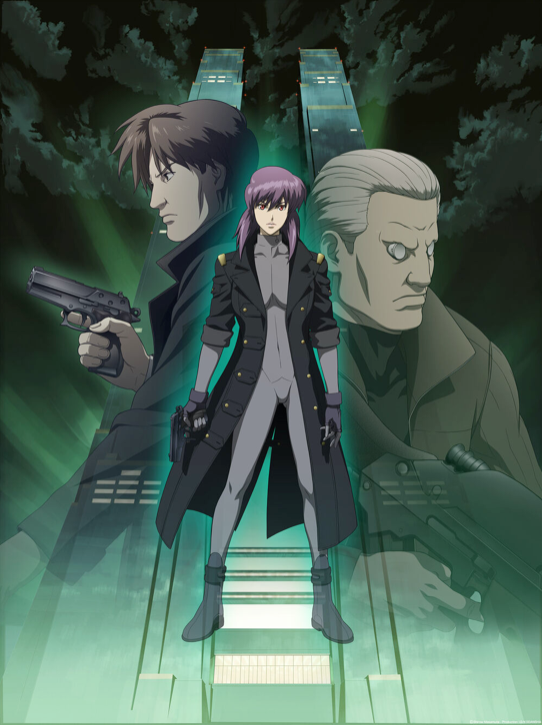
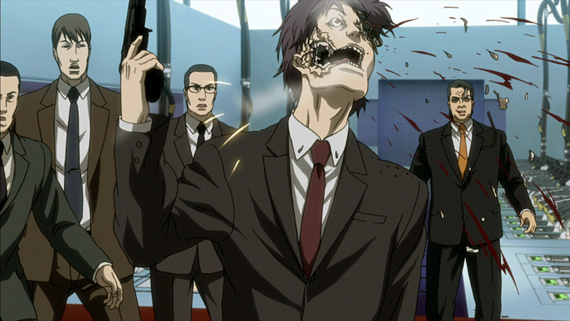
With the TV version of Ghost in the Shell (Kokaku Kidotai) director Kenji Kamiyama (and his production team — including the full support of original creator Shirow Masamune) is bringing a new dimension to the standard police detective drama adding a techno-cyberpunk flavour. Not only is this a very high quality show visually (HD full-digital screen to satisfy even the most hard-core fan!), but it is also full of exciting, intelligent storytelling. You can see that the writers really put forward their best efforts to attract viewers.
The story is set in a future Tokyo populated with high-tech doohickeys, and lots of cyborgs and androids. Fans of Ghost in the Shell find out immediately that this story is quite different from the manga or games. It’s a kind of alternate world created for the TV series, closer to what was already developed for the movie. The manga is funny and set in a fictitious future (lots of made-up names) where Section 9 is an international anti-terrorist unit. The TV series’ setting feels less like a militaristic anti-terrorist outfit and more like a special police force dealing with cyber crimes. It is more serious and more realistic. Nevertheless, like the movie, which was based mostly on the manga, the TV series is using bits and pieces of the manga’s story. We could consider the TV series as a prequel to the movie, whereas the new manga, Man-Machine Interface, is the direct sequel of the original manga.
So what do they mean by “Stand Alone Complex”? It could mean that the series is mostly made of stand alone episodes (self contained stories), with a few more complex episodes (the “Laughing Man” story arc). However, episode 6 also provides another explanation: it refers to the fact that Laughing Man’s imitators are independent copycats, created without an original. To me it seems that Production I.G.’s writers want to make the point that “It’s extremely difficult and almost impossible today to stand alone in this complex society of computers and networks.” Each episode throws enormous amounts of technical information and detail about computers, science and politics for the viewer to digest. At first, for an average nincompoop like myself, the contents of this show can be too much, but with a bit of patience it’s certainly educational. I think, in a way, it’s charming to see so much information on technology. Compared to ordinary anime shows, the amount of dialogue and information is quite huge.
You really have to sit down and watch this TV show over and over again to catch the small details and to understand better. In this respect it shares much in common with its source, the manga. On the other hand, despite all this, the show can also be watched as an intelligent police/detective drama. The viewers can try to solve crimes with Section 9 members and get great satisfaction to see the conclusion of each cyber-crimes case. But don’t think that the show is as slow paced as the film — there is still a lot of action!
The characters seem to be like normal humans, but in fact most of them are cyborgs (or with some sort of cybernetic enhancement). I wonder if, in the near future, when humans begin to replace body-parts to improve their lives and live more comfortably, we’ll have different kinds of crimes? It’s the same type of premise as in Patlabor : if technology takes us there, the nature of crime will change. Of course we’re all human, but how in the world can we live and “stand” with our own personalities in this extremely complex society of the future? In this show, all criminals are making statements of a kind (politically, individually or otherwise).
This is certainly a strong series evolved from speculative fiction, with excellent (and exotic Russian sounding) music by Yoko Kannno (Cowboy Bebop, Escaflowne and Macross Plus) and viewers will enjoy this full-action crime fighting anime! In our opinion, this series clearly shows one thing: good writing and storytelling make a great difference! There are many shows with high quality visuals, but with weak stories. Ghost in the Shell is one of the best shows to come down the road in the last few years and hearkens back to a period where stories and strong characters were the main focus. I’d like to send out enthusiastic applause to the creators of this show!
Despite its high quality animation and intelligent story, the show has a few annoying details: the original opening is much better than the 3D one which starts with episode 3 and there are some technical impossibilities (like the cloaking devices which are not consistent with those in the movie).
This anime won’t disappoint you — in fact, you’ll be totally hooked! A must see show that I’d recommend to anyone. In order to understand the TV series a bit better it is recommended to have seen the movie or read the manga (you would already know the characters and technological background), but you will probably manage anyway if you just dive straight in (you’ll find some helpful information, right after the jump). The series was very well received with critics’ rating of 8.5 on IMDb and of 67% / 100% on Rotten Tomatoes. Enjoy !
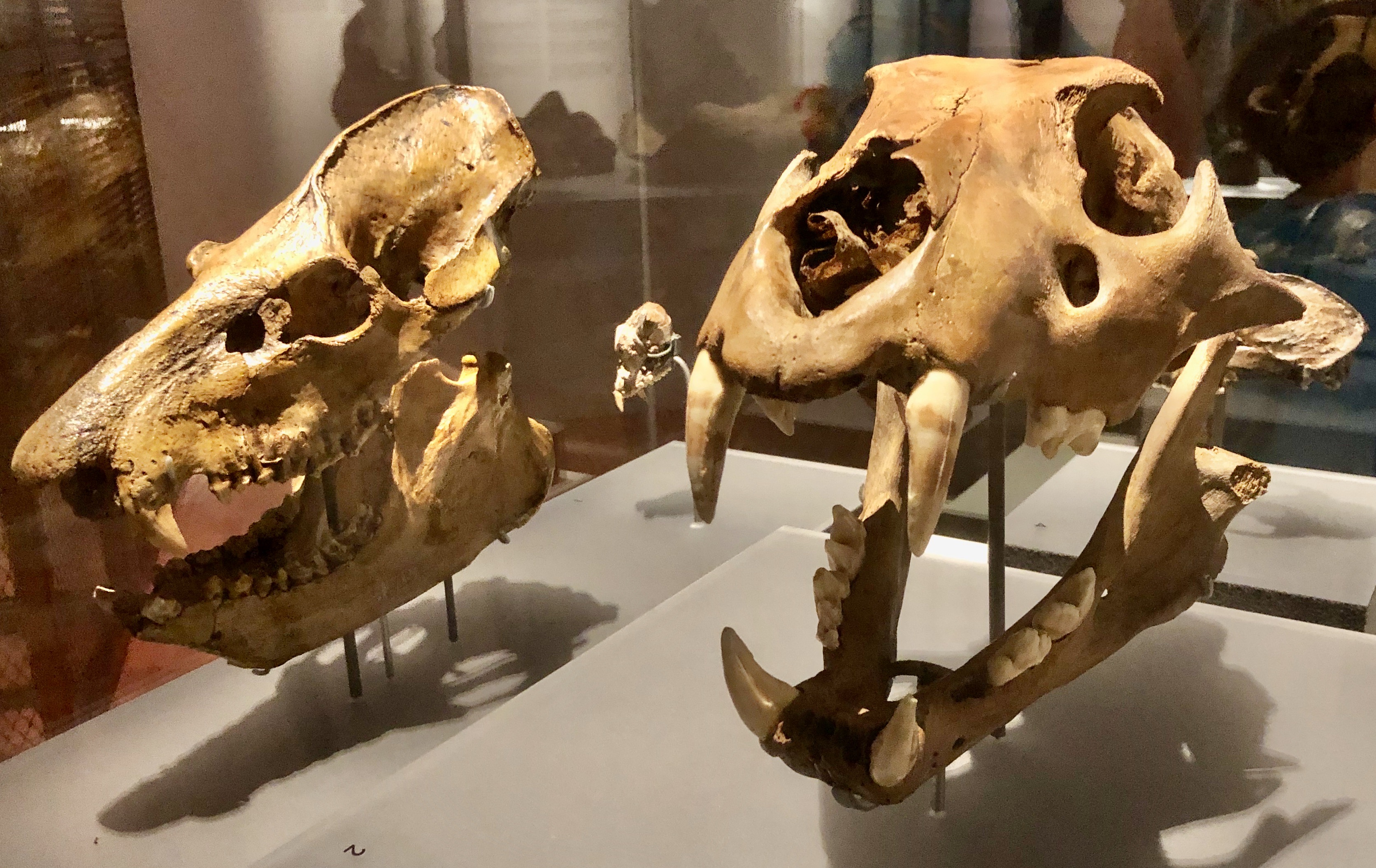
De la cinquantaine d’espèce de lémuriens de Madagascar, dix-sept ont disparu avec l’arrivée des premiers humains il y a au moins quatre mille ans. On voit ici (à gauche), le crâne d’un spécimen de l’une de ces espèces disparues, qui atteignait une taille impressionnante (1.2 m). Le Megaladapisedwardsi est une espèce du genre Megaladapisqui était similaire au koala. Elle appartient à la famille des Megaladapidae et de l’ordre des Primates. (Sources: Fiche signalétique de l’exposition, Wikipedia [FR / EN]).
Le spécimen de droite a été déterré dans les douves de la Tour de Londres en 1937. Il s’agit d’un lion de Barbarie, originaire de l’Afrique du Nord, qui appartenait sans doute à une ménagerie d’animaux exotiques conservée pour divertir la cour à une époque où la Tour servait encore de palais royale (probablement au XIIIe siècle). Il était caractérisé par une impressionnante crinière, plus volumineuse et plus sombre que le lion africain. C’est une sous-espèce du Panthera leo, appartenant au genre Panthera, à la famille des Felidae et à l’ordre Carnivora. (Sources: Fiche signalétique de l’exposition, Wikipedia [FR / EN]).
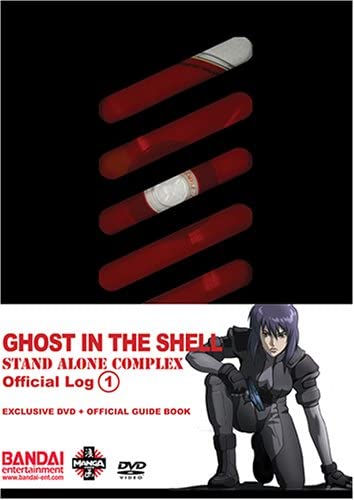
This superb book is an Official Guide to the Stand Alone Complex TV series and offers an in-depth analysis of the background story as well as the production development. It features an introduction to the Ghost In The Shell’s world (manga, movies, video games, etc.), character profiles and designs, mechanical designs, synopses and background notes for the first 19 episodes, interviews with the creative staff and an essay on the science of Ghost In The Shell. It also includes an exclusive 90-min. DVD with never-before-seen footage, a documentary on the digital animation techniques used for the series and more interviews with the staff and cast.
This type of high-quality art book usually comes in a larger format, but if the 6 x 8.5 inches size is more practical it also means fewer and smaller illustrations presented in a more cramped layout. Still, the Official Log is quite useful when it comes to better understanding the complex story of the Ghost In The Shell TV series. It is a must-have for all serious anime fans!
Ghost in the Shell: Stand Alone Complex Official Log, Vol. 1 (by collective; editor, Robert Place Napton). [Cypress, CA] : Bandai / Manga Entertainment / Production I.G., October 2005. 148 pages (64 in colour) [DVD: Cat.# 25180, Subtitled, 90 min.]; Limited Edition (only 15,000 copy released), $49.98 US, rated 13+, ISBN: 1-59409-571-X.
Review originally published in PA #87 : 63 (December 2005 / January 2006). There is also a second volume but I haven’t seen it and therefore cannot comment on it. The book is old but seems to still be available online.
“If you are cold, tea will warm you; if you are too heated, it will cool you; If you are depressed, it will cheer you; If you are excited, it will calm you.” ― William Ewart Gladstone























 “Une comédie délirante et pleine d’action sur les fous des chats !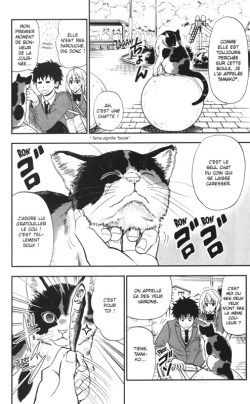






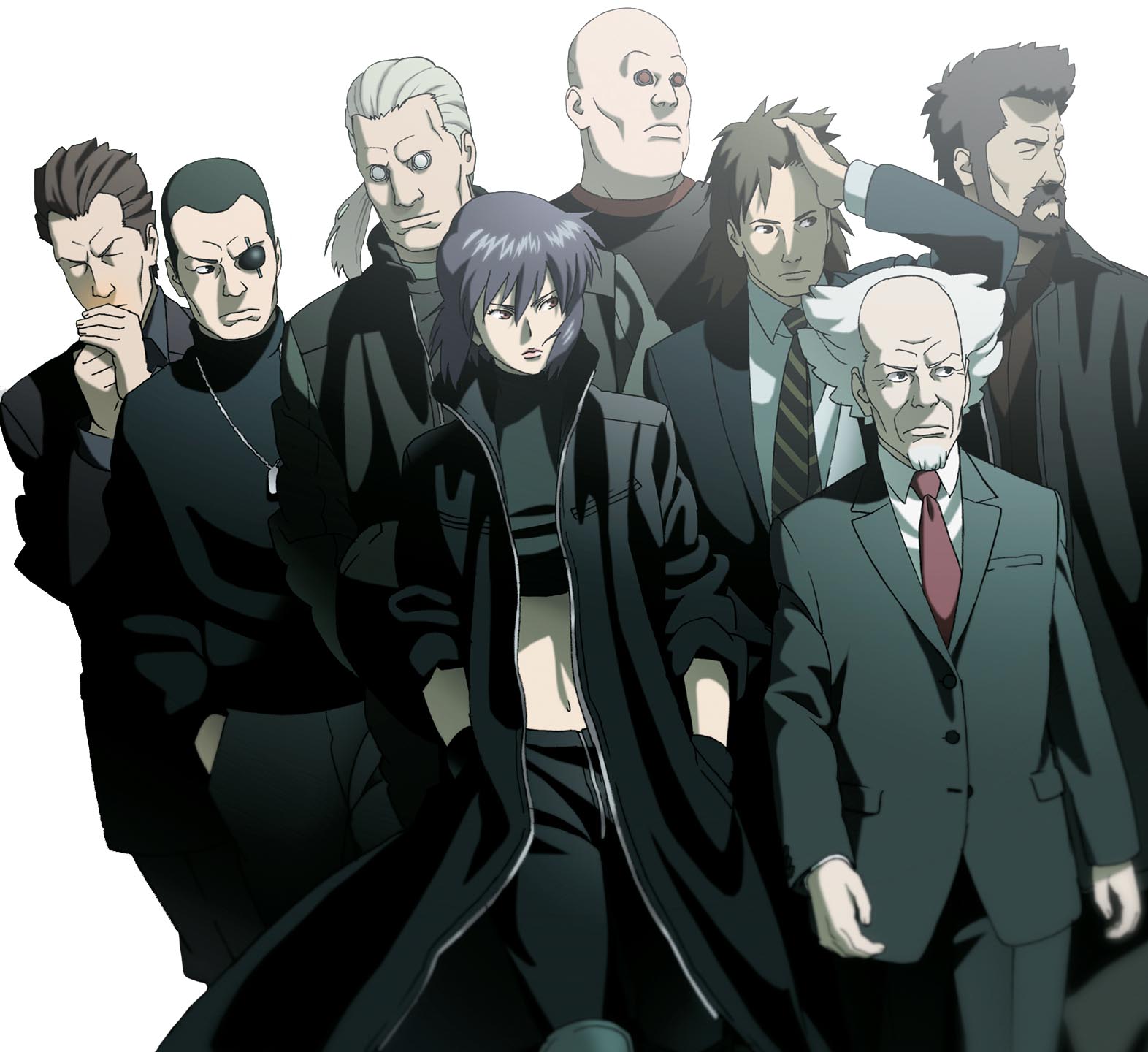
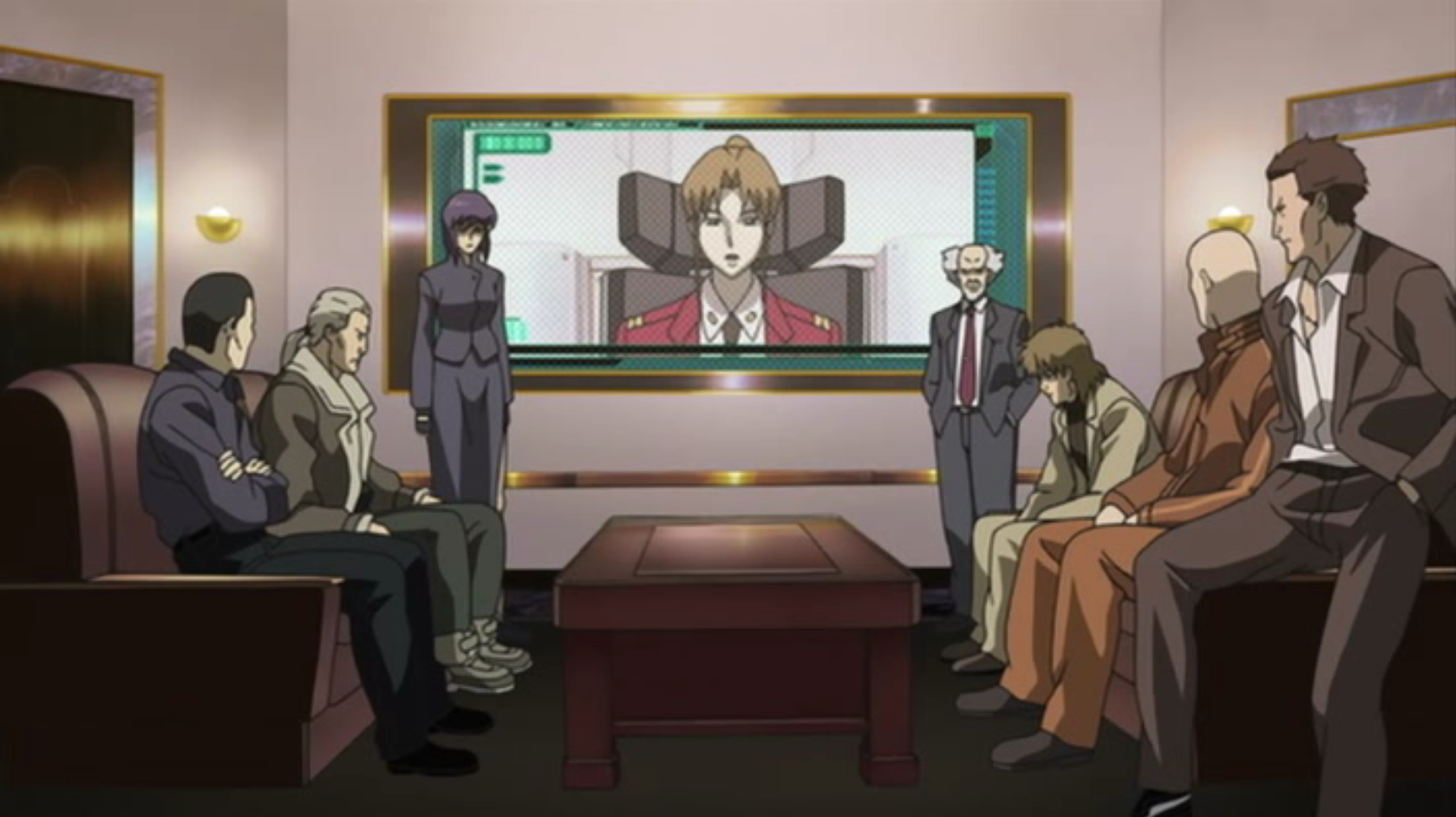
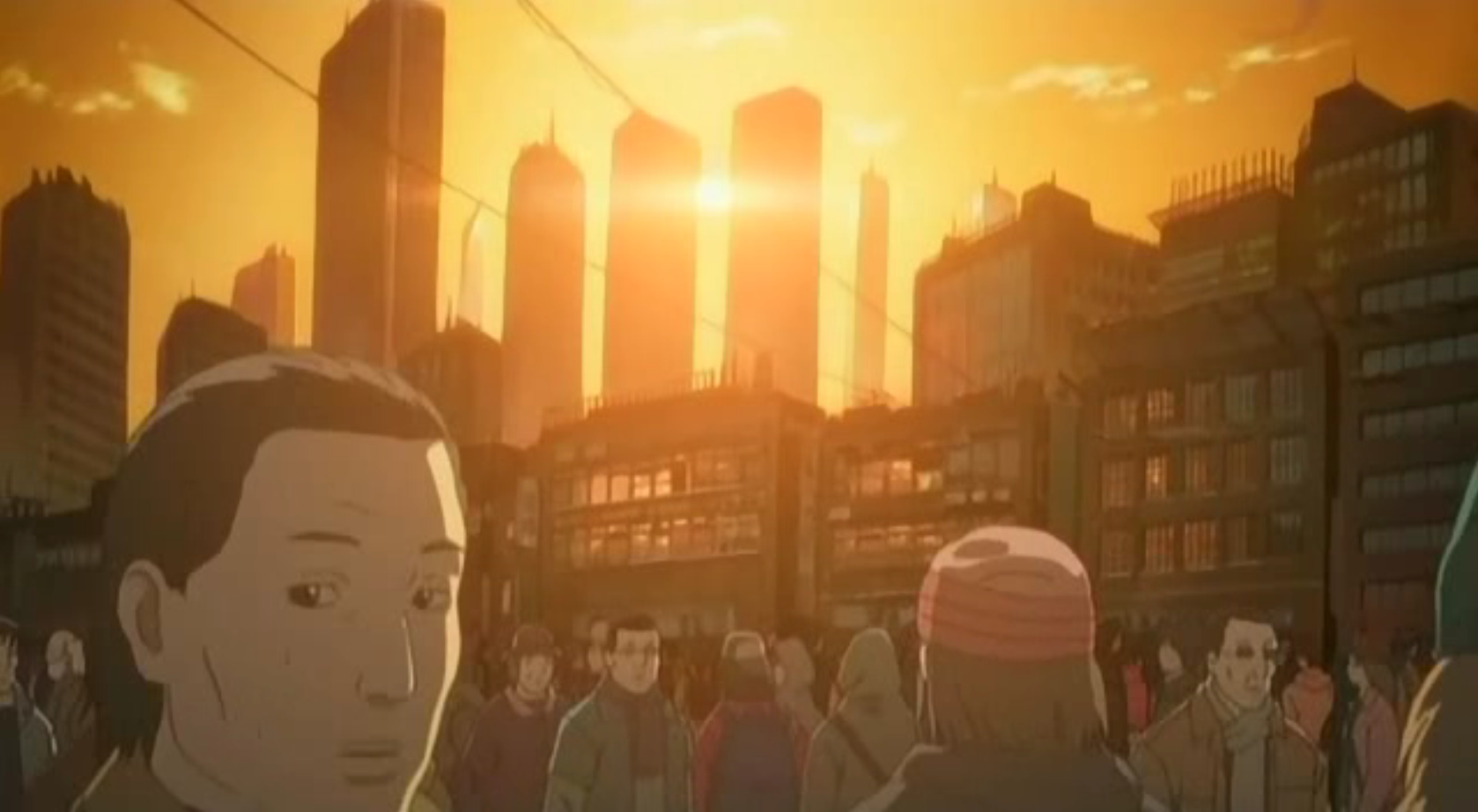
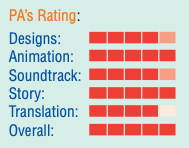
 With the TV version of Ghost in the Shell (Kokaku Kidotai) director Kenji Kamiyama (and his production team — including the full support of original creator Shirow Masamune) is bringing a new dimension to the standard police detective drama adding a techno-cyberpunk flavour. Not only is this a very high quality show visually (HD full-digital screen to satisfy even the most hard-core fan!), but it is also full of exciting, intelligent storytelling. You can see that the writers really put forward their best efforts to attract viewers.

 Clodjee's Safe-House