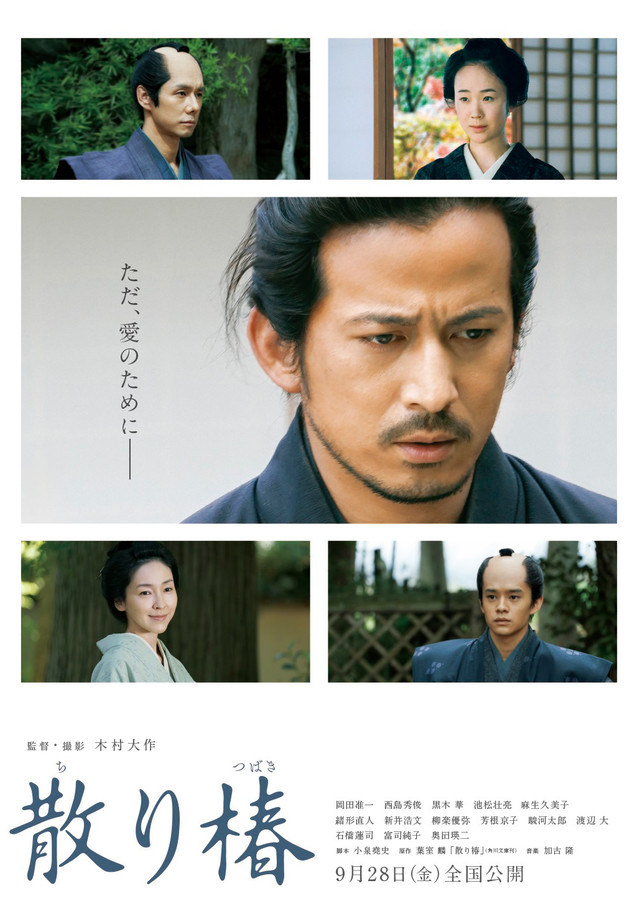
Samurai’s Promise

Chiri_Tsubaki-posterShinbei is exiled from his clan for investigating its activities too closely. Eight years later, when Shinbei’s dying wife pleads with him to go to help his former best friend, Umeme, he returns to the clan. Infighting has produced turmoil within the clan, allowing Shinbei to discover the truth behind incidents involving his wife and his friend. Confronting Umeme, he understands the reason for his wife’s last wish. (FFM)

This is a very good movie. Its most noticeable aspect is that it offers an excellent photography (which is not surprising since director Kimura acted as his own photography director, a job he has hold many times for other directors like Kinji Fukasaku, Yasuo Furuhata, or Shin’ichirô Sawai). He made great use of the superb location in the Toyama Prefecture (anciently the Etchû province) showing as backdrop the fantastic landscape of the Hida mountains in the Northern Japanese Alps. 

Another aspect that I quickly noticed was that the music was unfortunately very annoying. They used a soundtrack of classical music (which first accords sounded like The Godfather’s music by Nino Rota), playing it again and again recurrently. I think that, for a jidaigeki (samurai movie), a soundtrack of traditional Japanese music would have been better…

Shinbei (Jun’ichi Okada) is exiled from the clan after denouncing as corrupt a high-ranking officer of the clan — who is later mysteriously murdered leaving all the suspicion of culpability on Shinbei. Both Shinbei and his friend Uneme (Hidetoshi Nishijima) were courting Shino (Kumido Aso), but when Uneme’s family denies him the permission to wed Shino, she goes with Shinbei instead. The harsh condition of their exile put a toll on Shino’s health who eventually dies. She makes Shinbei promise to continue living, to go back to their village to observe the camellia falling in spring and to reconcile and help Uneme. When he tries to clear his name and find out the real assassin, he gets entangled in the complex politics of the clan…

Samurai’s Promise is a beautiful and interesting samurai movie. It has a smooth storytelling, although it is sometimes difficult (at the beginning) to understand who’s who and figure out all the plots and politics at play. The acting is good, and particularly the nice realistic combat scenes. It must not have been easy considering the fact that there was many fights in the rain or snow and that the dialogues were using an old form of Japanese. 

Of course, we should expect nothing less from such a veteran director. During his sixty-year career, Daisaku Kimura worked on over fifty films and won many awards. He started his career as camera assistant on Akira Kurosawa’s Hidden Fortress (1958). He worked five years with him (on movies like Yojimbo and Sanjuro) and he learned a lot during this time. Eventually, he cames to direct his own movies (Mt. Tsurugidake in 2009 and Climbing to Spring in 2014), mostly about mountain climbing. Samurai’s promise is his first jidaigeki and he made it as a tribute to Kurosawa. It is a beautiful and authentic movie, well worth watching. These days we don’t see much movies like this…

Samurai’s Promise (散り椿 / Chiri Tsubaki / lit. “Falling Camellia”): Japan, 2018, 111 mins; Dir./Phot.: Daisaku Kimura; Scr.: Takashi Koizumi (based on the novel by Rin Hamuro); Ed.: Tomoni Kikuchi; Mus.: Takashi Kako; Prod.: Yoshihiro Sato. Cast: Jun’ichi Okada, Hidetoshi Nishijima, Haru Kuroki, Hirofumi Arai, Kyôko Yoshine, Sosuke Ikematsu, Kumido Aso, Naoto Ogata.

Screened as opening movie (in the “World Competition” program) of the 42nd Montreal World Film Festival (at the Cinema Imperial on Thursday August 23, 2018 at 19:00). stars-3-5

[ AsianWiki / IMDb /  Official  / Youtube ]

[ Traduire ]

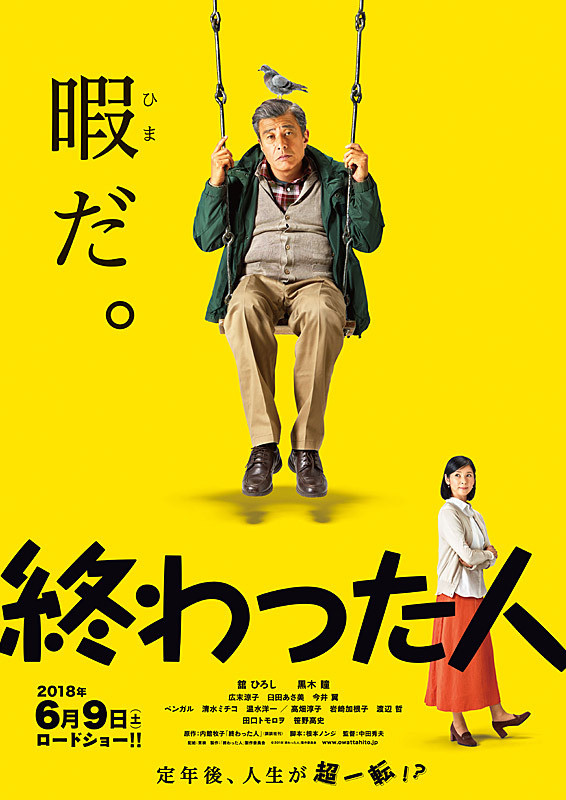
Life in Overtime

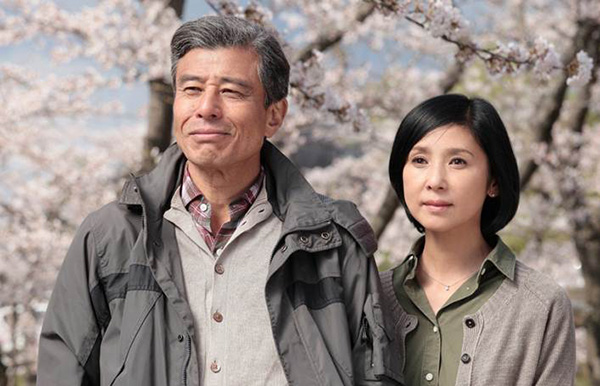
Owatta_Hito-posterSosuke Tashiro has a successful career in a large bank until he is transferred – or rather relegated – to a subsidiary until retirement. After decades of dedication to his work, he is lost and idle. He then decides to resume a professional activity, but realizes that the challenge is daunting. Over the course of two meetings, at the gym and at the adult education center, his life is on the move again. (FFM)

This is exactly the type of Japanese movie that I like the most: some sort of family drama that touches us (and often makes us cry) but which, in the end, makes us feel good and laugh. It is so perfectly enjoyable! And the seamless storytelling, the bright, well-framed and beautiful photography, as well as the nice soundtrack (particularly the beautiful song 「あなたはあなたのままでいい」 [Anatawa Anatano Mamadeii / “You can stay as you are”] by Miki Imai) really show the mark of an experienced filmmaker. Strangely, Hideo Nakata is mostly known for his horror movies (Ring, Chaos, Dark Water, Kaidan, etc.) so it is really surprising to see him direct for the first time a more traditional Japanese comedy! This is probably his way to tell us that he is not finished yet and that he can be a polyvalent creator. He does that brilliantly. Unfortunately, he didn’t arrive in time to present the movie and do the Q&A for the first screening at 11:30, and that was a great disappointment for me (I knew I should have gone to the 21:30 screening!). The quality of the production as well as Nakata’s fame makes of Life in Overtime a great contender for the competition. It is surely the best Japanese film I’ve seen at the festival so far this year.

Sosuke studied at the top university in Tokyo and finds himself on the path for an executive position at a large bank, but gets beaten by a rival and ends up finishing his career at a subsidiary branch. He already feels he’s a failure but, when he retires, he finds himself with no hobbies, no dreams, no job and no sympathy at home! What to do? He feels “Retirement is like a premature funeral (…) I don’t want my life to end like this!” It’s like the game is over but you continue to play in overtime in hope to finish on top (I like this idea)!

He tries to find a new purpose in order to make up for his failures. He looks for a new job but his impressive resume torpedoes his efforts. He considers going to graduate school to study literature, makes an attempt at a new romance or, after a chance meeting with the CEO of an IT company, try to start a new career but without any success. However, does it really matter as long as you have a life to enjoy?

Nakata succeeds in giving a realistic depiction of life struggles and relationships while tackling one of the hot topic of the decade: with its aging population, Japanese society has to deal with an ever increasing number of retirees. To keep them mentally and physically fit, it is important to make sure they feel their life is not finished yet and that they can make their experience or expertise valuable and useful to the society. It’s also a challenge on the domestic level as many couples, who never spent lots of time together because they were too busy working, find out that they don’t know much about what to do with each other! Retirement can surely be a shocking change but it is certainly not the end of your life (personally, I know very well that I’ll probably be even busier once I retired — in about 3192 days!). However, for some people, not knowing what to do or not feeling useful anymore can be an horrific experience and, in that aspect, maybe this is an horror movie after all…

Life in overtime, with its sadness and joy as well as its beautiful scenery, gives us plenty to ponder and an excellent movie experience. It is certainly a must see.

life_in_overtime

Life in Overtime (終わった人 / Owatta Hito / lit. “A finished man”): Japan, 2018, 125 mins; Dir.: Hideo Nakata; Scr.: Nonji Remoto (Based on the novel by Makiko Uchidate); Phot.: Koichi Saito; Prod.: Masatake Kondo; Cast: Hiroshi Tachi (Sosuke), Hitomi Kuroki (Chigusa), Ryoko Hirosue (Kuri), Asami Usuda (Michiko), Tomorowo Taguchi (Toshihiko), Tsubasa Imai. 

Screened at the Cinema Imperial (Sun. 08/26 at 11:30) as part of the “World Competition” program of the 42nd Montreal World Film Festivalstars-4-0

[ AsianWiki / IMDb / Official / Toei / Youtube ]

[ Traduire ]

Zone Out

Zone OutKindergarten teacher, Chinatsu is always in a state of stress. And it is at this moment that a pupil of her class is murdered. Totally distraught, Chinatsu begins to sink into a world of illusion that she can not control. (FFM)

I don’t know what they have put in the water of that city but all the characters in this movie offer a whole catalog of mental illness: Chinatsu, a kindergarten teacher, cracks under the pressure brought by all those helicopter parents and develops schizophrenia; her acupuncture doctor, Yuichi, suffers from Capgras syndrome; Naoto, a salesman bullied by his seniors, has nomophobia; Akamatsu, the convenience store clerk, suffers from Asperger; Mitsuki, Haruka’s mother, suffer from Munchausen syndrome, etc. I guess it was the purpose of the director to show with this docudrama-style movie what it is to have such illness and how difficult it can be for the families.

It is a very dark movie and the end result is, unfortunately, barely average. The storytelling is awkward and not particularly skillful, the photography feels amateurish and the acting is so-so — although, the main actress is very charming and switching the actors who plays the two Yuichi toward the end of the movie in order to unexpectedly show the schizophrenia of Chinatsu is, I must say, quite brilliant. Also, the movie is really not well served by the poor translation (in the subtitles). When I noticed two typos in the very first sentence of the movie, I knew that this would spell trouble! (unless they made it on purpose to make us feel crazy!) If it was not already obvious with the production quality, the horrible translation really smelled of tiny budget…

Finally, to really give a last pathetic impression, the absence of a translator for the Q&A at the end of the presentation (due to the minimalistic ressources of the festival this year — what? they couldn’t even find a volunteer to take up the task?) left the poor director and main actress at the mercy of their basic English language skills and made for such a laughable exchange that you could only feel sorry for them. 

However, undertaking such a difficult and serious subject requires some strength. I understand what the director was trying to achieve and I greatly appreciate his efforts (for that I give him extra points!). In a society that was repressed for so long, where you find a real epidemic of bullying (both at school and at the work place, including sexual harassment) and where an aging population is plagued by various forms of dementia, it is really not surprising to find that mental illness has become a great challenge in Japan today. Kudos to the director for trying to bring attention to this problem.

Zone Out / Regarder dans le vide (アウトゾーン / Out Zone): Japan, 2017, 115 mins; Dir.: Hiroshi Kanno; Scr.: Mari Takanashi; Phot.: Makoto Hayashi; Ed.: Aya Mitsuaka; Light.: Sousuke Yoshikado; Sound: Kazuyuki Tutiya; Mus.: Magumi Masui; Cast: Minami Matsunaka (Chinatsu), Masato Oki (Yuichi Akino), Kyoko Toyama (Kyoko), Gen Kuwayama (Naoto), Yusuke Ueda (Akamatsu), Yusuke Sugiyama (Yuichi Kagawa), Ben Hori (Hisashi Aoyama).

Screened at the Cinema Imperial (Sat. 8/25 at 16:30) as part of the “World Great” program (out of competition) of the 42nd Montreal World Film Festival. stars-2-0

[ IMDb ]

[ Traduire ]

The Guernsey Literary and Potato Peel Pie Society

GuernseyLiteraryAndPotatoPeelPieSocietyNot long after the end of WW2, Juliet (Lily James) receives a letter from a pig farmer in Guernsey (who’s a member of a local literary club) asking her for the address a good bookstore in London. He got her address from inside a used book she sold before the war and which somehow had made its way to this island near the coast of France. She send him one book for free at the condition that he answers three questions to explain the name of their literary club and the circumstances of its creation. The tale of their ordeal under German occupation intrigues her, therefore, being a writer herself, she invites herself for a reading at their club to make some research in preparation for a newspaper article she was asked to write. Upon arrival she notices that the founder of the club, Elisabeth (Jessica Brown Findlay), is mysteriously absent and the club members seem very secretive about her circumstances. She starts asking questions around and her enquiry will unravel a painful past and make her fall in love with the island. It’s interesting how books can touch people and change their lives forever!

Of course, it is not a perfect movie as you find, for example, many stereotypical characters (like the self-centred and possessive American, the nationalist mean informer, the nosy and religious lodger, etc.). However, it remains a very beautiful movie, that offers a well-written and touching story about the hardship of war — a time when friendship and compassionate sentiments can be quite dangerous! It’s based on the novel by Mary Ann Shaffer and Annie Barrows. Interestingly, since nowadays Guernsey is too touristy, the movie was shot in North Devon with a cast in good part made of actors from Downton Abbey (Lily James, Jessica Brown Findlay, Matthew Goode, Penelope Wilton)! It is also noteworthy that the movie is distributed by Netflix as one of its original films (that’s where I watched it). All in all, it’s quite entertaining (critical response of 81% on Rotten Tomatoes) and an excellent movie experience. stars-4-0

[ BiblioIMDbNetflixWikipedia ]

[ Traduire ]

Capsules

FFM 2018 Day 1

FFM2018-banner2

Red carpet and Opening ceremony

This year the Festival des Films du Monde (FFM or MWFF, Montreal World Film Festival) strangely seems slightly more organized (at least for the accreditation) than the previous couples of years. They are probably getting used to extreme austerity and benefits from plenty of movie aficionado volunteers. Also, there’s more Japanese movies than last year (but still less than the usual dozen). Unfortunately, since there are only four screens (Cinéma Impérial and Quartier Latin 10, 12 & 13) to show ALL movies, they are shown only once (twice for the titles in competition) and mostly in the afternoon — which is not compatible with my own schedule, so I’ll probably end up viewing only half of the Japanese movies. Too bad, but that’s better than nothing!

However, I was happy that the title selected as opening film was one of the Japanese movies: Samurai’s Promise. No one from the cast or crew was present for the opening ceremony, although there was plenty of actors & actresses from other Japanese and Chinese movies (as well as local dignitaries) parading on the red carpet.

Red carpet photo gallery


The only speech was given by the president of the festival, Serge Losique. He seemed tired, but still defiant (although slightly apologetic):

“The festival is a great cathedral open to all. Our role was not to imitate whoever but to be ourselves, to be authentic. (…) Our role was also to helped small unknown countries, like Cape Verde or Sri Lanka [to promote their films]. All we want is for the public, and the journalists, to appreciate the films.”

He continues saying he doesn’t want the glamour of the other festivals but only to showcase the diversity of the world cinema. That’s why it is the “Festival des Films du Monde” [also a word-play in French meaning the festival of the people]. People are asking for stars, he says, but the stars here are the films. He also argues that the directors and actors who come to Montreal are stars in their own countries, and many more have been discovered here, at the festival, and are now stars! [I might add that I’ve seen plenty of great stars at the FFM over the years: Catherine Deneuve, Sofia Loren, Jackie Chan, Robert de Niro, Tony Curtis, Mamoru Oshii, etc.]

He also announces the new policy for the festival to chose as president of the jury a director that has previously won the Grand Prix of the Americas. Also the jury members will not necessarily be present at the festival but will screen the titles in competition via video link (although the president of the jury will always be present in Montreal). He introduces the members of this year’s jury (critic Élie Castiel, Pierre-Henri Deleau, an executive from China Film Group Corporation and another jury whose name will be revealed at the end of the festival) as well as its president, Silvio Caiozzi [Chilean director, winner of last year’s Grand Prix des Amériques], who also said a few words:

“From the beginning this festival always chose nothing but films of cinematographic excellence. Nowadays, I can feel that around the world somehow (…) [in the movie industry] the true quality of films is not looked upon, really. What they look upon is (…) what film has the big budget (…) or the politics (…) but not really the quality of the films. So, really, honestly, (…) in my opinion this is perhaps the only festival that still remains absolutely independant.”

Opening ceremony video

(I understand what Serge Losique is saying here. He is trying to explain and justify his position. The festival is his life-work, his baby, and he doesn’t want to relinquish its control. Indeed, if you accept public money you have to show transparency and do things the way the government wants them to be done… Unfortunately, if he doesn’t step down, pass the mantle to someone else soon (while maybe remaining on board as advisor), the festival will die with him…)

The theatre was not full, like we’ve seen for previous years, but considering the situation, it was full enough (maybe half?). Surprisingly, there was not that many people from the local Japanese community.

It was a short ceremony, a good movie (see my separate comment), the weather was nice, Radio-Canada / CBC was there to report on the event so, all in all, it was a good day for the festival.

[ Traduire ]

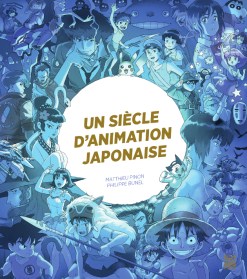
Un Siècle d’Animation Japonaise

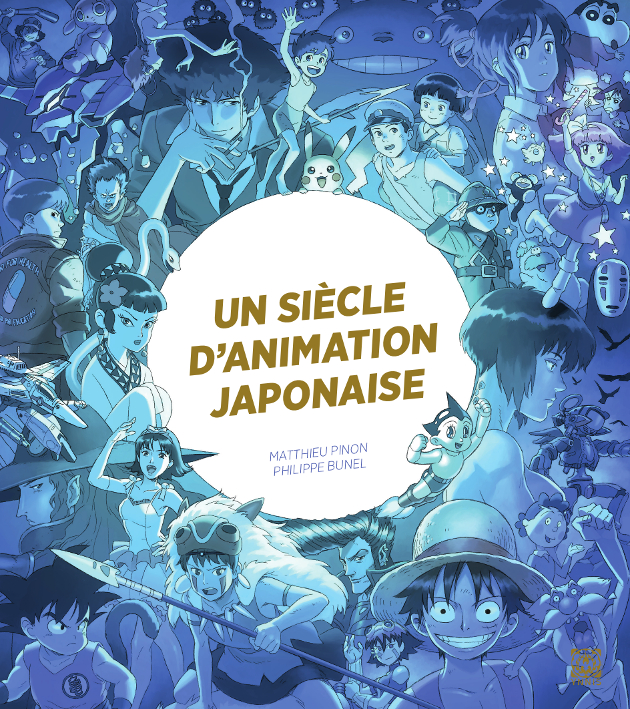
Siècle-animation-covEn 2017, l’animation japonaise est plus que jamais un rouage essentiel de la pop culture mondiale. Studios hollywoodiens historiques ou diffuseurs modernes nés avec Internet, les géants du divertissement investissent dans ce média dont les spécificités graphiques ont été adoptées par plusieurs générations de spectateurs.

À la fois composante et reflet de sa culture nationale, l’animation japonaise trouve pourtant sa source dans les expérimentations cinématographiques occidentales de la fin du XIXe siècle. En remontant à ses origines, Un siècle d’animation japonaise parcourt les évolutions marquantes vécues tant par les créateurs que par le public de ce média jusqu’à  nos jours.

Avancées technologiques, prolifération des genres, mutations économiques, oeuvres et artistes majeurs, triomphes et débâcles, consécration mondiale publique et critique… Découvrez comment, en cent ans, une terre inexplorée est devenue un eldorado économico-culturel dont les ressources semblent aujourd’hui s’amenuiser. Accessible aux néophytes comme aux passionnés, Un siècle d’animation japonaise vous propose de revivre cette aventure afin de mieux comprendre un média définitivement ancré dans notre quotidien.

(Texte du site de l’éditeur; voir aussi la couverture arrière)

J’avais brièvement parlé de cet ouvrage en janvier et je viens tout juste de mettre la main dessus (en bibliothèque — car je n’en possède malheureusement pas de copie puisque mes demandes de service de presse sont restées sans réponse et que, comme je n’écris plus vraiment sur l’anime, je ne peu pas justifier de dépenser $50 pour un bouquin de référence aussi utile soit-il). Pas besoins de le consulter longtemps pour réaliser que c’est un excellent ouvrage. Je dirais même qu’il est essentiel pour tout amateur d’anime qui se respecte car il existe peu de références qui traitent de l’histoire de l’animation japonaise (surtout en français). Avec cet ouvrage, Animeland célèbre un siècle d’animation Japonaise…

L’ouvrage est divisé en quatre grandes périodes historiques:

  • Le cinéma noir et blanc (1917-1957): Balbutiements et premiers écueils (Premières explorations, premiers revers / Renouveau et avancées technologiques / La propagande dans l’animation / L’après-guerre: l’aube du modernisme)
  • Le cinéma couleur et la télévision (1958-1982): L’animation industrielle (Le cinéma, un nouveau modèle économique / Nouveau média, nouvelles méthodes / La grande expansion); Le nouveau marché (un marché installé / La consécration de la science-fiction / Le retour du celluloïd au cinéma)
  • Les trois médias (1983-1995): La crise d’adolescence (Un nouveau marché, l’OAV / Télévision: la fidélisation du téléspectateur / Cinéma: les licenses fortes); L’énergie canalisée (L’émancipation des artistes / Mutation économique / L’entrée dans un nouveau monde)
  • L’ère numérique (1996-2017): La folie des grandeurs (Liberté artistique / La révolution numérique / Le médiamix à son paroxysme / La consécration mondiale); Le tonneau des Danaïdes (L’otaku, ce héros des comptes modernes / Climat de crise / Élargissement des cibles / Globalisation)

Comme tout ouvrage de référence qui se respecte, ce livre se termine avec un glossaire, un index des noms propres mentionnés (étrangement non paginé!) et une (trop) courte bibliographie.

C’est un ouvrage bien écrit, agréable à l’oeil, amplement illustré et très informatif. Il n’est pas rébarbatif pour les néophytes mais reste suffisamment détaillé pour intéresser aussi les amateurs endurcis. Personnellement, j’ai trouvé trois aspects particulièrement intéressants dans Un Siècle d’Animation Japonaise: 1) le premier chapitre, car il y a peu de documentation sur les débuts de l’animation Japonaise; 2) le dernier chapitre, car cela fait longtemps que je suis plutôt déconnecté du sujet et c’est intéressant de lire sur ce qui s’est produit dans la dernière décennie; 3) les auteurs nous présentent, “à la fin de chaque période (…), une sélection récapitulative de douze oeuvres synthétisant les tendances majeures de l’époque” qui peut servir de recommendation pour ceux qui se demandent quels anime valent la peine d’être visionné.

Finalement, un dernier aspect m’a fait grandement apprécié Un Siècle d’Animation Japonaise: j’ai eu le privilège de vraiment vivre l’aventure de l’anime à une époque où le medium était à son sommet (de la fin des années ’80 au début des années 2000) et cet ouvrage a réveillé en moi la douce nostalgie de cette période dorée. Ah!, la joie de découvrir des anime comme Macross, Megazone 23 Part 2, Area 88, Bubblegum Crisis, Ranma 1/2, Orange Road, Nausicaä, Laputa, Grave of the Fireflies, Wings of Honneamise, Akira, Nadia, Windaria, Record of Lodoss War, Patlabor, Porco Rosso, Whisper of the Heart, Gunbuster, Neon Genesis Evangelion, Ghost in the Shell, Vision of Escaflowne, Cowboy Bebop… Je dois bien avouer que ce temps-là me manque. J’en ai un peu revécu l’excitation récemment quand j’ai visionné Your Name. de Makoto Shinkai. Oui, quelle belle nostalgie… Mais cette époque semble bien révolue. Si par le passé l’anime a eut un impact culturel sur l’ensemble de la planète, je ne vois plus beaucoup d’animation nippone qui soit suffisamment originale et innovatrice pour m’impressionner… À moins que que soit parce que je suis devenu plus exigeant et difficile.

En conclusion, si l’animation Japonaise vous intéresse moindrement, c’est un ouvrage essentiel à lire (en bibliothèque) ou a conserver sur votre étagère de référence (si vous en avez les moyens).

Un siècle d’animation Japonaise, par Matthieu Pinon et Philippe Bunel. Paris: Ynnis Éditions, novembre 2017. 208 pages, 24 x 27 cm, 29,90€ / $49.95 Can. ISBN 9791093376806. Pour lectorat tout public. stars-4-0

Pour en savoir plus vous pouvez consulter les sites suivants:

[ AmazonBiblioGoodreadsGoogleWorldCat ]

© 2017, Ynnis Éditions.

[ Translate ]

The Ghost in the Shell 1.5: [Human Error Processer]

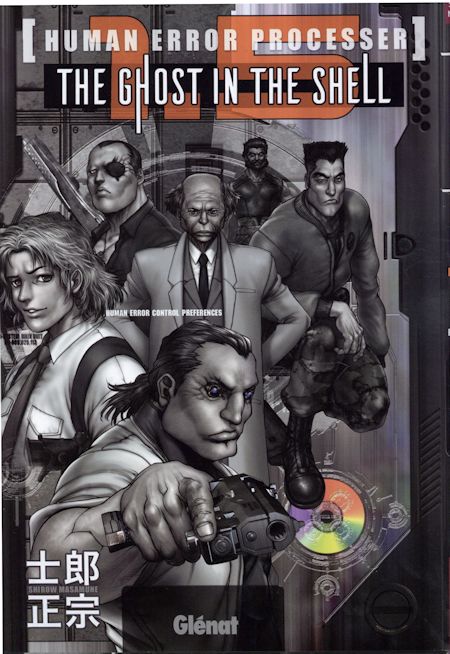
GitS-1-5-hummanErrorProcesser-cov“La section 9 est sur les dents ! Il faut dire que les enquêtes s’enchaînent pour la section d’élite et que Kusanagi et Batou n’ont guère le temps de chômer…”

“Découvrez enfin dans sa version perfect ce volume phare de la saga, qui vous éclairera sur la vie quotidienne de la section 9, ses difficultés et ses tensions. Un tome qui conclut à merveille le triptyque de The Ghost in the Shell Perfect Edition.”
[ Texte du site de l’éditeur ]

ATTENTION: Peut contenir des traces de divulgâcheur (i.e. “spoilers”)! Les personnes allergiques à toutes discussions d’une intrigue avant d’en avoir elle-même prit connaissance sont vivement conseillées de prendre les précautions nécessaires pour leur sécurité et ne devraient poursuivre la lecture qu’avec circonspection.
La description ci-haut (qui provient du site de Glénat) est totalement erronée! C’est bien la première fois que je vois ça: un éditeur qui ne connait pas son produit ou qui s’en fout! Le Major Kusanagi fait certes une brève apparition mais elle ne fait plus partie de la section 9! Quant à éclairer la vie quotidienne de la section 9, pas vraiment: on y apprends quelques détails nouveaux sur son fonctionnement mais sans plus. Par contre, il est vrai que l’histoire se concentre sur le travail journalier d’enquête de cette force militaro-policière qu’est la section 9.

Si Ghost in the Shell (攻殻機動隊 / Kōkaku kidōtai / lit. “Police anti-émeute blindée mobile”) est mon manga préféré, étrangement, je n’en ai jamais vraiment parlé dans ce blogue (à part brièvement lorsque j’ai commenté le film en live-action et l’animation). Je me dois donc d’abord de donner un aperçu de l’oeuvre en général.

Poursuivre la lecture après le saut de page >>

Continue reading

Isle of dogs

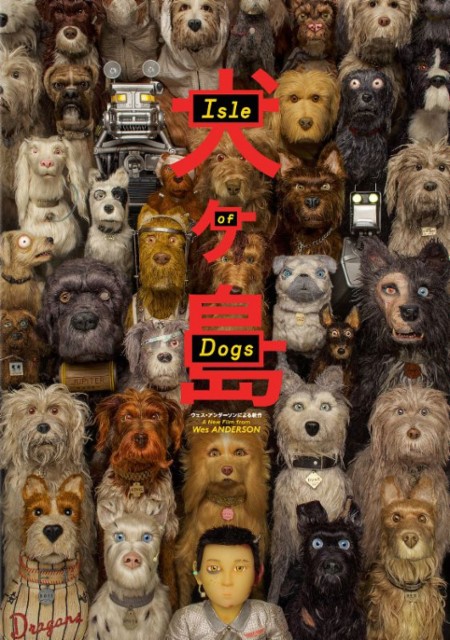
IsleOfDogs-covIn a timeless and fictitious Japan, the dictator of Megasaki — a cat lover — has banned all dogs to Trash Island. A twelve-year-old boy will sneak out on the island looking for his dog and unwithingly start a revolution. The stop-motion animation is amazing and quite stunning. The story is clever and cute — but, frankly, I’m a cat lover myself. The movie was well received (with a critic rating of 89% on Rotten Tomatoes) — although there was some harsh critics claiming it was succumbing to “the trope of the white savior” as the white foreign-student is organizing the revolt (but lets not forget that the REAL hero is the young boy!) and that it was a prime “example of racial stereotyping and cultural appropriation” ! On this I totally agree: it was a great hommage to the popularity of Japanese culture in the West (anime & manga, Kurosawa’s movies, etc.) and it’s an outrage that they didn’t select real dogs to play the parts! All in all, it’s beautifully entertaining, a great animation that I fuzzily recommend to everyone (although I am quite sure my cats will not like it). stars-3-5

[ AmazonBiblioGoogleIMdBOfficialWikipediaYoutube ]

[ Traduire ]

Capsules

The Mummy

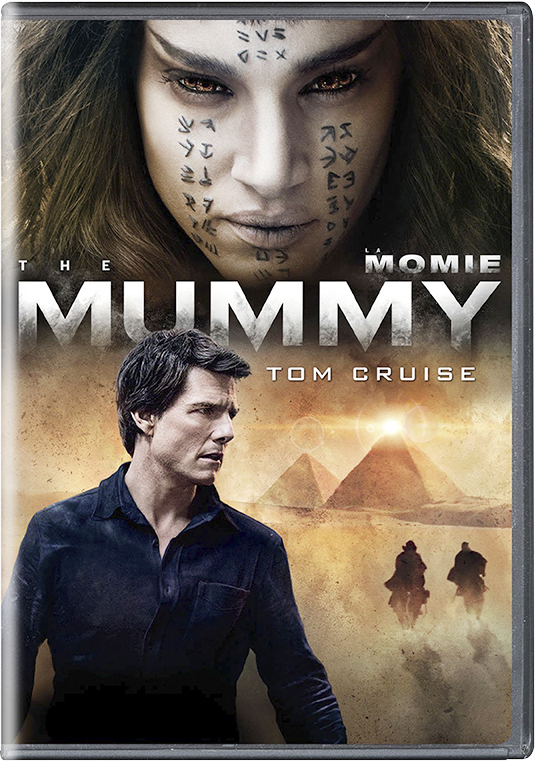
L9677659I found this action movie rather average and, if they wanted to do horror, well, I wasn’t scared. It is well paced and the acting is good (although Tom Cruise is getting a little old for this, his two female co-stars, Annabelle Wallis & Sofia Boutella, are great), but the story is rather predictable — however, mixing Jekyll & Hyde (Russell Crowe) with it was a surprise! I also like the “Egyptian” designs (the flashbacks, the look of Princess Ahmanet, the tomb & sarcophagus — a little reminiscent of Giger style). It’s interesting that, just in case the movie would be successful enough, they’ve put an open ending to allow for a sequel. I hope not. This reboot of The Mummy franchise offered a nice mindless entertainment but, alas, nothing more (Rotten Tomatoes concurs with a critical rating of 15% !). What’s scary is that The Mummy is supposed to be the first movie in the reboot of Universal’s Dark Universe (Jekyll & Hyde [with Russell Crowe — now the cross-over with The Mummy makes sense!], Frankenstein [with Javier Bardem], Dracula, Creature from the Black Lagoon, Phantom of the Opera, Hunchback of Notre Dame, Invisible Man [with Johnny Depp], etc.). The next movie in line should be Bride of Frankenstein [dir. Bill Condon, with possibly Angelina Jolie or Gal Gadot in titular role] first announced for Valentine’s Day 2019 but its release has now been delayed!  stars-2-5

[ AmazonBiblioGoogleIMDbWikipediaYoutube ]

[ Traduire ]

Capsules

In this corner of the world

InThisCornerOfTheWorld-covAnother great animation—this time by a less known director (at least in this corner of the world, but Sunao Katabuchi has also directed the TV series Black Lagoon and the movies Princess Arete and Mai Mai Miracle). This is a very traditional Japanese animation which is not drawn in the cute style we usually associate with anime. It is soft, pastel-like, yet a little sketchy. It is also realistic in its concept but yet cute in its own way. However, despite a good dose of humour (through the awkwardness of the main character and how she sees the world through her drawings), the story is quite serious as it chronicles the life and hardships of a young bride in the pre-war and, later, the WW2-era Japanese countryside in Kure. Despite the cartoony style, it is very precise in the description of the everyday life, the clothings, the food rationing, and the military details (warships, bombings, etc.). It is really touching, beautiful, educational and entertaining (although it is a bit long at 129 mins). Like Grave of the Fireflies describes the life after the firebombing of Tokyo, this movie is painting a detailed portrait of the life of ordinary Japanese citizens in the Hiroshima area before the A-bomb and a little after. It is a must-see movie that has been nominated for and received several awards both in Japan and abroad. stars-3-5

[ AmazonBiblioGoogleIMdBOfficialWikipediaYoutube ]

[ Traduire ]

Capsules

Your name.

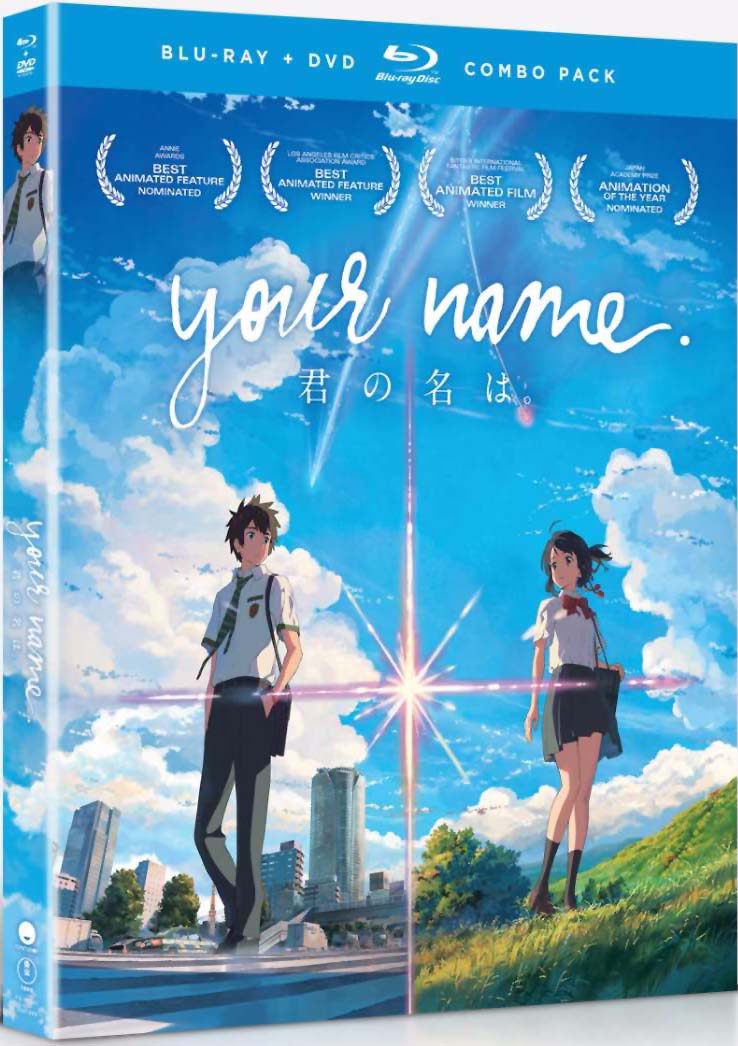
your-name-movie-bd-dvd-combo_1I had forgotten how amazing it was to watch an anime that’s so great you are at loss of words, feeling awestruck, almost like it’s a religious experience. I cannot really begin to describe the complex storytelling of this animation. It’s the story of a teenage romance between a Tokyo boy and a countryside girl who swap bodies as they are linked through space and time by some sort of old Shinto god. Or was it just a dream? It’s a truly fantastical tale — as it follows more or less Todorov’s definition of the genre. And yet, it’s also science-fiction because it involves a comet, some meteorites and technology — cellphones, etc. — is instrumental in the storytelling. In that aspect, it might be an allegory on the kind of relationships people can have through social media without never even meeting in person. But the really extraordinary part is the exceptional quality of the animation. It’s so realistic, precise and beautiful that it does really feel like a dream. You want to be there, to visit this remote part of Japan in the Gifu prefecture!

I could say so much about this movie and yet I just cannot find the words to describe how I feel. You really have to see it to understand how great it is. But, of course, if you’re a fan of Makoto Shinkai, you already know all this. He really is a master animator/director. And with each new movie he surpasses himself (mostly Voices of a Distant Star in 2002, The Place Promised in Our Early Days in 2004, 5 Centimeters per Second in 2007, The Garden of Words in 2013). There’s also a light novel and a manga adaptation, both written by Shinkai. Your name. A must! stars-4-0

[ AmazonBiblioGoogleIMdBOfficialWikipediaYoutube ]

[ Traduire ]

Capsules

Nos yeux fermés

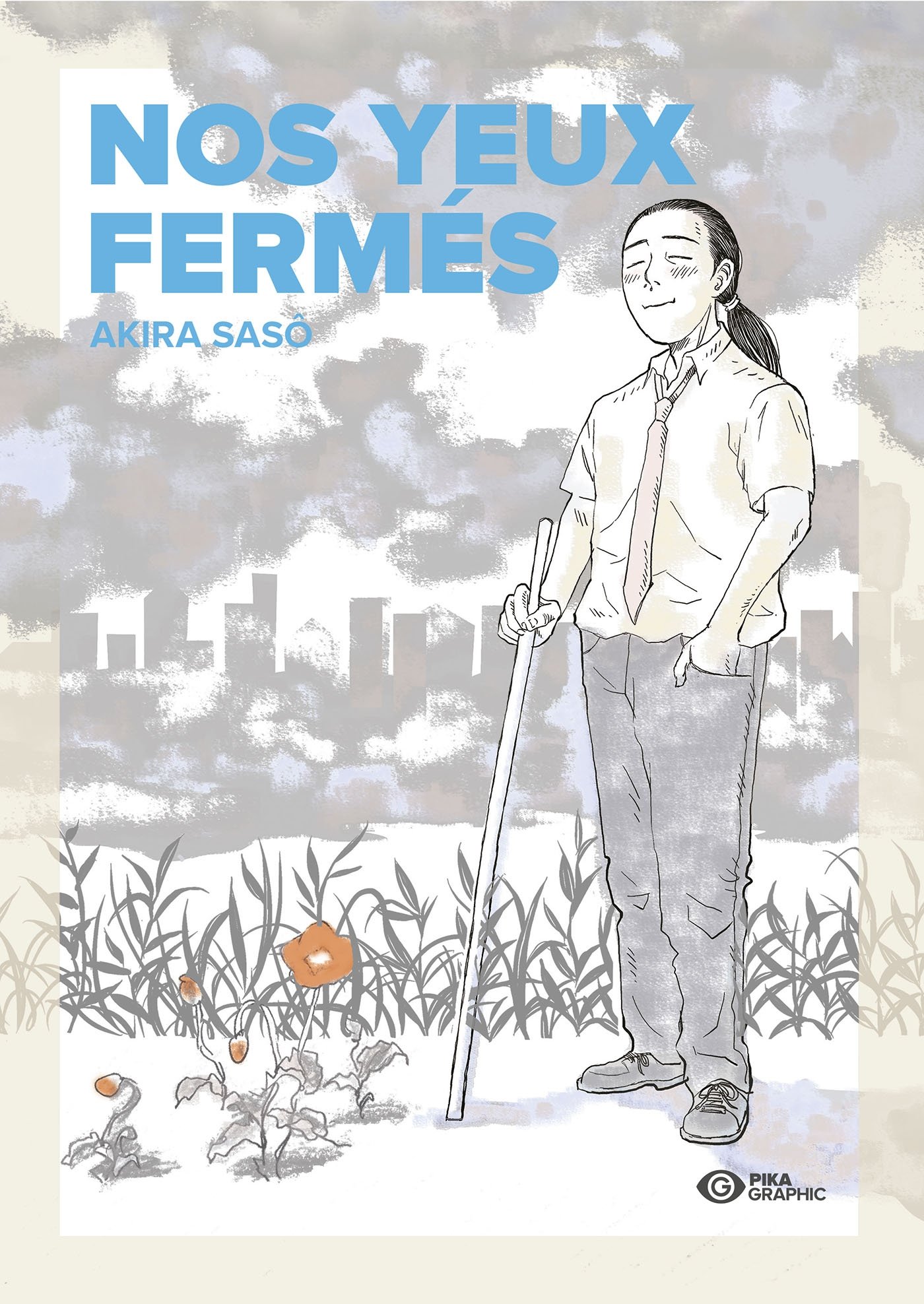
NosYeuxFermés-covOuvrez les yeux sur les petits bonheurs de la vie !

La vie n’est pas tendre avec Chihaya… Et elle le lui rend bien. Le bonheur ? Elle ne connaît pas. Son père alcoolique, sa mère partie, elle enchaîne les petits boulots pour pouvoir joindre les deux bouts. Un jour, son pied heurte accidentellement la canne d’Ichitarô, un non-voyant. À partir de cet instant, ce jeune homme à la joie de vivre communicative va tout faire pour entrer dans la vie de Chihaya et lui faire voir le monde autrement.

Dans ce conte moderne touchant, Akira Sasô nous invite à voir le monde autrement qu’avec nos yeux, un vrai hymne à la tolérance, à l’acceptation des autres et de leurs différences, mais aussi un hymne à la vie, dans ce qu’elle a de plus simple et de plus beau. Les personnages s’animent sous le crayon de l’auteur, qui dépeint avec simplicité la vie quotidienne d’un trait doux qui invite à la réflexion et au calme.

[Texte du site de l’éditeur; voir aussi la couverture arrière]

J’ai découvert cette collection, “Conte Moderne” chez Pika Graphic, quand j’ai lu Un Simple Monde de Mari Yamazaki. J’ai remarqué que la collection offrait trois autres titres Japonais: Nos Yeux Fermés de Akira Sasô (avril 2017), Une douce odeur de café de Yamakawa Naoto (février 2018) et Sunny Sunny Ann! de Yamamoto Miki (mai 2018). Comme le style graphique des deux plus récents ouvrages m’apparaîssait plus alternatif, j’ai préféré me lancé d’abord dans le titre plus classique de Akira Sasô… Nos yeux fermés (花に問ひたまへ / Hana ni Tohitama e / lit. “De temps en temps demander à la fleur”) est un manga seinen qui a été prépublié dans le magazine Gekkan Action (Futabasha) avant d’être compilé en volume en 2015.

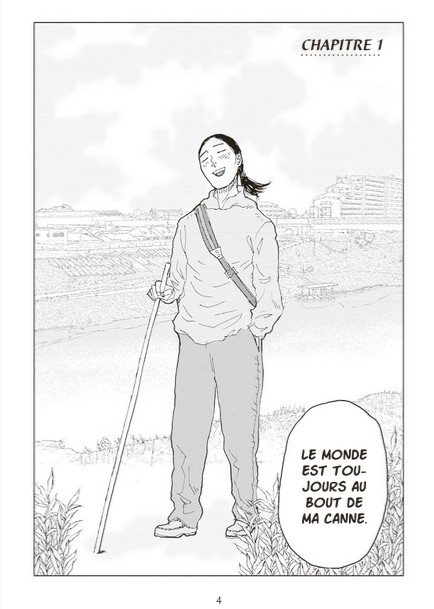
NosYeuxFermés-p004Nos yeux fermés est un très bon manga qui met en scène Chihaya, une jeune fille malheureuse et amère qui n’a que peu d’égard pour son entourage… Jusqu’à ce qu’elle rencontre Ichitarô, un jeune homme aveugle plein d’optimisme et d’énergie positive qui semble être contagieuse. Mais tout n’est pas rose dans la vie du jeune homme, marqué par un traumatisme d’enfance qui refera soudainement surface lorsque le fils du riche amant de sa mère défunte tentera d’exproprier le restaurant de sa tante. La relation entre Chihaya et Ichitarô leur sera mutuellement bénéfique—leur faisant découvrir le monde sous un jour nouveau, prouvant qu’un sourire et l’entraîde résout bien des problèmes—avant de fleurir en un sentiment qui va au-delà de l’amitié…

C’est un très beau récit, qui se lit bien. Il nous apprend que la cécité n’est pas nécessairement un handicap car on peut voir tout aussi bien (ou encore mieux) avec le coeur. Le style graphique de Sasô est très simple et propre (trait de plume mince et zip-a-tone) mais demeure assez agréable à l’oeil. C’est donc une bonne et agréable lecture.

Nos yeux fermés, par Akira Sasô. Paris: Pika Édition (Coll. Pika Graphic, série “Conte Moderne”), avril 2017. 272 pages, 17.2 x 24.2 cm, 16,00 € / $26.95 Can. ISBN 978-2-8116-3463-6. Pour un lectorat adolescent (15 ans et plus). stars-3-0

Pour en savoir plus vous pouvez consulter les sites suivants:

[ AmazonBiblioGoodreadsGoogleWikipediaWorldCat ]

HANA NI TOHITAMAE © AKIRA SASO 2014 / FUTABASHA PUBLISHERS LTD. © 2017 Pika Édition pour la version française.

[ Translate ]

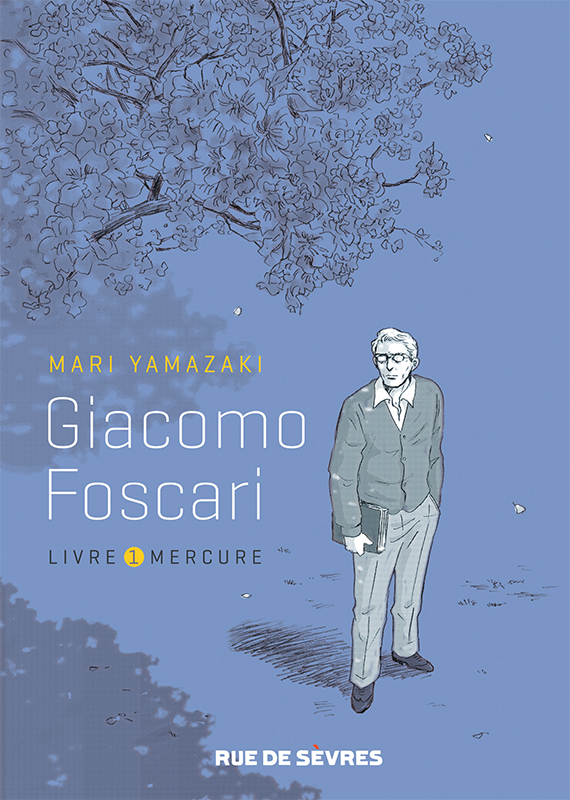
Giacomo Foscari 1

GiacomoFoscari-covUne rencontre subtile entre deux cultures

Giacomo Foscari est un témoin sensible de l’évolution de deux sociétés chahutées au cours du XXe siècle : en Italie, pendant son enfance, il assiste à la montée du fascisme. Quelques années plus tard, il se retrouve jeune professeur au cœur du Tokyo intellectuel des années 1960, en pleines tensions d’émancipation de la jeunesse. C’est via son parcours et ses rencontres hautes en couleurs que Mari Yamazaki nous invite à voyager dans l’histoire, entre cultures japonaise et romaine. 

[ Texte du site de l’éditeur; voir aussi la couverture arrière ]

Un autre manga de Yamazaki qui m’avait échappé lors de sa parution! Giacomo Foscari (ジャコモ・フォスカリ / Jakomo Fosukari) est un manga josei serialisé dans le magazine Office You (Shueisha) en 2011 et qui a été compilé en volume en septembre 2012. La traduction française est parue chez Rue de Sèvre un an plus tard.

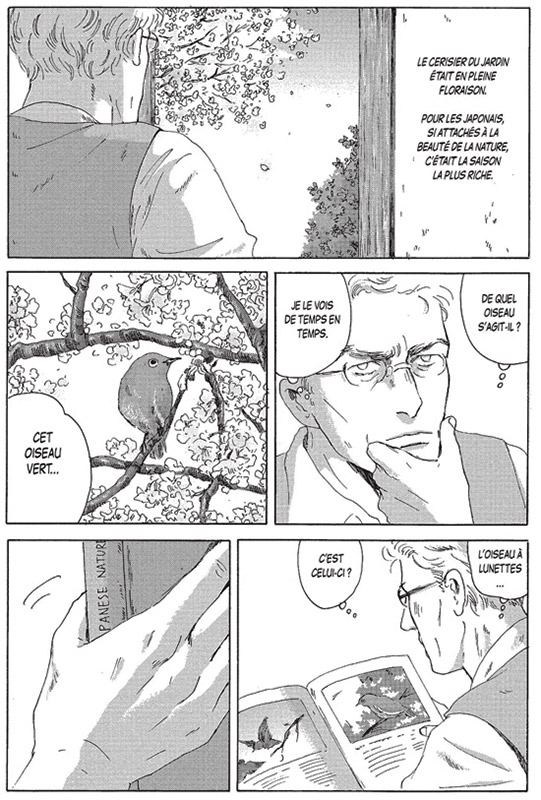
GiacomoFoscari-p073

Page 73

Grâce à des flash-backs, Yamazaki établit assez vite le personnage de Foscari qui a grandi à Venise dans un milieu bourgeois et cultivé. En observant le bel Andrea, un camarade de classe plutôt voyou, il réalise qu’il n’est pas donné à tous de grandir dans un milieu favorisé et que certain individu sont peut-être encore sous la protection des vieux dieux romains, comme Mercure, le dieu des voleurs. Quelques années plus tard, l’approche de la guerre et la monté du fascisme rend la situation difficile pour sa famille. Il visite le Japon en 1960, invité par Owada, un collègue universitaire, et décide d’y rester. La “culture chrétienne” qui a profondément transformée l’Italie le rendait mal à l’aise et il se sent beaucoup mieux “dans ce Japon sans contraintes religieuses“ qui lui rappelle beaucoup le polythéisme du monde romain antique. Il est témoin de la tourmente étudiante qui frappe les universités japonaises à l’instigation de la nouvelle gauche et du syndicat étudiant Zengakuren. Le gros du récit se déroule en 1966, alors qu’il enseigne l’histoire gréco-romaine à l’Université de Tokyo. Par l’entremise de sa logeuse—la veuve de son collègue Owada—ainsi que ses amis Yoshio Kishiba et l’excentrique Mitsuharu Tabé, il découvre la culture japonaise. Dans un café qu’il fréquente avec Kishiba, il fait la rencontre de Shusuke Koba, un jeune serveur qui lui rappelle Andrea. Il est fasciné par le jeune homme mais aussi par la jeune femme qu’il fréquente (sa petite amie? sa soeur?). 

Après Thermae Romae, Yamazaki continue avec ce manga sa recherche pour établir des parallèles entre la culture nippone et la civilisation romaine. Elle avait déjà établi le bain public comme point commun et, cette fois, elle traite de la similarité religieuse (à Rome il s’agissait de polythéisme teinté d’animisme alors qu’au Japon on retrouve un animisme frôlant le polythéisme—sans parler de la relation syncrétique entre le Shinto et le Bouddhisme!) ou de vénération de la nature. La sensibilité du récit et l’ambiance introspective qui invite à la réminescence du passé me rappelle beaucoup l’oeuvre de Jirō Taniguchi. Ce n’est peut-être pas surprenant puisque Taniguchi et Yamazaki sont sans doute les deux mangaka le plus influencés par l’art et la culture occidentale. 

À l’opposé de ses oeuvres plus importantes (comme Thermae Romae ou Pline), le style que Yamazaki utilise ici est plutôt simple, sans beaucoup de détails ou d’arrière-plans, comme c’est le cas dans la plupart de ses one-shots (PIL, Un simple monde). Il n’en reste pas moins élégant et laisse ainsi plus de place au texte. Toutefois, comme la majeure partie du récit sert à établir le contexte et les personnages, on sent que l’histoire va vraiment démarrer avec le tome suivant. Malheureusement, le volume deux n’est jamais paru. Yamazaki en a suspendu la production (Temporairement? Définitivement?) pour se consacrer à d’autres projets (Pline, entre autres). Elle a promis à quelques reprises de s’attaquer à la suite (en 2014, puis en 2017) et on espère bien qu’elle tiendra promesse. Car Giacomo Foscari est fort intéressant à lire tant par son récit touchant que par son sujet captivant pour les historiens: l’intersection de deux cultures que tout semble séparer mais où l’on retrouve des similarités intrigantes. 

Giacomo Foscari, livre 1: Mercure, par Mari Yamazaki. Paris: Rue de Sèvre, septembre 2013. 192 pages, 15.2 x 21.5 cm, 12,50 € / $21.95 Can. ISBN 978-2-36981-007-0. Pour un lectorat adolescent (14 ans et plus). stars-3-0

[ AmazonBiblioGoodreadsGoogleWikipediaWorldCat ]

Giacomo Foscari © Mari Yamazaki / Shueisha Creative Inc., 2012. © Rue de Sèvre, Paris, 2013 pour la traduction française.

[ Translate ]

Jumanji: Welcome to the jungle

Jumanji-covI don’t remember the 1995 version with Robin Williams, besides that it was silly. This more modern version is a little less silly and has much more action. It’s a teen movie so we must not take it too seriously, but it is quite clever in its storytelling. I enjoyed it quite a lot. The play with the characters getting totally opposite avatars in the game (especially the vain girl becoming the fat man [Jack Black]) is quite funny. The Rock (a.k.a. Dwayne Johnson) is really good at comedy and the movie is worth it just to see Karen Gillan again. It’s a good light entertainment that will make you laugh (or at least smile). It was released as a Christmas movie and was rather successful at the box-office (bringing in nearly ten times its cost in revenue!) and was relatively well received by the critics (76% at Rotten Tomatoes). A sequel is planned for next year. stars-3-0

[ AmazonBiblioGoogleIMDbOfficialWikipediaYoutube ]

[ Traduire ]

Capsules

Batman v Superman: Dawn of Justice

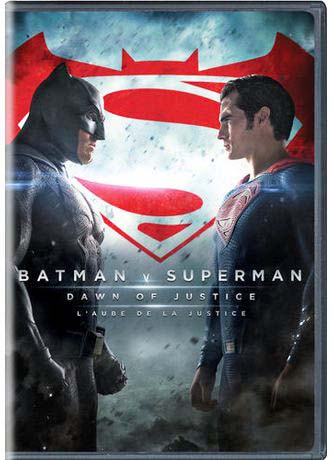
Batman v Superman-covThis is certainly one of the best DC movies (after Wonder Woman of course). It has plenty of good action, interesting story and a very powerful storytelling. I greatly enjoyed it even if it is a bit long and the Hulk-like final enemy/monster is rather disappointing and irritating — the concept of a monster full of energy who fires death rays feels a lot like Godzilla, so no extra point for originality here. I guess you get the best drama when you put emotion at play (or someone’s mama) while pitting super-heroes against each other. I only wish I would have watched this movie before its sequel, Justice League! They also made Lex Luthor into a Batman-type vilain, making the genius albeit evil boy into a simply mad genius — I am not sure if that was a good or a bad thing… Once again,  Ben Affleck, Henry Cavill, Gal Gadot offer good performances. Anyway, with this movie you get a great (somber) ambiance and epic battles that make it worth watching. As often, Rotten Tomatoes disagrees with a critical rating of only 27% ! stars-3-0

[ AmazonBiblioGoogleIMDbOfficialWikipediaYoutube ]

[ Traduire ]

Capsules

Justice League

Justice-League-2017-movie-posterThis movie offers an interesting ensemble of super-heroes (some more known than others, like Superman, Batman and Wonder Woman, other less known like the Flash, Aquaman and Cyborg). I like Ben Affleck, Henry Cavill, Gal Gadot in their super-heroes roles. Unfortunately, the bad guy, Steppenwolf, reminds me too much of the Thor movies… As it starts slow and never really takes off, Justice League provides only average action and storytelling, and is overall just good enough to keep you interested (and entertained) into seeing how it ends. The good thing is that you can still “enjoy” the movie even if, like myself, you have not read any of the comics or seen the previous movies introducing the plot and the new DC Extended Universe (Batman v Superman: Dawn of Justice) or its characters (Man of Steel, Wonder Woman, and, lets not forget the bad guys, Suicide Squad). In the end, it doesn’t feel very original. Yawn… Rotten Tomatoes agrees with a critic rating of 40%, although the fans liked it (audience score of 74% !) stars-2-5

[ AmazonBiblioGoogleIMDbOfficialWikipediaYoutube ]

[ Traduire ]

Capsules

Alienated

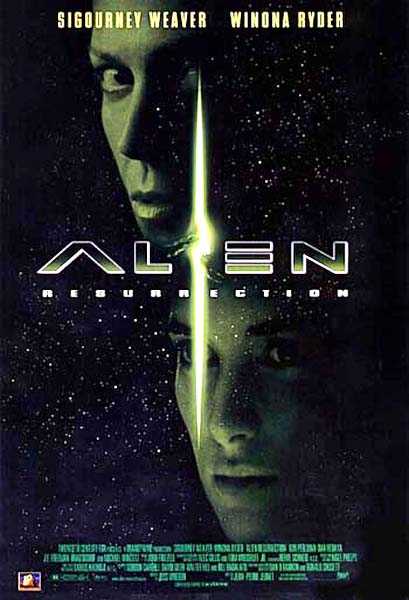
Catching up on some of the movies recorded on my PVR, I decided to watch the latest two movies from the Alien franchise: Alien Resurrection and Alien: Covenant.

AlienResurrection-covIn this 1997 sequel of the Alien franchise, Ripley is brought back to life by cloning in order to deliver an alien embryo for an army mad-scientist to study. Of course, everything goes wrong and close quarter’s chases ensue. However, director Jean-Pierre Jeunet (Delicatessen, Amélie) is no Ridley Scott and the movie doesn’t have the thrill of the original and is riddled with inconsistencies. I’ll list two. First, cloned someone along with the parasite that infects her, and she keeps her personality and memories? Even the pseudo-explanations given to justify that doesn’t make any sense! Second, the alien queen switches from oviparous reproduction to viviparous in the middle of the movie, as she gives birth to the end-level monster which ends up so weak and pitiful that you almost want to champion him instead of the good guys. However, I like that the genetically-mixed Ripley, believe it or not still played by Sigourney Weaver, is such an ambivalent character that you keep wondering whether she’s the bad guy of the movie. I also like the character of Call, played by Winona Ryder. Despite those few positive aspects, the movie is barely entertaining. For once, Rotten Tomatoes seems to agree with me (critics rating at 55% and audience rating at 39% !). stars-2-0

[ AmazonBiblioGoogleIMdBWikipediaYoutube ]

Capsules

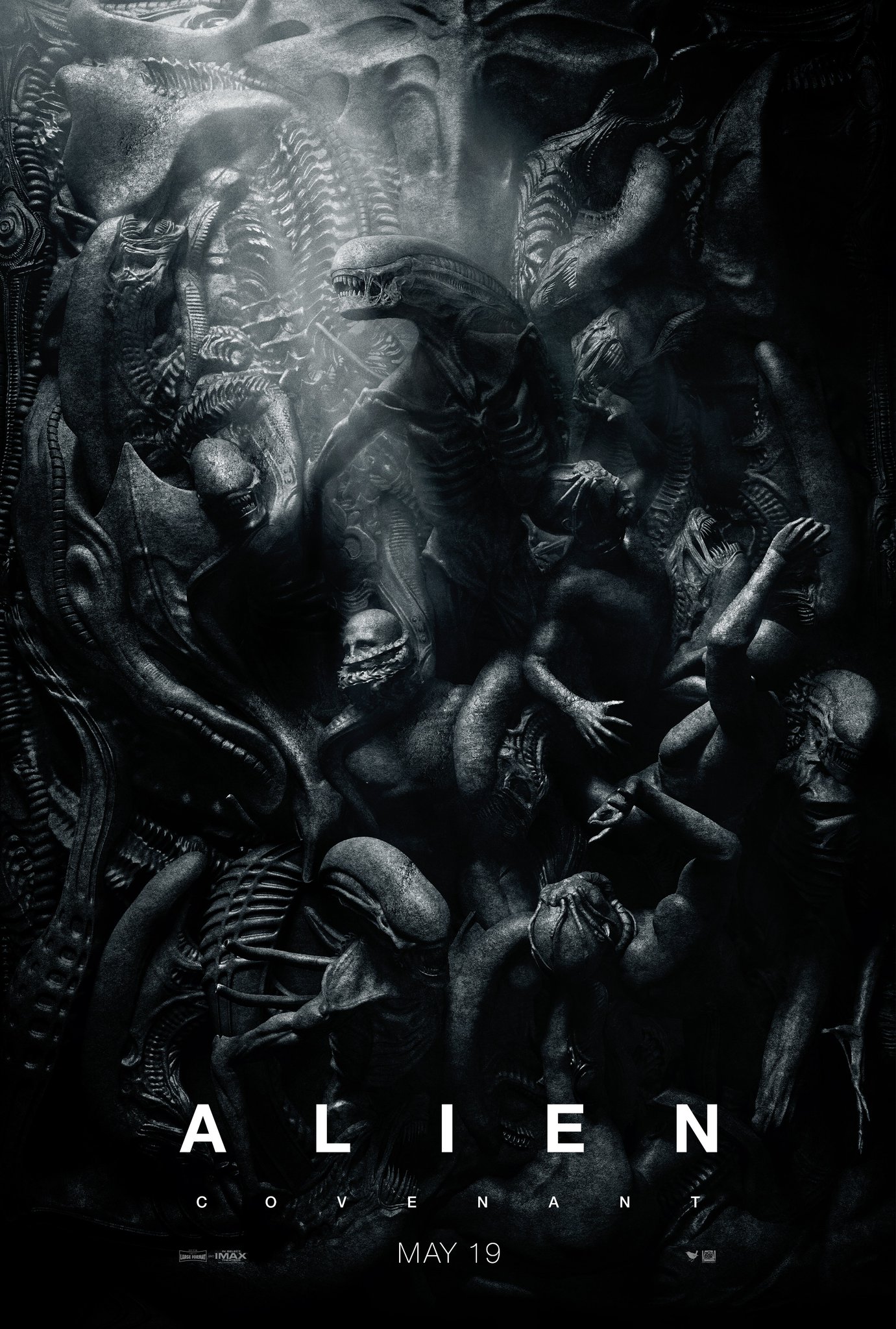
Alien-Covenant-posterAlien: Covenant is the 2017 sequel to the Alien prequel, Prometheus, both directed by Ridley Scott. His experience and skills make for a story that is a more suspenseful thriller than the movie above, but after so many iteration, it unfortunately has nothing original left to offer. It’s the same old story. Katherine Waterston, who plays Daniels, the movie’s heroine, is a suitable replacement for Ripley. But in the end the movie received only an overall rating of 66% on Rotten Tomatoes.

A radio signal brings a colony-ship to an earth-like planet home of the ship encountered in Prometheus. There, the android David has released the pathogen that creates a new type of aliens that consumes all animal life on the planet. David awaits, in what looks like an old temple, for new life to visits him so he can pursue further his experiments in creation. I like the fight between the two androids, David and the newer (but emotionally neutered) model named Walter (both played by Michael Fassbender). An opened ending leaves space for yet another sequel. Alien: Covenant is well-made and entertaining, but what’s the point to repeat endlessly the same kind of story? Apparently, that’s what Ridley Scott thinks as well, and he is planning something rather different for the eventual sequel… stars-2-5

[ AmazonBiblioGoogleIMdBOfficialWikipediaYoutube ]

Capsules

[ Traduire ]

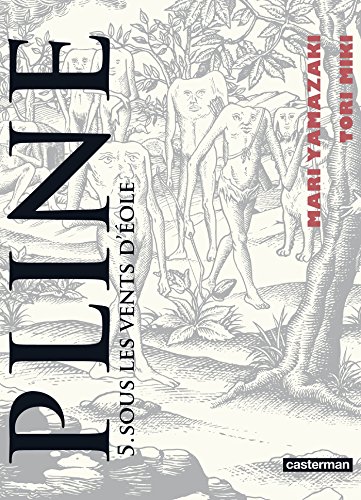
Pline, vol. 5

Pline-v5-covDans le tome précédent : A Rome, la folie croissante de Néron semble laisser toute latitude à Poppée. De son côté, Pline, après le tremblement de terre qui a ravagé Pompéi, fait la connaissance d’un mystérieux voyageur revenu de lointaines contrées.

Plus que jamais assoiffé de connaissance, Pline comprend que les écrits de ses contemporains ou des auteurs du passé ne lui suffiront pas. L’heure du départ a sonné, cap vers l’Afrique !

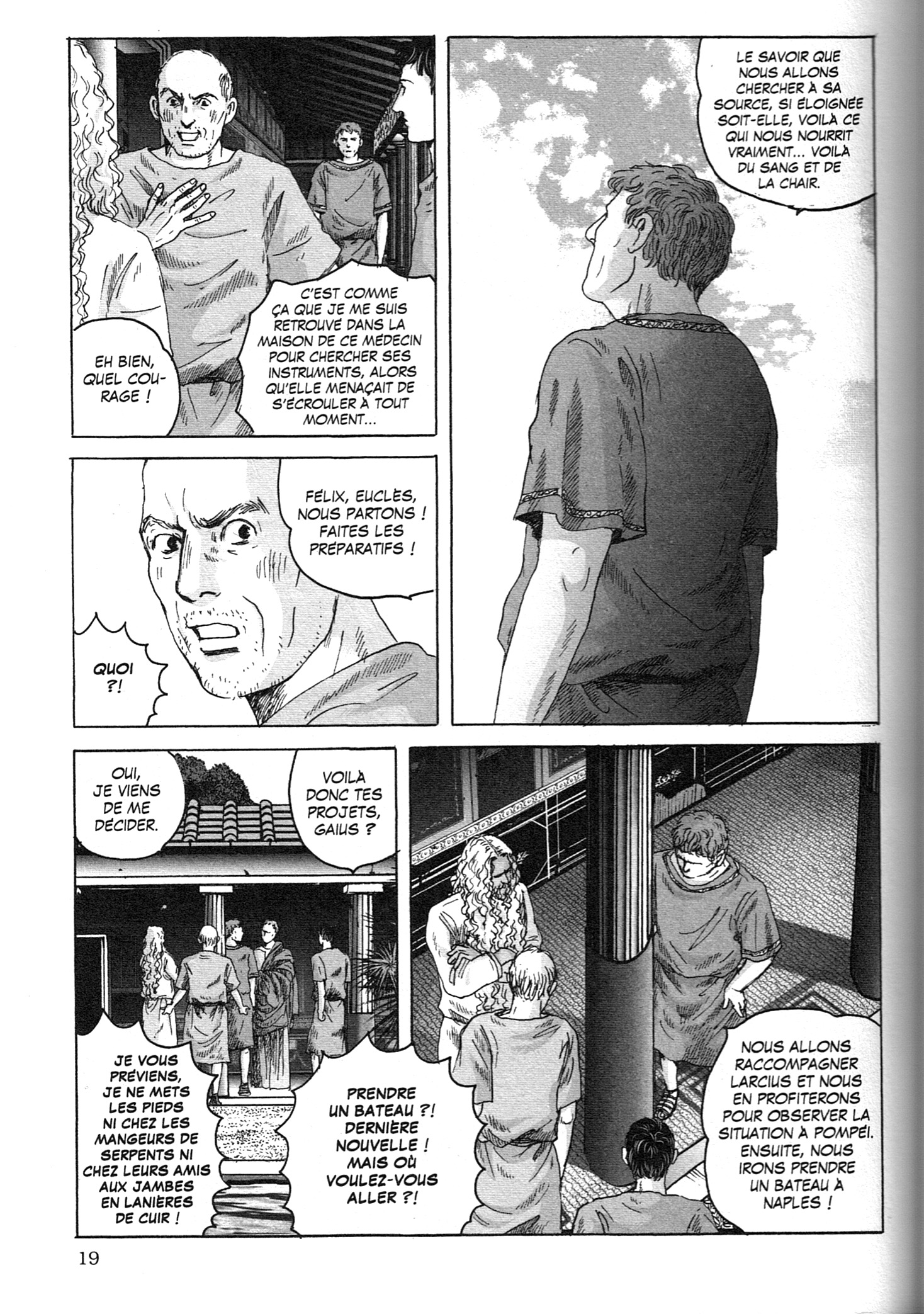
Pline-v5p019Pline écoute les récits de Larcius (fils d’un négociant en vin de Pompéi qui a beaucoup voyagé) et cela lui donne l’appétit de faire ses propres voyages de découvertes. Pline, Euclès et Félix raccompagnent donc Larcius à Pompéi afin de voir comment la situation y a évolué. La reconstruction de la ville se fait de façon inégale, au gré des besoins de la politique et des moyens financiers des habitants. Ils retrouvent l’ingénieure Mirabela et font la rencontre de Aselina Eumachia, une riche et influente commerçante de la laine. Sur l’un de ses bateau, à Naples, ils prennent la mer sur la Mare Nostrum en direction de l’Afrique!

Après une tempête, ils rencontrent l’épave d’un navire attaqué par des pirates. Le seul survivant est un enfant très doué pour la navigation et son corbeau. Les vents ont fait dériver leur navire vers les Iles Éoliennes. Ils font escale à Strongyle pour attendre que se calment les vents et charger un cargaison d’obsidienne mais l’équipage les abandonne sur l’île! Le Stromboli choisit ce moment pour faire éruption et Pline désir observer le phénomène en détail et de près. Il constate que les volcans forment une ligne du sud vers le nord, de l’Etna au Vésuve en passant par Vulcano et Stromboli. Il remarque aussi que l’éruption du Stromboli est différente de celle de l’Etna qu’il a observé précédemment…

Avec ce cinquième volume, il me semble que l’action commence vraiment alors que Pline décide de se lancer dans l’aventure. Il est surtout amusant de constater que le destin de Pline est décidément marqué par les volcans: l’Etna, puis le Vésuve, et maintenant le Stromboli! Réussiront-ils tous à survivre à cette éruption et s’échapper de cette île volcanique? C’est ce que nous saurons dans le volume six, qui vient tout juste de paraître en Europe!

Ce manga historique demeure tout aussi fascinant. Le récit est bien mené et capte notre attention alors que Mari Yamazaki et  Tori Miki nous font découvrir de nombreux aspects de la société romaine: géographie, politique, architecture, commerce, etc., sans oublier quelques anecdotes d’histoire naturelle! Le travail des deux artistes nous offre un graphisme toujours aussi beau et détaillé, et qui gagne même en assurance. Un très bon manga historique qui s’avère une lecture à la fois agréable et instructive. Vivement recommandé!

Pline, vol. 5: Sous les vents d’Éole, par Mari Yamazaki et Tori Miki. Paris: Casterman (Coll. Sakka), Jan. 2018. 200 pg, 13.4 x 18 cm, 8,45 € / $15.95 Can (ePub/PDF: 5,99 €), ISBN: 978-2-2031-5359-2. Pour lectorat adolescent (14+). Voir couverture arrière. stars-3-5

[ AmazonBiblioCastermanGoodreadsGoogleWikipediaWorldcat ]

Pline © 2015-2016 Mari Yamazaki, Tori Miki. © 2017 Casterman pour la traduction française.

Voir mes commentaires sur les volumes précédents:

[ Translate ]

Capsules

Ad Astra, vol. 4-5

“Bravoure, complots et stratégie… Plongez au coeur des batailles qui opposèrent les légendaires Hannibal et Scipion !”

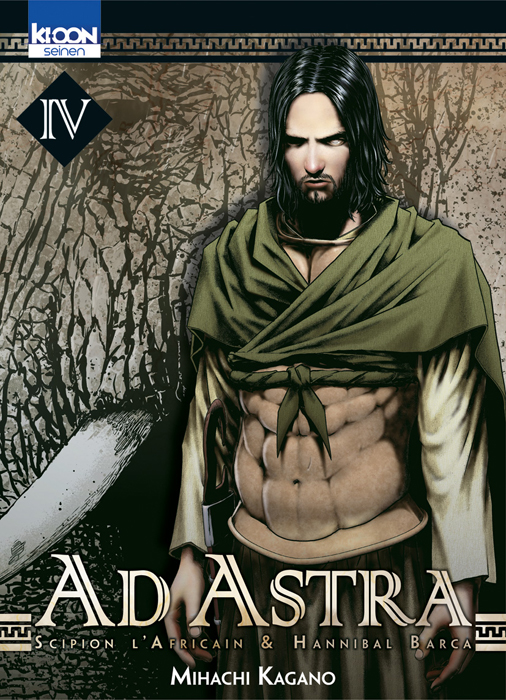
AdAstra-v04-cov“Fabius parvient à attirer Hannibal près de Capoue, dans la plaine de Campanie, où les troupes romaines l’attendent de pied ferme. Hélas, son plan est réduit à néant lorsque son maître de cavalerie, lassé par sa stratégie d’usure, contrevient à ses ordres : grâce à une nouvelle ruse, les Carthaginois réussissent à briser l’encerclement romain.”

“Le dictateur perd donc la confiance du sénat et voit ses pouvoirs transférés à Minucius, qui contre toute attente vient de l’emporter sur un détachement ennemi ! Enivré par sa victoire, le guerrier se lance à la poursuite d’Hannibal à la tête de deux légions, mais se retrouve bien vite en difficulté… Et si tout cela faisait partie du plan du monstre de Carthage ?” [Texte de la couverture arrière]

Ad Astra: Scipion l’Africain & Hannibal Barca (アド・アストラ -スキピオとハンニバル- / Ad Astra – Scipio to Hannibal) est un manga seinen historique par Mihachi KAGANO (dont c’est le premier titre) qui raconte les faits saillants de la deuxième guerre punique qui opposa Rome et Carthage. Il a été prépublié dans le magazine Ultra Jump (entre mars 2011 et février 2018), puis compilé en treize volumes chez Shūeisha. La version française paraît chez Ki-oon. J’en ai déjà commenté les trois premiers volumes.

AdAstra-v04p153

page 153

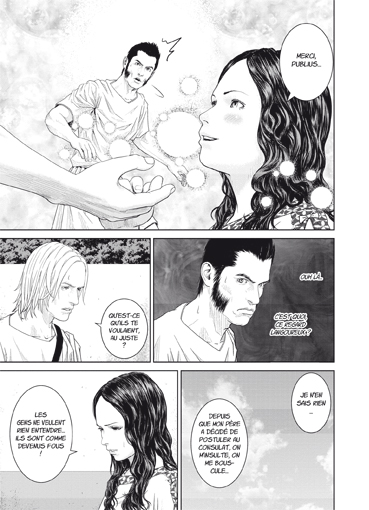
Dans le volume quatre, avec maintenant le support du Sénat, Minucius décide d’attaquer avec tous ses hommes les troupes d’Hannibal qui semblent prendre position sur une colline. Mais c’est évidemment une embuscade et des soldats carthaginois sortent de derrière chaque rocher ou crevasse, alors que les frondeurs bombardent les romains du haut de la colline. Trop fier, Minucius refuse de sonner la retraite. Il est blessé par Giscon en combat singulier. Il y aurait laissé la vie si Hannibal n’avait pas retraité à l’arrivée des renforts de Fabius, que Scipion avait convaincu d’intervenir. De retour à Rome, Scipion sauve sa jeune fiancée Aemilia qui est prise à partie par la foule car son père, Aemilius, se présente au Consulat en même temps que Varron.

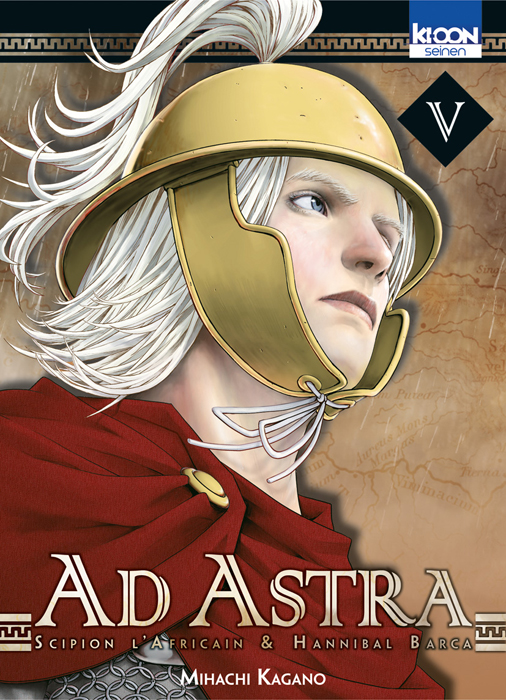
AdAstra-v05-cov“À Gerunium, Minucius paie au prix fort son entêtement : ses troupes sont décimées, et lui-même n’échappe à la mort que de justesse grâce à l’intervention de Fabius ! Ultime humiliation pour le guerrier, son combat contre Giscon lui coûte deux doigts de la main droite.”

“Mais sa dictature, tout comme celle de Fabius, touche à sa fin. Après une campagne acharnée, c’est Varron qui est nommé consul, aux côtés d’Aemilius ! Et le nouveau chef des armées compte bien écraser l’ennemi par le nombre. C’est donc 86 000 soldats qu’il envoie contre Hannibal dans la plaine de Cannes, théâtre d’une des plus grandes batailles de l’histoire…” [Texte de la couverture arrière]

AdAstra-v05p013

page 13

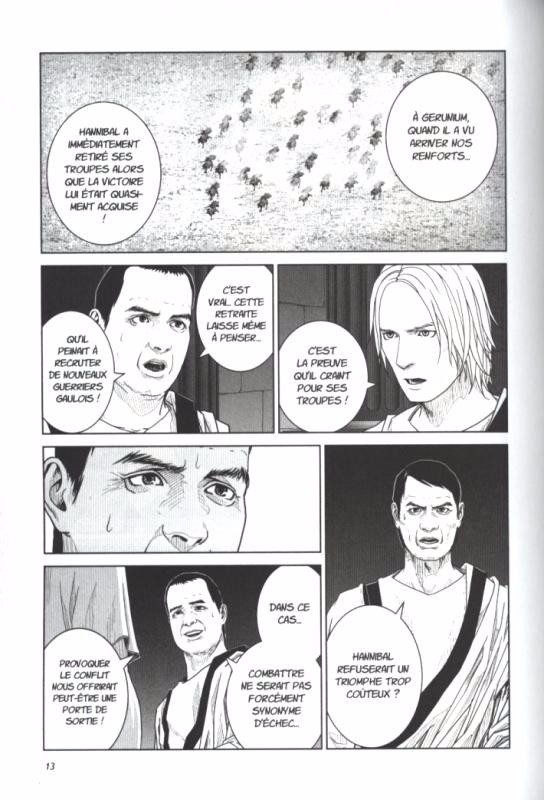
Dans le cinquième volume, Varron est élu premier Consul et promet de lancer une armée de quatre-vingt-six-mille hommes contre Hannibal. Fabius compte sur Aemilius, élu second Consul, pour tempérer l’audace de Varron. Les deux armées convergent vers la plaine de Cannes pour ce qui deviendra l’une des batailles majeures et décisive de la guerre. Malgré son infériorité numérique (seulement cinquante-mille hommes), Hannibal profite de son avantage tactique et attaque en premier. Grâce à sa fine stratégie il réussi à prendre l’armée romaine en tenaille!

Ad Astra est le manga parfait pour les amateurs d’histoire et de la Rome Antique. Il nous donne une vue intéressante de la politique et des stratégies militaires de l’époque, tout en nous donnant un récit captivant des intrigues et des sentiments qui opposent et rattachent les personnages.

Le style graphique de Kagano est clair et précis, souvent très détaillé, et même si il dépeint bien les scènes d’action et de combat, il me semble toutefois que le dessin est statique et manque un peu de vie.

Un manga très beau et passionnant, mais qui étire le récit un peu trop. Cependant, j’ai quand même hâte de lire la suite: plus que huit volumes (si l’on compte le treizième et dernier tome qui paraîtra en France en novembre 2018) avant d’en découvrir le dénouement!

Ad Astra: Scipion L’Africain & Hannibal Barca Vol. 4, par Mihachi KAGANO. Paris: Ki-oon,  décembre 2014. 178 pages, 13 x 18 cm, 7,90 € / $16.98 Can. ISBN 978-2-35592-752-2. Pour un lectorat adolescent (14 ans et plus). stars-3-0

Ad Astra: Scipion L’Africain & Hannibal Barca Vol. 5, par Mihachi KAGANO. Paris: Ki-oon, mars 2015. 178 pages, 13 x 18 cm, 7,90 € / $16.98 Can. ISBN 978-2-35592-797-3. Pour un lectorat adolescent (14 ans et plus). stars-3-0

[ AmazonBiblioGoodreadsWikipediaWorldCatYoutube ]

Ad Astra Publius Cornelius Scipio Africanus Major & Hannibal Barca © 2011 by Mihachi Kagano / SHUEISHA Inc.

[ Translate ]

Isabella Bird: Femme Exploratrice, vol. 1-2

IsabellaBird-v1-cov“À la fin du XIXe siècle, le Japon s’ouvre au monde et s’occidentalise à marche forcée. Mais le pays reste un vrai mystère pour la plupart des Européens, ce qui en fait une destination de choix pour la célèbre exploratrice anglaise Isabella Bird ! Malgré son jeune âge, elle est déjà connue pour ses écrits sur les terres les plus sauvages. Isabella ne choisit jamais les chemins les plus faciles et, cette fois encore, elle étonne son entourage par son objectif incongru : Ezo, le territoire des Aïnous, une terre encore quasi inexplorée aux confins de l’archipel… Le voyage s’annonce long et difficile, mais rien n’arrête la pétillante jeune femme !

Accompagnée de son guide-interprète, le stoïque M. Ito, la jeune femme parcourt un pays en plein bouleversement. Dans ses lettres quotidiennes à sa sœur, elle narre avec sincérité et force détails la suite de chocs culturels qu’elle expérimente. Elle veut tout voir, tout essayer, quitte à endurer chaleur, fatigue, maladie ainsi que les sarcasmes de ses pairs !

Lancez-vous à la découverte d’un Japon traditionnel désormais disparu à travers les yeux de l’intrépide Isabella Bird ! Basé sur les écrits réels de l’aventurière, Isabella Bird, femme exploratrice est un récit passionnant sur la rencontre de deux mondes, dessiné avec un rare souci du détail par Taiga Sassa, nouveau talent prometteur !”

[ Texte du site de l’éditeur; voir aussi la couverture arrière ]

Comme je l’ai déjà mentionné lorsque j’ai introduit ce manga, Isabella Bird, femme exploratrice (ふしぎの国のバード / Fushigi no Kuni no bādo [Bird] / littéralement: “Bird au pays des merveilles”) nous offre le récit de voyage de la célèbre exploratrice britannique au Japon du début de l’ère Meiji. Ce manga historique a d’abord été publié en feuilletons dans le magazine Harta de Enterbrain. Jusqu’à maintenant il a été compilé en quatre volumes (le dernier en date étant paru en novembre 2017). La version française est publiée par Ki-oon et trois volumes sont paru jusqu’à maintenant (le quatrième devrait paraître en août 2018).

L’auteur, dont c’est le premier manga publié, a basé son récit sur l’ouvrage Unbeaten Tracks in Japan (1880) qui rassemble la correspondance d’Isabella Bird avec sa soeur Henrietta durant son périple au Japon.

Continuez après le saut de page >>

Continue reading

Black Panther

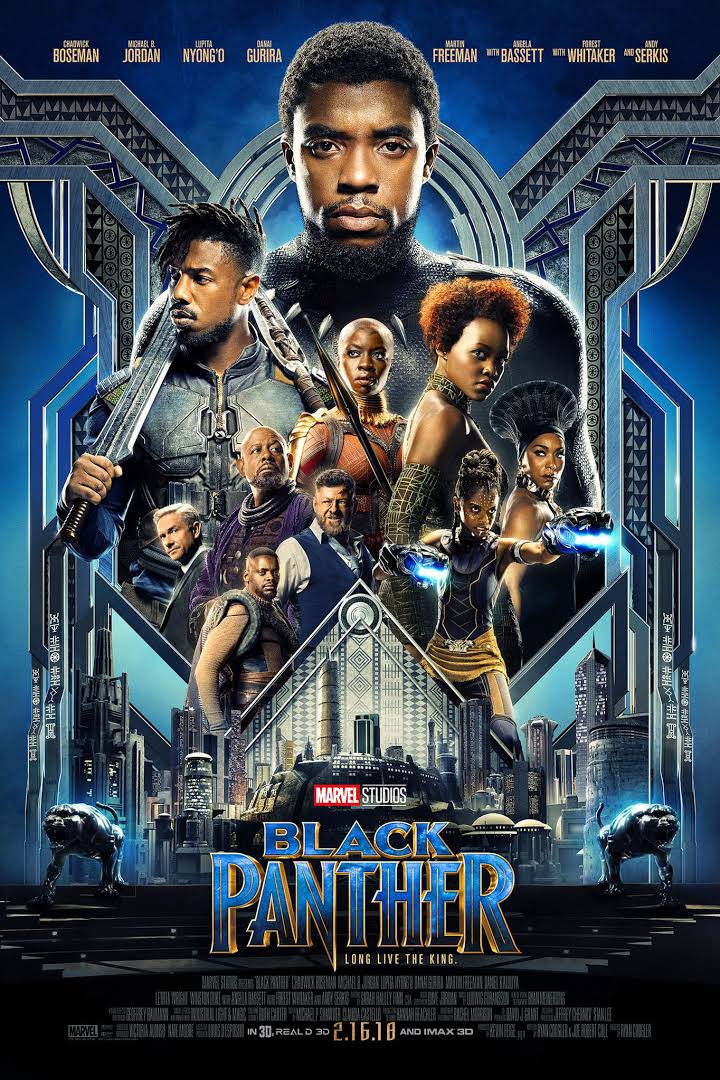
BlackPanterThat movie had been hyped so much that when I finally got to see it I was almost disappointed. It is what is now the average super-heroes movie with a thin storyline and lots of special effects. Superficial but with just enough storytelling to be interesting and a plethora of action to be entertaining. The originality of this film is that it offers a cultural super-hero — which bring a breeze of fresh air into the genre. Maybe we’ll see some offshoot of this concept, creating a new trend (the Maori super-hero or the Navajo super-hero or the Mexican Quetzalcoatl-man?) — as long as they don’t push it too far… 

The movie was very successful (97% on RottenTomatoes and returned six times its cost with a box office of $1.3b!). The acting was excellent and I liked very much what they did with the African accent of the characters (I wonder what was their inspiration for it?). It reminded me of the south african-style accent for the Belters in the TV series The Expenses. So, excellent idea to revive this super-hero (he appeared first in 1966 in the comic Fantastic Four #52), average action movie and, all in all, a good entertainment. Let’s see now what more they will do with this character. stars-3-0

[ AmazonBiblioGoogleIMdBOfficialWikipediaYoutube ]

[ Traduire ]

Capsules

Les chats du Louvre, vol. 1-2

“Avec Amer béton, ou, plus récemment la série Sunny, Matsumoto a développé un univers poétique et onirique très personnel. Avec Les Chats du Louvre, il nous invite à découvrir les véritables habitants du musée qui veillent sur ce lieu et ses oeuvres depuis l’origine, de drôles de chats qui changent d’apparence la nuit…”

ChatsDuLouvre-v01-cov“Lors d’une de ses visites guidées, Cécile aperçoit dans les allées du musée du Louvre un petit chaton blanc qui semble écouter ses commentaires. Quand elle en parle à son collègue, celui-ci ne la croit pas. Monsieur Marcel est gardien de nuit depuis des années. Sa famille travaille au Louvre depuis des générations. Ce soir, il forme Patrick, une jeune recrue. Très vite, il s’éloigne du circuit habituel pour emprunter le chemin des combles. Là haut, Patrick découvre des chats. Marcel vient les nourrir et explique à son jeune collègue que ces chats ont toujours habité au Louvre. Ils étaient là déjà à l’époque où le Louvre n’était qu’un château. Une fois les gardiens partis, les chats se mettent à parler. Il y a Barbe-bleue, Myosotis, Dent-de-scie, et le petit chat blanc, c’est Flocon. On raconte qu’il est spécial, ce serait un « passe-tableau »… mais qu’est-ce qu’un passe-tableau ?”

[ Texte du site de l’éditeur ]

Continuer après le saut de page >>
Continue reading

Un simple monde

UN_SIMPLE_MONDE (Pika Graphic)_JKT_a_6.indd“Mari Yamazaki est l’une des auteurs japonais de bande dessinée qui a le plus voyagé dans sa vie. Que ce soit en Italie, en Syrie ou au Brésil en passant par les îles Tuvalu, l’auteure de la célèbre série Thermæ Romæ s’imprègne de l’ambiance qui l’entoure et croque la vie quotidienne des habitants. Dans Un Simple Monde, elle capte avec justesse et sensibilité des bribes d’histoires où il est question de l’attachement à son pays, à sa famille, à sa culture… Des histoires toutes singulières mais qui touchent à l’universel et nous rendent le monde si proche.”

[ Texte du site de l’éditeur; voir aussi la couverture arrière ]

Un simple monde (地球恋愛 / Chikyû Renai / lit. “Affaire d’amour avec la terre”) est un manga josei par Mari Yamazaki (Thermae Romae, PIL, Pline). Il a été prépublié dans le magazine Kiss+ en 2010-11 puis compilé chez l’éditeur Kôdansha en août 2011. Il s’agit d’un recueil de six histoires courtes (vingt-six pages chacune) qui s’enchaînent (en faisant subtilement référence au récit précédent) et nous présentent des histoires d’amour de couples d’âge mûr tout autour du globe (Italie, Tuvalu, Danemark, Brésil, Syrie, États-Unis). Ces tranches de vie traitent non seulement de l’affection pour un être cher mais aussi de l’amour envers sa culture ou sa terre natale. Yamazaki a elle-même beaucoup voyagé (Florence, Lisbonne, Chicago, Venise, etc.) et semble prendre plaisir à observer le comportement humain.

Continuer après le saut de page >>

Continue reading

Victoria & Abdul

Victoria&Abdul-covBased on a book by Shrabani Basu, this movie is the fictionalized account of the extraordinary friendship between Queen Victoria and an Indian-muslim servant named Abdul Karim (a.k.a. the Munshi) that broke her boredom and loneliness, reviving a little her days for the last fifteen years of her reign (1887-1901). Of course, such movie is always largely made of fiction — how could we really know what happened between them? — but the fact remains that they spent lots of time together and Victoria gained an interest into the farthest corner of her empire. Amusingly, it makes of this movie some sort of a sequel to Mrs Brown (1997) where Dame Judi Dench first portrayed Victoria. However, the major aspects of the story must be somewhat truthful as it is based on the memoirs of Ponsonby, Victoria’s private secretary, published in 1951 and on Abdul’s own diary and some of his correspondance that were discovered in 2010. This little historical insight into Victoria’s reign, the excellent acting and the light tone — almost comedic — of the movie makes it being quite enjoyable and entertaining. stars-3-0

[ AmazonBiblioGoogleIMdBOfficialWikipediaYoutube ]

[ Traduire ]
Capsules

American Made

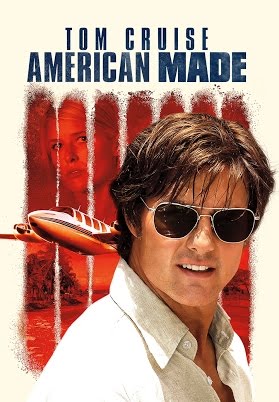
AmericanMade-poster

Poster art

This movie is presented as a biopic but it’s really just “inspired” by the life of Barry Seal. It’s nevertheless enjoyable to see Tom Cruise play in a comedy — although this story should really be a tragedy since it’s about how Reagan’s government was trying to prevent communism to prevail in Central America by arming the Nicaraguan Contras against the Sandinistas using drug smugglers. It doesn’t end well for Seal but the light tone of the movie makes the heavy subject entertaining enough to be enjoyable — while we should have been puking in disgust instead… stars-2-5


[ AmazonBiblioGoogleIMdBWikipediaYoutube ]

[ Traduire ]Capsules

More on “The Terror”

TheTerror-posterI just finished watching The Terror — which I already commented earlier this month. It’s interesting but a little disappointing. The fantastical aspect of the Inuk mythology seemed at first the most promising element but was left largely unexploited. The slaying of the beast was the symbol of the white men killing the native spirits, or their innocence, the beginning of their conquest. I guess the larger theme is homo homini lupus or, in extreme circumstances, men are their worst enemy. It’s a story of survival, even if it failed for all but one — who nevertheless disappeared into the wilderness as he went native, probably to atone his failure. Apparently, they are planning a second season set during WW2 in a Japanese-American internment camp. An interesting speculative-historic drama. stars-3-0

[ BiblioGoogleIMdBOfficialWikipediaYoutube ]

[ Traduire ]

Capsules

Crapule

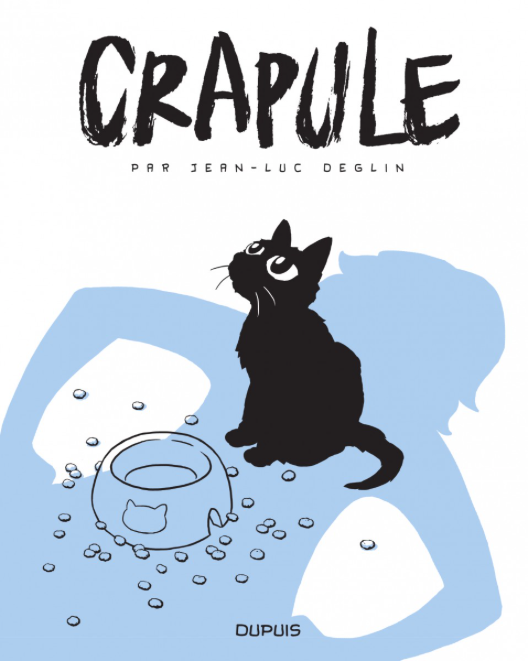
Crapule-cov“Crapule est un petit chat noir, maigre, aux yeux jaunes et globuleux. Dans son appartement vit aussi une jeune humaine célibataire et citadine. Ensemble, ils vont vivre de merveilleux moments insignifiants.”

[ Texte de la couverture arrière; voir aussi le site de l’éditeur ]

J’ai une collègue qui me recommande souvent des histoires de chats. Voici l’une de ses suggestions…

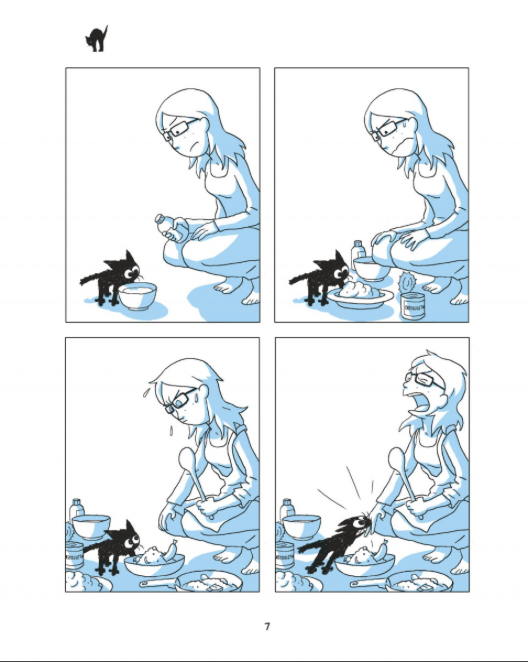
Crapule-p007Crapule est une bande-dessinée européenne de petit format (6 1/2 x 8 po) en deux couleurs (noir et bleu pâle) qui nous offre cent-vint-cinq petites histoires en quatre cases mettant en scène un chaton timide et malicieux. S’étant fait donner par sa mère le chaton de sa voisine décédée, une jeune citadine célibataire doit donc prendre soins dudit chaton pertinemment nommé Crapule. Il est capricieux dans sa nourriture, fait de nombreux dégâts, il est blessant, empêche sa nouvelle propriétaire de bien dormir, etc., mais il peut être aussi rigolo et, à l’occasion, adorable. Alors qu’il court partout dans l’appartement, elle s’exclame “J’appelle qui? Un vétérinaire ou un exorciste?” Enfin, si vous avez un chat, vous comprendrez.

Les BDs avec des anecdotes de chats sont plutôt nombreuses (le manga Chi, le web comic Simon’s Cat, ou la BD québécoise L’ostie d’chat pour ne nommer que ceux là) et celle-ci ne se distingue pas vraiment par son originalité. Par contre, si le dessin est relativement simple, il est très expressif et le récit est tout de même amusant et parfois attendrissant. À lire pour les amateurs de chats.

Crapule, par Jean-Luc Deglin. Paris: Dupuis, novembre 2017. 128 pages, 20.8 x 16.7 cm, 14,50 €  / $25.95 Can (ePub / PDF $19.99 Can). ISBN 978-2-8001-7400-6. Pour lectorat jeune (6+). Extraits disponible sur le site de l’éditeur. stars-3-0

Vous trouverez plus d’information sur les sites suivants:

[ AmazonBiblioGoodreadsGoogleWorldCat ]

© Dupuis 2017. Touts droits réservés.

[ Translate ]

The Terror

the-terrorI’m watching The Terror (three episodes in so far): It’s cool, although the storytelling moves like a slow agony and the suspense is unbearable! Joke aside, it is a very interesting 10-part TV series from AMC, based on Dan Simmons’ novel of the same title. I was first hesitating to watch as it is presented as an horror drama, but it should be considered more fantastic (as it seems to follow Todorov’s definition of the genre). The series was well received (92% rating on Rotten Tomatoes) and for good reasons: It has a great cast (Jared Harris, Tobias Menzies, Ciarán Hinds, Nive Nielsen!) and offers an interesting story about Franklin’s lost expedition which was looking for the Northwest Passage in 1845–1848. The story is, of course, largely fictionalized, but nevertheless based on all the known facts about the fate of the expedition. Many subsequent expeditions searched for survivors or for the two Franklin’s ships without much success: the only clues cames from Inuk eyewitness accounts (1854-55), as well as a few artefacts and skeletons (1859-69). Only very recently, modern expeditions found the remains of the HMS Erebus (2014) and of the HMS Terror (2016). stars-3-0

[ BiblioGoogleIMdBOfficialWikipediaYoutube ]

[ Traduire ]

Capsules

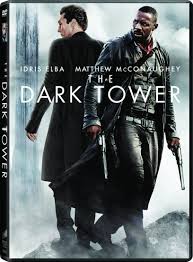
The Dark Tower

DarkTower-covOnce again a movie that was widely trashed by the critics (16% on Rotten Tomatoes ! — although it did well at the box office and the audience score is at 46% — the overall critical response being that it is “incomprehensible to newbies and wildly unfaithful and simplistic to fans of King’s books”) but which I greatly enjoyed. Despite not having read Stephen King’s series, I had no problem following and understanding the story. The storytelling was well paced and I found the background of the story quite interesting: what’s not to like about a universe that mixes dark fantasy’s wizards and western’s gunslingers! The acting is rather good, and, although the story itself is not exceedingly great (it feel like an relatively ordinary YA movie), it is quite entertaining. A sequel is considered and a TV series is in production at Amazon. stars-3-0

[ AmazonBiblioGoogleIMdBOfficialWikipediaYoutube ]

[ Traduire ]
Capsules

Movie Capsule-reviews (02.018.145)

Star Wars: The Last Jedi

StarWars-LastJedi-covThis movie offers good action and relatively interesting storytelling. It fits pretty well within the saga and it is a great joy to see Mark Hamill as Luke again. It is beautifully made and succeeds to express the depth of the characters’ angst facing their destiny — but with a good dose of humour. However, this movie is turning a page, as Disney seems to bring the franchise into a new direction. Yes, let’s get rid of all the old characters to reboot the story with an entire new cast! Good? Bad? We’ll see. I greatly enjoyed the movie but, strangely, there’s a disparity on Rotten Tomatoes between the critics’ rating (91%) and the audience’s (46%). stars-3-5

[ AmazonBiblioGoogleIMdBOfficialWikipediaYoutube ]

Capsules

Maze runner: The Death Cure

MazeRunner-DeathCure-covBetter than expected. I liked it despite the low Rotten Tomatoes rating (42%). Good action (bigger and louder than the previous two movies) and drama (although not always credible and sometime predictable). It is supposed to be the end of the trilogy, but the open ending might suggest otherwise… After too many average YA novel adaptations (i.e. Hunger Games or Divergent) it doesn’t feel too original, although I am a sucker for any dystopian, post-apocalyptic story — even with a simili-zombie twist. Anyway, I am not too demanding with that kind of movies: I just want to be entertained. stars-2-5

[ AmazonBiblioGoogleIMdBOfficialWikipediaYoutube ]

Capsules

Fahrenheit 451

fahrenheit451-covThe latest TV movie adaptation of the great Ray Bradbury’s novel is quite disappointing. It is a slow burn: there’s not much action, the acting is not that great, and the storytelling felt like cold ashes compared to my memory of the novel. Although it is not that different from the previous, interesting but painfully slow, adaptation by François Truffaut. Evidently, Ramin Bahrani wanted to rekindle Bradbury’s dystopian future (where “firemen” burned books instead of putting out fires) in order to give a warning about the dangers of a presidency during which truth and personal liberties are eroded a little more every day. stars-2-5

[ GoogleIMdBOfficialWikipediaYoutube ]

Capsules

Assassin’s Creed

AssassinsCreed-covI never played the video game but despite this I still enjoyed the story. The concept of the “genetic memory” is quite far-fetched but still somewhat interesting. Strangely, I was expecting a movie set in the past, not in the modern days, so I was a little caught off-guard. It is amusing to see the templar knights portrayed as the bad guys for once. Can wanting to end all violence and wars be a bad thing? Of course, it is if it involves removing all free will from the people! 

It is worth watching mostly because it is so visually beautiful and entertaining — but not much else. stars-3-0

[ AmazonBiblioGoogleIMdBOfficialWikipediaYoutube ]

Capsules

All the way

AllTheWay-covThis is a biographical TV movie mostly about Lyndon B. Johnson’s struggle to pass the Civil Rights Act. The title comes from LBJ’s campaign slogan (and how his opponents’ misused it!). It is an interesting historical movie, but it also offers sort of a commentary on the contemporary political situation. Politics don’t really change much with time and all the political in-fighting is quite reminiscent of the 2016 election campaign. However, fifty-four years after LBJ passed his civil right bill that was supposed to put an end to white people killing black people, where are we? Again, nothing seems to have changed much. Quite an educative movie indeed. stars-3-0

[ AmazonBiblioGoogleIMdBWikipediaYoutube ]

Capsules

Youth

Youth-covTwo retired friends, composer Fred Ballinger (Michael Caine) and filmmaker Mick Boyle (Harvey Keitel), are spending their vacation in the Swiss Alps. Fred is bugged by the Queen’s emissary who want him to perform for the prince’s birthday, but he refuses because the music piece they chose was written for his wife (who has now Alzheimer’s). Mick is putting the finishing touch on the script of his next movie. Family and friends will bring disturbance, drama and, eventually, tragedy.  This is another relatively contemplative movie by Paolo Sorrentino (Il Divo, La Grande Bellezza). It is rather similar to The Great Beauty. It is a really beautiful movie, with great actors (although the acting itself seems a little contrived sometimes), and which offers deep reflections on life. I enjoyed it a lot. stars-3-5

[ AmazonBiblioIMdBWikipediaYoutube ]

Capsules

[ Traduire ]