The Complete Cartoons of The New Yorker

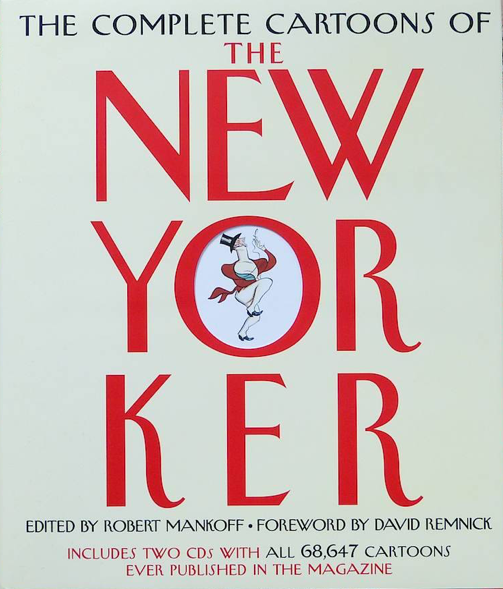
CompleteCartoonsNewYorker-covI acquired this phenomenally huge book in a sale earlier this fall and I paid only fifteen dollars for it. I have always liked the single-panel cartoons (often referred to as “gag cartoon”, in the likes of what you find in the series “For Dummies”, or in Herman or Bizarro, and, of course, in newspapers’ editorial cartoons) and the most iconic of those could be found in the magazine The New Yorker. So I was quite pleased with this acquisition. However, it is the type of nightstand book that you savour slowly and it took me a couple of months to go through its 655 pages and over 2,000 cartoons (about two weeks of actual reading). Unfortunately the used copy I purchased did not include the two CDs with all 68,647 cartoons ever published in the magazine (if so it would have taken me much more time to read!).

A New Yorker cartoon is usually made of one drawing (but sometimes of the sequence of two or three), plus a funny caption. Most of the time all the humour is in the caption… Here are some examples:


The cartoons are organized into the eight decades during which the magazine was published (from its founding in 1925 until the publication of the book in 2004) and each period is introduced by an essay by one of the magazine’s most distinguished writers: 1925-34 (introduction by Roger Angell), 1935-44 (Nancy Franklin), 1945-54 (Lillian Ross), 1955-64 (John Updike), 1965-74 (Calvin Trillin), 1975-84 (Ian Frazier), 1985-94 (Mark Singer) and 1995-2004 (Rebecca Mead). The book starts with an Editor’s Note by Robert Mankoff and a Forword by David Remnick, and concludes with an index of Artists.

In addition, for each era, you find a brief overview of a predominant theme (the depression, drinking, nudity, television, cars, the space program, slipper dogs, business culture, the internet and politics) as well as a brief profile (including a mini-portfolio) for a key cartoonist (Peter Arno, George Price, James Thurber, Charles Adams, William Steig, Saul Steinberg, George Booth, Jack Ziegler [about whom I’ve already talked], Roz Chast, and Bruce Eric Kaplan).

In a way, this book chronicles the history of the magazine, but also the history of the American society. Therefore, it is much more than just a funny reading as it provides great insights and understanding of the socio-politics of each era.

For me, the cartoons were funny most of the time (not LOL, but a chuckle or quiet giggle), but I also often didn’t get it (particularly the older ones — I guess culture change with time or the context was lost to us as sometimes you needed to be there to understand). However, I enjoyed reading this book immensely. If you have a chance, it is worth the time and therefore highly recommended. stars-3-5

To learn more about this title you can consult the following web sites:

[ AmazonBiblio MtlGoodreadsGoogleWikipediaWorldCat ]

[ Traduire ]

Capsules

RBG

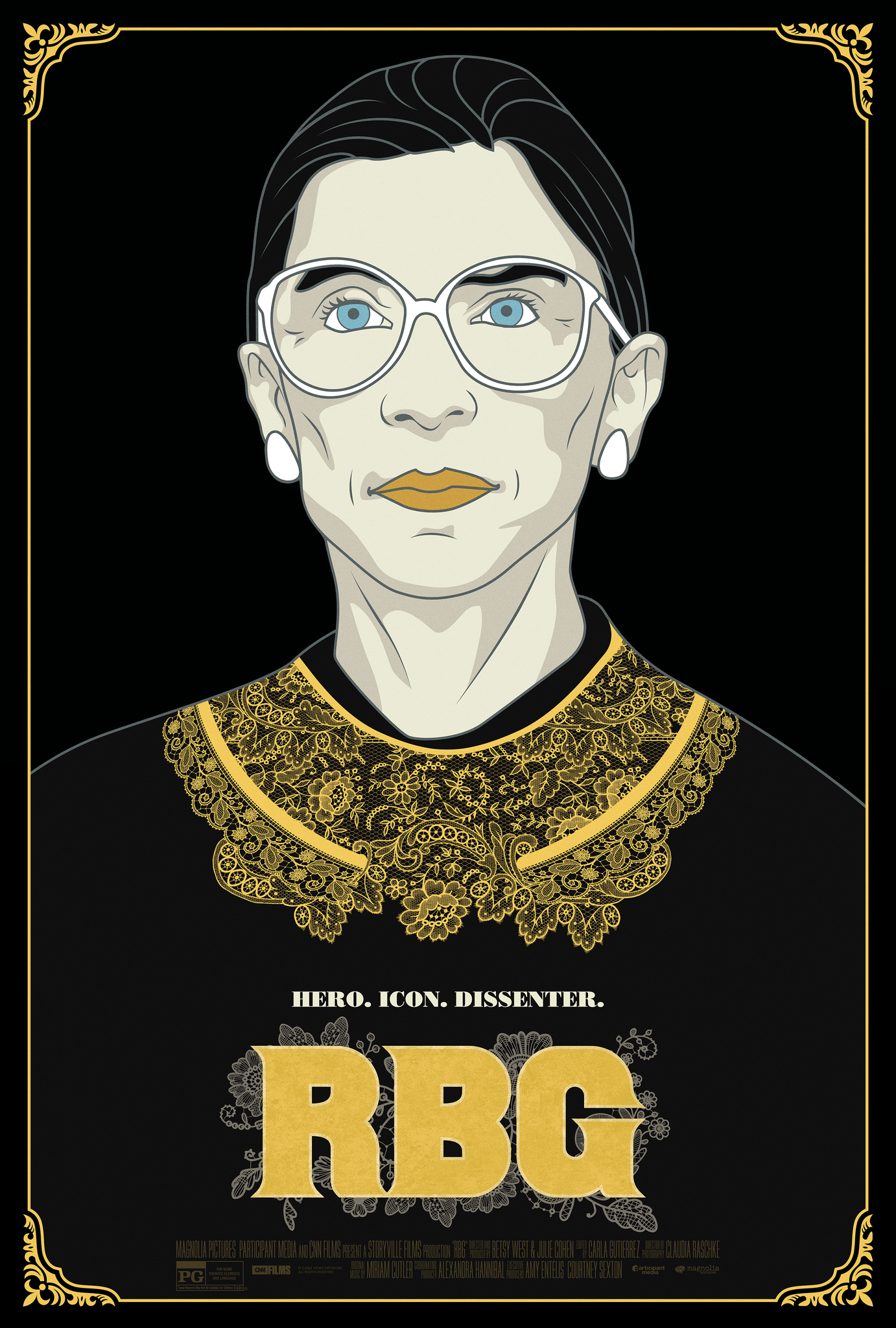
RBG-covI just watched this CNN documentary about the life of judge Ruth Bader Ginsburg. It is really a historical crash course about the other side of the fight for civil rights: the legal aspect of the women’s lib movement in which RBG played an essential role. The film is composed of extracts of hearing and court proceedings as well as interviews with RBG, friends, family and some legal or political experts. We first learn how she became a lawyer in 1959 (Harvard and then Columbia) but couldn’t find employment because she was a woman. She taught law at Rutgers. Within the ACLU she co-founded in 1972 the Women’s Rights Project which oversaw hundreds of gender discrimination cases, RBG personally arguing six of them before the Supreme Court (winning five). It is incredible how such a small and frail woman could be so dedicated and determined to fight gender discrimination in any way necessary in order to slowly build up precedents and find justice.

In 1980, Jimmy Carter nominated her as judge on the U.S. Court of Appeals for D.C.. In 1993, Bill Clinton nominated her as an Associate Justice of the Supreme Court where she played an iconic role. With the retirement of Justice O’Connor in 2006, she became the only woman on the court, until the nomination of Justice Sotomayor in 2009. First considered a moderate, she shifted toward the Left to preserve the balance as the court became more conservative. She is known for her dissenting opinion. She could be the last line of defence against the civil rights roll back by the Trump administration. Strangely, the appeal of her work and personality — through an Internet meme named Notorious R.B.G., which was comparing her to rapper Notorious B.I.G. — has given her great pop culture fame.

This is a great documentary that is fun to watch, but also very informative. I’ve learned a lot about American history. It is also a nice introduction to another movie about RBG’s life, this time a fictionalized account of her early days, titled On the Basis of Sex and which was just released this Christmas. RBG was well received as it earned a 94% rating on Rotten Tomatoes and 7.6 on IMDb. Therefore, it is highly recommended. I recorded it when it aired on CNN in September, but it is now available on Dvd (from Amazon or your local library) and can also be streamed on iTunes or Amazon Primestars-3-0

To learn more about this title you can consult the following web sites:

[ Amazon PrimeGoogleIMDbOfficialWikipediaYoutube ]

[ Traduire ]

Capsules

A place to call home S06

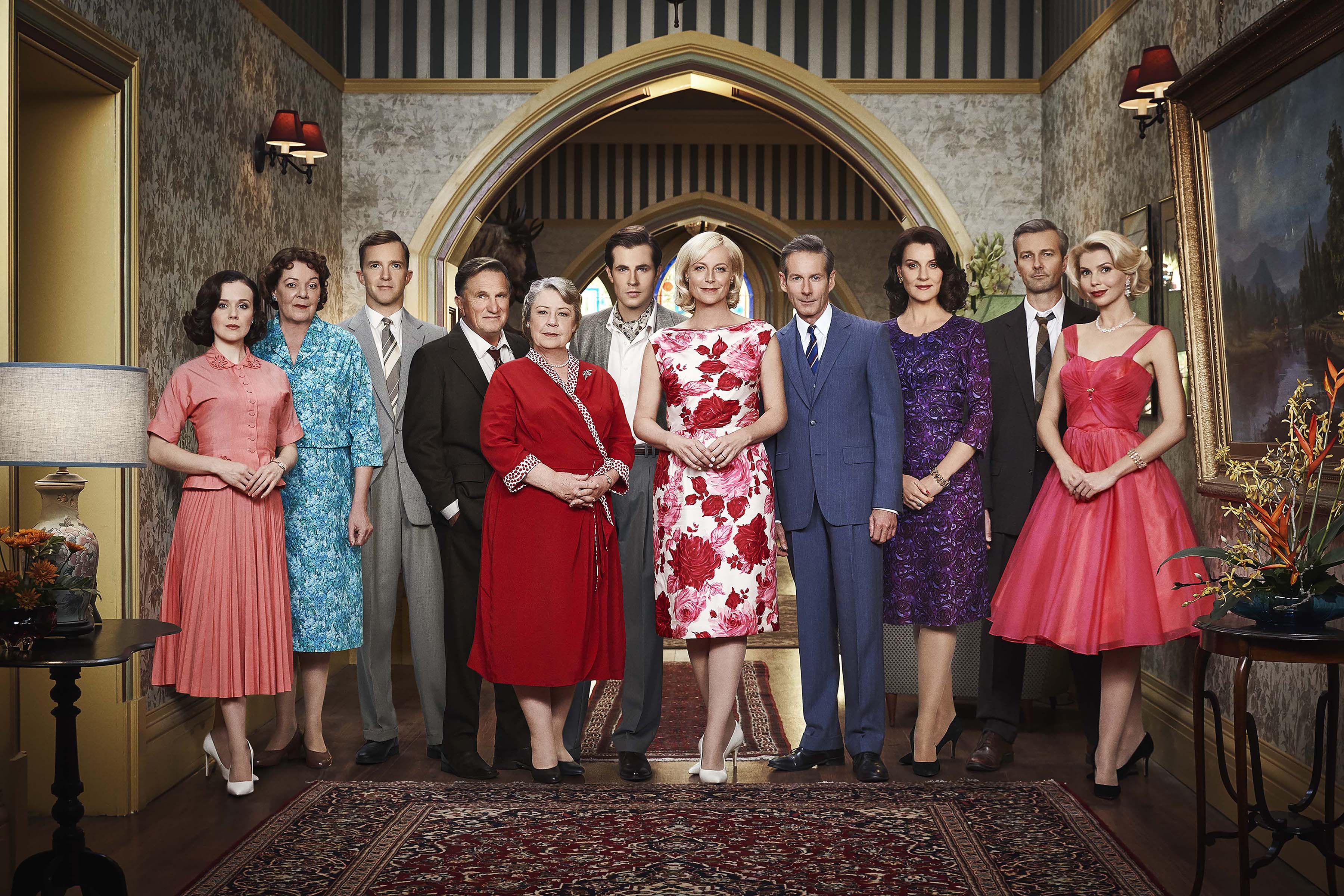
APlaceToCallHome-s06-covI just finished watching the sixth and final season of this Australian soap. It tells the story of the Blighs, a rich family of land owners from Inverness (New South Wales) whose life change forever after the chance encounter with a nurse on a cruise ship. Each member of the family will know love, grief and betrayal multiple times as they ride the wave of modernity emerging from the post-WW2 era (the Fifties). Some of them will have to come to term with the horrors of the war and they will all discover — and fight for, sometimes against their own prejudices — a large spectrum of human rights: gay rights, minority rights (Italians, Jews, Aboriginals) and women’s rights… It’s some sort of Australian’s Downton Abbey.

I am not a big fan of soaps (I watched them only with my wife) but this one is well written, endearing, it knows how to stir emotions and makes you reflects on our own society. It was very well received by the critics with a score of 100% (audience score of 85%) on Rotten Tomatoes and 8.3 on IMDb. I enjoyed it a lot myself, so I’d say it’s worth watching if you have the time (it has 67 episodes) and can find it (it plays on BBC Canada sometimes and the first five seasons are available on Dvd). stars-3-0

To learn more about this title you can consult the following web sites:

[ AmazonBiblioGoogleIMdBOfficialWikipediaYoutube ]

[ Traduire ]

A-Place-to-Call-Home-S6-on-Acorn-TV_Full-Cast

Capsules

Transformers: The Last Knight

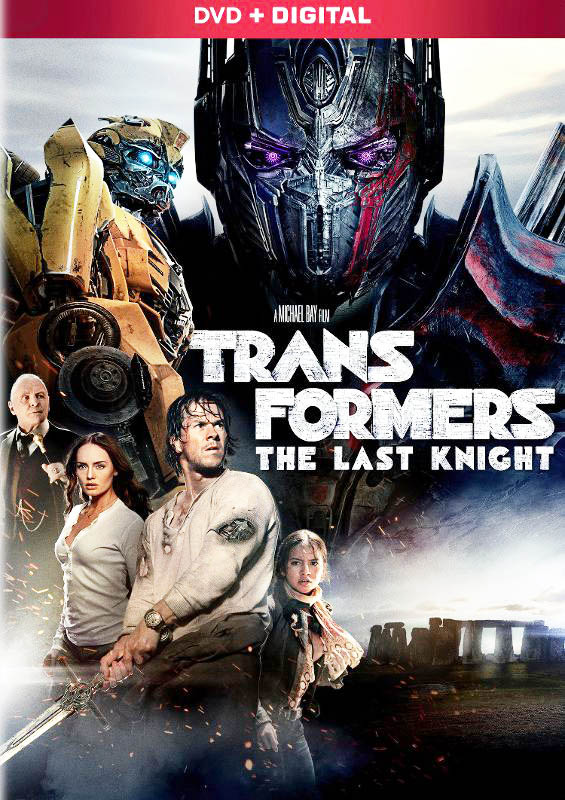
TransformersTheLastKnight-covThis story literally puts Earth against Cybertron. It’s Megatron versus Unicron. The Transformers have been here since the night of time. They fought with King Arthur, they fought in World War One, and even against Hitler. But we didn’t know about it because their existence has been occulted by a secret society started by Merlin himself, as he was entrusted with a power staff to control them all (or at least the three-headed dragon made of the bot-knights of the round table!). And Stonehenge is a weapon (more or less; maybe more a socket for a weapon…)!

Under the influence of Quintessa, Optimus has become Nemesis Prime! However, Yeager’s Autobot partner, Bumblebee, turns him around and, with the help of the bot-knights, they fight back against Quintessa and Megatron’s plan to destroy Earth. But it is far from over as the fight will continue with yet another movie (no, please, make them stop!)…

This movie offers a few good ideas (transformers in the past, steampunk influences, introduction of interesting new characters like Viviane or Izabella), but they are unfortunately slapped together in a messy way. The editing is horrendous, the dialogues terrible and don’t even get me started with the bad humour! At 2h34, the movie is way too long and the action is going too fast — transformations are just a blur and it feels like you’re watching a movie in fast-forward! Definitely entertaining but also rather annoying (particularly Cogman, the Bot-ler). I guess it is mostly for the hard-core fans.

The movie made plenty of money but it was disliked by viewers (with a mere 15% critic rating and 44% audience score at Rotten Tomatoes and 5.2 on IMDb — strangely the next film, standalone prequel Bumblebee, did very well with a Rotten Tomatoes critic rating of 94%). Maybe it’s time to pause and rethink the franchise… stars-2-0

To learn more about this title you can consult the following web sites:

[ AmazonBiblio MtlGoogleIMDbWikipediaYoutube ]

[ Traduire ]

Capsules

Mars S02

Mars-TV-posterI just finished watching the second season (and the end) of Mars, a National Geographic docudrama about what the colonisation of the red planet could look like. It’s based on a book by Stephen Petranek, How We’ll Live on Mars Amazon / Biblio ]The series has 13 episodes (two seasons of six episodes, plus a prequel).

It offers a fictitious story intertwined with interviews of real scientists and personalities (such has Elon Musk, Susan Wise Bauer, Andy Weir, Antonia Juhasz, Neil deGrass Tyson, Adam Frank, Stephen Petranek, Bill Nye, Kim Stanley Robinson, Robert Zubrin, Ann Druyan, etc.) to discuss the feasibility and necessity of exploring and colonizing Mars. It shows not only the scientific aspects of such endeavour, but also its human side. It is filmed in a very realistic way and the acting is good (although there’s no known actors in this international cast). A companion book was created to go along the TV series: Mars: Our Future on the Red Planet [ Amazon / Biblio ].

It is really interesting, particularly if you like hard science-fiction (series like The Expanse), but I would rather see a TV series adaptation of Kim Stanley Robinson Mars trilogy… I am disappointed that it lasted only two seasons as it could have been so much more. The constant interruption of the storytelling with interviews can be annoying sometimes, but it gives the story more realism and makes the series not only entertaining but also educative. However, considering how slow space exploration is going right now, I think that starting the story in 2033 is a bit too optimistic. It was relatively well received by viewers and critics (ratings of 61% / 66% on Rotten Tomatoes and 7.5 on IMDb) and it is worth watching if you like space exploration. stars-3-5

To learn more about this title you can consult the following web sites:

[ AmazonGoogleIMdBOfficialWikipediaYoutube ]

[ Traduire ]

Capsules

Prince Lao

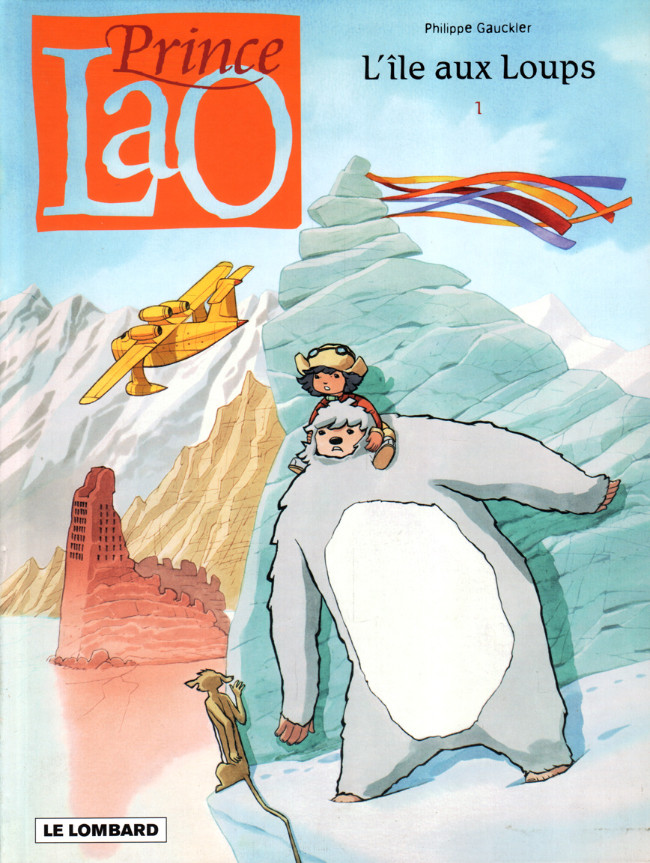
PrinceLao-01-covDans la haute montagne, Lao passe ses journées à courir après les animaux. Il ne sait pas encore que ces derniers vont devenir ses meilleurs amis après qu’une avalanche ait enseveli son village et sa famille. Recueilli par Chabala, un immense yéti blanc, Lao découvre alors qu’il peut parler le langage des animaux. Un nouveau monde s’offre à lui : de nouveaux amis, des paysages où nul de ses semblables n’a jamais posé le pied… mais aussi une lutte incessante contre la cupidité et la cruauté des humains ! 

Un magnifique conte initiatique en haut des cimes himalayennes.

ATTENTION: Peut contenir des traces de “divulgâcheur” [spoilers]! Les personnes allergiques à toutes discussions d’une intrigue avant d’en avoir eux-même pris connaissance sont vivement conseillées de prendre les précautions nécessaires pour leur sécurité et devraient éviter de lire plus loin! 

PrinceLao-01-p03

T. 1, page 3

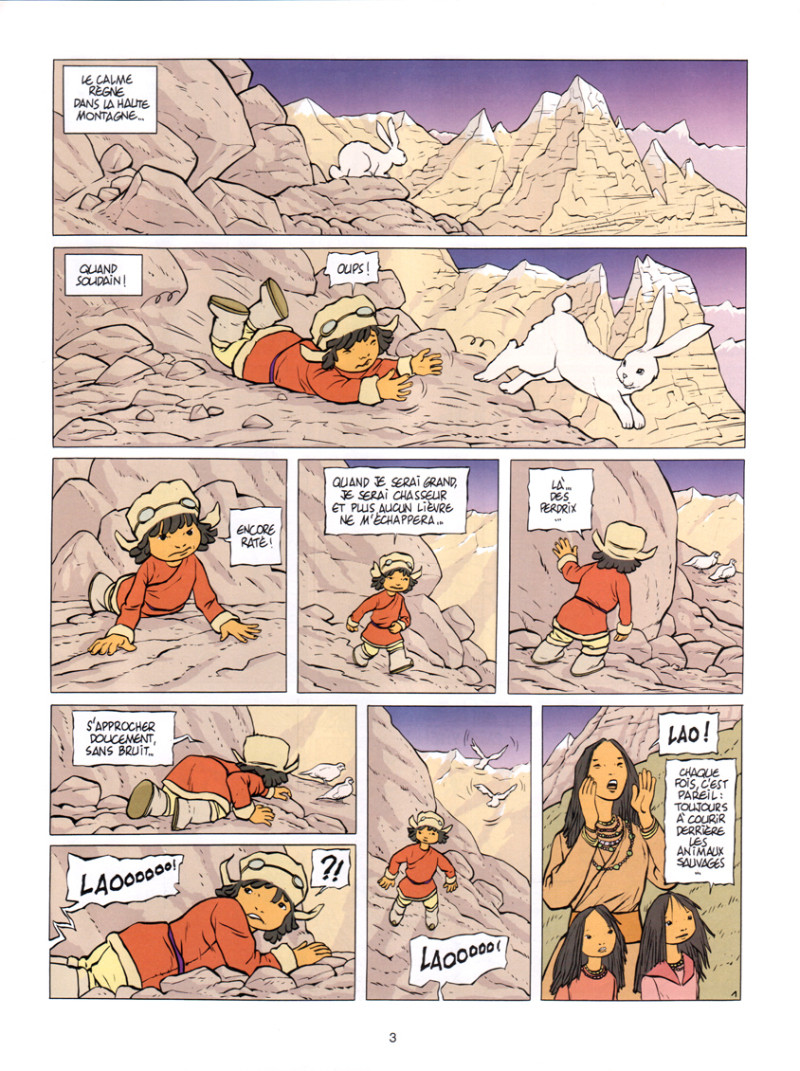
Entre Convoi et Koralovski, Philippe Gauckler a produit une bande-dessinée d’aventure pour enfants. Prince Lao est le récit des aventures d’un jeune garçon de sept ou huit ans, fils de bergers nomades qui vivent dans les pâturages himalayens de ce qui apparait être le Tibet. Lorsqu’une avalanche détruit leur campement, Lao se retrouve seul en plein blizzard. Il est recueillit par un gentil yéti blanc nommé Chabala. Ils retournent tous deux sur les lieux du campement ensevelit mais ne trouvent traces de personnes, seulement le coller de jade de Mamidahy, sa grand-mère. Lorsque les amis de Chabala, le léopard des neiges Sheyen et le gypaète géant Mirro, sont capturé par des chasseurs (vraisemblablement chinois car, selon Sheyen, ils “font de plus en plus d’incursions sur notre territoire”), Chabala et Lao partent à leur recherche, se lançant ainsi dans un long périple initiatique qui ultimement permettra à Lao de se découvrir. 

La présence de Chabala confère à Lao une partie de ses pouvoirs et il peut ainsi parler aux animaux. Avec l’aide de plusieurs compagnons d’infortune (les chats siamois Yin et Yan, le panda Zazen, la belette Shépa, la petite humaine Amala et le dompteur Pok), ils retrouvent finalement leurs amis dans le repère des chasseurs, l’île aux Loups. Après quelques péripéties et un combat contre le loup-ours Himal, ils rendent leur liberté à tous les animaux capturés par l’infâme colonel Kayen.

Gauckler nous offre ici un beau conte sous la forme d’une BD dans un format plus traditionnel que Convoi. Le trait est simple et les couleurs à plat sont plus claires et sobres. C’est très agréable à l’oeil. Le récit est fluide et assez dynamique, alors que chaque page se termine sur une sorte de suspense qui nous appel à poursuivre la lecture.  Cela en fait une excellente BD pour enfants (et aussi pour grands).

Prince Lao T. 1: L’Île aux Loups, par Philippe Gauckler. Bruxelles: Éditions Le Lombard, juin 2006. 48 pages, 22.5 x 29.7 cm, 10.60 € / C$17.95. ISBN 9782803621682. Pour lectorat jeune (3+). stars-4-0

Continuez la lecture après le saut de page >>

Continue reading

Travelers S03

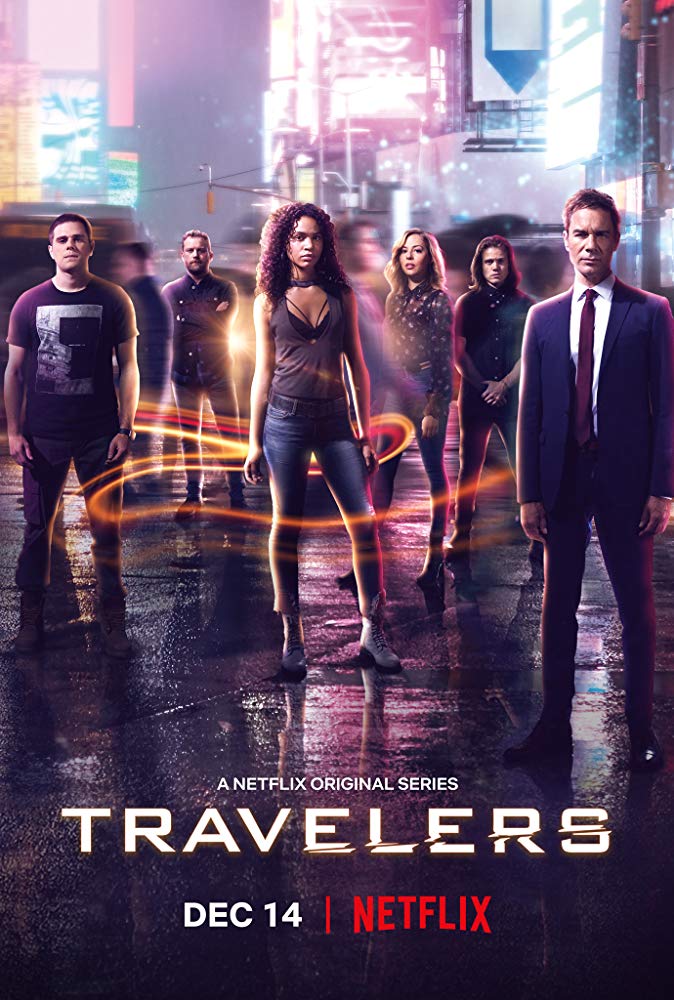
Travelers-s03This week-end I binge-watched the third season of the Canadian-American sci-fi TV series Travelers that was just released on Netflix (December 14th). 

A little similar to the older TV series Continuum (2012), this is a time-travel story where people from the future travel back in time to try preventing a dystopian future and possible civilization-ending events. Although, this time, the people themselves don’t travel in time, but it is rather their consciousness that “overwrites” the mind of present-day people who were about to die and of whom they assume the identity. Those well-trained travelers follow a strict set of rules (or protocols) and are executing missions that are given to them by the Director, an artificial intelligence that rules the future and monitors the timelines. 

The concept is quite interesting and it is cleverly written. Of course such stories are a basketful of paradoxes that are often confusing and not always credible so it is generally better not to scrutinize them too much. However, it is compelling and very entertaining. Despite all common sense telling me it should be bad, I liked it a lot.

The first season (12 episodes), which aired in late 2016 on Showcase and Netflix, introduced the characters and the setting of the story as the travelers main mission is to prevent an asteroid from destroying the northeastern seaboard. Each episode bring a minor mission and develops further the relationships between the travelers and their entourage. One of them, Marcy, has trouble with her host’s body. They all must battle a rebel group of travelers called the Faction, which want to save humanity from the control of the artificial intelligence.

With the second season (12 episodes), in 2017, the story concentrate around the fight against the Faction and their leader in present-day, known as Traveler 001. The third season (10 episodes), which was released only on Netflix, continues the Faction story arc. The travelers a battered and their cover story is blown — but their existence is known only to the top levels of governments. They are forced to work under the oversight of the actual FBI. As none of their missions seems to improve the future and as the Faction is gaining ground, the prospects are quite bleak for the travelers… 

No fourth season has been announced yet and the third season’s ending could very well also be considered the end of the series. However, it also leaves an opening for a sequel…

All in all, Travelers is a very good science-fiction TV series, well worth watching. stars-3-5

To learn more about this title you can consult the following web sites:

[ GoogleIMDbNetflixRotten TomatoesShowcase  Wikipedia ]

[ Traduire ]

Capsules

Outlaw King

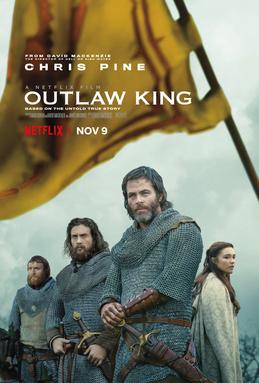
OutlawKingPosterOutlaw King is a movie about the other hero of the 14th-century War of Scottish Independence. As Braveheart told us about William Wallace, this story is about Robert the Bruce. When the Scottish monarch died without a descendent, the lords called upon Edward I of England to chose a successor, a process known as the Great Cause. Instead he invaded Scotland and seized power. The Scottish lords rebelled but the superior English army prevails and the lords finally submitted. Only Wallace continues to fight. However, when he is captured and killed, the civil unrest convinces Robert the Bruce to take arms again. He is crowned king of the Scots in 1306 and, despite being outnumbered and a series of early defeats (like the battle of Methven), he succeeds, through guerrilla warfare, to push back the invader and finally defeat Edward II at the Battle of Bannockburn in 1314. He remains King of the Scots until his death in 1329 and is succeeded by his son, David. Ultimately, through his daughter Marjorie, one of his descendants (James VI/I, son of Mary, Queen of Scots) will reign over both Scotland and England (1603-1625). He is still today revered as a national hero.

This is a beautiful and enthralling historical movie about honour, power, courage and strength. Unfortunately, like most movies, it favours drama over historical accuracy. I particularly like the gritty and realistic depiction of the period, which feels just like Outlander (the first season is similarly about the Jacobite rising of 1745 culminating with the defeat at the Battle of Culloden) or Game of Thrones (some actors of this series appear in the movie: James Cosmo, Stephen Dillane and Clive Russell), but without the fantasy elements. 

Outlaw King, starring Chris Pine (Star Trek), Florence Pugh and Aaron Taylor Johnson, premiered at TIFF in September and was released on Netflix (and select theaters) on November 9th. It is rated R because of some full frontal nudity and graphic violence. The movie was liked but without too much enthusiasm (rating of 63% / 68% on Rotten Tomatoes, 7.0 on IMDb). It is very interesting if you are a fan of Scottish historical action movies, but remains quite entertaining nevertheless. stars-3-5

To learn more about this title you can consult the following web sites:

[ GoogleIMDbNetflixRotten TomatoesWikipedia ]

[ Traduire ]

Capsules

Solo: A Star Wars Story

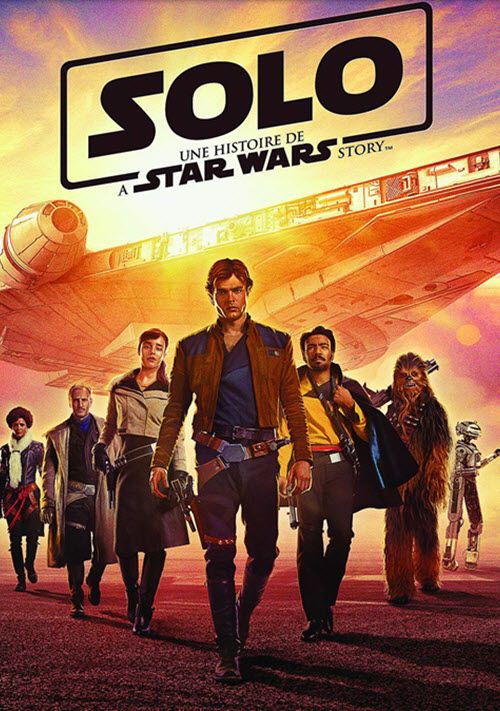
Solo-covThe latest Star Wars movie offers us quite an interesting (but simple) story with the usual (improved?) special effects. It’s the story of someone who gets out of the slums, with audacity and a bit of courage, doing what’s need to be done. A story of love and betrayal. It has a moral (hey, it’s Disney after all), lots of action and great humour. It also has a bunch of very interesting characters (and excellent acting to go with it). It’s sort of a growing-up story, about how a slum kid become… well… a kind of accidental hero. For the Star Wars fans it also offers lots of back story: how Han got his name, how he met Chewbacca and, later, Lando, how he got the Millenium Falcon and what makes it such a special ship, and, finally, how the rebellion started. 

It might not have the depth of the original movies (although that fame might be due in part to the legend, greater music and fantasized childhood memory) but it is, in itself, a good movie. It might not be THE Star Wars movie but, as the title says, it is A Star Wars movie. However, it is a fact that it didn’t performed well at the box-office, barely breaking-even, and was less appreciated by the fans than the critics with an audience score of 64% versus a critical rating of 70% on Rotten Tomatoes.  It’s a little blend, yes, but it’s still quite entertaining and well worth watching. stars-3-0

To learn more about this title you can consult the following web sites:

[ AmazonBAnQBiblio MtlGoogleIMdBOfficialWikipediaYoutube ]

[ Traduire ]

Capsules

Le Chat du Rabbin 8. Petit Panier aux amandes

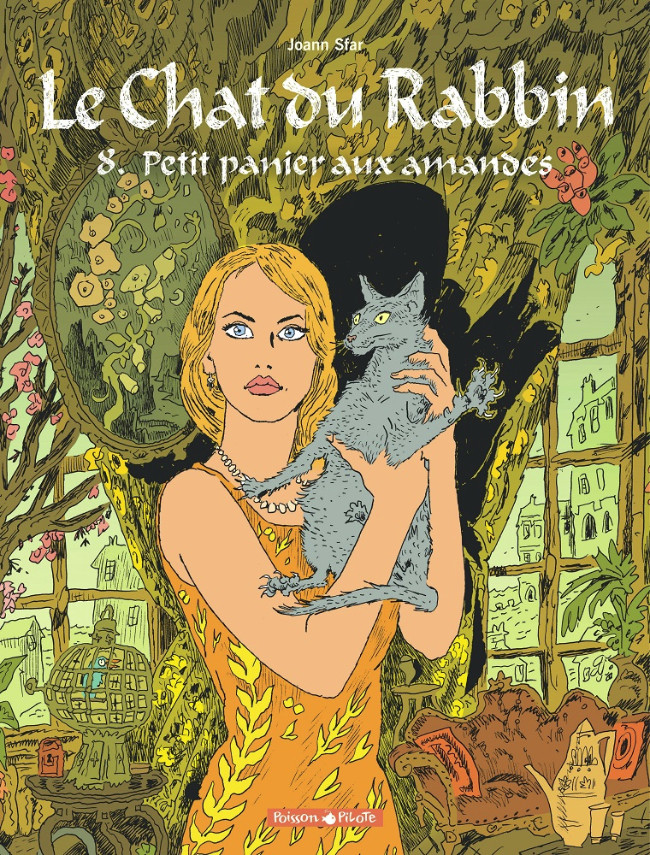
ChatDuRabbin08-cov“Ils s’aiment. Lui est juif, elle est catholique. Ils vivent à Alger, et un jour, le Rabbin voit arriver cette jeune femme qui, pour mieux s’intégrer et faire plaisir à son futur époux, veut se convertir au judaïsme. La stupeur le dispute à l’incompréhension : pourquoi vouloir embrasser une foi si compliquée, si irrationnelle, si pénible ? Le Chat et Zlabya sont tous d’accord pour la dissuader, et vont trouver en Knidelette une alliée inattendue…”

[Texte du site de l’éditeur; voir aussi la couverture arrière]

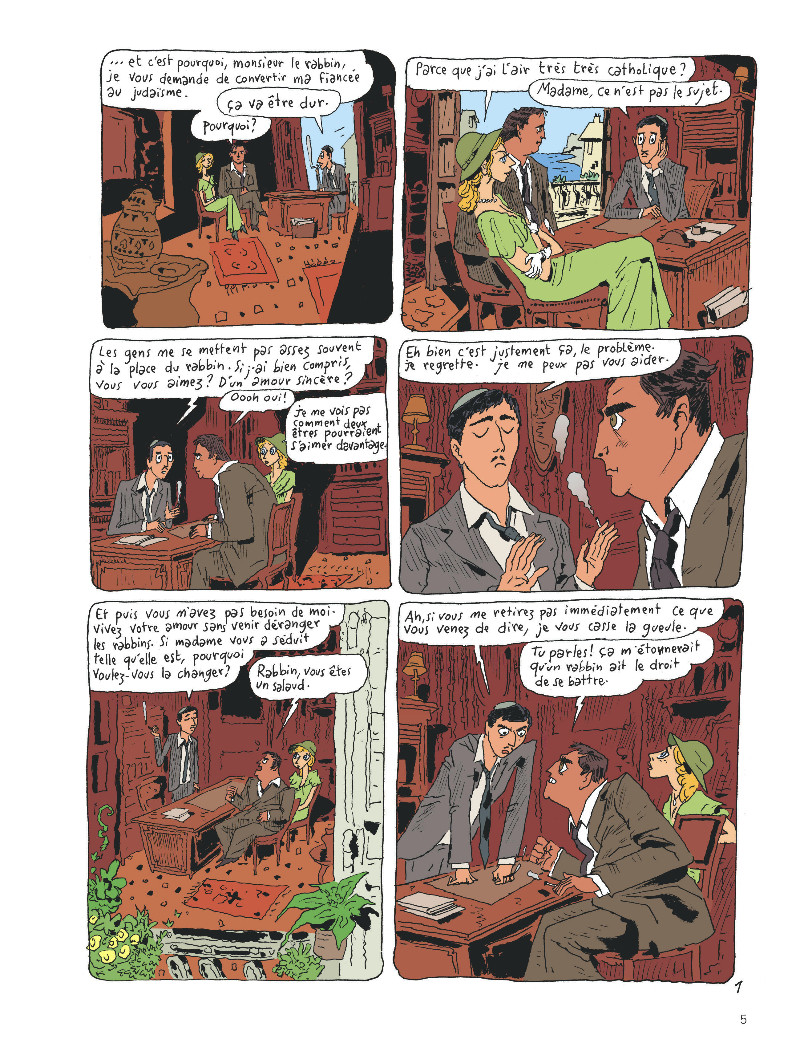
ChatDuRabbin08p05Roger est fiancé à Aline, qui désir se convertir au judaïsme pour adopter le mode de vie de celui qu’elle aime et pour préserver l’harmonie de sa famille. Ils demandent au jeune rabbin de la convertir, mais celui-ci refuse! Lui, il est né juif et n’a donc pas le choix: tout son imaginaire baigne dedans, mais il conçoit mal qu’un être équilibré ait spontanément envie de s’infliger une religion aussi contraignante. Alors Roger va voir le vieux rabbin, qui propose que sa fille Zlabya (la femme du jeune rabbin et maîtresse du chat!) enseigne les coutumes juives à Aline. “Le plus important“, dit-il, “le centre de la vie juive, ce n’est pas la synagogue, c’est la table familiale.”

Étrangement, Aline semble prendre plus à coeur tout ces commandements et rituels que Roger, aussi absurdes qu’ils soient. Ce dernier a d’ailleurs un doute et, peut-être qu’il ne veut pas trop se faire rappeler sa propre religion, alors il regarde du côté de Knidelette… Et Aline, pendant qu’elle se préoccupe de tout ces rituels, elle ne pense à rien d’autre…

Je n’aime vraiment pas le style “ondulé” et brouillon de Sfar. Cette fois-ci, on dirait même que le lettrage des bulles a été fait au stylo à bille par la main de l’auteur! Toutefois, il faut aller au-delà de cette première impression et se laisser emporter par la profondeur de son récit qui, à travers son humour et ses planches à six cases, nous fait se questionner sur la nature de la religion et tout particulièrement le judaïsme (évidemment). Ici le chat qui parle n’est plus l’instigateur du récit mais plutôt un simple observateur… Une histoire qui nous faire rire ou sourire, réfléchir et apprécier la différence d’une culture complexe et millénaire.

Vous trouverez cela génial si, comme moi, vous aimez à la fois les chats et la métaphysique! Je recommande chaudement.

Le chat du rabbin, 8: Petit panier aux amandes par Joann Sfar. Paris: Dargaud (Coll. Poisson Pilote), septembre 2018. 60 pages. 22.5 x 29.8 cm, 14,00 € / $24.95 Can, ISBN 978-2205-07835-0. Pour lectorat adolescent (12 ans et plus). stars-3-5

Vous trouverez plus d’information sur les sites suivants:

[ AmazonBAnQBiblio MtlGoodreadsWikipediaWorldCat ]

© Dargaud 2018.

Voir aussi mes commentaires sur les volumes précédents:

chat-rabbin-tome-1-bar-mitsva  chat-rabbin-2-malka-lions  chat-rabbin-3-exode  chat-rabbin-4-paradis-terrestre  chat-rabbin-5-jerusalem-d-afrique  chat_du_rabbin_6-cov chat_du_rabbin-v7-cov.jpg

[ Translate ]

Capsules

Koralovski

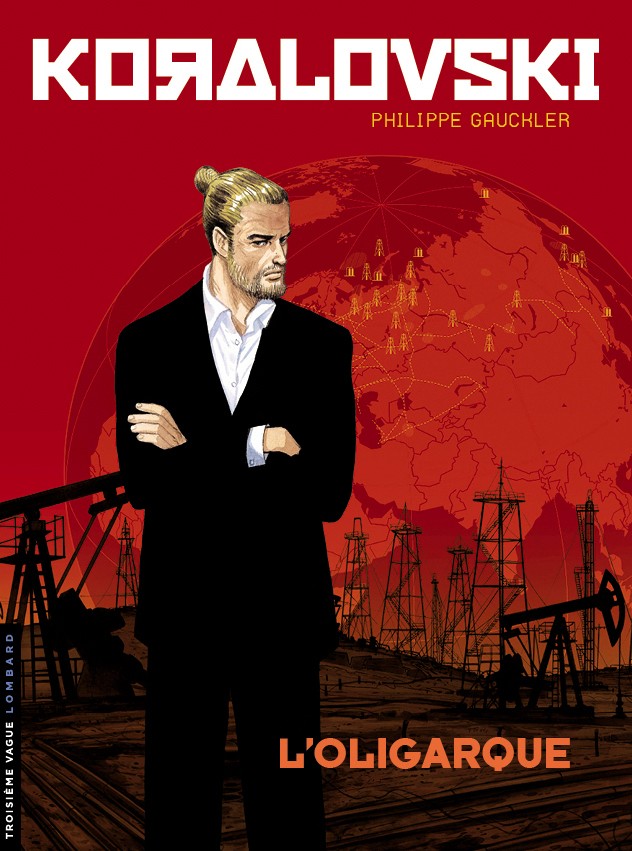
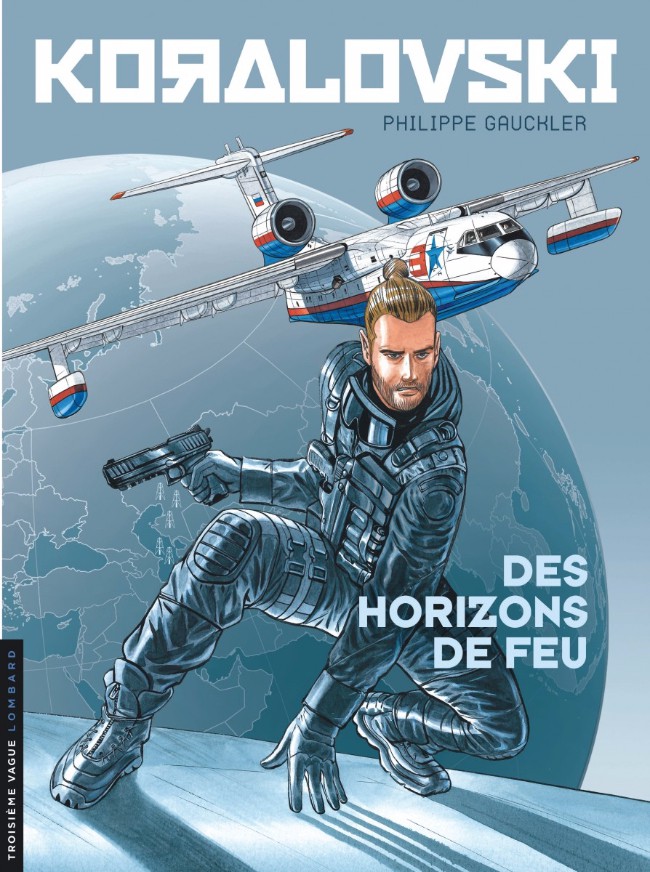
Koralovski-v01-cov“Et si la fin du pétrole n’était qu’un mythe… ?

Viktor Koralovski était le roi du pétrole russe. Une position qui lui a valu les foudres du président Khanine et dix ans d’emprisonnement.

À présent évadé malgré lui, Viktor va rapidement comprendre qu’en son absence, amis et ennemis sont devenus difficiles à distinguer. Et que son nom est au coeur d’une vaste conspiration, qui pourrait impliquer toute l’industrie pétrolière! Mais dans quel but… ?”

[Texte de la couverture arrière] 

ATTENTION: Peut contenir des traces de “divulgâcheur” [spoilers]! Les personnes allergiques à toutes discussions d’une intrigue avant d’en avoir eux-même pris connaissance sont vivement conseillées de prendre les précautions nécessaires pour leur sécurité et devraient éviter de lire plus loin! 

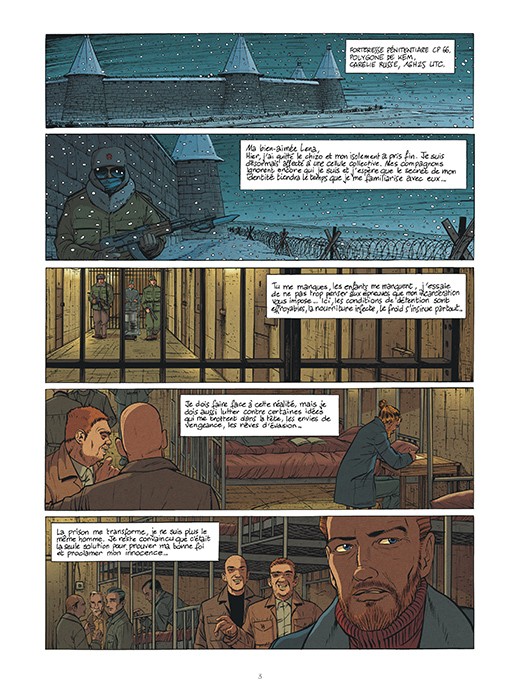
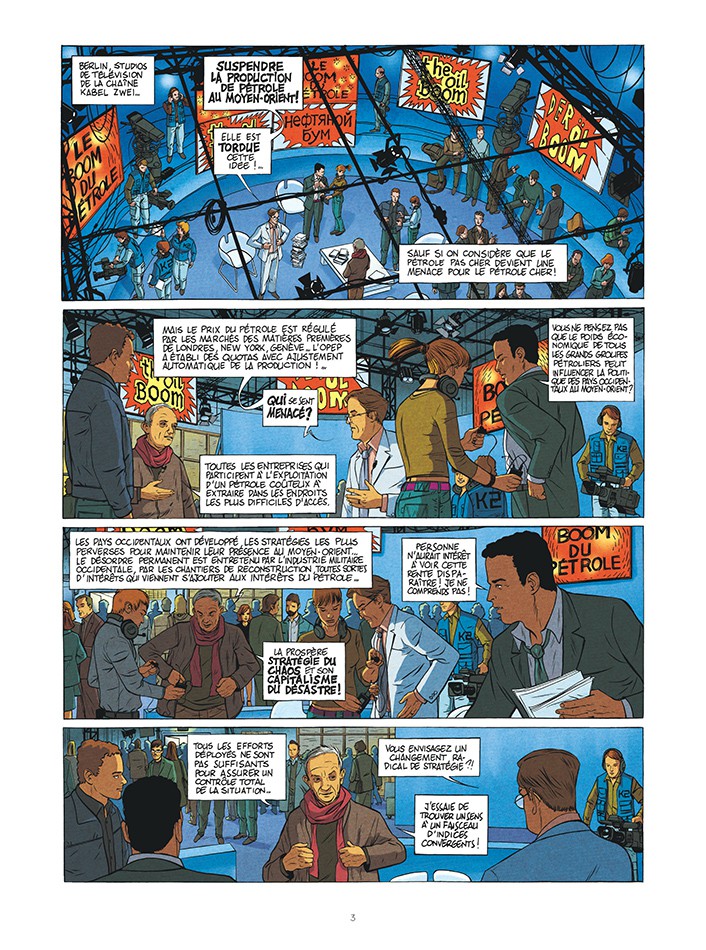
Koralovski-v01p03

Page 3

Dans le premier tome, Viktor Borissovitch Koralovski est un oligarque russe qui s’est enrichi dans le pétrole mais lorsqu’il est devenu trop riche et a montré des ambitions politiques, le président russe Vladimir Vladimirovitch Khanine le fait arrêter. Il est incarcéré depuis dix ans quand une mystérieuse attaque militaire contre la prison lui permet de s’évader. Il réussi à passer la frontière en Finlande et à obtenir l’aide d’un autre oligarque du pétrole, Aleksandr Orlov, qui le fait venir sur son yacht en mer Baltique.

Pendant ce temps, à Berlin, la journaliste Anika Keller travaille sur un article consacré à Koralovski. Son taxi frappe un SDF poursuivi par deux hommes. Ce simple incident va la propulsé au sein d’un complot d’envergure international. À l’hôpital, pendant que les médecins examinent le SDF, un commando masqué kidnappe le patient encore inconscient. Les médecins ont remarqué qu’il avait un implant RFID. En allant investiguer le lieu où les deux hommes avaient trouvé le SDF, ils découvrent une bombe dans un tunnel ferroviaire. Composé d’ogives nucléaires baignant dans l’essence, la bombe avait apparemment pour cible le président russe Khanine, qui est en visite à Berlin!


Koralovski 1: L’Oligarque, par Philippe Gauckler (couleurs par Scarlett Smulkowski). Bruxelles: Le Lombard (Coll. Troisième Vague), février 2015. 48 pages, 12.45€ / $21.95. ISBN 978-2-8036-3530-6. Pour public adolescent (15+). stars-3-0

Koralovski-v02-cov“À bord du yacht qui les a secourus, Koralovski et ses compagnons se mettent en route pour un laboratoire off-shore appartenant à sa société. Il s’agit du laboratoire qui a mis au point un procédé révolutionnaire permettant d’extraire la totalité d’un gisement de pétrole soi-disant épuisé. Mais à leur arrivée, le lieu est désert…”

[Texte du site de l’éditeur]

Koralovski-v02p03

Page 3

Dans le second tome, on apprend que le SDF est en fait un espion américain nommé Blasko. Un commando l’a exfiltré pour le ramener à Washington afin qu’il fasse son rapport sur un complot mondial. Anika et ses deux compagnons sont amené dans le bundesbunker du gouvernement allemand pour y être interrogé par les services secrets. Mais le bunker est attaqué par un commando et ils sont fait prisonniers. Les deux compagnons d’Anika se révèlent être des agents spéciaux du BND. Ils réussissent néanmoins à s’échapper et à libérer d’autres prisonniers: la chancelière allemande Andrea Kermel et le président russe Khanine. 

Le complot prends de l’ampleur, car une bombe similaire est trouvé à bord d’un tanker de gaz naturel liquéfié. À bord du yacht de Orlov, Koralovski se rend sur une plateforme de forage où il avait installé un laboratoire pour développer un procédé nouveau d’extraction du pétrole. Il n’y trouve qu’une autre bombe. Plusieurs autres bombes sont aussi découvertes dans des terminaux pétroliers au Moyen-Orient. La situation est grave et Orlov décide d’organiser un meeting pour trouver une solution…

Koralovski 2: Dans L’ombre du Monde, par Philippe Gauckler (couleurs par Scarlett Smulkowski). Bruxelles: Le Lombard (Coll. Troisième Vague), août 2015. 48 pages, 12.45€ / $21.95. ISBN 978-2-8036-3598-6. Pour public adolescent (15+). stars-3-0

Koralovski-v03-cov“La confrontation tant attendue par Koralovski avec le président Khanine est de courte durée : une menace d’attaque nucléaire au Kazakhstan éclate, visant l’un des gisements de pétrole les plus importants au monde. Ne connaissant pas l’ampleur de l’infiltration ennemie dans leurs services de sécurités, Koralovski et son équipe n’ont d’autre choix que de se rendre eux-mêmes sur place, pour tenter d’empêcher le pire de se produire…”

[Texte du site de l’éditeur]

Koralovski-v03p06

Page 6

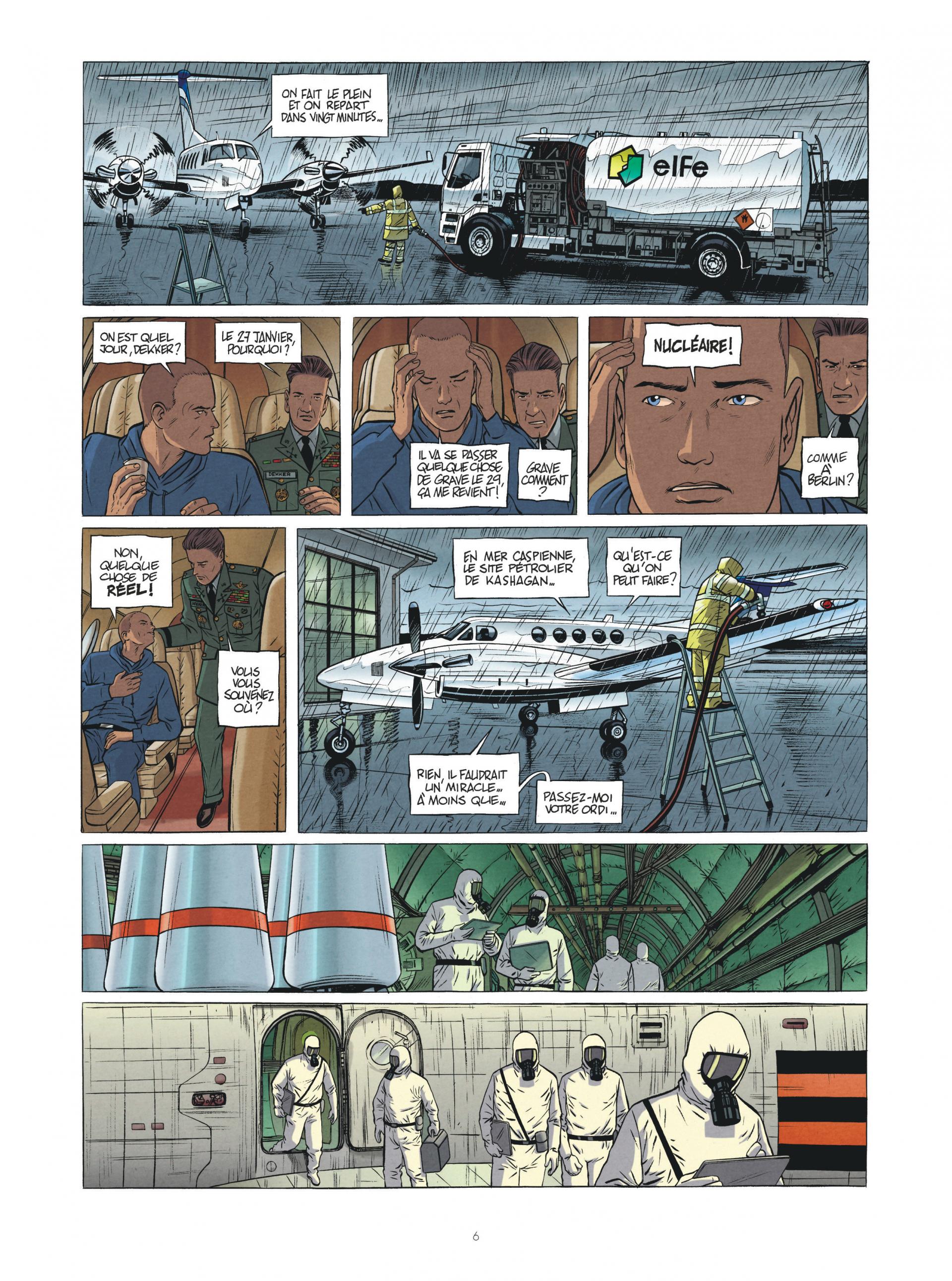
Dans le troisième tome, Blasko s’embarque sur un avion bimoteurs pour se rendre à Washington, où il doit témoigner devant une commission d’enquête des forces armées au sujet du complot mondiale qui vise à déstabiliser la production de pétrole au Moyen-Orient à l’aide de terrorisme nucléaire. La conspiration rassemble des éléments du complexe militaro-industriel et de Wall Street, ainsi qu’une organisation terroriste russe. La mémoire de Blasko lui revient peu à peu il se souviens qu’une véritable attaque nucléaire est prévu pour bientôt sur le site pétrolier de Kashagan en mer Caspienne. Comme pour démontrer que les organisations militaires des touts les pays semblent vraiment infiltrés par des éléments du complots, l’avion de Blasko est intercepté par les forces canadienne à la demande du DIA et sous de fausses accusations. Mais Blasko réussi à sauter en parachute…

Le petit groupe dont fait partie la journaliste Anika Keller se réfugie dans une safe-house où ils sont rejoint par Koralovski et Orlov. On y discute de révéler l’existence du complot par une émission de télé. La rencontre entre Koralovski et Khanine fait des étincelles. Les discussions sont cependant interrompues par la nouvelle de l’attaque nucléaire imminente au Kazakhstan. Le groupe s’embarque à bord d’un hydravion en direction la mer Baltique pour intercepter l’ekranoplane (un hydravion à effet de sol volant au raz de l’eau) qui transporte les ogives nucléaires. 

L’histoire se termine sur un air festif dans la villa de Orlov à Bakou. Khanine a amnistié Koralovski et Blasko a finalement témoigné à la commission d’enquête ouvrant la porte à un grand nettoyage dans l’administration gouvernementale… La dernière scène ressemble étrangement aux scènes de banquets dans les Astérix (hommage?)!

Koralovski 3: Des Horizons de Feu, par Philippe Gauckler (couleurs par Scarlett Smulkowski). Bruxelles: Le Lombard (Coll. Troisième Vague), août 2016. 48 pages, 12.45€ / $21.95. ISBN 978-2-8036-3518-4. Pour public adolescent (15+). stars-3-5

J’ai précédemment introduit l’oeuvre de Philippe Gauckler et je vous présente ici sa plus récente série. Dans cette trilogie, Gauckler nous offre un style réaliste, qui démontre qu’il a maintenant acquit une grande maîtrise de son art. Toutefois, comme c’est parfois le cas dans les BD franco-belge, les cases sont plutôt statique. Cependant la fluidité de l’action reste très bonne malgré tout. Le récit est, quant à lui, excellent. L’histoire est de toute évidence inspirée de la réalité (bien sûr Khanine représente Vladimir Vladimirovich Putine et Koralovski est Mikhaïl Borissovitch Khodorkovski) mais cet affaire de complot pétrolier demeure peu vraisemblable. Toutefois, somme toute, c’est un bon thriller. C’est une lecture agréable et divertissante que je recommande sans peine. Je me demande bien ce que nous réserve Gauckler pour sa prochaine série…

Pour en apprendre plus sur ce titre vous pouvez consulter les sites suivants:

[ AmazonBAnQBiblio MtlGoodreadsWikipediaWorldCat ]

© Gauckler / Éditions du Lombard 2015

[ Translate ]

Gauckler Blues

[ Note: une version de cet article a préalablement été publié dans Samizdat #23 (novembre 1992): 14-18; je l’ai retravaillé et complété pour la présente publication ]

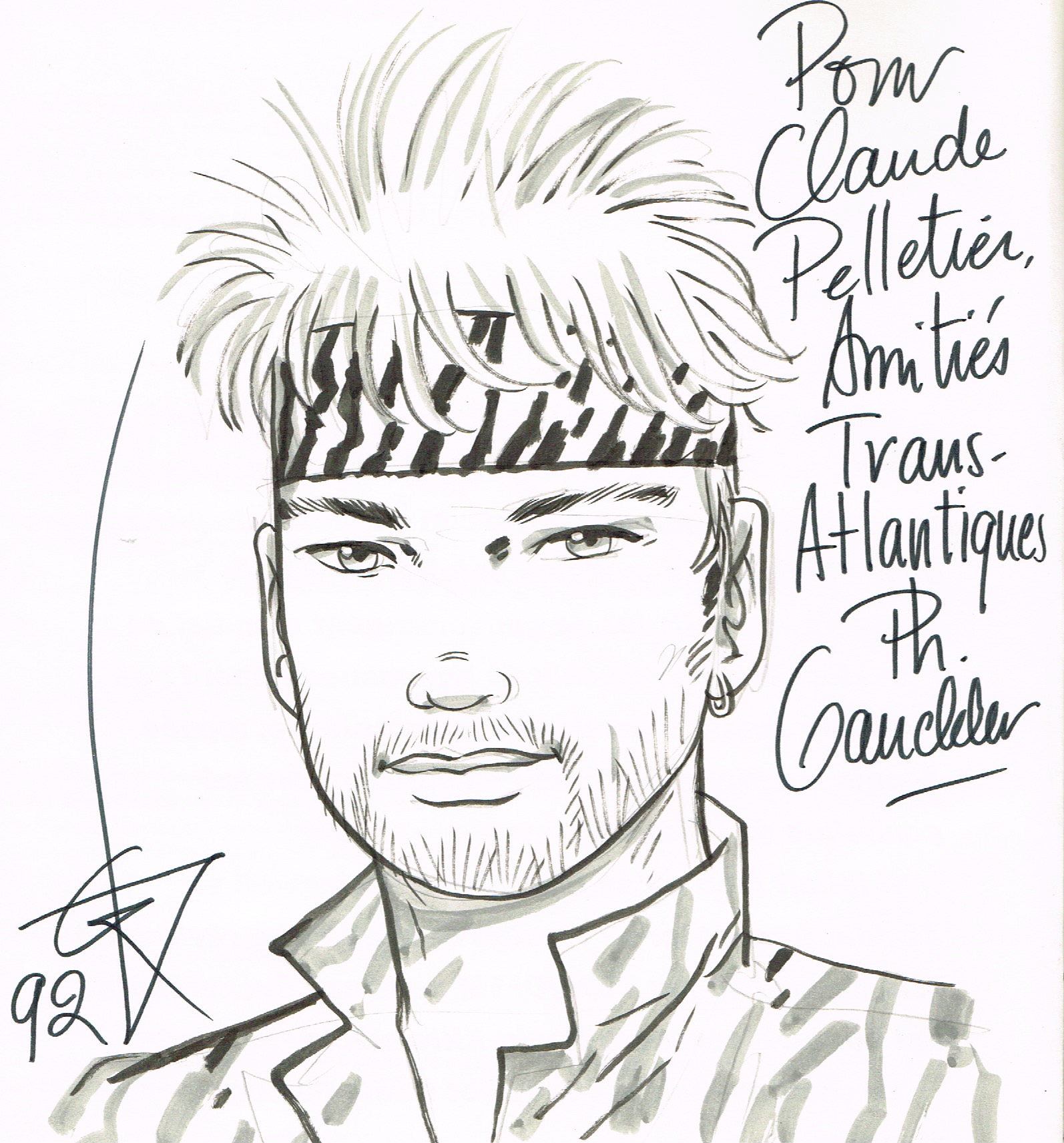
Gauckler-DedicaceConvoi01À l’été 1992, j’ai reçu par la poste deux bande-dessinées: les deux premiers volumes de Convoi, publiés aux Humanoïdes Associés, que m’envoyait l’auteur, Philippe Gauckler. Il a entendu parlé de moi par un ami commun, un collègue d’université partis travaillé sur le vieux continent. Sachant que je suis amateur de BD, admirateur du travail fait aux Humanos et que je suis éditeur, Gauckler m’a sans doute envoyé une copie de sa dernière oeuvre dans l’espoir que je l’aide à le faire connaître sur le marché nord-américain. Si malheureusement je ne peux pas faire grand chose pour lui il me fait tout de même plaisir de parler de son travail.

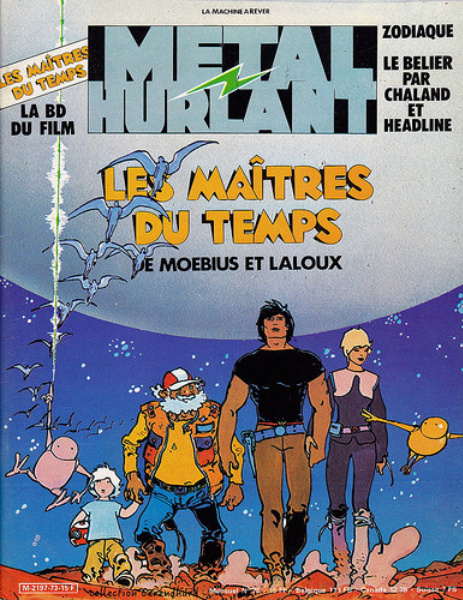
J’ai été très surpris par Convoi. D’abord par le fait que ce genre de de BD avait un très petit tirage (autour de cinq-mille, je crois), car j’ai toujours cru que le marché Européen était plus vaste que ça, pouvant théoriquement se permettre de plus gros tirage (bien sûr, pour un petit éditeur la prudence est de mise pour le tirage initial; mieux vaut réimprimer que piloner!). J’ai été surtout surpris par la qualité et l’intérêt que présente Convoi: c’est beau, c’est attrayant et l’histoire a beaucoup de coffre. J’ai été finalement surpris par ce nom, Gauckler, qui me rappelait vaguement quelque chose: je l’avais lu maintes fois, jadis, dans le magazine Métal Hurlant, avant que j’en abandonne la lecture (le magazine dérapait alors dans un style d’histoires qui ne me plaisait plus du tout). Si j’en avais retenu le nom, c’est que l’artiste devait être bon, mais je ne souvenais pas d’aucun titre d’histoire en particulier. Alors, j’ai ressorti ma collection de Métal Hurlant (les 110 premiers numéros) et j’ai relu l’oeuvre de Gauckler…


[ Translate ]

Continuez la lecture après le saut de page >>

Continue reading

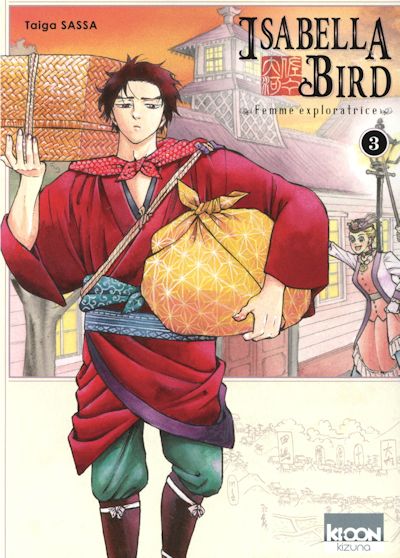
Isabella Bird: Femme Exploratrice, vol. 3

IsabellaBird-v3-cov“Le Japon du XIXe siècle hors des sentiers battus !”

“Pour rejoindre Niigata, première étape de son périple, Isabella Bird a choisi une voie secondaire, rarement empruntée par les voyageurs étrangers. Au fur et à mesure que l’intrépide exploratrice s’enfonce dans la campagne japonaise, l’agitation des grandes villes et la splendeur des sites historiques s’effacent devant la misère du monde rural… Aux divers chocs culturels s’ajoutent des conditions de voyage de plus en plus difficiles, si bien qu’Ito lui-même a du mal à faire face à cet aspect de son pays qu’il ignorait. Mais l’aventurière refuse de se laisser abattre, et c’est sans fléchir qu’elle s’engage sur le dernier tronçon de la route d’Aizu !”

“Lancez-vous à la découverte d’un Japon traditionnel désormais disparu à travers les yeux de l’intrépide Isabella Bird ! Basé sur les écrits réels de l’aventurière, Isabella Bird, femme exploratrice est un récit passionnant sur la rencontre d deux monde; dessiné avec un rare souci du détail par Taiga Sassa, un nouveau talent prometteur !”

[ Texte de la couverture arrière ]

Je continue la lecture de cette série dont j’ai déjà commenté le deux premiers volumes.

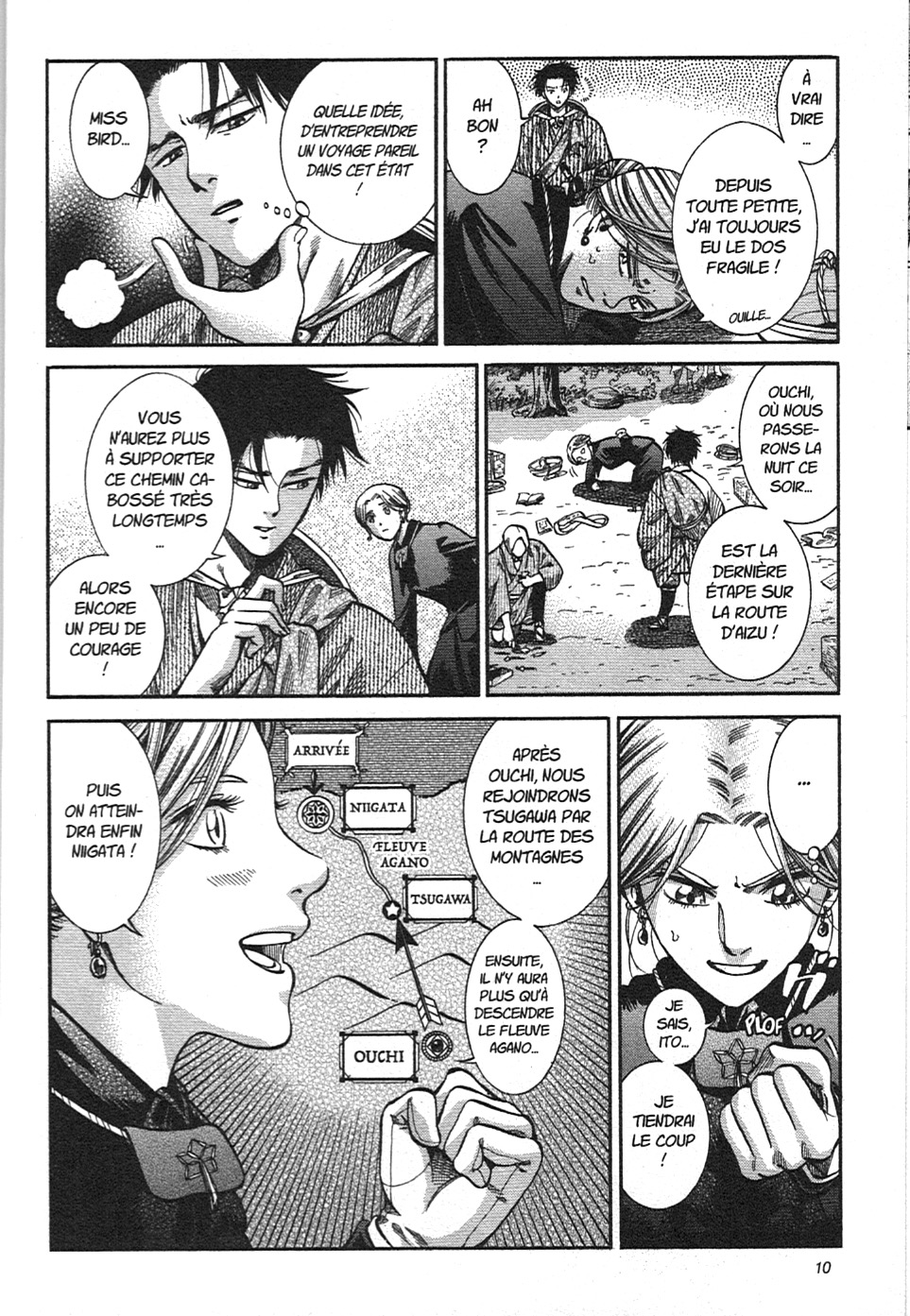
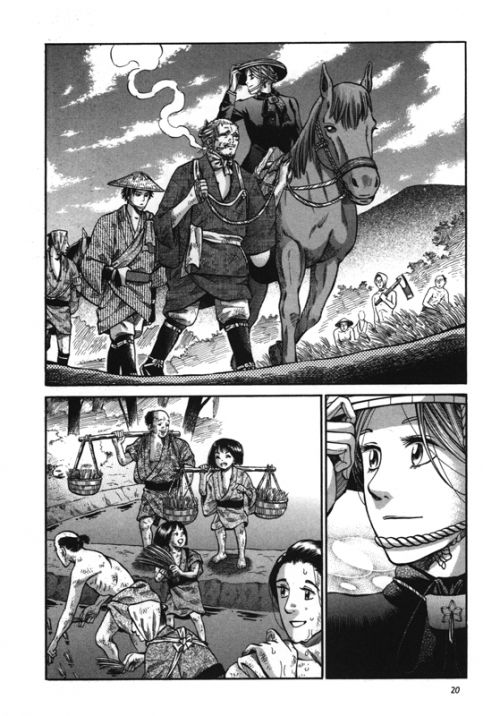
IsabellaBird-v3p010Juin 1878. L’exploratrice britannique Isabella Bird et son guide japonais Tsurukichi Ito continuent leur chemin sur la route d’Aizu en direction de l’île d’Ezo (Hokkaido). La route est difficile et les villages qu’ils rencontrent sont plongés dans une pauvreté si grande qu’elle surprend même Ito. Pourtant les villageois semblent travaillants et déterminés. Le palefrenier engagé pour prendre soin des chevaux leur explique que la région a été dévastée par la guerre de Boshin. L’armée de l’ouest, menée par les clans de Satsuma et de Chōshū, y a écrasé l’armée de l’est. Les paysans ont été enrôlés de force dans l’armée, beaucoup sont morts, les villages ont été pillés et brûlés. Dix ans plus tard la région n’a toujours pas récupéré. 

IsabellaBird-v3p020À Tsugawa (Aga), l’expédition fait des emplettes, Ito se bourre de friandises et prépare un repas gastronomique pour Isabella. Elle en profite pour commenter (à sa soeur, à qui elle écrit) que la gastronomie japonaise, par la propreté des ses instruments, “la parcimonie et la précision de chaque geste, la délicatesse de la présentation, l’incroyable variété des mets, absolument tout, est imprégné d’une beauté particulière”. Le lendemain, ils prennent une barque pour un voyage mouvementé sur le fleuve Agano jusqu’à Niigata, où Isabella passe quelques temps chez les Fyson. 

Pendant ce temps à Tokyo, un botaniste nommé Charles Maries rencontre le consul général Harry Parkes et James Hepburn car il désir poursuivre en justice Isabella parce qu’elle lui aurait volé son guide, Ito, qui était toujours sous contrat avec lui. Maries considère que son travail pour découvrir de nouvelles plantes est beaucoup plus important que les pérégrinations sans conséquences d’une simple voyageuse. Parkes objecte qu’au contraire l’intelligence sur la géographie et les moeurs des habitants de régions reculées fournit par les aventuriers est indispensable au développement de la diplomatie et des échanges commerciaux de l’Empire Britannique! Il lui refuse donc son support.

Isabella Bird est un autre manga historique au récit passionnant et instructif, mais aussi plein d’humour. La fluidité de l’action est assez bonne. Et, si le dessin est loin d’être parfait (parfois les proportions ou les expressions des personnages sont bizarres), il demeure très agréable à l’oeil et surtout bien détaillé pour donner une très bonne expérience de lecture. À travers le récit divertissant des aventures d’Isabella Bird, nous découvrons deux cultures assez opposées: celles de l’Angleterre Victorienne et celle du Japon de la restauration Meiji. C’est un sujet très intéressant et je recommande donc chaudement ce manga.

Isabella Bird, femme exploratrice T03 par Taiga SASSA. Paris: Ki-oon (Coll. Kizuna), avril 2018. 208 pg, , 13 x 18 cm, 7,90 € / $14.95 Can., ISBN 979-10-327-0248-2. Pour lectorat jeune (7+). stars-3-5

Vous trouverez plus d’information sur les sites suivants:

[ AmazonBiblioGoodreadsGoogleWikipediaWorldCat — Youtube ]

© 2016 Taiga Sassa. All Rights reserved.

[ Translate ]

Capsules

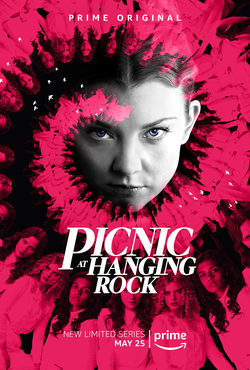
Picnic at Hanging Rock

picnic_at_hanging_rockThis is a fantastical story with Natalie Dormer. It follows more or less the Todorov’s definition of the genre as we are presented with a mystery that could have two or more explanations either rational or supernatural. This 6-episode Australian TV mini-series is based on a 1967 novel by Joan Lindsay which was also quite successfully adapted as a movie in 1975 by Peter Weir. It retells the story with more modern themes (like gender identity) and, like many other recent series or movies set in the victorian era, it is ultimately about the powerlessness of women in society at that time and all the distress that such situation was causing them.

Hester Appleyard is an ex-con on the run who purchases an Australian mansion to open a school for young ladies. Everything goes well until three students and one of their teachers mysteriously disappear on Valentine’s Day 1900 while on a picnic at a local landmark known as the Hanging Rock. This tragedy has a great psychological impact on the remaining students, the local community as well as on the finance and reputation of the school—leading to the discovery of Mrs Appleyard’s secrets and more tragedies. Did the girls get dizzy by the heat and get lost? Did they voluntarily run away to escape the harsh disciplinary environment of the school? Were they attacked and killed by a sexual predator? Were they kidnapped by Appleyard’s ex-crime partner seeking revenge? Or were they spirited away by the strange spiritual and physical properties of the rock itself which is a sacred (and feared) place for the aboriginals and seems to warp space-time continuum? No one will really know…

It is a very interesting and entertaining story but the storytelling a little confusing. It is beautifully filmed but fails to capture the mystical atmosphere essential for the genre and which the movie succeeded to establish. All in all, it’s a rather average and unremarkable series. This ambivalence is well expressed in the Rotten Tomatoes ratings (80% for the critics versus 58% for the audience). stars-2-5

To learn more about this title you can consult the following web sites:

[ AmazonGoogleIMDbWikipediaYoutube ]

 [ Traduire ]

Capsules

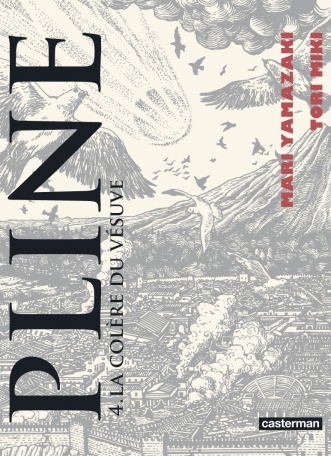
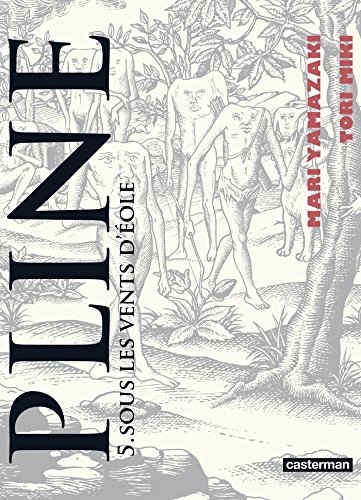
Pline vol. 6: Carthage La Grande

pline-v6-cov“Dans le tome précédent : Au terme d’une traversée mouvementée, Pline, Euclès et Félix, flanqués de deux nouveaux compagnons, débarquent à Stromboli. Les uns exultent de se rapprocher de leur terre natale, d’autres se réjouissent simplement de fouler à nouveau la terre ferme… Les plus clairvoyants sentent planer le danger.”

“L’Histoire a retenu son nom. Mais que savons-nous du plus grand savant de l’Antiquité ?”

“Après une traversée mouvementée, Pline et sa suite débarquent enfin sur la côte africaine. Carthage et son animation, puis le désert et ses dangers, s’offrent au regard du naturaliste pendant qu’à Rome, les intrigues politiques et l’instabilité de Néron annoncent de funestes événements.”

Pline et ses compagnons arrivent enfin dans le port affluent de Carthage. Il y rencontre son ami Vespasien, qui attend de prendre officiellement le poste de gouverneur de la province d’Afrique. On apprend que le jeune garçon que Pline à recueillit est d’origine Phénicienne. L’expédition se lance  alors dans la désert en direction d’Alexandrie!

Pendant ce temps à Rome, Poppée donne naissance à une fille, qui ne survit malheureusement pas longtemps. Néron retrouve l’esclave Plautina qu’il abuse pour oublié que ses responsabilités le rendent misérable. Et Tigellin complote afin de faire d’une pierre deux coups — à la fois contre les chrétiens et pour la spéculation immobilière — d’une façon qui changera le visage de Rome à jamais…

Extraits des pages 5 à 9

Ce fascinant manga historique nous offre un récit à la fois instructif et captivant. Le graphisme de Mari Yamazaki et Tori Miki est plutôt détaillé (de plus en plus avec chaque nouveau volume) et fort agréable à l’oeil. Ce manga est très recommandé particulièrement si la Rome antique vous intéresse. J’attend avec impatience le volume 7 qui devrait paraître en janvier 2019!

Pline, vol. 6: Carthage La Grande, par Mari Yamazaki et Tori Miki. Paris: Casterman (Coll. Sakka), juin 2018. 200 pg, 13.3 x 18.2 cm, 8,45 € / $15.95 Can (ePub/PDF: 5,99 €), ISBN: 978-2-203-15361-5. Sens de lecture original, de droite à gauche. Pour lectorat adolescent (14+). stars-3-5

Pour en apprendre plus sur ce titre vous pouvez consulter les sites suivants:

[ AmazonBiblioGoodreadsGoogleWikipediaWorldcat ]

Pline © 2017 Mari Yamazaki, Tori Miki • 2018 Casterman pour la traduction française.

Voir mes commentaires sur les volumes précédents:

[ Translate ]

Capsules

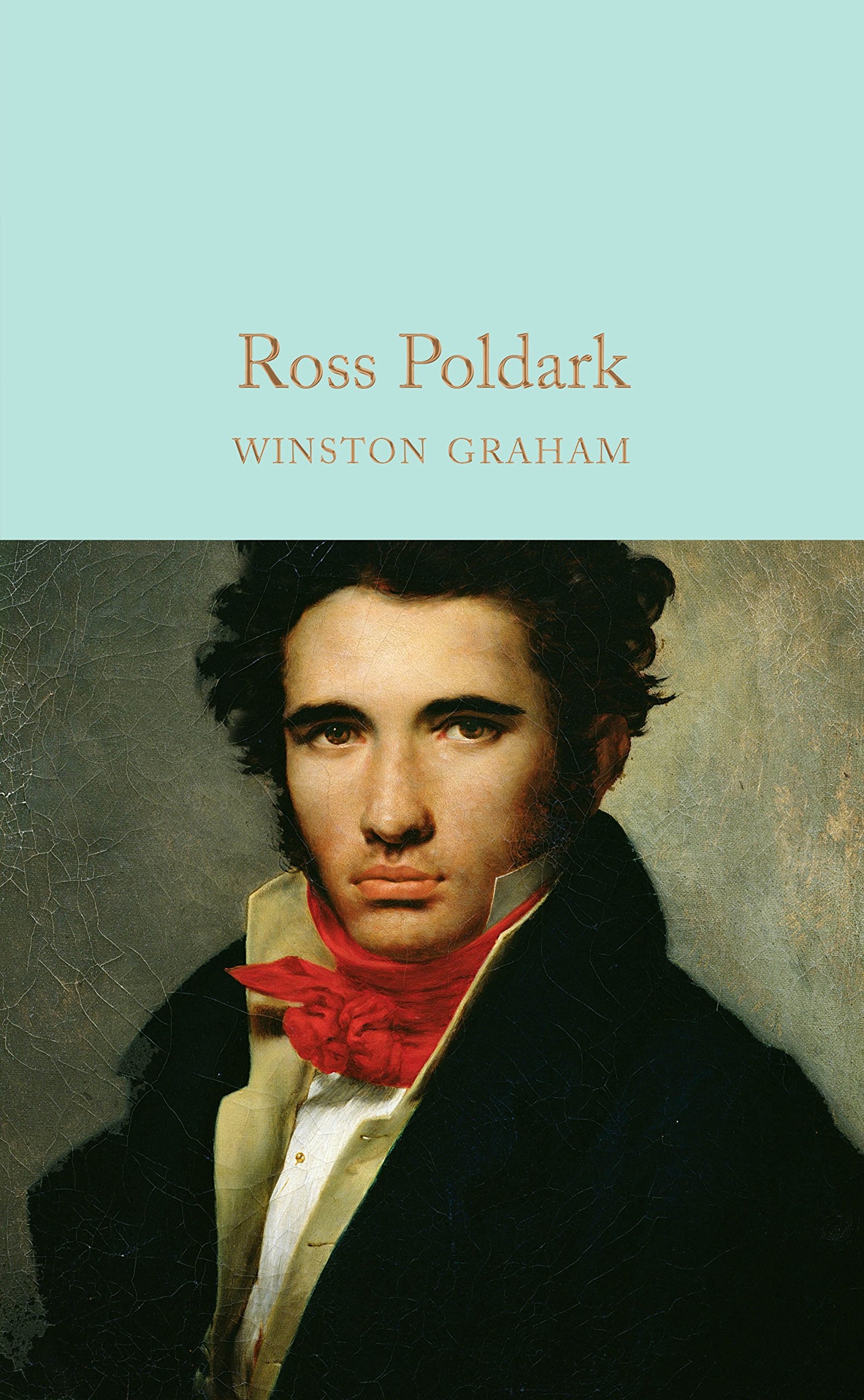
Ross Poldark

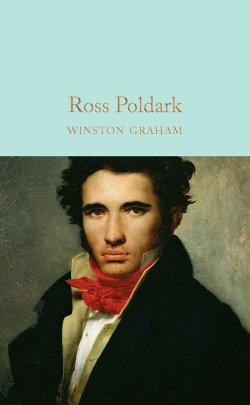
RossPoldark-cov“Returning home from a grim war in America, Ross Poldark is reunited with his beloved Cornwall and family. But the joyful homecoming he had anticipated turns sour; his father is dead, his estate in derelict,  and the girl he loves has become engaged to his cousin. However, his sympathy for the destitute miners and farmers of the district leads him to rescue a half-starved urchin girl from a fairground brawl and take her home — an act that will change the entire course of his life.”

“Ross Poldark is the first novel in Winston Graham’s sweeping saga of Cornish life in the eighteenth century. First published in 1945, the Poldark series has enthralled readers for over seventy years.”

I first discovered this story through the TV series (the 2015 BBC adaptation with Aidan Turner and Eleanor Tomlinson, not the previous 1975 adaptation with Robin Ellis and Angharad Rees) which aired on PBS as part of the Masterpiece show. It is an excellent and beautiful historical drama, very well written and with great actors. It really shows all the aspects of the Georgian era’s society in Cornwall (the westernmost county of England): mostly the sentimental struggle of the main characters, of course, but how they manage to survive at a time when the local mining industry is starting to fail, and how the living conditions of the common people (miners, farmers, fishermen) could be so starkly contrasted with those of the nobility. It also subtlety talks about the political, moral or religious issues of the era. It was all fascinating and I couldn’t resist wanting to see what the books looked like (or at least the first volume).

The book series was written by Winston Graham, who based the story on many aspects of his own life. He was born in Manchester in 1908 but lived in Perranporth, Cornwall, for thirty years (1925-1960). He first met his wife when she was thirteen year-old and the character of Demelza is partly based on her. The series includes twelve volumes which were written in two periods. The first four volumes (Vol. 1: Ross Poldark, Vol. 2: Demelza, Vol. 3: Jeremy Poldark, Vol. 4: Warleggan) were written between 1945 and 1953. In 1973, after a long hiatus, he resumed the series and wrote eight more volumes (Vol. 5: Black Moon, Vol. 6: The Four Swan, Vol. 7: The Angry Tide, Vol. 8: The Stranger From The Sea, Vol. 9: The Miller’s Dance, Vol. 10: The Loving Cup, Vol. 11: The Twisted Sword, Vol. 12: Bella Poldark), the last one being published in 2002, just a year before his death. The first seven volumes are set in the eighteenth century (1783-1799) and depict the life of Ross and Demelza, while the last five volumes, set in the nineteenth century (1810-1820), are centred around their children.

[ WARNING: The following MAY contain traces of spoilers! People allergic to the discussion of any plot’s elements before seeing/reading the story themselves are strongly advised to take the necessary precautions for their safety and should avoid reading further. ]

The first volume starts as Ross Poldark (a young British army officer, member of the low and rural English nobility) comes back from fighting on the losing side of the American War of Independence. He has been wounded in the leg and his face is scarred. Unfortunately, he quickly learn that, during his two years absence, his dissolute father has died, their mine has been closed, his two lazy domestic have let his house and domain (Nampara, located near Truro) go into disrepair, and — worse of all — his young fiancé, Elizabeth, believing he had been killed, is now engaged with his cousin Francis! However, he has a strong character and doesn’t despair: he simply roll-up his sleeves, repair the house, plow the land and makes plans to get financing in order to re-open the mine. He is certainly not perfect and has a quick temper but he is a good man, and, seeing the plight of the local villagers, will do his best to help them and always fight for justice. His exceptional social position (privileged but still a gentleman farmer) allows him the move around flawlessly between the social classes, in both the peasantry, the mine workers on one side and the nobility on the other. 

Ross struggles to forget Elizabeth, his first love, and avoids meeting her. He helps his cousin, Verity, in her amorous affair with the captain Andrew Blamey, but it puts him at odds with his family, and deepen the rift with Francis. After the birth of their child, Geoffrey Charles, Francis is gambling too much at the instigation of George Warleggan and Elizabeth is seeking Ross’ help. The family more or less reconciles on Christmas 1787. His choice of Pascoe’s Bank to finance his business (and eventually some personnal enmities) will put Ross on a collision course with George Warleggan, the son of a blacksmith who became a banker and industrialist.

However, the most life-changing event will occur when Ross saves a thirteen year-old girl from a fairground brawl (started over the abuse of her puppy dog, Garrick). He takes her into his household as a kitchen maid and she grows up admiring Ross. But, at seventeen year-old, fearing that Ross could send her back to her abusive father, she seduces him. They will soon after marry despite all the gossips. Ross will slowly learn to love her. She is a coarse young woman but beautiful and, with the help of Verity, will quickly learn the manners of the nobility. She will always see Elizabeth as a rival, but, despite their tumultuous relationship, Ross will somehow be happy. This is as much her story as his.

Winston Graham’s writing is beautiful and easy to read. The story is not only captivating because of its drama, but also because of its description the Georgian society. However, there are substantial differences between the book and the TV series. For examples: Demelza has black hair and not a beautiful red mane like on TV; she boldly seduces Ross in the book while they simply “fall in love” in the adaptation. The book tend to be more realistic in its description, showing more violence and grit, while the TV series is more reserved. But that’s to be expected. On the other side, the TV adaptation shows more easily the beauty of the Cornish countryside. 

I greatly enjoyed reading this first volume (even if I already knew the story), but I am not ready to engaged in the long commitment required by such a large series. However, I strongly recommend it. Also, take note that I read the edition from the superb MacMillan Collector’s Library but there is another edition, the Pan Macmillan media tie-in edition [ Amazon / Goodreads ], which is probably more widely available.

Ross Poldark – A Novel of Cornwall, 1783-1787, by Winston Graham. London: Pan MacMillan (MacMillan Collector’s Library), 2016. 460 pg. £9.99 / $10.00 US. ISBN 978-1-909621-51-0. For readers fourteen year-old and above. stars-3-5

To learn more about this title you can consult the following web sites:

[ AmazonBiblioGoodreadsGoggleWikipediaWorldCat ]

© Winston Graham 1945.

[ Traduire ]
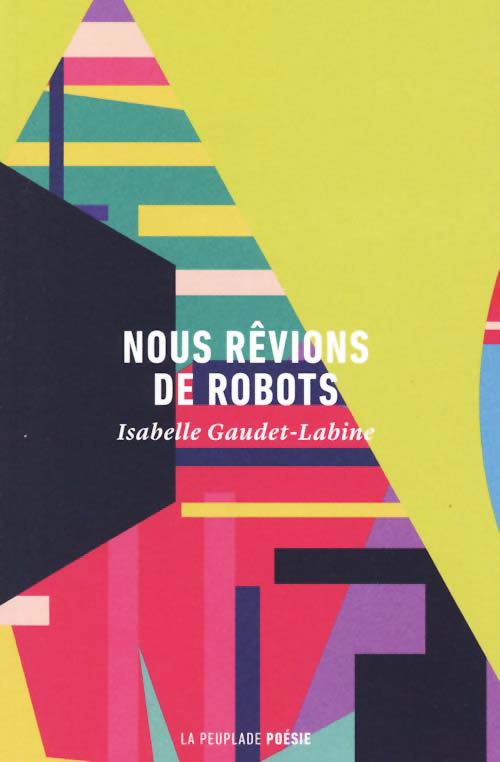
Nous rêvions de robots

NousRevionsDeRobots-cov“De la terre fertile et tangible d’une enfance agricole ardue, rêveuse et sensuelle, à l’enfermement d’un futur dématérialisé à la suite de la Grande Captation numérique, une femme raconte ses transformations physiques et amoureuses, la persistance de sa nature humaine. Comment conserver la mémoire de l’être et des sensations sur le chemin de la post-humanité ? Comment résister à l’entreprise totalisante à l’œuvre derrière les machines ? Avec Nous rêvions de robots, quelque part entre Asimov et Volodine, Isabelle Gaudet-Labine propose un récit de science-fiction décliné en poèmes, duquel n’est conservé que le plus précieux, le frisson, la beauté et le secret, pour affirmer l’humain.

À l’envers de toi / Philéa-2 zéro-2 / je suis / ce que je ne sais pas…”

[Texte du site de l’éditeur et du rabat intérieur]

Un collègue avait suggéré hier de profiter de l’heure gagnée par le retour à l’heure normale pour lire un court roman. Je me suis dit que ce serait l’occasion idéale pour m’attaquer à ce court recueil de poésie dont j’appréhendais la lecture depuis l’été…

D’emblée je dois avouer que je préfère écrire de la poésie qu’en lire. Toutefois, lorsque j’en lis, je l’approche un peu comme j’approche l’art : je préfère de beaucoup l’art figuratif à l’art abstrait. J’aime comprendre ce que je vois/lis sans devoir constamment l’analyser comme un puzzle. Je préfère donc des poètes lyrique comme Beaudelaire ou Nelligan, dont la lecture évoque des sentiments, des impressions, des souvenirs, des rythmes, auxquels je peux facilement m’identifier, sans nécessairement avoir une trame narrative. Il s’agit d’évoquer des sentiments par allégorie, bien sûr, mais ce que l’auteur veux exprimer demeure tout de même relativement clair même si l’expérience personnelle de l’auteur qui génère ce sentiment ne l’est pas toujours. 

De nos jours, chez les poètes modernes, cette clarté est rarement présente, ce qui fait que j’évite d’en lire. Toutefois, la promesse d’une poésie de science-fiction était irrésistible pour moi et, envahit par la curiosité (et ayant rencontré l’auteure à Boréal l’été dernier), j’ai décidé de tenter l’aventure avec Nous rêvions de robots, par Isabelle Gaudet-Labine.

Malheureusement, malgré tout mes efforts, cette lecture fut ressenti comme une corvée. Les mots n’évoquaient pas de sentiments, et les images ne se formaient dans mon esprit qu’avec difficulté. Mais que veut-elle donc exprimer?

Le recueil est divisé en trois parties. J’ai réussi à apprécier un peu la première, où l’auteure relate son passé agricole, car je pouvais assez bien suivre ce qu’elle tentait d’exprimer. Le présent, envahit par l’informatique, était lui beaucoup plus difficile à déchiffrer et la lecture en était donc dépourvue de plaisir. Le futur robotisé quant à lui était plutôt amusant puisque l’auteure ici tente, non pas d’exprimer des sentiments, mais plutôt de raconter une histoire fictive, à l’aide de ses strophes et de ses rythmes brisées. “Qu’une fiction m’efface / de la Grande Capture / Je deviens fée / dans la forêt des machines

Je ne regrette pas d’avoir assouvie ma curiosité même si l’expérience n’a pas été aussi agréable que j’aurais voulu. Ce ne fut pas une heure perdue mais cela a confirmé ma méfiance envers la poésie moderne. Toutefois si, contrairement à moi, vous savez l’apprécier je suis sûr que vous passerez de bons moments avec Nous rêvions de robots

Nous rêvions de robots, par Isabelle Gaudet-Labine. Chicoutimi: Éditions La Peuplade, septembre 2017. 108 pg. $19.95. ISBN 978-2-924519-57-8. Pour lectorat jeune adulte (16+). stars-2-0

Pour en apprendre plus sur ce titre vous pouvez consulter les sites suivants:

[ AmazonBAnQBiblioGoodreadsGoggleWorldCat ]

© 2017 Isabelle Gaudet-Labine • Éditions La Peuplade.

[ Translate ]

C Comme Cthulhu

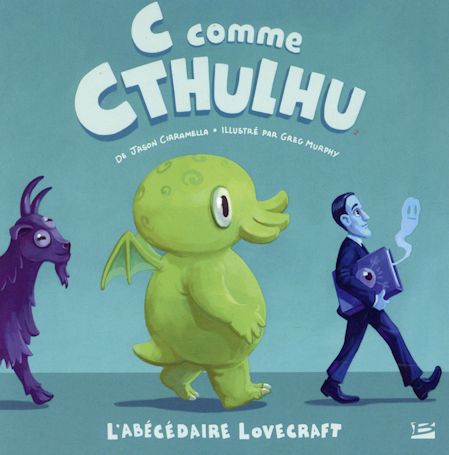
C_Comme_Cthulhu-covVous tenez entre vos mains C comme Cthulhu, un abécédaire inspiré de l’oeuvre d’Howard Philips Lovecraft. Si ces créations sont indicibles, cet ouvrage est la preuve qu’on peut en revanche les dessiner avec autre chose que de la bave de shoggoth. Les parents peuvent enfin partager leur passion avec leurs larves… euh… leurs enfants, et apprendre en jouant à se faire peur. Sans risquer de devenir fous. Peut-être chèvre (aux mille chevreaux) sur les bords, mais pas fou.” [Texte de la couverture arrière]

J’ai découvert cet album tout-carton en lisant le commentaire de Karine sur Mon Coin Lecture. Un album pour tout-petits basé sur la mythologie lovecraftienne! C’était trop intriguant: il fallait que je vois ça de moi-même. Alors je me le suis réservé sur le site des bibliothèques de la Ville de Montréal. Et voilà! Je vous le commente donc pour l’Halloween

Comme vous le savez tous, un abécédaire est un livre illustré servant à apprendre l’alphabet aux enfants en se servant d’associations mnémoniques entre une lettre, un mot qui commence par celle-ci et un dessin qui représente ce mot. Pour rendre la chose amusante les éditeurs de livres et les éducateurs font souvent preuve de beaucoup d’imagination et, dans le cas de ce livre-ci, parfois à l’excès!

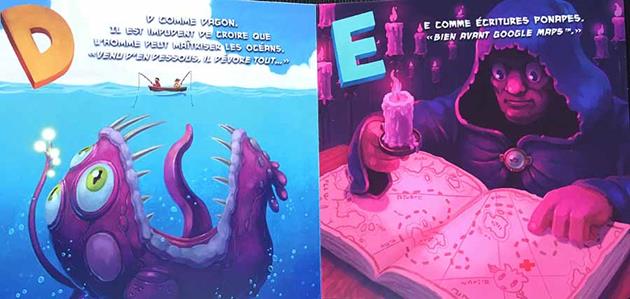
C_Comme_Cthulhu-D-E

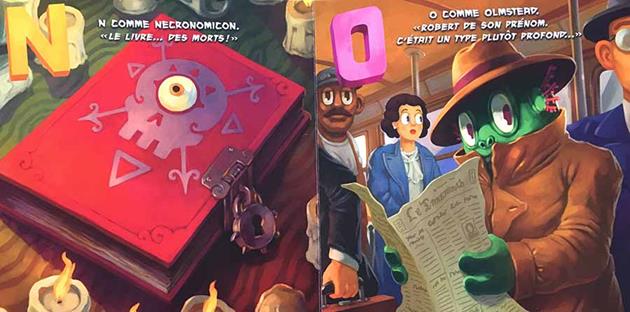
Avec C Comme Cthulhu, l’alphabet se décline selon l’univers de H.P. Lovecraft: Alhazred (l’auteur fou du Kitab al-Azif, a.k.a. Necronomicon), Bêêêêê (le cri présumé de Shub-Niggurath, la chèvre noire aux mille chevreaux), Cthulhu (l’inconcevable prêtre des Grands Anciens), Dagon (un autre Grands Anciens, dieu poisson), Écritures Ponapes (texte mythique de R’lyeh), Frissons, Goules, Hastur (un autre Grand Ancien tentaculaire), Innsmouth (ville du Massachusetts où se déroule les cauchemars), John Raymond Legrasse (un inspecteur dans L’Appel de Cthulhu), K’n-yan (territoire sous-terrain en Oklahoma), Lovecraft (Dâ!), Miskatonic (rivière maudite qui donne son nom à l’Université d’Arkham), Necronomicon (le livre occulte qui rend fou), Olmstead (Robert Olmstead, le narrateur dans Le Cauchemar d’Innsmouth), Providence (ville natale de Lovecraft), Q’yth-Az (l’Intellect Crystalloïde, un autre Grand Ancien), R’Lyeh (la cité engloutie), Shoggoth (monstres gélatineux créés par les Anciens), Tiare de Dagon, Ulthar (Contrées du Rêve, peuplée de chats), Vigilant, West (Herbert West, le réanimateur original), Xiurhn (serviteur des Outer Gods), Yog-Sothoth (le Gardien d’entre les Mondes), et finalement Zombies (eh, y-a pas de zombies dans la mythologie de Lovecraft!). Wow!

C_Comme_Cthulhu-N-O

C’est amusant et les illustrations sont “cute” mais est-ce vraiment un album pour tout-petits? A quel public ce livre s’adresse-t-il? J’ai compris quand j’ai vu que le livre est publié par Bragelonne, un éditeur français dédié aux littératures de l’imaginaire (SF, Fantastique, Fantasy). Mais c’est une traduction, publié à l’origine en anglais par ComixTribe en décembre 2014. Il semble que C Is for Cthulhu soit un phénomène en soi, puisqu’il y toute une entreprise créant toutes sortes de produits sur le thème de Lovecraft (livres, t-shirts, toutous, etc). C’est donc un livre à l’intension de geeks, ou plutôt à l’intension des enfants de geeks! Qui ne veut pas apprendre à lire à ses enfants en les introduisants très jeunes à la mythologie de Lovecraft! 

C Comme Cthulhu n’est vraiment pas pour tout le monde. Mais moi j’ai adoré. Cela reste toutefois une curiosité. 

C comme Cthulhu : l’abécédaire Lovecraft, écrit par Jason Ciaramella et illustré par Greg Murphy (traduit par Alain Névant). Paris: Bragelonne, novembre 2016. 26 pp. 14.90 € / $24.95. ISBN: 979-10-281-0152-7. Pour lectorat de 4 ans et plus (!). stars-3-0

[ AmazonBiblioGoodreadsWorldCat ]

[ Translate ]

Vegan Fest 2018

VeganFest2018

Like a couple of years ago, we went to the Vegan Fest. However, this year it was held at the Palais des Congrès de Montreal (new metro Place-d’Armes) on October 21st and 22nd. With such a venue, the festival was bigger but still quite compact so it was quite crowded and difficult to circulate. Also the conference area was much smaller and less accessible, so I didn’t bother to listen to any of the presentation.

This year there was a lot of cosmetic products, non-dairy cheese and desserts as well as fermented (Kombucha) or herbal tea. We have noticed A LOT of interesting products and organisations that deserve a further look (check their websites):

There was one local products in particular that I was looking for at the Vegan Fest because I had seen it talked about in culinary TV shows: Gusta’s sausages and cheeses. Their plant-based deli “meats” are made from wheat protein (saitan) and their grating cheeses are made from coconut oil and various plant milks. I tasted their meat substituted and the taste is pretty close. Check it out: gustafoods.com

Mélanie and Jimmy

Mélanie and Jimmy

Last year my wife met a nice couple, Mélanie and Jimmy, who had quit their jobs to become farmer in the small municipality of Boileau, in the Outaouais region. On their one-acre farm, La Ferme de l’Aube, they are cultivating a variety of over seventy vegetables, fruits, fines herbs and flowers. They are great advocate of biologic and vegan farming. They were at the Vegan Fest again this year, selling organic seeds and garlic. You can check their webpage and FB page. I greatly admire people who chose to become farmer because it is not an easy job and yet it is essential work. I think the future of a healthy life can be found is in locally produced, organic food. So I exhort everyone to encourage our local farmers. They surely need our support.

Unfortunately, there is a lot of stuff I’ve seen at the Vegan Fest that seriously annoyed me. I favour wholeheartedly the health aspect of veganism , but I seriously despise the political and militant part. I am okay with avoiding red meat, eating lots of plant-based food, treating animals and the environment with respect, but for me vegan philosophy goes too far. I particularly don’t understand this war that is currently waged against milk products. Personally, I don’t drink milk (I prefer Soy milk) but I like a lot my yogurt and cheese. I don’t mind eating plant-based cheese (so far, what I’ve tasted seems close in texture and taste) but I don’t see any purpose for it if you are not lactose intolerant. Why not appreciate the real stuff. Our dairy farmers needs our support too, you know!

[ Traduire ]

Press Ep. 1

tv-55-8-lawson-press-rileyI just watched yesterday the first episode of Press, a six-part British TV series that aired on BBC One between September 6th and October 11th 2018. It is written by playwright Michael Bartlett (Doctor Foster, King Charles III), directed by Tom Vaughan (Endeavour, Victoria) and starring Charlotte Riley (portrayed on the left), Ben Chaplin (World Without End), Priyanga BurfordPaapa Essiedu (The Miniaturist) and David Suchet (Agatha Christie’s Poirot). It is set in the world of newspapers in England, showing the work, life and career anxiety of the staff from two very different (and fictional) newspapers: The Herald and The Post. It’s apparently inspired by The Guardian and The Mirror, two newspapers with opposite journalistic philosophies: one is more of an investigative newspaper and the other more of a tabloid (or “Red Tops” as they say in the U.K.).

It is a very good TV series. The acting is excellent and it is quite well-written — it is not as good and clever as Aaron Sorkin’s The Newsroom (which was about the daily operation and trials of a cable news TV station) but it is still interesting and well worth watching (like most British TV series). Of course, despite the creator’s best efforts, the show was criticized for not portraying accurately the journalistic and editorial work, but all fiction need to take same artistic license to make the subject interesting. However, the writer of the series thought it was important to base the story on some real aspects of the journalists’ work (even if the details is sometimes wrong) in order to express the essence of journalism to the viewers. And I think it succeeded pretty well.

It’s a mini-series, so I have only five more episodes to watch… That’s what I like with British TV: it is usually short and sweet, all the goodness being concentrated in just a few episodes. No car chases or explosions with special effects, but just excellent writing and storytelling. That’s all a good show needs.

Press will air in North America on PBS’ Masterpiece following the UK broadcast, probably in early 2019. I recommend that you watch it if you can… stars-3-5

To learn more about this title you can consult the following web sites:

[ BBCGoogleIMDbPBSWikipediaYoutube ]

[ Traduire ]

Capsules

The Little Broomstick

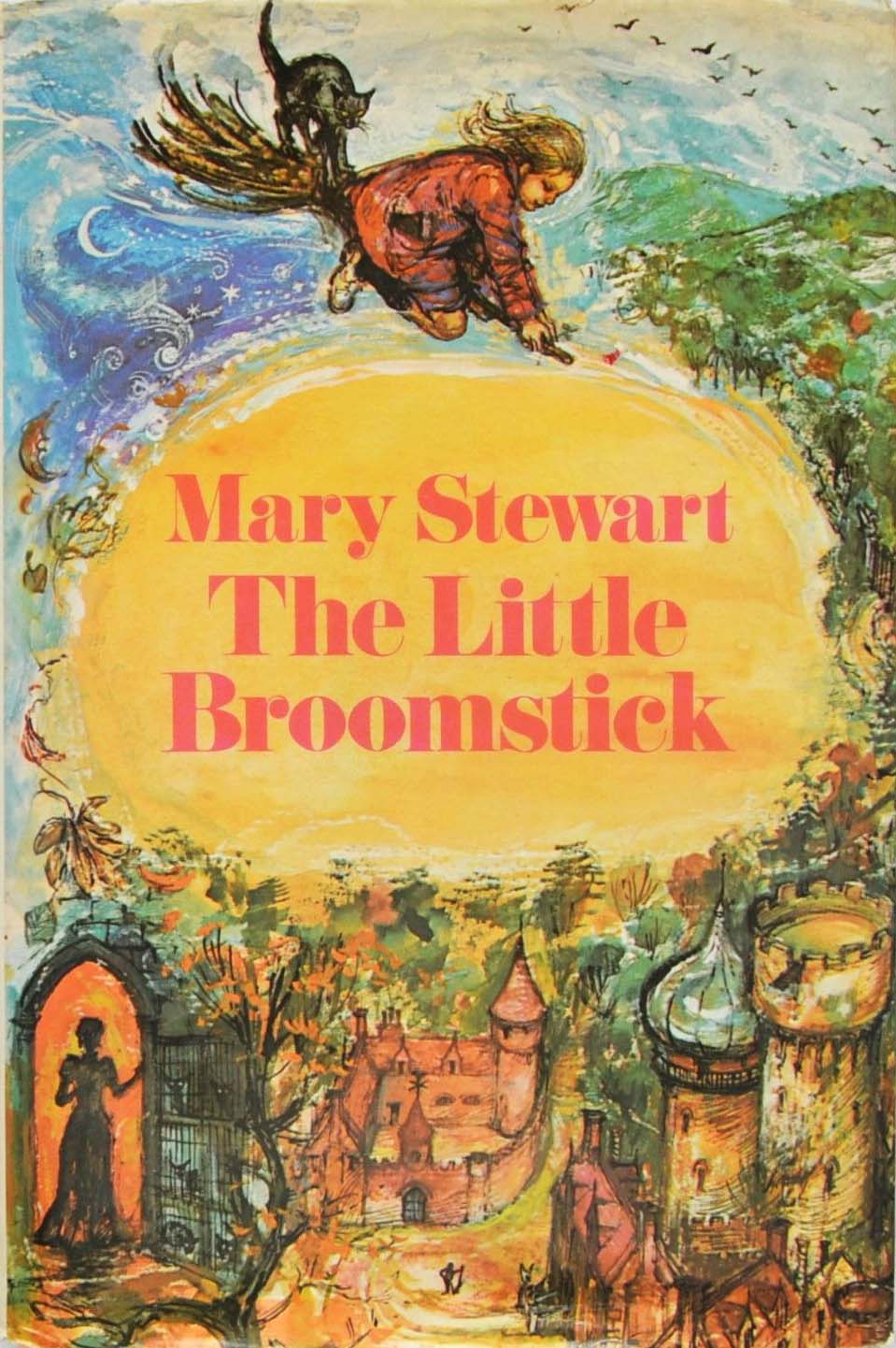
LittleBroomstick-cov“Mary, a lonely girl at all times, is bored with the holiday she has to spend with her great-aunt in the rambling country house. Wandering aimlessly in the woods, she finds a cat, who leads her to a curious flower that she has never seen before. There is something odd, too, about the cat, and about a little broomstick in a pile of rubbish waiting to be burnt…

The cat, the flower and the mysterious broomstick combine to launch Mary into an extraordinary series of adventures involving spells, witchcraft and animals transformed… leaving her with a terrible choice to make and a frightening act to perform.

Mary Stewart brings to The Little Broomstick all the qualities for which she is so admired — excitement, fine description, humour, fascinating detail and sheer readability.”

[ Text from the book flaps ]

I have not commented on a book of fiction that is not a manga or comic in a very long time. And yet, this is just a short book of children literature… However, after commenting on the animated adaptation by Studio Ponoc, Mary and the Witch’s Flower, I felt compelled to read the novel. I was lucky to find in the library the very first edition of the book (1971, although it was a second impression, produced the same year). That edition is now rare, but the book has been recently reprinted. I guess it will constitute my official reading for Halloween!

Mary is bored. She tries to give a hand to Zebedee, the gardener, but she isn’t very helpful. She then goes for a stroll in the wood. There she meets a black cat and discovers a little clump of flowers such as she had never seen before. Later, Zebedee tells her that it’s called witch’s bell or tibsroot or fly-by-night. It’s rare as it blooms only once in seven years. And superstitious folks say it has magical power. He also tells her that the black cat is called Tib, and that he has a grey companion (his brother maybe) called Gib. But the grey one has not been seen in a while…

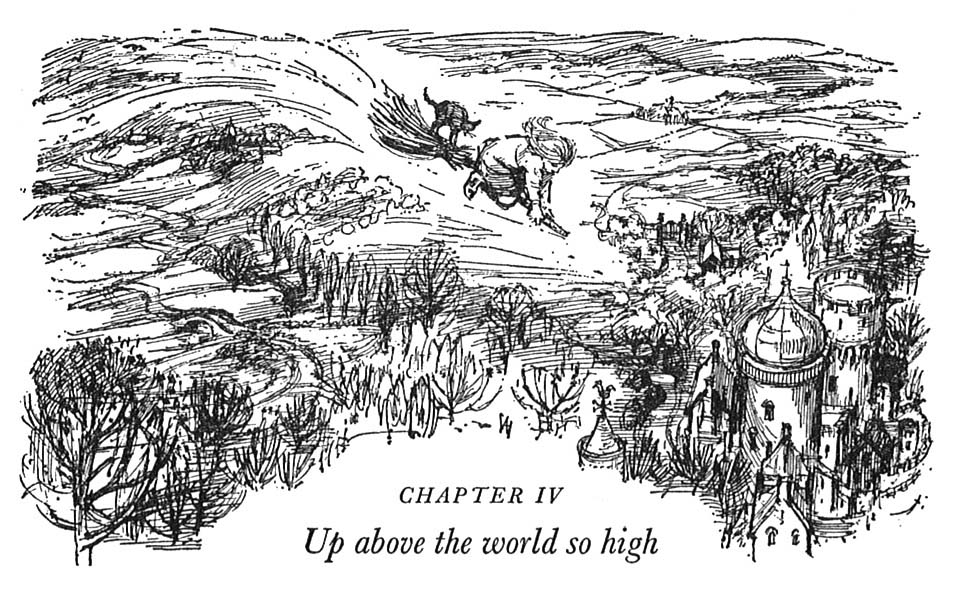
The next day, while trying to sweep up leaves in the courtyard with a broomstick too big for her, she discovers a little broomstick, just the right size for her. As she touches the little broomstick with her hands stained with the purple juice of crushed fly-by-night, the broomstick leap. Mary clings to it, trying to hold it between her legs, but it takes flight and bring her (and Tib) up in the sky, above the world so high! After crossing a thick fog, she finds herself in a strange place and lands near the Endor College for young witches. We meets Madam Mumblechook, the headmistress, and Doctor Dee. They think she’s a new pupil and she plays along (as “trespassers will be transformed”!). She visits the school, proves that she is a competent witch, steals a spell book and promises to come back for class the next morning. As she returns home, she realizes that Tib is missing.
Madam Mumblechook used a subterfuge to steal him in order to perform a transformation experiment on him. Mary goes back at night, finds Tib and use the Master Spell from the book she stole to restore Tib back into a cat (transforming back all the creatures and animals held captive by the school witches at the same time). She meets Peter, a boy from the village who is looking for his grey cat, Gib, and wandered in the magical world by accident while crossing some thick fog. They are discovered and escape on the broomstick, with Madam Mumblechook and Doctor Dee in hot pursuit. With the help of the animals that she had previously saved, they manage to escape and come back home safely.

The Little Broomstick offers a nice, simple story, beautifully written — as I’ve found it is often the case with British children literature. Strangely, when such stories are adapted into anime the story is usually simplified in order to fit the new medium, but it is the opposite in this case: the anime script-writers have added to the story to make it richer and more complex. In the original story it’s not Peter that is kidnapped, but the cats; there is no other nefarious use for the fly-by-night; no household member is involved in magic. The book is more straightforward and simple. And I like it that way.

Obviously, Mary Stewart is a skilled writer, although this is her first book for children. The language she uses is charming and her storytelling is full of rich descriptions. The book is a good thriller without being scary. It encourages kids (and here particularly girls) to be adventurous, to care, stand up for others and to do what’s right. It is simple enough to be enjoyed by kids, but with enough dept to also be appreciated by adults. All in all, The Little Broomstick is a nice, pleasant read wether you are a kid or not.

LittleBroomstick-illop35a

Illustration by Shirley Hugues

The Little Broomstick, by Mary Stewart (illustrated by Shirley Hugues). Leicester: Brockhampton Press Ltd, 1971. 128 pg. ISBN 0-340-15203-6. For a Middle Grade readership (age 8 to 12) and above. [The most recent edition is by Hodder Children’s Books, ISBN: 9781444940190, £6.99 / $10.75 US] stars-3-0

To learn more about this title you can consult the following web sites:

[ AmazonBiblioGoodreadsGoggleWikipediaWorldCat ]

Text © 1971 Mary Stewart • Illustration © 1971 Brockhampton Press Ltd. All rights reserved.

[ Traduire ]

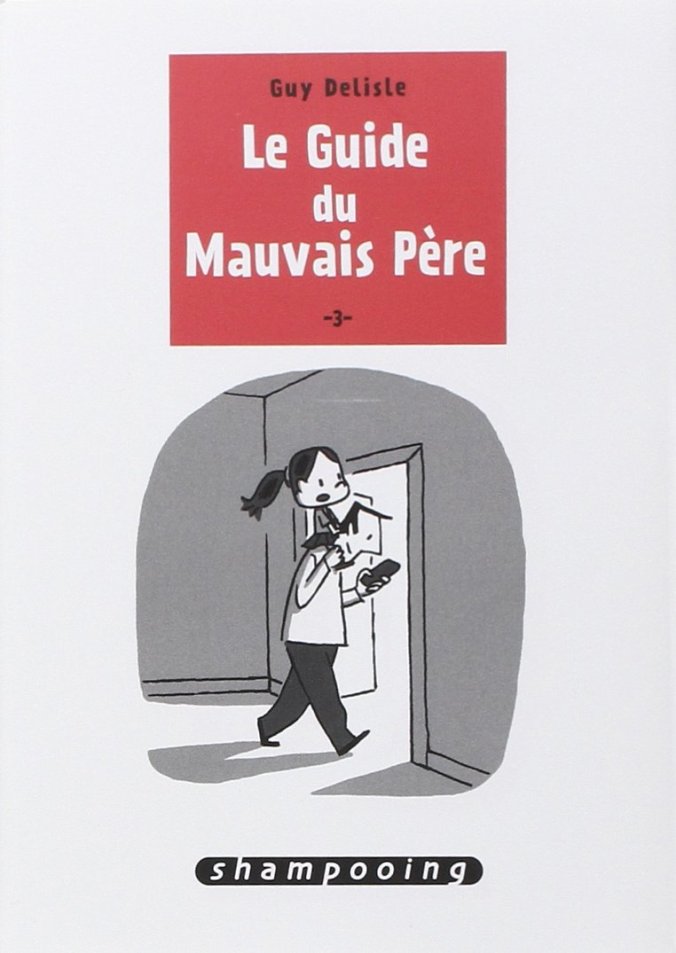
Le Guide du Mauvais Père (4)

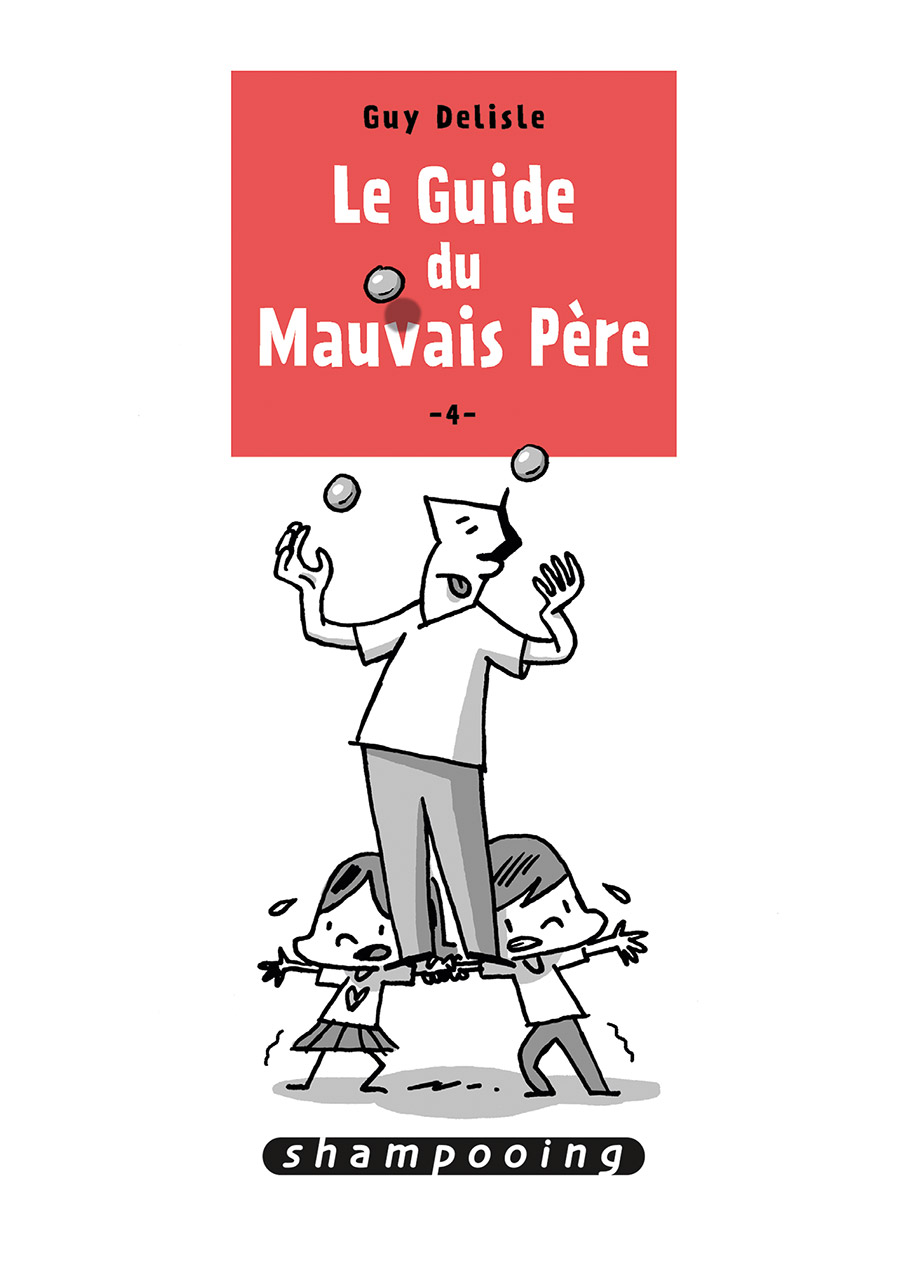
Guide_du_mauvais_pere_4-covToujours aussi parentalement incorrect, Guy Delisle retrouve son rôle préféré : meilleur (mauvais) papa du monde ! Sa recette : une bonne dose de mauvaise foi, des colères importunes, un tas de gamineries et surtout BEAUCOUP d’humour !

Défier son fils aux jeux vidéo quand il travaille, oublier sa fille dans un magasin et lui faire croire le contraire, parler à ses enfants de sa vie merveilleuse d’étudiant… quand ils n’existaient pas… Guy Delisle, un mauvais père ? Non, un auteur de bande dessinée qui sait puiser l’imagination là où elle se trouve, avec un sens aigu de l’observation et une bonne dose d’autodérision.

[ Texte du site de l’éditeur; voir aussi la couverture arrière ]

Guy Delisle nous fait encore rigoler avec son alter-égo qui représente le summum du mauvais parent: distrait, égocentrique et enfantin. Il s’agit de quatorze petites histoires d’en moyenne un douzaine de pages chacune (entre dix et dix-huit pages): Coup de blues, La dent III, La signature, Au magasin, Compétition, Sortie scolaire, Le jeu, Une histoire, Les invités, Savoir résister, Le test, Un petit film, Le placard, Tunnel of life.

Somme toute c’est quand même très similaire aux trois premier volumes. Je suppose qu’il y a une limite à étirer la sauce avec toujours le même genre d’histoires inspirées de son quotidien. C’est pourquoi ce quatrième volume sera sans doute le dernier. Dans la dernière histoire, Tunnel of Life, le père s’amuse bien avec les enfants dans un parc d’attraction mais se rend compte soudainement que ceux-ci ont grandit (Alice a maintenant 11 ans et Louis 14 ans) et n’ont plus autant le goût du jeu…

À travers cette série (et la plupart de son oeuvre) Delisle réussit le tour de force de raconter des histoires complexe et riches en émotions de façon très succincte et avec un trait de crayon très simple. C’est un livre amusant (et terrifiant à la fois) mais, avec en moyenne deux dessins par page, cela se lit plutôt vite. C’est tout de même une bonne lecture, légère, pour le transport en commun ou la salle d’attente.

Le Guide du Mauvais Père 4, par Guy Delisle. Paris, Éditions Delcourt (Coll. Shampooing), juin 2018. 18 x 13 x 1.75 cm, 192 pg., 9,95 € / $15.95 Can. ISBN: 978-2-413-00280-2. Recommandé pour public adolescent (12+). stars-3-0

Pour plus d’information vous pouvez consulter les sites suivants:

[ AmazonBiblioGoodreadsGoogleWikipediaWorldCat ]

Voir aussi mes commentaires sur les trois premiers volumes:

Le Guide du Mauvais Père © Éditions Delcourt, 2018.

[ Translate ]

Capsules

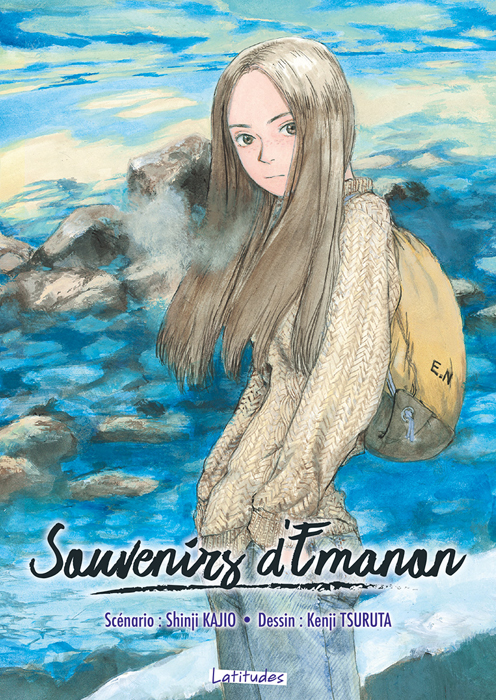
Souvenirs d’Emanon

Souvenirs_Emanon-cov“1967, dans le sud du Japon. Loin des événements qui agitent le monde, un étudiant prend le chemin du retour après un voyage d’errance. Une longue nuit en ferry s’annonce. Alors qu’il cherche à oublier une énième déception amoureuse en se plongeant dans ses romans de SF, une intrigante jeune femme s’installe à ses côtés.

 Fumant cigarette sur cigarette, elle a pour unique bagage un sac à dos marqué des initiales “E. N.” Son nom ? Emanon, ou “no name” lu à l’envers… Elle aussi voyage seule et sans but apparent. D’abord peu bavarde, les yeux dans le vague, elle se rapproche du jeune homme, car il lui rappelle un ancien amour… datant de plusieurs siècles !

 Au fil de la conversation, elle lui dévoile son secret : sous ses airs d’étudiante, elle cache une âme vieille de trois milliards d’années ! Ses souvenirs remontent au plus profond des âges, avant même l’apparition de l’humanité. Son récit dépasse toutes les histoires de SF. Cette nuit en compagnie d’Emanon va bouleverser à jamais la vision du monde du jeune voyageur…

 Emanon est un des personnages les plus fascinants de la science-fiction contemporaine japonaise. Le dessinateur Kenji Tsuruta, tombé amoureux du concept imaginé par l’écrivain Shinji Kajio, donne un visage aussi vivant que mélancolique à cette incarnation féminine du passé, du présent et du futur de l’humanité. Que l’on croie ou non à son histoire, impossible d’oublier Emanon. Et elle non plus ne vous oubliera jamais…”

[Texte du site de l’éditeur; voir aussi la couverture arrière]

Souvenirs d’Emanon (おもいでエマノン / Omoide Emanon) est un manga seinen qui a été prépublié dans le magazine Comic Ryu et compilé en volumes chez Tokuma Shoten à partir de 2008. La série comporte trois autre manga publié en 2012, 2013 et 2018. Le premier volume à été traduit en français chez Ki-oon (dans leur collection grand format, Latitudes) en janvier 2018 et la version française du deuxième volume, Errances d’Emanon (ISBN : 979-10-327-0315-1), y est déjà disponible en Europe depuis le début septembre 2018. L’histoire est basée sur une série de romans de science-fiction par Shinji KAJIO (aussi publiés par Tokuma Shoten), débutée avec une nouvelle en 1983, qui met en scène le personnage de “Emanon”, une mystérieuse jeune femme dont la mémoire remonte au début de la vie sur Terre, il y a trois millions d’année (et dont le nom, en anglais, signifie “no name” [sans nom] épelé à l’envers).

Le dessin de Kenji Tsuruta (Spirit of Wonder, Forget-me-Not) est plutôt classique et est à la fois clair, précis et détaillé. Le récit de Shinji Kajio, quant à lui, est plutôt simple (l’histoire se déroule principalement durant l’après-midi et la soirée du 24 février 1967) et est essentiellement narratif (sans vraiment d’action). 

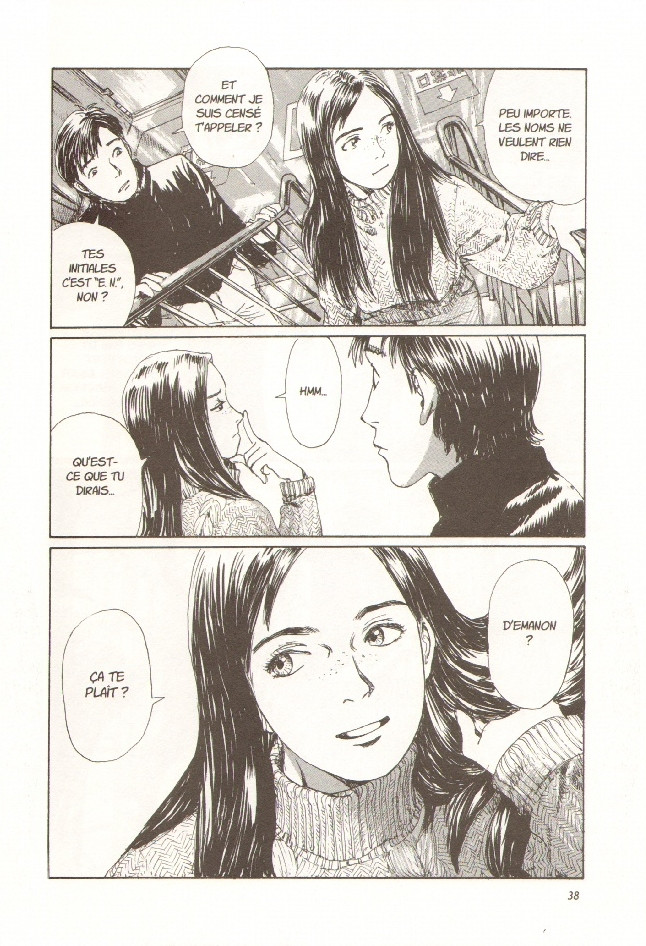
Souvenirs_Emanon-p038Un jeune étudiant bohème rentre chez lui après un voyage et, durant le périple de dix-sept heure du traversier qui l’amène sur l’île de Kyushu, il fait le rencontre d’une jeune fille mystérieuse. Elle dit s’appeler “Emanon” et, voyant qu’il est grand amateur de science-fiction, elle lui confesse qu’elle a l’étrange pouvoir de se souvenir des vies des tous les individus de sa ligne ancestrale directe depuis l’apparition du premier organisme unicellulaire! Toute cette mémoire lui pèse lourd et elle se demande pourquoi elle a ce pouvoir et dans quel but? Autour de quelques bières, à la cantine du traversier, ils discutent et spéculent sur les implications d’un tel pouvoir. Puis elle rit et avoue lui avoir raconté une histoire pour savoir ce qu’il en pensait, puisqu’il est fervent de SF. Ils discutent toute la soirée et, au matin, lorsque le traversier accoste au port, elle a disparu. Il la cherche partout mais en vain. Treize ans plus tard, il l’aperçoit sur le quai d’une gare accompagnée d’une enfant. Il l’approche mais elle ne se souvient pas de lui. Toutefois, la fillette lui dit: “C’est moi, Emanon. C’est gentil de te souvenir de moi!” Le pouvoir ne peut résider que dans un seul individu par génération, et lorsqu’un enfant nait, le parent oubli tout des vies précédentes! Il la revoit encore plus tard, alors qu’il est un vieillard…

Souvenirs d’Emanon nous offre donc une intriguante histoire agréablement illustrée par Tsuruta. Un bon moment de lecture que je recommande sans hésitation.

Souvenirs d’Emanon, par Shinji KAJIO (scénario) et Kenji TSURUTA (dessin). Paris: Ki-oon (Coll. Latitudes), janvier 2018. 180 pages, 17 x 24 cm, 15,00 € / $28.95 Can. ISBN 979-10-327-0226-0. Pour un lectorat adolescent (14 ans et plus). Un trailer et un extrait de 28 pages sont disponibles sur le site de l’éditeurstars-3-0

Pour en savoir plus vous pouvez consulter les sites suivants:

[ AmazonBiblioGoodreadsGoogleWorldCat ]

OMOIDE EMANON © Shinji Kajio, Kenji Tsuruta / TOKUMA SHOTEN PUBLISHING CO., LTD

[ Translate ]

Souvenirs Emanon-Logo

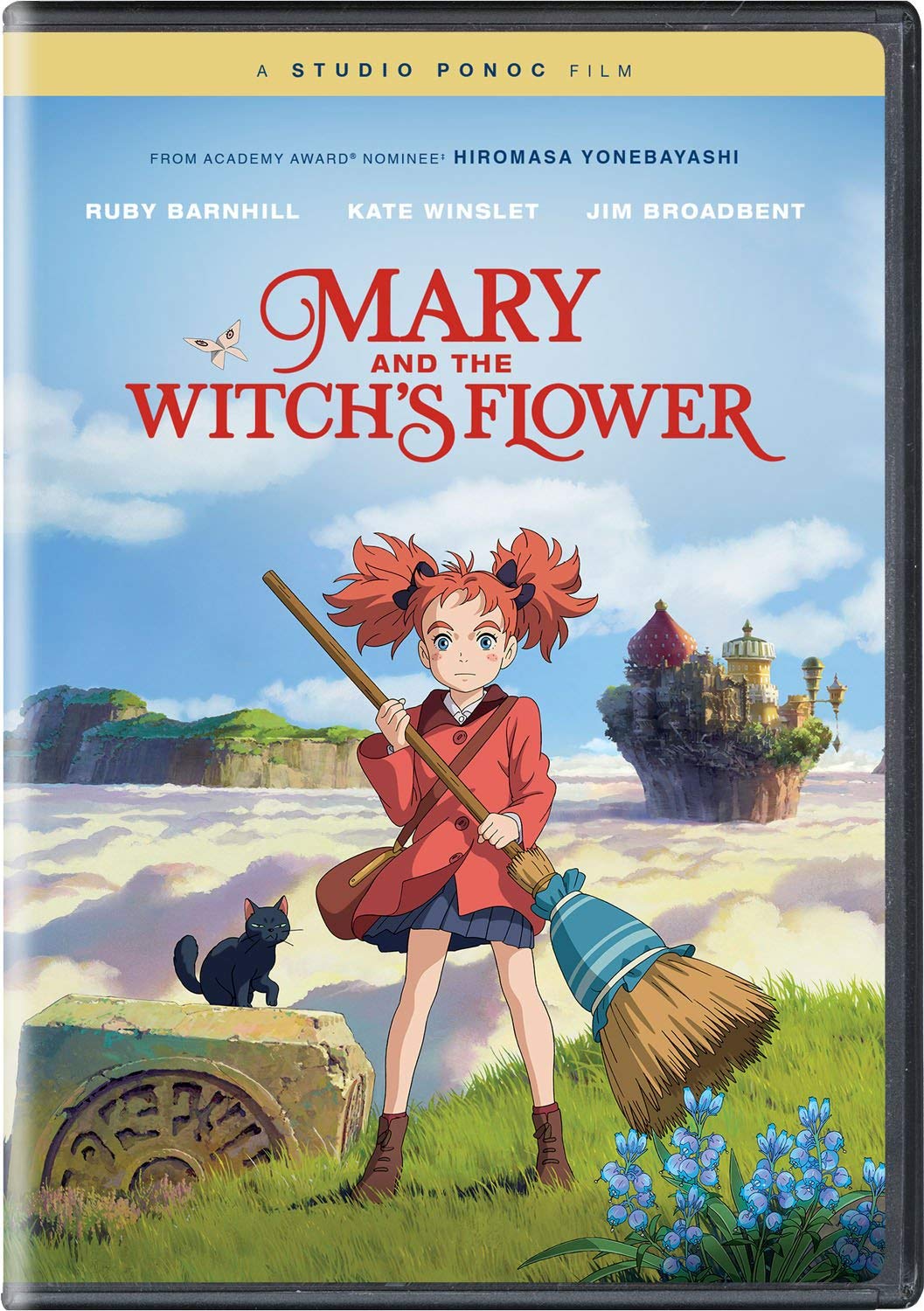
Mary and the Witch’s Flower

Mary_and_the_Witchs_Flower-covThis smooth and beautiful animation was produced by the Studio Ponoc, staffed with people who worked at the famous Studio Ghibli. The movie is directed by Hiromasa Yonebayashi (who was a key animator at Studio Ghibli and director of The Secret World of Arrietty [2010] and When Marnie Was There [2014]), with a screenplay by Hiromasa Yonebayashi & Riko Sakaguchi and character designs by Akihiko Yamashita. It is based on Mary Stewart‘s 1971 children’s novel The Little Broomstick (although it is never mentioned in the staff interview included with the Dvd).

Mary and The Witch’s Flower (メアリと魔女の花 / Meari to Majo no Hana) offers a good storytelling and quite a cute story but it doesn’t really look original at all. It rather feels like it is a mishmash of every Ghibli designs: the witch part is vaguely reminiscent of Kiki’s Delivery Service, the witch school in the sky reminds me a little of Laputa: Castle in the Sky, a herd of animal fleeing seems similar to a scene in Princess Mononoke, a costume design evokes Nausicaä of the Valley of the Wind, the girl being away from home with some distant family members is similar to When Marnie was There, etc. This could be explained by the fact that most animators learned their skills while working at Ghibli. However, the influences are not limited to this source: Doctor Dee’s design makes me think of Dragonball’s Master Roshi and even Harry Potter makes a cameo appearance in one of the school classroom! I guess it was all intended as hommage or humour.

If I found this a little odd, I was not really annoyed by it. The movie is good entertainment (critical rating of 87% on Rotten Tomatoes) and, if you don’t feel the same depth as in Ghibli’s productions,  I was still quite glad that another major studio (even if this is their first real movie) would continue to produce traditional full length anime. Indeed, with the closing of Studio Ghibli after Hayao Miyazaki’s retirement, I really hope that Studio Ponoc will become its rightful heir… So, all in all, it is definitely worth watching. It is available on Netflix and on Dvd. stars-3-0

[ AmazonBiblioGoogleIMdBWikipediaYoutube ]

[ Traduire ]

Capsules

Ex-Libris: The New York Public Library

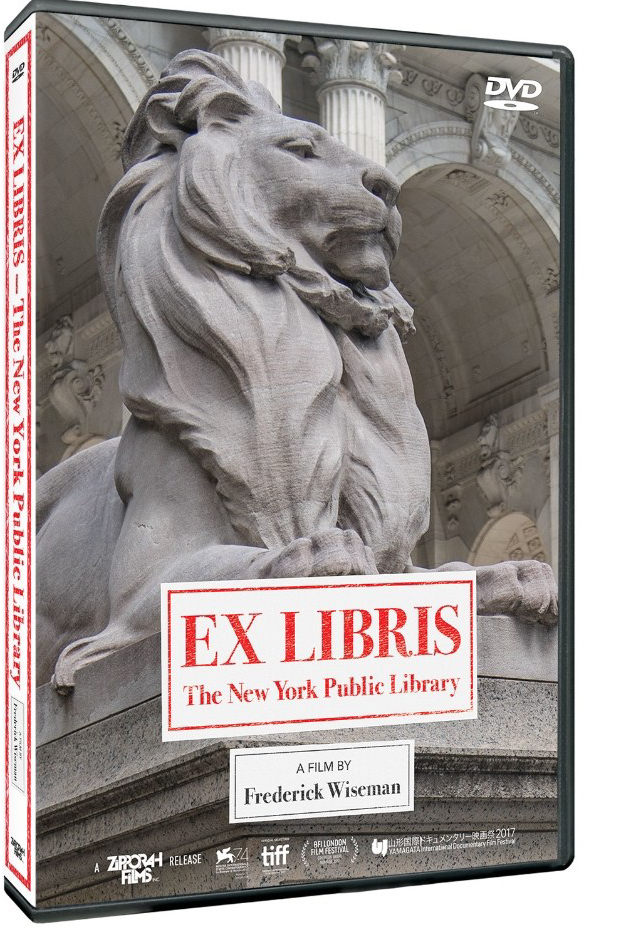
Ex-libris-dvd“Frederick Wiseman’s film, Ex Libris – The New York Public Library, goes behind the scenes of one of the greatest knowledge institutions in the world and reveals it as a place of welcome, cultural exchange and learning. With 92 branches throughout Manhattan, the Bronx and Staten Island, the library is a resource for all the inhabitants of this multifaceted and cosmopolitan city, and beyond. The New York Public Library exemplifies the deeply rooted American belief in the individual’s right to know and be informed. It is one of the most democratic institutions in America – everyone is welcome. The Library strives to inspire learning, advance knowledge and strengthen communities.”

Earlier this week I stumble upon this enormous documentary on PBS. If you are into books and libraries, you’ll just love this movie that gives us an extensive tour of the New York Library and demonstrates how dedicated and welcoming the staff of its 92 branches are, what are the challenges they face in order to keep up with the demands and needs of their patrons, and particularly how important libraries can be to foster the diffusion of culture & knowledge as well as artistic creativity. It’s certainly one of the best examples of what an ideal library should be (as I recently discussed).

It is amazing how our local libraries look insignificant and puny in comparison of the behemoth collection and the huge diversity of services offered by the New York Public Library… With 53 millions documents, it is the second largest public library in the U.S. (third largest in the world after the British Library and the Library of Congress). Surprisingly, despite its name, it is a private, non-profit library, but it’s using public/private partnership (and funding) to work in collaboration with local governments (city, state, federal) in providing a large array of services… It is quite interesting (and serendipitous) that, with our imminent provincial elections, a librarian and teacher at the U de M Library Science School has been very recently questioning the commitment of the government in regards of libraries. Will the government create a strategic plan for the development of libraries (like the PLA recently did) ? It is direly needed at a time when the usefulness of libraries (and even our society’s fundamental concepts of knowledge and truth) are being challenged  (NYT, The Guardian) !

Of course, for such an enormous documentary, the reception has been rather mixed (with a critical response at 97%, but with only a 61% audience score, on Rotten Tomatoes) with reviews going from bad (Globe & Mail), to good (Variety) to excellent (The Guardian).

For me it was very interesting to watch and compare (seeing the similarities and differences) our library work here, in relatively small municipal library branches, to what’s done in NYC. However, even with the mastery of legendary documentarist Frederick Wiseman, I do think that 3h17 is really too long for any documentary to keep the attention of the viewers (at least in one sitting)! Many sequences are unnecessarily long. Also someone can get easily annoyed by Wiseman’s “no-comment” documentary style where he just show the scene as it happens without much editing or information (like not telling us who is talking!). In the end, despite those faults, this documentary is definitely worth watching for anyone (with spare time) who’s interested in the realm of books and libraries.

Ex Libris – The New York Public Library : USA, 2017, 197 mins; Dir./Ed./Sound/Prod.: Frederick Wiseman; Phot.: John Davey; Exec. Prod.: Karen Konicek; Cast: Ta-Nehisi Coates, Elvis Costello, Richard Dawkins and the very dedicated staff of all NYL branches. The DVD will be available soon from the producing company, PBS or Amazon (UK / FR). It can also be streamed online (legally?)… stars-3-0

[ IMDbOfficialPBSWikipediaYoutube ]

[ Traduire ]

Capsules

FFM 2018: Wrap-up

FFM2018-banner2

It has been a good festival this year.

There was no scuffle to get the credentials, no problem with the schedule or screenings and an excellent selection of titles. 

Of course, it could be better. Apparently they brought back the Movie Market (and the press room?). I heard it was on the third floor of the Imperial, but couldn’t find how to get to it… In the past, they were always the practical places to access press information and to be able to screen video on our own schedule. However, what I really miss is the press conferences where we could have direct access to the film crew and cast of the movies in competition. Beside that, for me, the festival is already all I needs it to be.

As long as there’s good movies to watch, people should be happy. At least, as long as there’s Japanese movies, I’ll be happy. Although, come to think of it, the festival deserves a bigger audience. In the past, I used to see lots of people from the local Japanese community, but I saw very few of them this year. Most of the movie I’ve screened this year had barely an audience of a dozen people! Of course, there was absolutely no advertising this year and very little media coverage, so it certainly didn’t helped. And the last couple of years have had a fair share of scheduling and screening problems which might also have discouraged people from attending this year. If there is a festival next year (the same question come back every year lately), this really must be improved.

Another needed improvement, beside more advertising, would be more screens. The festival could use at least a couple more rooms of the Quartier Latin (if not the entire floor like in the good old years). However, for that to happen, the festival would need more budget. Not to put on lavish parties, but to make sure that all the movies can be screened at least a couple of times. Why not giving the festival a chance and give it again at least some subsidies?

The festival certainly has its share of detractors. People who don’t think it can improve or who want to see something else in its stead. Strangely, most of the criticism seems to come from the anglophone community (for example, the articles in The Gazette appears to be quite hostile). However, I don’t think that the majority of people in or around the local movie industry want the festival to continue in its downward spiral of death. But we don’t want a glamorous festival like Cannes or Toronto either (yeah, it’s nice to see Brad Pitt or the latest blockbuster with its load of stars, but what’s the use if that movie is gonna by in all theatres two weeks later?). Personally, I want a festival where I can see movies I couldn’t see anywhere else. Movies from all around the world. A festival that gives their chances to young or unknown directors, to small productions. A festival that doesn’t exclude stars, but that is not built around them. That’s what the festival was in the past and I think this formula can still works. There is no other festival like this one. And we can still mend its wounds. We must. Of course, every parties will need to water down its position a little. The government (local, provincial or federal) must look past previous disagreements and accept to provide a little help. And Losique needs to let go of his creation and prepare some sort of succession. Pass on the mantle while still remaining in the background to provide his knowledge and wisdom. If he doesn’t do that, the festival will surely die with him… We’ve seen a little improvement this year, so let’s hope it can continue in that direction…

All in all, this year, I’ve succeeded to watch five of the eight Japanese movies. I am pretty happy with this score. The selection included a great variety: a samurai movie, a docudrama-style movie, a comedy, a yakuza movie and a biopic — I wish I could have added to my score card the documentary, the action movie and the scary co-production!  And almost all the titles I’ve seen were good movies — save one which was a disappointment. Beside this last entry, I was able to write seven articles (including five movie comments) about the festival (which represents more articles than La Presse, Le Devoir or The Gazette each wrote about the FFM !).

Please read our other articles on the festival:

Your can also check the review of the Japanese movies at the FFM by Claude R. Blouin (in French: “FFM 2018: Cinq témoins japonais de la condition humaine” on Shomingeki.org)

[ Traduire ]

The festival’s awards:

Continue reading

Ready Player One

ReadyPlayerOneIn a dystopian future (Is it? It realistically could be just our future or it could be a “trumpian” future), the reality is too tough to take and people are looking to forget their troubles. What was originally created as a virtual reality game become the perfect source of escapism for the people. In virtual reality they can be whoever or whatever they want! It is based on the novel by Ernest Cline. 

This is a typical fantasy story where the hero (with a group of companions) must find an artifact to save the world from an evil overlord (or a nefarious corporation plotting to control the world). The only difference is that, this time, the artifact is a legendary Easter Egg in a virtual reality video game. It is also a quest to find the heir to the Halliday’s fortune and ownership of the entire virtual world, known as OASIS (Ontologically Anthropocentric Sensory Immersive Simulation). The movie improves on the book by providing a great visual: the part inside the virtual reality (60% of the movie) was created with motion capture CGI. It is certainly not very original, but it’s brilliantly written and well orchestrated.

For me, what makes the movie interesting is that it’s a treasure trove of popular culture references (mostly related to movies and video games) from the 80s (including a few anime like Akira, Dragon Ball, Godzilla, or Gundam !) that plays on the nostalgia of a long gone era. In that aspect, it can particularly appeal to two different audiences: those who grew up in that era (the Millenials or Generation Y) or those who grew up hearing stories from their parents and have a glorified impression of the era (the Generation Z or iGen, Centennials). It is so rich in references that you could see the movie a dozen time and still discover new ones! 

The movie was well received (with a Rotten Tomatoes critical score of 72% and a slightly better audience score of 78%) and did well at the box office (bringing back in revenue three time its budget of $175 millions). Unfortunately, even if it’s directed by Spielberg, it has the usual flaws of most teenage action movies: it offers an heroic but superficial story (and characters) where the exploding action (full of car races, fights and magic!), a shared cultural trivia, visual overload and an expedited storyline replace the depth and richness that usually make truly excellent movies. However, it remains a great and funny movie that celebrate geek culture. It is entertainment at its best. I enjoyed it immensely and, if you are in the right demographic, you will certainly too. stars-3-5

[ AmazonBiblioGoogleIMDbWikipediaYoutube ]

[ Traduire ]

Capsules

The Miracle of Crybaby Shottan

Nakimushi_Shottan_no_Kiseki-PosterBased on the true story of Shoji “Crybaby” Segawa, a talented player of shogi, a Japanese variant of chess. After rising quickly in a shore-kai, an organization that supervises professional shogi status, Shoji fails to fulfill the ironclad requirement of reaching the 4th rank by age 26. With the encouragement of his friends, he sets out to achieve the impossible: to be the first amateur to become a shogi professional. (FFM)

WARNING: May contain traces of spoilers! People allergic to the discussion of any plot’s elements before seeing a movie are strongly advised to take the necessary precautions for their safety and should avoid reading further.

This is a great feel-good movie based on the autobiographical book about the incredible career of Shoji Segawa, a Shōgi player. Shōgi  (将棋 / “The game of generals”) is a Japanese strategy board game very similar to chess (as you have a king, surrounded by his gold generals, his silver generals, rook and bishop, knights, lances and finally pawns pieces). We often see this type of “sport competition” story (where sport is often replaced by any possible type of occupation) in manga or anime (the best similar example is Hikaru no Go manga by Yumi Hotta & Takeshi Obata, which is about Go, but there are plenty of manga about shōgi like March Comes in Like a Lion) but it is rare to see this type of story in a live-action movie.

The movie has a strong cast of stars, so it is not surprising that the acting is quite good (although I’ve notice poor performances in the case of some minor characters). The photography is good enough (it’s not always optimum, but I guess it’s due to the attempt to give the picture a look of the 70s or 80s). The storytelling is, however, excellent considering that it is not easy to make such a subject interesting and to keep the attention of the audience while showing two guys sweating over a board game! The upbeat music and some comedic devices are very helpful for that.

Shoji Segawa (nicknamed Shottan) is a shy, introverted boy who has been interested in playing shōgi since elementary school. Encouraged by his school teacher and his father (Jun Kunimura), he improves his skill playing against his neighbour Yuya. They both go to a shōgi dojo where they are tutored by the local master (Issey Ogata). He is known for sometime crying after a game (hence the other nickname of “crybaby”). Learning that you can become a paid professional player of shōgi, Shottan (Ryuhei Matsuda) decide to apply to the shore-kai (the Japan shōgi Association’s apprentice school) but he doesn’t give his all and fails to reach the 4-dan level by age 26. A good part of the movie is dedicated to showing him agonizing over his chance of success (despite being a little overconfident) and over his failures. He finds himself in his late 20s, with no high school diploma, no job and becomes depressed. He eventually finds a salaryman job, but keeps playing shōgi for pleasure. He becomes quite skilled as an amateur player and, eventually in his 30s, gets some fame as the amateur who keep beating professionals (a miracle record of 17 wins and 5 losses!). He then starts fighting for the JSA to give him a second chance at becoming professional…

Strangely, nowhere in the movie they talk about the rules or strategy of the shōgi game. I guess, if the movie is solely aimed at a domestic Japanese audience, they assume that everyone know them. Anyway, the knowledge of the game is totally irrelevant to the story. The movie is more about fighting for your dream, learning the discipline (not being too distracted) and to play for the right reasons (not to win but just for the pleasure of it). It is interesting to note that the director, Toshiaki Toyoda, attempted himself to become a professional player when he was younger.

All in all, The Miracle of Crybaby Shottan is an upbeat biopic that provide a very good entertainment. Well worth watching.

The Miracle of Crybaby Shottan (泣き虫しょったんの奇跡 / Nakimushi Shottan no Kiseki): Japan, 2018, 127 mins; Dir./Scr.: Toshiaki Toyoda (based on the autobiographical novel of Shoji Segawa); Phot.: Norimichi Kasamatsu, Kôji Naoi; Ed.: Masaki Murakami; Prod.: Ryo Otaki, Kyôichi Mori; Cast: Ryûhei Matsuda (Shoji), Yôjirô Noda (Yuya), Shota Sometani, Kento Nagayama, Satoshi Tsumabuki, Kiyohiko Shibukawa, Ryusuke Komakine, Hirofumi Arai, Takako Matsu, Issey Ogata, Kaoru Kobayashi, Jun Miho, Jun Kunimura.

Screened at the Cineplex Quartier Latin 13 (Thu. 8/30 at 21:30) as part of the “Focus on World Cinema” program of the 42nd Montreal World Film Festival. There was a little more than half-a-dozen people in the theatre. stars-3-5

[ AsianWiki / IMDb /  Official  / Youtube ]

[ Traduire ]

Think Again, Junpei

JunpeiThinkAgain-posterJunpei, 21, is a lower-ranking yakuza. One day, his boss assigns him the mission to kill a high-ranking yakuza of a rival group. Junpei, who wants to be recognized by his clan, agrees. Junpei meets OL Kana and they spend the night together. He evokes with her the task that awaits her, and she is both worried and excited. She stays with him for three days until he carries out his mission. (FFM)

WARNING: May contain traces of spoilers! People allergic to the discussion of any plot’s elements before seeing a movie are strongly advised to take the necessary precautions for their safety and should avoid reading further.

This is a good movie for the younger crowd. It’s a yakuza movie with an existentialist tone. I don’t have anything bad to say on this movie: the photography is nice and clean, the acting is good, the storytelling fluid, the music is catchy and support well the story. However, I feel that there is something missing. It has all the looks of a feel-good movie and yet it ends badly for the main character (not surprising in a yakuza movie after all).

Junpei is a young wanna-be yakuza. He worships his aniki (“big brother”) and would do anything for him. However, he has a good nature, too good for him, as he likes to help people and has strong principles. In order to help a friend who has been wronged by a real-estate agency, he pays them a visit and play the tough yakuza. Unfortunately, the place is ran by a rival group. This initiative probably displeased his big boss because, not long after, he is asked to make a hit against a rival boss with little chance of survival. He is given money and told to enjoy himself for the three days before the scheduled hit.

A young woman working at the real-estate agency, Kana, noticed him and is impressed by his guts and looks. They hook up, make love — and fall in love. He goes back to his hometown to see his mother, they help a homeless man, etc. During all that time, Kana is tweeting (or using some equivalent app) their every moves, they every mood, and the tweetosphere is reacting, pondering weather killing people is bad (who still order hits on their competition, anyway?), how romantic they are, that they should forget the hit and elope, will Junpei survives the hit, etc. They plan to leave for a tropical island after it. Junpei goes ahead with the plan, because he is too loyal to avoid his responsibilities, even if he was told that his boss was using him to get promoted…

However, the boy Junpei is now a man. A good man who does the right thing (for a yakuza). He loves a woman. He takes his own decision. He has nothing to regret. In three days he has lived a whole life, more than many could boast for their entire existence. What is to live, but to live fully? And yet it feels sad. What a waste, some could say. But a yakuza’s story has an inescapable end. Is there a point to all of this?

I really enjoyed this philosophical yakuza movie. It’s both entertaining and food for thoughts, particularly for the younger generation who still have a life to live! It is well worth watching.

Think Again, Junpei (純平、考え直せ / Junpei, Kangae Naose): Japan, 2018, 95 mins; Dir.: Toshiyuki  Morioka; Scr.: Rumi Kakuta, Teru Kimura, Nami Kikkawa (based on a novel by Hideo Okuda); Phot: Shinji Kugimiya; Ed.: Naoki Watanabe; Prod.: Yukihiko Yamaguchi, Haruo Umekawa; Cast: Kisetsu Fujiwara, Shuhei Nomura, Yurina Yanagi, Reiko Kataoka, Manaka Kinoshita, Katsuya Maiguma, Suzuka Morita.

Screened at the Cinema Imperial (Thu. 8/30 at 16:30) as part of the “World Great” (Out of Competition) program of the 42nd Montreal World Film Festival. There was a little more than a dozen people in the theatre (but I was told that there was about fifty people in the previous day’s screening). stars-3-0

[ AsianWiki / IMDb /  Official  / Youtube ]

[ Traduire ]

Winchester

Winchester-DvdI am not a big fan of horror movies but I like Helen Mirren. So I watched the movie with the expectation that I would not like it. It is not a bad movie after all. Not a great movie, but a good entertainment nonetheless. 

The heiress (Helen Mirren) of the Winchester Repeating Arms Co is cursed and haunted by the spirits of all the people killed with a Winchester rifle. To appease their spirits and help them moving on she built for each of them a replica of the room where they were killed so her mansion is in constant construction, resulting in a huge building that doesn’t make much sense. The board of the company think she’s crazy and hires a doctor (Jason Clarke) to evaluate her mental state. He was himself widowed and almost killed in an incident involving a Winchester rifle and became addicted to laudanum as a result. Of course, the moment of his arrival at the mansion coincide with the appearance of an evil and vengeful spirit seeking pay back on the Winchester family! Will the rational mind of the doctor let himself be convinced and help fight against the murderous supernatural forces at play? Or is it all the result of the convergence of natural events and the power of suggestion of their own minds?  

It is quite an interesting take on the legend of the Winchester mansion and of Sarah Winchester. I also like the way they used other events of the era to add to the story, so it is really based on “real” events. After all, the mansion is well known for being the most haunted building in America. The storytelling is good and managed to follow the Todorov definition of the fantastic genre (if the characters seem to believe in the supernatural aspects, at least the viewers are well aware of the possible rational explanations for them). The acting is respectable, and the visuals are good considering that this is a very low budget production (shot in Australia for $3.5 million). So it is nothing to get excited about (besides the cheap scary tactics), but it is still worth watching. Although the reception was not very good (the critics’ score on Rotten Tomatoes was 14%, with an audience score of 35%) the movie still managed to make over ten times its production cost at the box office! stars-3-0

[ AmazonBiblioGoogleIMDbOfficialWikipediaYoutube ]

[ Traduire ]

Capsules