Life in Overtime

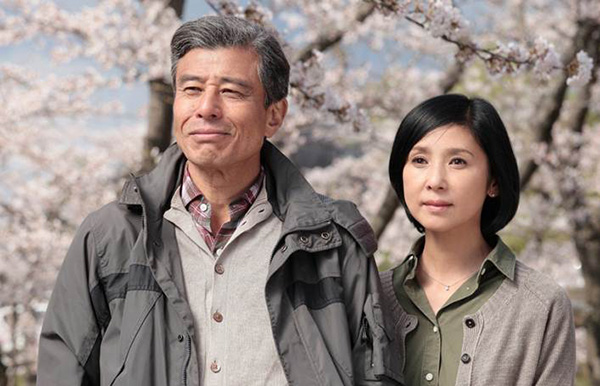
Owatta_Hito-posterSosuke Tashiro has a successful career in a large bank until he is transferred – or rather relegated – to a subsidiary until retirement. After decades of dedication to his work, he is lost and idle. He then decides to resume a professional activity, but realizes that the challenge is daunting. Over the course of two meetings, at the gym and at the adult education center, his life is on the move again. (FFM)
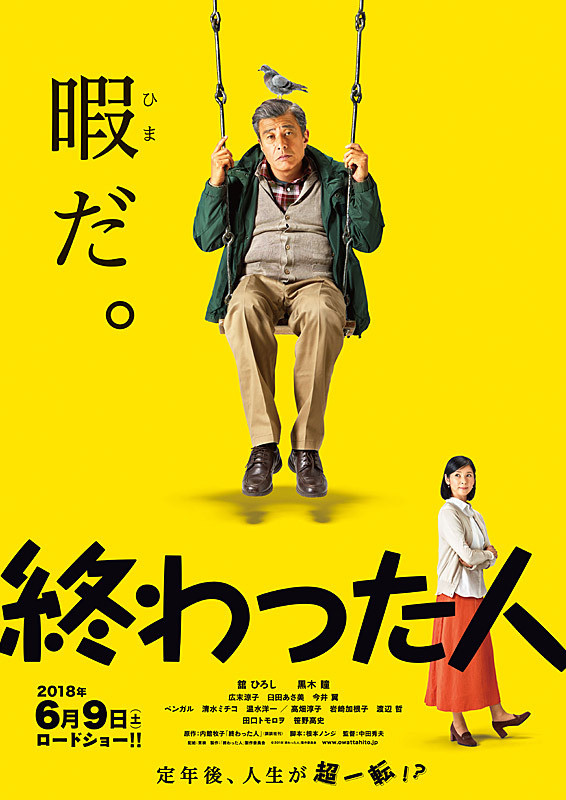
This is exactly the type of Japanese movie that I like the most: some sort of family drama that touches us (and often makes us cry) but which, in the end, makes us feel good and laugh. It is so perfectly enjoyable! And the seamless storytelling, the bright, well-framed and beautiful photography, as well as the nice soundtrack (particularly the beautiful song 「あなたはあなたのままでいい」 [Anatawa Anatano Mamadeii / “You can stay as you are”] by Miki Imai) really show the mark of an experienced filmmaker. Strangely, Hideo Nakata is mostly known for his horror movies (Ring, Chaos, Dark Water, Kaidan, etc.) so it is really surprising to see him direct for the first time a more traditional Japanese comedy! This is probably his way to tell us that he is not finished yet and that he can be a polyvalent creator. He does that brilliantly. Unfortunately, he didn’t arrive in time to present the movie and do the Q&A for the first screening at 11:30, and that was a great disappointment for me (I knew I should have gone to the 21:30 screening!). The quality of the production as well as Nakata’s fame makes of Life in Overtime a great contender for the competition. It is surely the best Japanese film I’ve seen at the festival so far this year.

Sosuke studied at the top university in Tokyo and finds himself on the path for an executive position at a large bank, but gets beaten by a rival and ends up finishing his career at a subsidiary branch. He already feels he’s a failure but, when he retires, he finds himself with no hobbies, no dreams, no job and no sympathy at home! What to do? He feels “Retirement is like a premature funeral (…) I don’t want my life to end like this!” It’s like the game is over but you continue to play in overtime in hope to finish on top (I like this idea)!

He tries to find a new purpose in order to make up for his failures. He looks for a new job but his impressive resume torpedoes his efforts. He considers going to graduate school to study literature, makes an attempt at a new romance or, after a chance meeting with the CEO of an IT company, try to start a new career but without any success. However, does it really matter as long as you have a life to enjoy?

Nakata succeeds in giving a realistic depiction of life struggles and relationships while tackling one of the hot topic of the decade: with its aging population, Japanese society has to deal with an ever increasing number of retirees. To keep them mentally and physically fit, it is important to make sure they feel their life is not finished yet and that they can make their experience or expertise valuable and useful to the society. It’s also a challenge on the domestic level as many couples, who never spent lots of time together because they were too busy working, find out that they don’t know much about what to do with each other! Retirement can surely be a shocking change but it is certainly not the end of your life (personally, I know very well that I’ll probably be even busier once I retired — in about 3192 days!). However, for some people, not knowing what to do or not feeling useful anymore can be an horrific experience and, in that aspect, maybe this is an horror movie after all…

Life in overtime, with its sadness and joy as well as its beautiful scenery, gives us plenty to ponder and an excellent movie experience. It is certainly a must see.
life_in_overtime

Life in Overtime (終わった人 / Owatta Hito / lit. “A finished man”): Japan, 2018, 125 mins; Dir.: Hideo Nakata; Scr.: Nonji Remoto (Based on the novel by Makiko Uchidate); Phot.: Koichi Saito; Prod.: Masatake Kondo; Cast: Hiroshi Tachi (Sosuke), Hitomi Kuroki (Chigusa), Ryoko Hirosue (Kuri), Asami Usuda (Michiko), Tomorowo Taguchi (Toshihiko), Tsubasa Imai. 

Screened at the Cinema Imperial (Sun. 08/26 at 11:30) as part of the “World Competition” program of the 42nd Montreal World Film Festivalstars-4-0

[ AsianWiki / IMDb / Official / Toei / Youtube ]

[ Traduire ]

Electoral conundrum

On October 1st the population of Quebec will have to vote to put their favourite candidates in the National Assembly. I find myself in quite an electoral conundrum since the lack of leadership makes it impossible to find anyone worth of my support. Every party has good ideas, but also so many stupid ones. I began this reflection when my union started a campaign advocating not voting for either the Liberals or the CAQ because “they are all the same” and that “we deserve better”… But if not them, who?

Continue reading

Zone Out

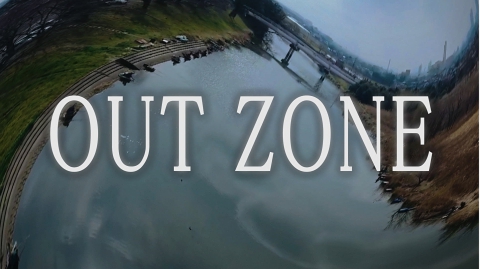
Zone OutKindergarten teacher, Chinatsu is always in a state of stress. And it is at this moment that a pupil of her class is murdered. Totally distraught, Chinatsu begins to sink into a world of illusion that she can not control. (FFM)

I don’t know what they have put in the water of that city but all the characters in this movie offer a whole catalog of mental illness: Chinatsu, a kindergarten teacher, cracks under the pressure brought by all those helicopter parents and develops schizophrenia; her acupuncture doctor, Yuichi, suffers from Capgras syndrome; Naoto, a salesman bullied by his seniors, has nomophobia; Akamatsu, the convenience store clerk, suffers from Asperger; Mitsuki, Haruka’s mother, suffer from Munchausen syndrome, etc. I guess it was the purpose of the director to show with this docudrama-style movie what it is to have such illness and how difficult it can be for the families.

It is a very dark movie and the end result is, unfortunately, barely average. The storytelling is awkward and not particularly skillful, the photography feels amateurish and the acting is so-so — although, the main actress is very charming and switching the actors who plays the two Yuichi toward the end of the movie in order to unexpectedly show the schizophrenia of Chinatsu is, I must say, quite brilliant. Also, the movie is really not well served by the poor translation (in the subtitles). When I noticed two typos in the very first sentence of the movie, I knew that this would spell trouble! (unless they made it on purpose to make us feel crazy!) If it was not already obvious with the production quality, the horrible translation really smelled of tiny budget…

Finally, to really give a last pathetic impression, the absence of a translator for the Q&A at the end of the presentation (due to the minimalistic ressources of the festival this year — what? they couldn’t even find a volunteer to take up the task?) left the poor director and main actress at the mercy of their basic English language skills and made for such a laughable exchange that you could only feel sorry for them. 

However, undertaking such a difficult and serious subject requires some strength. I understand what the director was trying to achieve and I greatly appreciate his efforts (for that I give him extra points!). In a society that was repressed for so long, where you find a real epidemic of bullying (both at school and at the work place, including sexual harassment) and where an aging population is plagued by various forms of dementia, it is really not surprising to find that mental illness has become a great challenge in Japan today. Kudos to the director for trying to bring attention to this problem.

Zone Out / Regarder dans le vide (アウトゾーン / Out Zone): Japan, 2017, 115 mins; Dir.: Hiroshi Kanno; Scr.: Mari Takanashi; Phot.: Makoto Hayashi; Ed.: Aya Mitsuaka; Light.: Sousuke Yoshikado; Sound: Kazuyuki Tutiya; Mus.: Magumi Masui; Cast: Minami Matsunaka (Chinatsu), Masato Oki (Yuichi Akino), Kyoko Toyama (Kyoko), Gen Kuwayama (Naoto), Yusuke Ueda (Akamatsu), Yusuke Sugiyama (Yuichi Kagawa), Ben Hori (Hisashi Aoyama).

Screened at the Cinema Imperial (Sat. 8/25 at 16:30) as part of the “World Great” program (out of competition) of the 42nd Montreal World Film Festival. stars-2-0

[ IMDb ]

[ Traduire ]

The Guernsey Literary and Potato Peel Pie Society

GuernseyLiteraryAndPotatoPeelPieSocietyNot long after the end of WW2, Juliet (Lily James) receives a letter from a pig farmer in Guernsey (who’s a member of a local literary club) asking her for the address a good bookstore in London. He got her address from inside a used book she sold before the war and which somehow had made its way to this island near the coast of France. She send him one book for free at the condition that he answers three questions to explain the name of their literary club and the circumstances of its creation. The tale of their ordeal under German occupation intrigues her, therefore, being a writer herself, she invites herself for a reading at their club to make some research in preparation for a newspaper article she was asked to write. Upon arrival she notices that the founder of the club, Elisabeth (Jessica Brown Findlay), is mysteriously absent and the club members seem very secretive about her circumstances. She starts asking questions around and her enquiry will unravel a painful past and make her fall in love with the island. It’s interesting how books can touch people and change their lives forever!

Of course, it is not a perfect movie as you find, for example, many stereotypical characters (like the self-centred and possessive American, the nationalist mean informer, the nosy and religious lodger, etc.). However, it remains a very beautiful movie, that offers a well-written and touching story about the hardship of war — a time when friendship and compassionate sentiments can be quite dangerous! It’s based on the novel by Mary Ann Shaffer and Annie Barrows. Interestingly, since nowadays Guernsey is too touristy, the movie was shot in North Devon with a cast in good part made of actors from Downton Abbey (Lily James, Jessica Brown Findlay, Matthew Goode, Penelope Wilton)! It is also noteworthy that the movie is distributed by Netflix as one of its original films (that’s where I watched it). All in all, it’s quite entertaining (critical response of 81% on Rotten Tomatoes) and an excellent movie experience. stars-4-0

[ BiblioIMDbNetflixWikipedia ]

[ Traduire ]

Capsules

FFM 2018 Day 1

FFM2018-banner2

Red carpet and Opening ceremony

This year the Festival des Films du Monde (FFM or MWFF, Montreal World Film Festival) strangely seems slightly more organized (at least for the accreditation) than the previous couples of years. They are probably getting used to extreme austerity and benefits from plenty of movie aficionado volunteers. Also, there’s more Japanese movies than last year (but still less than the usual dozen). Unfortunately, since there are only four screens (Cinéma Impérial and Quartier Latin 10, 12 & 13) to show ALL movies, they are shown only once (twice for the titles in competition) and mostly in the afternoon — which is not compatible with my own schedule, so I’ll probably end up viewing only half of the Japanese movies. Too bad, but that’s better than nothing!

However, I was happy that the title selected as opening film was one of the Japanese movies: Samurai’s Promise. No one from the cast or crew was present for the opening ceremony, although there was plenty of actors & actresses from other Japanese and Chinese movies (as well as local dignitaries) parading on the red carpet.

Red carpet photo gallery


The only speech was given by the president of the festival, Serge Losique. He seemed tired, but still defiant (although slightly apologetic):

“The festival is a great cathedral open to all. Our role was not to imitate whoever but to be ourselves, to be authentic. (…) Our role was also to helped small unknown countries, like Cape Verde or Sri Lanka [to promote their films]. All we want is for the public, and the journalists, to appreciate the films.”

He continues saying he doesn’t want the glamour of the other festivals but only to showcase the diversity of the world cinema. That’s why it is the “Festival des Films du Monde” [also a word-play in French meaning the festival of the people]. People are asking for stars, he says, but the stars here are the films. He also argues that the directors and actors who come to Montreal are stars in their own countries, and many more have been discovered here, at the festival, and are now stars! [I might add that I’ve seen plenty of great stars at the FFM over the years: Catherine Deneuve, Sofia Loren, Jackie Chan, Robert de Niro, Tony Curtis, Mamoru Oshii, etc.]

He also announces the new policy for the festival to chose as president of the jury a director that has previously won the Grand Prix of the Americas. Also the jury members will not necessarily be present at the festival but will screen the titles in competition via video link (although the president of the jury will always be present in Montreal). He introduces the members of this year’s jury (critic Élie Castiel, Pierre-Henri Deleau, an executive from China Film Group Corporation and another jury whose name will be revealed at the end of the festival) as well as its president, Silvio Caiozzi [Chilean director, winner of last year’s Grand Prix des Amériques], who also said a few words:

“From the beginning this festival always chose nothing but films of cinematographic excellence. Nowadays, I can feel that around the world somehow (…) [in the movie industry] the true quality of films is not looked upon, really. What they look upon is (…) what film has the big budget (…) or the politics (…) but not really the quality of the films. So, really, honestly, (…) in my opinion this is perhaps the only festival that still remains absolutely independant.”

Opening ceremony video

(I understand what Serge Losique is saying here. He is trying to explain and justify his position. The festival is his life-work, his baby, and he doesn’t want to relinquish its control. Indeed, if you accept public money you have to show transparency and do things the way the government wants them to be done… Unfortunately, if he doesn’t step down, pass the mantle to someone else soon (while maybe remaining on board as advisor), the festival will die with him…)

The theatre was not full, like we’ve seen for previous years, but considering the situation, it was full enough (maybe half?). Surprisingly, there was not that many people from the local Japanese community.

It was a short ceremony, a good movie (see my separate comment), the weather was nice, Radio-Canada / CBC was there to report on the event so, all in all, it was a good day for the festival.

[ Traduire ]

About writing (2)

Strangely, the more touched I am by a book or a movie, the more difficult it is to write about it. It seems easier to write about something I didn’t like so much… Maybe I am so overwhelmed that I just can’t organize the zillion things that I want to say. Or maybe I am just afraid to mess up something that I really like. I don’t know. I just find this strange…

[ Traduire ]

Un Siècle d’Animation Japonaise

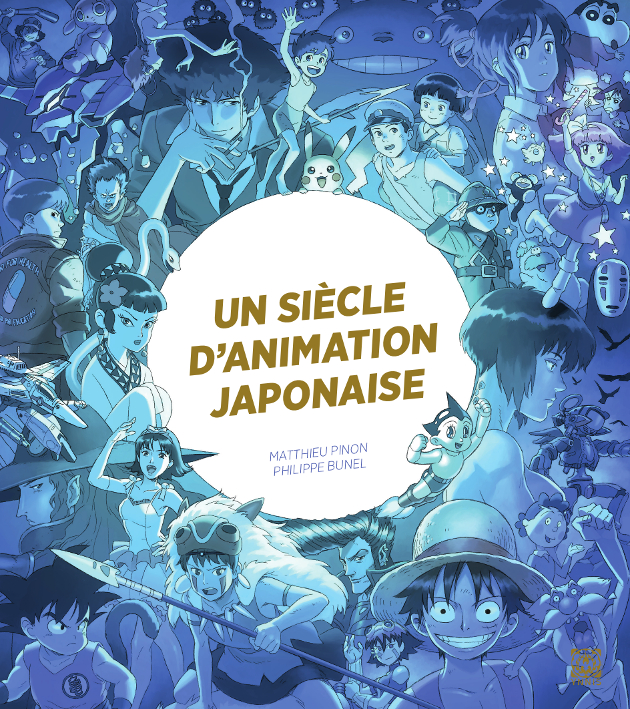
Siècle-animation-covEn 2017, l’animation japonaise est plus que jamais un rouage essentiel de la pop culture mondiale. Studios hollywoodiens historiques ou diffuseurs modernes nés avec Internet, les géants du divertissement investissent dans ce média dont les spécificités graphiques ont été adoptées par plusieurs générations de spectateurs.

À la fois composante et reflet de sa culture nationale, l’animation japonaise trouve pourtant sa source dans les expérimentations cinématographiques occidentales de la fin du XIXe siècle. En remontant à ses origines, Un siècle d’animation japonaise parcourt les évolutions marquantes vécues tant par les créateurs que par le public de ce média jusqu’à  nos jours.

Avancées technologiques, prolifération des genres, mutations économiques, oeuvres et artistes majeurs, triomphes et débâcles, consécration mondiale publique et critique… Découvrez comment, en cent ans, une terre inexplorée est devenue un eldorado économico-culturel dont les ressources semblent aujourd’hui s’amenuiser. Accessible aux néophytes comme aux passionnés, Un siècle d’animation japonaise vous propose de revivre cette aventure afin de mieux comprendre un média définitivement ancré dans notre quotidien.

(Texte du site de l’éditeur; voir aussi la couverture arrière)

J’avais brièvement parlé de cet ouvrage en janvier et je viens tout juste de mettre la main dessus (en bibliothèque — car je n’en possède malheureusement pas de copie puisque mes demandes de service de presse sont restées sans réponse et que, comme je n’écris plus vraiment sur l’anime, je ne peu pas justifier de dépenser $50 pour un bouquin de référence aussi utile soit-il). Pas besoins de le consulter longtemps pour réaliser que c’est un excellent ouvrage. Je dirais même qu’il est essentiel pour tout amateur d’anime qui se respecte car il existe peu de références qui traitent de l’histoire de l’animation japonaise (surtout en français). Avec cet ouvrage, Animeland célèbre un siècle d’animation Japonaise…

L’ouvrage est divisé en quatre grandes périodes historiques:

  • Le cinéma noir et blanc (1917-1957): Balbutiements et premiers écueils (Premières explorations, premiers revers / Renouveau et avancées technologiques / La propagande dans l’animation / L’après-guerre: l’aube du modernisme)
  • Le cinéma couleur et la télévision (1958-1982): L’animation industrielle (Le cinéma, un nouveau modèle économique / Nouveau média, nouvelles méthodes / La grande expansion); Le nouveau marché (un marché installé / La consécration de la science-fiction / Le retour du celluloïd au cinéma)
  • Les trois médias (1983-1995): La crise d’adolescence (Un nouveau marché, l’OAV / Télévision: la fidélisation du téléspectateur / Cinéma: les licenses fortes); L’énergie canalisée (L’émancipation des artistes / Mutation économique / L’entrée dans un nouveau monde)
  • L’ère numérique (1996-2017): La folie des grandeurs (Liberté artistique / La révolution numérique / Le médiamix à son paroxysme / La consécration mondiale); Le tonneau des Danaïdes (L’otaku, ce héros des comptes modernes / Climat de crise / Élargissement des cibles / Globalisation)

Comme tout ouvrage de référence qui se respecte, ce livre se termine avec un glossaire, un index des noms propres mentionnés (étrangement non paginé!) et une (trop) courte bibliographie.

C’est un ouvrage bien écrit, agréable à l’oeil, amplement illustré et très informatif. Il n’est pas rébarbatif pour les néophytes mais reste suffisamment détaillé pour intéresser aussi les amateurs endurcis. Personnellement, j’ai trouvé trois aspects particulièrement intéressants dans Un Siècle d’Animation Japonaise: 1) le premier chapitre, car il y a peu de documentation sur les débuts de l’animation Japonaise; 2) le dernier chapitre, car cela fait longtemps que je suis plutôt déconnecté du sujet et c’est intéressant de lire sur ce qui s’est produit dans la dernière décennie; 3) les auteurs nous présentent, “à la fin de chaque période (…), une sélection récapitulative de douze oeuvres synthétisant les tendances majeures de l’époque” qui peut servir de recommendation pour ceux qui se demandent quels anime valent la peine d’être visionné.

Finalement, un dernier aspect m’a fait grandement apprécié Un Siècle d’Animation Japonaise: j’ai eu le privilège de vraiment vivre l’aventure de l’anime à une époque où le medium était à son sommet (de la fin des années ’80 au début des années 2000) et cet ouvrage a réveillé en moi la douce nostalgie de cette période dorée. Ah!, la joie de découvrir des anime comme Macross, Megazone 23 Part 2, Area 88, Bubblegum Crisis, Ranma 1/2, Orange Road, Nausicaä, Laputa, Grave of the Fireflies, Wings of Honneamise, Akira, Nadia, Windaria, Record of Lodoss War, Patlabor, Porco Rosso, Whisper of the Heart, Gunbuster, Neon Genesis Evangelion, Ghost in the Shell, Vision of Escaflowne, Cowboy Bebop… Je dois bien avouer que ce temps-là me manque. J’en ai un peu revécu l’excitation récemment quand j’ai visionné Your Name. de Makoto Shinkai. Oui, quelle belle nostalgie… Mais cette époque semble bien révolue. Si par le passé l’anime a eut un impact culturel sur l’ensemble de la planète, je ne vois plus beaucoup d’animation nippone qui soit suffisamment originale et innovatrice pour m’impressionner… À moins que que soit parce que je suis devenu plus exigeant et difficile.

En conclusion, si l’animation Japonaise vous intéresse moindrement, c’est un ouvrage essentiel à lire (en bibliothèque) ou a conserver sur votre étagère de référence (si vous en avez les moyens).

Un siècle d’animation Japonaise, par Matthieu Pinon et Philippe Bunel. Paris: Ynnis Éditions, novembre 2017. 208 pages, 24 x 27 cm, 29,90€ / $49.95 Can. ISBN 9791093376806. Pour lectorat tout public. stars-4-0

Pour en savoir plus vous pouvez consulter les sites suivants:

[ AmazonBiblioGoodreadsGoogleWorldCat ]

© 2017, Ynnis Éditions.

[ Translate ]

Suggestion list of adult manga

At the library where I work we have a small to medium size collection of manga but only in French (very few in English). That’s to be expected since one of the mandates of our library is to foster the learning of French among the city’s (or the province’s) new-comer population. However, since the population we are serving is in majority anglophone, one of the librarians thought that it would be nice to develop a little more our nearly inexistant English manga collection. I am offering a few suggestions…

Most of the manga publishers target their releases toward kids and teenagers (kodomo, shōnen, shōjo) and just a few publishers put out manga really aimed at adults (seinen, josei, gekiga) — and I am not talking here about manga of sensual or erotic nature (LadiComi, yaoi, yuri, etc.).

The more traditional manga are translated and distributed by publishers like:

while the more serious and alternative titles (and unfortunately often less popular) comes from publishers like:

For this list, I avoided titles that we already had in our collection in French and — considering that we already had a few gekiga in French, that seinen or josei are also often targeted at teenagers, and that I think we should support local publishers like Drawn & Quarterly — I tried instead to favour more classical or serious manga (hence a selection of mostly gekiga, including mangaka in the likes of Shigeru Mizuki, Yoshihiro Tatsumi, Osamu Tezuka, or the more recent Jiro Taniguchi). I am indicating in the list if a title is already available in the Montreal Libraries’s network (even if it is only in French or only in one library).

[ Traduire ]

Continue reading

Japanese movies at the FFM 2018

FFM2018-banner

FFM2018-posterThe 42nd Montreal World Film Festival will be held from August 23rd to September 3rd 2018. So far there is only seven eight Japanese films listed in the line-up. We will add more details as they are available.

Of course, the festival has had financial troubles for sometime and run on a very minimal staff, so we shouldn’t expect a smooth operation. It will certainly not be better than last year. But the most important part of the festival is that there is movies to watch. This year it will be the nineteenth year that we are covering this movie festival and we hope that it will recover from this difficult period and prosper for many years to come.

The schedule for the Cinema Imperial (CI) is now available (2018/08/22). And the schedule for the Cinéma Quartier Latin (QL) is now also available (2018/08/23). As for previous years, the closing film will be a mystery title to be screened for free at the Cinema Imperial Monday September 3rd at 18:30. 

The FFM just announced the awards for the 42nd Montreal’s World Film Festival and for the 49th Student Film Festival (2018/09/03).

Two Japanese movies won an award: Samurai’s Promise by Daisaku Kimura won for the Special Grand Prix of the Jury (Ex-aequo) and Hiroshi Tachi won the Best Actor award for his role in Life in overtime by Hideo Nakata.

Please, read our comments on the festival:


[ Traduire ]

Here is the Japanese movies line-up (after the jump) :

Continue reading

Italian week 2018

SettimanaItalianaDiMontrealLike last year, we have visited the Settimana Italiana di Montreal (the Italian Week), festival held all over Montreal (but mostly in Little Italy, on St-Laurent street between St-Zotique and Jean-Talon streets) from August 3rd to 12th.

This year the festival celebrated its 25th Anniversary with many activities: an exhibition of all its promotional posters, a Fiat 500 car exposition, guided tours, a film festival, an opera presentation of Puccini’s “La Bohème”, a parade of the Sbandieratori Borghi e Sestieri Fiorentini (a group of Italian flag-throwers keeping alive the old military flag-waving tradition), and lots of food, musical displays and entertainments. Each local Italian association has a booth to inform about their activities. It was very interesting.

Here is a photo album and a short video (15 mins) as a memento of this year’s festival:

[ Traduire ]

Wild Coyote !

IMG_1324This is a video showing a wild coyote coming down my street and stopping by the neighbour’s driveway before continuing on its way (toward the Émile-Journault entrance of the Frédéric-Back Park)… It was taken on August 10, 2018, at 22h44. If you think that they are NOT coming into your neighbourhood you are wrong. Keep an eye on your kids and your small pets!

They are here… but it doesn’t means that we cannot coexist with them [PDF in French]. We have to be vigilant (some might have agressive behaviour but, like here, most will avoid human contact). However, I am against the current city policy to kill the urban invaders. After all, aren’t we the one who are destroying their habitat?

[ Traduire ]

The Ghost in the Shell 1.5: [Human Error Processer]

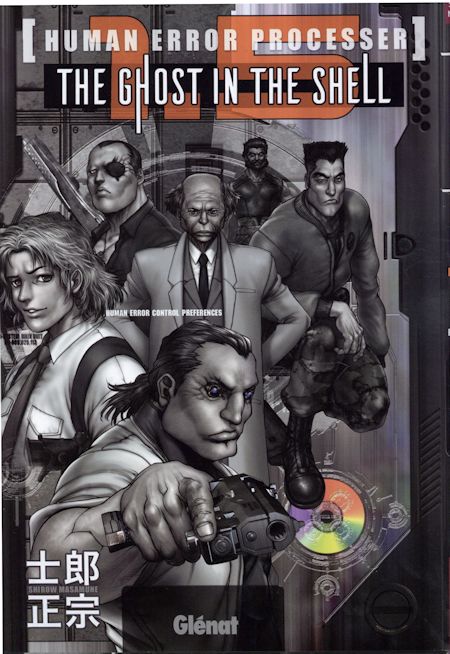
GitS-1-5-hummanErrorProcesser-cov“La section 9 est sur les dents ! Il faut dire que les enquêtes s’enchaînent pour la section d’élite et que Kusanagi et Batou n’ont guère le temps de chômer…”

“Découvrez enfin dans sa version perfect ce volume phare de la saga, qui vous éclairera sur la vie quotidienne de la section 9, ses difficultés et ses tensions. Un tome qui conclut à merveille le triptyque de The Ghost in the Shell Perfect Edition.”

[ Texte du site de l’éditeur ]

ATTENTION: Peut contenir des traces de divulgâcheur (i.e. “spoilers”)! Les personnes allergiques à toutes discussions d’une intrigue avant d’en avoir elle-même prit connaissance sont vivement conseillées de prendre les précautions nécessaires pour leur sécurité et ne devraient poursuivre la lecture qu’avec circonspection.

La description ci-haut (qui provient du site de Glénat) est totalement erronée! C’est bien la première fois que je vois ça: un éditeur qui ne connait pas son produit ou qui s’en fout! Le Major Kusanagi fait certes une brève apparition mais elle ne fait plus partie de la section 9! Quant à éclairer la vie quotidienne de la section 9, pas vraiment: on y apprends quelques détails nouveaux sur son fonctionnement mais sans plus. Par contre, il est vrai que l’histoire se concentre sur le travail journalier d’enquête de cette force militaro-policière qu’est la section 9.

Si Ghost in the Shell (攻殻機動隊 / Kōkaku kidōtai / lit. “Police anti-émeute blindée mobile”) est mon manga préféré, étrangement, je n’en ai jamais vraiment parlé dans ce blogue (à part brièvement lorsque j’ai commenté le film en live-action et l’animation). Je me dois donc d’abord de donner un aperçu de l’oeuvre en général.

Poursuivre la lecture après le saut de page >>

Continue reading

Pour en finir avec les tournesols

A sunflower finale

If you have followed the sunflower theft / case / saga, you’ll be glad to know that the case is finally closed (I hope). After nearly a month, the police finally intervened by visiting the culprit. He confessed his crime and said he was sorry. Apparently, he was so shocked & surprised to be caught that he was shaking. He also promised to return the stolen property to all the places he had taken them. Our stolen pots and sunflowers were returned by the police. I noticed the next day that the flowers stolen from the city’s flower beds were back. We didn’t press charge, but if he ever do us wrong again he would be in serious jeopardy. It was a great occasion to demonstrate my detective skills (elementary my dear Watson!), but now I can finally relax and start to enjoy the flowers again!


Si vous avez suivi le vol / l’affaire / la saga des tournesols, vous serez heureux d’apprendre que l’histoire est finalement close (j’espère). Après près d’un mois, la police est finalement intervenue en visitant le coupable. Il a avoué son crime et a dit qu’il était désolé. Apparemment, il était tellement choqué et surpris d’être pris qu’il en tremblait. Il a également promis de rendre les biens volés à tous les endroits où il les avait pris. Nos pots et tournesols volés ont été retournés par la police. J’ai remarqué le lendemain que les fleurs volées dans les parterres de la ville étaient de retour. Nous n’avons pas porté plainte contre lui, mais s’il nous faisait du tors à nouveau, il se retrouverait vraiment dans le trouble. Ce fut l’occasion idéale de faire preuve de mes habilités de détective (élémentaire ma chère Watson!), mais maintenant, je peux enfin me détendre et recommencer à apprécier les fleurs!

About writing

I realized recently that the best way to gather my thoughts in order to write a comment on a movie or a book (or any text) is to go take a poop or a shower right after viewing or reading. That’s when my mind gets freed from the daily drone and works better. It is also the case when I write early in the morning, when my mind is fresh from its nightly clean up and simulation.

They say that, in order to improve your writing, you must write at least a thousand words per day. I just can’t do that because, with my hellish job, I come back home at night completely exhausted and my mind is functioning just enough to eat, crash on the couch and watch TV… However, I have noticed that if I write regularly, the writing come easier to me and the result is generally more satisfying. I just have to keep going… I’ll do that thousand-word-a-day thing on the week-ends or, more likely, when I am retired (now in about only three-thousand-two-hundred-and-five days !!!)…

(Note: this blog entry is 194 words, so that means 806 words to go for today !)

[ Traduire ]

Isle of dogs

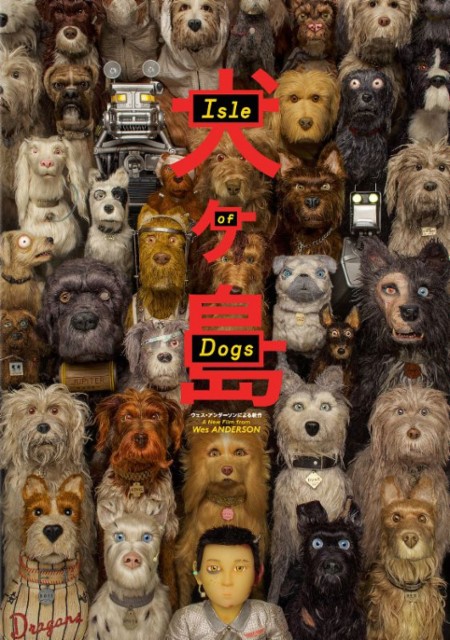
IsleOfDogs-covIn a timeless and fictitious Japan, the dictator of Megasaki — a cat lover — has banned all dogs to Trash Island. A twelve-year-old boy will sneak out on the island looking for his dog and unwithingly start a revolution. The stop-motion animation is amazing and quite stunning. The story is clever and cute — but, frankly, I’m a cat lover myself. The movie was well received (with a critic rating of 89% on Rotten Tomatoes) — although there was some harsh critics claiming it was succumbing to “the trope of the white savior” as the white foreign-student is organizing the revolt (but lets not forget that the REAL hero is the young boy!) and that it was a prime “example of racial stereotyping and cultural appropriation” ! On this I totally agree: it was a great hommage to the popularity of Japanese culture in the West (anime & manga, Kurosawa’s movies, etc.) and it’s an outrage that they didn’t select real dogs to play the parts! All in all, it’s beautifully entertaining, a great animation that I fuzzily recommend to everyone (although I am quite sure my cats will not like it). stars-3-5

[ AmazonBiblioGoogleIMdBOfficialWikipediaYoutube ]

[ Traduire ]

Capsules

In liberfacies

Against Facebook

I am really getting fed up with Facebook. It is an exceedingly time-consuming activity (chronophagios) that really gives little rewards — I means besides watching cat videos and stalking (um, I means, keeping in contact with) friends. More and more it has become the kingdom of fake news, as people constantly pass their expressed opinions as news (or as news-worthy).

Not only Facebook is doing very little to prevent foreign agencies to try to influence our minds through fake posting or advertising but, at the same time, they block legitimate ads from museums around the world because it is deemed offensive or subversive ! Incredible! How comes a bunch a geeks who know so little about the world become arbiters of morality and political decency ? They’re such a great influence over our minds (and our children’s minds) and yet, there is no one to oversee their policies? Inacceptable!

Of course, I would not be so inflamed by their ignominious policies if I would not have been touched personally by it. I am busy and I don’t have time to post on my blog, on Facebook, on Tweeter, on Instagram, etc. So I concentrate on what’s the most important to me (the medium that I can control the most) — my blog — and I just automatically repeat each (or most) post on the other social media to increase diffusion of my art and thoughts. However, a recent change in policies brought by Facebook is blocking this automatic reposting! What? They let the Russian pass through but they block my book reviews and cats’ pictures?! That’s unconscionable !

That I learned recently from a WordPress email:

“Starting August 1, 2018, third-party tools can no longer share posts automatically to Facebook Profiles. This includes Publicize, the WordPress.com tool that connects your site to major social media platforms (like Twitter, LinkedIn, and Facebook).”

They explain that if my content is linked to a Facebook Profile (a personal account), then Publicize will no longer be able to share my posts to Facebook, but it will still work if it’s a Facebook Page (public profiles allowing “artists, public figures, businesses, brands, organizations and nonprofits connect with their fans or customers”) that is connected to my site. I have only two options if I still want my Facebook followers to see my posts : create a link manually or convert my Facebook Profile to a Page ! They continue:

While Facebook says it is introducing this change to improve their platform and prevent the misuse of personal profiles, we believe that eliminating cross-posting from WordPress is another step back in Facebook’s support of the open web, especially since it affects people’s ability to interact with their network (unless they’re willing to pay for visibility) We know that this might cause a disruption in the way you and your Facebook followers interact, and if you’d like to share your concerns with Facebook, we urge you to head to their Help Community to speak out.

Damn you Facebook! Improving your platform? You means improving your profits by making changes that would favour the commercial use of your application! What about the users, the people who made your product famous (and create its value) ? Oh, yes, that’s true: since we know that WE are your product it is getting more difficult to fleece us, so you reorient your business model!

So, if you were wondering why I am posting very little on Facebook lately, well, that’s the reason. Now, I will probably share my posts manually for a while (for the most important entries) and maybe consider to eventually create a Page, but I am also quite seriously considering withdrawing completely from Facebook…

What do you think about that? (please comment)

And don’t hesitate to let Facebook know what I think of their stupid policies!

(note: the title is in latin)

[ Traduire ]

Sunflowers in bloom 2

Tournesols en fleurs 2

[ iPhone 8+, 2018/07/28 & 2018/08/04 ]

No, I’m not obsessed with sunflowers. It’s just that, this year, they really dominate the front garden and a lot of them were blooming this week. It’s really getting better and better… And none have been stolen in a while!

Non, je ne suis pas obsédé par les tournesols. C’est juste que, cette année, ils dominent vraiment le jardin avant et beaucoup d’entre eux fleurissaient cette semaine. C’est de plus en plus beau… Et aucun n’a été volé depuis un bout de temps!

Notable News (w23-w31)

Since the last update, over two months ago, so much has happened. 

On the domestic front, it seems that I ran out of karma points because a series of unfortunate events kept happening to me, including frustratingly bad customer service experiences: I had trouble getting my bag of weekly flyers delivered, after eight long months the contractor finally came to finish the landscaping work in the backyard so I could work (hard) to set up the garden, and then the water heater broke down! Everything was just a big pain in the ass! I ended up so stressed and distressed by the whole ordeal that I forgot to do the accounting and pay the bills! This had never happened to me in fifteen years!

UltraBlinking

Out of energy !

However, that was not the end of it. Work is usually a real nut house where we have to run around like crazy, doing absurd stuff. Under normal circumstances it is already demoralizing and exhausting. But we had to go at it during a heat wave, for a whole week! We had a few days of respite and then, the air conditioning broke down—for another week! We were working at temperature between 27° C and 30° C, with relative humidity of 50-55% ! If you calculate the humidity factor (the way that it’s normally done on weather channels) it felt like working at temperature between 35° C and nearly 40° C ! (Of course, according to the charts used by management, it was barely over 33° C and we shouldn’t even brake a sweat! For them it was just uncomfortable conditions!). Damn it, we are working in a library, not a sweat shop! Management brought huge fans, but if you move hot air, it is still just hot air — in a very noisy environment. 

If it was just working at a desk with a fan in the face it would probably be tolerable, but we are standing up and moving around a lot to serve customers (lending, shelving and processing books, etc.) — contrary to what most people believe it is a very physical work. At my age and with my health I cannot work in such conditions for a long duration. One day, I was tired and feeling dizzy (the head-librarian had already left and a couple of colleagues were not feeling well either) so I decided to also leave work early. We were threatened of “consequences” (disciplinary measures) by management for doing so. We endured for the rest of the week, but, in the end, I couldn’t take it anymore, I was exhausted (completely out of energy), having sore throat, migraine and ear ache, so I took a day off.  I just don’t get it: why’s this obstinacy to force employees to work in unbearable conditions? Where is decency and respect of the workers? That’s what upsets me the most: absurd decisions and disrespect… I get it that there is nothing in the labor law (health & security) that prevent work in extreme heat conditions, but it is just common sense and thoughtfulness not to subject your employees to such suffering! Then again, why should I be surprised of such contempt for the workers?

At the same time, I had to deal with some garden theft which became “the sunflowers’ affair” and evolved into a real saga. Finally, as I was ready to blow a gasket, my blood pressure medication was recalled due to contamination with a potential carcinogen (the generic version is made in China, no wonder)! I had trouble at first to get the pharmacy to replace it for free, but now there is a class-action lawsuit being organized

Japon instantané

My mind elsewhere !

Thankfully, there was a few positive events to brighten my mood, like an occasional trip to the botanical garden or the park, Apple announcing their incoming new operating systems (iOS 12 and macOS 10.14 Mojave) or finally being able to finish watching the latest seasons of Poldark and McMafia. Strangely, as I handled all the bad karma with relatively great zen, I managed to write comments on quite a bunch of stuff (books, TV series and movies): The Dark Tower, The Terror, Crapule, American Made, Victoria & Abdul, Un simple monde, Le chat du louvre 1-2, Black Panther, Isabella Bird: femme exploratrice 1-2, Alien Resurrection & Alien: Covenant, Pline 5, Ad Astra 4-5, Justice League, Batman v Superman, Jumanji, Giacomo Foscari 1, Nos yeux fermés, Your name., In this corner of the world, and The Mummy. Fortunately, reading (or alternatively watching TV) and writing (comments, rants or even poetry) is a great help to bring my mind elsewhere!

On the world stage, we saw the usual fires, floods, volcanoes, storms, kids trapped in a cave, a couple of summits (G7 & North Korea), the World Cup, water was found on Mars and each day kept bringing more Trump insanities. If I wouldn’t know better I could think that Trump is the antechrist and that the end of the world is near! But, no, it’s just our daily lives in the 21st century… I just don’t understand: in 1953 the Rosenberg were tried and executed simply for spying for the Soviets; now, some politicians conspired with the Russians to interfere in the U.S. elections, make their own businesses profits, as well as contribute to undermine western democracies and absolutely NO uproar is being made about it? Delirant isti americani !

Through all this I did my best to stay (sane?) acquainted with the affairs of the world and gathered over two hundreds notable news & links — which I now share with you (in both french or english, slightly categorized, but in no particular order — note that, to save on coding time, the links will NOT open in a new window beyond this point), after the jump.

[ Traduire ]

Continue reading

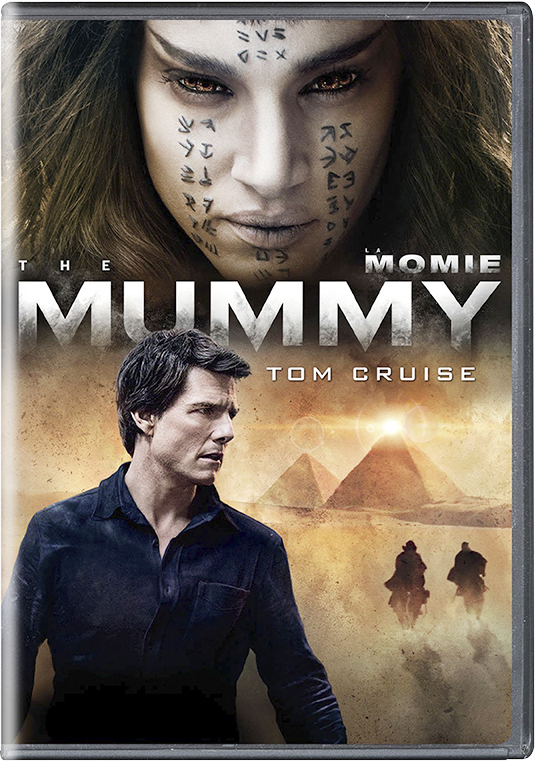
The Mummy

L9677659I found this action movie rather average and, if they wanted to do horror, well, I wasn’t scared. It is well paced and the acting is good (although Tom Cruise is getting a little old for this, his two female co-stars, Annabelle Wallis & Sofia Boutella, are great), but the story is rather predictable — however, mixing Jekyll & Hyde (Russell Crowe) with it was a surprise! I also like the “Egyptian” designs (the flashbacks, the look of Princess Ahmanet, the tomb & sarcophagus — a little reminiscent of Giger style). It’s interesting that, just in case the movie would be successful enough, they’ve put an open ending to allow for a sequel. I hope not. This reboot of The Mummy franchise offered a nice mindless entertainment but, alas, nothing more (Rotten Tomatoes concurs with a critical rating of 15% !). What’s scary is that The Mummy is supposed to be the first movie in the reboot of Universal’s Dark Universe (Jekyll & Hyde [with Russell Crowe — now the cross-over with The Mummy makes sense!], Frankenstein [with Javier Bardem], Dracula, Creature from the Black Lagoon, Phantom of the Opera, Hunchback of Notre Dame, Invisible Man [with Johnny Depp], etc.). The next movie in line should be Bride of Frankenstein [dir. Bill Condon, with possibly Angelina Jolie or Gal Gadot in titular role] first announced for Valentine’s Day 2019 but its release has now been delayed!  stars-2-5

[ AmazonBiblioGoogleIMDbWikipediaYoutube ]

[ Traduire ]

Capsules

In this corner of the world

InThisCornerOfTheWorld-covAnother great animation—this time by a less known director (at least in this corner of the world, but Sunao Katabuchi has also directed the TV series Black Lagoon and the movies Princess Arete and Mai Mai Miracle). This is a very traditional Japanese animation which is not drawn in the cute style we usually associate with anime. It is soft, pastel-like, yet a little sketchy. It is also realistic in its concept but yet cute in its own way. However, despite a good dose of humour (through the awkwardness of the main character and how she sees the world through her drawings), the story is quite serious as it chronicles the life and hardships of a young bride in the pre-war and, later, the WW2-era Japanese countryside in Kure. Despite the cartoony style, it is very precise in the description of the everyday life, the clothings, the food rationing, and the military details (warships, bombings, etc.). It is really touching, beautiful, educational and entertaining (although it is a bit long at 129 mins). Like Grave of the Fireflies describes the life after the firebombing of Tokyo, this movie is painting a detailed portrait of the life of ordinary Japanese citizens in the Hiroshima area before the A-bomb and a little after. It is a must-see movie that has been nominated for and received several awards both in Japan and abroad. stars-3-5

[ AmazonBiblioGoogleIMdBOfficialWikipediaYoutube ]

[ Traduire ]

Capsules